







Quick Answer: Cheap STD tests can be safe, but just because they are cheap doesn't mean they are accurate. The most important things about the test are how it is validated, what kind of sample it uses, and when it is done. Some $30 tests work well if you use them correctly and at the right time. Others might not find infections or give you false hope.
Why the Same Test Can Cost $29 or $289
The price gap between STD tests isn't just about markup. It reflects how the test is made, who analyzes it, and how much support you get. Imagine two people taking the same test for chlamydia: one uses a $30 rapid swab kit they bought online; the other sends a urine sample to a CLIA-certified lab through a $149 mail-in kit. They’re both trying to answer the same question, but the journey, accuracy, and peace of mind are completely different.
We broke down what you’re really paying for in the table below, so when you see that price tag, you’ll know what it includes (and what’s missing).
| Cost Range | What's Included | Typical Accuracy | Turnaround Time |
|---|---|---|---|
| $20–$50 | Basic rapid test, often without lab confirmation. May not include instructions tailored to timing. | Moderate (50–85%) | 10–20 minutes |
| $70–$150 | Mail-in test processed by certified lab. Includes shipping, sample collection, results portal. | High (95–99%) | 2–5 days |
| $200+ | Comprehensive STI panel, lab processing, optional telehealth consult, discreet packaging. | Very High (99%+) | 24–72 hours |
Table 1: Comparing what different price tiers actually provide, from materials to accuracy and results time.
Sticker Shock vs Safety: What Are You Really Paying For?
If you're short on cash, a cheap STD test might seem like the best option at first. But when it comes to infection detection, you're not just paying for the result. You’re paying for what backs that result: the science, the certification, and the support if something goes wrong. Let’s break it down through a common real-world scenario.
Case Scene: Diego, 26, ordered a $25 chlamydia test off a third-party site after a casual partner mentioned they'd tested positive. The test promised "instant results" with a color-change strip. Diego took it two days after exposure, got a negative, and breathed easy. But three weeks later, he developed symptoms, and a lab test came back positive for chlamydia. That cheap test didn’t fail. It just wasn’t designed to work that early.
False reassurance is one of the most expensive outcomes of buying the wrong test, not just in dollars, but in time, health, and potential transmission to others. That’s why understanding how and when a test works matters even more than what it costs.
Rapid tests often rely on antigen detection, which requires a certain viral or bacterial load to be accurate. Mail-in kits that use NAAT (nucleic acid amplification testing) can detect infection with much higher precision, especially for chlamydia, gonorrhea, and trichomoniasis.
People are also reading: HPV Isn’t Just About the Cervix, Why Testing Still Matters
Speed, Accuracy, and Privacy: You Can’t Always Have All Three
Buying an STD test often feels like choosing between things you shouldn’t have to sacrifice. You want results now, you want them to be right, and you don’t want anyone else to know. But here’s the reality: most affordable tests can only deliver two of those three.
Let’s look at what that means for different testing types:
| Test Type | Speed | Privacy | Accuracy |
|---|---|---|---|
| At-home rapid strip (under $50) | Immediate | High | Moderate (if used correctly) |
| Mail-in lab test ($70–$150) | 2–5 days | Very High | High to Very High |
| Clinic test (with ID) | Same-day to 3 days | Low to Moderate | Very High |
Table 2: Most tests trade one value (speed, privacy, accuracy) for another. Understanding the balance helps you choose confidently.
There’s no “perfect” choice, only the best fit for your situation. If you’re panicking after a one-night stand, a rapid test might calm your nerves. But if it’s been more than a week and you want certainty, a lab test will give you the clarity that a cheap strip kit can’t.
Check Your STD Status in Minutes
Test at Home with Remedium7-in-1 STD Test Kit

 For Men & Women
 Results in Minutes
 No Lab Needed
 Private & Discreet
Order Now $129.00 $343.00
For all 7 tests
When Cheap Becomes Costly: The Hidden Price of False Negatives
The most dangerous thing about a low-cost STD test isn’t that it’s cheap, it’s that it might lie. Not out loud, not on purpose, but quietly, by failing to detect an infection because you tested too early, used the wrong sample type, or didn’t read a faint result line correctly. And the worst part? You may never know until it’s too late.
Case Scene: Lena, 33, tested negative with a $35 test she bought off a discount retailer’s website. No shipping fee, no follow-up support. A month later, her OB/GYN flagged signs of untreated chlamydia during a routine pelvic exam. That untreated infection likely dated back to the same encounter that prompted her at-home test, but because the test was taken just six days after exposure, the bacteria hadn’t yet built up to detectable levels.
This is why timing is everything. Even the most accurate test in the world can’t detect what isn’t there yet. Rapid tests typically require a higher threshold of bacteria or antibodies to show a result, while lab-based tests (especially NAAT) can catch infections earlier and with fewer copies present in the sample.
So, when you see a price tag under $50, ask yourself: What am I sacrificing to save this money? Sometimes, the answer is nothing, but often, it's accuracy, clarity, or support.
The Shipping Trap: What Low-Cost Listings Don’t Tell You
One of the sneakiest hidden costs in cheap STD testing is shipping, and it doesn’t always show up until checkout. A $24.99 test might seem like a steal, but after you add $15 shipping and a 10-day delivery window, that savings evaporates fast.
Worse, some low-price kits ship from overseas with unclear labels or customs delays. That might not matter for a pregnancy test, but for STDs where early treatment can prevent complications or transmission, a delay can be more than frustrating, it can be harmful.
Mini Scene: Jordan, 29, was living in a rural area during wildfire evacuations when he ordered a $40 chlamydia test online. It took 11 days to arrive, by which time he had already developed discharge and burning. He ended up driving 90 minutes to a walk-in clinic, wishing he’d spent the extra $30 on an overnight delivery option from a trusted U.S. provider.
Lesson? A “cheap” test isn’t cheap if it shows up too late to help you act. Always check where the test ships from, whether it includes prepaid return postage (for mail-in kits), and how quickly you'll receive your results.
How to Read Between the Price Tags: A Decision Walkthrough
If you're trying to decide between a $25 test and a $125 one, here’s a walkthrough that weighs more than just your wallet. Read each section and see which situation sounds most like yours:
You had a one-time encounter and want quick peace of mind. You might lean toward a rapid test, especially if you’re several weeks past exposure. But be aware: If it’s within 7 days, you may need to retest later with something more sensitive.
You have symptoms and need reliable answers ASAP. A mail-in lab test or clinic test is the smarter investment. Rapid tests may miss low-level infections, especially early on. You deserve clarity, not just speed.
You’re asymptomatic but had unprotected sex recently. Go for a test that balances convenience and lab-grade analysis. Look for CLIA-certified kits or partner with services that offer NAAT testing for chlamydia, gonorrhea, and others. You can still do this from home, it doesn’t have to be a clinic trip.
You’re testing for peace of mind, not a specific incident. Here’s where the cheap tests might be okay, if you understand their limits and plan to follow up with lab testing if anything seems off. But don’t rely solely on rapid strips for diagnosis.
And if money is tight, look into low-cost clinic services, community health centers, or online platforms that accept FSA/HSA payments. Some cities even offer free test kits you can order anonymously, though availability varies.

People are also reading: When Is It Too Early to Test for Gonorrhea After Sex?
So, Are Cheap STD Tests Ever Worth It?
Yes, sometimes. But only when used with realistic expectations. If you’ve passed the window period, understand how to use the test correctly, and are okay with following up if symptoms appear, a low-cost test can be part of a smart sexual health strategy. What matters is the fit, not just the price.
You can get a reliable, private chlamydia home test kit backed by real science and real support if you need answers and don't want to play guessing games with accuracy. Don't take chances with your health; make sure you know what you mean.
Still Shopping? Here’s What to Look For Before You Click “Buy”
Not all at-home STD tests are created equal. And while reviews can help, they’re no substitute for understanding the basics. Look for FDA clearance, CLIA certification (for lab kits), clear sample instructions, and transparent refund or support policies. Avoid any site that doesn't list a physical address, customer service number, or actual test name.
Remember: good companies show you what the test can and can't do. If the promises sound too good to be true, like instant results, 100% accuracy, or detection “the same day” as exposure, close the tab. Real testing has nuance. And the companies that respect you will explain that.
Check Your STD Status in Minutes
Test at Home with Remedium6-in-1 STD Test Kit
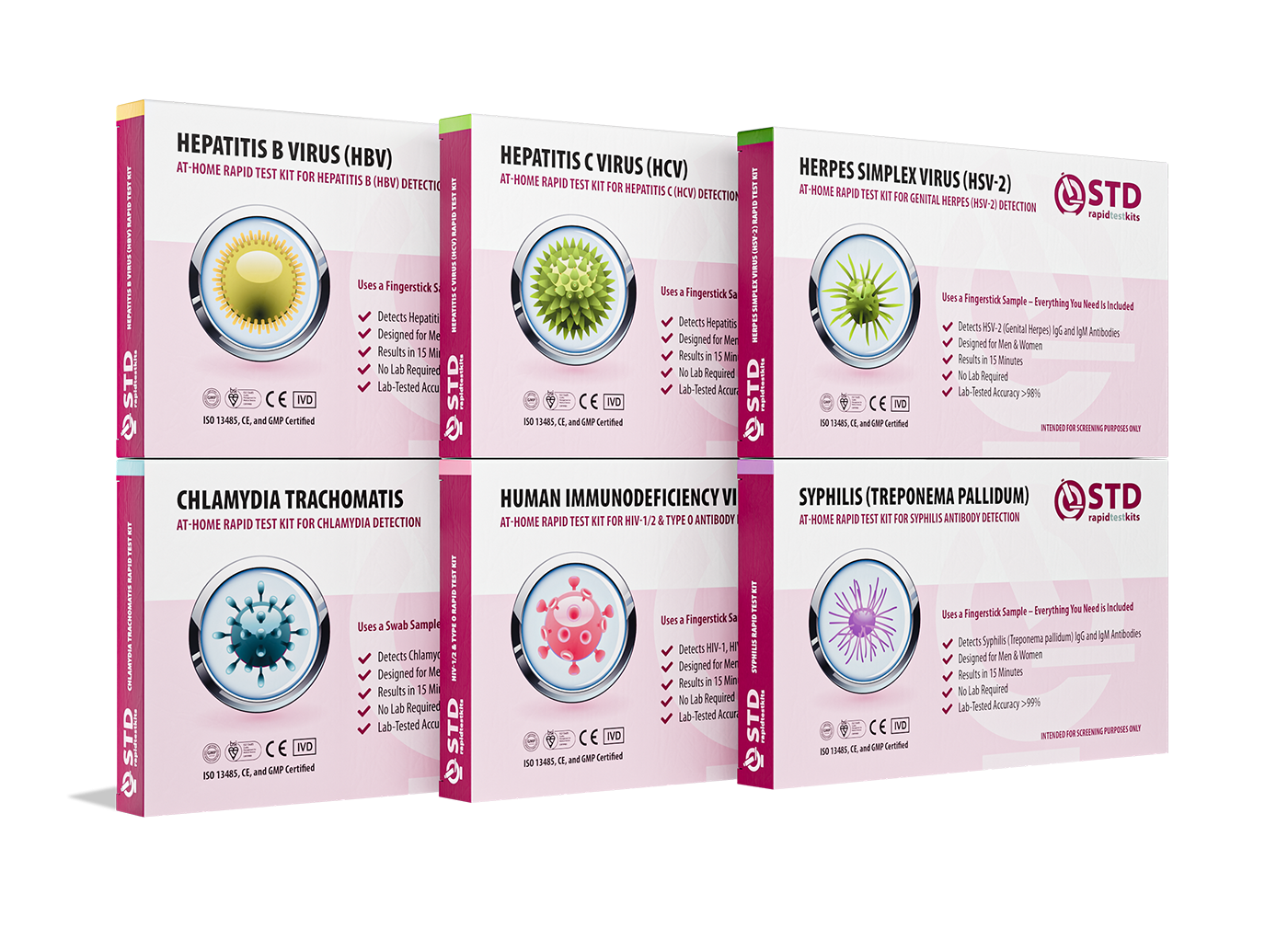 For Men & WomenResults in MinutesNo Lab NeededPrivate & Discreet
Order Now $119.00 $294.00
For all 6 tests
Before You Buy: What Cheap Tests Don’t Tell You
Here’s the raw truth: when you’re staring down that “Buy Now” button on a $19 STD test, no one is really explaining what you’re risking. The product listing isn’t going to say, “Warning: This might miss your infection.” It’s going to promise ease, speed, and peace of mind, all words designed to comfort you when you’re feeling scared, exposed, or guilty.
But peace of mind doesn’t come from a price tag. It comes from knowing the test was used at the right time, with the right sample, processed the right way. And those details? They’re often hidden behind five-star reviews, stock photos, and vague promises of “over 99% accuracy”, without any mention of the sample size, study design, or infection stage.
Mini-scene: Noah, 24, chose a $27 kit from an overseas eBay seller. The instructions were broken English. The test result line never appeared, just a blank strip. He shrugged, figured it was fine, and moved on. Two months later, his new partner tested positive for chlamydia. That tiny moment of uncertainty turned into a long conversation neither of them were ready for.
Let’s be clear, buying a low-cost test isn’t irresponsible. But using it without understanding what it can (and can’t) do? That’s where people get hurt. Not just physically, but emotionally. Relationships strain. Confidence takes a hit. Anxiety creeps in where clarity could’ve lived.
So before you pick a test based on price alone, ask yourself:
- Is this test right for my exposure timeline?
- Do I know how to use and read it accurately?
- What happens if the result is positive or unclear, do I have a plan?
If the answer to any of those is “I’m not sure,” then consider spending a little more to buy certainty. That doesn’t always mean the $200 kit, but it rarely means the one that cuts corners on science to hit a price point that feels less scary.
Because nothing is scarier than thinking you’re safe when you’re not.
Whether you choose a rapid test, a lab test, or even go in-person, the best decision is the one that’s informed. That puts you back in control. That gives you information you can act on, not just a line on a strip that might be lying to keep you calm.
Ready to stop guessing? You can order a verified, discreet chlamydia home test kit today. Results you can trust. Privacy you deserve. Testing, but without the second-guessing.
FAQs
1. Can I actually trust a $30 STD test?
Sometimes, yes, but only if you know what you’re getting. A $30 rapid test might work for peace of mind after the window period, but don’t expect lab-level accuracy. It’s like using a pocket thermometer instead of a full blood panel. One gives a quick clue, the other gives the whole story.
2. Why do some tests cost over $200? That feels... extreme.
It does, until you unpack what you’re buying. That price often covers lab analysis, discreet shipping, telehealth support, digital results, and higher-grade sample handling. Think of it like flying coach vs booking a full concierge medical experience. If you're stressed out or have a lot going on, the higher price might be worth it for how it makes you feel.
3. I took a cheap test and it was negative, but I still feel off. Now what?
Trust your gut over the plastic strip. Symptoms matter. If anything feels off, burning, spotting, discharge, or even just a gut feeling, get a lab test. False negatives happen, especially if you tested too early or used a low-sensitivity kit. Better to double-check than second-guess.
4. What’s the deal with faint lines? Mine looked... ghostly.
In most rapid tests, a faint line is still a line. But if it’s so pale you’re tilting it under the bathroom light like a magic eye puzzle, don’t guess. Take a picture, call the brand’s support line, and consider a confirmatory lab test. Evaporation lines and user error are real, but so are early positives.
5. Are those super cheap kits on Amazon legit?
Some are. Many aren’t. If it ships from a mystery seller, arrives in packaging you can’t read, and lists no manufacturer, toss it. The test you trust shouldn’t feel like a game of “Will it arrive broken?” Stick to verified medical suppliers or trusted platforms like STD Rapid Test Kits.
6. Can I use an old test that’s been sitting in my drawer for a year?
Nope. Even if it’s sealed. Expired tests = unreliable results. Chemicals degrade. Accuracy drops. You wouldn’t eat expired sushi, don’t risk it with something as critical as your sexual health.
7. Is it safe to throw away a used STD test at home?
Yes. Wrap it in tissue or a bag and toss it in the trash. No need for hazmat gear. If it’s a mail-in kit with biohazard labels, follow the provider’s return or disposal instructions. Don’t flush anything, your plumbing didn’t consent.
8. Can I test right after a hookup or do I have to wait?
Tempting, but wait. Testing the morning after likely won’t tell you much. Most infections need days or even weeks to show up in your system. If you test too soon, you might get a false negative and think you’re in the clear when you’re not. Aim for 7–14 days post-exposure, or sooner if symptoms appear.
9. What’s the most affordable test that still works well?
Look for mail-in NAAT tests that focus on just chlamydia and gonorrhea. Many cost under $100 and offer high sensitivity. Skip the mega-panels unless you have multiple exposures or need peace of mind across infections. Simpler doesn’t mean worse, it just means focused.
10. Is it weird that I feel ashamed just shopping for these?
Not weird. Just human. But let’s be clear, testing is self-respect, not confession. You’re not “dirty” for checking. You’re not reckless for being unsure. You’re doing the brave, adult thing. Shame thrives in silence; testing breaks that cycle. And that makes you powerful as hell.
You Deserve Clarity, Not Confusion
If you’ve read this far, it’s because you’re not just looking for the cheapest test, you’re looking for the right test. And that’s the real takeaway. Cheap doesn’t always mean dangerous, but it often means compromise. Some things aren't worth betting on when it comes to your health, your future relationships, and your peace of mind.
The best STD test for you is one that balances cost with clarity. One that fits your timeline, your symptoms (or lack thereof), and your emotional needs. If you’re feeling unsure, anxious, or overwhelmed, you’re not weak. You’re human. And the fact that you’re here, asking the hard questions, already means you’re doing the right thing.
Explore our full range of at-home STD test kits, backed by science, designed for privacy, and built for people like you who just want to know what’s real.
How We Sourced This Article: We combined current guidance from leading medical organizations with peer-reviewed research and lived-experience reporting to make this guide practical, compassionate, and accurate.
Sources
1. CDC – STD Prevention and Testing
2. Getting Tested for STIs | CDC
3. Chlamydia trachomatis - Diagnosis and Treatment | Mayo Clinic
4. Chlamydia Test | MedlinePlus
5. At-Home Specimen Self-Collection and Self-Testing for STIs | NIH/PMC
6. Acceptability of Home-Based Chlamydia And Gonorrhea Testing | NIH/PMC
7. At-Home STI Test Kits: How They Work, Costs, and More | GoodRx
8. What to Know About At-Home STD Tests | WebMD
9. Can I Take an STD Test at Home? | Planned Parenthood
About the Author
Dr. F. David, MD is a board-certified infectious disease specialist focused on STI prevention, diagnosis, and treatment. He blends clinical precision with a no-nonsense, sex-positive approach and is committed to expanding access for readers in both urban and off-grid settings.
Reviewed by: C. Hill, FNP-BC | Last medically reviewed: January 2026
This article is only meant to give you information and should not be taken as medical advice.


