

Published: December 2025 | Last updated: April 2026 | Editorial review and quality control: Martina N.
You took a test the morning after. Or the day after that. The result came back negative, and somehow the worry hasn't moved. Here's the part most people miss: gonorrhea detection has a clock attached to it. Test before that clock starts, and a negative result only means there's nothing to find yet. It does not mean you're in the clear.
This guide explains when gonorrhea actually becomes detectable after sex, why testing too early produces false negatives, and how to match the test to your specific exposure. It also covers what to do if you tested early, what changes if symptoms appear, and how home rapid tests fit alongside laboratory testing.
Can you test too early for gonorrhea?
Yes. Laboratory tests reach peak accuracy roughly one to two weeks after exposure, and testing earlier often returns a false negative because the bacterial load is still too low to detect. If you tested before day 7, plan a retest at the two-week mark, especially if symptoms appear or your partner has tested positive. Home rapid tests follow the same window logic and use lateral-flow chemistry, which is a different (lower-sensitivity) technology than the lab NAAT used at clinics.
Key Takeaways
- Detection peaks roughly 7 to 14 days after exposure. Testing on day 1, 2, or 3 commonly returns a false negative because there is not yet enough bacterial material to find.
- Most women with gonorrhea have no symptoms, per the CDC, and many men also carry the infection without recognizing it. Testing based on the date of exposure, not how you feel, is the more reliable trigger.
How Gonorrhea Detection Works
Gonorrhea is caused by a bacterium called Neisseria gonorrhoeae. It infects mucous membranes: the urethra, the cervix, the rectum, the throat, and (less often) the eye. Detection depends on finding either the bacterium itself, its genetic material, or its antigens in a sample taken from the right site.
The laboratory gold standard is the NAAT (nucleic acid amplification test). NAAT amplifies tiny amounts of bacterial DNA or RNA until they're easy to detect, which is why the CDC recommends it as the most sensitive method for diagnosing gonorrhea (CDC STI Treatment Guidelines). NAAT is what most clinics, urgent care centers, and mail-in lab kits use. The sample is collected by urine catch (penile), self-collected or clinician-collected vaginal swab, throat swab, or rectal swab, depending on where exposure happened.
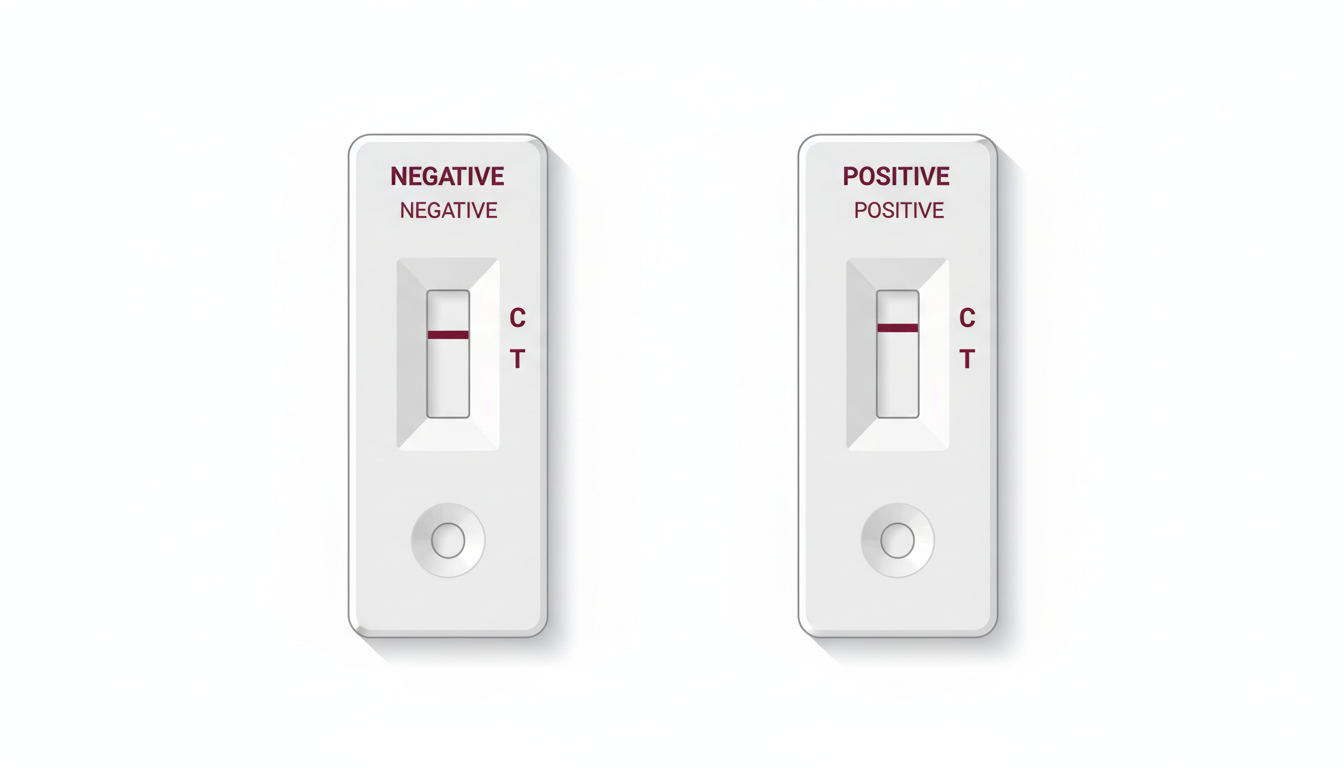
At-home rapid tests, including the kits sold on this site, use a different technology: lateral-flow immunoassay. That's the same chemistry behind a home pregnancy test or a COVID rapid test. The cassette gives a visible line within about 15 minutes of swabbing. It detects bacterial antigens directly from a self-collected swab.
Both tools have one thing in common: they need bacteria to detect. If N. gonorrhoeae hasn't yet multiplied to a level the chemistry can pick up, neither method will find it, which is why both tools require time after exposure before they can return a reliable result.
NAAT (laboratory): Amplifies bacterial DNA millions of times before reading the signal. CDC's diagnostic standard, highest analytical sensitivity.
Lateral-flow (at-home rapid): Detects bacterial antigen on a paper strip. Lower analytical sensitivity than NAAT, but a visible result in about 15 minutes without a clinic visit.
Culture (laboratory): Grows the bacterium from a sample. Slower than NAAT and used now mainly to test for antibiotic resistance, not routine diagnosis.
The Detection Window: Why Day 7 to 14 Matters
The window period is the gap between when you're exposed to an infection and when a test can reliably detect it. For gonorrhea, this window isn't immediate. After exposure, the bacteria need a few days to multiply at the site of infection before there's enough material for a test to read.
Most laboratory NAAT tests can reliably detect gonorrhea about one to two weeks after exposure. MedlinePlus notes that it may take weeks before a test turns positive, which is why testing too soon after exposure can return a false negative (MedlinePlus, Gonorrhea Test). Concretely: if you had unprotected sex on a Saturday and tested on Monday, that test is almost certainly too soon. A negative result on day 2 doesn't tell you whether you're infected, only that the test didn't see anything yet.
The same window applies to home rapid tests, with the added consideration that lateral-flow chemistry has a higher detection threshold than lab NAAT, so testing right at day 7 may still produce a false negative on a home test even when a clinic NAAT would have caught it.
| Days Since Exposure | Detection Likelihood | What This Means |
|---|---|---|
| 0 to 3 days | Low | Too early. Bacterial load is usually below detection threshold for both lab NAAT and home rapid tests. |
| 4 to 6 days | Increasing | Some early infections become detectable. False negatives are still common, especially with home rapid tests. |
| 7 to 14 days | High | The reliable testing window. Lab NAAT performs at peak accuracy here. Home rapid tests are most useful from day 10 onward. |
| 15+ days | Very High | Tests are at full sensitivity. Useful for confirming a result, screening after a single exposure, or follow-up after early-window testing. |
Lab NAAT vs At-Home Lateral-Flow: Two Different Tools
A laboratory NAAT and an at-home lateral-flow test are meaningfully different technologies, and treating them as interchangeable is where most testing confusion begins.
A laboratory NAAT amplifies bacterial DNA millions of times over before reading the signal. That's why it can detect very small amounts of N. gonorrhoeae and why the CDC names it the diagnostic standard. Sensitivity for urogenital NAAT is typically reported above 95%, with high specificity (CDC STI Treatment Guidelines).
An at-home lateral-flow test does not amplify anything. It binds antigen on the strip and shows a visible line. Lateral-flow technology trades analytical sensitivity for speed, privacy, and the ability to test without a clinic visit. A positive home result is meaningful and worth confirming with a lab NAAT before treatment. A negative home result inside the window period is suggestive but not conclusive.
So the practical layering most clinicians recommend looks like this: if you can wait until day 10 to 14 and access a clinic NAAT, that's the most sensitive single test. If you can't, an at-home rapid test at day 10+ is a reasonable screen, with a planned follow-up if your symptoms persist or your partner's status changes. Both have a place. Treating one as a substitute for the other is what causes confusion.
This article is published by stdrapidtestkits.com, which sells at-home STI testing kits. We recommend products based on fit-for-purpose for the reader's concern, not commercial benefit. Where the right answer is a clinic visit (throat swab, rectal swab, symptomatic infection), we say so.
What If You Have Symptoms Before Day 7?
Symptoms can show up faster than the test window. The NHS reports that gonorrhea symptoms typically appear around 2 weeks after infection, with some people developing them sooner and others never developing them at all (NHS, Gonorrhoea). Common signs include burning during urination, an unusual discharge from the penis or vagina, pelvic pain, or testicular discomfort. Throat infections are usually silent. Rectal infections can produce itching, soreness, or discharge.
If you have symptoms that fit gonorrhea, the priority shifts. Don't wait for the lab window to close. See a clinician now. Many sexual health clinics will treat empirically based on symptoms and exposure risk before lab results return, especially if a partner has tested positive. Empirical treatment with a single intramuscular dose of ceftriaxone (the current CDC first-line) is fast, simple, and resolves the infection in the great majority of cases.
An early home rapid test is still useful as a baseline result; just don't read a negative result on day 4 with symptoms as reassurance. Symptoms plus an early negative test means: get clinical care now, and plan a confirmation NAAT at day 14+ if the clinician hasn't already swabbed.
If you're experiencing burning, unusual discharge, pelvic or testicular pain before day 7, do not wait for an at-home test result to act. Many sexual-health clinics will treat empirically based on symptoms and exposure history before lab results return. Untreated symptomatic gonorrhea progresses faster than the testing window closes.
Exposure Site Matters: Where the Test Looks
The other half of "did I test correctly" isn't timing; it's site. Gonorrhea can colonize the urethra, the vagina and cervix, the throat, or the rectum, and a test only finds infection where the sample came from. A vaginal self-swab cannot detect a throat infection. A urine sample cannot detect a rectal infection.
This matters because pharyngeal and rectal gonorrhea are usually asymptomatic. Pharyngeal gonorrhea rarely causes noticeable signs. Most people with a throat infection have no symptoms and don't know they carry it, which means the only way to catch a non-genital infection is by swabbing the right site.
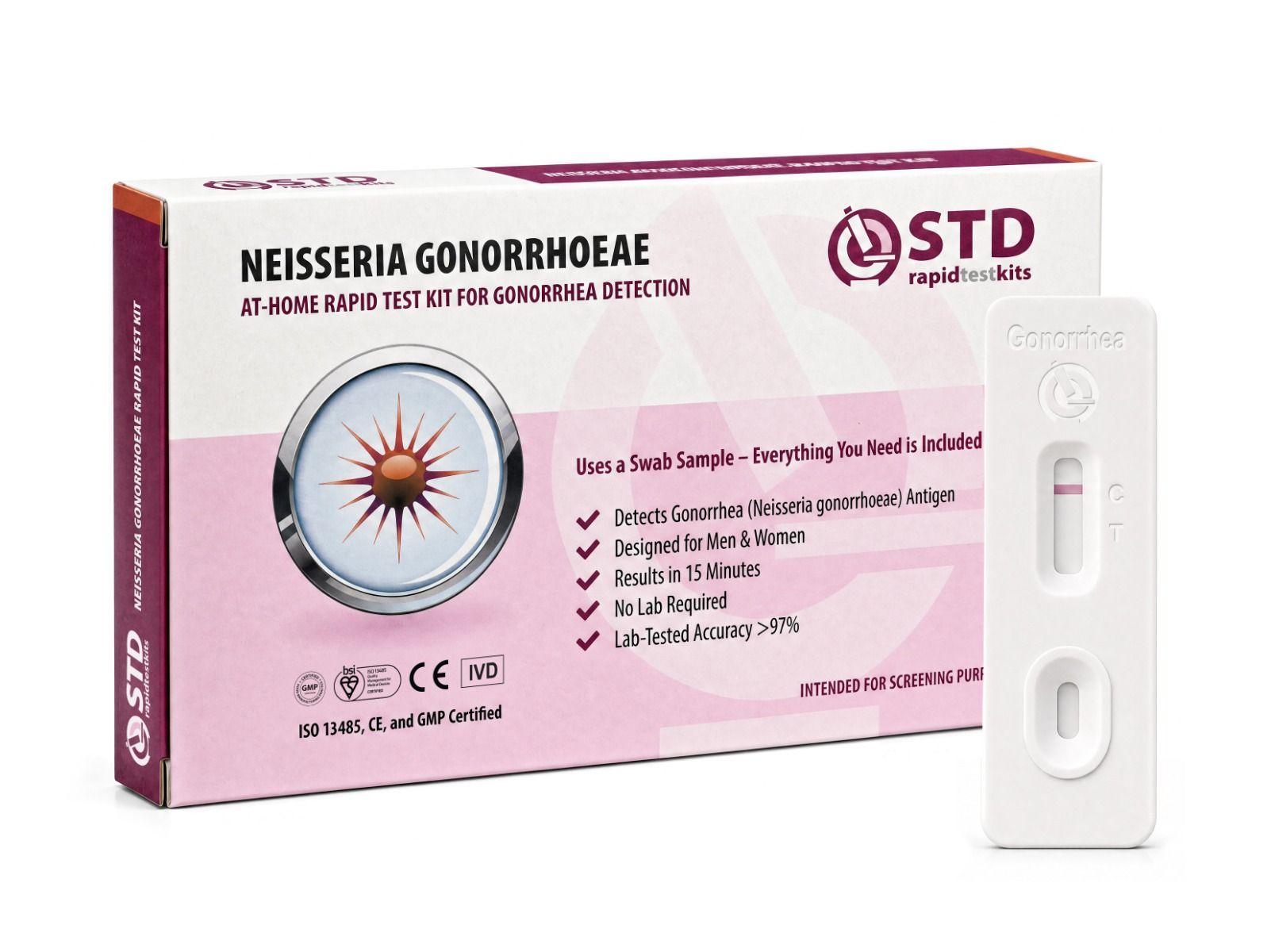
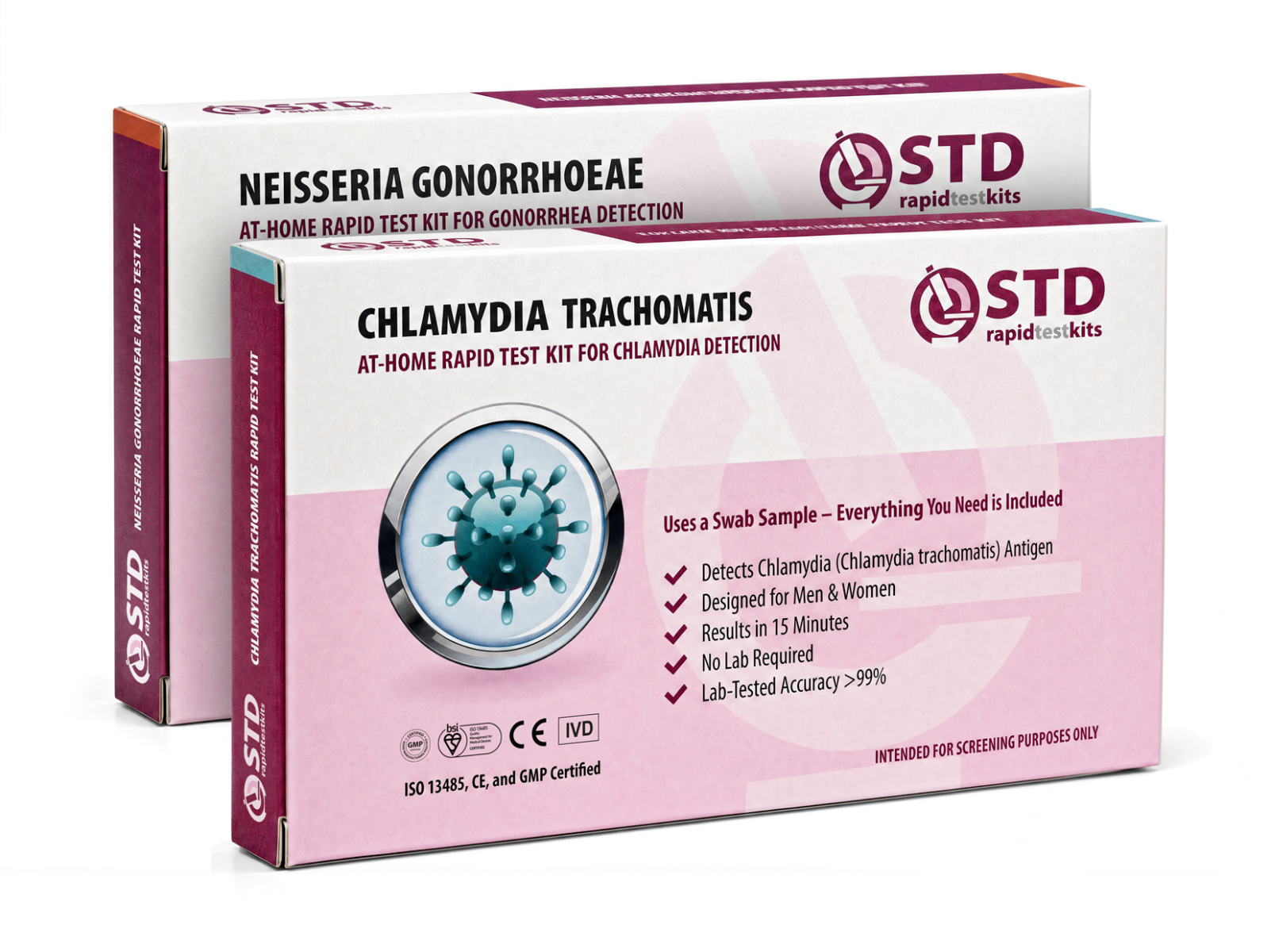
Honest scope on what we sell: our home gonorrhea kit covers genital exposure (self-collected vaginal or penile swab). We don't sell a home throat-swab or rectal-swab kit. If your exposure was oral or anal, the right test is a clinician-collected swab at a clinic or sexual-health service. We're flagging that here so you don't read this article, buy our kit, and miss the actual exposure route.
| Exposure Type | Sample Site Needed | Best Testing Window | Where to Test |
|---|---|---|---|
| Vaginal sex | Vaginal swab (self-collected) | Day 7 to 14 | Home rapid kit or clinic NAAT |
| Penile-receptive sex | Penile swab or urine sample | Day 7 to 14 | Home rapid kit (swab) or clinic NAAT (urine) |
| Receptive anal sex | Rectal swab | Day 7 to 14 | Clinic visit (we don't sell a home rectal kit) |
| Oral sex (giving) | Throat swab | Day 7 to 14 | Clinic visit (we don't sell a home throat kit) |
| Shared sex toys | Site of contact | Day 7 to 14 | Match the kit or clinic visit to the contact site |
Retesting: After Early Test, After Treatment, After New Exposure
Retesting isn't paranoia, it's how the timing math works. There are three distinct scenarios where a second test is the right move.
Scenario 1: You tested before day 7 and got a negative. The first test was a snapshot of "is there enough bacteria yet to find?" and the answer was no. Retest at day 14 to see whether the answer changed. If the second test is also negative and you have no symptoms, you can reasonably consider the exposure unlikely to have caused infection.
Scenario 2: You completed treatment for a confirmed gonorrhea infection. The CDC recommends a test of cure 7 to 14 days after treatment for pharyngeal gonorrhea, and a retest at 3 months for any treated gonorrhea infection because reinfection from an untreated partner is common (CDC STI Treatment Guidelines). NAAT testing too soon after treatment can pick up dead bacterial DNA and produce a false positive, which is why the 7- to 14-day gap matters.
Scenario 3: New partner or new exposure. Each new exposure resets the clock. A clean test from last month doesn't cover what happened last weekend. Wait 7 to 14 days from the most recent unprotected encounter, then test.
| Scenario | When to Retest | Why |
|---|---|---|
| Tested before day 7, got negative | At day 14 after the original exposure | Initial test may have missed a low bacterial load that has since multiplied to detectable levels. |
| Completed antibiotic treatment | 7 to 14 days post-treatment for test of cure; 3 months for reinfection check | Earlier retesting can pick up residual bacterial DNA. The 3-month retest catches reinfection from an untreated partner. |
| New unprotected partner or exposure | 7 to 14 days after the most recent encounter | Each exposure has its own window. Previous negative tests cover only earlier exposures. |
| Ongoing risk, multiple partners | Every 3 to 6 months at minimum | CDC routine screening recommendation for sexually active adults at higher risk. |
Most people with gonorrhea have no symptoms. Even when symptoms develop, they may be mild and confused with a bladder or vaginal infection.
If Your Test Comes Back Positive
Take a breath. A gonorrhea diagnosis isn't a moral failure or a lasting condition. It's a bacterial infection that responds to a single course of antibiotics in the great majority of cases.
The CDC's current first-line treatment is a single intramuscular injection of ceftriaxone 500 mg for adults under 150 kg, with a 1 g dose for those over 150 kg. Pharyngeal infections take longer to clear and require the same regimen plus a test of cure 7 to 14 days later (CDC STI Treatment Guidelines). If you tested at home with a positive result, the next step is contacting a clinician or telehealth provider to confirm the result with a NAAT and arrange treatment. Many sexual-health services will treat presumptively if your symptoms or partner status are consistent with gonorrhea.
After treatment, abstain from sex for 7 days, and wait until your partner has also been treated, to avoid the ping-pong reinfection pattern. The CDC recommends notifying every sexual partner from the past 60 days so they can test and treat as well. Anonymous partner-notification services exist for this exact purpose if a direct conversation feels too heavy.
Untreated gonorrhea isn't worth ignoring. It can progress to pelvic inflammatory disease and tubal infertility in women, epididymitis in men, and disseminated gonococcal infection (joint, skin, bloodstream). It also increases susceptibility to HIV transmission. The treatable window is wide; the consequences of leaving it alone are not.
Post-treatment checklist
- Take the full antibiotic course as prescribed (typically a single ceftriaxone injection).
- Abstain from sex for 7 days after treatment, and until your partner has also been treated.
- Notify every sexual partner from the past 60 days so they can test and treat.
- Retest at 3 months to catch possible reinfection from an untreated partner.
- For pharyngeal gonorrhea, plan a test of cure 7 to 14 days after treatment.
Privacy and Discreet Testing at Home
The reason home testing exists isn't just convenience. It's that real life rarely has a clean slot for a clinic visit. Late-night anxiety after a hookup, rural distance, no insurance, a partner you live with who can't see what's in the mail. Home rapid kits answer those constraints.
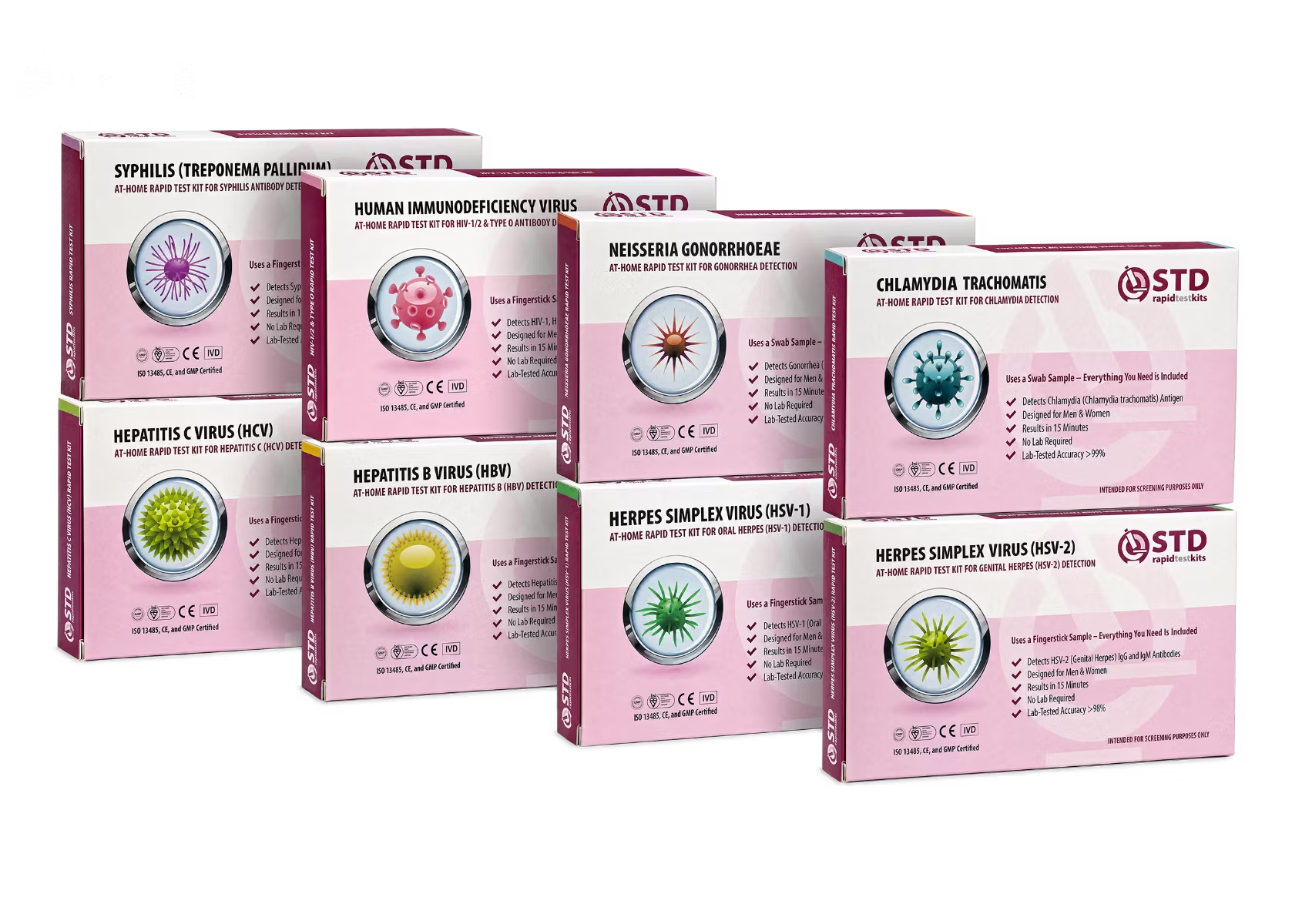
Kits ship in plain unmarked packaging with vague billing descriptors. Results don't go to insurance, your provider, or any external system unless you choose to share them. The collection is a swab you handle yourself, with instructions in the box.
What home testing isn't designed for: replacing the clinic visit you need. If you have severe symptoms, a partner with a confirmed positive, an exposure route we don't cover (throat or rectal), or a positive home result that needs confirmation before treatment, the clinic is still the right tool. If you fall into one of those categories (symptoms, confirmed-positive partner, non-genital exposure), the clinic visit is the right next step, not another home kit.
Plain unmarked packaging: No logos, no health-related labels on the outside of the box.
No insurance or provider reporting: Results stay with you unless you choose to share them.
Self-collection: A swab you take yourself, on your own timing, with instructions in the box.
When the clinic is still the better tool: Severe symptoms, partner with a confirmed positive, throat or rectal exposure, or a positive home result that needs confirmation before treatment.
Frequently Asked Questions
- Can you really test too early for gonorrhea?
- A negative result before day 7 tells you nothing useful. It only means the test found nothing yet, not that you are uninfected. For home rapid tests, day 10 onward is the more reliable threshold. Retest at day 14 if you tested earlier, and don't treat the early negative as a clean bill of health.
- I tested 3 days after sex and got a negative. Am I in the clear?
- Not necessarily. Day 3 is well inside the early window where false negatives are common. If you have no symptoms and the encounter was a known low-risk situation, the negative is reassuring but not conclusive. Plan a retest at day 14, especially if symptoms appear or you learn your partner's status changed.
- Can I have gonorrhea without any symptoms at all?
- Yes, and it's common. The CDC reports most women with gonorrhea have no symptoms, and many men also carry the infection without recognizing it. Pharyngeal (throat) and rectal infections are usually silent. This is exactly why testing based on the date of exposure rather than how you feel is the more reliable approach.
- I only had oral sex. Do I still need a test?
- If your throat had contact, yes, and the test should be a throat swab. Pharyngeal gonorrhea is mostly asymptomatic but transmissible. Our home kit doesn't cover throat swabs. For an oral-route exposure, see a clinic or sexual-health service that does pharyngeal NAAT.
- How long after treatment should I retest?
- For genital gonorrhea, the CDC recommends a retest at 3 months to catch possible reinfection from an untreated partner. For pharyngeal gonorrhea, a test of cure 7 to 14 days after treatment is recommended. Testing earlier than 7 to 14 days post-treatment can return a false positive on NAAT because the chemistry can amplify residual bacterial DNA from already-killed bacteria.
- Are at-home rapid tests as accurate as the clinic test?
- Not exactly. Home rapid tests use lateral-flow chemistry, which is meaningfully different from laboratory NAAT. NAAT amplifies bacterial DNA and is the CDC's diagnostic standard. Home rapid tests are useful for screening and have decent sensitivity when used inside the right window, but a positive home result is worth confirming with a lab NAAT before treatment, and a negative home result during the early window doesn't rule out infection.
- Can I get gonorrhea again after I've been treated?
- Yes. Gonorrhea infection doesn't produce lasting immunity. Reinfection from an untreated partner is the most common reason for a second positive shortly after treatment, which is why the CDC recommends a 3-month follow-up test. Use protection for 7 days after treatment and until your partner has also been treated.
- How do I tell my partner I tested positive?
- Direct works: tell them you tested positive for gonorrhea and they should test too. The CDC recommends notifying every sexual partner from the past 60 days. If a direct conversation feels too hard, anonymous partner-notification services exist (your local sexual-health clinic or sites like Tell Your Partner) that send the message without identifying you.
- U.S. Centers for Disease Control and Prevention. Gonorrhea fact sheet covering symptoms, transmission, and asymptomatic-carrier statistics.
- U.S. Centers for Disease Control and Prevention. STI Treatment Guidelines for gonococcal infections, including current first-line ceftriaxone regimen, NAAT recommendation, and retesting schedule.
- World Health Organization. Gonorrhoea (Neisseria gonorrhoeae infection) fact sheet on global epidemiology, transmission routes, and screening recommendations.
- NHS. Gonorrhoea condition page on UK clinical practice for diagnosis, symptom-onset timing of around 2 weeks, testing windows, and treatment.
- MedlinePlus. Gonorrhea Test page on testing methods, sample types, and the principle that testing too soon after exposure can miss the infection.
