Published: December 2025 | Last updated: May 2026 | Editorial review and quality control: Martina N.
For decades, HPV testing guidance has revolved around the cervix. Pap smears, HPV co-tests, and screening schedules were all built for one specific anatomy. That worked well for the people the guidance was designed for. It left a lot of others wondering whether the same advice applies to them.
If you've had a hysterectomy, transitioned, or were born without a cervix, you've probably heard some version of “you don't need to worry about HPV anymore.” That answer is too clean. HPV is a skin-to-skin virus that can affect the throat, anus, penis, vulva, and post-surgical tissues. The cervix is one site among many. Testing decisions for people without one are more nuanced than a single sentence, and this guide walks through what actually matters, what's available, and where the honest gaps still are.
Key Takeaways
- HPV can still affect the throat, anus, penis, vulva, and post-surgical tissue even when there's no cervix. Skin-to-skin contact drives transmission, not cervical anatomy.
- Your screening plan should follow your anatomy and risk profile (history of HPV, gender-affirming surgery, HIV status, sexual practices) rather than a default schedule built around cervical screening.
Why “No Cervix” Doesn't Equal “No Risk”
HPV awareness has been tied so tightly to cervical cancer screening that many people assume the two are the same conversation. They're related, but equating them is a mistake. HPV is a virus that infects skin and mucous membranes in the genital, anal, and oral regions. The cervix is the most studied site because Pap smears made it easy to track cellular changes there. That history shaped the public message, and the message has lagged behind the science.
Three groups regularly fall through the gap: people who've had a hysterectomy (partial or total), people born without a cervix due to congenital differences, and people who've had gender-affirming surgery that reconstructed or removed parts of their genital anatomy. Each group can still be exposed to HPV, can still harbor the virus in tissue that wasn't removed, and can still pass it on to partners.
The phrase “you don't need to think about HPV anymore” usually comes from providers trained on cervical-screening guidance. The message echoes outdated thinking more than malice. The CDC notes that HPV causes cancers of the cervix, vagina, vulva, anus, penis, and oropharynx. None of those other sites vanish after a hysterectomy, and none of them are routinely screened with a single test.
Per the CDC, HPV causes cancers of the cervix, vagina, vulva, anus, penis, and oropharynx. A hysterectomy removes one of those target sites; it does not remove the others. Screening decisions for non-cervical sites depend on anatomy, history, and sexual practices, not just on whether a cervix is present.
Where HPV Actually Lives in the Body
Consider Luca, a 35-year-old gay man whose partner recently tested positive for high-risk HPV. His first thought is “I don't have a cervix.” He's right about his anatomy. He also has skin and mucosa that the same virus can infect. His doctor suggests anal screening, and that suggestion is reasonable. Anal HPV is common, particularly among men who have sex with men, trans women, and people living with HIV. In high-risk groups, anal HPV rates can match or exceed cervical HPV rates in cisgender women.
HPV also affects the throat. Oropharyngeal infection happens through oral sex with an infected partner. The infection can sit silently for years and then, in a small subset of people, drive cancers of the tonsils, base of the tongue, or back of the throat. According to the National Cancer Institute, about 70% of oropharyngeal cancers in the United States are caused by HPV, and incidence of HPV-positive throat cancers has risen substantially in recent decades, especially in men.
Then there's the penis and scrotum, the vulva, the perianal skin, and post-surgical tissues. Each of these can be infected by HPV through skin contact. Condoms reduce transmission, though they don't eliminate it, because the virus lives on areas a condom doesn't cover. The cervix is one stop on a longer map of where HPV can take hold.
What Changes After a Hysterectomy
“You've had a hysterectomy, you're all set.” That sentence is partially true. The accurate part: routine cervical screening usually stops after a total hysterectomy done for benign reasons, when your prior Pap history was clean. The part that gets dropped: hysterectomy types vary, and so do the recommendations.
A total hysterectomy removes the uterus and cervix. A partial (or supracervical) hysterectomy removes the uterus but leaves the cervix in place. That distinction matters. If your cervix is still there, you still need cervical screening on the same schedule as anyone else with a cervix. If your cervix was removed, you may still need vaginal vault screening when the surgery was done for cervical cancer or high-grade cervical dysplasia, because residual virus can drive changes in the upper vagina.
The American College of Obstetricians and Gynecologists and the U.S. Preventive Services Task Force both support stopping routine cervical screening after total hysterectomy for benign indications when prior screening was unremarkable. They do not support stopping screening when the surgery was for HPV-related disease. Past HPV exposure remains clinically relevant even after the original target tissue is gone.
The table below outlines what screening typically looks like by surgical history.
| Surgical history | HPV screening still recommended? | Why |
|---|---|---|
| Total hysterectomy for benign reasons, clean prior Paps | Usually not | Risk drops substantially when prior cervical screening was unremarkable and surgery wasn't for HPV-related disease |
| Hysterectomy due to cervical dysplasia or cervical cancer | Yes | Vaginal vault screening continues for years afterward to monitor for recurrence or residual high-risk HPV |
| Partial (supracervical) hysterectomy, cervix retained | Yes | Cervix is still in place and remains a screening target on standard intervals |
| Post-op after gender-affirming vaginoplasty | Shared decision-making | Limited data; tissue type (penile skin, sigmoid, peritoneal) and individual risk factors shape the plan |
HPV After Gender-Affirming Surgery
Morgan, a 28-year-old trans woman, had a vaginoplasty using penile inversion two years ago. She's sexually active, HPV-vaccinated, and unsure whether she needs screening. Her doctor said “you probably don't need anything.” That word “probably” is where a lot of trans and nonbinary people end up, in the gap between thin research data and clinicians who weren't trained on this in medical school.
Here's what is known. The tissue used in vaginoplasty matters. Penile inversion uses skin from the penis and scrotum. Sigmoid colon vaginoplasty uses colon tissue. Peritoneal vaginoplasty uses peritoneum from the abdominal cavity. Different tissues have different responses to HPV. Skin-based neovaginas can still harbor the virus on the keratinized surface. Colon-tissue neovaginas have produced rare case reports of HPV-related dysplasia. Cancer risk appears lower than in the native cervix, though it isn't zero, and the data set is still small.
Many experts now recommend shared decision-making rather than a blanket yes or no. If you're sexually active, have a partner with known HPV, have a personal history of HPV, or live with HIV, screening of the neovaginal canal or external genitalia may be reasonable, especially if any unusual lesion or persistent symptom appears. If your provider isn't sure how to evaluate this, ask for a referral to a clinic with experience in transgender sexual health rather than skipping screening because nobody offered it.
Penile-inversion neovaginas are lined with keratinized skin; sigmoid neovaginas use colon mucosa; peritoneal neovaginas use peritoneum. HPV behavior differs across these tissue types, and the published data are still thin. The current clinical standard is shared decision-making with a provider experienced in transgender care, weighing your sexual history, HIV status, and any local symptoms rather than defaulting to a single screening schedule.
Oral and Anal HPV: The Screening Blind Spot
Jared was in his late 40s when he developed a persistent sore throat. No fever, no runny nose, just a lump near one tonsil and a creeping sense that something was off. Biopsy showed HPV-positive oropharyngeal cancer. He'd never been screened, never been warned, and didn't connect the dots between oral sex history and head-and-neck cancer.
Stories like his are increasingly common. Per the CDC, oropharyngeal cancers (cancers of the tonsils, base of tongue, and soft palate) are increasingly HPV-driven, with the majority of new cases in the United States linked to HPV. Most occur in men. Most are diagnosed only when the cancer has already become a noticeable lump or persistent symptom, because routine oral HPV screening doesn't exist for the general population. There is no equivalent of the cervical Pap for the throat.
Anal HPV follows a similar pattern. It is more common than most people realize, particularly among people who have receptive anal sex regardless of gender. People living with HIV face especially high risk. Anal Pap tests and high-resolution anoscopy (a magnified clinician-performed inspection of the anal canal) exist and are used in some specialty clinics, particularly for HIV-positive patients and men who have sex with men, but they aren't part of routine primary care for most people.
The result is a screening blind spot. Two of the body sites where HPV can do real long-term harm have no broad public screening program. For trans, queer, and post-surgical patients, the gap is especially visible, because providers often don't think to offer site-specific screening even when the risk profile would justify it.
HPV is the most common sexually transmitted infection in the United States. Most sexually active people will get HPV at some time in their lives, though most never know it.
Testing Options by Body Site
What's actually available depends on the site and the setting. Cervical screening is the most established, with Pap tests, HPV DNA tests, and (in 2024 the FDA approved) self-collected vaginal swabs done in a clinical setting. For the cervix, options are wide.
After a hysterectomy, vaginal vault screening is available when your history calls for it. For trans women with a neovagina, screening protocols are still evolving and depend on tissue type, surgical method, and individual risk factors.
Outside the cervix and vagina, options narrow. Anal HPV screening, where it exists, usually means an anal Pap done by a clinician, sometimes followed by high-resolution anoscopy if abnormal cells are found. Some LGBTQ-focused sexual health clinics and HIV-treatment centers offer this routinely. Most primary care offices don't.
Throat HPV screening is even less standardized. No clinical equivalent of the Pap smear exists for the back of the throat. A clinician may visually inspect, palpate the neck for lymphadenopathy, and biopsy anything suspicious. Population-level oral HPV screening isn't recommended because the predictive value is too low for routine use, though a careful exam matters when persistent symptoms show up.
Penile and scrotal HPV is mostly diagnosed visually. Genital warts are usually clinically obvious. Subclinical infections often go undetected unless they become visible or cause changes the patient or partner notices.
| Body site | HPV screening available? | Method | At-home option? |
|---|---|---|---|
| Cervix | Yes (well-established) | Pap test, HPV DNA test, clinician-collected or self-collected vaginal swab | FDA-cleared self-collection kits available |
| Vaginal vault (post-hysterectomy) | Yes when history justifies it | Vault smear or HPV swab in a clinic | No |
| Neovagina (post-vaginoplasty) | Shared decision-making | Clinician examination and site-appropriate sampling | No |
| Anus | Yes (specialty clinics) | Anal Pap, high-resolution anoscopy | Not currently FDA-cleared for home use |
| Oropharynx (throat) | Rare, specialist only | Visual exam, palpation, biopsy of suspicious areas | No |
| Penis and scrotum | Limited, mostly visual | Clinical exam, biopsy of suspicious lesions | No |
What You Can Screen for at Home
At-home HPV testing for sites other than the cervix doesn't yet exist in any FDA-cleared form. Anal and oral self-collection are being studied, with promising early results, though home use for those sites isn't approved yet. For now, anything beyond cervical or vaginal self-collection means a clinic visit.
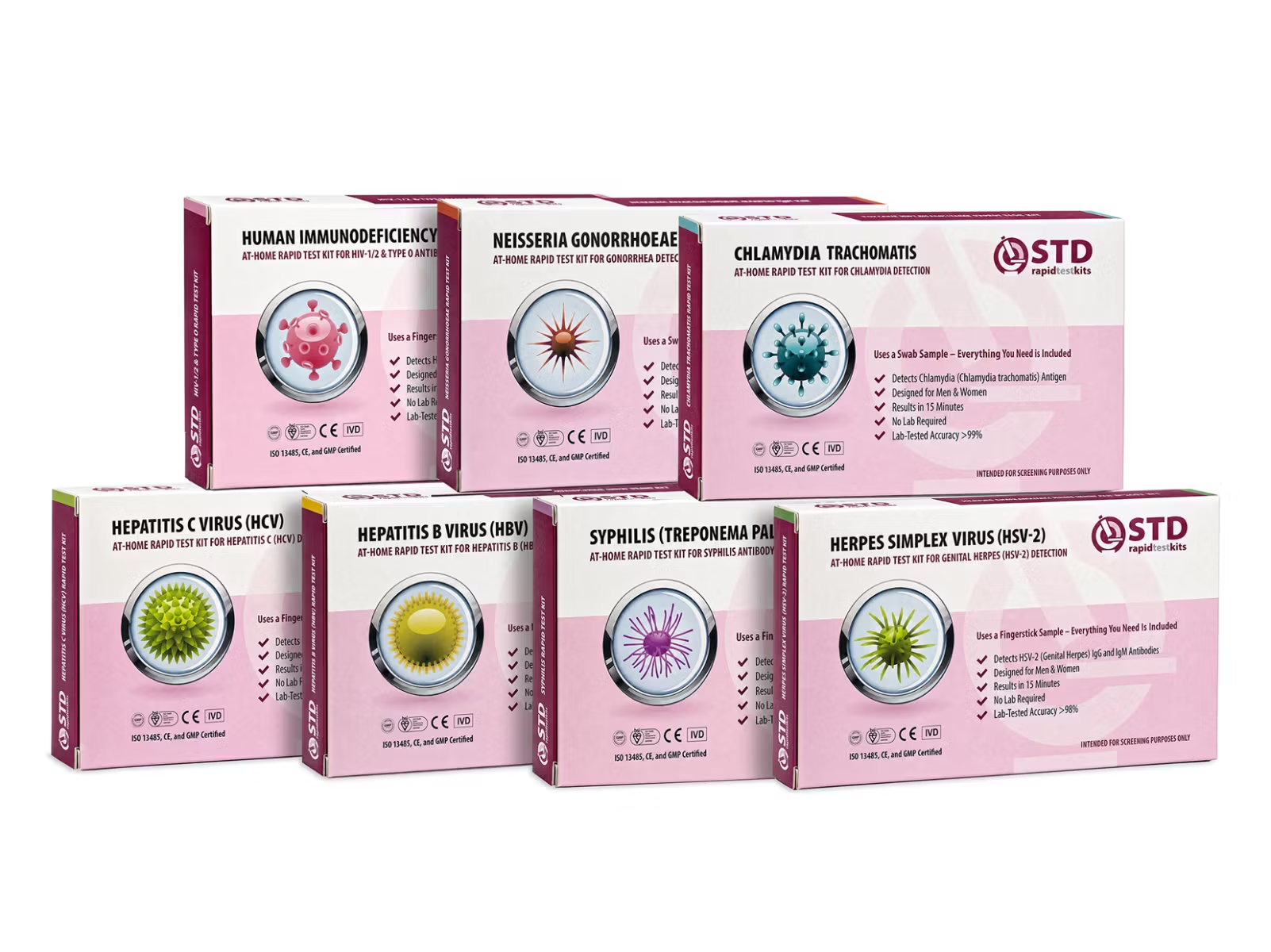
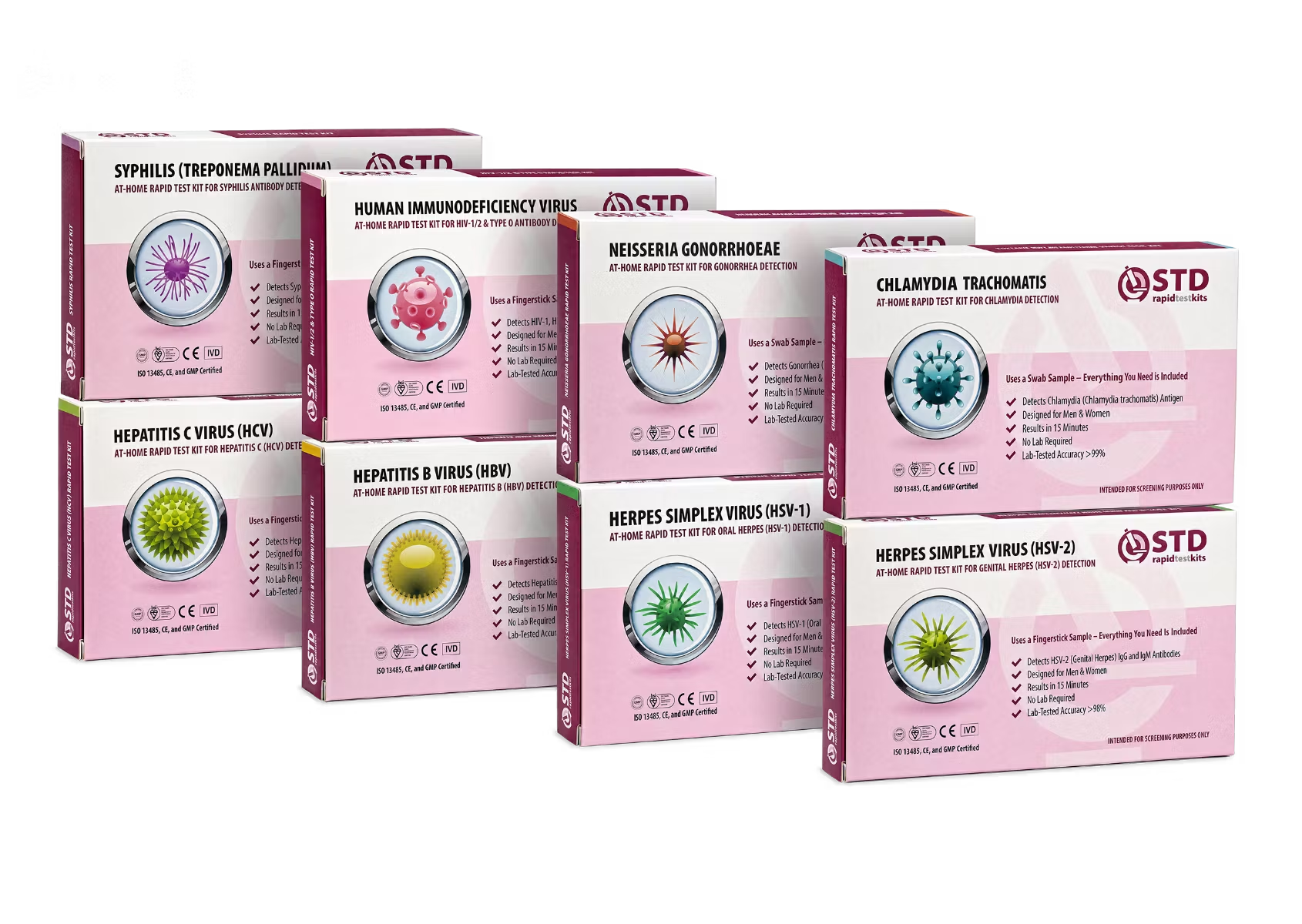
That doesn't make at-home STI testing useless for this audience. HPV often travels alongside other infections, and your risk profile for HPV typically overlaps with risk for HIV, syphilis, hepatitis B, hepatitis C, chlamydia, and gonorrhea. Screening for those at home is straightforward, takes about 15 minutes, and gives you actionable information you can take to a clinic if anything is positive.
A note on scope. Our at-home HPV test is a vaginal self-swab validated for women with a cervix. We don't sell an at-home oral or anal HPV test, because no kit is currently approved for those uses. For HPV outside the cervix, the right next step is a clinic that offers site-specific screening. The kit below covers the adjacent STI screening you can do at home in the meantime.
If Your Result Comes Back Positive
Alana, age 44, had a full hysterectomy eight years ago. She'd been told she “didn't need to worry about HPV anymore.” Then a routine vaginal vault swab came back positive for high-risk HPV. Her first reaction was shock, then frustration at the message she'd been given.
If you've tested positive for HPV at any site, the first thing to absorb: a positive HPV result is not a cancer diagnosis. HPV is the most common sexually transmitted infection in the world. Most sexually active adults will encounter at least one strain. Most infections clear on their own within roughly two years, especially in people with otherwise healthy immune systems.
Next steps depend on where the virus was found. A positive anal swab usually leads to high-resolution anoscopy for closer inspection. A positive vaginal vault smear after hysterectomy typically leads to continued monitoring on a schedule your provider sets. A visible genital wart can be treated topically or removed if you want, or watched if it's not causing problems. A suspicious finding in the throat means referral to an ear, nose, and throat specialist. Each path is well-defined once you find a provider with experience in your anatomy.
A positive result also doesn't reliably tell you who you contracted HPV from. The virus can sit dormant for years. Trying to trace the source is usually impossible and almost always unproductive. Focus instead on follow-up, treatment if indicated, and informed decisions going forward.

The HPV Vaccine Is Still Worth It
Gardasil 9 is the current HPV vaccine used in the United States. It protects against nine strains of HPV, including the strains most commonly linked to cervical, anal, penile, vaginal, vulvar, and oropharyngeal cancers. Protection is strongest when given before any HPV exposure (which is why routine vaccination is recommended starting around age 11 or 12), and the vaccine remains useful well into adulthood.
The CDC's Advisory Committee on Immunization Practices recommends routine HPV vaccination through age 26. For adults age 27 through 45, ACIP supports shared clinical decision-making: not a blanket recommendation, but a conversation about your individual exposure history and likely future exposures. Many adults in that age band still benefit, especially those who've had limited prior HPV exposure or who anticipate new partners.
Vaccination after a hysterectomy still makes sense in many cases. The vaccine doesn't treat existing infection. It does prevent future infection by strains you haven't already encountered. The same logic applies after a previous HPV diagnosis: you may have been exposed to one or two strains, and the vaccine covers seven more. If you're sexually active or expect to be, the math usually favors getting vaccinated.
For trans and nonbinary people, the vaccine is recommended on the same age-based schedule. The strains it covers cause the same cancers regardless of how your anatomy is configured. If a provider has been unwilling to vaccinate you because they didn't “see the point,” that's a provider knowledge gap, not a medical contraindication.
Routine HPV vaccination is recommended through age 26. For adults age 27 through 45, ACIP supports shared clinical decision-making, weighing your exposure history and likely future exposures rather than offering or declining the vaccine by default. The vaccine prevents future infection by strains you haven't yet encountered; it does not treat existing HPV.
Talking With Partners
Disclosure of an HPV history serves a practical purpose: giving partners context they can use to make informed decisions about their own care. It doesn't have to be a confession, and it doesn't have to be exhaustive.
You don't owe a partner your full medical history. You also don't need to carry the information silently if disclosing would actually be useful. Aim for enough honest information to support shared decisions, without making it a clinical recital.
On the receiving end of the conversation, the right response is calm interest rather than panic. HPV is so common that stigmatizing someone for having had it would mean stigmatizing most sexually active adults. What matters is what happens next: vaccination if you haven't been, screening at appropriate sites if your risk profile calls for it, and ongoing communication about new exposures.
- “I tested positive for HPV at some point. My provider and I are monitoring it.”
- “I've had HPV before, and even though my treatment site is gone, I want us both to stay smart about screening.”
- “I don't have a cervix anymore, though HPV can affect other tissues too, so I'm mentioning it in case you want to think about your own testing.”
Putting It All Together
If you don't have a cervix, you aren't exempt from HPV. You're in a category that mainstream guidance hasn't fully caught up with. The right testing plan depends on your anatomy, your sexual history, your past HPV exposures, and which body sites are in scope based on your behavior and risk factors.
A short checklist. If your cervix is still there, keep up with cervical screening on the standard schedule. If you've had a hysterectomy for cervical disease, ask your provider about vaginal vault screening. If you've had gender-affirming surgery, find a clinic with experience in that care and ask about site-appropriate screening. If you're at higher risk for anal or oral HPV (HIV-positive, MSM, history of receptive anal sex, multiple partners), ask specifically about anal Pap and what oral screening looks like in your area. And if you haven't been vaccinated and are under 45, ask about that conversation.
What you can do at home today is screen for the adjacent STIs that often track with HPV risk. The kit below covers eight common infections in one panel and is validated for use by men and women.
Frequently Asked Questions
- Can you still get HPV if you've had a hysterectomy?
- Yes. HPV can infect skin and mucosa throughout the genital, anal, and oral regions. Even after the uterus and cervix are removed, the vaginal walls, vulva, anus, and oropharynx can still be exposed. The risk picture is most relevant when the hysterectomy was done for cervical dysplasia or cancer, or when you have ongoing exposure through new sexual partners.
- I don't have a cervix. Do I still need any HPV testing?
- It depends on your history and your sexual practices. If your hysterectomy was for benign reasons and your prior screening was clean, routine cervical screening usually stops. If the surgery was for HPV-related disease, vaginal vault screening typically continues. If you have receptive anal sex, are HIV-positive, or have other risk factors, ask your clinician about anal screening even though it isn't part of routine primary care.
- Can trans women get HPV after vaginoplasty?
- Yes. HPV can infect the skin and mucosa of neovaginal tissue, particularly when the surgery used penile or scrotal skin. External genital skin, the urethra, and the anal area also remain potential sites. Cancer risk in neovaginas appears lower than in the native cervix, though data are limited, and shared decision-making with a provider experienced in transgender care is the current standard.
- Is there an at-home HPV test for people without a cervix?
- Not currently. FDA-cleared at-home HPV self-collection kits are validated for vaginal samples in women with a cervix. Anal and oral HPV self-collection are being studied, though no home test for those sites is approved yet. For HPV testing outside the cervix, a clinic visit is still required.
- Can I transmit HPV without symptoms?
- Yes. Most HPV infections are asymptomatic. The virus can live on skin or in mucosa without causing warts, pain, or any visible change, and it can still be transmitted to partners during oral, anal, or genital contact. Asymptomatic transmission is one reason HPV is so widespread, and the same logic explains why vaccination remains useful even after years of sexual activity.
- I'm over 30 and already had HPV. Is the vaccine still worth it?
- Often yes, if you're under 45. The vaccine doesn't treat an existing infection, though it can protect you from the other strains it covers. The CDC's ACIP supports shared clinical decision-making for adults age 27 to 45. People with limited prior exposure or anticipated new partners tend to benefit most.
- Can HPV cause cancer at sites other than the cervix?
- Yes. HPV is linked to cancers of the vagina, vulva, anus, penis, and oropharynx in addition to the cervix. Each of those sites can develop HPV-related changes independent of cervical anatomy. Screening for non-cervical sites is less standardized, which is one reason rates of HPV-related throat and anal cancers have been hard to reduce as quickly as cervical cancer rates.
- I'm HIV-positive. Is HPV more serious for me?
- Yes. People living with HIV are more likely to have persistent HPV infections and higher rates of HPV-related anal dysplasia and cancer. Anal screening is part of routine care in many HIV clinics for this reason. If your HIV provider hasn't brought it up, you can ask about anal Pap testing and high-resolution anoscopy referral.
How we sourced this article: We combined current guidance from the U.S. Centers for Disease Control and Prevention, the World Health Organization, the National Cancer Institute, and Mayo Clinic with consensus recommendations from the American College of Obstetricians and Gynecologists and the U.S. Preventive Services Task Force. Where data on neovaginal HPV remain limited, we describe the current state of evidence rather than overstating it. We do not provide individual medical advice. For screening decisions specific to your anatomy, history, and risk profile, see a clinician experienced with your care.
- U.S. Centers for Disease Control and Prevention. Human Papillomavirus (HPV): basics, transmission, prevention, and screening overview.
- U.S. Centers for Disease Control and Prevention. HPV and cancer: cancer sites caused by HPV, including oropharyngeal, anal, and genital cancers.
- World Health Organization. Human papillomavirus and cancer fact sheet, including global burden across cervical and non-cervical sites.
- National Cancer Institute. HPV and cancer overview, including the 70% figure for HPV-caused oropharyngeal cancers and data on anal, penile, vaginal, and vulvar cancers.
- Mayo Clinic. HPV infection: symptoms and causes, including transmission routes and clinical course.
- U.S. Centers for Disease Control and Prevention. HPV vaccination: ACIP recommendations for routine vaccination through age 26 and shared clinical decision-making for ages 27 to 45.
