Published: August 2025 | Last updated: May 2026 | Editorial review and quality control: Martina N.
HPV gets framed as a women's health issue because cervical cancer screening leans on it, and the framing has stuck for decades. The virus does not care about that framing. Most sexually active men encounter at least one HPV strain in their lifetime, and the CDC has stated repeatedly that HPV is so common that nearly all sexually active people get it at some point. Most clear it on their own and never know. A smaller group does not, and that group is where the throat, anal, and penile cancers tied to HPV come from years later.
This guide covers what HPV does in male bodies: which strains matter, how it spreads, why there is no routine screening test for men, what the vaccine still does for adults past their teens, and the practical action plan for protecting yourself and your partners. This site sells at-home rapid STI tests; where our products fit a reader's situation we say so, and where they do not we say that too. The reassuring fact comes first, since most HPV in men resolves without any clinical fuss. The realistic fact comes second, since the persistent infections deserve a plan, and prevention is the only lever you fully control.
Key Takeaways
- About 70% of oropharyngeal (throat and tonsil) cancers and over 90% of anal cancers in the United States are caused by HPV, with type 16 the dominant driver in both, per CDC and NCI surveillance.
- Gardasil 9 is FDA-approved through age 45. The CDC routinely recommends it through age 26 and supports shared clinical decision-making for adults aged 27 to 45.
Why HPV Got Framed as a Women's Health Issue
For decades, public-health campaigns built HPV awareness around cervical cancer screening, and that focus saved lives. The unintended side effect was that men learned to think of HPV as something happening to someone else. Most adult men in the United States grew up before the HPV vaccine was added to the routine immunization schedule for boys (added in 2011), and many were never told the virus was relevant to their own cancer risk at all.
The biology does not match the framing. According to the CDC, HPV is a family of more than two hundred related viruses that move through skin-to-skin and mucous-membrane contact. If you have had sex (oral, anal, vaginal, or even genital touching without penetration) you have probably encountered at least one HPV strain. Men are not bystanders, they are roughly half of the carrier population at any given time. The American Cancer Society reports that oropharyngeal cancer incidence has been rising about 1% per year since the mid-2000s, primarily because of HPV, and that these cancers are now more than twice as common in men as in women.
Three things make male HPV easy to overlook. First, most infections are silent. High-risk strains do not produce burning, itching, discharge, or pain. They sit quietly in the throat, the anal canal, or on penile skin while the immune system tries to clear them. Second, there is no routine screening test for men the way a Pap smear catches cervical changes early. Third, HPV-related cancers in men typically take ten to twenty years to develop after exposure, so the link between the original encounter and the eventual diagnosis is invisible to the person living it.
That gap is what this article addresses. The point is to close the information gap that left a generation of men without a plan, no alarm intended. Vaccination is more useful than most adult men realize. Barrier use is more partial than most men were taught. HPV-related cancers in men have been rising fast enough that the topic deserves a direct place in male health conversations.
The American Urological Association reports that HPV types 16 and 18 cause roughly 7,000 HPV-associated cancers in U.S. males each year, alongside about 15,000 in females (<a href="https://www.auanet.org/about-us/aua-statements/hpv-vaccination-for-males-and-females" target="_blank" rel="noopener">AUA Statement on HPV Vaccination</a>). The male share is not small, and it is the part of the HPV picture most often left out of public-health messaging. The HPV vaccine was added to the routine U.S. immunization schedule for boys in 2011, which means most adult men today aged out of the standard adolescent system before the change.
Low-Risk vs High-Risk HPV: Which Strains Actually Matter
Of the more than two hundred HPV types identified, only a small subset cause clinical disease in humans, and the meaningful split is between low-risk strains and high-risk strains.
Genital warts are caused by low-risk HPV types 6 and 11. Warts are uncomfortable and stigmatized, they are not cancerous, and they do not turn cancerous over time. Treatments shrink or remove the visible lesion, and the body usually clears the underlying virus on its own. NHS guidance on genital warts covers diagnosis, transmission, and the standard treatment options.
High-risk strains are different territory. Types 16 and 18 are the main cancer drivers, with type 16 alone responsible for the majority of HPV-related throat and anal cancers in men. About 14 HPV types in total are classified as high-risk for cancer, and the modern vaccine covers seven of the most clinically important ones. These strains usually cause no symptoms during the active infection. The risk shows up later, after months or years of persistence, when accumulated cellular changes turn into precancerous tissue and eventually a tumor. The World Health Organization attributes about 76% of cervical cancers globally to HPV-16 and HPV-18 alone, and the same two strains dominate male HPV-related cancers as well.
Carrying multiple HPV types at once is normal. Clearing one strain does not protect you from a different strain. And the immune response to HPV is type-specific, the antibodies your body develops against, say, type 6 do not block type 16. This is why the Gardasil 9 vaccine targets nine of the most clinically relevant strains in a single product, two low-risk plus seven high-risk types layered on top of the original 16 and 18.
Strains covered by Gardasil 9
- Low-risk wart-causing strains: HPV-6 and HPV-11.
- High-risk cancer-driving strains: HPV-16 and HPV-18, plus 31, 33, 45, 52, and 58.
- Nine strains in total, chosen because they account for the majority of HPV-linked genital warts and HPV-attributable cancers in the United States.
How HPV Moves Between Bodies
HPV spreads through direct contact between infected skin or mucous membranes and uninfected ones. That definition does more work than people realize. Penetrative sex transmits the virus, and so does oral sex, anal sex, genital-to-genital rubbing, and in some cases hand-to-genital contact when virus is present and skin breaks are involved. The virus does not need ejaculation or fluid exchange to spread.
For men, the common sites of HPV colonization are the penile shaft, glans, scrotum, perianal skin, anal canal, and the back of the throat or tonsils after oral exposure. Different sex acts seed different sites. Receptive anal sex creates anal-canal exposure. Oral sex creates oropharyngeal exposure. Genital-genital contact creates penile and perianal exposure. None of these are mutually exclusive, and a single sexual encounter can transmit multiple HPV types to multiple sites at once.
Condoms and dental dams reduce HPV transmission, they do not eliminate it. The virus lives on skin beyond the area a condom covers (the base of the penis, the scrotum, the perineum), so contact during sex can still transfer virus even when penetration is fully covered. The CDC and NHS both describe condoms as risk reducers for HPV, useful but partial.
You can also have HPV without ever having had penetrative sex, since the virus transmits through skin contact well beyond penetration. Many men in long-term monogamous relationships pick up HPV from a partner who got it from a partner years before the current relationship started. The virus can lie dormant for months or years before it shows up in any clinical way, so a positive HPV finding in one partner is rarely useful evidence of recent infidelity. Prevention planning also needs to match your sex life, since anal and oral exposures carry different risk profiles than penile-vaginal sex.
Nearly everyone will get HPV at some point in their lives.
HPV-Related Cancers in Men: What the Numbers Look Like
HPV does not cause cancer the day it enters the body. The high-risk strains drive cellular changes only when they persist for years, usually a decade or more. That long lag is the reason many HPV-related cancers in men are diagnosed at later stages, since the original exposure is invisible by the time anything shows up. Three cancer types account for most HPV-related disease in male bodies.
Oropharyngeal cancer (throat, base of tongue, tonsils) is now the fastest-growing HPV-related cancer in men. The CDC and National Cancer Institute describe HPV-16 as the dominant driver, and rates of HPV-positive throat cancer in U.S. men have surpassed cervical cancer rates in U.S. women over the past decade. Warning signs are subtle: a one-sided sore throat that does not resolve, a painless lump in the neck, a tonsil that looks larger on one side, ear pain on one side, or trouble swallowing. Smokers, heavy drinkers, and men over 40 with a history of oral sex are at higher risk.
Anal cancer is rare overall but heavily HPV-linked. Over 90% of cases are tied to high-risk HPV per the NCI. The risk is sharply elevated in men who have sex with men and in men living with HIV. Symptoms include rectal bleeding, persistent anal itching, pain or pressure during bowel movements, or a palpable lump. Anal symptoms are also commonly mistaken for hemorrhoids, which delays diagnosis.
Penile cancer is the rarest of the three but still appears in the at-risk groups above. The NCI reports that about 63% of penile cancers are caused by HPV, with the rest driven by chronic inflammation, smoking, and other factors. Any non-healing lesion, color change, or thickening on the penis or foreskin deserves clinical evaluation, especially in uncircumcised men or men with phimosis (a condition where the foreskin cannot fully retract).
| Cancer type | Share linked to HPV | Higher-risk groups for men |
|---|---|---|
| Oropharyngeal (throat, base of tongue, tonsils) | About 70% of cases in the US, mostly type 16 | Men over 40, history of oral sex with multiple partners, smokers, heavy drinkers |
| Anal cancer | Over 90% of cases linked to HPV per NCI | MSM, men with HIV, men with immunosuppression |
| Penile cancer | About 63% of cases linked to HPV per NCI | Uncircumcised men, men with HIV, chronic inflammation or phimosis |
From Exposure to Cancer: A Long, Quiet Timeline
This is what makes HPV so frustrating. The gap between catching a high-risk strain and noticing anything wrong can be a decade or longer. Most infections never reach that point because the immune system clears them. For the small share that persist, cellular changes happen slowly enough that by the time a tumor forms, the original infection may be undetectable. The timeline below maps the four common stages, what is happening biologically in each, and what action makes sense at that point. For most people, the story ends at stage two; for a small fraction, it continues.
| Stage | Time after infection | What is happening | What to do |
|---|---|---|---|
| Initial exposure | 0 to 6 months | Virus enters mucosal cells; usually no symptoms | Consider HPV vaccine if eligible; note any persistent changes |
| Cleared infection | 6 to 24 months | Immune system clears most strains on its own | Continue routine STI screening; no special action |
| Persistent infection | 2 to 10 years | High-risk strains continue replicating; cellular changes can begin | Watch for symptoms lasting more than 2 weeks; ENT evaluation if throat symptoms persist |
| Invasive cancer | 10 to 30 years | Tumor forms in throat, anus, or penis; spread possible | Diagnosis via biopsy; treatment with surgery, radiation, and/or chemotherapy |
Bumps and Lookalikes: When a Bump Is Probably Not HPV
Not every bump in the genital area is HPV. Several common, harmless skin findings get mistaken for warts, and learning the difference can save weeks of anxiety.
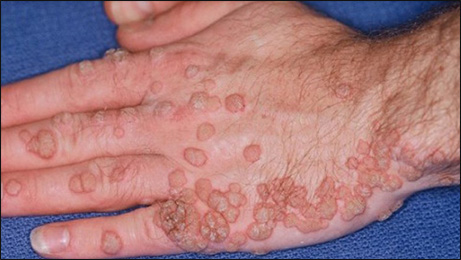
True genital warts from HPV-6 or HPV-11 are usually soft, flesh-colored or slightly gray, often a little rough on the surface, and may cluster or take on a small cauliflower shape. They are typically painless, occasionally itchy, and they can appear weeks to months after the exposure that caused them, or never at all if the immune system suppresses the virus before any lesion forms.
Common lookalikes that are not HPV include:
- Pearly penile papules: small, dome-shaped bumps in a tidy row around the corona of the glans. These are a normal anatomic variant present in about 30% of men, and they are not infectious.
- Fordyce spots: small whitish or yellowish bumps on the shaft or scrotum, also a normal variant, sebaceous glands visible through thin skin.
- Molluscum contagiosum: smooth, dome-shaped, pearly bumps with a tiny central dimple. Caused by a different virus, often spread through close skin contact, usually self-limiting.
- Skin tags from friction or healing: soft, narrow-based growths from repeated rubbing, more common in skin folds.
- Sebaceous cysts and ingrown hairs: round bumps under the skin, often tender, unrelated to HPV.
Visual diagnosis of warts is reliable when done by a clinician familiar with genital skin. The value of an exam is mostly in ruling out the conditions that need a different approach. Treatment for true warts is straightforward (topical creams such as imiquimod or podofilox, cryotherapy, electrocautery, or excision), and clearing the visible lesion does not always mean the underlying virus is gone, since the immune system clears the virus on its own timeline.
Any new genital lesion that is growing, bleeding, painful, or persistent for more than two to three weeks deserves a clinical exam. Most bumps are benign anatomical variants or common skin conditions, and the value of the visit is mostly in ruling out the conditions that need different treatment. The same applies to throat symptoms over two weeks: a one-sided sore throat or neck lump warrants an ENT visit, especially with smoking or heavy drinking history.
The Testing Gap: Why There Is No Routine HPV Test for Men
There is no FDA-approved routine HPV swab or blood test for men, and that is the single most confusing fact about HPV in male bodies. The reason is not a belief that men do not get HPV. It is that the screening tests built around HPV (cervical Pap and HPV co-testing) were validated for cervical tissue, where high-risk strains have a clear, slow-burn precancer pathway and where treating precancer prevents cancer. The CDC's STI Treatment Guidelines state explicitly that HPV tests are only FDA cleared for use with cervical specimens, not oral or anal specimens. The equivalent precancer pathway in male sites is less clear-cut, and the population-level evidence for routine male screening has not yet supported a national program.
What does exist:
- Visual diagnosis of warts. A clinician can identify HPV warts by appearance and may biopsy if the diagnosis is unclear.
- Anal cytology (sometimes called an anal Pap), with high-resolution anoscopy if abnormal. This is offered to higher-risk men, primarily MSM and men with HIV. Coverage and availability vary by region.
- Biopsy of any suspicious lesion. The definitive way to identify HPV-related precancer or cancer in penile, anal, or oropharyngeal tissue.
- Throat exam by an ENT for persistent symptoms. There is no validated population screening test for oropharyngeal HPV, but a clinician can examine the throat and order imaging or biopsy when a lesion is suspected.
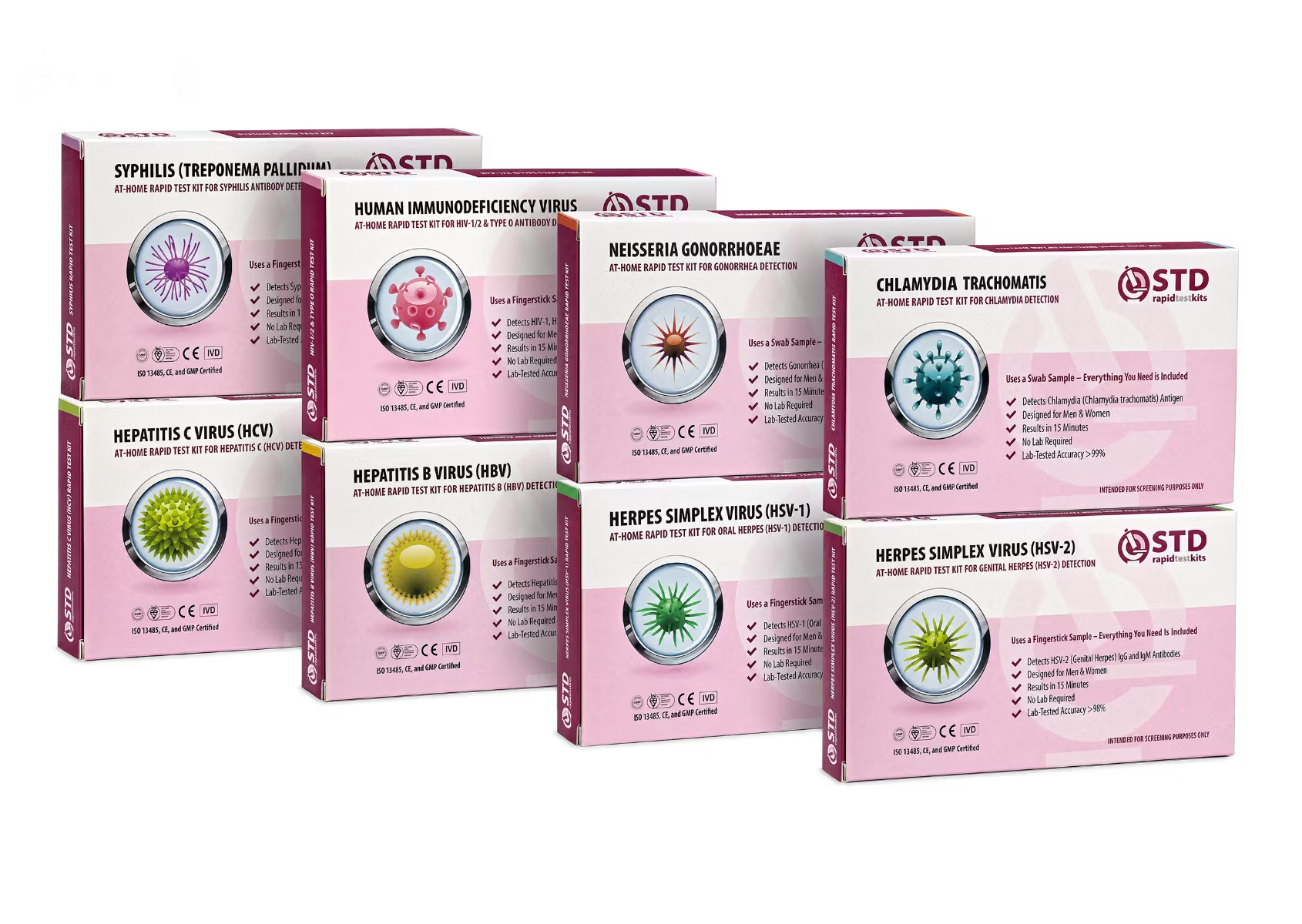
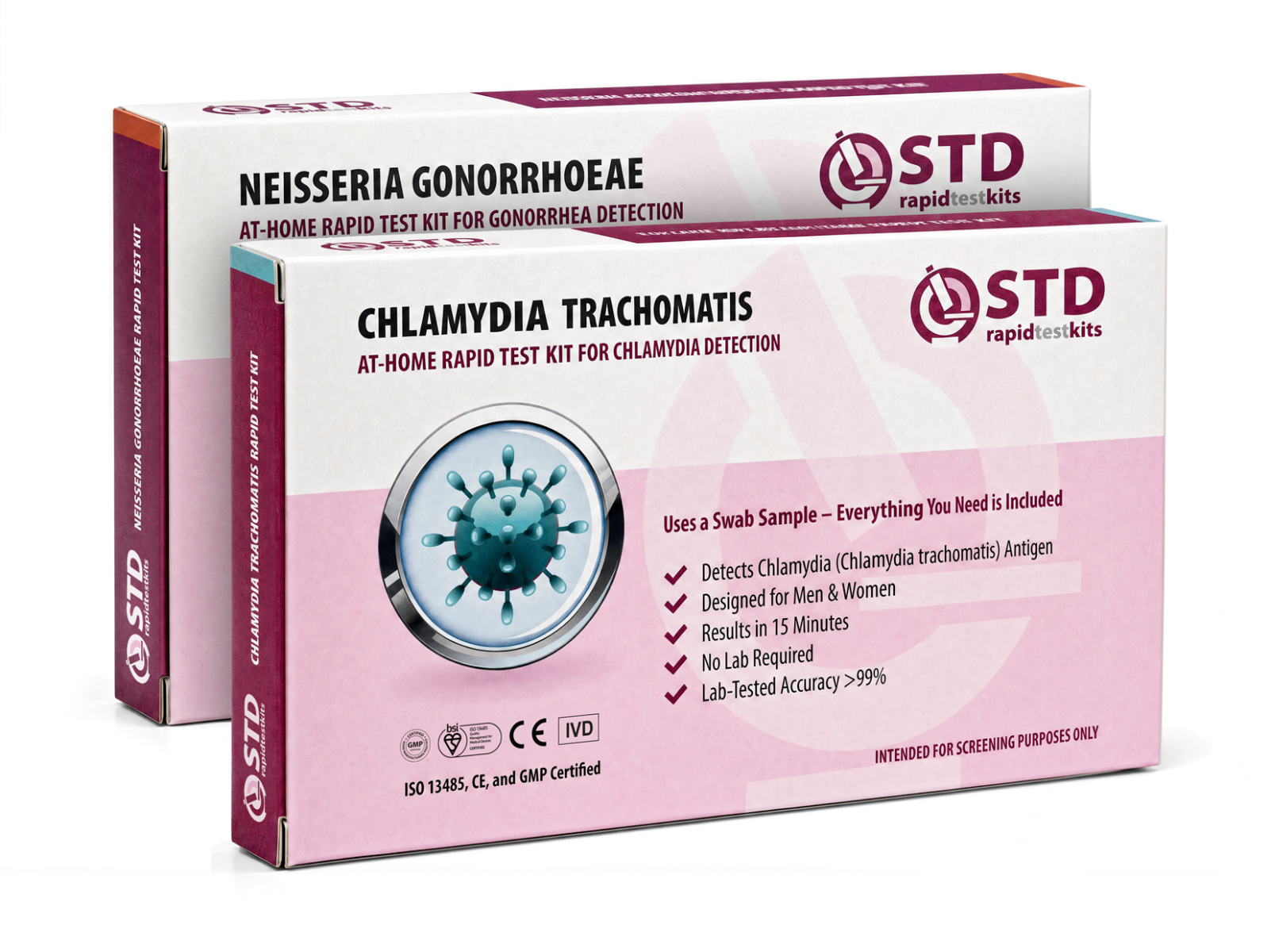
A practical note on at-home testing. The HPV self-swab rapid test we sell on this site is validated for vaginal self-collection and is not designed for male anatomy. Men with HPV-specific concerns should see a clinic for clinical evaluation. Our combination at-home rapid kits do not include HPV in the panel, since validated rapid lateral-flow assays for HPV in male anatomy do not currently exist. The rest of the standard male STI panel (HIV, syphilis, hepatitis B, hepatitis C, herpes, chlamydia, gonorrhea) is well-served by at-home rapid testing, and we offer those panels separately.
Is there an at-home HPV test for men?
No. There is no FDA-approved at-home or routine in-clinic HPV screening test for the general male population. Clinicians visually diagnose genital warts, offer anal Pap testing in higher-risk groups (such as men living with HIV or men who have receptive anal sex), and recommend HPV vaccination through age 26 with shared clinical decision-making through age 45. At-home combination STI kits do not include HPV but cover several of the infections that often travel alongside the same exposures.
Gardasil 9: Why Vaccination Past Your Teens Still Matters
Gardasil 9 is the only HPV vaccine currently available in the United States. It protects against nine HPV types: the two main wart-causing strains (6 and 11) and seven of the most clinically important high-risk strains (16, 18, 31, 33, 45, 52, and 58). The CDC HPV vaccination guidance sets the age framework summarized in the next block.
The most common adult misconception is that the vaccine is useless if you have already had sex. The CDC and ACIP have addressed this directly. The vaccine cannot treat an existing HPV infection, and it does not eliminate strains you already carry. It does protect against the strains you have not been exposed to, and almost no one has encountered all nine vaccine-covered types. Even partial coverage is meaningful when the strains it covers are the ones that cause most cancers.
Gardasil 9 is recommended by the CDC for boys and men, men who have sex with men through age 26 (and often beyond with shared decision-making), people with HIV through age 26, and immunocompromised men. Insurance generally covers it through age 26. After age 26, coverage varies, so ask about cost ahead of time. LGBTQ+ clinics, college health centers, and some pharmacy chains can often help find an affordable path. Uptake among men aged 27 to 45 remains low, so primary-care doctors do not always raise it; patients sometimes need to ask first.
Gardasil 9 is the only intervention that creates type-specific immunity against high-risk strains you have not yet encountered. Condoms and lifestyle changes reduce exposure, but neither can replicate that biological protection.
ACIP HPV vaccine schedule for the United States
- Routine vaccination at age 11 or 12, with a two-dose series if the first dose is given before age 15.
- Catch-up vaccination through age 26 with a three-dose series if started at age 15 or older.
- Shared clinical decision-making for adults aged 27 through 45. Gardasil 9 is FDA-approved through age 45 for everyone.
Oral HPV: What to Watch For in the Throat
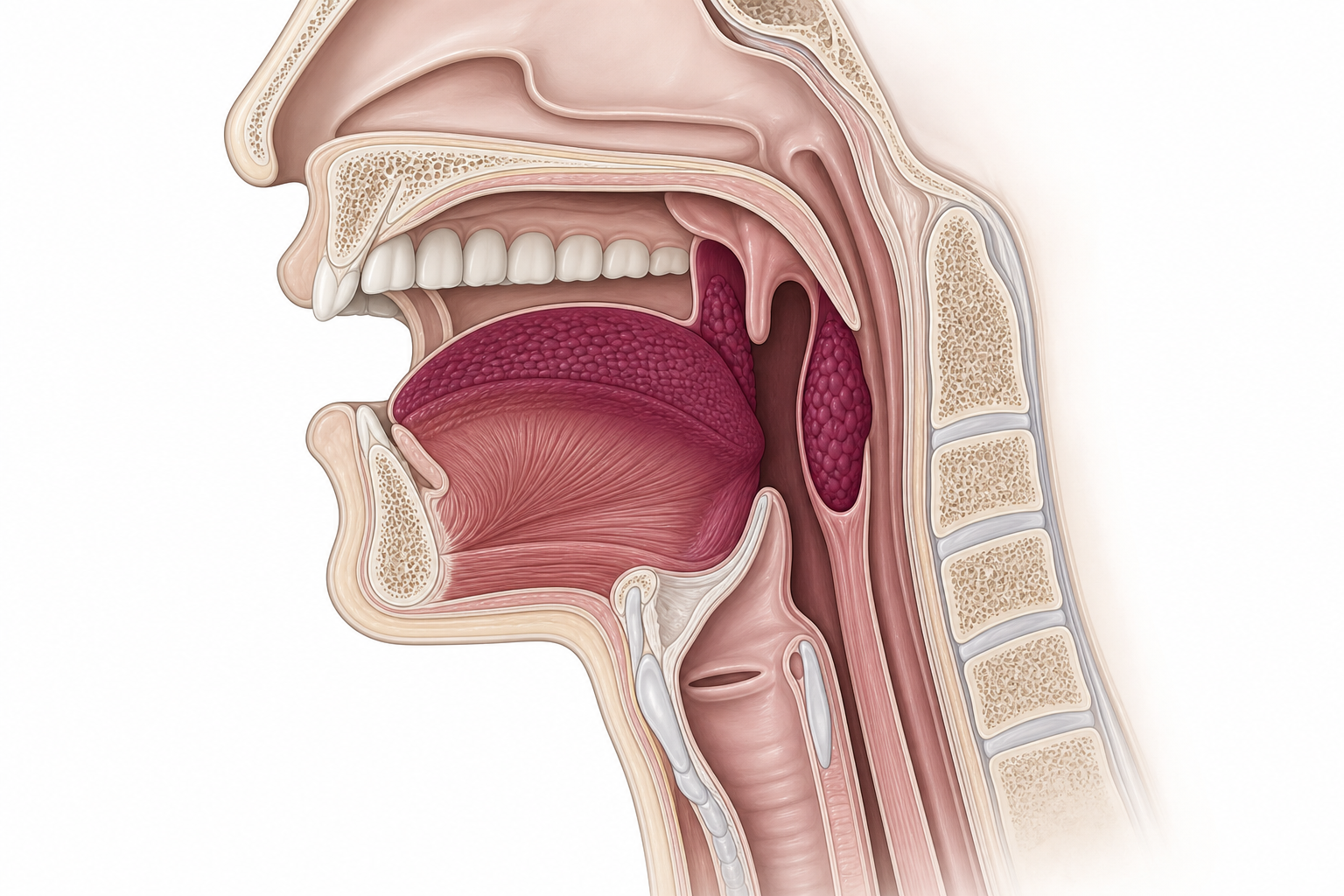
Oral HPV is acquired through oral sex and, in some cases, deep kissing. Most oral HPV infections clear within one to two years and never produce symptoms. The minority that persist with high-risk strains, especially type 16, can drive oropharyngeal cancer years or decades later. The CDC estimates that approximately 10% of men carry oral HPV at any given time, and HPV-related oropharyngeal cancer is now the fastest-growing HPV-linked cancer in U.S. men.
The early warning signs of HPV-related throat cancer are easy to dismiss because they often start small: a sore throat or hoarseness lasting more than two weeks, a painless lump in the neck (often under the jaw or near the angle of the jaw), a tonsil that looks larger or more inflamed on one side, persistent ear pain on one side without an obvious ear-infection cause, trouble swallowing or a feeling that something is stuck, or unexplained weight loss combined with any of the above.
None of those symptoms automatically mean cancer. They can also be caused by viral pharyngitis, mononucleosis, dental infections, allergies, or post-nasal drip. The reason to take them seriously is the small minority where they do reflect early disease, where catching it sooner makes treatment dramatically simpler. Cleveland Clinic guidance uses a two-week threshold for primary-care or ENT evaluation. An ENT exam, often with a small flexible scope, is a low-impact visit that rules out the worrying cases quickly.
Smoking and heavy alcohol use both raise the risk of HPV-driven throat cancer. Men who smoke or drink heavily and have a history of oral sex with multiple partners are the highest-risk group for this cancer type. The combination is multiplicative rather than simply additive, so reducing tobacco and heavy alcohol intake meaningfully lowers risk even in someone who is already HPV-exposed. Routine dental and physical exams do not check the tonsils or base of tongue closely enough to catch early HPV-related lesions, which is part of why a persistent throat symptom is worth a dedicated ENT visit rather than a wait-and-see at the next physical.
How Long HPV Lasts in Men: Clearance vs Persistence
The good news first. Most HPV infections in men clear without intervention within twelve to twenty-four months. The immune system recognizes the virus, mounts a response, and the infected cells are eliminated. After clearance for a specific strain, the chance of passing that same strain on drops sharply, and most people develop type-specific immunity that protects against reinfection with the same type.
Persistent infection is the part that drives long-term risk. A minority of HPV infections (the figure varies by strain and study) do not clear and instead settle in for years. High-risk strains like type 16 are more likely to persist than low-risk strains, which is part of why they are dangerous. Persistence reflects how the immune system happens to respond to a given strain, and it can happen to anyone with any number of sexual partners.
The factors that increase persistence include HIV infection or other immunosuppression, heavy alcohol use that suppresses local immune function in the throat and oral cavity, smoking that damages mucous membrane defenses, coinfection with other STIs that cause inflammation, and older age at first infection when immune response is generally less robust.
Reinfection with a different HPV strain is possible at any point, including after clearing one strain. The vaccine cannot help with strains you already carry, but it does help with the ones you have not yet encountered. The CDC reports that approximately nine in ten HPV infections clear within two years; the small persistent fraction is where long-term cancer risk concentrates.
The CDC estimates that roughly 9 in 10 HPV infections clear on their own within two years, driven by normal immune response. Long-term cancer risk is concentrated in the small minority that persist, which is part of why the vaccine still matters in adulthood: it adds protection against high-risk strains you have not encountered.
Your Action Plan and Talking With Partners
If you read nothing else, here is the practical plan for HPV in male bodies.
- Get vaccinated if you are eligible. Routine through age 26, shared clinical decision-making through age 45. Insurance often covers it through 26, so ask about cost ahead of time for older ages.
- Use condoms and dental dams consistently. Partial protection is meaningfully better than none, especially for visible-wart transmission.
- Treat visible warts. They are not dangerous, and treating them reduces local viral load and partner transmission risk.
- Get specialty evaluation for any non-healing lesion on the penis, perianal skin, or in the throat. Persistent throat symptoms over two weeks deserve an ENT visit, especially with smoking or heavy drinking history.
- Cut tobacco and heavy alcohol use. Both raise persistence and cancer risk significantly, and the effect compounds with HPV exposure.
- Maintain a regular STI screening cadence for the infections that do have validated tests, since HPV often travels alongside other exposures and clearing the rest of the panel narrows what you need to worry about.
Talking with partners about HPV is awkward because the science does not give you a clean diagnosis or a clean cure to point to. HPV transmission is rarely traceable. The virus can sit dormant for years, and most adults will encounter it at some point. A partner testing positive does not mean someone cheated, was reckless, or was unhealthy. It means the virus moved through normal sexual contact, often years before either person knew. Forward-looking framing usually lands better than investigatory framing. Both partners can ask their providers about the vaccine, keep current on adjacent STI screening, and pay attention to any persistent symptoms.
One framing tweak that often helps: the partner conversation does not have to lead with HPV specifically. It can lead with "I am due for an STI check and I think we both should be," which is a lower-stakes way into the same outcome.
Try something close to this when you bring it up: "I found out I may have been exposed to HPV. Most adults will get it at some point and most never know, so this is not about blame. I have already asked my provider about the vaccine and adjacent STI screening, and I wanted to share what I learned so you can decide what makes sense for you too." Forward-looking framing, with one concrete action you have already taken, tends to lower defensiveness and make the conversation about care rather than confession.
FAQs
- Is there a routine HPV test for men?
- No FDA-approved routine HPV test exists for men. If you have visible warts, a clinician can identify them on sight or biopsy a suspicious lesion. MSM and men with HIV are sometimes offered anal cytology with high-resolution anoscopy, with availability varying by region. The at-home HPV swab kit on this site is for vaginal self-collection only, so men with HPV-specific concerns should see a clinic.
- Will the HPV vaccine still help if I am already sexually active or over 26?
- FDA-approved through age 45; the CDC routine recommendation ends at 26, with shared clinical decision-making between 27 and 45. The vaccine does nothing for strains you already carry, but it can prevent infection with the nine vaccine-covered strains you likely have not encountered. Insurance typically covers it through 26; ask about cost beyond that age.
- How can I tell if a bump is a wart or something else?
- True genital warts from HPV are usually soft, flesh-colored, sometimes cauliflower-shaped, and painless. Common lookalikes include pearly penile papules (a normal anatomic variant on the corona of the glans), Fordyce spots, molluscum contagiosum (with a central dimple), and skin tags from friction. A clinician can usually identify warts on visual exam, and biopsy is reserved for unclear cases.
- Can I have HPV and never know it?
- Yes, this is the rule rather than the exception. High-risk HPV strains usually cause no symptoms during the active infection. You can carry the virus, pass it to partners, and clear it without ever feeling anything. The risk of late disease (cancer years later) is concentrated in the small fraction of infections that persist with high-risk strains.
- Can I get HPV just from kissing?
- Possibly, but the odds are far lower than from oral sex. HPV needs skin-to-skin or mucous-membrane contact, and brief social kissing rarely transmits it. Deep open-mouth kissing with someone shedding the virus has been linked to oral HPV in some studies, but it accounts for a much smaller share of cases than oral sex does.
- Do condoms fully prevent HPV?
- No, but they reduce transmission significantly. HPV lives on skin areas a condom does not cover (the base of the penis, the scrotum, the perineum), so contact during sex can still transfer virus. The CDC and NHS describe condoms as risk reducers for HPV, not risk eliminators. Combine consistent barrier use with vaccination for the strongest available protection.
- How long does HPV last in men?
- The immune system clears most HPV infections within one to two years. The small minority that persist, more commonly with high-risk strains like type 16, are where long-term cancer risk concentrates. Smoking, heavy alcohol use, HIV, and other immunosuppression all raise the odds of persistence, which is why lifestyle factors matter even when the strain itself is the same.
- My partner just tested positive for HPV. Do I have it too?
- Possibly. HPV transmits easily and silently between partners, and most adults have been exposed at some point. The constructive next step is for both partners to ask about the HPV vaccine and stay current on adjacent STI screening, rather than trying to figure out who had it first. There is no useful HPV test for men, so trying to confirm your status directly is not really an option.
- U.S. Centers for Disease Control and Prevention. About Genital HPV Infection. Population prevalence, transmission, immune clearance, and the absence of routine male screening tests.
- U.S. Centers for Disease Control and Prevention. HPV Vaccination. ACIP routine, catch-up, and shared clinical decision-making age guidance for Gardasil 9 through age 45.
- National Cancer Institute. HPV and Cancer. Statistics on HPV-related cancer types in men and women, including the dominance of HPV-16, the over-90% HPV attribution for anal cancer, and the 63% HPV attribution for penile cancer.
- World Health Organization. Cervical Cancer Fact Sheet. Attribution of approximately 76% of cervical cancers globally to HPV-16 and HPV-18.
- U.K. National Health Service. Genital Warts. NHS overview of diagnosis, transmission, and standard treatment options for HPV-related genital warts.
- American Urological Association. AUA Statement on HPV Vaccination for Males and Females. Supports the figure of approximately 7,000 HPV-associated cancers per year in U.S. males and HPV vaccine recommendations through age 45.
- Cleveland Clinic. Oropharyngeal Human Papilloma Virus (HPV) Infection. Two-week symptom-duration threshold and guidance on ENT evaluation for persistent throat symptoms.
