







Quick Answer: Hepatitis B symptoms can easily mimic the flu in the early stages, fever, fatigue, nausea, but signs like jaundice, dark urine, and abdominal discomfort point to liver involvement and should never be ignored. A rapid test or lab screening is the only way to know for sure.
Why This Confusion Happens (And Who’s at Risk)
It’s shockingly common to confuse early Hepatitis B with the seasonal flu. Both hit suddenly. Both can wipe you out for days with fatigue, fever, and malaise. But while the flu runs its course in about a week, Hep B can linger, and do serious damage, without obvious symptoms. The overlap fools people, especially if there’s no clear memory of a risky exposure. Think: a drunken hookup, a shared razor, or a poorly sanitized tattoo needle a few weeks back. It might not seem like a big deal at the time.
One reader, Marcus, 32, thought he was battling a “weird stomach flu.” He was achy, nauseated, and exhausted, but not coughing or congested. He kept working through it until a coworker commented on the yellow tinge in his eyes. By then, his liver enzymes were off the charts. He’d contracted Hep B from a one-night stand two months prior. He’d never even heard of it presenting like the flu.
If you’re reading this while bundled up, half-sweating through a fever and Googling your symptoms between waves of nausea, you’re not alone. The confusion isn’t just common, it’s built into how these viruses work. But there are some key differences, and understanding them can literally change the trajectory of your health.
How Hep B and the Flu Can Feel the Same, At First
The early stages of Hepatitis B infection can feel eerily similar to influenza. Both cause general malaise, body aches, low appetite, fever, and chills. In fact, some people with Hep B never experience any distinct symptoms at all and only find out after routine blood work or liver testing. That’s where the danger lies, because if you assume it's just the flu, you might miss the chance to get tested, treated, and stop the spread.
Take fever. It’s a classic flu symptom, often sudden and intense. But it’s also one of the first signs your immune system is reacting to the Hepatitis B virus. Similarly, fatigue shows up early in both conditions, and in Hep B, it tends to stick around much longer, even after other symptoms fade. Nausea and vomiting? Common in both, but for Hep B, they often come with a dull, persistent pain in the upper right side of the abdomen, right where your liver lives.
The trick is paying attention to what comes next. Does the fever resolve in a few days? Are you feeling generally better by the end of the week? Or is something new cropping up, like yellowing skin, unusually dark urine, or pale stools? Those aren’t flu symptoms. They’re liver red flags.
People are also reading: Want to Protect Your Teen’s Health? Start Here
Table: Comparing Symptoms of Flu vs Hepatitis B
| Symptom | Flu (Influenza) | Hepatitis B |
|---|---|---|
| Fever | Common (sudden, high) | Common (early stages) |
| Fatigue | Common, resolves in ~1 week | Common, can persist for weeks/months |
| Nausea / Vomiting | Sometimes | Very common |
| Body Aches | Severe and widespread | Milder, may feel like joint pain |
| Jaundice (yellow eyes/skin) | Not present | Common in later stages |
| Dark Urine / Pale Stools | Not present | Common indicators of liver dysfunction |
| Cough / Sore Throat | Very common | Rare |
If you’re noticing yellowing skin or eyes, even faintly, it’s time to stop assuming it’s “just the flu.” Liver involvement is never a minor issue.
Check Your STD Status in Minutes
Test at Home with Remedium7-in-1 STD Test Kit

 For Men & Women
 Results in Minutes
 No Lab Needed
 Private & Discreet
Order Now $129.00 $343.00
For all 7 tests
Case Spotlight: When the “Flu” Wasn’t
Sophia, 26, shared a story in an anonymous support forum that echoed what many others have lived through. She’d had a wild New Year’s Eve, hooked up with someone she met through friends, used protection for intercourse, but not for oral. Three weeks later, she felt completely wiped out. “I was shaking, vomiting, couldn’t keep anything down. I thought I just picked up a nasty flu.”
She didn’t think much of it, until her eyes turned yellow. “That was the turning point,” she wrote. “I went to urgent care and ended up getting sent for bloodwork. I tested positive for Hep B. I wouldn’t have even thought of it if not for the jaundice.”
Stories like Sophia’s highlight how symptoms alone can be misleading. Without visible signs like rash, sores, or discharge, many STDs, including Hepatitis B, fly under the radar. Especially when their earliest symptoms overlap with common illnesses like the flu.
Why Liver Symptoms Change the Game
When the flu takes hold, it works through your respiratory system. That’s why cough, sore throat, nasal congestion, and even ear pressure are textbook symptoms. Hepatitis B, on the other hand, isn’t a respiratory virus, it’s a liver infection. And when your liver is struggling, your body lets you know in much quieter but more alarming ways.
One of the first signs? Your urine gets darker, like tea or cola. That’s because your liver isn’t filtering out bilirubin properly. At the same time, you might notice your stools become pale, almost clay-colored. These aren’t symptoms most people associate with a viral infection, but they’re classic signs of liver inflammation. Jaundice follows. You may not even notice it yourself at first, it often shows up in the whites of the eyes before it spreads to the skin. Friends or coworkers are often the ones to say something. And by then, the virus has already done some damage.
Even more quietly, Hep B can cause abdominal bloating or discomfort, especially under your right ribs. Some people describe it as a dull pressure, others like a “rock in the gut.” The liver has no pain nerves, but when it swells or the capsule around it stretches, you feel it. Again, not something you’d ever associate with a head cold or flu.
These are the moments where your body is begging you to pause and consider: “What if this isn’t just viral fatigue? What if this is something more serious?”
Table: Signs That Point to Liver Involvement (Not Just the Flu)
| Warning Sign | Why It Matters |
|---|---|
| Dark urine (tea or cola colored) | Signals bilirubin build-up; possible liver dysfunction |
| Jaundice (yellowing of eyes or skin) | Classic sign of hepatitis; needs urgent evaluation |
| Upper right abdominal pain or bloating | May reflect liver inflammation or swelling |
| Pale or clay-colored stools | Indicates bile duct obstruction or impaired liver processing |
| Prolonged fatigue (beyond 10 days) | Suggests systemic viral load and immune overwork |
If even one of these is showing up alongside what feels like “just the flu,” it’s time to test, not guess.
How Hepatitis B Develops, and Why Timing Is Everything
Flu viruses work fast. You’re usually exposed and symptomatic within a couple of days. This is not how hepatitis B works. Symptoms usually show up between 30 and 180 days after exposure. This means that you could be sick for weeks without knowing it, and you might not show any signs of being sick until a long time after you were first exposed.
This timeline is important for tests. Your body might not have made enough antibodies or antigens to get a positive result if you test too soon. If you wait too long, you might miss the acute phase and go straight into chronic infection without even knowing it. That’s why pinpointing your exposure window matters.
Let’s break it down. Say you had a risky encounter six weeks ago, unprotected sex, a shared needle, a piercing in a questionable setting. You start feeling sick now. That tracks perfectly with the average Hep B incubation period. Testing at this stage is more likely to yield accurate results than testing a few days after exposure. And unlike the flu, where time heals all, Hep B needs to be caught early if you want to limit liver damage or prevent transmission to partners.
In a clinic setting, your provider may order an HBsAg test (Hepatitis B surface antigen), which detects active infection. Other tests look for antibodies to determine past exposure or immunity. At-home kits often focus on the same markers but may take longer to ship or return. If you're unsure what test is right for you, now’s the time to find out.
When to Get Tested: A Decision Tree for the Sick and Unsure
If you’ve had flu-like symptoms for more than a few days, and you're not improving, or worse, you’re developing symptoms that don't align with a cold or seasonal virus, it’s time to stop assuming. Testing for Hepatitis B is fast, discreet, and can literally change your trajectory. Here’s a quick breakdown:
If it’s been fewer than 5 days of symptoms and you haven’t had recent exposure risks, monitor closely. But if symptoms are progressing or worsening, talk to a provider. If it’s been 2–6 weeks since a potential exposure and you now have nausea, fatigue, and dark urine, get tested. That’s a prime window where results will be accurate and action can be taken. If it’s been over 3 months and you're still tired, jaundiced, or unsure, you’re overdue for testing and evaluation.
We’ve seen too many people assume they “just had a weird flu” and find out later they were living with a chronic liver infection. Don’t be that person. Even if you think you’re being paranoid, a simple at-home test can provide peace of mind or catch a silent threat early.
If your head keeps spinning, peace of mind is one test away. This discreet combo test kit includes screening for common STDs, including Hepatitis B, and delivers results fast and privately.
Case Follow-Up: Marcus Gets the Full Picture
Remember Marcus from earlier? The guy who thought he had the flu until someone noticed the yellow in his eyes? He ended up testing positive for Hepatitis B. Thankfully, it was still an acute infection, he hadn’t crossed into chronic territory yet. But he needed a few months of monitoring, liver function testing, and rest.
What shocked him most wasn’t the diagnosis. It was the realization that he’d almost ignored it completely. “If my coworker hadn’t said anything,” he admitted, “I would’ve just powered through it like any other flu.”
Marcus now talks openly about his experience in local STI forums. “People think STDs are all rashes or discharge. They don’t realize one of the most serious ones can feel like food poisoning or a hangover.” He’s right, and that insight might save someone else.
Why People Miss the Signs: Shame, Myths, and Misdiagnosis
It’s not just medical confusion that leads people to miss Hepatitis B, it’s cultural. Shame plays a massive role. The idea that only certain types of people “get hepatitis” keeps folks silent and sick. Even though Hep B is one of the most common liver infections globally, many still assume it only affects people who use IV drugs or have high-risk sexual behavior. That stigma stops people from testing when symptoms show up. Especially when those symptoms look like the flu. “I thought I couldn’t get Hep B,” people say. “I’m not that kind of person.”
That mindset is deadly. Anyone can get Hepatitis B. You can contract it through a razor at a barbershop, a piercing, dental work in countries with low sterilization standards, or sex with someone who doesn't even know they have it. This isn’t a disease that only exists in specific communities. It’s viral. It’s stealthy. And it spreads through blood, semen, and bodily fluids whether we talk about it or not.
Unfortunately, doctors miss it too. If you walk into urgent care in January complaining of chills, fatigue, and nausea, most providers are trained to think flu or COVID first. Unless you speak up about risk factors, sexual exposure, travel history, prior infection, they may not order a Hepatitis panel. That’s why knowledge is power. Knowing what liver symptoms look like helps you advocate for yourself in those ten-minute appointments where one wrong assumption could delay diagnosis for months.
What About the Vaccine? Can It Help Now?
Yes, and no. The Hepatitis B vaccine is one of the most effective vaccines available. It’s over 95% effective in people who complete the full three-dose series. But here’s the catch: it’s preventive, not curative. That means if you’re already infected, getting the vaccine won’t help treat it.
However, if you’re reading this and you haven’t been vaccinated, or aren’t sure, it’s absolutely worth checking your status. You can ask your doctor to run a Hep B immunity panel (anti-HBs) to see if you’re protected. If not, getting vaccinated now can protect you from future exposures. And if someone you’ve recently slept with is diagnosed with Hep B, post-exposure prophylaxis is sometimes possible, but only if caught very early.
The bottom line? Vaccination is part of the solution, but so is regular testing, especially if you’re sexually active, have traveled recently, or share intimate items like razors or toothbrushes with others.
People are also reading: Still Itching in 2025? How to Tell If It's Crabs (or Something Worse)
Table: Most Common Hep B Myths That Delay Testing
| Myth | What’s Actually True |
|---|---|
| Only drug users get Hep B | Hep B can spread through sex, household contact, shared razors, or birth |
| Hepatitis always causes obvious symptoms | Many infections are asymptomatic or mimic flu-like illness |
| If it’s not painful, it’s not serious | The liver has no pain nerves, damage often happens silently |
| I got vaccinated once, so I’m protected forever | Immunity can wane, and not all vaccinations lead to full immunity |
| I’d know if I had it | Most people don’t, until their liver function tests come back abnormal |
If even one of these myths feels familiar, you’re not alone. This is why thousands of cases go undiagnosed or misattributed every year. Awareness is what closes that gap.
Check Your STD Status in Minutes
Test at Home with Remedium6-in-1 STD Test Kit
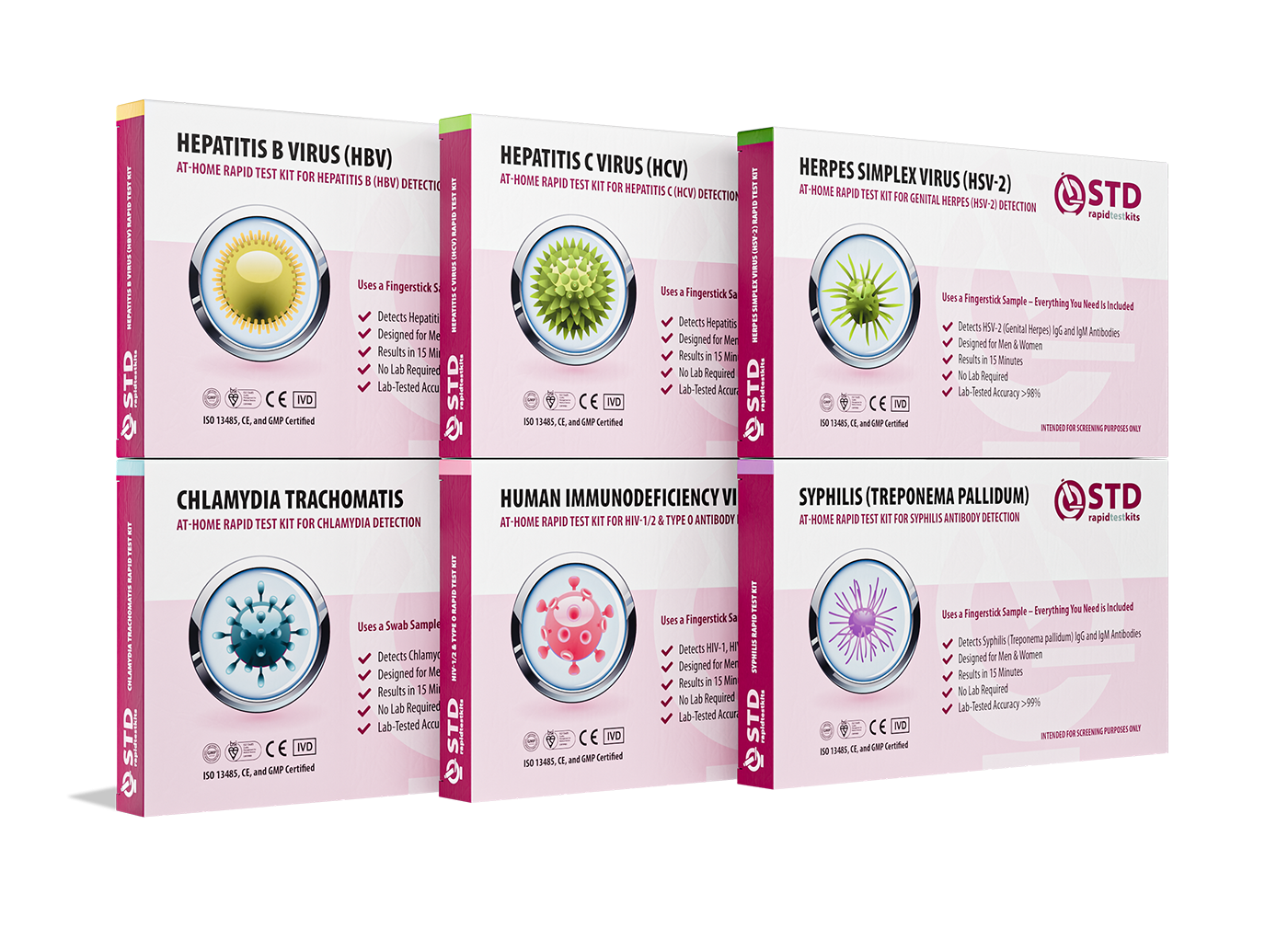 For Men & WomenResults in MinutesNo Lab NeededPrivate & Discreet
Order Now $119.00 $294.00
For all 6 tests
Why At-Home Testing Might Be Your Best Option
Let’s be honest. Walking into a clinic and asking for an STD panel that includes Hep B isn’t easy for everyone. That’s where STD Rapid Test Kits come in. At-home testing provides privacy, speed, and the chance to control your own care, without the awkward waiting room vibes or judgmental looks.
If you’re dealing with fatigue, nausea, yellowing eyes, or unexplained pain on your right side, a discreet home test can provide clarity fast. Most kits come with everything you need: instructions, lancets for a finger prick, collection vials, and a return envelope if it’s lab-based. Others offer results within minutes using lateral flow strips.
No matter the format, the goal is the same: take the fear out of not knowing. When you're sick and don't know what to do, the worst thing to do is nothing.
Whether it’s a recent exposure or months of unexplained fatigue, you deserve clarity. Order a discreet Hepatitis B rapid test and take the first step toward answers.
When to See a Doctor (Even If You Tested at Home)
Testing at home can make a big difference, but it's not the end of the road. You should see a doctor if your result is positive or even close to positive. They can do more blood tests, like HBV DNA, liver enzymes, or antibody panels, to confirm the diagnosis, check how well your liver is working, and help you understand your options. Not all Hep B infections need medicine; some go away on their own, but some become chronic and need to be watched or treated with antiviral drugs.
Even if your result is negative, but symptoms persist or worsen, don’t stop there. Testing early can miss a developing infection. You may need to recheck in 30–90 days, especially if your initial test was close to an exposure event.
And if the shame is what’s stopping you from reaching out, know this: over 250 million people around the world live with chronic Hepatitis B. You are never the only one. You’re just one of the brave ones who’s willing to face it head on.
FAQs
1. Can Hep B really feel like the flu?
It’s wild, but yes, it can. That wiped-out feeling, the fever, the chills, the “I just want to sleep for a week” fatigue? Classic flu. Also classic Hep B. The difference is that Hep B tends to linger longer and bring in other weird stuff like nausea, dark pee, and sometimes yellowing eyes. If your flu is dragging past a week or doing things flu doesn’t normally do, your liver might be raising its hand for help.
2. How long after sex or exposure would symptoms show up?
Hep B takes its sweet time. You might not feel anything for 1 to 4 months after exposure. That means a hookup from February can come back to haunt you in May. Flu hits fast. Hep B simmers quietly, and that’s why it catches people off guard. If you’re feeling rough and had a risk moment in the last few months, it’s worth checking.
3. I don’t feel that bad anymore. Should I still get tested?
Yep. Hepatitis B is sneaky like that. Some people feel terrible for a few days, then bounce back and assume it’s over. But the virus may still be inside, quietly messing with your liver. You deserve to know for sure, not just guess based on vibes. A test is clarity, and clarity = power.
4. Does Hep B spread from kissing or sharing drinks?
Nope, not that way. Hep B isn’t like mono or a cold, it doesn’t spread through saliva, hugging, or sharing forks. It spreads through blood, semen, vaginal fluids, and birth. Think unprotected sex, shared needles, or even using someone else’s razor. So unless your makeout session turned into something riskier, kissing won’t cut it.
5. Wait, could I have gotten it years ago and not know?
Totally possible. Many people live with chronic Hepatitis B for years without symptoms. They find out accidentally, during blood donation, a routine checkup, or when their liver enzymes spike. If you were never tested after a risk event, even from years back, it’s still worth doing now. You don’t need symptoms to have answers.
6. Can I use an at-home test kit for this?
You sure can. If going to a clinic feels awkward, shamey, or just a logistical nightmare, at-home tests are a solid option. Some give you results in minutes. Others you send in and get results a few days later. Either way, it’s private, easy, and no one’s asking you invasive questions in a waiting room.
7. If I test positive, what happens next?
First: don’t panic. Testing positive doesn’t mean you’re dying, dirty, or doomed. It means your body has been fighting something, and now you get to do something about it. Your next move is to check in with a provider (telehealth works!). They’ll confirm it, run a few more tests, and help you figure out if treatment is needed. Most people don’t need meds, but everyone needs a plan.
8. Can I still hook up if I have Hep B?
Yes, but you’ll need to be smart about it. Use protection. Tell your partner (there are ways to do that without ruining the vibe, we can help). Encourage them to get vaccinated if they haven’t been already. Hep B is preventable. Being upfront about your status is part of keeping your partners safe and keeping shame out of your sex life.
9. I thought I got vaccinated already, do I still need to test?
That’s a maybe. Some people were vaccinated as kids and built strong immunity. Others didn’t finish the full series or never built antibodies. If you’re unsure, a test can check if you’re protected. And if you're not? It’s never too late to get that defense in place. Bonus: once you're fully immune, Hep B can't touch you again.
10. What if my test is negative but I still feel weird?
Then it might be something else, and you’re not crazy. Other STDs, liver conditions, or even post-viral burnout can mimic Hep B. You might need to retest in a few weeks, especially if the timing was close to an exposure. Or follow up with a provider to explore other possibilities. But pat yourself on the back: testing means you’re taking your body seriously. That’s always the right move.
You Deserve Answers, Not Assumptions
Feeling sick is scary enough. It's not surprising that so many people put off getting tested when you add in the confusion, the lack of talk about STDs, and the fact that Hepatitis B hides behind flu-like symptoms. But being clear is strong. Knowing what you're dealing with lets you treat it, track it, and stop it from spreading.
Whether you're still unsure or already suspecting the truth, the next step is simple. Order a confidential Hepatitis B test kit. Do it for your future self. Do it because you deserve care without shame.
How We Sourced This Article: We combined current guidance from leading medical organizations with peer-reviewed research and lived-experience reporting to make this guide practical, compassionate, and accurate.
Sources
2. HepB Foundation – Testing Overview
3. Hepatitis B Signs & Symptoms – CDC
4. Hepatitis B and Other Viral Diseases – NCBI / NIH
5. Signs & Symptoms of Flu – CDC
6. Influenza (Flu) – Symptoms and Causes (Mayo Clinic)
7. Flu (Influenza): Symptoms & Overview – MedlinePlus
8. Preventing Seasonal Flu – CDC
About the Author
Dr. F. David, MD is a board-certified infectious disease specialist focused on STI prevention, diagnosis, and treatment. He blends clinical precision with a no-nonsense, sex-positive approach and is committed to expanding access for readers in both urban and off-grid settings.
Reviewed by: Dr. E. Ramos, MPH | Last medically reviewed: January 2026
This article is for informational purposes and does not replace medical advice.


