

Published: October 2025 | Last updated: April 2026 | Editorial review and quality control: Martina N.
Genital itching is one of the most common reasons people search sexual health content at 2 a.m., and one of the hardest to interpret on your own. The skin in the groin is unusually thin and reactive. It sweats more, rubs more, and meets more chemicals than skin almost anywhere else on the body. Most of the time, an itch down there is friction, fragrance, sweat, yeast, or razor irritation that resolves on its own within a few days.
The complication is that several sexually transmitted infections also begin with itching alone, with no rash, no sores, and no discharge for days or sometimes weeks. So a brief itch after a sweaty workout is almost certainly nothing. An itch that lingers past a week, returns in waves, or shows up after a new sexual contact deserves a second look. This guide walks through how to tell those situations apart, when at-home testing makes sense, and when you should skip the home kit and see a clinician instead.
When does a genital itch mean an STI?
Most genital itching is not an STI. Friction, shaving, fragrance reactions, yeast, and dry skin cause far more itch than infections do. Persistent itching that lasts more than five to seven days, returns in cycles, or shows up after unprotected sex with a new partner can be the first sign of herpes, trichomoniasis, or chlamydia, sometimes before any visible rash. If the itch sticks around or arrived after a recent exposure, get tested. Rapid at-home tests work well for screening; a clinic visit is the right call if you have pain, sores, fever, or discharge alongside the itch.
Key Takeaways
Why Most Genital Itches Are Not an STI
The skin in the groin is thinner and more reactive than skin elsewhere on the body. Groin skin sweats more, rubs more, and meets a longer list of potential irritants than almost anywhere else: detergent residue, fragranced soap, latex condoms, lubricant, spermicide, depilatory cream, and tight synthetic fabric, sometimes all in the same day. Any of these can disrupt the skin barrier and set off itching that lasts a few days and clears on its own.
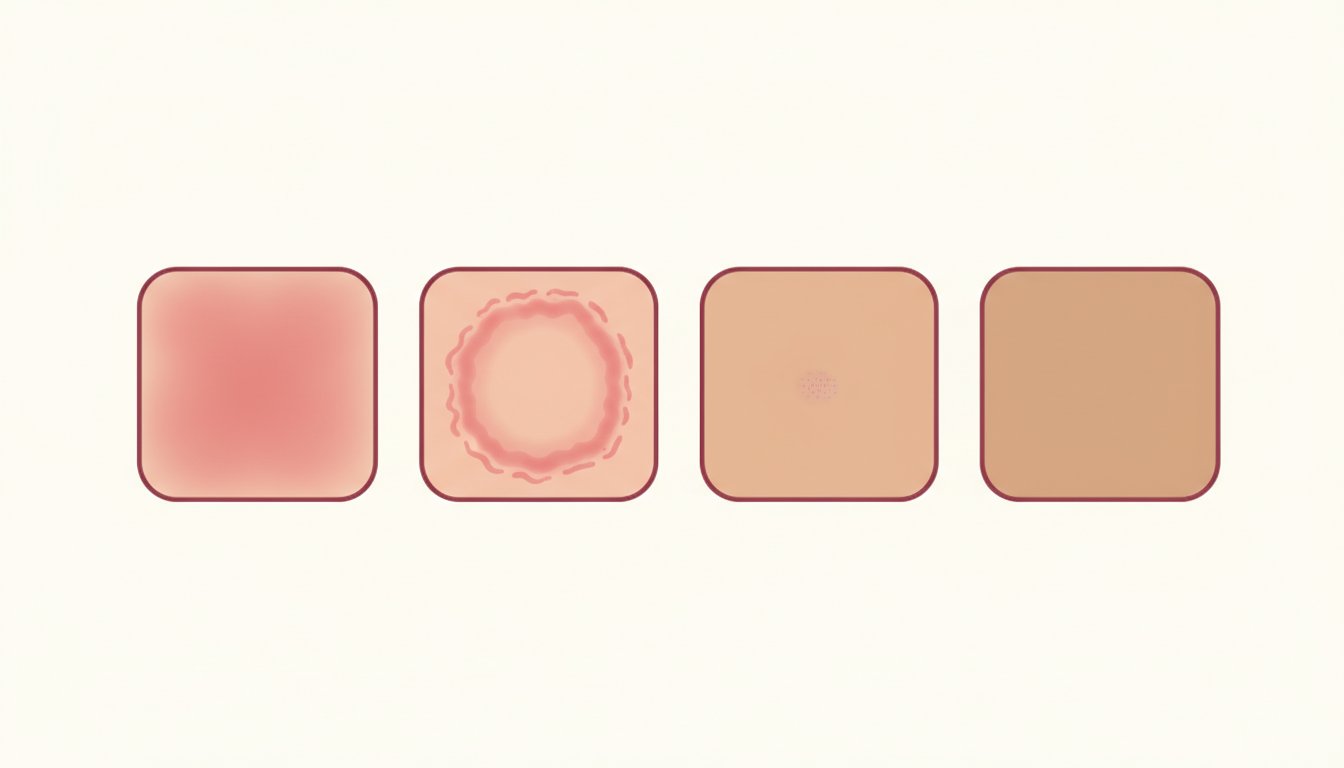
Yeast overgrowth (candida) and jock itch (tinea cruris, a fungal infection of the groin folds) are also extremely common. Both produce intense itching and can fool you into thinking something more serious is happening. Yeast tends to bring thick white discharge and a yeasty smell within a day or two; jock itch usually shows a defined ring shaped rash in the groin folds. Either responds to over the counter antifungal cream within a week.
A brief itch after a sweaty workout, a new soap, or a fresh shave is almost certainly benign. The threshold for taking it more seriously is duration (past a week), pattern (recurring waves), or context (new sexual contact in the past month).
| Cause | Typical features | When to test or see a clinician |
|---|---|---|
| Friction or dry skin | Itch with no bumps or discharge, often after sex, shaving, or a new product | If it lasts more than 5 to 7 days or spreads |
| Yeast (candida) | Itch with thick white discharge, yeasty smell, redness | If OTC antifungal cream does not work within a week |
| Jock itch (fungal) | Red ring shaped rash in groin folds, may burn or peel | If OTC antifungal cream does not work within a week |
| Contact dermatitis | Itch and redness after a new detergent, soap, lube, or condom | If it worsens, or causes pain with sex or urination |
| Herpes, trich, chlamydia | Persistent or recurring itch, sometimes with sores, discharge, or burning urination | Always test after a new partner, unprotected sex, or persistent symptoms |
When the Itch Is Genital Herpes
Herpes does not always begin with a blister. The earliest sign is often a tingling, burning, or itching sensation in a small area of skin, days before any sore appears. The NHS describes herpes as contagious from this first tingle or itch, even before blisters develop (NHS). Some people only ever experience this prodrome; visible sores never form, or are small enough to miss.
That is why so many people misdiagnose themselves. The CDC notes that most people with genital herpes do not know they have the infection, because symptoms are often very mild or absent (CDC). The classic teaching that herpes always means a cluster of painful blisters is wrong, and that gap in awareness is one of the main reasons the virus spreads.
Practical signs that an itch may be herpes rather than friction or yeast: it appears in a recurring small patch of skin (often the same spot each time), it sometimes evolves into a tiny ulcer or red spot a few days after the itch starts, it is preceded or followed by a flu like feeling, or it followed unprotected sex with a new partner in the past two to four weeks. A blood antibody test for HSV-1 and HSV-2 can confirm exposure once enough time has passed for seroconversion, typically eight to twelve weeks after the suspected contact.
The classic prodrome pattern: itching or tingling that recurs in the same small skin patch (often the same spot each outbreak), sometimes evolving into a tiny ulcer or red spot within a few days, and occasionally accompanied by flu like symptoms (low fever, body aches, swollen lymph nodes near the groin). Many people only ever experience the prodrome and never see a visible sore. The pattern of recurrence in the same location is one of the strongest clues that the cause is herpes rather than friction or yeast.
When the Itch Is Trichomoniasis
Trichomoniasis is one of the most under diagnosed STIs in the U.S., and one of the itchiest when it does cause symptoms. About 70% of people with the infection have no signs or symptoms at all (CDC). When symptoms do appear, the CDC lists itching, burning, redness, or soreness of the genitals for women, and itching or irritation inside the penis for men.
Because trichomoniasis can live in the body for weeks or months before producing symptoms, it is regularly mistaken for a yeast infection or a UTI. If you have been treated for a yeast infection that did not fully resolve, or for a UTI that did not respond to antibiotics, trich is worth ruling out. The classic vaginal trichomoniasis presentation also includes a frothy yellow green discharge with a distinctive smell, but discharge is often absent or subtle. Bacterial vaginosis (covered in a later section) produces a different discharge: thinner, grey-white, with a fishy smell rather than a frothy or yellow-green appearance.
Diagnosis is straightforward when you test. The lab gold standard is a NAAT (nucleic acid amplification test); rapid lateral flow swabs are available for at home use as a screening tool, with positives confirmed by a lab NAAT when possible.
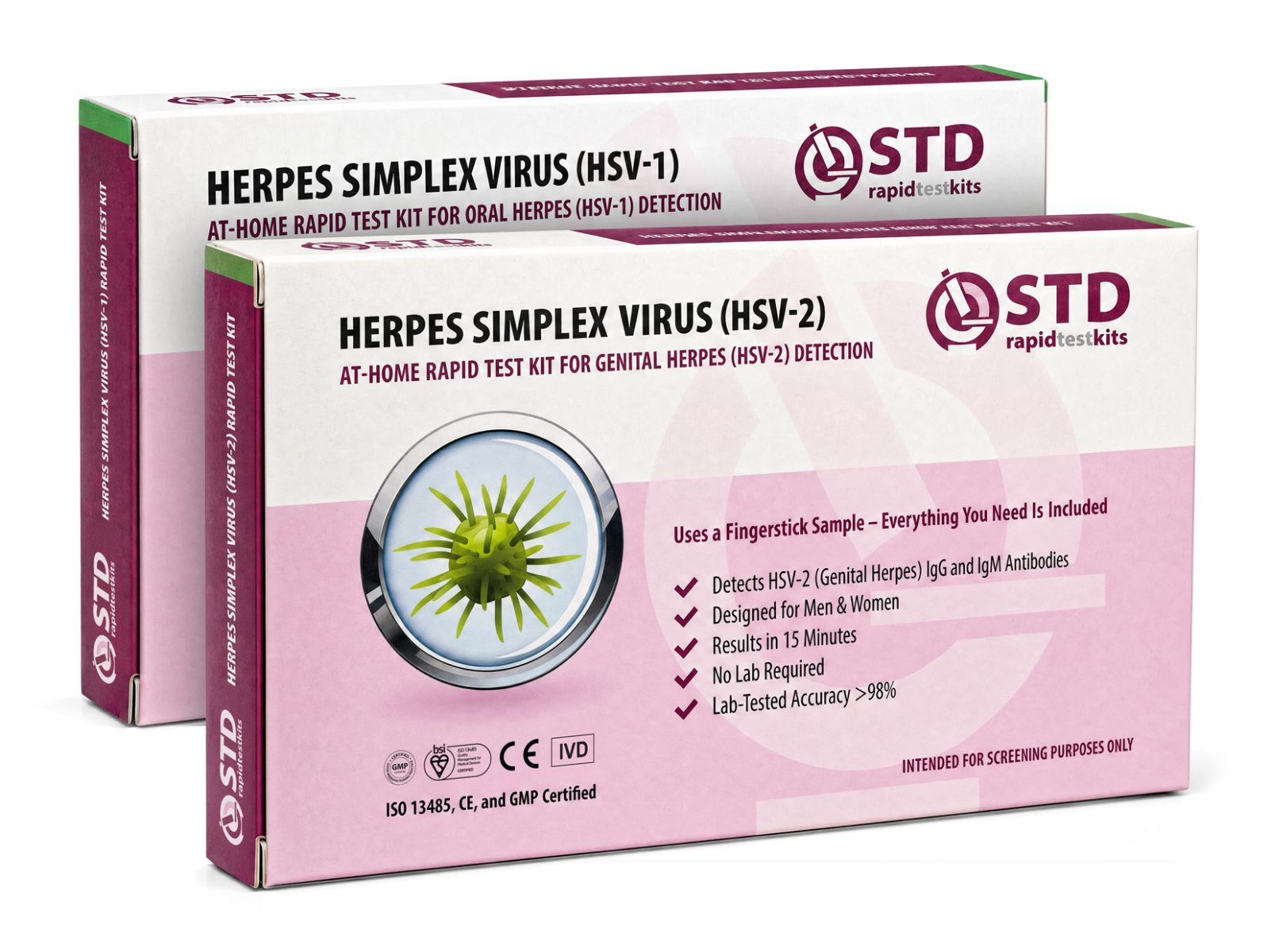
Our at home rapid trichomoniasis test is validated for vaginal self swab only, so it is a women only kit. Male readers who suspect trichomoniasis should see a clinic for testing. Our broader multi STI combo kits cover other infections most relevant to anyone with a penis, including chlamydia, gonorrhea, and herpes.
When the Itch Is Chlamydia or Gonorrhea
Chlamydia and gonorrhea are usually thought of as discharge and burning urination infections rather than itch infections. The CDC describes the typical chlamydia symptoms as abnormal vaginal or penile discharge and a burning sensation when peeing, and stresses that chlamydia often has no symptoms at all (CDC).
That said, mild urethral irritation from either infection can feel itch like, especially in men, where a low grade awareness or itch inside the urethra is sometimes the only early clue. The most important point is that asymptomatic chlamydia is the rule, not the exception. The CDC notes that millions of new STI infections happen each year in the U.S., and that many of those have no symptoms at all (CDC). Anyone who has had unprotected sex with a new or untested partner in the past two to six weeks should test, even if symptoms are vague or absent.
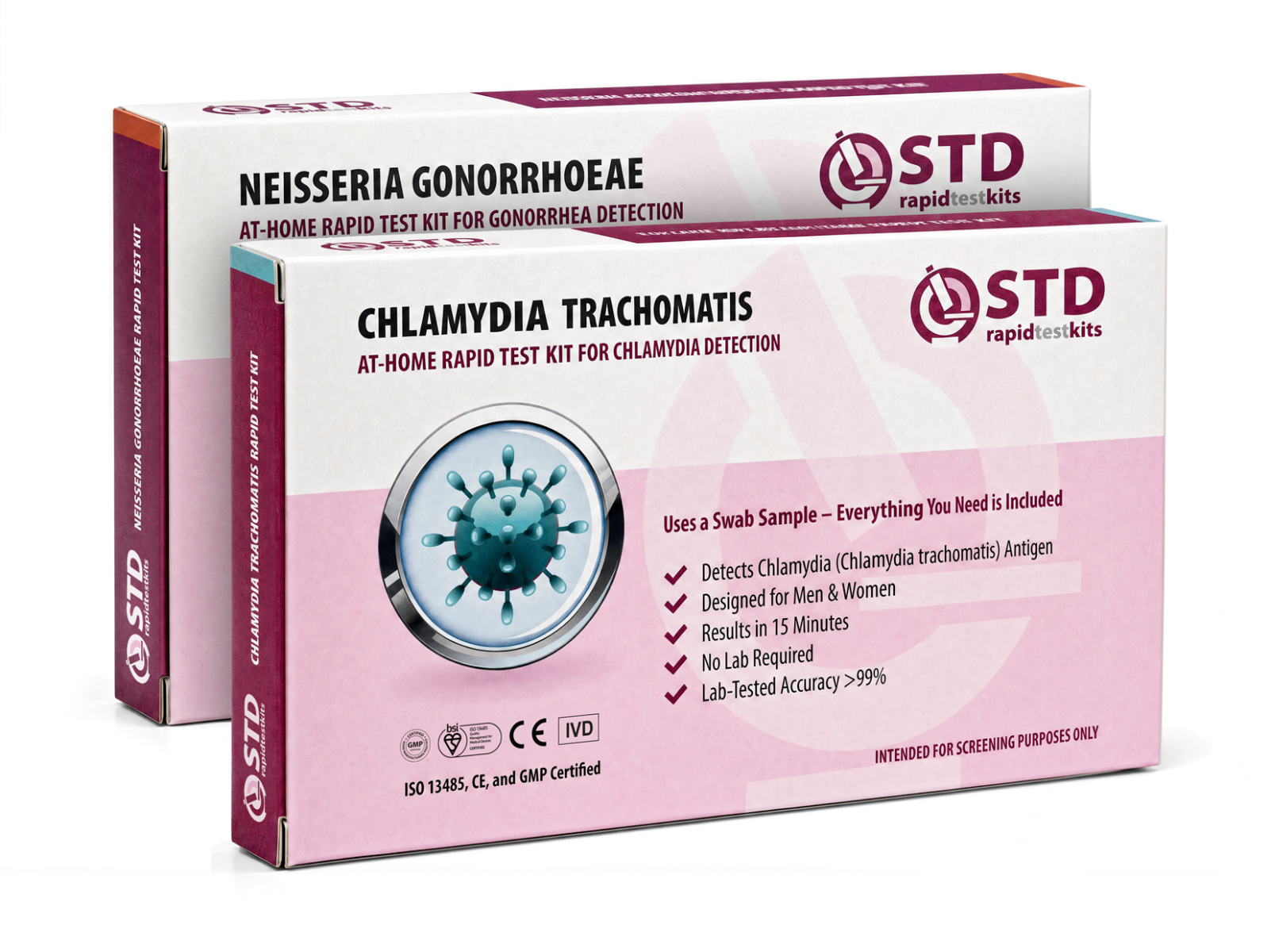
Both infections are curable with a short course of antibiotics. Untreated, they can cause pelvic inflammatory disease, infertility, and, in newborns of infected pregnant people, eye and lung infections. The earlier you catch them, the simpler the treatment and the lower the long term risk. Test at least 14 days after the suspected exposure for the most reliable result. We offer rapid at-home lateral-flow test kits for the infections covered in this article, sold based on fit-for-purpose for the reader's concern, not commercial benefit.
Why catching these early matters
- Untreated chlamydia or gonorrhea can ascend to the upper reproductive tract and cause pelvic inflammatory disease (PID), one of the leading preventable causes of infertility and chronic pelvic pain in women.
- Both infections can be passed during pregnancy and cause eye and lung infections in newborns, which is why testing during pregnancy is part of routine prenatal care.
- Both are curable with a short course of antibiotics, and a single rapid swab kit at the 14-day mark catches the typical exposure window.
Yeast, BV, and the Skin Conditions That Mimic STIs
Not every infectious itch is sexually transmitted. Yeast and bacterial vaginosis (BV) overlap heavily with the symptoms people associate with STIs, and treating one when you actually have the other is one of the most common reasons an itch refuses to go away.
Yeast brings itching with thick white discharge and a yeasty smell. BV brings irritation, a thinner grey or white discharge, and a sour or fishy smell that often gets worse after sex. Either can flare in cycles tied to hormones, antibiotics, or new sexual activity, but neither is technically transmitted from a partner. OTC antifungal creams clear yeast quickly. BV needs a prescription antibiotic; antifungal creams will not touch it.
Then there are the chronic skin conditions: lichen sclerosus, eczema, psoriasis, and lichen planus, all of which can show up on the genitals as dry, cracked, or itchy patches. Lichen sclerosus in particular is regularly misdiagnosed for years, especially in people assigned female at birth, because patients and clinicians both assume the symptoms must be sexual in origin. If creams are not working and tests come back clean, this is the lane to ask a dermatologist or vulvar specialist about.
When and How to Test
Each STI has a window period, the time between exposure and when a test can reliably detect the infection. Test too early and you can get a falsely reassuring negative; the test is not lying, it is just looking before the infection is detectable. Most people who feel itchy after a recent exposure benefit from a two part testing plan: an initial test around two weeks out, and a follow up at the longer window mark for any infection that takes longer to seroconvert, like herpes.
Here is a practical timeline that lines up with what most public health bodies recommend:
| Infection | Earliest reliable test | Best time to test | Retest needed? |
|---|---|---|---|
| Chlamydia | About 7 days | 14 days after exposure | Yes if tested earlier |
| Gonorrhea | About 7 days | 14 days after exposure | Yes if tested earlier |
| Trichomoniasis | About 7 days | 14 to 21 days | Sometimes |
| HSV-2 (blood antibody) | About 4 weeks | 8 to 12 weeks | Yes, antibodies take time to form |
| Syphilis | About 3 weeks | 6 weeks | Yes if tested earlier |
| HIV (4th gen antigen/antibody) | About 18 to 45 days | 45 days | Confirm at 90 days for full reassurance |
What to Do While You Wait for Answers
The waiting period between symptom and test result is the part most people find hardest. A few practical moves can keep the itch from getting worse and keep your head from going to the worst place.
Skip harsh soaps for now. Use plain water or a fragrance free, pH balanced cleanser on the genital area, and pat dry rather than rub. Switch to loose cotton underwear and avoid tight synthetic workout gear until things settle. Stop shaving or waxing the area until you know what is going on, since fresh microcuts can make any infection or irritation worse and harder to interpret. Avoid steroid creams unless a clinician has prescribed one, since long term use thins the skin in ways that backfire later.
Pause sex until you have a result; you deserve a clean read on what is happening before introducing another variable. If you do have sex, use condoms; condoms reduce but do not eliminate transmission risk for the skin to skin infections like herpes and HPV.
Wash with plain water or a fragrance free, pH balanced cleanser; pat dry, do not rub. Wear loose cotton underwear and avoid tight synthetic gym wear. Pause shaving or waxing until you have a result. Skip steroid creams unless a clinician has prescribed one. Pause sex, or use condoms if you do not. Resist the urge to scratch (broken skin makes everything harder to interpret on a swab or visual exam). If symptoms worsen sharply, stop waiting on the home kit and book a clinic visit instead.
Telling a Partner Without the Drama
If you are in a relationship or have had recent sexual contact, it is reasonable to give a heads up before you have a diagnosis. You do not need every answer to start the conversation. A short, calm script works better than a confession.
Try something like: "I have been dealing with some irritation that is not going away on its own, so I am getting tested to be safe. I wanted to let you know in case it is something we should both check." If the result comes back positive, the conversation gets simpler, not harder, because there is something concrete to act on, treatment is usually fast, and your partner has clear next steps.
If a partner reacts with anger or accusation, that reaction is about them, not about your worth. Most people respond better than expected to a calm, factual heads up. If safety is a concern, anonymous partner notification services exist through many sexual health clinics and online services, and you can choose to use one rather than make the disclosure yourself.
Most people with genital herpes have no symptoms or have very mild symptoms. As a result, most people do not know they have a herpes infection.
When to Skip the At-Home Kit and See a Provider
At home rapid tests are designed for screening: they are accurate, private, and fast, and a clear positive result is reliable enough to act on by getting treatment. They are not a substitute for a clinician when symptoms suggest something the kit cannot answer.
See a provider, ideally a sexual health clinic, urologist, gynecologist, or dermatologist, if any of the following are true: the itch is accompanied by pain, fever, or a sore that lasts more than a week; you are pregnant or trying to conceive; you are immunocompromised; the symptoms are getting worse or have lasted more than two weeks despite negative at home results; or you suspect a non STI cause like lichen sclerosus, lichen planus, or eczema that needs a visual exam and possibly a biopsy.
Your provider can run lab grade NAAT testing for chlamydia, gonorrhea, and trichomoniasis (more sensitive than rapid lateral flow), do a PCR swab on an active herpes lesion (much more reliable than antibody testing during an outbreak), and rule out the chronic skin conditions that an at home kit will never detect. Use at home tests as the first step toward an answer, not as the only step when something is clearly off.
Skip the home test and see a clinician promptly if any of these apply: pain, fever, or a sore that lasts more than a week alongside the itch; pregnancy or trying to conceive; an immunocompromising condition or medication; symptoms that are worsening or have persisted past two weeks despite a clear negative home test; suspected non STI causes like lichen sclerosus, lichen planus, or eczema that need a visual exam and possibly a biopsy. A clinician can also run lab grade NAAT and PCR testing that is more sensitive than rapid lateral flow when the situation calls for it.
Frequently asked questions
- Can itching really be the only symptom of an STI?
- Yes. Herpes, trichomoniasis, and even early chlamydia can present with nothing more than persistent or recurring itch. The CDC describes most herpes infections as having no symptoms or only very mild ones, which is exactly why so many cases go undiagnosed for years.
- How long should I wait before treating an itch as a real concern?
- Pattern matters more than raw duration. An itch that returns in the same skin patch over weeks, or that started after a specific new sexual contact, is a stronger signal than a one-off itch on a hot day. As a duration threshold, anything past five to seven days that has not responded to basic skin care is worth testing for, especially if it follows unprotected sex with a new or untested partner.
- Does everyone with genital herpes get blisters?
- No. Many people only ever experience the prodrome, a tingle, burn, or itch in a small patch of skin that comes and goes. The NHS notes herpes is contagious from this first sensation, even before any blisters appear. Plenty of people who have herpes have never seen a sore.
- I tested negative but I am still itchy. Could the test be wrong?
- It might have been too early. If you tested before the window period closed, a negative result is not yet meaningful. Recheck the timeline and plan a retest at 14 days for chlamydia, gonorrhea, and trich, and at 8 to 12 weeks for an HSV blood antibody test. Persistent itch with confirmed negative tests is also a clue that the cause may be non infectious, like eczema, lichen sclerosus, or BV.
- Do condoms prevent all itch causing STIs?
- Condoms reduce risk significantly for fluid borne infections like chlamydia, gonorrhea, HIV, and trichomoniasis. They reduce but do not eliminate risk for skin to skin infections like herpes and HPV, since those can be transmitted from skin a condom does not cover. Condoms also do nothing about contact dermatitis from latex itself, which is its own source of itch in people with latex sensitivity.
- Can stress trigger genital itching?
- Indirectly, yes. Stress disrupts immune function and skin barrier integrity, which can flare conditions like eczema and trigger herpes outbreaks in people who already carry the virus. Stress is not the same as causing the itch from nothing, but it can be the trigger that pushes a manageable condition into a noticeable one.
- I tried a yeast cream and it did not work. What now?
- Do not assume you need a stronger antifungal. The more likely possibilities are that the cause is not yeast at all (BV, trich, contact dermatitis, lichen sclerosus, herpes), or that you have yeast plus something else. Test for the common STIs and see a clinician if symptoms persist past two weeks despite treatment.
- Is it worth testing if I have only one symptom and no rash?
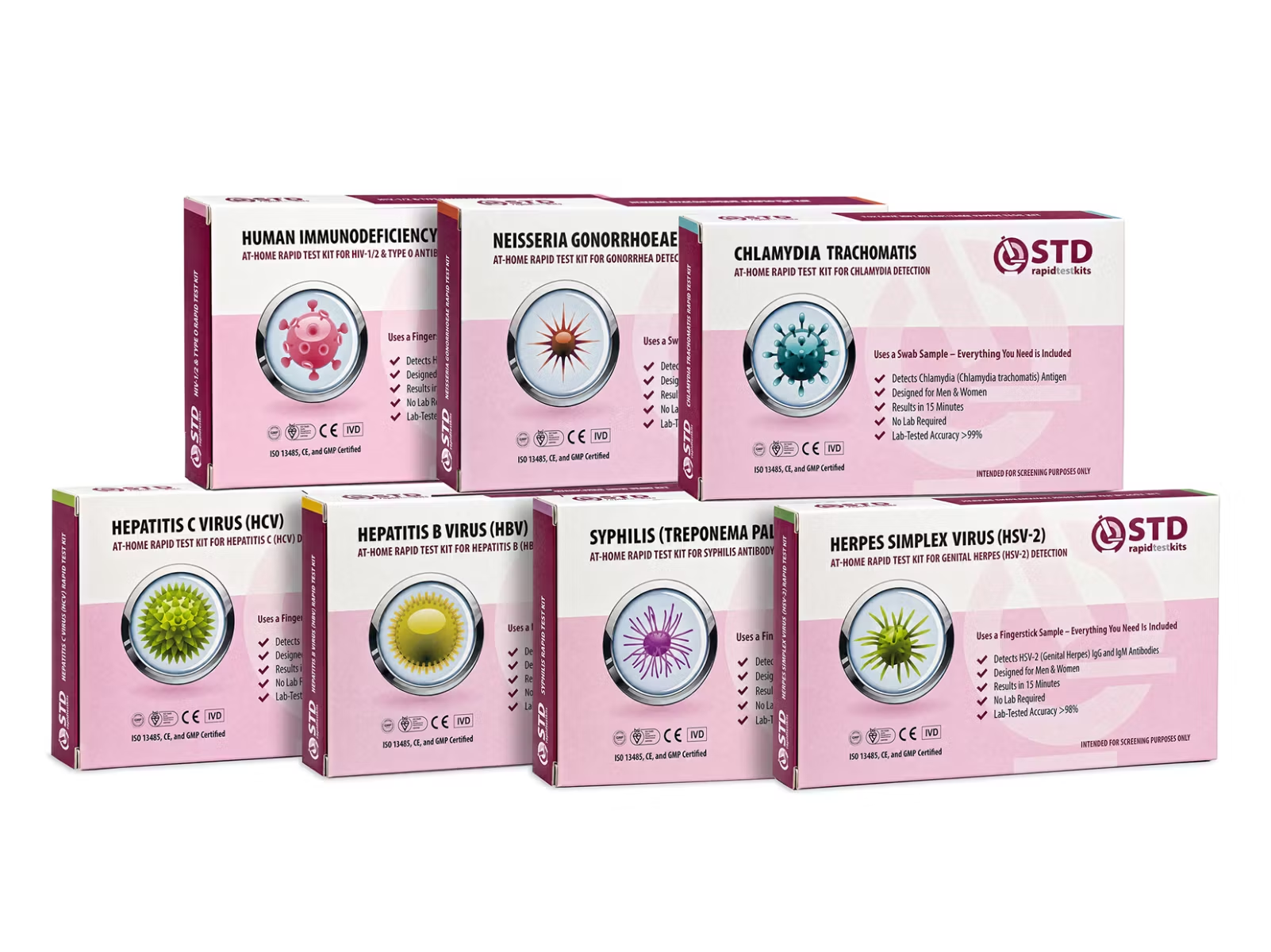
- Yes, especially after a new sexual contact. The CDC explicitly notes that many STIs have no symptoms or only mild ones, which is why testing matters even when you feel mostly fine. A combo at home kit screens for the most common infections in a single sitting and gives you a starting answer in about 15 minutes.
- U.S. Centers for Disease Control and Prevention. About Genital Herpes. Used here for the claim that most people with genital herpes do not know they have the infection because symptoms are absent or very mild.
- U.S. Centers for Disease Control and Prevention. About Trichomoniasis. Used for the 70% asymptomatic rate and the listing of itching, burning, and irritation as common symptoms.
- U.S. Centers for Disease Control and Prevention. About Chlamydia. Used for the typical symptom profile (discharge, burning urination) and the note that chlamydia is often asymptomatic.
- U.S. Centers for Disease Control and Prevention. About Sexually Transmitted Infections. Used for the general statement that many STIs have no symptoms or only mild symptoms, and that testing matters when sexually active.
- U.K. National Health Service. Genital Herpes. Used for the description of tingling, burning, and itching as early herpes symptoms and the note that the prodrome is contagious before blisters appear.
- World Health Organization. Sexually Transmitted Infections (STIs) Fact Sheet. Used for global context on STI prevalence and the importance of screening for asymptomatic infections.
