






Quick Answer: A negative STD test only reflects your status at a specific point in time, and doesn’t tell you anything about your partner’s. Unless both of you test (and retest at the right times), you may still be at risk.
This Isn’t About Blame, It’s About Biology
Let’s be clear: this isn’t about trust, fidelity, or assumptions about your partner’s past. This is about the basic science of how STDs spread, and how easily someone can carry an infection without knowing. Around 1 in 5 people in the U.S. has an STD at any given time, and most don’t have any symptoms. That includes long-term relationships, queer relationships, “monogamish” arrangements, and brand-new flings.
Andre, 32, had been with his boyfriend for two years when a routine exam revealed he had chlamydia. “We hadn’t cheated. We got tested when we first got together. I was shocked,” he said. Turns out, his partner had never tested again, and the infection had quietly passed back and forth until Andre started showing symptoms.
“I felt betrayed, but it wasn’t about cheating. It was about not knowing, and not checking.”
Even in the most committed setups, people bring histories into bed with them. And STDs don’t care how much you trust each other, they just need skin, fluid, and a gap in testing to move from one body to another.
What Your Negative Test Actually Means (And Doesn’t)
Testing negative doesn’t mean you don’t have an STD. It means the test didn’t detect one, yet. That distinction matters, especially when you’re testing during the early stages after exposure. Every infection has a “window period”, a stretch of time between exposure and when a test can reliably detect it. During that time, you can test negative and still have an active infection.
The person you’re sleeping with might also be in that window. Or they may never show symptoms at all. If they weren’t tested when you were, or if they’ve had any other partners since, you don’t know their status. And unless they test too, you never will.
| STD | Can Be Asymptomatic? | Typical Window Period | Can You Test Negative While Infectious? |
|---|---|---|---|
| Chlamydia | Yes (often) | 7–14 days | Yes |
| Gonorrhea | Yes | 5–14 days | Yes |
| HIV | Yes (early stages) | 10–33 days (NAAT) | Yes |
| Herpes (HSV-2) | Very often | Up to 12 weeks (antibody test) | Yes |
| Trichomoniasis | Yes (especially in men) | 5–28 days | Yes |
Table 1: Even with negative results, many STDs can still be present during the early testing window, especially if your partner hasn't been tested at the same time.
That’s why mutual testing matters. If your test is negative but your partner’s is positive (or untested), you may still be exposed, and at risk for reinfection even after treatment.
People are also reading: Silent STDs That Can Leave You Infertile Without a Clue
Case Study: “We Tested Together Once. That Was It.”
Marissa, 26, and her ex-boyfriend got tested together after six months of dating. Everything was negative, and they stopped using condoms shortly after. “It felt like a milestone,” she said. “Like, ‘We’re grown-ups. We’re safe now.’” Two years later, after a routine check-up post-breakup, Marissa tested positive for HPV and trichomoniasis.
“I called him, furious. But honestly? We just never tested again. I don’t even know when or from who it came. It could have been dormant. Or his. Or mine.”
Many people think of STD testing as a one-time event, like checking off a box. But testing is a snapshot, not a shield. If only one person is tested, you’re still flying half-blind. And if testing stops after a single “all-clear,” infections can remain hidden until they show up in routine exams, or painful symptoms.
The reality: STDs can sit in your system for weeks, months, even years without symptoms. Testing only you is like checking one tire on a four-wheel car. You need the full picture. Otherwise, you're just guessing.
Check Your STD Status in Minutes
Test at Home with Remedium7-in-1 STD Test Kit

 For Men & Women
 Results in Minutes
 No Lab Needed
 Private & Discreet
Order Now $129.00 $343.00
For all 7 tests
The Reinfection Loop: How Untested Partners Put You Back at Risk
Let’s say you test positive for chlamydia, get treated, and resume sex with your partner. But they never got tested, or assumed they were fine because you got medication. You’re clean now, right?
Wrong. If your partner still has the infection and you resume sex, they can give it right back to you. This happens so often it has a name: ping-pong transmission. It’s one of the biggest reasons people test positive for the same STD twice in the same year, even when they think they’re being careful.
Nina, 38, had three rounds of treatment for trichomoniasis in under 12 months. “Each time, my doctor kept saying, ‘You need to make sure your partner gets tested and treated, too.’ But I was embarrassed to push. He didn’t have symptoms, so he didn’t think it was real. Now I know better.”
“We were treating me, but we weren’t treating the problem.”
This kind of loop isn’t just frustrating, it’s emotionally exhausting and physically dangerous. Reinfections can increase your risk of complications like PID (pelvic inflammatory disease), infertility, or chronic pain. And if you’re dealing with herpes or HIV, untreated partners can affect the frequency and severity of your own symptoms over time.
Why You Can’t Rely on Symptoms, In Them or You
If your partner isn’t showing symptoms, that doesn’t mean they’re uninfected. In fact, most STDs are stealthy, especially in men. According to the CDC, up to 75% of women and about 50% of men with chlamydia don’t notice symptoms. Trichomoniasis is often completely silent in male carriers. And herpes can be spread even when there are no visible sores.
This makes self-diagnosing, or using your partner’s symptom status as a barometer, completely unreliable. By the time visible signs show up, the infection may have already been transmitted, and you could both be cycling it back and forth without realizing it.
And when symptoms do appear, they’re often mistaken for other things. A burning sensation during urination could be a UTI… or gonorrhea. A small bump could be an ingrown hair… or herpes. Unless you test, and unless both of you test, you’re not getting the truth. You’re just guessing based on vibes and hope.
| Symptom | Common Misdiagnosis | Could Actually Be |
|---|---|---|
| Itching after sex | Yeast infection | Trichomoniasis, HSV |
| Small red bump | Ingrown hair, razor burn | Herpes, syphilis |
| Burning when peeing | UTI | Chlamydia, gonorrhea |
| No symptoms at all | N/A | Any asymptomatic STD |
Table 2: Many early STD symptoms mimic everyday issues. Testing is the only way to know.
If you’re experiencing symptoms and your partner isn’t, or vice versa, that’s not a sign of who “has it” and who doesn’t. It’s just biology being sneaky. The only answer is testing, ideally, both of you, around the same time, with follow-ups if needed.
At-Home Testing Makes It Easier Than Ever (For Both of You)
One of the biggest reasons people skip partner testing? Awkwardness. Nobody wants to ask, “Hey, can you pee in a cup and send it to a lab for me?” But modern at-home STD test kits are changing that. You can now test for multiple infections with a fingerstick, urine sample, or swab, from the privacy of your home, without dragging anyone to a clinic.
Think of it as a couples check-in. If you're having sex, you’re sharing more than just vibes, you’re sharing biology. Suggesting a shared testing moment isn't an accusation. It's a caring thing to do. You are saying, "I respect you enough to know the truth, not just guess."
If you don't know how to bring it up, you could say something like, "I just ordered a combo test kit for myself. Do you want me to get one for you too?" No pressure, just think it makes sense if we’re both on the same page.”
Need a discreet, quick option? Our Combo STD Home Test Kit checks for multiple infections and ships discreetly. It’s fast, accurate, and private, no clinic waiting rooms, no insurance drama.
Testing Is Love: Reframing the Conversation
For some people, asking a partner to test feels like saying they don't trust them. For some people, it's a trigger that brings back memories of relationships that were full of doubt or secrecy. But it doesn't have to be that way. Fear and shame don't really have anything to do with testing. It's about being open, caring, and taking responsibility together.
Jordan, 29, had avoided asking his girlfriend to test for months. “I didn’t want to seem controlling or make it weird,” he admitted. “But when I finally brought it up, she said, ‘I’ve been waiting for you to say something. I didn’t want to pressure you either.’ We ended up doing it together.”
Testing doesn’t have to be a dramatic sit-down. It can be casual, even intimate. You can do it together at home on a weekend. You can frame it as a health check, the same way you'd go for a physical or get your teeth cleaned. Because your sexual health deserves that same level of routine care and respect.
And if someone resists? That’s important data too. Someone who refuses to test, dodges questions, or minimizes your concerns is showing you something, not just about their status, but about how they handle shared responsibility. You deserve more than guesses and vague reassurances. You deserve real answers.
Why Retesting Matters (Even After a Clean Slate)
Even after you and your partner both test, that doesn’t mean you’re done forever. Depending on the timing of your last exposures, or the kind of sex you’re having, retesting may still be necessary. That’s because different STDs become detectable at different points. Testing too early can result in false negatives, even if you’re already infected.
Example: If you were exposed to HIV two days ago and test today, most rapid antibody tests won’t detect anything. A lab-based NAAT might catch it, but even that isn’t foolproof until around day 10–14. The same applies to syphilis, which may not show antibodies until several weeks after exposure.
That’s why many health providers recommend testing now, and again 3 to 6 weeks later, especially if you’ve had recent or high-risk contact. It’s not paranoia. It’s pattern recognition. Retesting fills the gaps that initial results can’t always catch.
If you’re being treated for an infection, retesting after treatment also confirms that it worked, and ensures your partner didn’t pass it back. Think of it as a double lock on a door. One test catches the obvious; the second confirms the fix.
Wondering if it's time to test again? Use our free Window Period Calculator to check the best testing window for your situation. It’s fast, anonymous, and built for real-life timelines.
People are also reading: Monogamous ≠ Safe: Why Loyalty Doesn’t Prevent Infection
What Happens If Only One of You Tests?
Let’s break it down bluntly. If you test and your partner doesn’t:
- You’re still vulnerable to STDs they may carry, even if they’re asymptomatic
- You could get treated and still be reinfected
- You might feel resentful, anxious, or suspicious over time
- You’re carrying all the responsibility while they avoid theirs
And if they test and you don’t? Same deal. You're the question mark. You're the one who could be unknowingly exposing them.
Testing only works when it's mutual. That’s when it becomes powerful. That’s when the data actually means something. Because “clean” is only meaningful if it's shared, recent, and real, not just assumed.
If you’ve already tested and you’re not sure how to ask your partner to do the same, here’s one approach that keeps things neutral and practical:
“Hey, just so we’re both protected, do you want to test together sometime this week? I already did mine, but it would be great to both have results we can feel good about.”
Remember, you’re not asking them to prove innocence. You’re inviting them into shared responsibility. That’s sexy. That’s safety. That’s respect.
Check Your STD Status in Minutes
Test at Home with Remedium6-in-1 STD Test Kit
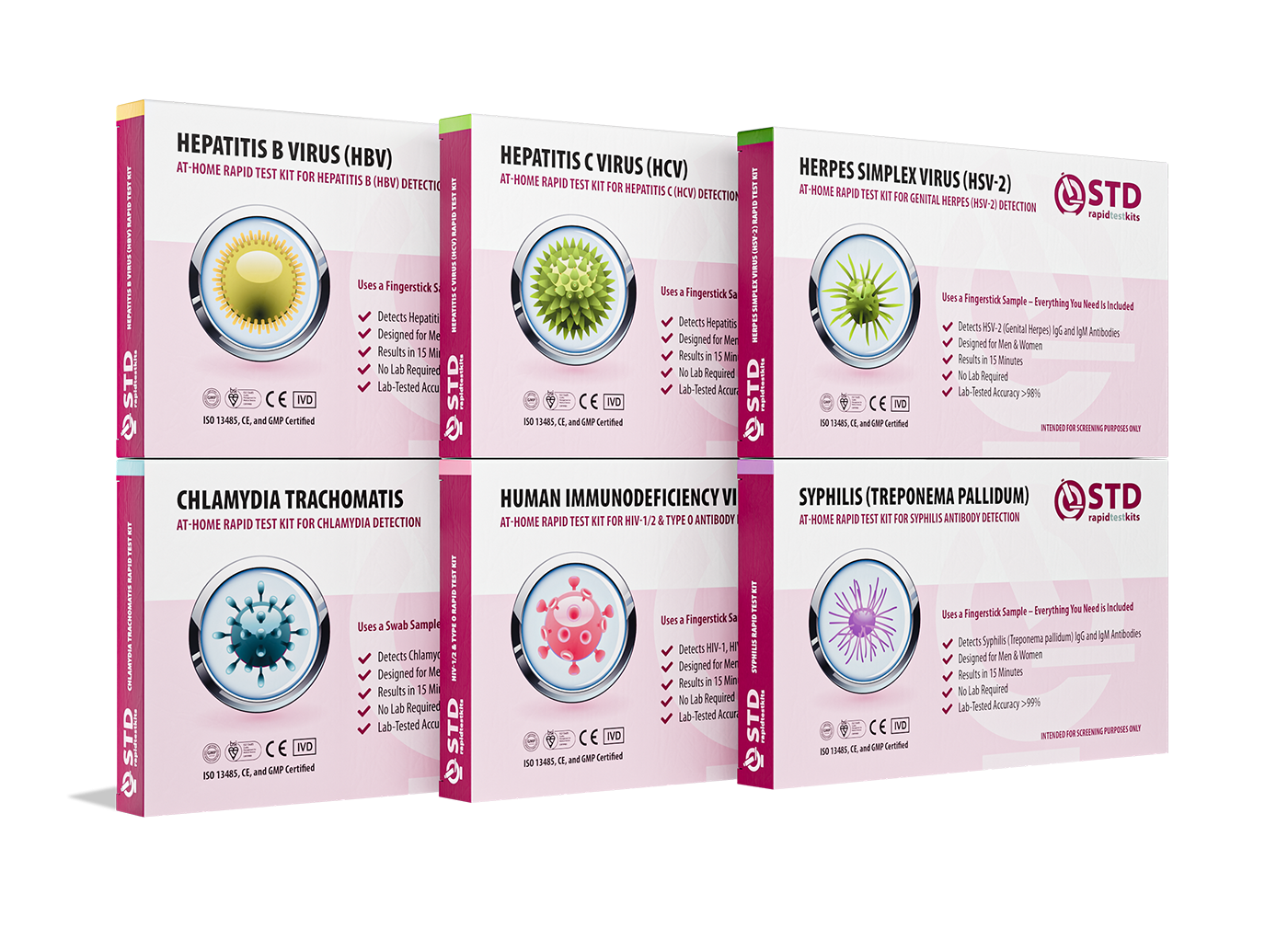 For Men & WomenResults in MinutesNo Lab NeededPrivate & Discreet
Order Now $119.00 $294.00
For all 6 tests
Call-to-Action: Get Peace of Mind for Both of You
You’ve read the stats. You’ve seen the stories. If you’re ready to stop guessing and start knowing, it’s time to act. This at-home combo test kit checks for the most common STDs quickly and privately. You can order one for you, one for your partner, or test together for clarity and connection.
Your body, your health, your peace of mind, don’t let them depend on someone else’s silence. Take back control. Testing together is protection, not paranoia.
FAQs
1. Can I still have an STD even if my test came back negative?
Yes, and this is where a lot of people get tripped up. Testing negative just means the test didn’t detect anything at that moment. If you were recently exposed, you could be in the “window period”, that sneaky gap where an infection is active but undetectable. Think of it like baking a cake and checking the oven too early. Nothing shows up on the stick yet, but it’s still cooking in there.
2. My partner says they feel fine, do they still need to test?
Absolutely. Most STDs don’t come with flashing neon signs. Many infections, like chlamydia or trichomoniasis, are silent in the body for weeks or even years. Feeling fine isn’t a medical diagnosis. Testing is the only way to know for sure. It’s not about paranoia, it’s about peace of mind, for both of you.
3. We’re in a monogamous relationship, do we still need to test?
Here’s the thing: monogamy is a relationship style, not a medical status. Unless both of you got tested before you became exclusive, and haven’t had other partners since, there’s still a chance one of you brought something into the relationship without realizing it. Testing doesn’t question loyalty. It confirms health.
4. My partner won’t test. What do I do?
First: breathe. This happens more than you think. People avoid testing for lots of reasons, fear, stigma, denial. But if someone flat-out refuses, that’s a conversation about trust and mutual care. You can’t force anyone, but you can protect yourself. That might mean using condoms, getting tested regularly, or rethinking the situation altogether.
5. Do we have to test at the same time?
Not strictly, but it helps. Testing together closes the information gap. If you test this week and they wait three months (and have other partners in between), your results no longer reflect the same timeline. Testing at the same time creates a shared starting point, and makes the conversation a lot less awkward.
6. What’s the risk of reinfection if I got treated and they didn’t?
High. Like, frustratingly high. This is how ping-pong infections happen: you get treated, they don’t, and boom, you’re back where you started. It’s not that the meds didn’t work. It’s that the infection never left the bedroom. That’s why testing both partners matters, especially after treatment.
7. Can I just wait for symptoms before testing?
We wouldn’t recommend it. STDs are sneaky. Many people never get symptoms, or they confuse them with things like UTIs, yeast infections, or shaving irritation. By the time symptoms do show up (if they ever do), the infection could have already spread or caused complications. Testing early = catching it before it causes damage.
8. What if I tested last year, am I still good?
Only if you’ve been in a bubble since then. If you or your partner have had new partners, any kind of unprotected sex, or haven’t tested together recently, it’s smart to check again. Last year’s test doesn’t cover today’s risks. Think of it like an oil change, you don’t do it once and call it forever.
9. Can I test my partner without telling them?
Nope. That’s a hard no. Testing requires consent, period. What you can do is invite them to test with you. Share your own results. Create a vibe of “we’re in this together” instead of “I don’t trust you.” If they’re hesitant, give them space, but don’t sacrifice your health or comfort in the process.
10. I’m scared to bring it up. What if they get mad?
Then that’s something to notice. A partner who cares about you should want to have this conversation, even if it’s a little uncomfortable. Start soft. Try: “I’ve been thinking about our health and how much I care about us. Would you be open to testing together?” If someone reacts with anger or defensiveness, it’s worth asking: are they hiding something, or just not ready to have adult conversations about sex?
You Deserve More Than a Maybe
One STD test can give you information. But only testing together can give you real peace of mind. Whether you're casually dating, nesting with a long-term partner, or exploring something new, knowing both your statuses is one of the most protective, empowering things you can do.
Don’t let uncertainty fill in the blanks. Don’t rely on assumptions. You’re worth the truth, and so is the person you’re sleeping with.
Take the guesswork out of it. Order a combo test kit today and start the conversation that could change everything, for the better.
How We Sourced This Article: We combined current guidance from leading medical organizations with peer-reviewed research and lived-experience reporting to make this guide practical, compassionate, and accurate.
Sources
1. CDC: STD Surveillance Statistics
2. CDC: Chlamydia , Detailed Fact Sheet
3. Getting Tested for STIs | CDC
4. Screening for Genital Herpes | CDC
5. Sexually transmitted infections (STIs) | WHO
6. Partner Services in STD Prevention Programs: A Review | NCBI
About the Author
Dr. F. David, MD is a board-certified infectious disease specialist focused on STI prevention, diagnosis, and treatment. He blends clinical precision with a no-nonsense, sex-positive approach and is committed to expanding access for readers in both urban and off-grid settings.
Reviewed by: Dr. Lena Qualls, MPH | Last medically reviewed: December 2025
This article is for informational purposes and does not replace medical advice.


