
Published: November 2025 | Last updated: May 2026 | Editorial review and quality control: Martina N.
Can an STD cause infertility without any symptoms?
Yes. Chlamydia, gonorrhea, Mycoplasma genitalium, and trichomoniasis can ascend into the reproductive tract and trigger pelvic inflammatory disease (PID), tubal scarring, or epididymitis without symptoms. The CDC reports 1 in 8 women with a PID history have difficulty getting pregnant (<a href="https://www.cdc.gov/pid/about/index.html" target="_blank" rel="noopener noreferrer">CDC</a>). Testing is the only reliable way to catch a silent infection before it causes lasting harm.
The hardest part of fertility damage from a sexually transmitted infection is that most people who have it cannot tell. There is no fever, no rash, no discomfort that points to a reproductive cause. The CDC describes chlamydia as an infection that often has no symptoms at all, even while it can cause permanent damage to a woman's reproductive system (CDC chlamydia fact sheet). Gonorrhea, trichomoniasis, and the increasingly recognized Mycoplasma genitalium follow the same quiet pattern. The infection settles into the cervix, urethra, or upper genital tract, where it can drive inflammation for months or years without any external clue.
By the time a signal arrives (unexplained pelvic pain, an ectopic pregnancy, or a fertility workup revealing scarred fallopian tubes), the damage may already be done. This article covers which infections cause that quiet damage, how the timeline works, who falls through screening gaps, and how to catch a problem while it is still treatable, whether through a clinic visit or an at-home chlamydia test.
This article is published by stdrapidtestkits.com, which sells at-home STI testing kits. We recommend products based on fit-for-purpose for the reader's concern, not commercial benefit.
Key Takeaways
- Chlamydia, gonorrhea, Mycoplasma genitalium, and trichomoniasis are the silent infections most strongly linked to infertility, and most people who carry them feel completely fine.
- Routine screening, not symptoms, is what catches these infections in time. The CDC recommends annual chlamydia and gonorrhea testing for all sexually active women under 25 and for older women with new or multiple partners.
How a silent STD damages fertility
"Silent STD" is not a clinical category. It is a shorthand for infections that are commonly asymptomatic, especially in women. The four biggest offenders are Chlamydia trachomatis, Neisseria gonorrhoeae (gonorrhea), Trichomonas vaginalis (trich), and Mycoplasma genitalium (Mgen). Each can persist in the lower reproductive tract for weeks or months without producing burning, discharge, or any other obvious warning.
The trajectory changes when the infection ascends. When chlamydia, gonorrhea, or Mgen moves from the cervix into the uterus and fallopian tubes, the immune response produces inflammation, then scar tissue. The lining of the fallopian tube is delicate and ciliated, with hair-like structures that guide a fertilized egg toward the uterus. Prolonged inflammation damages those cilia and replaces healthy tissue with fibrous scar (CDC PID overview). Even partial scarring can block an egg from reaching the uterus, or trap a fertilized egg inside the tube itself, which is what an ectopic pregnancy is.
This umbrella complication is called pelvic inflammatory disease, or PID. Most PID traces back to chlamydia or gonorrhea, with bacterial vaginosis, trich, and Mgen contributing in some patients.
For people with testicles, the analogous concern is epididymitis: inflammation of the coiled tube behind each testicle that stores and transports sperm. Chlamydia and gonorrhea are common bacterial causes in younger men. Untreated or recurrent epididymitis can impair sperm count, motility, and morphology.
The damage is mechanical, not microbial. Antibiotics clear the bacteria; they do not reverse scarring. The difference between treating a four-week infection and a four-year one is often the difference between intact tissue and permanent harm.
| Infection | Roughly how often asymptomatic | Main fertility-related risk | Typical timeline if untreated |
|---|---|---|---|
| Chlamydia | Most women; many men (CDC: often no symptoms) | PID, tubal scarring, epididymitis | Weeks to months |
| Gonorrhea | Most women; a smaller share of men (CDC: often no symptoms in women) | PID, tubal damage, epididymitis | Weeks to months |
| Mycoplasma genitalium | Most carriers have no symptoms | Emerging PID risk, persistent male urethritis; not on standard panels | Variable; often missed entirely |
| Trichomoniasis | Most cases minimally symptomatic or asymptomatic | Increased PID risk, pregnancy complications | Variable; frequently underdiagnosed |
The damage timeline: from weeks to permanent scarring
There is no fixed clock. Some people develop tubal damage within weeks of an untreated chlamydia or gonorrhea infection; others carry the same infection for years before any consequence appears. Some clear the bacteria spontaneously without ever knowing they had it. What is consistent is that risk accumulates with time: every additional month of untreated infection raises the probability of inflammation and scarring.
Reinfection compounds the problem significantly. A second or third chlamydia infection raises the odds of fallopian tube damage even when each individual episode is brief. The CDC recommends retesting roughly three months after treatment because reinfection from untreated partners is the main driver of repeat damage (CDC STI screening recommendations).
Individual biology matters too. Immune response, co-infections, age, and prior reproductive-tract history all influence outcomes.
Cumulative Fertility Risk Over Time
- Week 0 Infection establishes
Bacteria colonize the cervix or urethra. Usually no symptoms. Treatment now prevents nearly all downstream damage.
- Week 4 Ascending infection possible
Bacteria may begin migrating to the upper tract. Early PID or epididymitis can develop in some people.
- Week 12 Scarring risk climbs
Subclinical PID and tubal or epididymal scarring become more likely, particularly with repeat exposures.
- Week 26 Substantial permanent risk
Cumulative inflammation raises the probability of lasting tubal damage, ectopic pregnancy, or impaired sperm parameters. Most patients still have no symptoms.
- Week 52 High risk of irreversible damage
A year or more without treatment. Permanent scarring increasingly likely. Fertility consequences may surface only years later during a workup.
Risk of permanent reproductive damage increases the longer a silent infection persists. Annual screening exists to interrupt this timeline.
Untreated chlamydia: the silent infection most often linked to infertility
Chlamydia is the most reported bacterial STI in the United States and a major driver of preventable infertility. Chlamydia trachomatis is an obligate intracellular bacterium, meaning it lives inside the cells lining the cervix or urethra and triggers a slow, low-grade immune response that often stays below the threshold of awareness. The CDC notes that chlamydia often has no symptoms, but it can cause serious health problems even without them (CDC chlamydia fact sheet). Most cases are caught through screening, not symptoms.
When treated promptly with antibiotics (commonly a 7-day course of doxycycline), the infection clears and most people retain normal fertility. What matters is the gap between infection and treatment. The longer chlamydia persists, the higher the chance it ascends into the upper tract and starts the scarring process.
The CDC reports that about 1 in 8 women with a history of PID experience difficulty getting pregnant (CDC PID overview), and Cleveland Clinic notes that up to 1 in 10 develop a diagnosed infertility (Cleveland Clinic PID). A common pattern in fertility clinics: a couple has been trying to conceive for over a year, a workup reveals tubal scarring on a hysterosalpingogram (HSG), and chlamydia antibodies in bloodwork suggest a past infection that was never diagnosed. The patient often has no recollection of symptoms and sometimes only one prior partner.
The CDC recommends annual chlamydia and gonorrhea screening for all sexually active women under 25, plus older women with new or multiple partners or a partner with a known STI (<a href="https://www.cdc.gov/std/treatment-guidelines/screening-recommendations.htm" target="_blank" rel="noopener noreferrer">CDC STI screening recommendations</a>). Annual gonorrhea screening is also recommended for sexually active gay, bisexual, and other men who have sex with men. Most heterosexual men are not on a routine screening schedule, which is part of why silent infections continue to circulate.
What pelvic inflammatory disease actually does
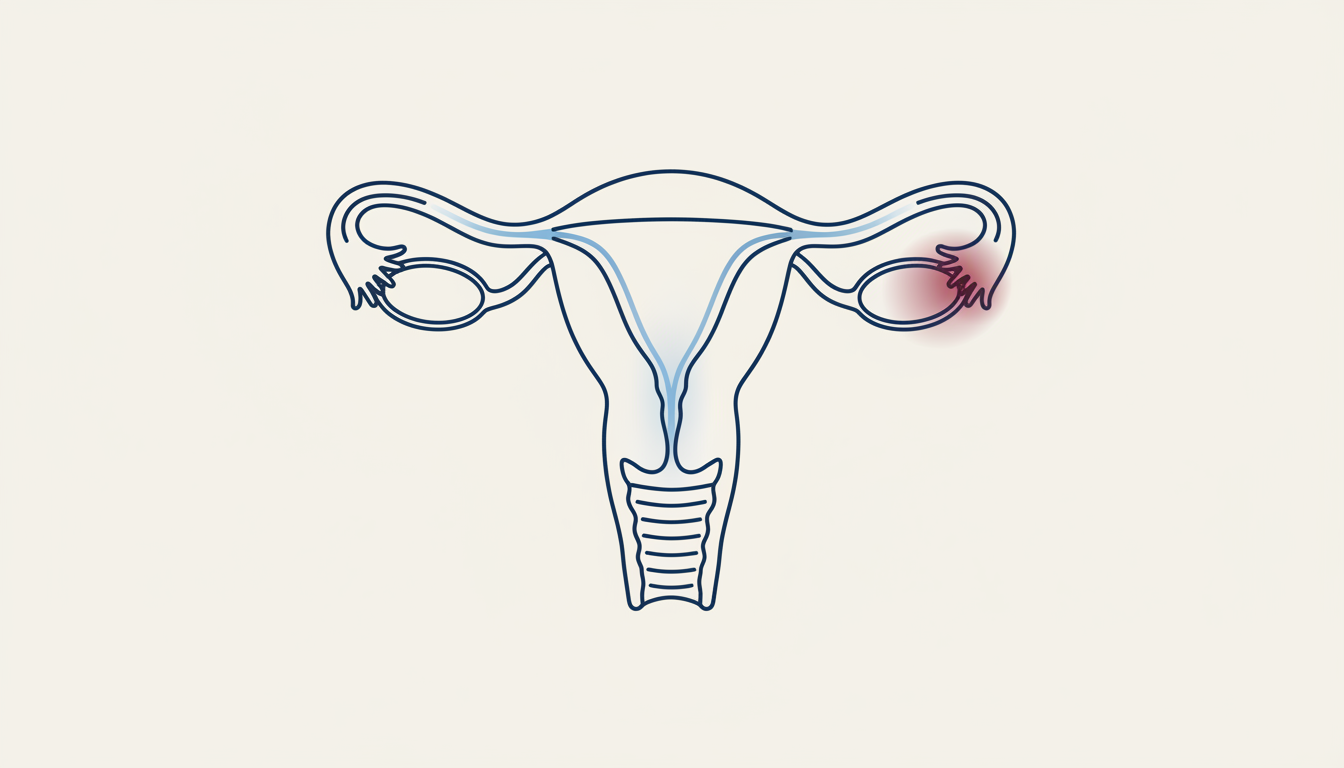
PID is the clinical consequence when bacteria from the cervix ascend into the uterus, fallopian tubes, and surrounding pelvic tissue. Acute PID can cause pelvic pain, fever, abnormal bleeding, or pain during sex. A substantial share of PID, however, is mild or entirely asymptomatic. Some women learn they had PID only years later, during an infertility evaluation, because the original episode never produced symptoms that drove a clinic visit. Scar tissue accumulates without fever, severe pain, or any external warning.
Each subsequent PID episode compounds the risk of lasting reproductive harm. The CDC lists tubal blockage, ectopic pregnancy, infertility, and long-term pelvic pain as consequences of PID (CDC PID overview). Prompt treatment of every confirmed pelvic infection matters even when a prior episode seemed to resolve on its own.
PID is treated with broad-spectrum antibiotics covering chlamydia, gonorrhea, and vaginal anaerobes. Treatment stops further damage and resolves symptoms, but it cannot reverse scar tissue that has already formed.
Silent STDs in men are often missed too
Most public conversation about STI-related infertility focuses on women, partly because PID and tubal scarring are more decisively linked to imaging findings. The picture in men is less documented but real. Chlamydia, gonorrhea, and Mycoplasma genitalium can each cause epididymitis, an inflammation of the epididymis that can be acute (painful, swollen) or low-grade and easy to miss. When the inflammation is chronic, men may notice nothing while it slowly damages the small tubules where sperm mature and the duct that transports them. The result: reduced sperm motility, abnormal morphology, or complete obstruction.
A second mechanism affects sperm quality directly. Inflammatory cytokines produced during chronic genital tract infection appear to impair sperm DNA integrity and reduce fertilization potential, even when no structural obstruction is visible.
Routine asymptomatic screening guidelines for heterosexual men in the United States are limited. The CDC recommends annual chlamydia and gonorrhea screening for men who have sex with men but does not currently recommend universal screening for heterosexual men (CDC STI screening recommendations). In practice, many men carry and transmit these infections without ever being tested. Infections often surface only when a partner tests positive or when a fertility workup reveals an abnormal semen analysis.
If a partner tests positive for chlamydia, gonorrhea, or trich, get tested and treated even if you feel fine. Concurrent treatment of both partners prevents the reinfection cycle that drives long-term damage.
If a partner tests positive for chlamydia, gonorrhea, Mgen, or trich, current clinical guidance is concurrent treatment for both partners regardless of whether the second person has symptoms. Treating only one half of a couple produces the reinfection cycle that drives most long-term fertility damage.
Who is most at risk, and when to screen
Several patterns combine to keep silent infections circulating. Screening guidance varies by age, anatomy, and risk profile, and many providers do not offer testing unless a patient asks. The assumption that monogamy equals zero risk overlooks past partners, undiagnosed prior infections, and the fact that chlamydia, Mgen, and trich can persist for months without symptoms. Education about STI testing as routine self-care, on the same calendar as a dental cleaning or a Pap smear, remains uneven (WHO STI fact sheet).
Treating an STI test as something you do only after a scare causes the most harm at population level. The WHO notes that more than 1 million curable STIs are acquired every day worldwide and recommends screening asymptomatic individuals in priority populations. Reframing testing as a normal part of sexual healthcare is the single biggest lever for reducing silent reproductive damage.
For trichomoniasis, routine screening is not standard outside of pregnancy or symptomatic presentations. That gap helps explain why trich is the most common curable STI in the world and also one of the most underdiagnosed. Mgen sits in a similar blind spot: it is rarely included on standard panels, so even motivated patients often have to request it by name.
When silent STI screening is recommended
Having even one of these factors is reason enough to screen, regardless of whether you feel symptoms.
- Sexually active and under 25 Common
- New sexual partner in the past 12 months Common
- Multiple sexual partners, or a partner with multiple partners Common
- A current or recent partner tested positive for an STI Common
- Prior diagnosis of chlamydia, gonorrhea, or PID Common
- Planning a pregnancy and not screened in the past year Less common
Most people who have chlamydia do not have any symptoms.
How and when to test for a silent STD
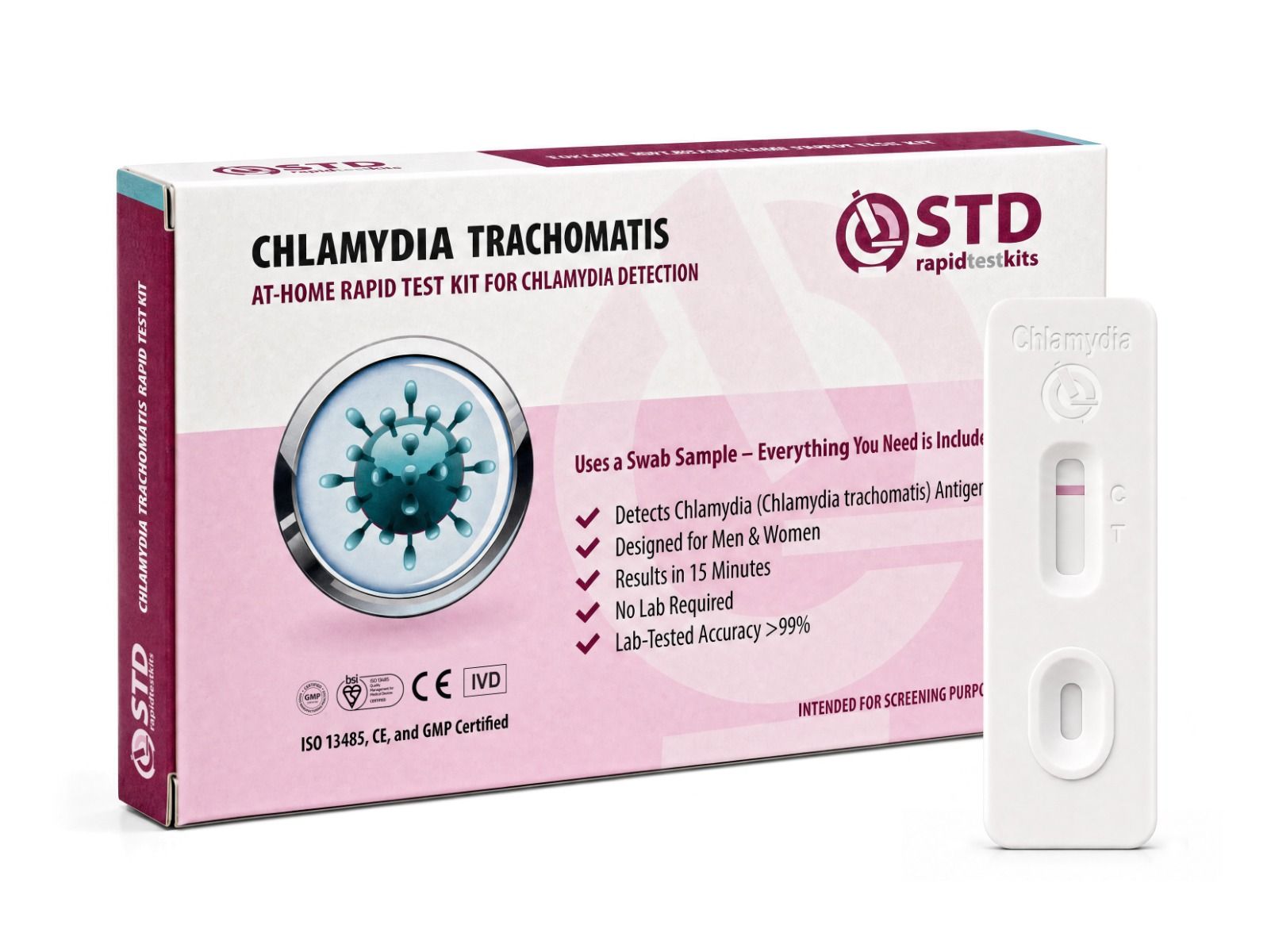
Testing comes in three practical categories: clinic-administered NAAT (nucleic acid amplification test) on a urine sample or swab, mail-in lab kits that ship a self-collected sample to a CLIA-certified laboratory, and at-home rapid lateral-flow tests that give a result in roughly 15 minutes.
- Lab-processed NAAT remains the analytical gold standard for chlamydia and gonorrhea. Sensitivity is very high, including for low-burden infections.
- Mail-in collection kits use NAAT chemistry on a self-collected sample and offer most of the analytical performance of a clinic visit, plus privacy. Turnaround is typically a few days.
- At-home rapid tests use lateral-flow chemistry. They are useful for fast screening at home, with the understanding that a positive result is worth confirming with a lab NAAT and a negative result in a high-suspicion situation should be rechecked at the appropriate window.
Testing too soon after exposure can produce a false negative because bacteria have not yet reached detectable levels. For chlamydia and gonorrhea, a baseline test from day 5 to 7 post-exposure can detect many infections, but the most reliable window is about 14 days. Trich is similar, with reliable detection around day 7 to 14. Mgen testing is most reliable around day 14 and usually requires specialist referral, since it is rarely included on home panels. If you have had a potential exposure (new partner, condom failure, partner notification), the most useful sequence is a baseline test now and a repeat test at the appropriate window.
If your concern is broader (multiple infections, unprotected exposure, planning a pregnancy), a combination panel covering several common STIs in one round is more efficient than single-infection tests in series. Combination kits typically include chlamydia and gonorrhea swabs alongside fingerstick blood tests for HIV, syphilis, and hepatitis.
After treatment, retesting matters
Treatment for chlamydia and gonorrhea is highly effective, but a single course of antibiotics is not the end of the story. The CDC recommends retesting roughly three months after treatment regardless of whether the partner was also treated (CDC STI screening recommendations). The reason is reinfection, not treatment failure: untreated partners, new partners, or an unrecognized concurrent infection can produce a second round.
Reinfection compounds the risk of permanent fallopian tube damage, sometimes more than the original infection. If you have ever been diagnosed with chlamydia or gonorrhea and never had a follow-up test, scheduling one now is reasonable even years later. A current negative test does not prove past damage was avoided, but it establishes a baseline going forward.
Antibiotics clear the active infection. They do not undo scar tissue that has already formed in fallopian tubes or the epididymis. Every month sooner is a month less of cumulative inflammation. If you have a history of untreated or repeatedly treated chlamydia or gonorrhea and you are planning a family, talking to your provider about a structured fertility evaluation (HSG for tubal patency, semen analysis for partners) is reasonable.
Can you still get pregnant after a silent STD?
For many people, yes. A single, promptly treated chlamydia or gonorrhea infection often leaves no lasting fertility consequence, particularly when caught before it ascends into the upper tract. The risk of significant damage rises with duration of untreated infection, with the number of separate infections, and with the development of PID.
If you have had a silent infection in the past and are now trying to conceive without success, a fertility evaluation can clarify what is happening. Several targeted diagnostic studies can assess whether past infection left structural damage. When tubal scarring is significant, assisted reproductive technology (IUI or IVF) can bypass the affected pathway, and many people who once had untreated chlamydia go on to have healthy pregnancies, sometimes naturally and sometimes with clinical support.
What determines the outcome is usually how long the infection persisted, how many separate infections occurred, and whether PID developed. If you have not had a recent STI screen and you are beginning fertility discussions with a partner, a full panel provides a reasonable baseline before any specialist workup.
How Clinicians Check for Past STI Damage
- Hysterosalpingogram (HSG): imaging study that checks whether the fallopian tubes are open or blocked by scar tissue.
- Transvaginal ultrasound: detects hydrosalpinx (fluid-filled, scarred tubes) and other structural changes in the reproductive tract.
- Semen analysis: evaluates sperm count, motility, and morphology for male-factor fertility questions.
- Chlamydia antibody testing: bloodwork that can reveal past chlamydia exposure even after the active infection has cleared.
What to do right now
Silent-STI fertility risk asks you to act without a felt prompt. Your body is not telling you anything is wrong, but annual screening exists precisely for this reason. The scenarios below cover most readers.
Consistent condom use reduces transmission of chlamydia and gonorrhea. HPV vaccination (recommended through age 26, with shared clinical decision-making through 45 per ACIP guidance) covers the most prevalent sexually transmitted virus. Pairing condom use with regular screening closes most of the remaining transmission gap. A positive result on a home test is something to confirm with a clinician; a negative result is one less unknown.
Which Testing Step Fits Your Situation?
Has it been more than a year since your last STI screening, and have you been sexually active in that period?
Yes: A baseline chlamydia and gonorrhea test is the highest-value next step. These two infections account for the bulk of bacterial silent-STI fertility damage.
Have you had a new sexual partner in the past several months, with at least 14 days since the last potential exposure?
Yes: Test now. Consider a broader panel that adds HIV, syphilis, and hepatitis for wider coverage in one collection event.
Are you or your partner planning a pregnancy in the next year or two?
Yes: Both partners should screen at the start of the planning window, not after months of unsuccessful attempts. Catching an asymptomatic infection at this stage is one of the highest-leverage fertility interventions available.
No: If none of these apply, your current risk is lower. Consider screening at your next routine health visit or whenever your situation changes.
General screening guidance. A provider who knows your history can advise on your specific situation.
Frequently asked questions
- Can I really have chlamydia for years without knowing?
- Yes, and it is more common than most people realize. The majority of chlamydia infections are caught through screening, never through symptoms. Annual testing for sexually active women under 25 exists specifically because the infection can persist silently for a year or more. A past partner may have carried it without knowing, which is why testing at each new relationship or once a year is a reasonable default regardless of how long you have been with your current partner.
- If I had chlamydia once and treated it, am I now infertile?
- Probably not. A single, promptly treated chlamydia infection often leaves no lasting fertility damage. Risk rises mainly with duration of untreated infection, repeat infections, and the development of pelvic inflammatory disease. If you are concerned, a discussion with your clinician about a tubal patency check (HSG) or semen analysis is reasonable.
- Can men become infertile from a silent STD?
- Yes. Chlamydia, gonorrhea, and Mycoplasma genitalium can each inflame the epididymis and reduce sperm motility or transport, sometimes without noticeable symptoms. Routine STI screening is rarely included in male fertility workups unless someone specifically asks. If you are planning a pregnancy or have had multiple partners since your last screen, request a panel that includes chlamydia and gonorrhea.
- What is the difference between PID and an STI?
- An STI is the underlying infection, most often chlamydia or gonorrhea. Pelvic inflammatory disease is what happens when those bacteria climb from the cervix into the upper reproductive tract and trigger generalized inflammation. Some PID episodes are dramatic and painful; many are subclinical and silent. The lasting fertility consequences come primarily from PID, which is why catching the underlying infection early matters.
- What about Mycoplasma genitalium and fertility?
- Mgen is an emerging concern. Most carriers have no symptoms, but the bacterium is associated with PID in women and persistent urethritis in men. It is not on most home panels and is usually tested via specialist clinic referral, often after standard antibiotics fail to clear symptoms. Rising antibiotic resistance makes prompt identification important.
- Is there a way to know if PID has already damaged my fertility?
- Imaging studies, primarily a hysterosalpingogram (HSG) or transvaginal ultrasound, can assess whether the fallopian tubes are open and whether structural changes such as hydrosalpinx are present. A clinician can also check chlamydia antibody status as a clue to past infection. These studies are typically ordered during a fertility workup, not as routine screening.
- I tested positive but feel completely normal. Could it be a false alarm?
- A positive on a clinic-based NAAT is highly reliable. A positive on an at-home rapid lateral-flow test is more likely correct than incorrect, but lateral-flow chemistry has lower analytical sensitivity than NAAT, so a positive home result is worth confirming with a clinician rather than dismissing. Feeling fine does not change the result; most people with chlamydia feel fine. The right step is follow-up, not reassurance from the absence of symptoms.
- How do I bring up testing with a partner without making it awkward?
- Frame it as shared health maintenance rather than suspicion. Something like "I would feel better if we both got tested before things progress, want to do it together?" reads as care, not accusation. Most reasonable partners respond well.
- U.S. Centers for Disease Control and Prevention. Chlamydia fact sheet, including the statement that chlamydia often has no symptoms and can cause permanent damage to a woman's reproductive system.
- U.S. Centers for Disease Control and Prevention. About pelvic inflammatory disease (PID), including the figure that 1 in 8 women with a history of PID experience difficulty getting pregnant, and that PID can cause tubal blockage, ectopic pregnancy, and infertility.
- U.S. Centers for Disease Control and Prevention. STI screening recommendations by age, sex, and risk profile, including the 3-month retest guidance after chlamydia or gonorrhea treatment and annual screening for women under 25.
- World Health Organization. Sexually transmitted infections fact sheet, noting that more than 1 million curable STIs are acquired daily worldwide and that gonorrhea and chlamydia are major causes of PID and infertility.
- U.K. National Health Service. Chlamydia condition overview, noting that most people with chlamydia do not have any symptoms.
- Cleveland Clinic. Pelvic inflammatory disease overview, including the figure that up to 1 in 10 people with PID receive a diagnosis of infertility and that scar tissue can block fallopian tubes.
- U.S. Centers for Disease Control and Prevention. Gonorrhea fact sheet, noting that gonorrhea often has no symptoms in women and can cause tubal scarring and infertility.
- Mayo Clinic. Pelvic inflammatory disease clinical overview, covering subclinical PID presentations and long-term fertility consequences including the finding that some women discover they had PID only during an infertility evaluation.
