





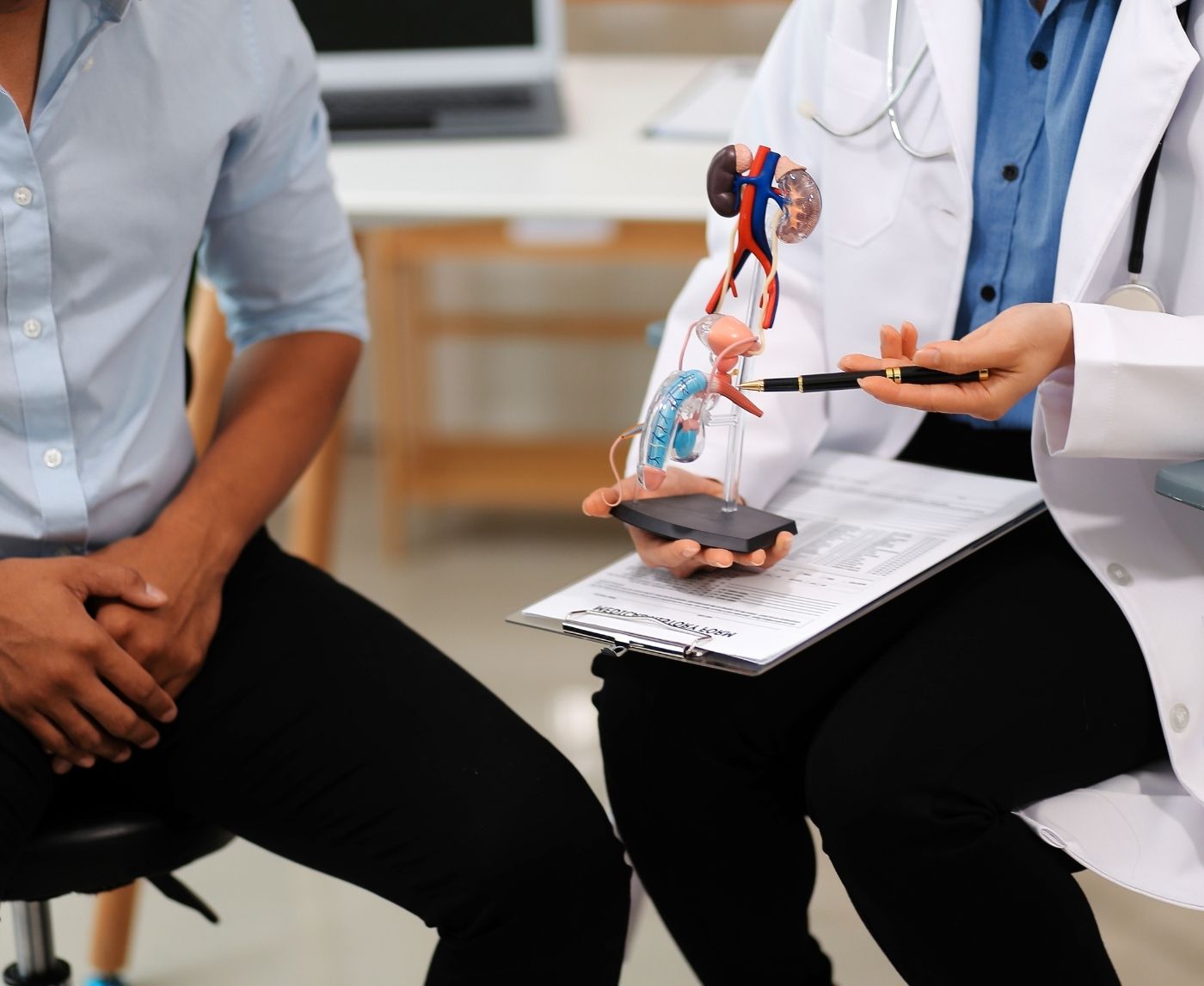

Quick Answer: Yes, hidden STDs like chlamydia and gonorrhea can silently damage reproductive organs, often without symptoms, and lead to infertility in both men and women.
When Silence Is a Symptom Too
Let’s get one thing straight: not all STDs scream when they arrive. In fact, the ones most likely to affect your fertility, chlamydia, gonorrhea, and sometimes trichomoniasis, are notorious for showing no symptoms at all. The CDC estimates that up to 70% of chlamydia cases in women and more than 50% in men are completely asymptomatic. That’s not a rounding error, that’s millions of people walking around with untreated infections and no idea they’re at risk.
Imagine going on with your life, having sex, falling in love, and maybe even settling down to start a family, all while a hidden infection is quietly inflaming your reproductive organs. For women, that might mean scarring of the fallopian tubes, blocked egg passage, or pelvic inflammatory disease (PID). For men, the damage could involve inflammation of the epididymis or reduced sperm quality, all without any pain or obvious discomfort.
It's not just rare horror stories. The data is sobering. According to the CDC, untreated chlamydia causes infertility in at least 10–15% of women who develop PID. For many of them, PID wasn’t diagnosed because the chlamydia was never caught. That’s the brutal math: no symptoms = no testing = no treatment = lasting damage.
The Infections That Target Fertility
Not every STD affects your ability to have children, but a few carry especially high risks when left untreated. Here's where the science is clearest, and the stakes are highest.
| STD | How It Harms Fertility | Silent Infections Common? |
|---|---|---|
| Chlamydia | Causes fallopian tube scarring, blocked tubes, PID; in men, can affect sperm and epididymis. | Yes – up to 70% in women |
| Gonorrhea | Similar to chlamydia; also linked to PID and tubal infertility. | Yes – often asymptomatic in men and women |
| Trichomoniasis | Can cause inflammation that disrupts cervical mucus and sperm mobility. | Yes – ~85% show no symptoms |
| Mycoplasma genitalium | Emerging cause of PID and infertility; less often screened for. | Often – still under-researched |
| Syphilis, Herpes, HIV | Usually don’t directly harm fertility, but complications or co-infections can indirectly affect outcomes. | Herpes often silent; others vary |
Table 1. How common STDs affect fertility and how often they go unnoticed. Even without symptoms, reproductive harm can accumulate over time.
What’s alarming is how long these infections can stick around. One study published in Sexually Transmitted Diseases journal found that untreated chlamydia can persist in the body for more than a year. That’s a full year of microscopic damage happening under the radar.
People are also reading: It’s Not Healing Like Usual, Could This Be Syphilis or Herpes?
How STD-Linked Infertility Happens (And Why It’s So Hard to Detect)
Fertility doesn’t shut down overnight. It fades, sometimes slowly, sometimes suddenly, depending on what the body’s been through. With STDs, it’s often the immune response and inflammation that cause the most damage. Here's a closer look:
In women, bacteria like chlamydia travel from the cervix into the uterus and fallopian tubes. The body reacts by sending immune cells to the area. The result? Swelling, inflammation, and eventually scar tissue that narrows or blocks the tubes entirely. Ovulation might still happen like clockwork. You might even track fertile windows perfectly. But if the egg can’t meet the sperm, pregnancy doesn’t happen.
In men, gonorrhea and chlamydia can cause epididymitis, swelling of the tube that stores and carries sperm. Some research suggests these infections may also impact sperm motility or shape, reducing the chances of fertilization even if ejaculation seems normal. But there’s often no pain, no warning sign, just a quiet disruption of function that may only be discovered years later when fertility testing begins.
It’s this invisibility that makes silent STDs especially cruel. You don’t know you’ve been affected until you try to conceive. And by then, the damage may be irreversible.
Check Your STD Status in Minutes
Test at Home with Remedium6-in-1 STD Test Kit
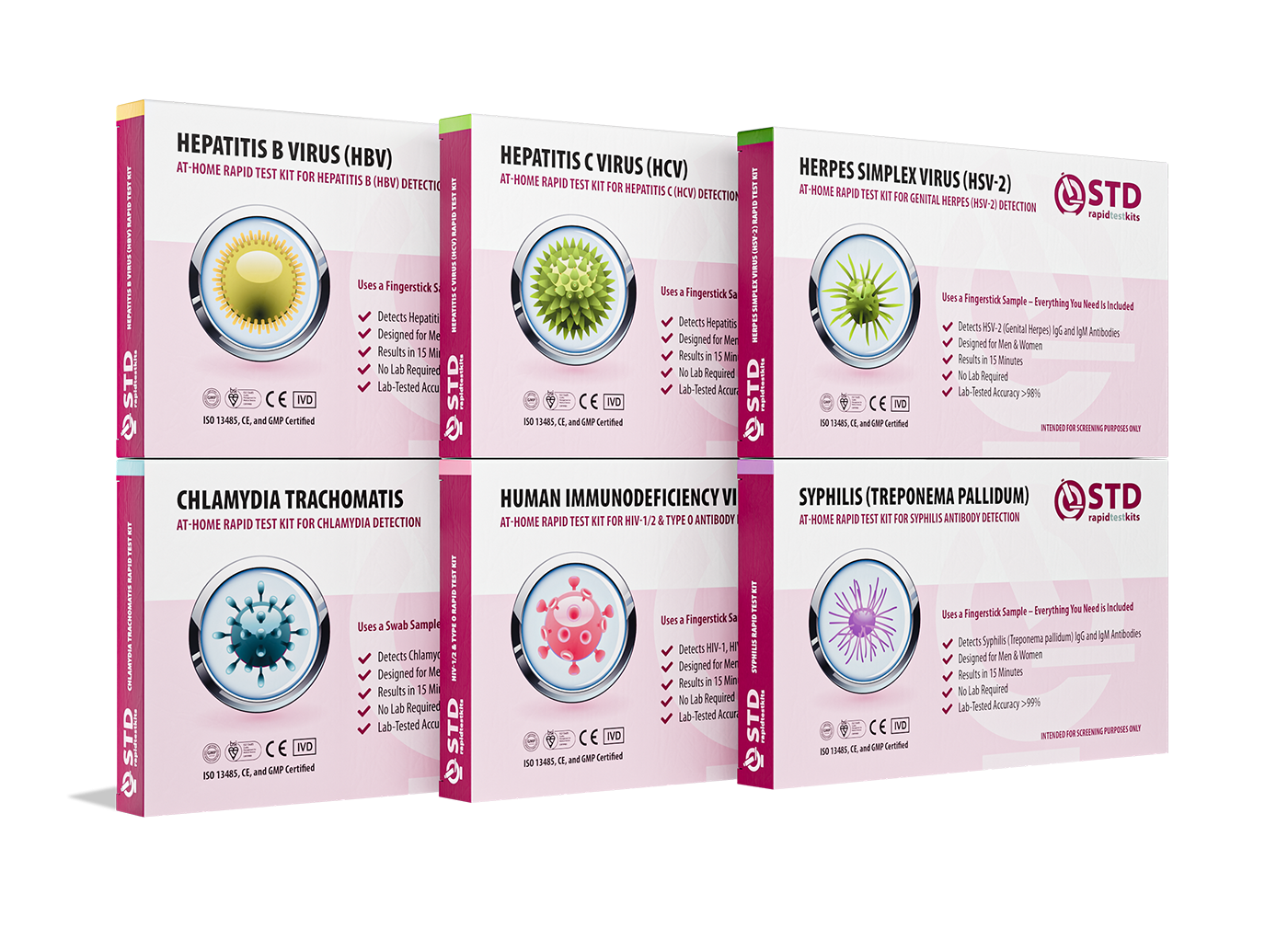
 For Men & Women
 Results in Minutes
 No Lab Needed
 Private & Discreet
Order Now $119.00 $294.00
For all 6 tests
Case Study: “I Had No Idea Anything Was Wrong”
Marcus, 34, had never once been told to get an STD test unless he had symptoms. He’d had a few casual partners in college but always used condoms “most of the time.” When he and his wife started trying to get pregnant, they assumed any delay was due to her cycle. But after months of testing, it turned out the issue was low sperm motility, and a surprise finding of old inflammation in the epididymis. The likely culprit? A past chlamydia infection he never knew he had.
“I honestly felt betrayed by my own body,” he said. “No one ever told me that an STD I didn’t even know I had could screw up my chances of being a dad.”
His story isn’t rare. And it’s not limited to one gender, one age, or one relationship style. Anyone who’s ever had sex without a full panel test, and that’s most people, could be walking around with silent damage they haven’t discovered yet.
That’s why early, regular testing is more than just a precaution, it’s prevention.
How Long Before a Silent STD Starts Affecting Fertility?
If you're hoping for a crystal-clear answer, like “damage starts on day 42”, we wish it were that simple. The timeline between infection and infertility depends on several factors: the type of STD, how long it goes untreated, how your immune system reacts, and whether you’ve had repeat exposures.
In general, infections like chlamydia or gonorrhea can begin damaging the reproductive system within weeks. But because symptoms don’t usually show up, the infection can linger for months, or even years, before anyone realizes something’s wrong.
One of the biggest myths is that you’ll know when something’s off. But research shows most people diagnosed with PID (Pelvic Inflammatory Disease), a leading cause of infertility in women, report no obvious warning signs. The damage builds gradually. By the time pain or irregular bleeding shows up, scarring may already be present in the fallopian tubes or uterus.
| Infection | Average Time to Cause Damage | Symptoms Usually Present? |
|---|---|---|
| Chlamydia | 2–3 weeks to begin affecting fallopian tubes or epididymis | Rarely |
| Gonorrhea | 1–2 weeks for tissue inflammation; faster if co-infection exists | Sometimes, but mild |
| Trichomoniasis | 4–6 weeks for cervical/vaginal inflammation that can alter fertility signaling | No, in ~85% of cases |
| PID (from any source) | Damage may begin within days, worsen over months | Not always; many cases are asymptomatic |
Table 2. Estimated timeline for fertility damage from untreated STDs. Timelines vary, but silent damage can start surprisingly early.
There’s also the question of compounding risk. If you've had multiple partners or weren’t screened between relationships, the chances of prolonged, untreated exposure go up. For some, it's not a single infection that does the harm, but years of missed testing opportunities that allowed chronic inflammation to set in.
At-Home Testing: The First Step to Reclaiming Your Future
Here’s the good news: you don’t need to wait for symptoms, or a fertility specialist, to take action. At-home STD testing has become fast, discreet, and accurate enough to give you clear answers without an invasive clinic visit.
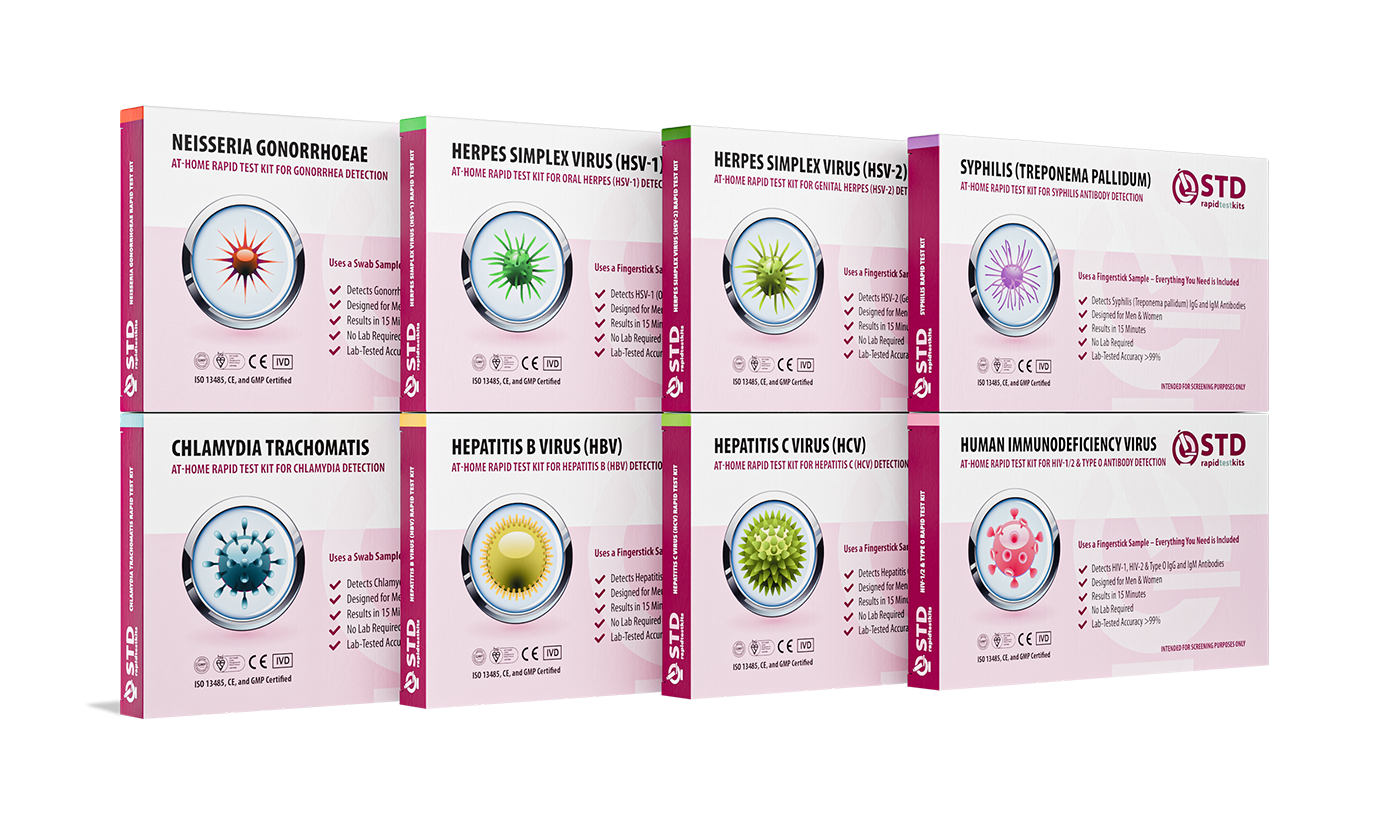
Modern STD Rapid Test Kits can find common infections like chlamydia, gonorrhea, syphilis, and HIV in urine samples or finger pricks with high sensitivity technology. Some tests can even check for more than one infection at a time, which can help you rule out causes of infertility that you might not have thought of.
If you're worried that a past hookup or a previous relationship may have left a mark, you can order a discreet Combo STD Test Kit and get answers in minutes. No labs, no waiting rooms, no side-eye from the receptionist.
This isn’t just about peace of mind. It’s about intervention. The earlier you catch an infection, even if it’s silent, the better your chances of preventing lasting reproductive damage.
Can the Damage Be Reversed?
It’s a question almost every patient asks after a fertility-related STD diagnosis: “Is it too late?” The answer depends on the type and extent of the damage, but there’s more hope than you might think.
If an infection is caught early enough, before full scarring or blockage, antibiotic treatment can often prevent further progression. In cases where scarring is already present, surgical options like laparoscopic tubal repair may help restore fertility. And for many, assisted reproductive technologies like IUI (intrauterine insemination) or IVF (in vitro fertilization) offer real paths to pregnancy even after fallopian tube damage.
For men, it may be possible to treat problems with sperm motility, hormone levels, or blockages, especially if the problem was caused by an old infection. But the timing is important. The longer an infection stays in the background, the more likely its effects will last.
One study published in Fertility and Sterility found that couples with chlamydia-related infertility who underwent early treatment were significantly more likely to conceive naturally than those who delayed testing. In other words, finding out sooner really does improve your chances.
The Role of Retesting and Follow-Up Care
If your last STD test came back negative, it doesn't mean you don't have the disease. Many people assume a single negative result means they’re safe, but if that test was taken too soon after exposure, or didn’t include all relevant STDs, it may have missed something important.
Experts recommend retesting if you’ve had unprotected sex with a new partner, if a partner has tested positive, or if you’re planning a pregnancy and haven't had a full panel within the last year. For chlamydia and gonorrhea, testing again three months after treatment is also advised, since reinfection is common.
And here’s something most people don’t realize: even if the infection is gone, follow-up imaging like a hysterosalpingogram (HSG) or semen analysis might be necessary to check for lasting effects. You may feel healthy, and your test may be negative, but underlying scarring or inflammation could still be interfering with fertility.
This is where a proactive mindset pays off. Don’t just wait until you’re trying to conceive to get answers. Testing now can give you the clarity, and the head start, you need.
When It’s Not Just About You: Partner Risks and Reproductive Health
Infertility rarely affects just one person. It’s a shared experience, often between two people trying to build something bigger than themselves. And when STDs are part of the story, the emotional complexity deepens.
Many couples discover a past silent infection only after months, or years, of struggling to conceive. It can stir up shame, blame, guilt, or fear, especially when no one knew the infection was even there. But here's the truth: most silent STDs aren’t the result of recklessness or betrayal. They’re the result of not being told how important regular testing is, especially when no symptoms are present.
Take Valeria and Jess, both in their early 30s. They'd been together for years and decided to start a family. Jess had no history of STDs. Valeria had never tested positive. But after a fertility workup, they found signs of tubal blockage likely caused by an undetected infection years prior. “It never even occurred to me that something from before we met could follow us into this part of our lives,” she said.
Stories like theirs remind us that testing isn’t about suspicion, it’s about protection. It’s not about who gave what to whom. It’s about making sure everyone’s future stays intact. If you’re with a partner now, or thinking about trying for a baby, consider testing together. Turn it into an act of mutual care, not just disease prevention.
People are also reading: How to Ask for an STD Test Without Sounding Accusatory
Testing Is Confidential. So Is Infertility. That’s the Problem.
Here's the part most people don’t talk about: the shame. Not just around sex or STDs, but around infertility itself. Too many people suffer in silence, thinking they’re the only ones who didn’t know, the only ones who “should have tested,” the only ones who feel broken.
We’re here to break that silence. To say it clearly: your value is not defined by your fertility. And your fertility is not protected by silence.
If you feel uncomfortable going to a clinic, or just don’t have access, there are discreet options. At-home testing kits arrive in unmarked packaging. No one has to know. You control who sees the results. And the earlier you get answers, the more options you keep open for yourself and your future.
Not sure where to start? STD Rapid Test Kits offers reliable, FDA-approved testing options for all the major infections linked to fertility risk, including combo kits for broader screening.
If your head keeps spinning, peace of mind is one test away.
What to Do If You’ve Already Had an Infection
If you’ve tested positive for an STD in the past, especially chlamydia, gonorrhea, or trichomoniasis, that doesn’t automatically mean you’re infertile. But it does mean you need a few follow-up steps to rule out complications.
Start by reviewing when the infection was diagnosed and whether you completed the full course of treatment. If you’re unsure, talk to a provider about testing for residual effects. For women, that may include an HSG to check for tubal patency. For men, a semen analysis can reveal sperm count, shape, and motility issues that may trace back to past inflammation.
And if you’ve never been tested but suspect something might be off, irregular cycles, low libido, pelvic pain, or just a nagging “what if”, get tested now. You don’t need a prescription. You don’t need permission. You just need the will to know.
Order a discreet chlamydia rapid test kit today and take the first step toward clarity.
Check Your STD Status in Minutes
Test at Home with Remedium8-in-1 STD Test Kit
 For Men & WomenResults in MinutesNo Lab NeededPrivate & Discreet
Order Now $149.00 $392.00
For all 8 tests
What Doctors Want You to Know
Fertility is complex. STDs make it more so, but they don’t make it hopeless. If you take one thing from this article, let it be this: silence doesn’t protect you. Testing does.
Healthcare providers across the board recommend regular STD screening for sexually active individuals under 25, and for anyone with new or multiple partners. But if you're outside those guidelines and still worried, you're not overreacting. You're being proactive.
It doesn’t matter if you were “careful most of the time.” It doesn’t matter if you don’t remember symptoms. It matters that you’re asking the question now. That means you still have time to protect what matters most, your health, your choices, and yes, your fertility.
FAQs
1. Can you really lose your fertility from an STD and not even know it?
Yeah. That’s the part that messes with people’s heads the most, how quiet it all is. No burning, no weird smell, no discharge. Just inflammation doing its thing in the background until, one day, you’re in a fertility clinic wondering what went wrong. It happens more than it should, especially with chlamydia and gonorrhea. That’s why testing regularly, yes, even when you feel totally fine, is your best defense.
2. How fast does chlamydia start damaging your body?
It’s not instant, but it doesn’t wait around forever either. Within a couple of weeks, it can climb your reproductive tract and start triggering inflammation. That inflammation is what causes scarring over time. For some, the damage builds slowly. For others, a single untreated infection can lead to full-blown PID in under a month. It’s not about panic, it’s about timing.
3. Can men be affected too? Or is this mostly a “female problem”?
Huge myth. Men absolutely can lose fertility from STDs. It’s just that no one talks about it. Infections like chlamydia can cause swelling in the epididymis (that little coil behind the testicle where sperm mature). If that gets messed up, sperm production and movement can tank. And just like in women, this damage often happens with zero symptoms.
4. Is there any way to tell if an STD caused my fertility issues?
Honestly? Sometimes yes, sometimes no. If you’ve got blocked tubes or low sperm motility and no other explanation, doctors will start connecting the dots. But unless you were tested during the infection, or had obvious signs of PID or inflammation, it’s often hard to “prove.” That’s part of why it feels so unfair. The evidence isn’t always visible until it’s too late.
5. So… if I had trich or herpes in the past, am I screwed?
Not necessarily. Trichomoniasis might increase risk a little due to inflammation, but it’s less studied. Herpes doesn’t usually mess with fertility directly at all. The concern there is more about complications during pregnancy, not conception itself. Still, if you’ve had a past infection, it’s worth doing a full checkup just to be safe.
6. I had PID once, years ago. Does that mean I can’t get pregnant?
Not a dealbreaker, but it does mean your road might be bumpier. Some people conceive naturally after PID, especially if it was treated quickly. Others may need help, like IVF. The only way to know what’s going on inside is with imaging (like an HSG) or a fertility evaluation. Don’t assume the worst, but don’t avoid answers, either.
7. What’s the point of testing if I don’t have symptoms?
Because that’s exactly how these infections cause damage, by hiding. The point of testing isn’t just to treat what’s there now, but to catch what could become a problem later. No symptoms doesn’t mean no infection. It just means no warning shot.
8. Can I test at home, or do I really need to go to a clinic?
You can absolutely test at home. STD Rapid Test Kits are built for this exact situation, when you want answers without dealing with judgmental waiting rooms or scheduling nightmares. Results in minutes, shipped discreetly, no awkward small talk with the nurse about your last partner.
9. What if I test positive now, does that mean the damage is already done?
Not necessarily. It means you’ve got a chance to stop it from getting worse. Antibiotics can knock out infections like chlamydia fast, and early treatment can prevent long-term complications. If you’re worried the damage already happened, talk to a provider about follow-up fertility tests. Knowing is better than guessing.
10. How often should I test if I’m thinking about having kids?
Best move? Get tested before trying to conceive. Even better? Test between partners, or yearly if you’re sexually active. STDs don’t care if you’re monogamous now. They care if they’ve been hanging out undetected for months or years. And you deserve to know before it becomes a bigger deal.
You Deserve Answers, Not Assumptions
STDs don’t always look like we expect. Infertility doesn’t always come with a warning. And damage to your body doesn’t always feel like pain. That’s why silence is so dangerous, and why your decision to get informed is already a powerful act of care.
Whether you're just curious, feeling afraid, or trying to protect your ability to conceive, one thing is clear: your fertility is worth protecting. Your future is worth clarity. And your health is worth the test.
Don’t wait and wonder, get the clarity you deserve. This at-home combo test kit checks for the most common STDs discreetly and quickly.
How We Sourced This Article: We combined current guidance from leading medical organizations with peer-reviewed research and lived-experience reporting to make this guide practical, compassionate, and accurate.
Sources
1. Infertility - Symptoms and causes | Mayo Clinic
3. Sexually transmitted infections (STIs) | WHO
5. Infertility: Frequently Asked Questions | CDC
6. Sexually Transmitted Diseases and Infertility - PMC
About the Author
Dr. F. David, MD is a board-certified infectious disease specialist focused on STI prevention, diagnosis, and treatment. He blends clinical precision with a no-nonsense, sex-positive approach and is committed to expanding access for readers in both urban and off-grid settings.
Reviewed by: Leah Stein, NP-C | Last medically reviewed: December 2025
This article is for informational purposes and does not replace medical advice.


