





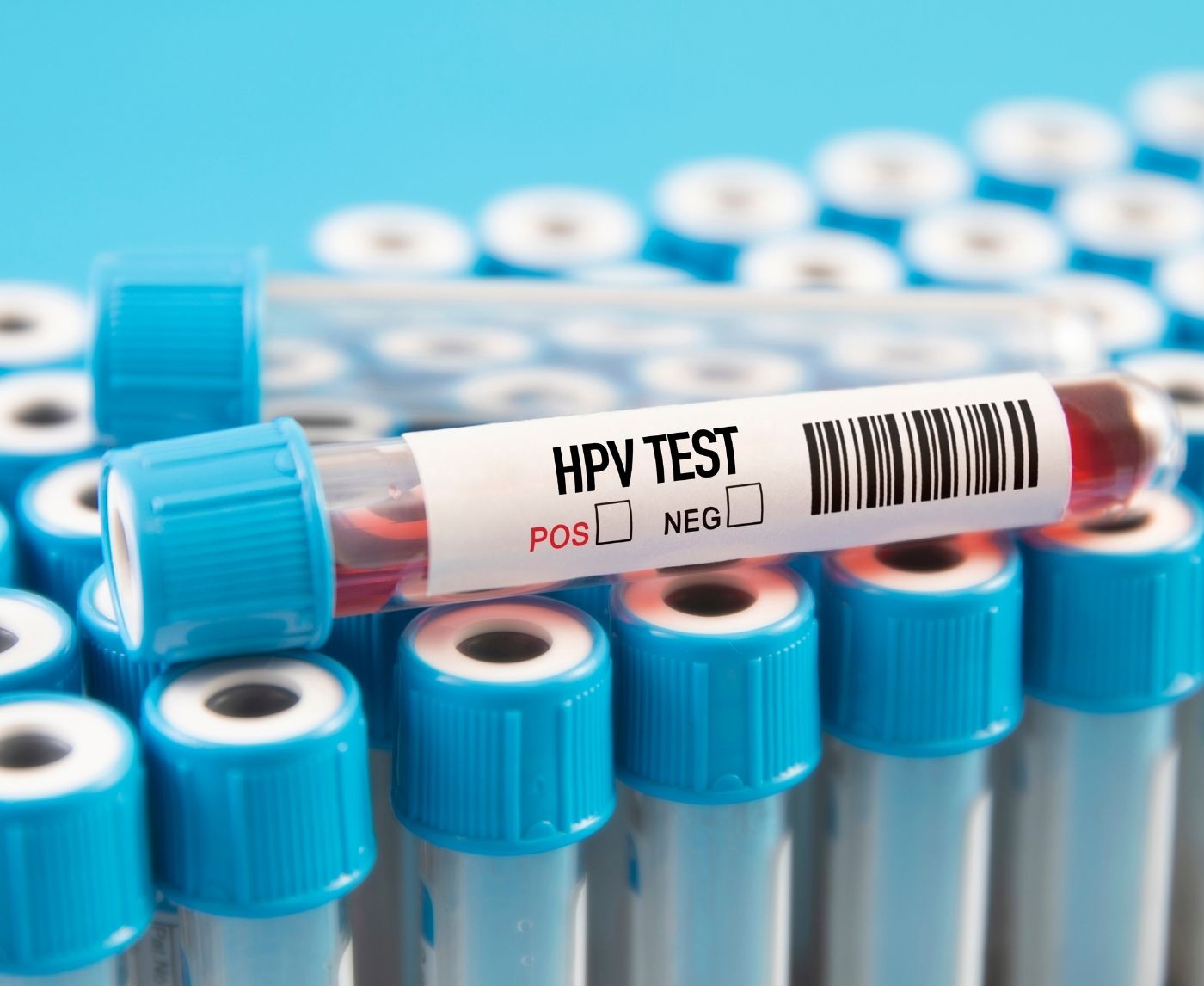

Quick Answer: HPV can still affect the throat, anus, penis, vulva, and post-surgical tissues even if you don’t have a cervix. Testing may still be recommended depending on your anatomy, sexual practices, and medical history.
Why This Article Exists (And Who It’s For)
HPV testing guidance has long centered around people with cervixes, usually cis women between 21 and 65. The default assumption? If you don’t have a cervix, you don’t need to think about HPV. That guidance works for some, but it leaves a huge group of people behind. This includes people who’ve had hysterectomies (partial or total), those born without a cervix due to congenital differences, and people who’ve transitioned and undergone gender-affirming surgeries.
But here’s the reality: HPV isn’t exclusive to the cervix. It’s a skin-to-skin transmitted virus that affects multiple parts of the body, and can cause genital warts, as well as cancers of the anus, throat, penis, and vagina. You don’t need a cervix to be at risk. You just need skin or mucosa in contact with an infected area. That’s it.
This guide is for everyone who’s been told they don’t need to worry when they absolutely should. It’s for the people left in the medical blind spot, for folks who’ve been told “you’re fine” without context, and for those wondering if that old HPV infection really went away after surgery.
Where HPV Shows Up (And Why It’s Not Just Cervical)
Picture this: Luca, a 35-year-old gay man, gets a call from his partner who recently tested positive for high-risk HPV. “But I don’t even have a cervix,” Luca says, laughing nervously. The doctor on the other end doesn’t laugh. “You might still want to consider screening. Especially anal.”
That conversation isn’t rare anymore. Anal HPV is increasingly common, especially among men who have sex with men, trans women, and people living with HIV. In fact, some studies show that anal HPV rates may be equal to or higher than cervical rates in high-risk populations.
HPV also affects the throat and mouth, particularly through oral sex. Oropharyngeal cancers, those at the back of the throat, including the tonsils and base of the tongue, have been on the rise for over a decade. According to the CDC, HPV causes about 70% of these cancers in the United States.
So if we only focus on the cervix, we’re missing the bigger picture. HPV is stealthy, slow, and sometimes asymptomatic for years. It doesn’t need a cervix to cause harm.
People are also reading: What to Order When You’re Not Sure: STD Tests by Situation
What Happens After a Hysterectomy? It Depends.
“You’ve had a hysterectomy, you’re all set.” That line sounds comforting, but it’s only half the truth. Not all hysterectomies are the same. Some people have just the uterus removed, while others also have the cervix taken out (a total hysterectomy). And still others retain part of the cervix or have it surgically reconstructed during gender-affirming procedures.
If you had a hysterectomy due to cervical cancer or abnormal Pap results, you may still need regular vaginal vault screening. That’s where doctors sample cells from the upper vagina where HPV-related changes can still occur, even without a cervix. For others, screening guidelines might be relaxed, but that doesn’t mean zero risk, especially if there’s a history of HPV or exposure to new partners.
Let’s break down what post-hysterectomy HPV screening might look like, depending on the type of surgery and personal history:
| Surgical History | HPV Testing Still Needed? | Why |
|---|---|---|
| Total hysterectomy (no cervix, no cancer history) | Usually no | Low risk if prior Pap smears were normal and no HPV history |
| Hysterectomy due to cervical dysplasia or cancer | Yes | Follow-up needed to monitor for recurrence or residual HPV |
| Partial hysterectomy (cervix retained) | Yes | Cervix is still present and can develop HPV-related changes |
| Post-op after gender-affirming vaginoplasty | Possibly | Screening decisions depend on donor tissue type and surgical method |
Table 1. HPV testing decisions after hysterectomy or gender-affirming surgery vary by history and anatomy.
Order Now $129.00 $343.00 Check Your STD Status in Minutes
Test at Home with Remedium
7-in-1 STD Test Kit
 For Men & Women
 Results in Minutes
 No Lab Needed
 Private & Discreet
For all 7 tests
HPV and Gender-Affirming Surgeries: What We Know (and Don’t)
Morgan, a 28-year-old trans woman, had a vaginoplasty using penile inversion two years ago. She’s sexually active, HPV-vaccinated, and unsure whether she should be getting screened. Her doctor seemed unsure too. “You probably don’t need anything,” he said. Probably.
This “probably” is where many trans and nonbinary people live, between lack of data and lack of training. Most research on HPV and genital cancers centers cis women. But the risks don’t vanish after surgery. The type of tissue used in gender-affirming surgeries (penile, scrotal, or sigmoid colon tissue) affects susceptibility to HPV. Some tissues are less prone to dysplasia, while others, especially if chronically inflamed or exposed to friction, may still develop HPV-related changes.
What we do know: HPV has been detected in neovaginas and in the penile skin of post-op patients. While cancer risk may be lower than in cervical tissue, it isn’t zero. Many experts now recommend shared decision-making around screening, especially if a patient is sexually active with partners who have a cervix, penis, or history of HPV infection.
In plain terms? If there’s sexual contact with areas where HPV can be exchanged, and if you’ve had surgery that created new internal or external genital surfaces, screening may still be appropriate. And if your doctor says they’re unsure, that’s not a reason to ignore it, it’s a reason to find a provider who understands trans health better.
HPV in the Mouth and Anus: Still Taboo, Still Real
Jared was in his late 40s when he developed a persistent sore throat. No fever, no runny nose, just a lump near his tonsil and a growing sense of unease. It wasn’t until a biopsy confirmed HPV-positive oropharyngeal cancer that he learned what had likely caused it: oral sex with past partners. “I didn’t even know HPV could do that,” he told his doctor, stunned. “I thought it was a cervix thing.”
It’s not. In fact, HPV-related head and neck cancers, particularly those of the tonsils and tongue, have increased dramatically in recent years. According to the CDC, nearly 20,000 HPV-related oropharyngeal cancers occur in the U.S. each year, mostly in men. And because these infections can go unnoticed for years, many people never know they were exposed, or that they could have been tested.
The same goes for anal HPV. It’s more common than most people realize, particularly among receptive anal sex partners regardless of gender. People with HIV are especially at risk; studies have shown that anal HPV infection rates can be as high as 90% in some groups.
But here’s the problem: very few providers offer or even mention anal or throat HPV screening. It’s not part of routine care. It’s not even something most people know they can ask for. This lack of visibility has created a massive testing gap, especially for trans, queer, and post-surgical patients who don’t fit the traditional mold.
Where Can You Get Tested, And What Are Your Options?
Let’s say you’re worried. You’ve had unprotected sex, or a partner tested positive, or you just want peace of mind. What are your options if you don’t have a cervix?
Testing access is uneven. Most at-home HPV tests are currently only validated for use with cervical samples. That means if you’re looking to test the throat, anus, or penis, your options are limited, and likely in-person. But that doesn’t mean you're stuck.
Some LGBTQ+ clinics and specialty providers offer anal Pap tests or throat swabs for HPV DNA, especially for higher-risk groups. These tests can be uncomfortable (emotionally and physically), but they’re often the only way to detect changes before they become serious. In cities like San Francisco, Toronto, or New York, you may even find community-based programs that offer free anal Pap screening during Pride events or sexual health campaigns.
And while FDA-approved at-home HPV tests for non-cervical sites don’t yet exist, that’s slowly changing. Pilot studies have explored self-collected anal swabs with encouraging results. Until broader approval arrives, your best bet is a provider who understands how to code and request these tests appropriately, and who respects your anatomy and identity.
To help compare what’s available, here’s a quick look at HPV testing options by body site:
| Body Area | HPV Test Available? | Method | At-Home Option? |
|---|---|---|---|
| Cervix | Yes | Pap smear + HPV DNA test | Some FDA-approved kits |
| Vaginal vault (post-hysterectomy) | Yes | Vault smear or HPV swab | No |
| Anus | Yes (off-label) | Anal Pap or HPV swab | Not yet FDA-approved |
| Throat | Rare (specialist only) | Oropharyngeal swab | No |
| Penis/scrotum | Rare | Visual exam, biopsy if needed | No |
Table 2. As of 2025, these are the HPV tests that can be done on different parts of the body. Access and accuracy may vary depending on location and clinical guidance.
At-Home vs In-Clinic Testing: What’s Realistic Right Now?
“I wanted to test at home because I don’t trust doctors with trans patients,” said Ren, a 30-year-old nonbinary person in rural Nevada. “But when I searched for HPV kits, they all assumed I had a cervix.”
This isn’t just a logistical issue. It’s emotional. It’s about trauma-informed care, or the lack of it. Many people seeking at-home testing do so because they’ve been dismissed, misgendered, or traumatized in clinics. They want privacy, dignity, and autonomy. And when at-home kits aren’t built for their anatomy, they’re left in the cold.
Right now, HPV at-home testing is only validated for cervical samples. That leaves out anyone without a cervix, whether due to surgery, identity, or natural variation. Even though self-swabs for anal HPV show promise in research settings, they aren’t yet approved for home use by the FDA.
Clinic-based testing, while more comprehensive, requires trust. It requires providers who understand diverse bodies and ask consent every step of the way. That means finding LGBTQ+ clinics, sexual health centers, or even GYNs with experience in gender-affirming care. It also means being prepared to advocate for yourself, or bringing someone who can advocate with you.
If you're unsure where to go, you can start with GLMA’s provider directory or the Planned Parenthood health center locator. These resources help connect people to clinics that are trained, or at least willing to learn, how to meet diverse needs with respect.
When the Test Comes Back Positive, Now What?
“I thought I was safe because I don’t have a cervix,” said Alana, a 44-year-old woman who had a full hysterectomy eight years prior. When her doctor told her she tested positive for high-risk HPV in a vaginal vault swab, she felt betrayed, not by a person, but by the medical advice she’d been given. “I was told I didn’t need to worry. That it wasn’t relevant anymore. But it was.”
If you’ve received an HPV-positive result, whether from a cervical swab before surgery, an anal Pap, or a post-op screening, the first thing to remember is this: you are not dirty, reckless, or doomed. You are part of the majority. HPV is the most common sexually transmitted infection in the world. In fact, most sexually active adults will encounter at least one strain in their lifetime.
Testing positive doesn’t mean you have cancer. It means the virus is present, and depending on the strain (low-risk vs high-risk), your doctor may recommend further screening or simply monitoring. In many cases, your body clears the virus on its own within two years, especially if you’re otherwise healthy and not immunocompromised.
But if you’ve tested positive and don’t have a cervix, next steps depend on where the virus was found. For example:
If the positive result came from an anal swab, you may be referred for high-resolution anoscopy or additional follow-up. If it came from a vaginal vault smear after hysterectomy, your provider may monitor cell changes (just as they would for someone with a cervix). If HPV was found on the penile shaft or foreskin, treatment may involve topical solutions for warts or further biopsy if changes are seen. And if it’s suspected in the throat, referral to an ENT (ear, nose, and throat specialist) is standard.
Testing positive means it’s time to open the door to honest care, not panic. This is when the provider you choose matters most. Choose someone who treats you like a whole person, not just a genital configuration.

People are also reading: Burning After Sex but No STD? It Could Be BV, Yeast, or Trich
What If Testing Isn’t Available to You?
Let’s be real: not everyone can get tested. Maybe your provider doesn’t offer anal or oral swabs. Maybe you live in a conservative area where no one understands trans anatomy. Maybe you don’t have insurance, or you’ve been denied respectful care before and can’t face another humiliating appointment. So what then?
First, know that testing is only one tool. Prevention, monitoring, and vaccination also play huge roles. If you’ve ever had HPV, your immune system might have cleared it. If you’ve never been vaccinated, you can still benefit, even in your 30s, 40s, or beyond. The HPV vaccine protects against multiple cancer-causing strains, and the CDC now recommends it up to age 45 in some cases.
Second, consider symptom monitoring. While HPV is often silent, visible warts, changes in discharge, sore throat, or anal bleeding may be signs to follow up. And even if testing isn’t available now, keep checking back. Medical access changes. So does your confidence to demand it.
Jules, a 38-year-old nonbinary reader, told us: “I didn’t get tested for years because I was afraid they’d misgender me again. But once I found a queer-friendly clinic, it felt different. I felt seen. And that made all the difference.”
If you’re still searching, you’re not alone. This guide exists for exactly that reason, to close the gaps the system still hasn’t.
Should You Get the HPV Vaccine If You Don’t Have a Cervix?
Absolutely. And here’s why.
The HPV vaccine isn’t just about the cervix, it’s about protection across multiple body sites. Gardasil 9, the current vaccine used in the U.S., protects against nine strains of HPV, including those most commonly linked to cervical, anal, penile, and throat cancers.
If you’ve never been vaccinated, talk to your provider, even if you’re over 26. While FDA approval officially caps at age 45, some clinics may offer it off-label beyond that in shared decision-making. The earlier you get it, the better, but later is still better than never.
Vaccination after surgery, after diagnosis, or even after HPV exposure can still offer protection from other strains you haven’t encountered yet. It’s not a treatment, but it’s a powerful tool in prevention.
And for those worried about being judged for asking: asking is an act of self-protection, not shame. If your provider treats you differently for wanting to protect yourself, you need a new provider. Period.
Check Your STD Status in Minutes
Test at Home with Remedium8-in-1 STD Test Kit
 For Men & WomenResults in MinutesNo Lab NeededPrivate & Discreet
Order Now $149.00 $392.00
For all 8 tests
Talking to Partners, Yes, Even Without a Cervix
“But I don’t even have the body part they’re worried about,” said Ellis, after learning their long-term partner tested positive for HPV. “Why should I even bring it up?”
Because HPV doesn’t stop at the cervix, and neither does risk. Even if you no longer have internal genitalia, you may still carry or transmit the virus through oral or anal sex, genital contact, or skin friction during intimacy.
Disclosure isn’t about scaring someone, it’s about context, consent, and care. You don’t need to offer a medical history, but you can say: “Just so you know, I’ve had HPV before. I don’t have a cervix anymore, but I still care about protecting us both.” That opens the door for real, shame-free conversations.
And if you're on the receiving end of that conversation? The only correct response is compassion. HPV is so common that stigmatizing someone for having it is like shaming them for ever having had a cold. What matters isn’t blame, it’s what you both do next.
FAQs
1. Can you still get HPV if you’ve had a hysterectomy?
Yep, especially if you’ve ever had HPV before or if your cervix was removed because of abnormal cells or cancer. The virus doesn’t just live in the cervix. It can hang out in the vaginal wall, anal area, or even the throat. So if a provider told you you’re “done forever” after surgery, they might’ve oversimplified it a bit.
2. I don’t have a cervix, do I still need to test?
Maybe. It depends on your body, your history, and how you have sex. If you've had HPV in the past, engage in anal or oral sex, or had gender-affirming surgery, some form of screening might still make sense. A good provider will look at your anatomy and behaviors, not just your paperwork.
3. Can trans women get HPV?
Yes, and this one’s not talked about enough. HPV spreads through skin-to-skin contact. That means it can affect the penis, scrotum, anus, and even neovaginas, depending on the tissue used during surgery. You don’t need a cervix to be at risk. You just need skin that touches other skin during sex.
4. Is there an at-home HPV test for people without a cervix?
Not right now. Most at-home HPV tests are designed for vaginal or cervical self-swabs. Anal and oral self-testing are being studied, but you’ll still need a clinic or provider for those kinds of tests, for now.
5. Can I pass HPV even if I don’t have any symptoms?
100%. That’s the trickiest part of HPV, it’s usually invisible. No warts, no pain, nothing. You could pass it during oral, anal, or even just close genital contact without ever knowing you had it.
6. I’m over 30 and already had HPV, should I still get the vaccine?
If you're under 45, it might still be worth it. Even if you’ve had one strain, the vaccine protects against others, including the nastiest ones linked to cancer. It won’t cure anything, but it can block future infections. Talk to a provider who won’t roll their eyes when you ask.
7. How often should I be screened if I don't have a cervix?
There's no universal rule, this one depends on your individual risk factors. If you’ve had cervical cancer, surgery for abnormal cells, or engage in receptive anal or oral sex, some providers recommend screening every 1–3 years. If your risk is low, you may not need regular testing at all.
8. Can HPV cause cancer even if I don’t have a cervix?
It can. HPV is linked to cancers of the anus, throat, penis, and vagina, none of which require a cervix to exist. That’s why focusing only on Pap smears leaves a lot of people unprotected. It’s about where HPV goes, not where it started.
9. Who do I see about this if I’m trans, nonbinary, or post-op?
Start with a provider who actually gets gender-affirming care. That could be an LGBTQ+ clinic, a sexual health center, or a GYN who works with post-op patients. If they flinch when you mention your anatomy, keep looking, you deserve better.
10.I’m HIV-positive. Is HPV more serious for me?
Unfortunately, yes. People living with HIV are more likely to have persistent HPV infections, and the risk of anal cancer goes up. That’s why anal screening is often part of routine HIV care in many cities. If your provider hasn’t brought it up yet, you absolutely can.
You Deserve Answers, Not Assumptions
If there’s one takeaway from this guide, it’s this: your body is not invisible just because it’s complex. Whether you’ve had surgery, transitioned, been dismissed by providers, or simply don’t fit the narrow definitions of “who needs testing”, you still deserve real, compassionate, informed care.
HPV isn’t just about the cervix. And testing isn’t just about ticking boxes. It's about protecting your future, your partners, and yourself. Every step counts, whether that means getting the vaccine later than planned, asking for an anal Pap, or looking for LGBTQ+ clinics.
Don't wait and wonder; get the answers you need. This at-home combo test kit checks for the most common STDs discreetly and quickly. While HPV screening is still evolving, knowing your status for other infections is a powerful start.
How We Sourced This Article: We combined current guidance from leading medical organizations with peer-reviewed research and lived-experience reporting to make this guide practical, compassionate, and accurate.
Sources
1. HPV and Oropharyngeal Cancer — CDC
2. Human Papillomavirus and Cancer — WHO
3. Basic Information about HPV and Cancer — CDC
4. HPV and Cancer — National Cancer Institute (NCI)
5. Human Papillomavirus and Associated Cancers: A Review — PMC / NCBI
6. HPV Infection: A Cause of Cancer in Men? — Mayo Clinic
About the Author
Dr. F. David, MD is a board-certified infectious disease specialist focused on STI prevention, diagnosis, and treatment. He blends clinical precision with a no-nonsense, sex-positive approach and is committed to expanding access for readers in both urban and off-grid settings.
Reviewed by: Raven O’Malley, MSN, NP-C | Last medically reviewed: December 2025
This article is only for informational purposes and should not be taken as medical advice.


