







Quick Answer: Yes, you can have an STD without symptoms. Many common infections, including chlamydia, gonorrhea, and even HIV, often cause no early signs. Testing regularly is the only way to know for sure.
Who This Article Is For (And Why It Matters)
This guide is for anyone who's ever skipped testing because everything “felt normal.” It’s for people in monogamous-looking relationships, people on hookup apps, people who haven’t had sex in months but remember that one night. It’s also for the ones who are scared to ask their partner to test or are living somewhere remote where clinics aren’t an easy option. Basically, it’s for most of us.
We live in a culture where if something isn’t hurting, we assume it’s fine. But when it comes to STDs, silence is not safety. Testing isn’t about guilt or assumptions, it’s about care. For yourself and for the people you connect with. This article will walk you through why symptoms aren’t a reliable indicator, how common silent infections are, the timing that makes tests accurate, and what to do if you test positive, because it happens more than you think.
The Problem With Relying on Symptoms
Imagine this: You're in a committed relationship and haven't had any new partners in over a year. One day, your doctor offers an optional STD panel during a routine check-up. You shrug and say sure. Days later, you get a call: you tested positive for chlamydia. That was Sarah’s story, and she's not alone.
Chlamydia, one of the most common STDs, often doesn’t produce symptoms, especially in people with vaginas. According to the CDC, about 70–90% of women and more than 50% of men infected with chlamydia don’t notice any symptoms at all until complications show up [CDC]. And it’s not just chlamydia. Gonorrhea, HPV, and even early-stage HIV can quietly persist without a single clue.
The body doesn’t always sound an alarm, and when it does, those “alarms” can be mistaken for minor things, like a yeast infection, razor burn, or a weird pimple. If you wait for pain or discharge to show up, you might be waiting too long.

People are also reading: Is It Herpes or Something Else? Post-Sex Rash Breakdown
Which STDs Are Often Symptomless?
Not all infections stay silent forever, but many do, at least at first. That early asymptomatic window is where harm can quietly build. Here's how the most common STDs present themselves in the real world:
| STD | Chance of No Symptoms | Common Misdiagnoses or Overlaps |
|---|---|---|
| Chlamydia | ~70% of women, 50% of men | UTI, yeast infection, no symptoms |
| Gonorrhea | ~50% of women, 10% of men | UTI, irritation, no symptoms |
| HPV | 90% have no symptoms, many clear it naturally | None until warts or abnormal pap |
| HIV | Early symptoms mimic flu or go unnoticed | Flu, fatigue, no symptoms |
| Herpes (HSV) | ~80% don’t know they have it | Pimples, ingrown hairs, nothing at all |
| Syphilis | Early sores often painless or missed | Rash, canker sore, nothing visible |
Table 1. Approximate rates of asymptomatic infection by STD, based on CDC and WHO reporting.
None of these statistics are meant to scare. They're meant to inform. If you feel fine, great. But that’s not a valid reason to skip testing, especially after new partners or if your partner’s status is unclear.
Check Your STD Status in Minutes
Test at Home with Remedium8-in-1 STD Test Kit
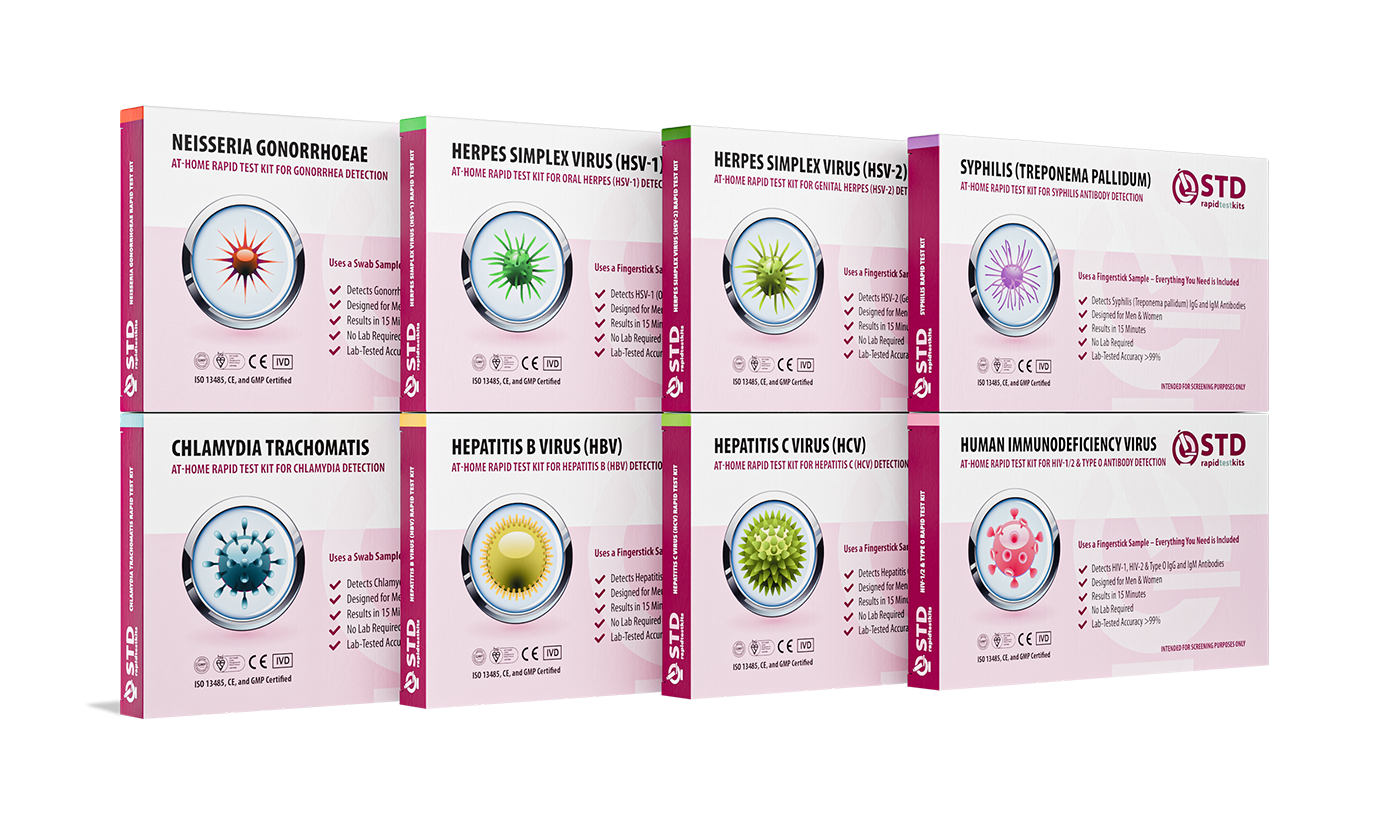
 For Men & Women
 Results in Minutes
 No Lab Needed
 Private & Discreet
Order Now $149.00 $392.00
For all 8 tests
When Should You Get Tested If You Feel Fine?
Testing isn’t just for when something feels off. It’s a form of sexual hygiene, like brushing your teeth or checking your blood pressure. Most experts recommend the following:
✔️ Once a year for all sexually active people under 25
✔️ Every 3–6 months if you have new or multiple partners
✔️ Immediately if a partner tests positive or has symptoms
✔️ After any condom break, unprotected sex, or sexual assault
✔️ During prenatal visits or before starting a new relationship
And yes, these apply even if you’re symptom-free. Regular testing is how people catch infections before they cause harm.
In one Reddit thread, a user wrote, “I only got tested because my best friend tested positive. Turns out I had gonorrhea too, and hadn’t even kissed anyone in months.” These are the wake-up calls we want you to have without the panic. Testing gives you power. Not testing gives the infection a head start.
Timing Is Everything: Window Periods vs Incubation
Let’s clear up a common confusion. The “incubation period” is how long it takes for symptoms (if any) to appear. The “window period” is how long it takes for a test to reliably detect an infection. They’re not the same, and that matters if you’re testing while feeling fine.
Say you have unprotected sex on a Friday night. On Monday, you take a test. Even if you’re infected, the test might not catch it yet. That’s because your body hasn’t produced enough of the bacteria, virus, or antibodies to trigger a positive result. This is where false negatives happen. You feel okay, the test says okay, but it’s not okay.
Here’s how long you should wait before testing to increase accuracy:
| STD | Test Type | Window Period | Best Time to Test |
|---|---|---|---|
| Chlamydia | NAAT / PCR | 7–14 days | 14+ days post-exposure |
| Gonorrhea | NAAT / PCR | 7–14 days | 14+ days post-exposure |
| Syphilis | Antibody | 3–6 weeks | 6+ weeks post-exposure |
| HIV | Ag/Ab or RNA | 2–6 weeks | 6+ weeks for full accuracy |
| Herpes | Antibody (HSV-2) | 4–6 weeks | 12+ weeks post-exposure |
Table 2. Estimated window periods by infection. These reflect common clinical guidelines and may vary slightly by test type or individual immune response.
The “I Tested Too Soon” Story
One of the most common patterns we see? Someone tests early, gets a negative, skips the retest, then symptoms hit weeks later.
Jamal had a condom break during a casual hookup. He panicked, ordered a rapid test online, and took it four days later. Negative. He exhaled, assumed it was over, and moved on. But around week three, he started feeling odd, a bit of burning, maybe. He retested and came back positive for chlamydia.
This story isn’t rare. And it’s not a failure, it’s biology. The test didn’t lie; it was just too early. That’s why experts recommend testing again at the peak of the window period, especially if the first test was close to exposure or symptoms evolve.
Bottom line: if you tested negative but your gut says something’s off, or if you tested early and the worry lingers, it’s okay to test again. Peace of mind isn’t a one-shot deal.
What Kind of STD Test Is Best If You Feel Fine?
If you don’t have symptoms, your options might feel overwhelming. Do you go to a clinic? Mail a kit? Use a rapid test at home? Let’s break it down based on your situation, not just the science.
Imagine someone on a road trip, living out of their car. They stop at a gas station, pull out a rapid test, and wait 10 minutes in the front seat. Or someone who doesn’t want their roommates knowing, they order a kit, collect a sample in the bathroom, and drop it in the mailbox. Or a clinic visit, where you’re surrounded by paperwork, fluorescent lights, and a nurse who gently asks about your last partner.
Each of these choices comes with tradeoffs:
| Method | Speed | Accuracy | Privacy | Best For |
|---|---|---|---|---|
| At-Home Rapid Test | 10–20 minutes | Moderate–High | Very high | Immediate peace of mind |
| Mail-In Lab Kit | 2–5 days | High (lab-grade) | High | People without nearby clinics |
| Clinic Visit | Same-day to 1 week | Very high | Low–Moderate | Persistent symptoms or complex cases |
Table 3. Comparison of common STD testing options by use case.
There’s no one-size-fits-all. But if you’re asymptomatic, and especially if privacy matters, at-home options are a solid first step.
Need somewhere to start? This discreet combo kit tests for multiple infections and arrives in plain packaging. No awkward clinic visits, no waiting room stares.
You Deserve Peace of Mind, Even Without Symptoms
Whether you're just curious or feel a low-key pit in your stomach, you deserve answers. STD Rapid Test Kits offers confidential, easy-to-use tests that meet you where you are, literally and emotionally.
Not sure where to begin? Start with a test, not with fear. Silence doesn’t always mean safety, but testing can mean peace.
When (and Why) You Should Retest
There are two main reasons you might need a second test: either you tested too soon, or something new happened since your last test. Both are normal, and neither means you did anything wrong.
Let’s say you got tested a week after a risky hookup and the results came back negative. That doesn’t necessarily mean you’re in the clear. As we saw in the window period table earlier, some infections don’t show up on tests right away. Retesting at the end of that window, especially around the 14-day or 30-day mark, can give you more confidence in your results.
You might also test after a treatment and still see a faint line or an odd result. That's because some tests can still find tiny amounts of dead bacteria or antibodies after the infection is gone. The CDC says that for most bacterial STDs, like chlamydia or gonorrhea, you should wait 3 to 4 weeks after finishing treatment before getting tested again [CDC Treatment Guidelines].
Here’s what that might look like in real life. Lydia got treated for gonorrhea after her ex tested positive. She followed all the instructions. No symptoms. Felt fine. But two weeks later, she panicked and took another test, still positive. Her doctor explained that the test picked up leftover bacterial DNA. One week later, she retested and was finally clear.
Retesting isn’t just for peace of mind. It’s a reality check. If you’ve had new exposures, are starting a new relationship, or just want to double-check before stopping condom use, it’s totally reasonable to test again.

People are also reading: Faint Line on a Herpes Test? Here's Exactly What to Do Next
What If the Test Comes Back Positive?
Let’s be real, getting a positive result can feel like a punch to the gut. But pause. Breathe. This is not a death sentence. In most cases, it’s the beginning of straightforward treatment and a return to clarity.
When Mateo opened his results email, he stared at the word “Positive” for chlamydia and felt his ears ring. But after texting his partner, talking to a telehealth provider, and picking up a one-dose antibiotic, his relief was stronger than the fear ever was. It had been scary, but it was over in a week.
Here’s what to do if you test positive:
First, confirm the result, especially if it came from a rapid or early test. A follow-up with a lab or clinic might be needed. Second, talk to a provider about treatment. Many STDs can be cleared with a simple prescription. Third, inform your partner(s). This part sucks, but it’s also a massive act of care and courage. You’re protecting them, and future you, from more complications.
If you’re not sure how to start that conversation, STD Rapid Test Kits offers resources and scripts. Some clinics also provide anonymous partner notification services so you don’t have to do it alone.
And last, retest later if advised, especially for infections like chlamydia, where reinfection is common if both partners aren’t treated at the same time.
Why Regular Testing is a Form of Care
You brush your teeth, get your oil changed, maybe even check your credit score. STD testing belongs in the same category: routine maintenance, not emergency damage control.
Think of it this way: testing is what responsible people do, not what “dirty” or “risky” people do. The most responsible people are often the ones testing most regularly, especially when they feel fine. They’re taking care of themselves and their partners, and they’re helping stop the quiet spread of infections that thrive in silence.
Whether you test once a year or once a quarter, the point is that you know your status, not guess it. That’s how you build trust in your relationships and confidence in your body.
Check Your STD Status in Minutes
Test at Home with Remedium7-in-1 STD Test Kit
 For Men & WomenResults in MinutesNo Lab NeededPrivate & Discreet
Order Now $129.00 $343.00
For all 7 tests
You’re Not Dirty. You’re Being Smart.
If you’ve ever delayed testing because you didn’t want to “deal with it,” know this: there is nothing dirty about being cautious. There is nothing shameful about having had sex. And there is definitely nothing embarrassing about getting tested when you feel fine.
It means you care. It means you’re thinking ahead. And it means you're making informed choices, not rolling the dice.
Need a test that respects your privacy and gives fast answers? This at-home combo test kit checks for multiple STDs and ships discreetly to your door. You don’t have to explain yourself. You don’t even have to leave your house. You just have to take the first step.
FAQs
1. Can I really have an STD and feel completely normal?
Yep, and that’s what makes them so sneaky. Infections like chlamydia, gonorrhea, and HPV often don’t throw up any red flags until they've already done some damage. You could be walking around symptom-free, feeling great, and still be passing something on. That’s why testing isn’t about symptoms, it’s about knowledge.
2. So how long should I wait to get tested after sex?
Not immediately. We know the panic is real, but hold tight. Most tests won’t catch an infection the next day, or even three days later. The sweet spot? Around 14 days for chlamydia and gonorrhea, and up to 6 weeks for HIV or syphilis. Testing earlier is okay for peace of mind, but follow it up later for confirmation.
3. Is it even worth testing if I don’t have symptoms?
Absolutely. Waiting for symptoms is like waiting for your check engine light to come on, by then, it might already be a mess under the hood. Most STDs do their damage quietly. If you’re sexually active, especially with new or multiple partners, regular testing is a solid act of self-care.
4. What if I already took a test last week?
Depends when “last week” was. If it was within a few days of exposure, your result might be a false negative. No shame, it’s common. If you’re still inside the window period, it’s smart to retest after another week or two. Testing once is good. Testing again at the right time? That’s smart as hell.
5. Do I really have to tell someone if I test positive?
You don’t have to shout it from a rooftop, but yeah, telling partners is part of protecting each other. It’s not about shame; it’s about care. If the idea makes your stomach twist, know there are anonymous notification tools out there. You don’t have to do it alone.
6. Will an STD go away on its own if I ignore it?
Wishful thinking. While some HPV infections can clear on their own, most bacterial STDs won’t, and they can cause real damage if left untreated. We’re talking fertility issues, chronic pain, and increased HIV risk. If something’s growing inside you, don’t ghost it. Treat it.
7. Do at-home tests really work?
They do, as long as you follow instructions and time it right. At-home rapid and lab tests use the same tech clinics do for chlamydia, gonorrhea, HIV, and more. They’re not second-tier. They’re just more private, which is a win if you hate awkward clinic vibes.
8. What if I’m in a monogamous relationship?
That’s great, but here’s the tricky part: unless you both got tested after your last outside partners, “monogamous” doesn’t always mean “low risk.” And life happens, people cheat, forget, or make assumptions. Testing together can actually build trust, not break it.
9. I took antibiotics recently. Could that affect my results?
Yes. If you took antibiotics that treat STDs, even if it was for something else, they could suppress the infection just enough to mess with your test result. Tell your provider or check the test kit info if this applies to you. And maybe wait a few weeks before retesting, just to be sure.
10. Can I get an STD from oral sex or just “fooling around”?
Short answer: yes. Herpes, gonorrhea, syphilis, and even chlamydia can spread through oral sex, mutual masturbation, or skin-to-skin contact. You don’t need full-blown penetration for something to get passed around. That’s why testing matters, no matter how “safe” it felt.
You Deserve Answers, Not Assumptions
Let’s be honest, most of us were never taught to treat STD testing like normal healthcare. It’s been wrapped in stigma, whispered about, or shoved under the rug until something “feels wrong.” But you’re here, reading this, asking the right questions. That already sets you apart.
Testing doesn’t mean you did something bad. It means you care enough to find out. It means you respect your body and your partners enough not to make assumptions. Whether you’re feeling fine, newly single, or just ready for clarity, you deserve answers based on truth, not guesswork, not vibes, and definitely not silence.
Don’t wait and wonder, get the clarity you deserve. This at-home combo test kit checks for the most common STDs discreetly and quickly.
How We Sourced This Article: We combined current guidance from leading medical organizations with peer-reviewed research and lived-experience reporting to make this guide practical, compassionate, and accurate.
Sources
1. CDC – Chlamydia: Symptoms and Treatment
2. Chlamydial Infections – STI Treatment Guidelines (CDC)
3. About Sexually Transmitted Infections (STIs) – CDC
4. Sexually Transmitted Infections (STIs) fact sheet – WHO
5. Sexually Transmitted Infections (STIs) overview – Cleveland Clinic
6. Sexually Transmitted Infections – StatPearls
7. Sexually transmitted infections and female reproductive health – PMC/NCBI
8. STI Screening Recommendations – CDC
About the Author
Dr. F. David, MD is a board-certified infectious disease specialist focused on STI prevention, diagnosis, and treatment. He blends clinical precision with a no-nonsense, sex-positive approach and is committed to expanding access for readers in both urban and off-grid settings.
Reviewed by: Dr. Anjali Rao, MPH | Last medically reviewed: December 2025
This article is for informational purposes and does not replace medical advice.


