







Quick Answer: Yes, it’s possible to get gonorrhea without cheating. This can happen through asymptomatic transmission, long dormancy, past untreated infections, or false test assumptions. Testing timelines and symptoms don’t always tell the full story.
When a Positive Test Feels Like a Betrayal
For Jamie and El, a couple in their thirties who had been together for five years, the word gonorrhea detonated more than just a health scare. “I was devastated,” El told a friend later. “I believed Jamie had cheated on me. What else could it mean?” But as they dove into testing timelines and medical guidance, they found themselves questioning their assumptions. Like many others, they discovered that STDs don’t always follow the rules we think they do.
Gonorrhea, like other bacterial infections, can lie low for weeks or even months, showing no signs. It can be contracted without any immediate symptoms, and, this part is crucial, it can be carried unknowingly for some time. If you've been sexually active before, even in relationships where testing didn’t happen upfront, there's a chance that you or your partner could have had a dormant case without knowing.
This doesn’t mean you shouldn’t take the result seriously, it means the conversation doesn’t need to start with blame.
The Medical Timeline: What We Know About Gonorrhea's “Silence”
Let’s be honest: most people don’t get tested between every partner. Many assume that if nothing hurts, burns, or leaks, they must be clean. But gonorrhea can be asymptomatic in up to 50% of men and up to 80% of women, depending on where it infects the body [CDC]. That means someone could unknowingly carry it for months, sometimes longer.
Now layer that onto this: the infection typically becomes detectable 2 to 14 days after exposure, but symptoms (if they show up) can take weeks. Add in the fact that not all tests are performed during clinic visits, and you've got a recipe for confusion, fear, and some very unfair accusations.
Here’s how the infection timeline typically looks:
| Event | Timeline | Notes |
|---|---|---|
| Exposure to Gonorrhea | Day 0 | Can occur through oral, vaginal, or anal sex |
| Infection Incubation | 2–14 days | May remain asymptomatic; person is still contagious |
| Typical Symptom Onset | Within 7 days (if any appear) | Many cases show no symptoms at all |
| Test Accuracy Window | 7+ days post-exposure | NAAT tests most reliable after 7 days |
Table 1. Gonorrhea timeline from exposure to detection. Note how delayed or silent symptoms complicate partner assumptions.

People are aslo reading: Cystitis or Chlamydia? What That Post-Wedding Burn Could Mean
Real People, Real Confusion: Why Gonorrhea Feels Like a Setup
Consider Bryan, 41, who hadn’t had a new sexual partner in two years when he tested positive during a routine screening. His partner, Dev, was furious, until they both learned that rectal gonorrhea, which often shows zero symptoms, could have been sitting dormant since a relationship Bryan had long before Dev. “It made us rethink what we thought we knew about trust,” Dev later admitted.
This isn’t uncommon. Reddit is filled with threads like “I didn’t cheat but tested positive for gonorrhea” and “Can I get an STD from my partner’s past without them cheating?” The answers aren’t always cut and dry, but medicine gives us a clearer path than assumptions ever could.
According to the Journal of Clinical Microbiology, some infections can go undetected if testing is done too early or if the sample site (throat, rectum, or urethra) isn’t screened properly. Many people who test negative once assume they’re cleared forever, but that’s not how bacteria, or time, works.
So If It’s Not Cheating, How Did I Get Gonorrhea?
There are several possible explanations that have nothing to do with infidelity. Let’s break them down, narratively, not judgmentally.
Imagine a woman named Kira who had a single hookup six months before meeting her current partner. No symptoms, no discomfort, and no reason to test. They’re now six months into their new relationship when she gets tested for a UTI that won’t go away, and it’s gonorrhea. She hadn’t cheated. Her current partner hadn’t either. It just took that long for something to flag the infection.
Other routes include testing errors (false negatives), untreated past infections, and asymptomatic cases that go unnoticed until routine checkups or unrelated health complaints arise. In rare cases, people can also become reinfected by a partner who was never treated, or by someone who tested too early.
Let’s clear something else up while we’re here: you cannot get gonorrhea from toilet seats, towels, or casual contact. That myth’s been put to rest by every credible medical institution [NHS].
Check Your STD Status in Minutes
Test at Home with RemediumGonorrhea Test Kit
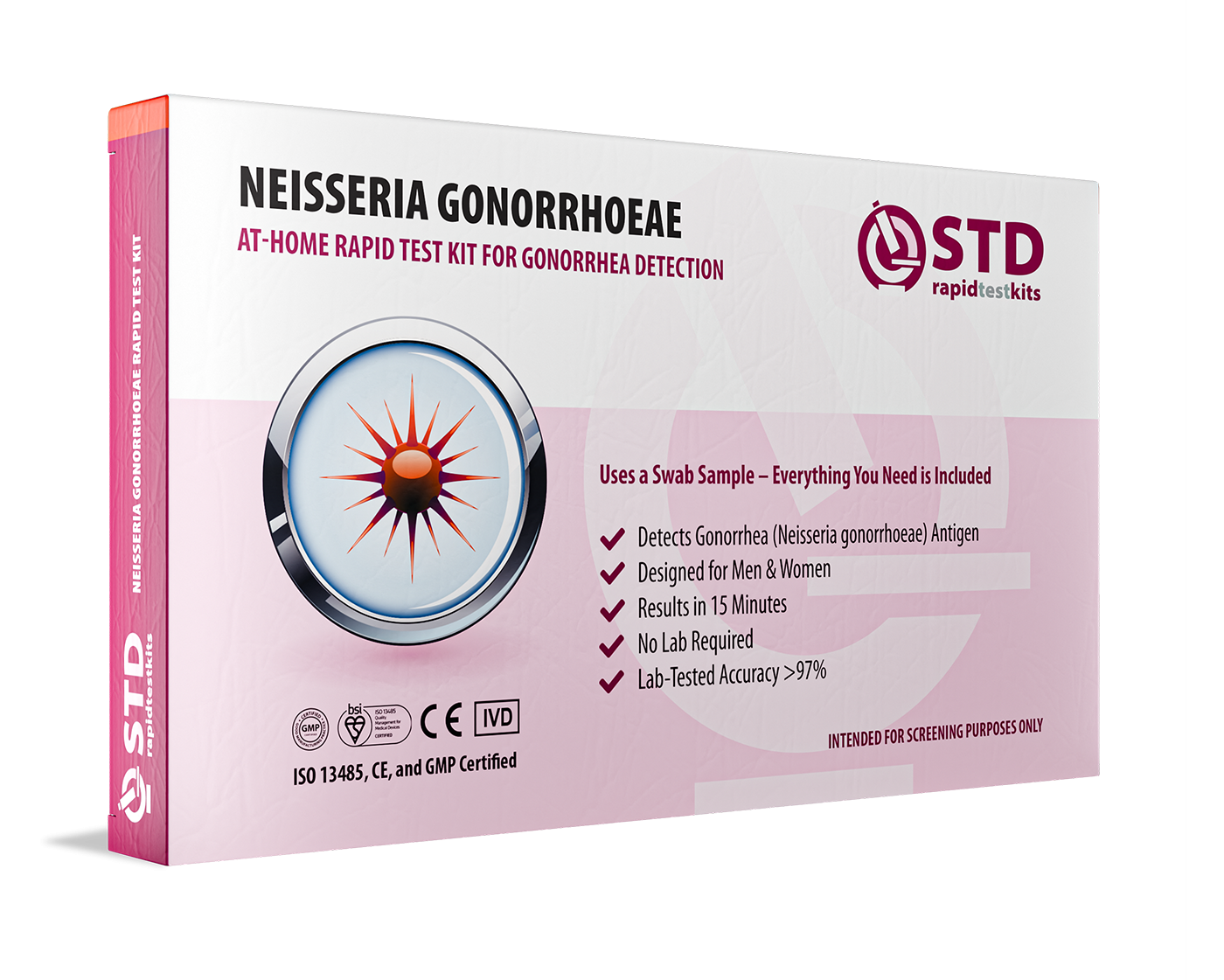
 For Men & Women
 Results in Minutes
 No Lab Needed
 Private & Discreet
Order Now $33.99 $49.00
Trust, Testing, and That Awkward Conversation
Few things derail a conversation like a surprise STD result in a supposedly monogamous relationship. But blaming first and questioning later can cause more damage than the infection itself. Gonorrhea is treatable. Betrayal trauma is harder to heal.
If you or your partner tests positive unexpectedly, here’s what needs to happen:
First, both of you should get retested using a reliable NAAT-based STD test. False positives are rare but possible. Second, talk about past sexual history honestly, not to place blame, but to understand where the infection may have come from. Third, treat the infection fully and confirm that both partners complete antibiotics. Reinfection from untreated partners is common and frustratingly avoidable.
At this point, clarity becomes more important than closure. And for many couples, this moment becomes the start of real sexual health transparency, not the end of trust.
Worried about privacy? At-home testing makes these conversations easier by giving you answers before you sit down to talk. STD Rapid Test Kits offers discreet options that ship fast and test accurately for infections like gonorrhea. If your brain won’t stop spinning, this combo kit might help ground you.
Why Gonorrhea Doesn’t Always Tell You “When” or “Who”
One of the most painful misunderstandings about STDs is this: people think a positive test is a timestamp. That it tells you when it happened. Who gave it to you. Who should be blamed. But infections don’t come with receipts. And gonorrhea, in particular, is slippery when it comes to timelines.
Gonorrhea can be picked up from a past partner and live unnoticed for weeks, or even months, especially if it infects non-genital areas like the throat or rectum. Many people only get genital testing unless they specifically request otherwise, which means non-genital cases can be missed entirely. This leads to false reassurance and delayed discoveries that feel like fresh betrayals but are really just... biology taking its time.
Take Adam, for instance. He had an oral encounter with someone a year before he met his current partner. No penetration, no symptoms, no testing. When he and his partner did a round of full-panel tests “just to be safe,” his throat swab came back positive for gonorrhea. The result nearly ended their relationship, until a clinic doctor explained how common asymptomatic oral infections are and how long they can go unnoticed.
False Positives, False Negatives, and Why Retesting Matters
Not all tests are created equal. The most accurate method for diagnosing gonorrhea is a NAAT (nucleic acid amplification test), which detects the genetic material of the bacteria. But even NAATs have their weak spots. Testing too early can result in a false negative. Testing too late after antibiotic exposure (even from unrelated meds) can cause confusion. And certain home tests may not include swabs for all possible infection sites.
If someone in a relationship tests positive while the other tests negative, it doesn’t always mean one person is “clean” and the other is “dirty.” It could mean:
| Scenario | Possible Explanation |
|---|---|
| Partner A tests positive, Partner B tests negative | B may have cleared the infection naturally or through antibiotics without knowing |
| One partner only tests urine, not oral/rectal | They may have an undetected infection in a different site |
| Recent exposure within last 5 days | Still in window period, test may not show infection yet |
| Testing after partial antibiotic use (for another condition) | Can suppress symptoms and reduce detectability, creating mixed results |
Table 2. Why one partner may test positive and the other negative in a monogamous relationship.
This is why most experts recommend repeat testing 7–14 days after potential exposure, or sooner if symptoms appear. It’s not about paranoia. It’s about catching what the first test might miss. Especially when your relationship is on the line.
If you’ve both tested and you’re getting mixed results, it’s not unreasonable to seek a third party, like a doctor or telehealth provider, to help walk through what’s real, what’s possible, and what comes next.
Reinfection Is Real (And Way More Common Than You Think)
Even if you and your partner both tested, treated, and moved on, gonorrhea has a frustrating habit of coming back. But here’s the kicker: it often reappears not because of cheating, but because of untreated reinfection. The CDC reports that 15% or more of people treated for gonorrhea will get it again within a year, usually from the same partner [CDC Treatment Guidelines].
Sometimes one partner starts treatment a day or two later than the other. Sometimes sex happens before treatment is complete. Sometimes the antibiotics aren’t taken correctly. And yes, sometimes someone just doesn’t get tested at all and assumes they’re fine.
So if your doctor recommends retesting a few weeks after treatment, they’re not being dramatic. They’re being realistic.
In relationships where gonorrhea shows up unexpectedly, it’s often this cycle, not infidelity, that’s to blame:
“We tested. I was negative. But I got it again a month later. Turns out, my partner never finished their antibiotics.”
This is why at-home retesting can be a useful follow-up tool, especially if you’re not ready to return to the clinic just yet. This gonorrhea test kit gives you a private, fast option to make sure you’re truly in the clear.
Let’s Talk About Shame: Why STDs Still Feel Like Moral Fails
Even in 2025, there’s a deep emotional wiring that tells people an STD equals wrongdoing. It’s a leftover cultural virus, one that predates modern medicine and still creeps into our most intimate conversations. But we’ve got to unlearn that.
Getting gonorrhea doesn’t mean you’re dirty. It doesn’t mean you’re disloyal. It means you’re a human being who’s sexually active in a world where bacteria exist. That’s it.
Shame, however, can lead to real harm. It stops people from getting tested. It stops them from being honest. It makes people lash out instead of talk. If you’ve been diagnosed, or if your partner has, take a breath before reacting. Test. Treat. Then talk.
One couple we interviewed said the experience of navigating an STD actually strengthened their relationship. “It forced us to talk about sex in a way we never had before,” they said. “We went from guessing to knowing. That felt more intimate than anything else.”
Testing isn’t about catching someone in a lie. It’s about showing up for your health, and sometimes, your relationship.
What If the Infection Came From the Past, Not the Present?
Here’s a truth that rarely gets airtime: sometimes gonorrhea shows up long after the relationship that caused it ended. Bacterial STDs don’t follow emotional timelines. They don’t respect anniversaries. They can linger in your throat, rectum, or cervix without a single symptom, and get discovered months (or even years) later during a routine check, fertility workup, or when symptoms flare due to unrelated stress.
This happened to Camila, a 33-year-old nurse who got tested during a pap smear. “I hadn’t had a new partner in almost a year,” she said. “But the result came back positive for gonorrhea. My current partner freaked out. He thought I cheated. But when we traced it back with my gynecologist, it was most likely a dormant infection from an old partner who had never gotten tested either.”
There’s no crystal ball for when a dormant infection decides to wake up, or when your immune system stops holding it back. But medical professionals are increasingly recognizing these “long silence” cases, especially with asymptomatic or partially treated infections.
So when you or your partner tests positive in a supposedly monogamous relationship, try shifting the question from “Who cheated?” to “What haven’t we tested for yet?”
Where You Test Matters: Sample Sites and Missed Infections
Most people don’t realize that gonorrhea doesn’t only affect genitals. It can live in the throat, anus, urethra, and cervix. If you only get a urine test but had oral sex? You might miss an infection. If your partner had receptive anal sex but no rectal swab? Same issue. Gonorrhea hides where you don’t look.
That’s why high-quality STD tests, whether at home or in clinics, should allow for throat, rectal, and genital samples. The sensitivity (i.e., ability to detect an infection when it’s really there) varies by site:
| Sample Site | Test Type | Typical Sensitivity | Missed Infection Risk |
|---|---|---|---|
| Urine (genital) | NAAT | 95–98% | Low (if site matches exposure) |
| Throat (oral) | NAAT or swab culture | 75–85% | Moderate (often missed without symptoms) |
| Rectum (anal) | NAAT | 88–95% | Moderate (needs specific request) |
Table 3. Gonorrhea detection rates by sample site and test type. Results vary by lab and timing.
If you’re testing at home, make sure the kit allows multi-site sampling, or supplements your results with a follow-up in-clinic swab. If you’re unsure which test to choose, this multi-STD combo kit is a good place to start.
People are aslo reading: Same-Day STD Results in Florida? What’s Real, What’s Hype
From Panic to Plan: What to Do After a Positive Test
Whether the result is yours or your partner’s, the first 24 hours are crucial. Not for shaming, but for action. Most strains of gonorrhea are still treatable with a single dose of antibiotics, though resistant strains are emerging. Here’s what to do, human first, clinical second.
First, confirm the result. If the test was a rapid type, follow up with a NAAT-based lab test to eliminate any doubt. Next, talk. Not in anger. Not in accusation. Just facts. Ask your partner when they were last tested, how they tested (urine only? full-panel?), and whether they had symptoms that went unaddressed.
If either of you had a sexual partner before testing or between test dates, mention it, even if it feels awkward. Infections don’t care about timelines or assumptions. They just spread. If you’re unsure how to bring it up, try this:
“This result was a shock, and I know it doesn’t automatically mean cheating. Can we walk back through when we each last tested and who we may have been with before we met?”
From there, you can decide whether you both need treatment (often, you do), whether retesting is necessary, and how to prevent it from happening again. Remember: clearing the infection is only one part. Clearing the confusion and shame takes a bit more honesty, but it’s worth it.
Check Your STD Status in Minutes
Test at Home with Remedium8-in-1 STD Test Kit
 For Men & WomenResults in MinutesNo Lab NeededPrivate & Discreet
Order Now $149.00 $392.00
For all 8 tests
Sex-Positive, Not Suspicious: A Better Way Forward
Let’s call it what it is: STDs are normal. Annoying? Yes. Embarrassing? Sometimes. But normal. If you’re sexually active, even with precautions, you are in the zone of possibility. That’s not a failure. That’s biology.
Getting tested doesn’t make you dirty. It makes you responsible. Treating your partner with empathy instead of suspicion? That makes you brave. Choosing to test again after a surprise result? That makes you smart. Relationships don’t end because of infections. They end because people stop communicating once they find out.
So if you’ve just gotten news you didn’t expect, take a beat. Then take action. Because a test result isn’t a verdict. It’s a prompt.
You’re not alone. And your sex life isn’t over. In fact, the next chapter might be more honest than any before it.
FAQs
1. Can you get gonorrhea if neither of you cheated?
Yep, and it happens more than you think. Gonorrhea can lie low for weeks or even months without a single symptom. If one of you had a past partner and never got tested for throat or rectal sites, the infection could’ve been sitting there quietly, waiting to be found. It’s awkward, not scandalous.
2. Is a positive gonorrhea test the same as catching someone in a lie?
Not at all. It’s more like catching something biology forgot to tell you about. Gonorrhea doesn’t carry timestamps. It won’t tell you whether it came from last week or last year. That’s why testing timelines matter more than finger-pointing.
3. What if I tested negative, but my partner tested positive?
It’s confusing, but it happens. Maybe your partner got tested at the right site and you didn’t (oral, anal, genital all matter). Maybe you’re still in the window period. Or maybe you had antibiotics recently that messed with detection. One test isn’t the full picture, retest if there’s doubt.
4. Can gonorrhea just... come back?
Not like herpes does. Gonorrhea doesn’t go dormant and then pop up on its own. But if you or your partner didn’t fully treat it, or if you had sex again before finishing meds, you could end up with a repeat infection that feels like déjà vu. It’s common, not mysterious.
5. Does it matter if I don’t have any symptoms?
Actually, that’s the tricky part. Most people with gonorrhea don’t feel anything. You might carry it in your throat and never know unless you get a swab. That’s why regular testing is smart, even if you feel fine and everything looks “normal.”
6. Can you really get gonorrhea from oral sex?
Yes, and it’s sneakier than you think. Giving or receiving oral sex can transmit the bacteria, and throat infections rarely hurt. A quick BJ months ago can turn into a positive throat swab today, and most people wouldn’t connect the dots.
7. What if we both got treated, but it came back?
This is reinfection 101. One of you probably didn’t finish meds or got re-exposed too soon. You need to wait 7 days post-treatment before sex and make sure both partners are treated at the same time. Otherwise, you’re just passing it back and forth like a bad cold.
8. How accurate are at-home gonorrhea tests?
Good ones are very accurate, especially when used correctly and at the right time. NAAT-based kits (like the ones we link to) offer lab-grade results. Just make sure you're testing the right site. Pee-only kits won’t catch oral or rectal infections, and that’s where people often miss stuff.
9. Can stress or other infections trigger a gonorrhea flare-up?
Gonorrhea isn’t like herpes, it doesn’t flare. If it shows up on a test after you’ve been symptom-free, it usually means one of two things: either the first test missed it, or you were re-exposed. Stress may bring on symptoms, but it doesn’t reactivate the bacteria.
10. How do I even start the conversation with my partner?
Try this: “I got a result I wasn’t expecting, and I want us to figure it out together, no blame, just facts.” Then share your test info, ask when they last tested, and take it from there. If you’re nervous, test together at home, it turns a scary convo into a shared decision.
You Deserve Answers, Not Assumptions
When gonorrhea shows up in a relationship, the gut reaction is often fear, anger, or heartbreak. But what it really calls for is clarity. STDs like gonorrhea don’t always point to betrayal, they point to the gaps in our testing habits, education, and conversations about sex. And those gaps? They can be closed.
If you're navigating a surprise diagnosis, don't jump to blame. Step back, get the facts, and take control. The best way to move forward, alone or together, is with testing, treatment, and real talk.
This at-home combo test kit checks for the most common STDs discreetly and quickly, because peace of mind should never require a waiting room.
How We Sourced This Article: We combined current guidance from leading medical organizations with peer-reviewed research and lived-experience reporting to make this guide practical, compassionate, and accurate.
Sources
2. CDC – 2023 Gonorrhea Treatment Guidelines
4. Planned Parenthood – Gonorrhea Resources
5. Gonorrhea — Symptoms and causes — Mayo Clinic
6. Gonorrhoea (Neisseria gonorrhoeae infection) — WHO Fact Sheet
7. Gonococcal Infections Among Adolescents and Adults — CDC Treatment Guidelines
8. Gonorrhea — Cleveland Clinic
9. Gonorrhea (Pharyngeal, Rectal, Urogenital Infections) — StatPearls / NCBI
10. Oropharyngeal Gonorrhea in Absence of Urogenital Infection — PMC (2019)
About the Author
Dr. F. David, MD is a board-certified infectious disease specialist focused on STI prevention, diagnosis, and treatment. He blends clinical precision with a no-nonsense, sex-positive approach and is committed to expanding access for readers in both urban and off-grid settings.
Reviewed by: A. Lewis, RN, MPH | Last medically reviewed: December 2025
This article is only for informational purposes and should not be taken as medical advice.


