







Quick Answer: Yes, you can get trichomoniasis from oral sex, although it’s less common than vaginal transmission. The parasite can be present in the genitals or mouth, and unprotected oral contact can transmit it, especially if either partner is asymptomatic.
“No One Told Me Oral Could Give You an STD”
Julián, 27, had never even heard of trich before getting diagnosed. “It was a chill night, some drinks, some kissing, and eventually, I went down on him. That was it,” he said. “I had this weird irritation in my throat a few days later, but I figured it was allergies.”
Weeks later, a regular check-up flagged an unusual discharge. A swab came back positive for Trichomonas vaginalis, the parasite that causes trich. His partner tested negative. Julián was floored. “I didn’t even think it was a risk. We didn’t even have sex.”
This isn’t rare. In fact, many people who test positive for trich can’t pinpoint when or how they were exposed. It doesn’t always show symptoms, and when it does, the signs can be so subtle, mild irritation, discharge that comes and goes, a smell that you write off as normal body odor, that it’s dismissed. And because trich doesn’t get the public attention that herpes or HIV do, it flies under the radar. But it’s real. And yes, oral sex is a legitimate transmission route.
How Trich Actually Spreads (Spoiler: It’s Not Just Vaginal)
Trich is caused by a protozoan parasite, not a virus or bacteria. That detail matters, because it affects where the infection can live and how it spreads. Trich prefers warm, moist environments like the vagina, urethra, and potentially the mouth or throat, though the latter is debated. Still, multiple studies suggest the parasite can survive briefly in the oral cavity, especially if the giver has cuts, sores, or oral inflammation.
During oral sex, bodily fluids and skin contact can transfer the parasite from genitals to mouth, or vice versa. This is more likely if:
1. The receiving partner is infected but asymptomatic (which is common in men).
2. The giver has minor abrasions or gum inflammation.
3. There’s fluid exchange, pre-cum, vaginal fluid, or saliva during oral-anal contact.
4. Barriers like condoms or dental dams aren’t used.
Even though trich isn’t classified as a “main” oral STD like herpes or gonorrhea, emerging case reports and testing patterns show it can be present in oral sites, and passed between people that way. The CDC doesn’t list oral sex as a high-risk route, but doesn’t rule it out either. And real-world testing outcomes suggest it’s worth taking seriously.
| Scenario | Risk of Trich Transmission | Comments |
|---|---|---|
| Unprotected vaginal sex | High | Primary transmission route |
| Unprotected oral-genital sex | Moderate | Possible if fluids or lesions are present |
| Receiving oral sex | Low–Moderate | Depends on partner’s infection status |
| Oral-anal contact (“rimming”) | Moderate | Can involve parasite exposure if partner is infected |
Figure 1. Trich transmission risk levels by sexual activity. Oral contact is not risk-free.

People are also reading: Before You Blame the Itch, How STDs Hide in Long-Term Relationships
But I Only Had Oral, So Why Do I Have Vaginal Symptoms?
This is where it gets messy. Many people get diagnosed with trich and don’t recall any penetrative sex during the infection window. Others had one encounter that seemed “safe” because it was “just oral.” So how did the parasite migrate?
Here’s the deal: if the parasite enters the mouth, it may briefly colonize the throat. From there, it can travel through saliva or hand-genital contact during mutual stimulation. It can also infect the urethra or vagina if fluids are shared, think oral followed by digital penetration, or shared sex toys. Trich doesn’t need a penis in a vagina to infect someone. It needs moisture, mucosal contact, and access.
Case in point: A 22-year-old woman from New Jersey had been celibate for six months but gave oral sex to a new partner. Two weeks later, she experienced frothy, greenish discharge and vaginal itching. Her doctor suspected BV, but a trich test came back positive. Her partner was asymptomatic, and tested negative. She was devastated. “I thought I was being careful,” she said. “I didn’t know trich could do that.”
It can. And it does.
Check Your STD Status in Minutes
Test at Home with RemediumTrichomoniasis Test Kit
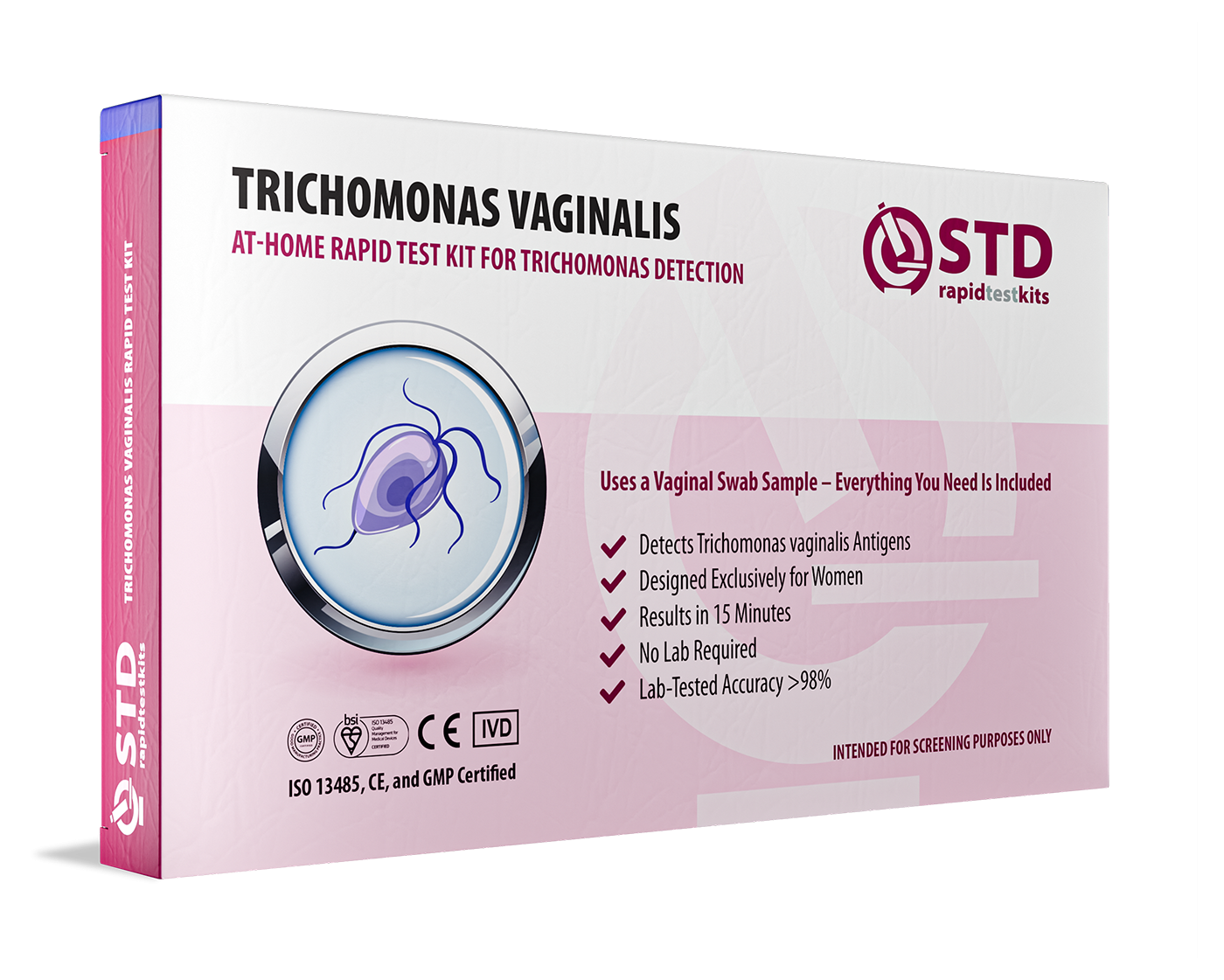
 For Women
 Results in Minutes
 No Lab Needed
 Private & Discreet
Order Now $33.99 $49.00
Symptoms You Might Miss (or Mistake for Something Else)
Trich is often symptomless, especially in men, but when symptoms do show up, they’re easy to confuse with yeast infections, UTIs, or bacterial vaginosis. That’s especially true after oral sex, where people often assume irritation is from friction or shaving, not infection.
In women, signs might include:
- Vaginal discharge that’s yellow-green or frothy
- Unpleasant or “fishy” odor
- Itching or burning around the vulva
- Pain during urination or sex
In men, symptoms are usually more subtle:
- Mild burning after peeing or ejaculation
- Slight discharge from the penis
- Redness or irritation inside the urethra
Oral symptoms (rare, but possible): sore throat, persistent cough, or burning sensation in the mouth. These are easy to blame on allergies or colds, so they often go undiagnosed.
Because these signs mimic other conditions, many people dismiss them. But if they appear days to weeks after an oral encounter, especially with a new or untested partner, it’s worth testing for trich. Even if you never had penetration.
And here’s the kicker: many people infected with trich don’t show symptoms at all, but can still pass it on.
“My Test Was Negative, But I Still Have Symptoms”
One of the most frustrating aspects of trichomoniasis is how slippery it can be in diagnosis. You may go to a clinic, explain your symptoms, even suspect trich, and still walk out with a negative result. That doesn’t mean you don’t have it. It might mean you tested too early, or the test wasn’t sensitive enough.
Rapid tests are convenient and fast, but they can miss low-level infections. Lab-based NAAT (nucleic acid amplification tests) are more sensitive and can catch early-stage infections, even if you’re asymptomatic. Unfortunately, not all clinics or at-home kits use this method. And if your only exposure was oral sex, providers might not even suggest testing for trich, especially if you’re a man or in a same-sex encounter.
Austin, 33, had a similar experience. “I kept getting these little flare-ups, discomfort, some discharge, but every STD test I took came back clean. I finally paid out-of-pocket for a trich test through an at-home lab, and boom, positive.”
Timing matters, too. Trich has a variable incubation period, anywhere from 5 to 28 days. Testing during the first week after exposure can produce a false negative, especially with less sensitive tests. That’s why some people test negative at first, then positive weeks later once the infection is detectable.
| Testing Method | Accuracy | Best Testing Window | Notes |
|---|---|---|---|
| Rapid Antigen Test | Moderate | 7–28 days after exposure | May miss low-level or early infections |
| NAAT (Lab PCR) | High | 5–30 days after exposure | Detects even asymptomatic carriers |
| Oral Swab (rarely used) | Low–Unknown | Only used in specific research settings | Not widely available or validated |
Figure 2. Trichomoniasis testing accuracy varies widely depending on method and timing.
So You Got a Trich Diagnosis, Now What?
First: breathe. Trichomoniasis is curable, typically with a single dose or short course of antibiotics like metronidazole or tinidazole. Most people clear the infection quickly and don’t have complications, if they actually complete the treatment and don’t get reinfected.
But here’s the part many people don’t hear: if your partner isn’t treated at the same time, you can get reinfected within days. This happens more than you think. You take your meds, feel fine, hook up again with the same person, and boom, the symptoms are back.
Trich can also linger in the urethra or prostate, especially in men, without any symptoms at all. That means someone can be a silent carrier for weeks, even months, passing it back and forth without knowing. That’s why simultaneous partner treatment is a must.
If your partner says, “But I got tested and I’m negative,” it’s okay to ask about the type of test, when it was taken, and whether treatment was still offered. In some cases, a provider might treat both partners empirically, without waiting for results, just to stop the ping-pong effect.
If you’re not sure whether you need to retest, here’s a basic rule: if you had sex again after treatment, and symptoms return (even mildly), test again. If you didn’t get retested after your last treatment, or if your last partner never got treated, retesting is wise even without symptoms.
The “Safer Sex” Myth That Leaves People Vulnerable
For years, “safer sex” messaging focused on condoms during penetrative sex. Oral was often treated as an exception, intimate, low-risk, and barely worth worrying about. That message might’ve been comforting, but it wasn’t complete.
STDs like trichomoniasis, herpes, gonorrhea, chlamydia, and even syphilis can spread through oral sex. Not always. Not every time. But enough to make the risk real, especially when people think oral sex is safe and don't use barriers.
Dental dams, flavored condoms, and mutual testing conversations are tools, not buzzkills. But in the absence of these tools, the risk gap grows. And unlike condoms, oral barriers are rarely normalized in porn, hookup culture, or even public health campaigns.
Nina, 24, put it this way: “I thought I was being safe. We only did oral. He didn’t finish in my mouth. But a week later, my vaginal discharge was…off. I got tested on a whim and came back positive for trich. I was shocked.”
She wasn’t alone. The disconnect between perceived safety and real risk is one reason trich continues to circulate quietly, especially among younger adults, queer people, and communities with limited access to regular testing.
That’s not about blame. It’s about information. And being able to act on it.
When to Test, Retest, and Talk About It
If you’ve had oral sex, especially with a new partner, or one whose STD status is unclear, and symptoms show up within a month, test for trich. Ideally with a NAAT-based test that doesn’t rely on visible symptoms. If symptoms are strong (like foul-smelling discharge or burning), test immediately. If they're mild or confusing, wait 7 to 14 days post-exposure for peak accuracy.
If you’re asymptomatic but curious, or panicked from Googling at 2 a.m., at-home test kits can provide discreet reassurance. Look for ones that include trich in the panel, not just chlamydia and gonorrhea. You can order a discreet kit from STD Rapid Test Kits here.
And if you’ve already treated trich but symptoms return, don’t assume you’re clear. Trich can survive in tissue folds, prostate channels, or re-enter through untreated partners. A retest 3–4 weeks post-treatment is a smart move, especially if you’re sexually active again.
Need a script for the conversation? Try: “Hey, I tested positive for trich, and I want to make sure we’re both clear. I know it can spread even through oral, and I’d rather we get treated together than keep worrying.”
Testing is care. Treatment is care. Talking about it? That’s care too.
Whether it’s a new partner, a situationship, or a random encounter you barely remember, if you’re feeling off after oral, you deserve answers. Explore at-home testing options and start your plan.
Is Trich in the Mouth Even Real? Here's What Science Says
Here’s the honest truth: the medical community is still debating how often trich can survive or thrive in the mouth. Unlike chlamydia or gonorrhea, which have well-documented oral forms, trichomoniasis is trickier. The parasite can be found in the oral cavity in rare cases, especially if there's oral-genital exposure and the person already has inflammation or microtears.
But detection is tough. Most providers don’t routinely swab the throat for trich. There are no FDA-approved oral trich tests, and existing studies use PCR techniques that aren’t widely available outside of research labs. So even if you have symptoms in your throat, or got infected that way, standard testing might miss it.
Yet case studies exist. In one small trial, trich DNA was found in oral samples of sex workers who performed frequent unprotected oral sex. Another found the parasite in tonsillar tissue in individuals who had no genital symptoms but persistent throat irritation. These cases are rare, but they add to a growing picture: oral trich isn't a myth, just a diagnostic blind spot.
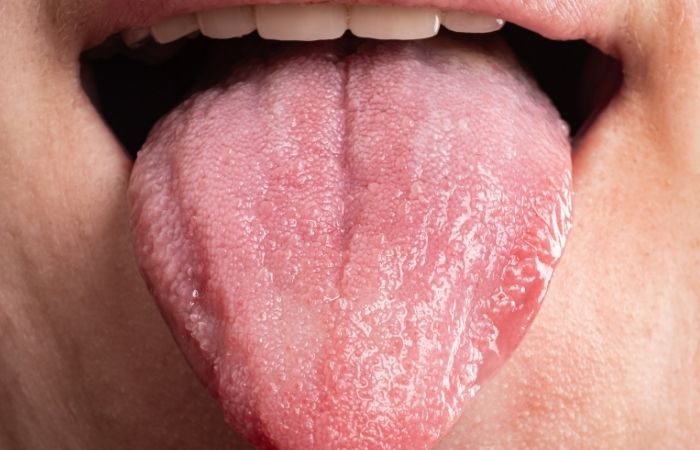
So if you’ve had unprotected oral sex and are experiencing persistent throat symptoms, especially if you've tested negative for other common causes, it’s worth flagging trich with your provider. They might not think to look for it otherwise. And if you’re on the receiving end of oral sex, you can still be exposed if the giver has untreated trich in the mouth or genitals, even without symptoms.
This gray area, the space between “rare” and “impossible”, is where many people get blindsided. Don’t let uncertainty silence your instincts. If you feel off, investigate.
People are aslo reading: STD Discharge vs. Healthy Discharge: Here’s How to Tell
Let’s Talk About Same-Sex Oral Risk
STI education has long been biased toward heterosexual encounters. That means oral sex between women, between men, or in gender-diverse contexts often gets erased in the conversation. But trich doesn’t care about gender or labels. It cares about moisture, mucosal contact, and gaps in protection.
Trich among women who have sex with women (WSW) is surprisingly underdiagnosed. Shared sex toys, digital penetration after oral, and fluid contact can all transmit the parasite. Studies have shown that women in same-sex relationships can harbor trich without having had recent male partners, suggesting oral or indirect contact as a transmission route.
Men who have sex with men (MSM) are also at risk, especially when it comes to oral-anal exposure and rimming. Again, the absence of clear symptoms means trich can hide in networks where testing isn’t routine. Because trich is often left off standard MSM screening panels, many never know they’ve been exposed or are carriers.
Including oral trichomoniasis in your personal risk assessment isn’t about paranoia, it’s about clarity. Especially for queer, trans, and nonbinary people who’ve been left out of the standard narratives. If your provider shrugs off your concerns, push back. You know your body. And your exposures.
This at-home combo STD test includes trich along with the more commonly discussed infections. It’s one of the few ways to get clear answers without a dismissive gatekeeper.
Check Your STD Status in Minutes
Test at Home with Remedium7-in-1 STD Test Kit

 For Men & WomenResults in MinutesNo Lab NeededPrivate & Discreet
Order Now $129.00 $343.00
For all 7 tests
Why You’re Not “Dramatic” for Wanting to Know
Trich rarely makes headlines. It’s not the terrifying STD that ruins lives. It’s the “quiet” one. The one you Google, see “curable,” and scroll past. But just because it’s treatable doesn’t mean it’s harmless. Left untreated, trich can increase your risk of getting or transmitting HIV, contribute to pelvic inflammatory disease, cause complications in pregnancy, and create long-term inflammation in the reproductive tract.
It’s also emotionally disruptive. The shame spiral from hearing, “You have trich” after you only had oral sex is real. The second-guessing. The awkward partner convos. The blame. The betrayal. All of it matters.
You’re not dramatic for caring. You’re not dirty for testing. You’re not overthinking for wondering if that one unprotected moment could have consequences. You’re being smart. Protective. Informed. And in a world that still treats oral sex like a loophole in STD risk, your curiosity is power.
So if something feels off, whether in your mouth, genitals, or gut, you’re allowed to ask questions. You’re allowed to test. And you’re allowed to demand more from both providers and partners.
If your symptoms are saying “maybe,” give yourself the clarity of “no” or “yes”, not silence.
FAQs
1. Wait, can I actually get trich from just giving or receiving oral?
Yep, it’s possible. Trich isn’t picky, it just needs a moist environment to catch a ride. So if your partner had an untreated infection in their genitals, mouth, or even prostate, unprotected oral contact can absolutely be enough. It’s not the most common route, but it happens more than people think.
2. How would I even know if I got trich from oral sex?
That’s the tricky part, you might not. Some folks notice things like weird discharge, burning when peeing, or a funky odor down there. Others just feel... off. If any of that shows up after a hookup that involved oral, it’s worth testing. Even if it felt “low risk.”
3. I have a sore throat, could that be trich?
Maybe, but don’t jump straight to panic. A sore throat can be a million things. That said, there have been cases where trich has been found in the mouth and throat, especially in people who give oral frequently without barriers. If it lingers or shows up alongside genital symptoms, it’s worth mentioning to your provider, even if they raise an eyebrow.
4. Can men carry trich and not know it?
Absolutely. In fact, most do. Trich often sets up camp in the urethra or prostate without causing obvious symptoms, which means a guy can pass it to multiple partners without ever feeling a thing. That’s why mutual testing (and mutual treatment, if needed) matters, even when everyone “feels fine.”
5. I tested negative but still have symptoms. Am I just paranoid?
No, you're paying attention. Testing too early or using a less sensitive test (like a rapid test) can miss early infections. Trich can also hide in hard-to-reach places, so if your gut says something’s wrong, listen to it. Retest in a week or two, or go for a lab-based test if you can swing it.
6. Do at-home STD tests even include trich?
Some do, but not all. You’ll need to check the test panel. Trich is often left off the standard 3- or 4-panel kits, which usually just include chlamydia, gonorrhea, HIV, and sometimes syphilis. Look for a combo kit that specifically lists trichomoniasis. This one does.
7. My partner tested negative, so why did I get trich?
A few possibilities. They might’ve tested too soon. Their test could’ve missed it. Or maybe they were treated before but reinfected by someone else. Sometimes it’s a testing gap. Sometimes it’s an honesty gap. Either way, it's okay to ask questions, and prioritize your health without guilt.
8. Is it over once I take the meds?
Hopefully, yes. Trich is very treatable with antibiotics. But if your partner doesn’t get treated too? You might just play STD ping-pong until you both do. That’s why coordinated treatment (even if you're not seeing each other anymore) is so important. It saves everyone time, stress, and another round of meds.
9. I’m queer, should I be worried about trich?
If you’re having sex, it’s worth knowing about. Trich affects people of all genders and orientations. In same-sex encounters, it can spread through oral, shared toys, or digital-genital contact. Because queer folks are often excluded from mainstream sex-ed, trich flies under the radar. But it doesn’t discriminate. Knowing the risk is power, not paranoia.
10. Should I be embarrassed about this?
Hell no. STDs don’t care if you’re careful, sweet, responsible, or wildly hot-headed. They spread through normal things like touch, trust, and sex, which is to say, being human. What matters is what you do next: getting tested, getting treated, and not letting shame keep you in the dark.
What Now? The Next Right Step
If you’ve made it this far, you’re probably still wondering: “Okay, so what do I do now?” The answer is simple, but not always easy, test, talk, and treat. Whether you’ve had oral sex once with someone new, or you’re navigating confusing symptoms weeks after a hookup, clarity is your best tool.
Testing for trichomoniasis might not be standard, but it’s available, and it can be done discreetly. At-home kits like the Combo STD Test Kit offer options that include trich, with no clinic visit required. If you're in a remote area, living off-grid, or just not ready to explain your situation to a doctor, this gives you control.
And if you’ve already been treated, remember: retesting isn’t a sign of failure. It’s a sign of follow-through. It’s how you close the loop, protect your partners, and protect yourself. Especially if oral sex was involved, because this is where so many people fall through the cracks of “low risk.”
You deserve clear answers. You deserve providers who listen. You deserve partners who care. And if you're not getting any of those things? You still deserve to know what's going on with your own body.
Don’t wait and wonder, get the clarity you deserve. This at-home combo test kit checks for the most common STDs discreetly and quickly.
How We Sourced This Article: We combined current guidance from leading medical organizations with peer-reviewed research and lived-experience reporting to make this guide practical, compassionate, and accurate.
Sources
1. Planned Parenthood: What Is Trichomoniasis?
2. Healthline: Trichomoniasis Overview and Symptoms
3. Trichomoniasis Fact Sheet — WHO
4. Can trichomoniasis cause pharyngitis? A case report — PMC
5. Trichomoniasis: Overview — Medscape
6. Trichomoniasis — Symptoms & Causes — Mayo Clinic
7. Trichomoniasis — StatPearls / NCBI Bookshelf
8. Trichomoniasis — Prevalence and Epidemiology Review — PMC
About the Author
Dr. F. David, MD is a board-certified infectious disease specialist focused on STI prevention, diagnosis, and treatment. He blends clinical precision with a no-nonsense, sex-positive approach and is committed to expanding access for readers in both urban and off-grid settings.
Reviewed by: Rebekah Flores, MSN, APRN-CNP | Last medically reviewed: November 2025
This article is just for information and doesn't take the place of medical advice.


