







Quick Answer: Asymptomatic STDs like chlamydia, gonorrhea, HPV, and HIV often go undetected for months or years. They can silently damage fertility, immunity, and overall health. Routine testing is the only way to catch them in time.
What Happens When Nothing Happens (At First)
Picture this: Taylor, 28, is healthy, active, and in a new relationship. She goes in for a routine Pap smear and agrees to add a chlamydia test “just in case.” The result? Positive. Her doctor tells her it’s likely she’s had it for over a year, possibly longer. The infection has already scarred her fallopian tubes. Taylor never had a single symptom.
This isn’t rare. In fact, it’s the norm for many common STDs. According to the Centers for Disease Control and Prevention (CDC), the majority of chlamydia and gonorrhea infections are symptomless, especially in women. And these silent infections aren’t just hanging out harmlessly. They’re busy in the background, causing inflammation, tissue damage, and making your body more vulnerable to other diseases.

People are also reading: Are Red Spots on Your Vagina an STD Sign, or Just Razor Burn?
The Top Asymptomatic STDs (and What They Do Behind the Scenes)
Just because you can’t see or feel something doesn’t mean it’s not messing you up. These infections are the stealth operators of the STD world:
| STD | How Often It’s Asymptomatic | What It Can Cause If Untreated |
|---|---|---|
| Chlamydia | 70% of women, 50% of men | Pelvic inflammatory disease, infertility, chronic pain |
| Gonorrhea | 50–70% of cases, especially in throat or rectum | Infertility, joint pain, increased HIV risk |
| HPV | Most infections | Cervical cancer, throat cancer, genital warts |
| HIV | Years with no symptoms | Weakened immune system, opportunistic infections |
| Herpes (HSV-2) | Many never show sores | Recurring outbreaks, transmission to partners |
| Trichomoniasis | ~70% have no symptoms | Increased risk of HIV, pregnancy complications |
| Syphilis | Often unnoticed in early stages | Neurological issues, heart damage, fetal death |
Figure 1: Silent but serious, these STDs often give no warning signs until they’ve caused irreversible harm.
Why No Symptoms Can Be More Dangerous Than Obvious Ones
If you feel something, itching, burning, pain, you know to get help. But what if you feel nothing? That’s when people stay untested. That’s when partners don’t get warned. And that’s when infections pass from one person to the next in total silence.
Herpes is one of the best examples. Many carriers have no sores, no outbreaks, no clue. But they can still transmit it during “viral shedding,” especially if they think there’s no need for protection. Similarly, someone with throat gonorrhea from oral sex might never cough or feel sore, yet still infect their next partner.
In the public health world, asymptomatic infections are the reason we can’t get a handle on STD rates. The numbers always look lower than they are. And people keep getting blindsided.
Want to stop the spiral? You test even when you don’t think you need to.
Check Your Status, Without Leaving the House
You don’t need to wait until something feels “off.” You don’t need to wait at all.
6-in-1 STD At-Home Rapid Test Kit checks for the most common silent infections, including chlamydia, gonorrhea, syphilis, trichomoniasis, and more. It’s designed for total privacy, no lab visits, no awkward small talk. Just fast results and clear answers.
If your head’s spinning right now, peace of mind is literally a few clicks away. Get ahead of it, before it gets ahead of you.
Check Your STD Status in Minutes
Test at Home with Remedium6-in-1 STD Rapid Test Kit

 For Men & Women
 Results in Minutes
 No Lab Needed
 Private & Discreet
Order Now $119.00 $294.00
For all 6 tests
When Silence Isn’t Safety: What Undiagnosed STDs Can Really Do
The problem isn’t just that you don’t know. It’s what happens in your body while you don’t know. These aren’t passive infections, they’re active agents of long-term damage. And once you cross a certain point, no treatment can undo it completely.
Let’s break down the consequences most people never see coming until it’s too late.
Fertility Fallout: The Damage You Can’t Reverse
Chlamydia and gonorrhea are notorious for staying silent while they travel up the reproductive tract. In women, they can lead to pelvic inflammatory disease (PID), which scars the fallopian tubes, causes ectopic pregnancy, and creates permanent fertility barriers. In men, they can inflame the epididymis, leading to pain, swelling, and possible infertility.
And here’s the kicker: many people diagnosed with PID or post-infection infertility only find out after trying to conceive and failing. By then, it’s a conversation with a fertility specialist, not a GP. All from an infection they didn’t know they had.
Complications That Don't Stay Below the Belt
These infections don’t just hang out in your genitals. Some of them are ambitious, they want access to your whole system.
Untreated syphilis can move into the brain and spine, causing neurosyphilis. It can also affect the eyes, hearing, and heart. Long-latent HIV weakens your immune system over years, opening the door for infections, cancers, and other diseases that should never be deadly in a healthy person. HPV can morph from a silent infection into full-blown cervical or anal cancer, often with no signs in between.
Here’s where it gets unfair: you can’t feel this happening. It’s slow and silent, like rust in the background. But by the time you notice something's wrong? It’s already serious.
Pregnancy Risks: STDs Don’t Pause for Motherhood
One of the most heartbreaking impacts of undiagnosed STDs is what they can do during pregnancy. A woman with untreated syphilis can transmit the infection to her baby during pregnancy or delivery, leading to congenital syphilis, miscarriage, stillbirth, or neonatal death.
Other infections, like trichomoniasis or chlamydia, can cause premature labor, low birth weight, or early rupture of membranes. Newborns exposed to gonorrhea may develop eye infections that lead to blindness if not treated immediately.
Routine STD testing is part of prenatal care for a reason. But many women don’t know they’re pregnant, or don’t get early care, until damage has already begun.

People are also reading: The New HIV Prevention Option That Only Requires Two Doses a Year
How These STDs Spread So Easily, And Quietly
The thing about asymptomatic infections? You don’t just keep them, you share them. Without realizing it, people with silent infections pass them on to new partners, who then unknowingly pass them to others. This is how you get epidemics, not just breakouts.
Here’s the pattern:
| Stage | What Happens | Impact |
|---|---|---|
| Infection Begins | Transmitted during sex, oral, anal, vaginal, even with no visible symptoms | No signs, so person doesn’t know to get tested |
| Silent Period | Infection develops but stays asymptomatic | Partner thinks they’re clean and skips testing |
| Transmission | New partner gets exposed through unprotected sex | Cycle continues undetected, now across multiple people |
| Discovery (Too Late) | Detected through fertility testing, symptoms, or routine screen | By then, damage may be permanent, and partners must be notified |
Figure 2: The transmission chain of an undiagnosed STD, why routine testing matters more than symptoms.
Stories That Stick With You: What It Feels Like to Find Out Late
DeShawn, 33, found out he had throat gonorrhea after a partner insisted they both get tested. He had no pain, no sore throat, nothing.
“I honestly thought I’d feel something. I was shocked. I felt ashamed at first, but I was more relieved to just know.”
Lena, 21, tested positive for HPV after a routine Pap.
“I didn’t have one symptom. Nothing. But I’m glad I got that Pap test, it probably saved my life.”
Marcus, 28, attributed his exhaustion to stress. He tested positive for HIV after months of ignoring fatigue.
“I didn’t feel sick. I almost didn’t go in. I still don’t know when it happened.”
None of these people thought they were at risk. None of them felt “off.” But all of them are now advocates for testing, because finding out late changed their lives forever.
Why Most People Don’t Get Tested, Until It’s Too Late
There’s a reason this issue keeps spiraling. It's not just about biology, it’s about misinformation, shame, and access.
People assume that if there are no symptoms, there’s no problem. They trust their gut instead of science. Or they avoid the test altogether out of fear:
“What if it’s positive? What if my partner asks why I want to test? What if someone finds out?”
Even people who know better sometimes put it off. Clinics have long wait times. Testing feels invasive. And in many communities, STD testing still feels like a scarlet letter. But the truth is, testing is self-respect. It’s love in action. It’s care for your body and your future.
And with discreet at-home options, there’s no longer a good reason not to know.
The Testing Gap: Why Timing (Still) Matters
So maybe you’re convinced. You want to test. But when’s the right time? That depends on your last potential exposure, your test type, and the specific STD you’re worried about.
Here’s a simple truth: testing too early might give you a false sense of safety. Many STDs have a window period, a delay between infection and when it shows up on a test. That doesn’t mean don’t test. It just means you might need to test again later to be sure.
Let’s say you had unprotected sex five days ago. A rapid test might not detect chlamydia yet, but it could give early signs. A full HIV antibody test might not show results until 3–6 weeks. Some people test at day 7, then again at day 30 just to be sure.
If your situation feels confusing, it’s not just you. That’s why combo test kits and retest plans exist. You're allowed to double-check. You're allowed to test again after peace of mind has returned.
Check Your STD Status in Minutes
Test at Home with Remedium7-in-1 STD Test Kit
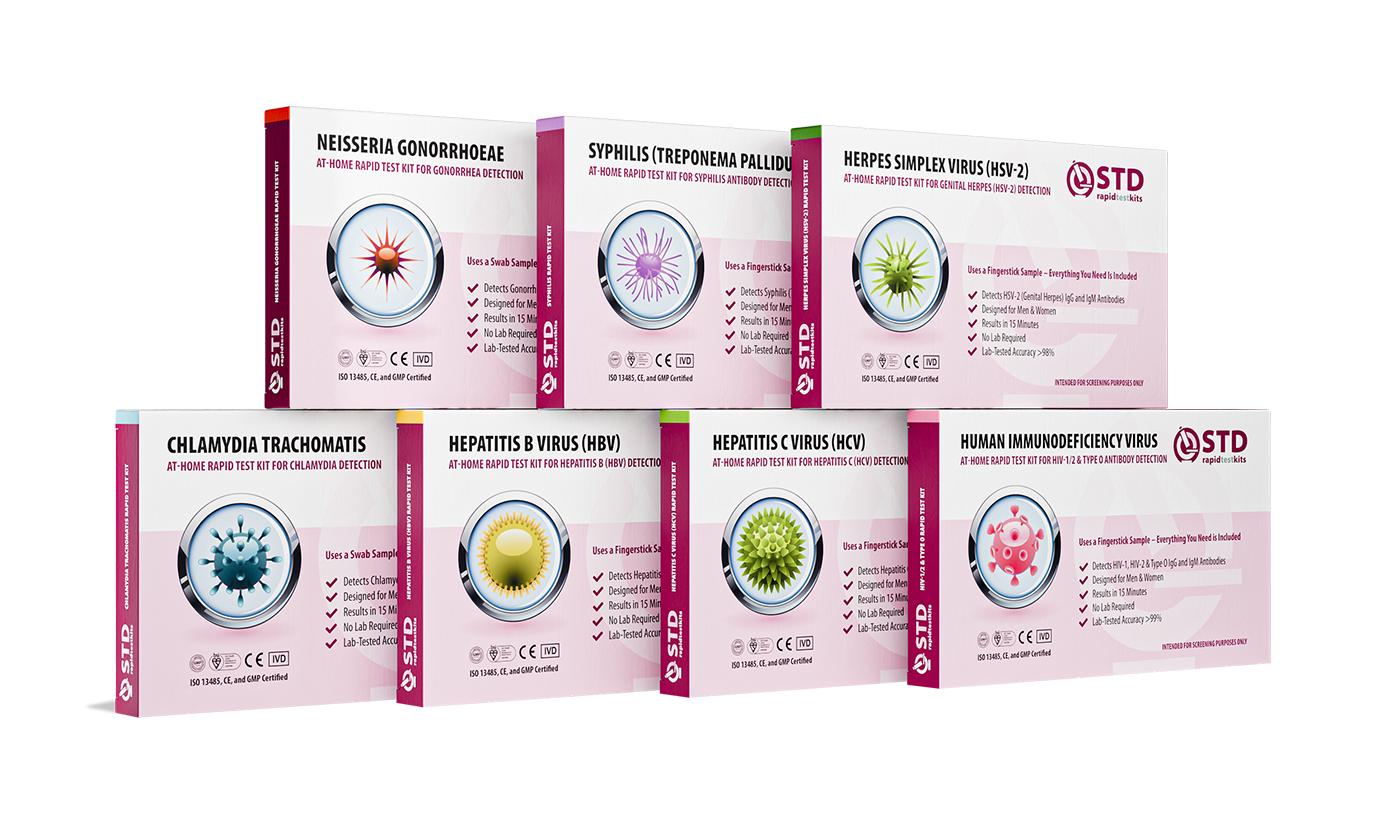 For Men & WomenResults in MinutesNo Lab NeededPrivate & Discreet
Order Now $129.00 $343.00
For all 7 tests
What If You Test Positive, And Weren’t Expecting It?
First: breathe. Whatever it is, you’re not alone, and you’re not doomed.
Most STDs are curable. The rest are manageable. Treatment is usually simple. And if you caught it early, chances are good you can stop it from doing lasting harm. A positive result doesn’t mean you’re dirty. It means your immune system just got a heads-up. That’s a gift.
The next steps? Follow up with a doctor or clinic. If you used an at-home test, many kits offer telehealth referrals or PDF results you can show your provider. Tell recent partners. Get them tested too, it’s part of the healing. You don’t have to do it alone.
And for every “What if I hadn’t tested?” moment, remind yourself that you did. That’s a win. You took control.
Test Kits Made for Real Life (Not Perfect Scenarios)
Let’s be real: most of us don’t love the idea of sitting in a clinic waiting room, trying not to make eye contact with the guy holding his pee cup.
That’s why at-home tests exist. They're built for people who want privacy, speed, and control.
This 3-in-1 STD test kit checks for the three most common silent infections. It's simple, affordable, and ships in discreet packaging. You get fast results and support if you need it, no lab, no judgment, no guessing.
Take the test when you’re ready, but don’t wait until you’re scared. Test while you still feel strong. That’s the best time.
What You Can Do Right Now (Even If You're Not Ready to Test)
Not everyone feels ready the moment they learn the risks. That’s okay. You don’t have to rush. But you can still take action, tiny steps that build up to protection and power.
Here’s what you can do today, even without a swab or drop of blood:
- Start the conversation: Ask your partner, “When’s the last time you tested?”
- Bookmark a test kit: Even if you’re not ready to click ‘buy,’ know where to go.
- Use protection every time: Condoms and dental dams help, even when infections are invisible.
- Get vaccinated: The HPV and hepatitis B vaccines are safe, effective, and preventative.
- Share this info: Someone you care about might be silently at risk. Pass it on.
Taking care of your sexual health isn’t a one-time decision. It’s an ongoing act of self-respect.
The Real Reason Most People Never Know They’re Infected
It’s not just biology. It’s a lie we were told. That we’ll “know” if something’s wrong. That STDs are obvious, dirty, shameful. That good people don’t get them. That healthy people can’t have them.
But the truth is this: asymptomatic STDs are just infections. They don’t care how nice you are, how careful you were, or how healthy you feel. And they thrive in silence, especially when shame keeps people from testing.
If you’ve ever felt afraid to ask, to test, to tell the truth, you're not weak. You’re human. And if you’re reading this? You’re already stronger than your fear.
People are also reading: Why Syphilis in Pregnancy Is Rising (And How to Protect Your Baby)
FAQs
1. Can you really have an STD and feel 100% fine?
Yep. And that’s the messed-up part. Most people think “If I had something, I’d know.” But infections like chlamydia, gonorrhea, and even HIV can quietly hang out in your body for months, or years, without making a sound. You could be going to the gym, eating clean, living your best life… and still be infected.
2. How long can an STD stay in your body without symptoms?
Way longer than you'd expect. Some people carry HPV or herpes for life without ever showing symptoms. Others might live with chlamydia for a year or more and only find out when they’re trying to get pregnant. The absence of symptoms ≠ absence of infection.
3. Do asymptomatic STDs eventually go away on their own?
Rarely, and not in a good way. A few might clear up (like some low-risk strains of HPV), but most won’t. They’ll just quietly keep causing damage: scarring, inflammation, immune stress. You might “feel fine” while your fertility’s taking a hit behind the scenes. That’s why testing matters.
4. Can I give someone an STD even if I don’t have symptoms?
Absolutely. That’s how most STDs spread, through people who have no clue they’re carriers. Herpes, for example, can shed virus when there are no sores. Gonorrhea can live in your throat from oral sex and pass to others without a single cough or sore.
5. What’s the best kind of test if I don’t feel sick?
A combo test that checks for several STDs at once. You want to cast a wide net, because if you’re not sure what you’re looking for, it’s smart to check for the usual suspects. At-home kits make it ridiculously easy, no awkward waiting rooms required.
6. Are home STD tests still accurate if I don’t have symptoms?
Yes, if you use them correctly and test at the right time. Most detect the presence of bacteria or antibodies, not symptoms. That’s the beauty of modern testing: your body doesn’t have to wave a red flag for the test to catch something.
7. How often should I test if I have more than one partner?
If you’re sexually active with new or multiple partners, aim for every 3 to 6 months. It’s not about paranoia, it’s about peace of mind. Think of it like oil changes for your health. Regular checks = smoother ride.
8. Do I really have to tell someone I tested positive if I didn’t even feel sick?
Yes, because they might not feel sick either, and still be at risk. Think of it less like a confession and more like a PSA: “Hey, I just found this out and wanted you to know so you can take care of yourself too.” It’s awkward, but it’s also respect.
9. Can you become infertile from an STD you didn’t even know you had?
Heartbreakingly, yes. That’s one of the biggest risks. Untreated chlamydia and gonorrhea can damage the fallopian tubes or testicles over time, without a single symptom. People often find out when it’s already too late to reverse.
10. What if I’m scared to get tested?
Then you’re like most people. Testing feels scary because we associate it with shame, judgment, or worst-case scenarios. But here’s the twist: the scariest part is not knowing. Once you have your results, positive or negative, you can breathe. You have a plan. And there’s real power in that.
How We Sourced This Article: We combined current guidance from leading medical organizations with peer-reviewed research and lived-experience reporting to make this guide practical, compassionate, and accurate. In total, around fifteen references informed the writing; below, we’ve highlighted some of the most relevant and reader-friendly sources.
Don’t Wait for Symptoms, Protect Yourself Now
If you've read this far, here's what you already know: STDs don't always announce themselves. You won’t always get a warning. And you don’t need to feel sick to be at risk. But you can take control, right now.
Whether you're worried about a past partner, planning for the future, or just want clarity, you deserve answers. And you don’t have to wait for symptoms to show up.
This at-home combo test kit checks for the most common silent STDs quickly and privately. Take the guesswork out of your health.
Because silence isn’t safety. Knowing is power.
Sources
1. Planned Parenthood – STDs and Safer Sex
2. WHO – Sexually Transmitted Infections Fact Sheet
3. About Sexually Transmitted Infections (STIs) | CDC
4. Management of asymptomatic sexually transmitted infections (PMC)
5. Sexually Transmitted Infections (StatPearls / NCBI Bookshelf)
6. Sexually Transmitted Disease (STD) Symptoms | Mayo Clinic
About the Author
Dr. F. David, MD is a board-certified infectious disease specialist focused on STI prevention, diagnosis, and treatment. He blends clinical precision with a no-nonsense, sex-positive approach and is committed to expanding access for readers in both urban and off-grid settings.
Reviewed by: J. Nyla Monroe, NP-C | Last medically reviewed: November 2025
This article is for informational purposes and does not replace medical advice.


