







Quick Answer: A positive trichomoniasis rapid test usually shows two visible lines; one control and one test. Even a faint test line counts as positive. If no control line appears, the result is invalid and you’ll need to retest. Always follow the instructions and timing closely for accuracy.
What’s Inside the Trichomoniasis Test Kit (And Why It Matters)
The moment you crack open the foil pouch, it’s easy to get overwhelmed. Maybe you're doing this in secret before a date, or maybe you’re living far from a clinic and this is your only option. Either way, understanding each item in your test kit is the first step to doing it right.
Inside most FDA-cleared trichomoniasis test kits, you’ll find a sealed cassette device (your result reader), a sterile swab or urine collector depending on the version, a sample buffer or reagent bottle, a small dropper, and instructions. Some versions include a timer. Others expect you to use your phone or watch.
The cassette is the real star here, it’s where the result will show up, similar to a pregnancy test. The control line confirms the test is working properly. The second line (the “T” or Test line) tells you whether trichomoniasis antigens were detected in your sample. Even if the line is faint, it can still be valid. We’ll get to that.
Test kits should be stored in a cool, dry place, ideally below 30°C (86°F), and away from sunlight. Heat and moisture can damage the reagents, potentially invalidating your result. If your test kit is expired or the packaging is damaged when you open it, stop there. Don’t risk a false reading. Order a new one or contact the provider.
Prep First. Panic Less. Here’s What to Do Before You Test
Nadia, 26, had never taken a rapid STD test before. She was living out of her car for a while and didn’t have access to a clinic. When she finally ordered a trich test online, she was already experiencing itching and discharge. “I was shaking when I opened the box,” she said. “I thought I’d mess it up.”
Nadia didn't know that prep makes a big difference. Before you test, make sure to wash your hands well with soap and water. Place the cassette, buffer, swab, timer, and instructions on a clean surface. Make sure the cassette is flat and doesn't move. Don't rush; if you do, you might make common mistakes like not sampling enough or putting the buffer in the wrong place.
Don't pee for at least an hour before you take a vaginal swab test. If the test is based on urine, try to get it from the first morning or wait at least two hours after your last urination to make sure it's concentrated. Do not use creams, douching, or have sex 24 hours before the test because these things can change the results.
Read the instruction sheet twice. Not all tests follow the same steps. Some require 2–3 drops of the sample mixture, others need four. The wait time before reading the results also varies, from 10 minutes to 20 minutes. Set a timer so you don’t accidentally read it too early or too late, both of which can lead to false interpretations.

People are also reading: Mother-to-Child Transmission of Hepatitis C: What Every Expecting Mom Should Know
Step-by-Step: How to Use a Trichomoniasis Rapid Test
This isn’t like taking an online quiz, doing the steps precisely matters. Whether you’re using a swab-based or urine-based trich test, here’s what the process typically looks like, broken down as a narrative walk-through.
Case Example: Kevin, 32, had mild irritation and a partner recently diagnosed with trich. He opted for a rapid test before his next date. “I did it in my truck with bottled water and hand sanitizer. I was nervous I’d contaminate it or mess it up.”
He started by swabbing his urethra using the sterile swab provided, uncomfortable but necessary. He swirled the swab in the buffer solution for 20 seconds and then pressed it against the tube to release all the fluid. Using the dropper, he added three drops to the sample well of the cassette. The control line appeared almost immediately. The test line followed faintly at the 14-minute mark.
Trichomoniasis rapid tests detect specific antigens, proteins from the parasite. They don’t look for antibodies like HIV or syphilis tests, so the window period is slightly shorter. But precision matters. Failing to saturate the swab, using too little sample, or letting the test sit too long before reading can all lead to invalid or unclear results.
| Step | What to Do | Why It Matters |
|---|---|---|
| Prepare workspace | Clean surface, open components, wash hands | Prevents contamination or mix-ups |
| Collect sample | Use swab or urine as directed | Proper sampling ensures enough antigen is present |
| Mix with buffer | Swirl/swab and express fluid fully | Antigen must be in contact with reagent |
| Apply drops | 2–4 drops into sample well | Too much/little can affect flow across cassette |
| Wait & read | Check result exactly at indicated time | Reading too early/late can cause false results |
Table 1. Step-by-step breakdown for home trichomoniasis rapid test usage.
Check Your STD Status in Minutes
Test at Home with RemediumTrichomoniasis Test Kit
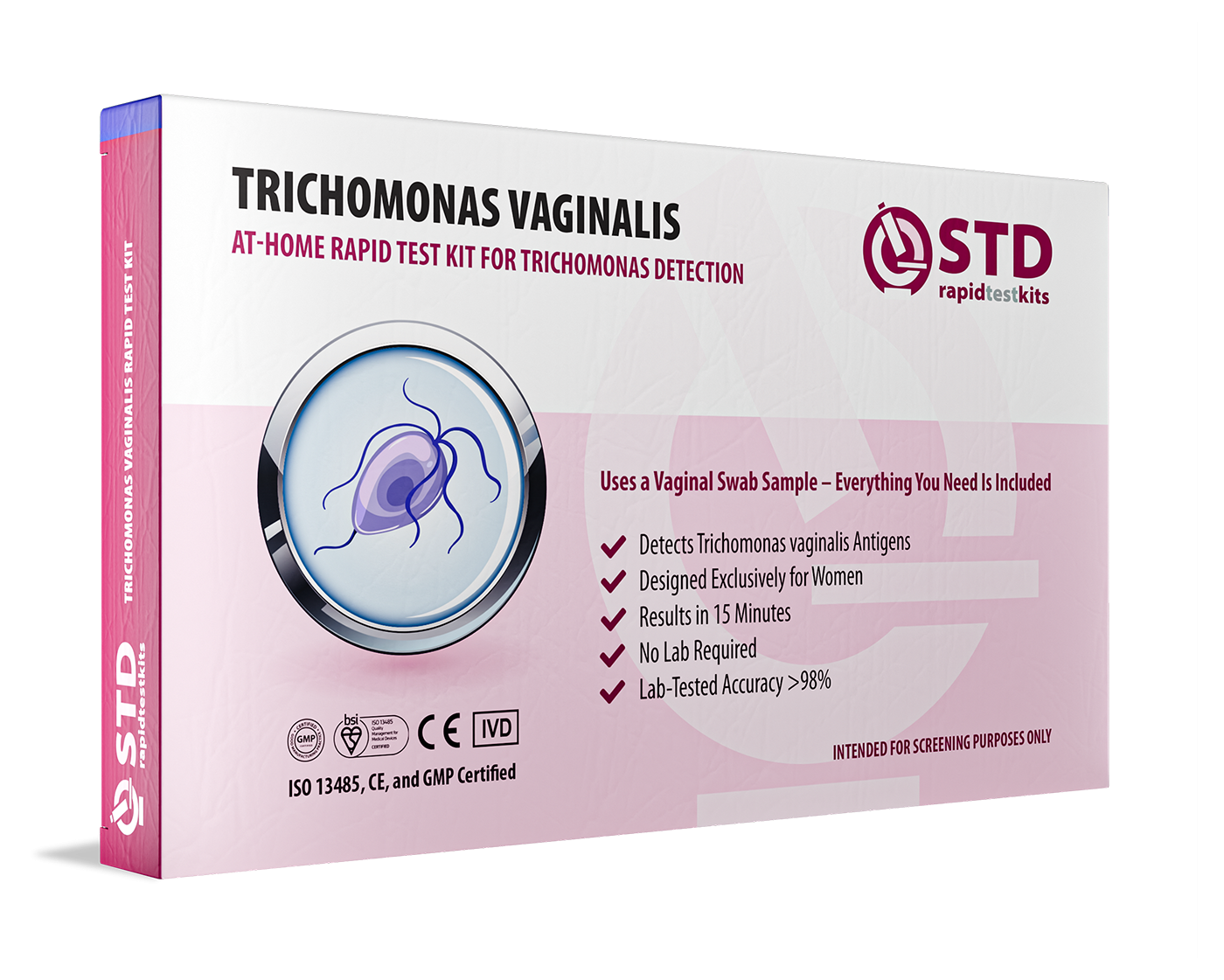
 For Women
 Results in Minutes
 No Lab Needed
 Private & Discreet
Order Now $33.99 $49.00
Reading the Result: One Line, Two Lines, or None?
This is where most people panic. You’ve waited the 15 minutes. You’re staring down at the cassette. Maybe you see one bold line. Maybe two. Maybe one is faint. Maybe there’s nothing at all. Here's how to decode what you're seeing without spiraling.
Every trichomoniasis test cassette has two possible indicators: a “C” for control and a “T” for test. If the “C” line appears clearly, your test has worked correctly. If the “T” line appears as well, even faintly, that’s considered a positive result. No “C” line? The test is invalid, no matter what else you see. You’ll need to test again with a new kit.
Sofia, 22, took her test while her roommate was out. “I saw a very faint second line. Like, barely there. I almost threw it away thinking it didn’t count. But I Googled it and found out it was positive.” She got treated the next day at a walk-in clinic and confirmed the result with a lab test.
Test manufacturers use lateral flow technology, meaning if the sample moves across the test strip correctly, antigens (if present) will bind to chemicals that create a colored line. The amount of color doesn’t reflect how “infected” you are. A faint line doesn’t mean a weak infection. It just means the antigen was detected in lower quantity, possibly due to early infection or sample quality.
| Result Appearance | Meaning | Next Steps |
|---|---|---|
| One clear line at “C” only | Negative result | Retest if symptoms continue or exposure was recent |
| Two lines: “C” and faint “T” | Positive result | Confirm with lab or start treatment if advised |
| No lines at all | Invalid test | Discard and use a new kit |
| Only a “T” line, no “C” | Invalid result | Test malfunctioned, retake test |
Table 2. Interpreting trichomoniasis rapid test results at home.
What Can Go Wrong (And How to Fix It)
Even if you do everything right, things can go wrong. Maybe your test got too hot in the mail. Maybe you touched the swab tip. Maybe you waited 25 minutes instead of 15. Understanding common pitfalls will help you avoid them, or catch them when they happen.
Case Example: Louis, 28, did two tests in a row. The first one had no lines. The second showed only the control. “I realized I’d skipped the buffer the first time. I just swabbed and dropped it on the strip.”
Tests can also fail silently. If your result looks weird, like smeared lines, no movement across the cassette, or an oddly colored window, don’t trust it. Retest. Keep the box and instructions for reference. Most kits include a contact number or QR code for support. If your test came from STD Rapid Test Kits, their product page includes extra guidance and discreet reorder options.
If you tested early (within 5 days of exposure), you may get a false negative even if you're infected. Trichomoniasis has a window period of roughly 5 to 28 days, with most reliable results appearing around the 14-day mark. Retesting after two weeks improves confidence, especially if you had symptoms.
And yes, false positives can happen, but they’re rare. If you’re asymptomatic and tested positive, a lab confirmation can give peace of mind. Better safe than untreated.

People are also reading: Everyday Ways Hepatitis C Can Spread: The Risks Hiding in Plain Sight
Disposal, Privacy, and What to Do If Someone Might See It
After testing, you may feel a mix of relief, panic, or just straight-up awkwardness. What do you do with this used cassette and swab now? If you live with others or want total discretion, here’s the good news: most tests are easy to dispose of discreetly.
Wrap all used components (swab, cassette, droppers) in toilet paper or a tissue, place them in a small plastic bag (like one from produce), tie it tight, and toss in the trash. If you’re in a shared space, wait until you're taking out the trash or bury it beneath other waste. Most tests don’t produce any smell or leakage, so you won’t need to worry about exposure.
Never flush anything except toilet paper. Swabs, plastic, and strips can clog pipes or harm plumbing. Kits are not biohazardous, so standard waste disposal is fine unless your local regulations say otherwise (rare).
If you’re worried about someone seeing the shipping label or the brand on the kit, most providers, including STD Rapid Test Kits, ship in plain packaging with no medical markings. Orders show up as “Health Technologies” or similar on billing statements for full discretion.
Check Your STD Status in Minutes
Test at Home with Remedium7-in-1 STD Test Kit
 For Men & WomenResults in MinutesNo Lab NeededPrivate & Discreet
Order Now $129.00 $343.00
For all 7 tests
Troubleshooting: Did the Test Fail or Was It Just Too Soon?
You did everything right, but your result feels off. Either you still have symptoms with a negative result, or your result came back invalid and now you’re out of kits. Don’t worry. You’re not alone, and there’s a clear next step.
Jenna, 34, tested negative three days after unprotected sex. But she still had a burning sensation and weird discharge. “I figured it was over. But it got worse. I re-tested 10 days later, positive. That window period is no joke.”
Symptoms of trichomoniasis can show up before the test becomes positive. Likewise, some people stay asymptomatic even while contagious. If your result was negative but something feels off, listen to your body. Retest at 14 days. If still negative and you have symptoms, go in for a lab-based test or talk to a provider.
Here’s a quick cheat sheet on whether your issue is timing, user error, or an actual result problem:
| Issue | Likely Cause | What to Do |
|---|---|---|
| No lines appear | Test failure or skipped buffer | Retest with new kit |
| Only “C” line shows | Negative or too early | Retest in 7–14 days if symptoms persist |
| Only “T” line shows | Test didn’t activate | Discard, use new kit |
| Both lines, faint “T” | Positive, early infection | Start treatment or confirm via lab |
| Smudged or partial lines | Contamination or delayed reading | Invalid, do not trust result |
Table 3. Troubleshooting common trichomoniasis rapid test result problems.
FAQs
1. Can I use a trich test during my period?
You can, but it’s not ideal. If you’re bleeding heavily, it might dilute the sample or make the results harder to interpret. If you can wait a few days, that’s usually best. But if symptoms are bad and you can’t wait, go ahead, just make sure to follow the instructions to the letter. And maybe keep a spare test on hand in case you want to double-check later.
2. Is a faint line still a positive?
Yep. Even the tiniest pink shadow on that test line usually means the test picked up trichomonas antigens. Faint doesn’t mean “kinda infected” or “maybe not”, it just means the sample had a low but detectable amount. If you’re unsure, confirm it with a clinic or take a second test in a few days.
3. How soon after sex can I test?
We get it, when anxiety hits, you want answers yesterday. But testing within 24–48 hours is usually too early. Trich has a window period of about 5 to 28 days. Best bet? Wait at least a full week if you can. If you test early and it’s negative but you still feel off, test again at the two-week mark. Your peace of mind is worth it.
4. Do men really need to test for trich?
Yes. Please. Just because symptoms are less obvious in people with penises doesn’t mean you’re off the hook. You can carry it without knowing and pass it on. If your partner tested positive, or you’ve got weird urethral irritation, get tested, even if you think it’s “probably just from biking too hard.”
5. Why did my test come out blank?
If no lines show up at all, no “C” line, no “T” line, you got a dud. Could be user error (missed a step, didn’t add enough buffer), or the test got cooked during shipping. Don’t take it personally. Just toss it and start fresh with a new one. Make sure the kit isn’t expired and hasn’t been sitting in a hot mailbox all week.
6. Should I still get tested at a clinic if my home test was positive?
It’s smart, especially if you don’t have symptoms. Home tests are reliable, but they’re not perfect. A lab confirmation locks things in, and gets you treatment faster. Some clinics or telehealth services will even accept a photo of your test strip as a conversation starter.
7. How is trichomoniasis treated?
Usually just one dose of metronidazole or tinidazole. It's fast, works, and doesn't require needles or long-term medications. After that, don't drink alcohol for a few days because it doesn't mix well with the meds. And yes, your partner needs to get treated too, or you'll keep getting sick.
8. Can I hook up after testing?
Not if you tested positive. Even if you're not feeling any symptoms, you’re still contagious. The rule of thumb? No sex until both you and your partner(s) are treated and symptom-free. Otherwise, it’s a game of hot potato, except with parasites instead of carbs.
9. Will this show up on my health insurance or medical record?
Nope, not if you test at home and keep it to yourself. Orders from STD Rapid Test Kits are discreet, and nothing shows up unless you seek treatment or insurance coverage. It’s your business, no one else’s.
10. Is there a test that checks for trich plus other STDs?
Yes, and it’s a good move if you’re not sure what you’re dealing with. Combo kits test for things like chlamydia, gonorrhea, syphilis, and trichomoniasis in one go. It saves time, worry, and those awkward “should I test for that too?” Google spirals.
You Deserve Answers, Not Assumptions
If you’ve made it this far, you’ve probably stared down a test cassette and wrestled with uncertainty. Maybe you saw one line and sighed with relief, or spotted a faint second line and felt your stomach drop. Wherever you land, know this: testing is an act of care, not confession.
Trichomoniasis is treatable. It’s also common, millions are diagnosed every year, many with no symptoms at all. But catching it early helps protect your partners and your own reproductive health. If you need to retest, do it. If you're unsure, confirm it. If you're positive, take a breath and move forward. There’s a plan, and you’re not alone.
Don't wait and wonder, get the clarity you deserve. This trichomoniasis rapid test kit is discreet, fast, and trusted by thousands. One test could save weeks of confusion or missed treatment.
How We Sourced This Article: We combined current guidance from leading medical organizations with peer-reviewed research and lived-experience reporting to make this guide practical, compassionate, and accurate.
Sources
1. Planned Parenthood: Trichomoniasis
2. Trichomoniasis — STI Treatment Guidelines (CDC)
9. Stepwise Diagnosis of Trichomonas vaginalis Infection (PMC)
About the Author
Dr. F. David, MD is a board-certified expert in infectious diseases who works to stop, diagnose, and treat STIs. He blends clinical precision with a no-nonsense, sex-positive approach and is committed to expanding access for readers in both urban and off-grid settings.
Reviewed by: K. Moreno, MPH | Last medically reviewed: October 2025
This article is only for informational purposes and should not be taken as medical advice.


