







Quick Answer: Untreated syphilis moves through stages, starting with subtle signs or none at all, progressing to systemic infection that can hit the brain, heart, nerves, and organs. Stage 2 often brings rash, systemic symptoms, and nerve signs. The later, latent and tertiary phases can cause irreversible harm or death. Early testing and treatment halt all of this.
The Silent Start: Primary Syphilis and the Vanishing Sore
Marcus remembers vague soreness on his groin region, but he thought it was an ingrown hair. Three to six weeks later, the sore had disappeared. He assumed the body healed itself. Many people do. A chancre, the hallmark sore of primary syphilis, is often painless and subtle. It may occur on genitals, anus, oral cavity, or lips. Because it doesn’t hurt, most don’t notice it.
From the CDC’s perspective, that disappearance is misleading: the sore may heal, but the infection does not. The bacteria slip deeper into the bloodstream, waiting. Untreated, the disease presses on to secondary syphilis.
In Marcus’s story, that hidden window lasted about 8 weeks. No red flags, no worsening. Just a quiet entry into a disease most people don’t see coming.
Stage 2 Syphilis: When the Infection Spreads Loud (Sort Of)
Around week 8, Marcus noticed a faint rash spreading across his torso. It wasn’t itchy. It looked like heat rash or maybe stress hives. The rash even showed up on his palms and the soles of his feet, which he thought was bizarre, but still, he hesitated to see a doctor. Within days, fatigue set in. His joints ached as if he had the flu. Swollen glands in his neck, mild fever, and scattered headaches followed.
These are classic signs of secondary syphilis, the phase where the bacteria have traveled deep and are triggering immune responses. Common symptoms include rash (often non-itchy), fever, sore throat, patchy hair loss, muscle aches, and swollen lymph nodes.
Importantly, those symptoms may fade over weeks, even without treatment, and many believe they are cured. But that’s false reassurance. The infection is still inside you. The bacteria may temporarily quiet, but not gone. That’s when the latent phase begins.
Marcus describes confusion and frustration. “I felt better for a few days,” he said, “so I told myself it passed.” Meanwhile, he had already exposed a partner to the bacteria. He lived in denial until a neurologic symptom, tingling in his toes, pushed him over the edge.
Latent Phase: The Calm Before the Storm
When symptoms disappear, stealth takes over. In the latent stage, there are no outward signs. You look “normal.” But internally, the bacteria are active, eroding tissue, affecting blood vessels, and occasionally reactivating. This silent middle stage can last years, even decades.
Most people with syphilis never progress beyond latency. But for those who do, tertiary (late) syphilis is the threat. In fact, 10–40 percent of untreated cases will eventually progress to late-stage disease.
Marcus’s latent phase was uneasy. He worried constantly. Sometimes he felt odd stiffness in his back or blips of blurred vision. He dismissed them. He told himself he was just tired, overworked. But that denial was dangerous. During latent syphilis, the damage is happening, just quietly.

People are also reading: Connecticut’s Hidden Epidemic: Why STIs Are Rising Among High-Income Adults
Tertiary Syphilis & Neurosyphilis: The Worst Comes Out
Marcus’s nerve symptoms worsened. He started to stumble. His balance failed him. He developed sharp, lightning‑like pains in his legs. His memory faltered. His mood shifted. Panic rose. He feared he was neurological.
Tertiary syphilis occurs years after untreated infection. It can damage your heart, blood vessels (especially the aorta), bones, skin (gummas), and especially the nervous system. When the infection invades your brain or spinal cord, you get neurosyphilis, which can cause dementia, paralysis, vision loss, and seizures.
One classic manifestation is tabes dorsalis, a degeneration of spinal cord pathways leading to stabbing pains, loss of reflexes, walking difficulties, and bladder problems.
Another is general paresis, which erodes memory, judgment, and personality. Over time, you might lose ability to care for yourself. These aren’t just theoretical risks, they are recorded outcomes in patients whose syphilis was never treated.
In Marcus’s case, a neurological workup confirmed neurosyphilis. His vision was impacted. His gait was unstable. It shook him: a “mild rash” months ago led him all the way to this.
The Full Progression at a Glance
| Stage | Typical Timeline (if untreated) | Key Features / Symptoms | Risks & Damage |
|---|---|---|---|
| Primary | 10–90 days | Painless sore(s), often unnoticed | Transmission risk, unnoticed spread |
| Secondary | Weeks to months | Rash, fever, lymph nodes, hair loss | Systemic burden, immune reaction |
| Latent | Years to decades | No symptoms | Internal organ damage, silent progression |
| Tertiary / Neurosyphilis | 10–30+ years | Organ failure, neurological decline | Death, dementia, paralysis |
Table 1. Untreated syphilis stages and risks.
How Testing & Diagnosis Work (And Why Timing Matters)
Before Marcus’s diagnosis, he thought tests were optional, something for people with obvious symptoms. But syphilis testing is your best defense, and timing defines accuracy.
Testing often begins with a blood test (nontreponemal tests like RPR or VDRL) followed by a confirmatory treponemal test. In early lesions, fluid from a chancre can also be examined under a microscope.
However, early on, antibody levels might not be high enough to detect. That’s why testing too soon after exposure can generate false negatives. Experts recommend waiting at least 6 to 12 weeks after exposure for reliable results in many cases.
If your first test is negative but you had a high-risk encounter, retest later. Marcus’s first round was negative when done prematurely. The confirmatory test months later caught the infection in secondary phase.
During any stage, if neurosyphilis is suspected, a cerebrospinal fluid (CSF) exam may also be required.
Why People Wait (and Regret It)
The psychology is real: denial, shame, fear. Marcus ignored his symptoms because he told himself they were nothing. He believed a rash was stress, tingling was fatigue, memory lapses were burnout. But every ignored hint nudged the infection deeper.
Delaying care is common. Many people with STDs delay testing until symptoms can’t be ignored, even when those initial signs are subtle. That delay amplifies risk. The later you catch it, the more complicated treatment becomes, and the higher the potential for permanent harm.
Check Your STD Status in Minutes
Test at Home with RemediumSyphilis Test Kit
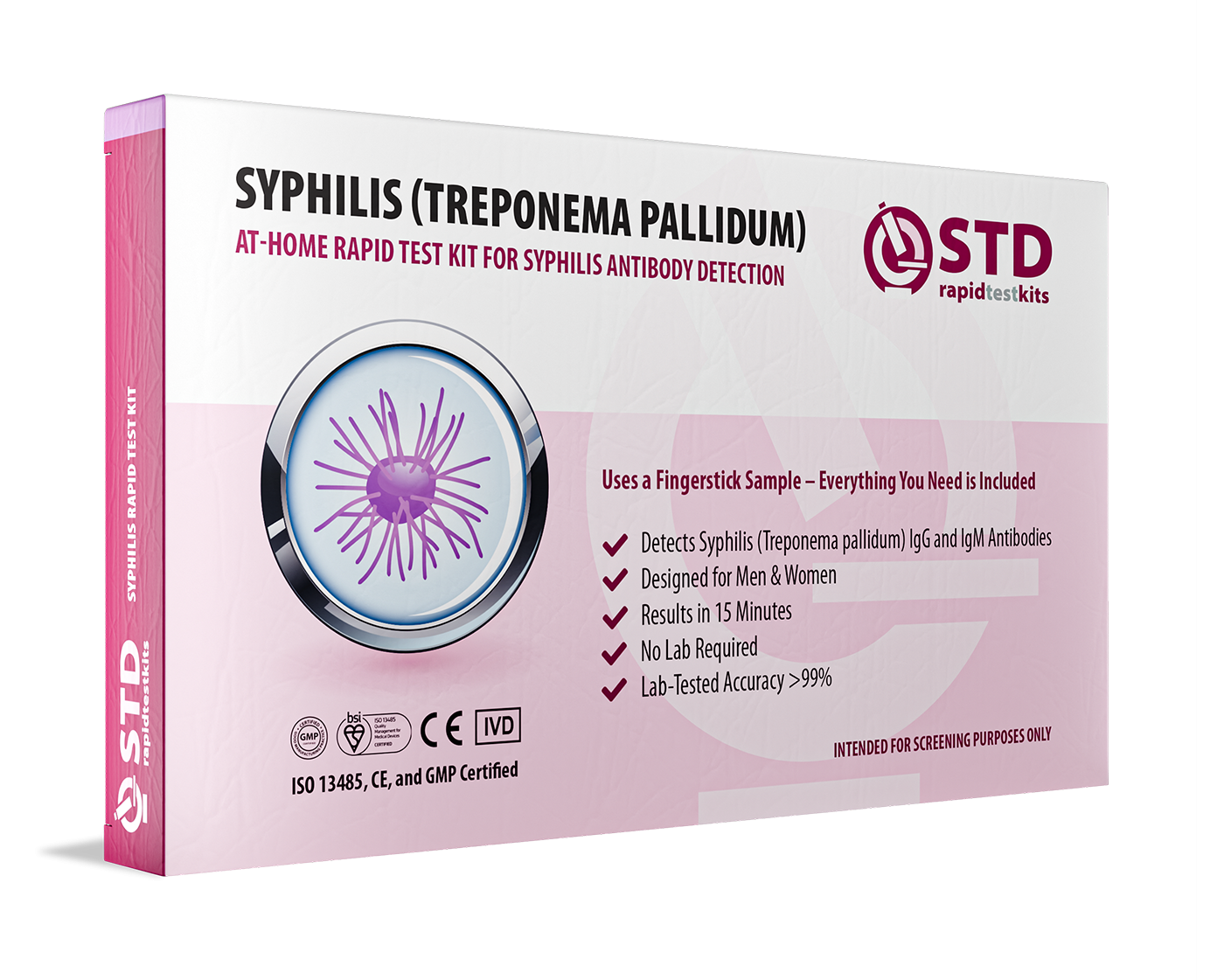
 For Men & Women
 Results in Minutes
 No Lab Needed
 Private & Discreet
Order Now $33.99 $49.00
What Treatment Looks Like (Yes, You Can Fix This, If You Act)
Here’s the relief: syphilis is fully curable at all stages, if you treat it. The key is prompt and adequate antibiotic therapy.
For primary, secondary, and early latent syphilis, the standard is benzathine penicillin G (one injection, in many cases). The dose and duration vary by stage. If neurosyphilis or ocular involvement exists, more intense regimens (multiple injections or IV) are used.
Marcus’s treatment plan spanned multiple injections over weeks. He feared the side effects, the possible Jarisch‑Herxheimer reaction (a flu‑like reaction some get when bacteria die off), but he pushed through. Within months, the tingling receded, his cognition improved, and the latent threat began to fade.
Even in tertiary stages, treatment can stop progression and years of suffering, though existing damage may not fully reverse. That’s why earlier is everything.
When Is It Too Late, or Almost Too Late?
“Am I beyond saving?” Marcus asked one night, panic in his voice. The answer is nuanced. In some cases, damage to nerves and the heart may be irreversible, especially once tertiary disease has set in. But treatment can arrest further decline and improve quality of life.
Not everyone with syphilis develops severe late disease. The latent stage may remain dormant lifelong in many. According to studies, only a fraction (perhaps 10–40%) progress to tertiary complications.
But you can’t predict which path your body will take. Leaving syphilis untreated is betting your future on chance. It’s a risk most of us can’t afford.
Anatomy of Risk: Who Is Especially Vulnerable?
People living with HIV, those who have recurrent STDs, people with multiple partners, or those who avoid routine screening are at greater risk for both contracting syphilis and seeing worse outcomes. Co‑infection complicates the immune response and accelerates progression.
Pregnant people with untreated syphilis can pass it to their fetus, causing congenital syphilis, miscarriages, stillbirths, or severe infant illness. Those risks alone make screening in pregnancy nonnegotiable.
Marcus’s story is not unique. Many silently carry syphilis for months, even years, before something forces the conversation. What made the difference for him was finally facing it head-on.

People are also looking for: Queer, Unvaccinated, and At Risk: How HPV Hits Gay Men Hardest
What You Can Do Right Now (Yes, You Can Take Control)
If you’ve had any exposure you’re uncertain about, or symptoms you can’t explain, test. Don’t wait for full-blown illness. Order a test kit, walk into a clinic, ask your provider. If the first result is negative but your risk was high, retest after the proper window (6–12 weeks is common). Don’t trust your body’s silence.
If you’re diagnosed with syphilis, follow the full treatment regimen. Don’t skip doses. Stay in contact with your provider. Let them monitor your response with blood tests. Test your partners too, tell them, get them treated. This isn’t just about you, it’s public health. It’s community care.
Even after treatment, you’ll need follow-up. Serologic tests (RPR/VDRL titers) are repeated at 3, 6, 12, and sometimes 24 months to ensure the infection responded appropriately. In neurosyphilis cases, additional cerebrospinal fluid monitoring may occur.
Are you scared? Good. Let that fear move you to act. Because inaction can cost you far more than discomfort, it can cost your autonomy, your memory, your life.
FAQs
1. Can syphilis ever go away on its own?
Not at all. Even though early symptoms may resolve temporarily, the infection persists. Without treatment, it can enter latency and cause damage later.
2. Is it true syphylis really be completely dormant and asymptomatic for a long while?
Hauntingly, yes. It can just stay dormant for years (or even decades) in the latent phase. Some people never get tertiary disease at all!
3. Can you still transmit syphilis if you have no symptoms?
Yes, especially in the first and second stages. The risk of transmission goes down in the late latent stages, but it doesn't go away completely.
4. Is there a best window period to test at, to get that maximum accuracy?
Very much. Antibodies take time to form after exposure. Many doctors wait 6 to 12 weeks after exposure to get reliable results for syphilis. If you test too soon, you could get false negatives.
5. Is penicillin the only treatment for this?
Yes, for now. Benzathine penicillin G is the gold standard for all stages. In neurosyphilis, more intensive regimens are used.
6. Can treatment reverse all the damage?
Treatment halts further progression and often improves symptoms. But damage already done, especially in tertiary disease, may be partially irreversible.
7. Should partners be treated too?
Of course. Anyone who had sex during a time when they could have been infectious should get tested and treated, even if they don't have any symptoms. It's very important to let your partner know.
8. How often should I get retested after treatment?
Serologic tests are usually done again at 3, 6, and 12 months. Some patients get 24 months. In neurosyphilis, further CSF testing may be advised.
9. I tested positive for syphilis. Does that mean I can’t have sex ever again?
Not at all. But you do need to hit pause, for now. Once you’ve completed treatment and your provider confirms you're no longer infectious (usually with follow-up testing), sex is back on the table. What matters most is giving your body time to heal and making sure partners are tested too. Healing is sexy. Ghosting syphilis is even sexier.
10. Can I get syphilis again after being treated?
Yes, and that’s the part most people don’t realize. Treatment clears the current infection, it doesn’t make you immune. You can absolutely catch syphilis again from a new exposure. That’s why regular testing matters, especially if you're changing partners or skipping condoms. Think of treatment as a reset, not a forever shield.
Information And Caution Are Great Tools To Have
Marcus’s journey from “I feel fine” to neurological symptoms is a cautionary tale, not a horror story. It’s a reminder that sexually transmitted infections are rarely polite, and waiting only gives them a head start. Syphilis is treatable, curable, but only if you don’t let it go quiet.
Your body’s silence doesn’t mean safety. If you suspect exposure or notice unusual signs, don’t wait. Test. Treat. Reclaim control. And by doing so, you protect not just yourself, but every intimate connection you’ll ever have.
How We Sourced This Article: We based this article on current evidence from the world’s leading health authorities and peer‑reviewed medical journals. Guidance from the CDC, WHO, Mayo Clinic, NIH, and Cleveland Clinic shaped every fact you’ve read.
Sources
2. CDC: 2024 Sexually Transmitted Infections Treatment Guidelines – Syphilis
3. Syphilis: Symptoms and Causes – Mayo Clinic
4. Syphilis Diagnosis & Treatment – Mayo Clinic
5. Syphilis – World Health Organization Fact Sheet
6. Syphilis Overview – Cleveland Clinic
7. Neurosyphilis – NCBI / StatPearls
About the Author
Dr. F. David, MD is a board-certified infectious disease specialist and medical writer who wants to make sure that everyone has access to accurate, stigma-free sexual health information. Dr. David has been a doctor for more than fifteen years, which helps him connect medical research with making decisions in real life. He works on helping patients with STD testing, diagnosis, and treatment communicate in a way that is practical and trauma-informed.
Reviewed by: Dr. Eliana Torres, MPH, PhD | Last medically reviewed: October 2025
This article is only meant to give you information and should not be taken as medical advice. If you think you might have been exposed or infected, talk to a licensed healthcare professional or use an FDA-approved home test kit.


