







Quick Answer: A faint or absent test line doesn’t always mean you’re in the clear. Chlamydia rapid tests can miss early infections, especially if used before the window period ends or if the sample wasn’t collected properly. Treat faint lines as suspect positives, and always confirm or retest if symptoms persist or your exposure risk is high.
Why Reading the Test Is More Than “Line or No Line”
Rapid chlamydia tests (often antigen-based) promise results in minutes, but they're not foolproof. Their accuracy hinges on how you use them. Even the most sensitive test can miss an infection if the sample is taken too early or interpreted too quickly. A faint line could be your body whispering “yes,” while your anxious brain says “nah.” Meanwhile, a missing line doesn’t always mean a clean bill of health, especially if the timing wasn’t right.
Several large reviews have shown that rapid antigen tests for chlamydia have moderate sensitivity, sometimes missing over 40% of true infections when compared to PCR (NAAT) tests. Specificity tends to be higher, so if a test says you’re positive, it’s more likely to be correct. But negatives? They come with caveats. Newer rapid molecular POC tests (which use DNA detection) can reach over 90% sensitivity, but those aren’t yet the norm in home testing kits.
Here’s a simplified reference guide that helps interpret what you’re seeing:
| Test Strip Pattern | Likely Meaning |
|---|---|
| Control line + bold test line | Likely positive |
| Control line + faint test line | Probable positive , retest or confirm |
| Control line only (no test line) | Likely negative, but timing/sample matters |
| No control line visible | Invalid test , discard and retest |
When You Think “Negative” But It’s Not
Ella, 27, swabbed carefully, followed the timer, and stared at the cassette under the bathroom light. No second line. She breathed a sigh of relief. Her boyfriend had tested positive last week, but maybe she dodged it. A week later, pelvic pain started creeping in. Her doctor ran a PCR swab, positive for chlamydia.
What went wrong? Ella tested too early, just three days after exposure. Her body hadn’t produced enough antigen to show up yet. The rapid test wasn’t “wrong”, but it was misused. Her relief came too soon. This is one of the most common errors people make: testing before the window period ends.
Common Mistakes That Lead to Misreading (And How to Avoid Them)
You’re not alone if you’ve squinted at a rapid test wondering if that’s a shadow or a signal. Most people make small but crucial mistakes, rushing the read, mishandling the swab, testing too early, or misjudging a faint line. These human errors contribute to the gap between lab-reported test accuracy and real-life outcomes.
| Mistake | Example | Why It Matters |
|---|---|---|
| Reading test too early | Checking result at 7 minutes instead of 15 | Faint lines may take time to develop |
| Swabbing incorrectly | Too shallow, too fast, not enough rotation | Misses infected cells, leads to false negatives |
| Bad lighting | Trying to read in a dim bathroom | Faint positives become invisible |
| Ignoring window period | Testing 2–3 days after exposure | Too soon to detect infection |
| No control line | Only test line appears or none at all | Test is invalid, must be discarded |
The Faint Line You Almost Missed
Jas, 31, held the test up to the light and tilted it. There it was, maybe. A whisper of pink at the test line. Or was it just the plastic reflecting? She snapped a photo, stared, then tossed it. “Probably nothing.” A week later, she got back dull pelvic cramps and yellow discharge. Her clinic NAAT came back positive. That ghost of a line? It was the warning.
Faint lines are a known challenge. Some are real. Some are not. But in the case of chlamydia, the general rule holds: faint still means potential positive. Don’t ignore it. Retest, or confirm.
People are also looking for: What No One Tells You About Probiotics, Yeast Infections, and STIs
How Sensitivity and Specificity Affect Your Result
Every test has strengths and blind spots. The two metrics that matter most here are sensitivity and specificity. Sensitivity is the ability to correctly identify people who have the infection. Specificity is the ability to correctly exclude those who don’t. High sensitivity means fewer false negatives. High specificity means fewer false positives.
In controlled studies, chlamydia antigen rapid tests have shown a wide range of sensitivity, from 30% to 70%, depending on sample type, user handling, and test brand. But specificity often sits in the 90–100% range. That means a strong positive is more reliable than a single negative, especially if symptoms or exposure risk are present.
A newer generation of molecular rapid tests (like Cepheid’s Xpert or binx io) show much better performance, with sensitivities approaching 95% and results in about 30 minutes. But these aren't widely available in home settings yet. Most home kits still use older lateral flow technology that’s cheaper and faster, but not as precise.
When Timing Makes or Breaks the Result
Think of the test like a camera trying to catch an intruder in low light. If you snap too early, before the pathogen has replicated enough, it slips past unnoticed. This is the infamous “window period”, the time between infection and when a test can reliably detect it. For chlamydia, that period usually lasts 7 to 14 days. Test before that, and you might get a false sense of safety.
Carlos, 24, hooked up at a festival. Five days later, he swabbed, saw a negative, and moved on. Ten days in, he had urethral itching. His second test lit up clearly, positive. That early negative gave him false reassurance. If he’d known about the window, he might’ve waited, or at least not assumed the first test meant “clear.”
Here’s a visual table to help frame your testing timeline:
| Days Since Exposure | Detection Likelihood | Suggested Action |
|---|---|---|
| 0–3 days | Very low | Wait and monitor for symptoms |
| 4–6 days | Low to moderate | Test cautiously, retest later if negative |
| 7–14 days | Moderate to high | Optimal window for testing |
| 15+ days | High | Good timing for test accuracy |
Understanding timing saves you from misinterpreting a false negative. Your result isn’t just about what the line says, it’s about when you took the test.
What a Faint Line Really Means
Faint lines terrify and confuse people. Is it a smudge? A mistake? A leftover from processing? In the context of chlamydia rapid testing, a faint line is usually a signal that the test has detected a small amount of the target antigen. It doesn’t always mean “false.” It may mean “early positive.”
Angela, 33, took two tests. The first had a faint test line. The second, two days later, showed a stronger line. Her confirmatory PCR nailed it: positive. That faint result wasn’t a fluke. It was early warning.
If you see a faint line, assume it could be a positive. Take a follow-up test, either another rapid or, better yet, a molecular test at a clinic. False faint positives do happen, but they are rare. Most of the time, the test is telling you something. You just have to be willing to hear it, and act.
Confirmatory Testing: The Gold Standard
Rapid tests are convenient. But when stakes are high, symptoms, potential exposure, new partners, molecular confirmatory testing is the safer bet. NAATs (nucleic acid amplification tests) look for the DNA or RNA of chlamydia, not just surface antigens. They're less likely to miss early or low-level infections and far less likely to give false positives.
In most cases, if your rapid test is positive, or even faintly positive, a NAAT should be your next step. Some telehealth services now offer mail-in NAAT kits, which combine privacy with accuracy. You collect the sample at home and send it to a lab. Results come back in 1–3 days.
If you’re in a rush or feeling overwhelmed, remember: one clear positive test is enough to start treatment. But if your result is faint, questionable, or you just want to be sure, confirm before panicking, or dismissing the test entirely.
Check Your STD Status in Minutes
Test at Home with Remedium10-in-1 STD Test Kit
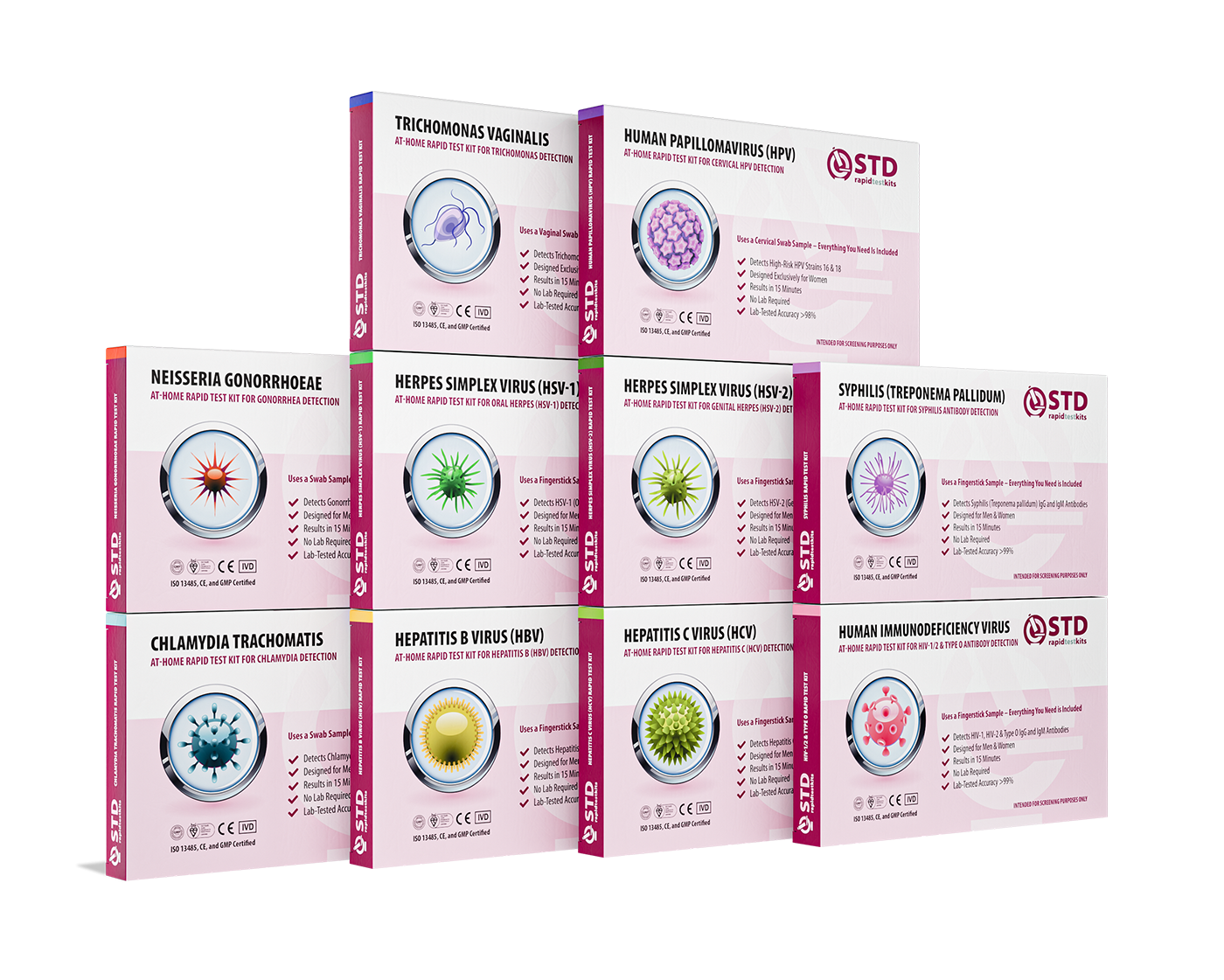
 For Women
 Results in Minutes
 No Lab Needed
 Private & Discreet
Order Now $189.00 $490.00
For all 10 tests
When One Result Isn’t Enough
If you tested early, had a faint line, or symptoms started after a negative test, a retest is smart. Especially within the first 10 days post-exposure, repeating the test is more than just reassurance, it’s science. The body may not have reached detectable antigen levels yet. By days 7 to 14, your odds of an accurate result jump.
Ty, 22, tested negative at day six but still felt off. He waited and tested again at day 13. This time, the line was clear. The diagnosis? Chlamydia, caught just in time to avoid more serious complications. That second test made the difference between confusion and clarity.
In cases of high-risk exposure (new partner, condom break, symptoms, known exposure), even a “clean” rapid test doesn’t mean you’re safe. Retest at 10–14 days. Trust your gut. If something feels off, your body might be signaling what the strip didn’t catch yet.
When a Negative Isn’t the End of the Story
You took the test. It said negative. But something doesn’t sit right. Maybe it’s a pelvic twinge, a cloudy discharge, or just the creeping memory of a condom that didn’t quite stay on. Here’s what most people don’t hear enough: you are allowed to doubt a negative result. Especially if the test was taken early, or symptoms keep nagging.
Ray, 30, got a negative result on day five post-exposure. No symptoms, just anxiety. But three days later, he felt burning while peeing. His rapid test still said negative. But his clinic NAAT? Positive. That second confirmation prevented complications, and partner transmission.
A rapid test is not the final word. It's a snapshot, not a crystal ball. Treat it as part of the conversation, not a period at the end of the sentence.
When It’s Better to Skip the Rapid Test
Rapid tests can be great for quick checks, but they’re not the right tool for every situation. If you’re already having symptoms, like unusual discharge, pelvic pain, spotting, or burning during urination, it’s smarter to go straight to a clinic or use a telehealth service that offers molecular testing. You need a clear answer, not a maybe.
The same goes if a partner recently tested positive, told you they might have chlamydia, or if you’ve had unprotected sex in the last couple of weeks. Early testing with a rapid kit often misses infections that are still developing. And if you're pregnant or trying to conceive, accuracy matters more than ever, this isn’t the time to gamble.
Rapid tests also can’t check everything. Most only cover urine or vaginal swabs. If the exposure was oral or anal, that kit may miss it completely. Clinics can swab those areas properly and give you the full picture.
And if your first test came back faint or unclear? That’s your cue to get a second opinion from a lab. Some things are worth slowing down for. This is one of them.
The Reluctant Partner Test
Mina, 29, tested positive on a rapid kit and texted her new partner. He insisted he had no symptoms. “I don’t need to test. I feel fine.” But she persisted. He took a kit at home. Faint line. He shrugged it off. She pushed for a lab test. NAAT confirmed it, positive. He would’ve kept unknowingly infecting others if she hadn’t spoken up.
Partner testing matters. Even when someone feels fine. Even when a rapid test looks unclear. Silent chlamydia infections are still contagious. Especially in men, where symptoms may be minimal or delayed.

People are also reading: One Night Stand, One Mystery Sore, and One Big Lesson
What to Do If the Test Line Disappears Later
Some people notice a faint line, then return to check an hour later, only to find it faded or gone. This doesn’t mean the result was invalid. Most test instructions state that results should be read within a specific window (usually 10–20 minutes). After that, the chemistry can degrade, lines can fade, and results may become unreliable.
If a line appeared clearly within the valid window, even if faint, it should be taken seriously. Snap a photo within the time frame. Use it as documentation, especially if you’re seeking care, counseling a partner, or planning follow-up testing.
What to Do Based on Your Result
| Test Result | Symptoms or Exposure? | Suggested Action |
|---|---|---|
| Clear positive (test + control line) | Any | Seek treatment or confirm with NAAT if needed |
| Faint test line | Any risk or symptoms | Retest in 48 hours or confirm at clinic |
| No test line + control line present | Early testing or ongoing risk | Retest at 10–14 days post-exposure |
| No control line visible | Irrelevant | Invalid test , discard and rerun |
| Negative test, but new symptoms | Yes | Confirm with NAAT or test different anatomical site |
| Negative test, no symptoms, low risk | No | Likely accurate , monitor only if exposure changes |
FAQs
1. Can a chlamydia rapid test actually miss an infection?
Absolutely, and it happens more often than people realize. If you test too early, say, three or four days after a risky hookup, your body might not have enough detectable antigens yet. It’s not that the test is broken, it’s just running too soon. We’ve seen folks get a negative result on Monday and a clear positive by Friday. It’s like checking your oven before the cookies rise, too soon to tell.
2. What does a faint line even mean? Am I positive or not?
If there’s a line, even a whisper of one, your test is probably trying to tell you something. Faint lines usually mean there’s a small amount of antigen present, it’s not just “ghosting” you. Some people ignore these and regret it later when symptoms kick in. Best move? Retest or confirm with a lab test. You don’t want to guess on this one.
3. My test had no control line, did I screw it up?
Nope, that’s not on you. If there’s no control line, the test didn’t run properly. Maybe it was expired, maybe there wasn’t enough liquid, maybe the chemistry failed. Either way, the result is trash, don’t trust it. Grab another test and try again. You're not the first person to get a dud.
4. I tested negative but I still feel weird, what gives?
Trust your body. If you're feeling symptoms, burning, discharge, cramping, that negative result might be misleading. Maybe you tested too soon, or the swab didn’t catch enough. Maybe the infection’s in a site the test didn’t cover (like the throat or rectum). If something feels off, it probably is. Get a NAAT test and get answers.
5. Can antibiotics mess with my test result?
They sure can. If you’ve taken antibiotics recently, even for something unrelated, your body might suppress the infection just enough to throw off a rapid test. That means you could still have traces of chlamydia hanging out, but not enough to trigger a positive. If you’ve medicated and then tested, take your result with a grain of salt and consider confirming at a clinic.
6. What if I had oral or anal sex, does the test still work?
Not always. Most at-home tests use urine or vaginal swabs, which won’t catch a throat or rectal infection. So if the fun stuff involved other parts, and your test came back negative, you might still be in the dark. Clinics can swab those other sites or use NAATs that are tailored to them. Bottom line: test the site you used.
7. Should I confirm a positive rapid test, or is it enough?
If the line is strong and your exposure was recent, you’re probably good to go ahead with treatment. But if it’s faint or unexpected, or you want a record for your partner, or peace of mind, confirming with a NAAT test is smart. It’s not about paranoia. It’s about clarity, especially when emotions or relationships are involved.
8. How long should I wait to test again after a negative?
If you tested early (within 7 days of exposure), don’t trust the result just yet. Wait another 4 to 7 days and test again. Symptoms or not, the infection needs time to become detectable. It’s not overkill, it’s just timing. Think of it like crop-watching: you don't harvest what hasn’t sprouted yet.
9. Why did the line disappear after an hour?
Rapid tests are divas when it comes to timing. Most give you a 15–20 minute read window, and after that, all bets are off. Lines can fade or morph as the chemicals dry out. If you saw a line during the valid time, even faint, take a photo and treat it seriously. That was your real result.
10. Are these home tests really reliable, or should I just go to a clinic?
Home tests are reliable enough for screening, especially if you follow the directions to a T and test at the right time. But if you need 100% clarity (like you’re symptomatic, pregnant, or just plain stressed), a clinic-based NAAT will always win. You don’t have to choose one or the other forever. Use both when the stakes feel high.
Real-Life Test Day: A Walkthrough
You open the kit. Your hands are a little shaky. You set everything down on a clean surface, swab, buffer, strip. You check the expiration date. You wash your hands. You breathe.
Following the instructions, you insert the swab gently, rotating slowly. You avoid over-thinking. You add the buffer. Drop, drop. Timer on. Fifteen minutes feels like forever. You fight the urge to check early.
When the time hits, you look at the cassette in bright light. The control line is sharp. Under “T,” something faint flickers. You tilt it. It’s there. Is it real? You take a photo. You note the time. You decide: better to assume yes than to risk it. You schedule a follow-up test and text your partner with what you found.
This isn’t paranoia. It’s self-respect. You’d rather overcheck than overlook. That’s how you turn confusion into control.
How We Sourced This: This article gives you practical tips, medical research, and user-focused testing advice to help you understand your chlamydia rapid test results correctly. We used advice from reputable medical groups, research that had been peer-reviewed on how accurate diagnoses are, and studies that looked at how well things work in the real world to write every part. We've picked out some of the most useful and easy-to-read sources below.
Sources
1. Performance of point-of-care tests for detecting chlamydia infections – The Lancet
2. Evaluation of molecular rapid test for chlamydia and gonorrhea – NIH
3. Screening for Chlamydia and Gonorrhea – USPSTF Recommendation Statement
4. Antigen-Based Chlamydia Rapid Test Evaluation – Elsevier
5. Avoiding False Negative STD Test Results – Centers Urgent Care
About the Author
Dr. F. David, MD is a board-certified infectious disease specialist focused on STI prevention, diagnosis, and treatment. He blends clinical precision with a no-nonsense, sex-positive approach and is committed to expanding access for readers in both urban and off-grid settings.
Reviewed by:Dr. Tara Meeks, OB/GYN | Last medically reviewed: October 2025
This article is for informational purposes and does not replace medical advice.


