Published: September 2025 | Last updated: May 2026 | Editorial review and quality control: Martina N.
Probiotics get marketed for almost everything these days, including sexual and vaginal health. The pitch is appealing: a daily capsule rebalances your microbiome, eases yeast flares, and protects against sexually transmitted infections. Two of those promises have some evidence behind them. The third is wishful thinking, and acting on it can delay an STI diagnosis long enough for an infection to spread or cause complications.
Most episodes of vaginal irritation are yeast or BV and respond to standard treatment. The trouble is that those symptoms are similar enough to several STIs that testing is the only reliable way to tell them apart when standard treatment fails or a new partner is involved.
This article covers what probiotics can and cannot do for vaginal and sexual health, why yeast-like symptoms get confused with sexually transmitted infections, when testing genuinely answers the question, and where at-home STI panels fit into the picture.
Key Takeaways
- Probiotics may help reduce yeast recurrence and support healthy vaginal flora, but they do not prevent or treat sexually transmitted infections.
- If symptoms persist after self-treatment, or if a partner discloses an STI, rapid at-home testing is the fastest way to rule out chlamydia, gonorrhea, trichomoniasis, and other common infections.
Why this conversation matters
The first response to vaginal itching or unusual discharge is often to grab probiotics, eat more yogurt, or pick up an over-the-counter antifungal cream. Sometimes that works. A real yeast infection does respond to antifungals, and some Lactobacillus strains do appear to reduce how often yeast flares come back. The problem is that self-diagnosis is unreliable in a way that matters for sexual health.
Research published in the journal Obstetrics and Gynecology found that when women buying over-the-counter antifungal products were examined, only about a third had a yeast infection. The rest had bacterial vaginosis, trichomoniasis, mixed infections, or other conditions that an antifungal cream cannot treat.
The downstream cost is real. An untreated chlamydia infection raises the risk of pelvic inflammatory disease and tubal scarring (CDC). Untreated trichomoniasis can persist for months and increases susceptibility to HIV. Soothing the symptoms with probiotics or creams can buy weeks of false reassurance while the underlying infection keeps spreading.
About two-thirds of women who self-treat for a suspected yeast infection turn out to have something else: BV, trichomoniasis, a mixed infection, or another condition antifungals will not touch (Ferris et al., Obstetrics and Gynecology, 2002). Symptoms alone are a poor diagnostic tool.
What probiotics actually do for vaginal health
Probiotics are live microorganisms intended to support a microbial community when consumed in adequate amounts. The strains most studied for vaginal health are Lactobacillus crispatus, L. rhamnosus, and L. reuteri. These bacteria normally make up most of the healthy vaginal microbiome. They produce lactic acid, which keeps vaginal pH low and discourages overgrowth of yeast and certain bacteria.
The evidence is strongest for two scenarios: restoring vaginal flora after a course of antibiotics, and reducing recurrence of bacterial vaginosis. Some studies also report fewer recurrent yeast infections in people taking specific Lactobacillus strains alongside antifungal treatment (Planned Parenthood). A useful supportive role, not a magic bullet.
What probiotics do not do is alter the biology of sexually transmitted infections. They cannot kill Chlamydia trachomatis, neutralize Neisseria gonorrhoeae, suppress herpes simplex virus, or prevent HIV from establishing infection. Those infections enter the body through sexual contact and replicate independently of vaginal pH. A probiotic capsule cannot stop that biology any more than a multivitamin can.
Can probiotics prevent or treat STIs?
No. Probiotics may help with yeast recurrence and bacterial vaginosis, but they do not prevent or cure chlamydia, gonorrhea, syphilis, herpes, HIV, or other STIs. Persistent symptoms or a recent exposure are reasons to test, not reasons to double the probiotic dose.
When yeast isn't yeast
Consider a pattern many readers describe: a history of occasional yeast flares since college, familiar cues like itching, thick white discharge, and irritation after sex, and a habit of reaching for probiotics plus an over-the-counter antifungal at the first sign of trouble. Three weeks later, the itching has not resolved. Then a partner texts about a recent chlamydia diagnosis, and what looked like a yeast flare turns out to have been an untreated STI the whole time.
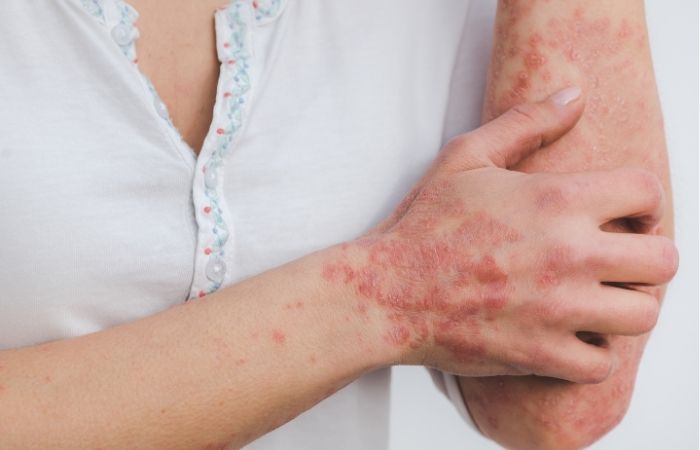
This pattern is common because the symptoms overlap heavily. Discharge, odor, itching, burning, and irritation can appear in yeast infections, bacterial vaginosis, trichomoniasis, chlamydia, gonorrhea, and herpes outbreaks. Even experienced clinicians often need lab testing to tell them apart, and the odds are no better for someone working from internet symptom lists alone.
How yeast, BV, and STIs overlap
The table below shows the typical pattern for each condition along with whether probiotics can play a supportive role and whether STI testing is indicated. Real cases blur these categories often enough that the table should be read as a starting point, not a substitute for testing.
| Condition | Typical Discharge | Other Key Symptoms | Can Probiotics Help? | Needs STI Test? |
|---|---|---|---|---|
| Yeast Infection | Thick, white, “cottage cheese” texture | Itching, redness, swelling | Yes, may reduce recurrence | Only if symptoms persist after antifungal treatment |
| Bacterial Vaginosis | Thin, gray-white | Fishy odor, mild irritation | Yes, some strains reduce BV risk | Yes, to rule out coexisting STIs |
| Trichomoniasis | Yellow-green, sometimes frothy | Strong odor, itching, pain with sex | No | Yes, always |
| Chlamydia | May be clear, mucus-like, or absent | Often no symptoms; sometimes burning with urination | No | Yes, always |
| Gonorrhea | Yellow or greenish, sometimes absent | Burning, pelvic pain, often asymptomatic | No | Yes, always |
Why timing and testing both matter
Imagine waking up three days after a worrying encounter, already itching and anxious. You grab probiotics, cranberry juice, maybe an antifungal cream. The science of STIs does not bend to that timeline. Most infections have an incubation or window period during which a test cannot detect them, no matter how strong the symptoms feel. A capsule can soothe some local discomfort. It cannot accelerate the biology of how an infection replicates or when it becomes detectable.
Chlamydia and gonorrhea typically reach reliable detection levels about a week after exposure, with two weeks giving the most confidence. Syphilis antibody tests turn positive between three and six weeks after exposure. Fourth-generation HIV antigen/antibody lab tests can detect infection as early as 18 to 45 days after exposure, with accuracy increasing toward the later end of that window (CDC HIV Testing). Trichomoniasis can be picked up within a week, sometimes sooner if symptoms are present.
The clock that matters is the date of exposure, not the day symptoms started. Testing before the window period closes is the most common reason for a false-negative result, and probiotics do nothing to shorten that window.
Common STI testing windows at a glance
The table summarizes the earliest a rapid or laboratory test can reasonably detect each infection, along with the window that typically gives the highest accuracy. Always check the specific kit's instructions; exact windows vary by assay and infection type.
| STI | Earliest Reliable Test Window | Best Time for Accuracy |
|---|---|---|
| Chlamydia | 7 days | 14 days or later |
| Gonorrhea | 7 days | 14 days or later |
| Syphilis | 3 weeks | 6 to 12 weeks |
| HIV (4th-gen antigen/antibody lab test) | 18 to 45 days | 45 days or later |
| Trichomoniasis | 5 to 7 days | 2 to 4 weeks |
| Herpes (HSV antibody) | 3 to 6 weeks | 12 weeks or later |
Probiotic myths that can put you at risk
Myth 1: Probiotics prevent STIs. They do not. STIs spread through sexual contact, mostly through mucosal membranes that probiotics do not coat or protect. No yogurt, capsule, or vaginal suppository changes that route of transmission.
Myth 2: If probiotics clear the symptoms, there is no infection. Many STIs, especially chlamydia and gonorrhea, are silent in the majority of cases. Symptoms resolving, whether from probiotics or just from time, does not mean the infection has cleared.
Myth 3: Probiotics replace the need for testing. Only a test can confirm or rule out an STI, whether that is an at-home rapid panel or a clinic visit. Relying on supplements alone risks silent damage to fertility and long-term reproductive health (Mayo Clinic).
Probiotics do not prevent STIs, do not clear them when symptoms quiet down, and do not replace testing. Treat them as a wellness habit, not a diagnostic plan.
Why people delay testing
Probiotics often give a false sense of momentum. Buying the bottle, taking the capsule, sometimes feeling slightly better the next day, all of that feels like taking action. It is much easier than booking a clinic visit or ordering a test kit, so the days slip past. Many users on health forums describe variations of the same story: weeks of drinking kombucha or layering on antifungal cream, only to discover months later that the symptom was trichomoniasis, BV, or an STI all along.
The hesitation is human. Shame, fear of a positive result, cost concerns, fear of judgment from a clinician, and optimism bias (the quiet belief that "this cannot really be happening to me") all push people toward the cheaper, easier-feeling option.
That hesitation itself is the signal. Order a kit or book the visit today and decide what to do with the result tomorrow. The decision-fatigue cycle is part of what keeps infections undiagnosed.
At-home testing changes the equation
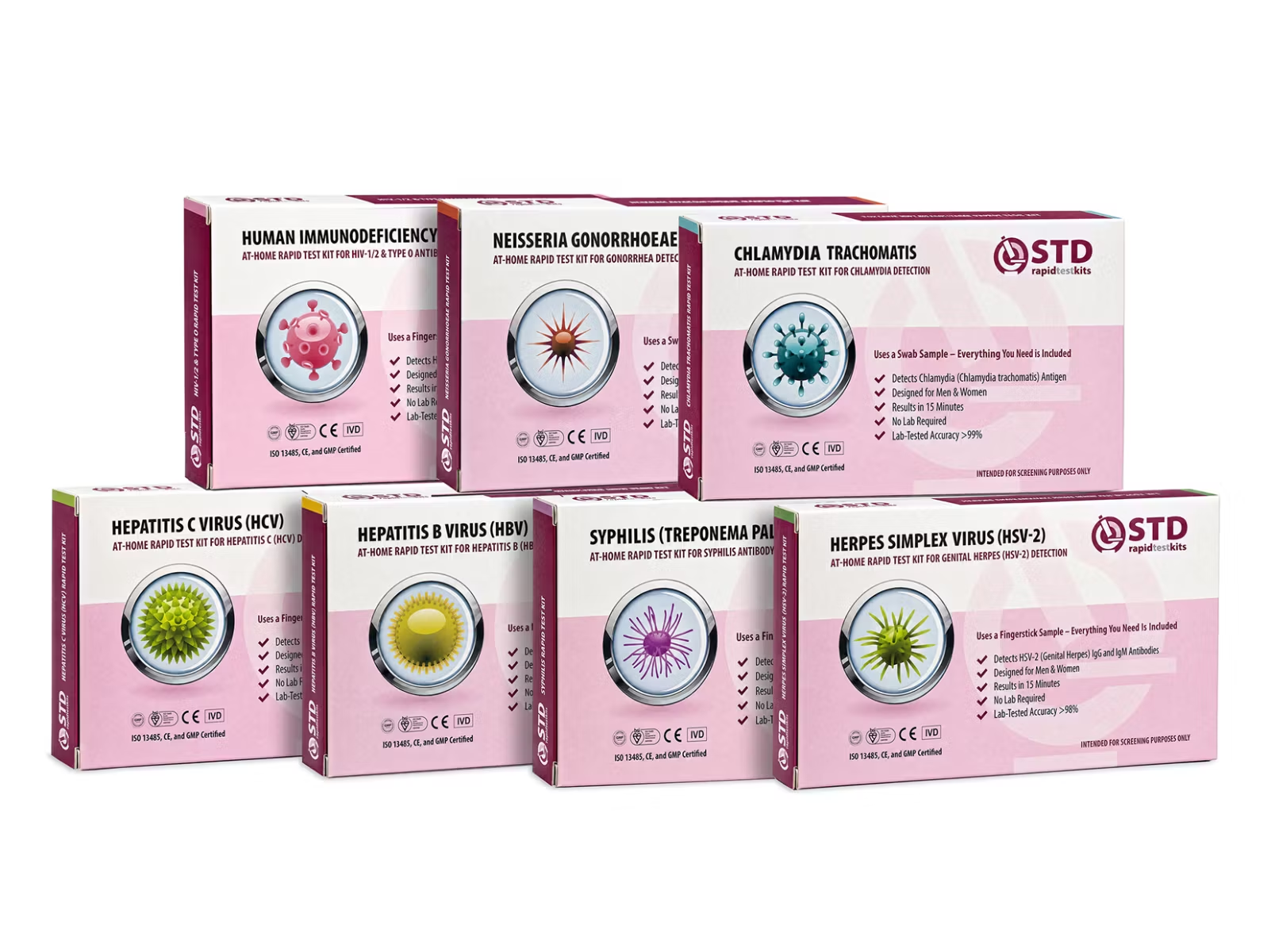
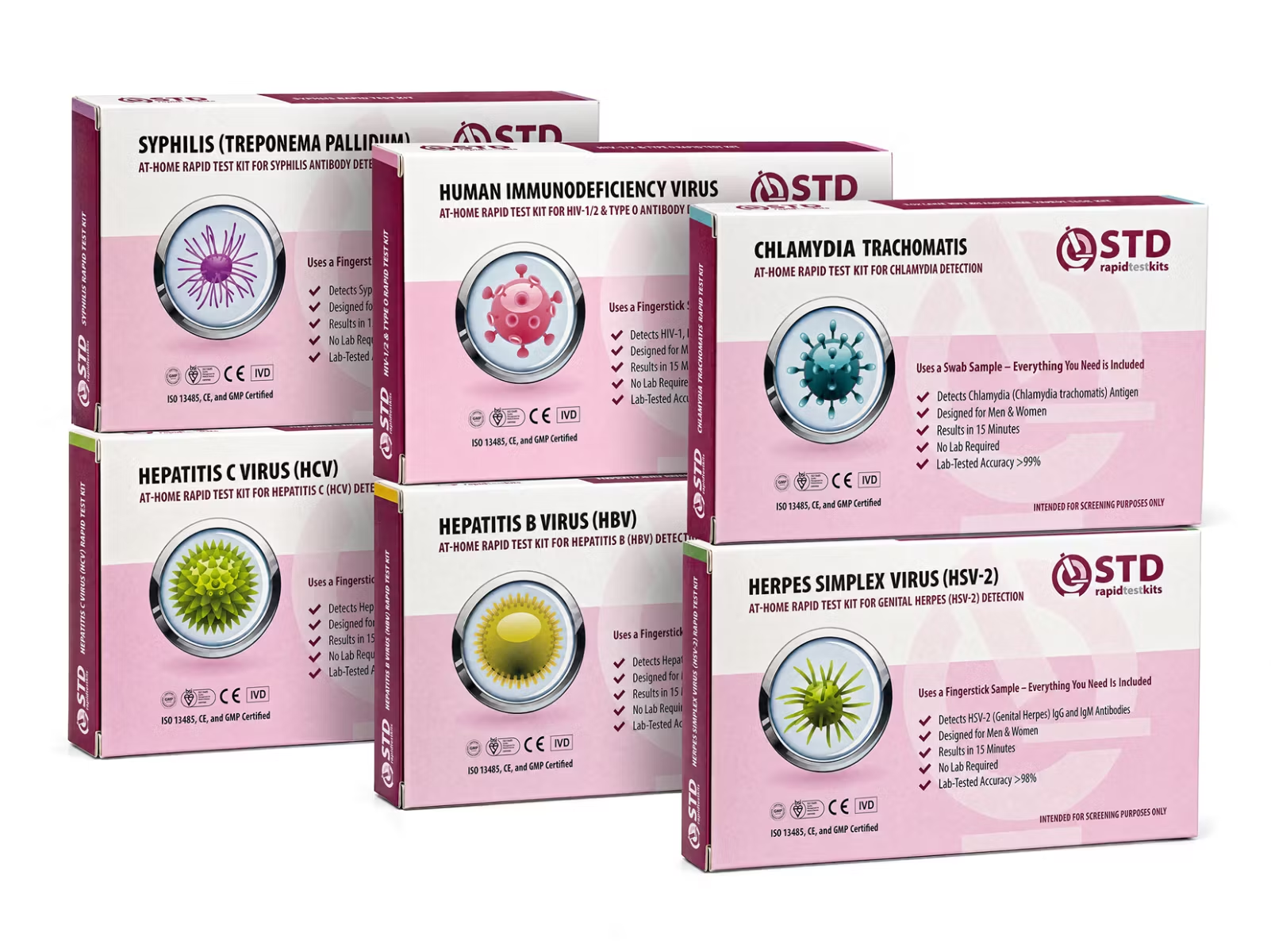
The trade-off between ignoring symptoms and walking into a clinic used to be the whole game. That is no longer true. Rapid at-home STI test kits ship in plain packaging, take a self-collected sample (a swab for chlamydia, gonorrhea, trichomoniasis, or HPV; a fingerstick for HIV, syphilis, hepatitis, and herpes antibody panels), and produce a result in about fifteen minutes. For people unsure whether their symptoms are yeast, BV, or something sexually transmitted, a multi-infection panel can rule several conditions in or out in one go.
These kits are lateral-flow rapid tests, similar in chemistry to a home pregnancy test. They are screening tools: useful for fast at-home answers and for catching infections that might otherwise go untested. A positive result is worth confirming with a laboratory NAAT (nucleic acid amplification test) when possible, both because labs use a more sensitive technology and because confirmation guides the specific antibiotic or antiviral plan. For ruling out infection at the right moment in the window period, an at-home rapid panel does the job and respects the kind of privacy that gets lost in a waiting room.

How to talk with a partner without panic
Discovering that symptoms might be something more serious is hard enough alone. Telling a partner can feel impossible. A short script helps, framed around shared care rather than blame: "I have been having symptoms that might be yeast but could be something else. I am going to test, and I think it would be good if we both did."
That sentence does several things at once. It names the uncertainty honestly. It frames testing as a shared step, not an accusation. And it leaves room for the truth either way. If the result is yeast or BV, the moment passes. If it is an STI, both of you can begin treatment together instead of one person finding out months later. Probiotics fit into the wellness routine on either side of that conversation. They are not what the conversation is about.
When probiotics do help
Some Lactobacillus strains have reasonable evidence for reducing recurrence of bacterial vaginosis and for supporting vaginal flora during and after a course of antibiotics. People prone to repeated yeast infections sometimes find a quality probiotic helpful as part of broader management. The supportive role is real.
What probiotics will not do is cross the line into treatment. They cannot clear gonorrhea. They cannot suppress herpes reactivation. They cannot protect against syphilis transmission or HIV infection. Antibiotics, antivirals, and (for HIV) PrEP and antiretroviral therapy are the medications that change those infections. Probiotics sit alongside, supporting general flora; they do not stand in for clinical treatment when an STI is in the picture (NHS).
Probiotics belong in the wellness toolkit alongside diet and sleep. The STI-treatment toolkit is a different one: antibiotics for chlamydia, gonorrhea, syphilis, and trichomoniasis; antivirals for herpes; and PrEP plus antiretroviral therapy for HIV.
The bottom line
Probiotics are a useful supplement when the question is vaginal balance after antibiotics or how to reduce recurrent yeast flares. They are not the answer when the question is whether a current symptom might be a sexually transmitted infection. Yeast, BV, and several STIs look enough alike at home that guessing is a poor strategy, and probiotics can mask the very signs that would otherwise prompt testing.
If symptoms persist after a reasonable self-care attempt, or if a partner discloses an infection, or if a recent encounter raises the question at all, the most useful next step is a test. The combination of an at-home rapid panel and, where the timeline calls for it, a follow-up lab test gives the level of certainty that a probiotic capsule cannot.
Many STIs have no symptoms, so the only way to know for sure is to get tested.
Frequently asked questions
- Can probiotics cure a yeast infection?
- No. Probiotics may help reduce how often yeast infections come back, but they do not clear an active infection. Active yeast infections respond to antifungal medications, either over-the-counter or prescription.
- Do probiotics protect against STIs?
- No. Sexually transmitted infections like chlamydia, gonorrhea, syphilis, and HIV are transmitted through sexual contact, not through imbalance in gut or vaginal bacteria. Condoms, vaccination (for HPV and hepatitis B), and PrEP (for HIV) are the prevention tools that change STI risk.
- Why is it so hard to tell a yeast infection from an STI?
- The same overlapping cues (itching, unusual discharge, burning) show up across at least five conditions, from yeast to gonorrhea. None of those signs points reliably to one diagnosis over another. Research on women who self-treated for suspected yeast found only about one in three actually had a yeast infection (Ferris et al., 2002), which is why clinicians rely on lab tests rather than symptom interpretation.
- How do I know if my symptoms are BV, yeast, or an STI?
- You confirm with testing. Discharge color, smell, and texture give clues, but they are not reliable enough to skip a test if symptoms persist or follow a new sexual contact. At-home rapid panels and clinical labs are both valid options.
- Can probiotics hide STI symptoms?
- They can soothe local irritation in some cases, which may feel like improvement. The underlying infection continues regardless. That short-term relief is one of the main reasons probiotics-only self-care delays diagnosis.
- Can I take probiotics after finishing antibiotics for an STI?
- Yes. Probiotics are generally safe during and after a course of antibiotics, and some Lactobacillus strains may help restore healthy vaginal and gut flora once treatment ends. They do not interfere with antibiotics and they do not replace them, so take the full prescribed course exactly as directed and use probiotics as a follow-on, not a substitute.
- Do men benefit from probiotics for sexual health?
- Some, in limited ways. Probiotics may support gut and urinary health for men, with modest evidence. They do not prevent or treat STIs in men any more than they do in women.
- What happens if I treat an STI as if it were a yeast infection?
- Symptoms may quiet temporarily while the infection continues. Untreated chlamydia and gonorrhea can ascend into the upper reproductive tract and cause pelvic inflammatory disease, tubal scarring, and fertility problems. Untreated trichomoniasis can persist for months. Untreated syphilis or HIV have far more serious long-term consequences. The earlier the test and treatment, the lower the risk.
How we sourced this article: Our editorial team synthesized current guidance from the U.S. Centers for Disease Control and Prevention, the World Health Organization, the UK National Health Service, Mayo Clinic, and peer-reviewed literature on vaginal microbiome research, then translated it into plain English. We do not provide clinical diagnosis. For symptoms that concern you, see a licensed provider.
- U.S. Centers for Disease Control and Prevention. Sexually transmitted infections overview, screening recommendations, and the asymptomatic nature of common STIs.
- Mayo Clinic. Chlamydia symptoms, causes, and complications including pelvic inflammatory disease and fertility risk.
- U.S. Centers for Disease Control and Prevention. HIV Testing page, including the 18-to-45-day detection window for antigen/antibody (fourth-generation) lab tests.
- Planned Parenthood. Vaginitis overview covering yeast infections, bacterial vaginosis, trichomoniasis, and the limits of self-diagnosis.
- UK National Health Service. Sexually transmitted infections overview, symptoms, and the recommendation to test rather than rely on symptom interpretation.
- U.S. Centers for Disease Control and Prevention. Sexually Transmitted Infections Treatment Guidelines, 2021: Bacterial Vaginosis section, including the link between BV and increased susceptibility to STIs such as HIV, gonorrhea, and chlamydia.
