





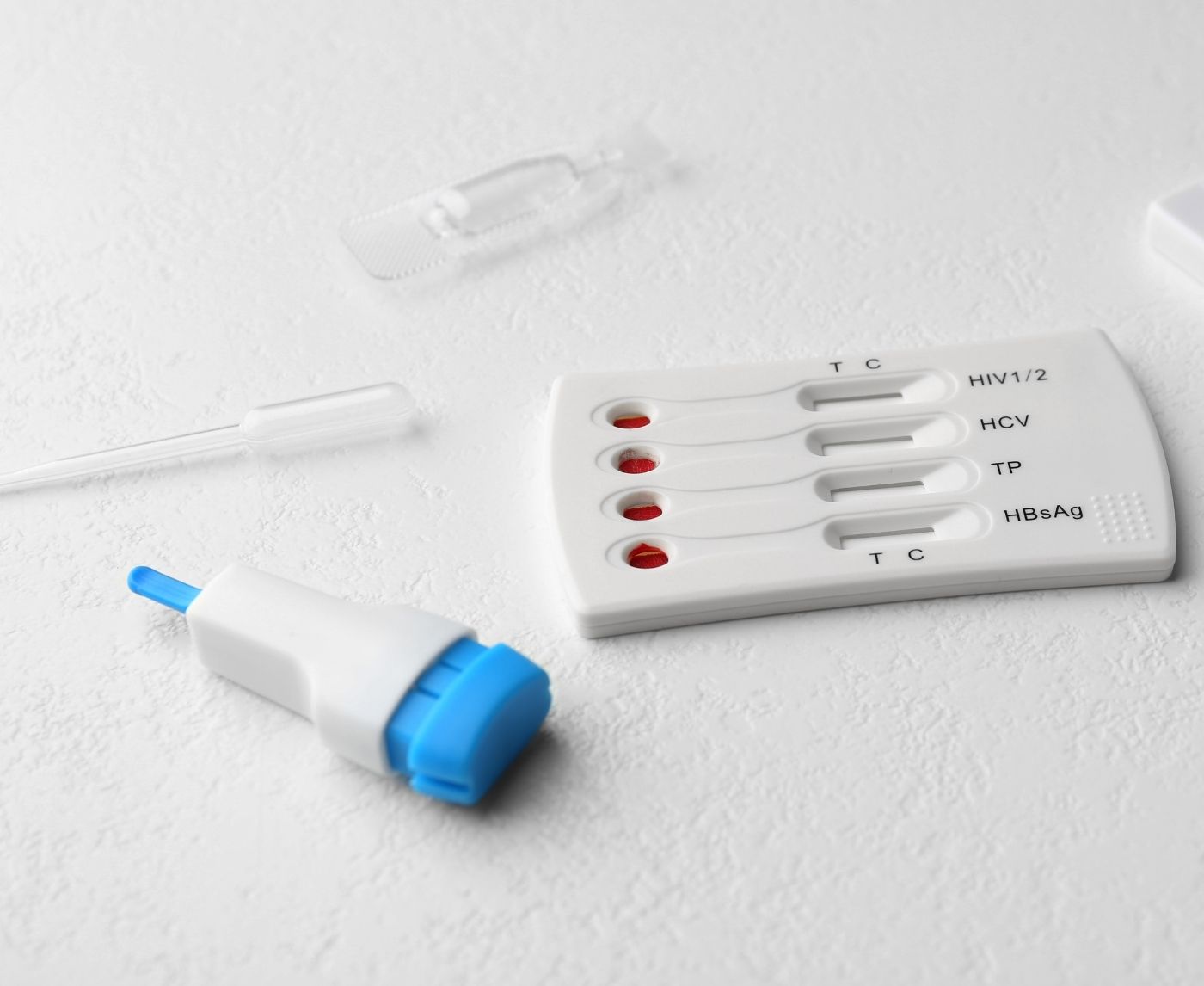

Quick Answer: If you tested positive for chlamydia, you need antibiotics, typically doxycycline or azithromycin. You should avoid sex for 7 days after treatment begins, inform partners from the last 60 days, and retest in 3–4 weeks to confirm clearance. It’s not just about your body, it’s about preventing reinfection and keeping others safe too.
Step One: Breathe (No, Seriously)
Before you fire off apology texts or rage-clean your apartment, take a second. Getting an STD diagnosis feels like a punch to the gut, especially if you weren’t expecting it. But panic won’t help, and it definitely won’t speed up treatment.
Chlamydia is common, treatable, and manageable. It doesn’t mean someone cheated. It doesn’t mean you’re “unclean.” It means you had sex, like a human, and bacteria got passed along. That’s it. It happens.
Tasha, 25, put it like this:
“I thought my life was over. Then I took two pills and felt better within days. What felt like a massive failure turned out to be a very normal medical thing.”
This moment doesn’t define you. How you handle it does.

People are also looking for: How Early Is Too Early to Test for Chlamydia?
Step Two: Get the Right Treatment (and Actually Take It)
The standard treatment for chlamydia is straightforward. Depending on your provider, you’ll either be prescribed:
- Doxycycline: 100mg twice daily for 7 days
- Azithromycin: A single 1g dose (less common now due to resistance)
If you ordered a rapid test online and tested positive, many services offer follow-up prescriptions or telehealth options. You can also go through your doctor, a walk-in clinic, or Planned Parenthood.
Whatever you’re prescribed, take every dose exactly as instructed. This isn’t the time to “see how you feel” halfway through. Incomplete treatment can let the infection linger and lead to complications like PID (pelvic inflammatory disease) or epididymitis. You don’t want that. Trust us.
And no, there are no DIY natural remedies that can replace antibiotics. Herbal tea is great for stress. Not so much for killing intracellular bacteria.
Step Three: No Sex. Not Yet.
| Don’t | Why It Matters |
|---|---|
| Don’t have sex for 7 days after starting treatment | Even if symptoms disappear, you're still contagious during this window |
| Don’t assume your partner is fine without testing | Many people carry chlamydia with zero symptoms—retesting prevents re-infection |
| Don’t take leftover antibiotics from a friend | Wrong dosage or medication can lead to resistance or incomplete treatment |
| Don’t skip the follow-up test | A retest confirms clearance and catches repeat exposures early |
Step Four: Tell the People Who Need to Know
We won’t sugarcoat it, this part sucks. But it’s necessary. If you tested positive for chlamydia, you need to tell anyone you’ve had sex with in the past 60 days. That’s not about punishment, it’s about protection. The only thing worse than getting chlamydia is giving it to someone you care about without knowing.
If you’re thinking, “They’re going to hate me,” stop. You’re not giving someone an incurable disease. You’re giving them information. What they do with it is on them. You’re just doing the right thing, quietly, clearly, and with as much grace as you can manage.
Here’s a simple text that works if you’re too anxious for a phone call:
“Hey, just wanted to let you know I tested positive for chlamydia. You should get tested too. It’s treatable and common, but important to catch. Let me know if you have questions.”
That’s it. You’re not required to apologize. You’re not required to share how you got it or who from. You’re not required to answer anything you’re not comfortable with. You’re informing them, not confessing a crime.
What to Expect Physically After You Start Treatment
Most people start feeling better fast, sometimes within 48 hours of starting antibiotics. Discharge clears. Burning eases. That heavy pressure in your pelvis lets up. But don’t mistake symptom relief for total clearance.
The antibiotics are working behind the scenes for a full week. And even after that, some inflammation can linger. That doesn’t mean the infection is still active. It just means your body is healing.
Ty, 32, put it perfectly:
“I felt fine by day three, but I still waited to have sex until my test-of-cure came back. I didn’t want to risk it, not for me, not for her.”
If you have symptoms that don’t go away after treatment, like ongoing pelvic pain, strange bleeding, or testicular swelling, follow up. You could be dealing with lingering damage or a second infection, like gonorrhea or trichomoniasis, which often travel together with chlamydia.
Check Your STD Status in Minutes
Test at Home with Remedium7-in-1 STD Test Kit
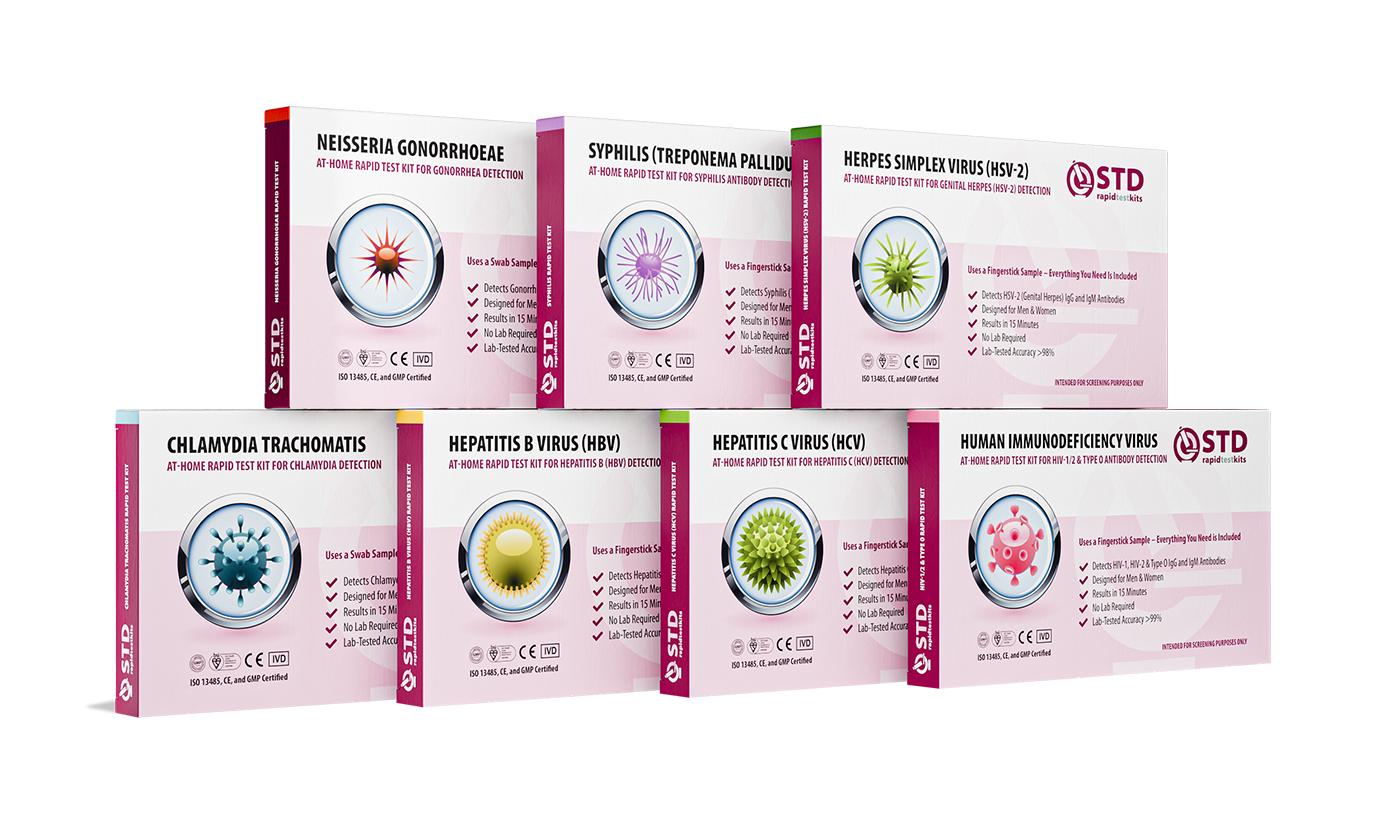
 For Men & Women
 Results in Minutes
 No Lab Needed
 Private & Discreet
Order Now $129.00 $343.00
For all 7 tests
Step Five: Ask Yourself Who Else Needs to Get Tested
This isn’t just about you and your last partner. Chlamydia doesn’t always show up right away. It can linger in the body for weeks, sometimes months, without any symptoms at all. If you’ve had multiple partners in the last few months, or if your current partner had others before you, you’re looking at a potential transmission chain that goes deeper than one test result.
Encourage others to get tested, even if you’re not sure where it came from. The goal isn’t to track down Patient Zero, it’s to prevent more cases from going unnoticed.
If your result came from an at-home kit, and you’re unsure how long you’ve had it, consider retesting again at a clinic or via lab-based NAAT just to confirm you’re not dealing with a mixed infection. Sometimes people have both chlamydia and gonorrhea, and only one gets detected.
| Scenario | How Reinfection Happens |
|---|---|
| You get treated, but your partner doesn’t | You clear the infection but get re-exposed during sex with them |
| Your partner starts antibiotics but doesn’t finish them | They remain partially infected and contagious |
| You assume testing means immunity | Even after a negative test, future exposure can lead to new infection |
| You resume sex after 4–5 days instead of 7 | You’re still contagious and risk infecting your partner again |
Step Six: Don’t Get It Twice (Reinfection Is a Thing)
Here’s the thing nobody tells you until it’s too late: chlamydia doesn’t make you immune. Getting it once doesn’t mean you’re “done.” In fact, reinfection is one of the biggest reasons chlamydia spreads, and one of the most common reasons people end up back in a clinic weeks later.
If your partner didn’t get treated (or didn’t finish treatment), they can give it back to you even after your antibiotics worked. That’s not drama. That’s biology.
Jade, 27, learned the hard way.
“We both tested positive, but he didn’t finish his meds. We had sex two weeks later, and I got reinfected. I felt so stupid, but no one told me that could happen.”
It’s not about being paranoid. It’s about protecting your health. If you’re in a relationship, both of you should complete treatment, wait 7 full days before sex, and then retest before getting back to your usual routine. If you’re not in a relationship, assume your recent partners may not know their status, and ask.
People are also looking for: STD Testing for Survivors: No Clinic, No Questions, Just You
Step Seven: Retest (Even If You Feel Fine)
We get it. You took the meds. You waited the week. You feel okay. So why go through the awkwardness of another test?
Because the CDC recommends retesting 3–4 weeks after treatment for a reason. Not every infection clears completely, especially if treatment wasn’t followed to the letter. Some people accidentally skip doses. Some have resistant strains. Some get reinfected without even realizing it.
Retesting is your confirmation. It’s your green light. It’s the part where your peace of mind stops being a guess and starts being a fact.
At-home rapid tests can be helpful for a quick check, but if you want maximum accuracy, go with a lab-based nucleic acid amplification test (NAAT). Or, get both and double-confirm. You deserve to know for sure.
| Situation | When to Retest |
|---|---|
| Tested negative before day 7 post-exposure | Retest around day 14–21 |
| Started antibiotics before testing | Retest 3–4 weeks after completing treatment |
| Symptoms persist after a negative result | Retest immediately with a lab-based NAAT |
| Partner tested positive recently | Retest even if asymptomatic (after 7–14 days) |
Step Eight: Yes, You Can Have Sex Again (Eventually)
Sex after an STD diagnosis can feel like walking through a minefield. When is it okay? How do you bring it up? Will it ever feel normal again?
Here’s the timeline: Wait 7 full days after completing treatment before having sex. If you had symptoms, wait until they’ve cleared. And if you’re planning to have sex with someone new, or with the person you got it from, talk about it first.
You don’t have to give a TED Talk. Just be honest:
“I got treated for chlamydia recently, and I want to make sure we’re both good before we do anything.”
If they respond with support? That’s someone worth your time. If they ghost or mock you? That’s dodging a bullet, not losing love.
You’re not a threat. You’re not radioactive. You’re responsible, clear, and ready for connection again, on your terms.
Step Nine: Shame Is a Liar, Here’s the Truth
Chlamydia is common. But the shame that follows a positive test? That feels personal. Like you did something wrong. Like you crossed a line you can’t come back from.
Here’s what we want you to hear: you didn’t fail. You didn’t ruin anything. You caught it, treated it, and stopped it from spreading. That’s powerful. That’s care. That’s growth.
STDs don’t only happen to people who “sleep around.” They happen in monogamous relationships. They happen during one-time hookups. They happen in love and in loneliness and in late-night maybe-this-is-a-bad-idea moments.
They happen to people like you. People who deserve love, safety, and a future that isn’t defined by one test result.
Own your story. Even the scary parts. Especially the scary parts.
Check Your STD Status in Minutes
Test at Home with Remedium10-in-1 STD Test Kit
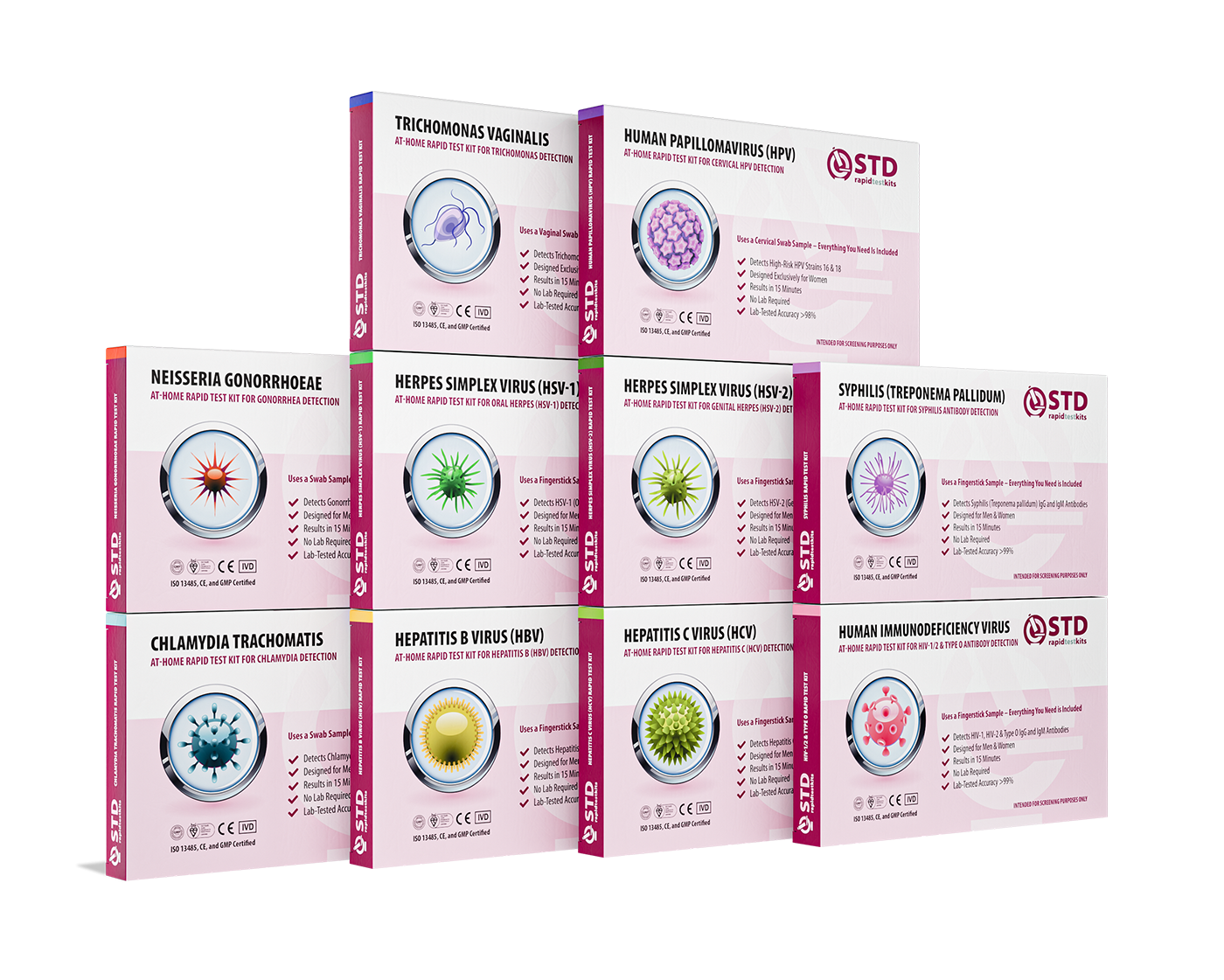
 For WomenResults in MinutesNo Lab NeededPrivate & Discreet
Order Now $189.00 $490.00
For all 10 tests
FAQs
1. Do I really have to tell people I slept with?
Yes. And before you groan or ghost, hear us out. You’re not doing it to feel awkward. You’re doing it so they don’t walk around with an infection they didn’t even know they had. You don’t have to spill your soul. Just a quick message like, “Hey, I tested positive for chlamydia. You should get checked too.” That’s it. You’re not starting drama. You’re shutting it down.
2. I don’t feel sick at all, was my test wrong?
Probably not. Chlamydia is sneaky. Most people who test positive don’t have any symptoms. No pain. No discharge. Nothing obvious. But just because it’s quiet doesn’t mean it’s not doing damage. That’s why screening matters, because the worst infections are often the invisible ones.
3. So, when can I have sex again?
Short answer? One week after starting antibiotics. Long answer? After 7 days, and your partner’s been treated too. Otherwise, you’ll just pass it back and forth. Use that week to binge something, clean your sheets, and send those awkward-but-necessary texts. Think of it as a reset.
4. What happens if I skip a dose?
Don’t. Seriously. Skipping meds is how infections linger, spread, or bounce back. If you miss one dose of doxy, take it as soon as you remember, unless it’s almost time for the next one. Then skip it (don’t double-dose), but stay on track. And if you totally blew the regimen? Talk to your provider about restarting.
5. Can I get chlamydia again after I’ve treated it?
Yep. And a lot of people do, not because they’re careless, but because their partner wasn’t treated or they had unprotected sex too soon. Treatment clears the infection, but not future exposure. You’re not immune just because you’ve had it before. It’s not chickenpox. It’s more like bad Tinder karma, you have to stay on guard.
6. I tested positive, but my partner tested negative. Huh?
It could be timing. Maybe they tested too soon. Maybe the sample wasn’t collected right. Maybe they already cleared it unknowingly. Or maybe you didn’t get it from them. These tests don’t come with time stamps. The important part is: if you have it, they still need to treat, even if their test says no.
7. Is it okay to just wait and see if it goes away?
Hard no. Untreated chlamydia doesn’t just hang out quietly, it can cause long-term damage, especially in the reproductive system. We’re talking about fertility problems, chronic pain, and complications you do not want. It doesn’t go away on its own. You’ve got to treat it.
8. Will this show up on my record?
Not in any way that impacts your job, credit, or future. STD test results aren’t shared with employers or schools, and you don’t walk around with a public “positive” stamp. If you went through a clinic, your result may go into a secure health database, but that’s for public health tracking, not judgment.
9. I feel gross. Is that normal?
Unfortunately, yes. But it’s not deserved. STDs carry a truckload of stigma, and chlamydia is one of the most misunderstood. The truth? You got tested. You’re getting treated. You’re protecting others. That’s the opposite of gross. That’s someone who gives a damn. Take the guilt off your shoulders, you’ve got better things to carry.
10. Do I need to test again even if I feel better?
Yes. Always retest 3–4 weeks after treatment to make sure it’s gone for good. Feeling fine isn’t the same as being bacteria-free. Especially with chlamydia, where symptoms can vanish even when the infection doesn’t. Retesting is your peace-of-mind receipt. Keep it clean.
You Got This
Getting a positive chlamydia test doesn’t mean your sex life is over. It doesn’t mean you’re gross. It means your body picked something up, and now you’re doing the smart, grown-up thing by dealing with it.
You’re treating it. You’re telling the people who need to know. You’re retesting, protecting yourself, and showing up. That’s powerful. That’s what responsibility actually looks like.
If you haven’t tested yet, or if you want a discreet way to retest from home, this chlamydia rapid test kit gives you answers in 15 minutes. No appointments, no lab drama, no judgment.
You’re not alone. You’re not broken. You’re just dealing with something human. And you’re doing it like a damn pro.
How We Sourced This Article: We reviewed over a dozen sources, including CDC guidelines, peer-reviewed studies on chlamydia treatment and reinfection rates, and firsthand experiences from patients and sexual health counselors. Five of the most helpful resources are listed below. This article was built to reflect both clinical best practices and real-world emotional dynamics after diagnosis.
Sources
1. American Sexual Health Association – Chlamydia
2. Next Steps After Testing Positive for Gonorrhea or Chlamydia | CDC
3. CDC STI Treatment Guidelines: Chlamydia
4. Chlamydia: Diagnosis and Treatment | Mayo Clinic
6. Retesting After Treatment to Detect Repeat Infections | CDC
About the Author
Dr. F. David, MD is a board-certified infectious disease specialist and sexual health advocate with more than 20 years of experience in the field. He works to reduce the stigma around STDs and make it easier for people to get accurate, trauma-informed care.
Dr. Riley Santos, MPH, looked over this. Last checked by a doctor: October 2025
This article is only for informational purposes and should not be used as a substitute for professional medical advice.


