Published: September 2025 | Last updated: May 2026 | Editorial review and quality control: Martina N.
For many survivors of sexual trauma, the idea of walking into a clinic and asking for an STI test can feel impossible. Shame, flashbacks, fear of being judged or disbelieved, these reactions shape what feels safe and what doesn't. They don't show up on a lab result, but they shape every decision around testing.
This guide is for anyone who has ever asked: what if I can't go to a clinic? What if I panic in the exam room? What if I'd rather do this in my own space, on my own timeline, without anyone watching? At-home STI testing isn't a substitute for trauma-informed clinical care when you want it, but it can be a way forward when traditional systems feel unsafe. We'll walk through what counts as an at-home test, how accurate the kits are, how to time them, and what to do if a result comes back positive.
Key takeaways
- Survivors can test for STIs at home using rapid lateral-flow kits or mail-in lab kits, with no clinic visit, no waiting room, and no questions about why.
- Most STIs cause no symptoms, so testing is the only way to know. If your exposure was recent, retest after the relevant window period for a fully reliable answer.
What at-home STI testing actually means
The phrase “STD test” can mean a lot of different things depending on where you are and what you're looking for. When the goal is testing privately and safely, without a clinic visit, two main options exist: rapid lateral-flow kits, and mail-in lab kits.
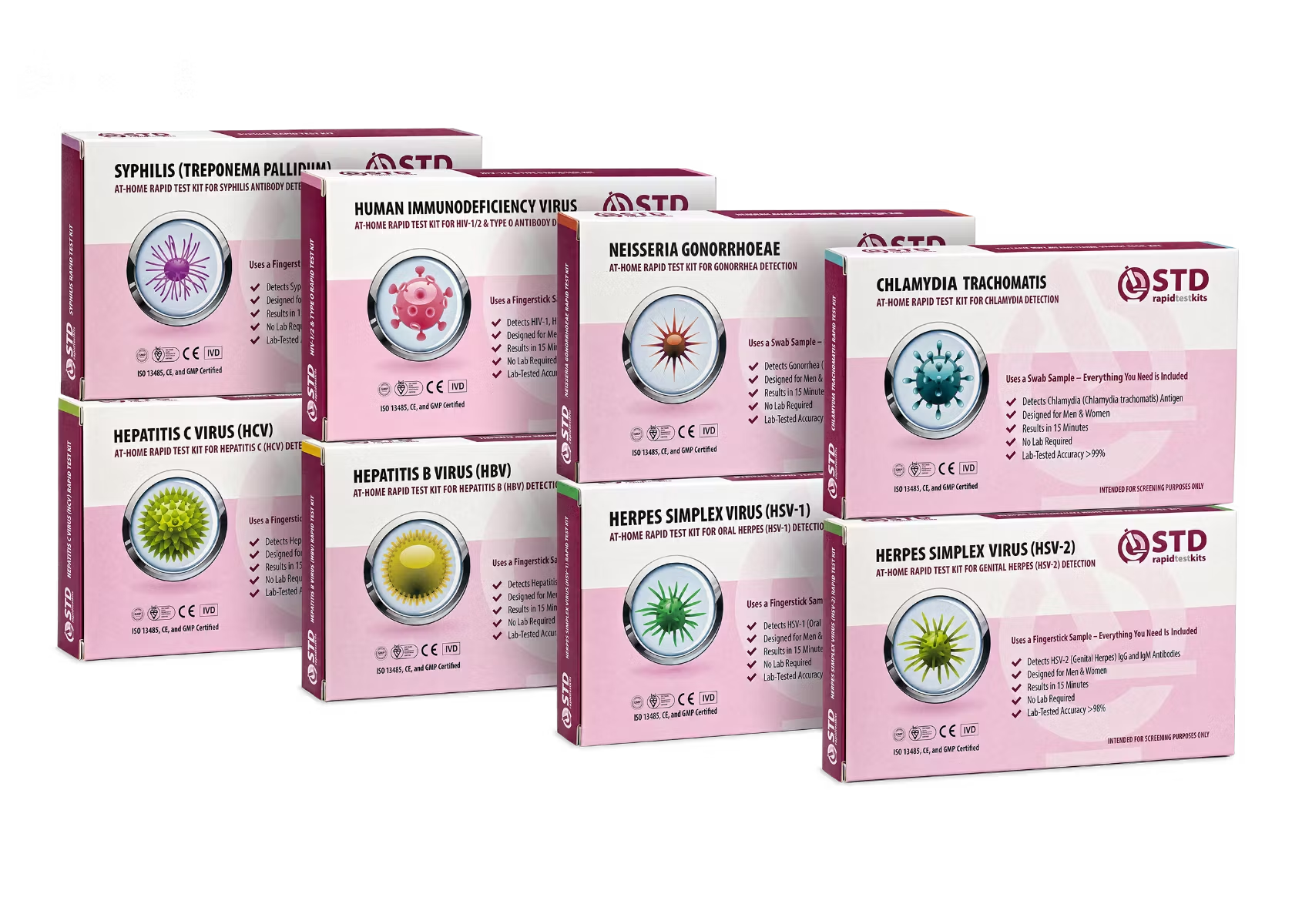
Rapid lateral-flow kits work like at-home pregnancy tests or COVID-19 rapid tests. You take a small fingerstick blood sample or a self-collected swab, apply it to a cassette, add buffer, and read the result in about 15 minutes. The result stays with you. No lab, no shipping, no portal account. The kits sold at stdrapidtestkits.com are lateral-flow immunoassays, which means they detect antibodies or antigens rather than amplifying DNA the way a laboratory PCR test does. A positive rapid result is a strong signal worth confirming with a lab when possible; a negative result outside the window period is reliable enough to act on.
Mail-in lab kits ship a collection kit to your address. You collect a urine, swab, or blood sample at home and return it in a prepaid envelope. A certified lab runs the same NAAT or antibody tests they would run on a clinic-collected sample, and a digital portal delivers the result a few days later. This is the lab-quality option, with the privacy of doing the collection yourself.
Both are valid. The right choice depends on which experience feels safer to you: immediate and tactile, or lab-verified and digital.
| Test type | Time to result | Privacy level | Sample type |
|---|---|---|---|
| Rapid at-home test | 15 to 20 minutes | Very high (you keep the result) | Fingerstick blood or self-collected swab |
| Mail-in lab kit | 2 to 5 days after mailing | High (digital portal) | Urine, oral swab, or blood |
Window periods: why timing matters
Every STI has a window period, the stretch of time between exposure and when a test can reliably detect infection. Test too early and a negative result can be falsely reassuring; the infection may simply not be detectable yet. Test at or past the window, and the result becomes trustworthy.
For survivors, the window period creates a hard emotional tension. You may be terrified of waiting weeks to know. You may also be terrified of knowing. Both are valid. The science doesn't erase the fear, but it helps you decide when one test is enough and when a second is worth the time.
If you're within 7 to 14 days of a possible exposure and you cannot bear to wait, it's reasonable to test now with the understanding that a negative may be too early to fully trust, then retest later for the complete answer. Here's a quick reference based on current CDC screening and detection guidance for common STIs:
| Infection | Earliest detection | Most reliable window |
|---|---|---|
| Chlamydia / gonorrhea | 7 to 14 days post-exposure | 14+ days post-exposure |
| HIV (antigen / antibody) | 18 to 45 days post-exposure | 45 to 90 days for full reliability |
| Syphilis | 3 to 6 weeks post-exposure | 6 to 12 weeks post-exposure |
| Trichomoniasis | 5 to 7 days post-exposure | 2 to 3 weeks post-exposure |
| Hepatitis B | 3 to 6 weeks post-exposure | 6 weeks to 6 months |
| Herpes (HSV-2 antibody) | 6 to 8 weeks post-exposure | 12 to 16 weeks post-exposure |
Is it too late to test if the incident was a while ago?
This is one of the most common survivor questions, and the answer is almost always no. Many STIs can live in the body asymptomatically for months or years. Chlamydia, HPV, HIV, hepatitis B and C, syphilis, and herpes can all persist quietly. That doesn't mean you have any of them. It means a test taken now still gives you a real answer.
According to the World Health Organization's fact sheet on sexually transmitted infections, STIs are often asymptomatic, and when symptoms do occur they can be non-specific. That's why testing rather than self-diagnosing is the only reliable way to know your status, regardless of how much time has passed since the exposure.
If you've never tested since the event, you don't need to do multiple rounds unless your circumstances have changed since the incident. One properly chosen kit, used correctly at the right time, can be enough to close the loop and move forward.
A few practical notes for delayed testing:
- If you have any current symptoms (unusual discharge, sores, pelvic pain, persistent fatigue, jaundice, unexplained rash), test sooner rather than later and follow a positive result with a clinic or telehealth confirmation. Symptoms change which test makes the most sense.
- If you've had additional sexual partners since the incident, the timeline becomes about your most recent exposure window, not the original event.
- If you're considering new intimacy, testing first protects both you and a future partner, regardless of how long ago the incident was. Many survivors describe the act of testing itself as a way of taking back a decision that had been taken from them.
- A negative result years after the event is real reassurance, not a technicality. Most STIs that produce no symptoms for a year would still be detectable on a current test if they were there.

How accurate are at-home rapid tests, really?
Rapid lateral-flow tests for HIV, syphilis, hepatitis B, hepatitis C, and herpes typically report sensitivity in the mid-to-high 90s and specificity above 99% when used after the relevant window period, in line with the CDC's screening-test guidance for these lateral-flow technologies. Swab-based rapid tests for chlamydia, gonorrhea, trichomoniasis, and HPV use similar lateral-flow chemistry and perform in the same range when the swab is collected correctly and the test is read at the right time.
A few caveats matter for survivors:
- Sensitivity vs specificity. Sensitivity is how well a test catches true positives; specificity is how well it confirms true negatives. Most rapid tests have higher specificity than sensitivity, which means a positive result is very trustworthy, and a negative result is reliable when you're past the window period.
- Rapid is not NAAT. The laboratory gold standard for chlamydia and gonorrhea is a molecular NAAT (nucleic-acid amplification test). At-home rapid tests are not NAAT-equivalent; they use a different chemistry with different strengths. Think of them as a fast, private screening tool, with a lab NAAT available for confirmation if you want it.
- Read the result at the right time. Most rapid kits have a result window of 15 to 20 minutes. Reading too early or too late can produce a false reading. The kit's insert specifies the timing; trust it.
- Store the kit correctly. Rapid kits stay accurate for the printed shelf life when kept at room temperature out of direct sunlight. A kit you bought three months ago and tucked into a drawer is still good.
How accurate are at-home STI tests?
Most rapid at-home STI tests report sensitivity in the 95% to 99% range and specificity above 99% when used after the relevant window period (typically 14 to 90 days post-exposure depending on the infection). A positive result is worth confirming with a lab when possible; a negative result outside the window is reliable enough to act on. Window periods and per-infection sensitivity vary, see the timing table above for the specific infection you're testing for.
At-home rapid lateral-flow tests are designed for private screening, not definitive diagnosis. A positive result is worth following with a laboratory NAAT or blood confirmation when possible, and a negative result is reliable only after the relevant window period has closed. The timing table earlier in this article shows the right wait for each infection.
How discreet packaging and analog results protect you
If you've survived sexual trauma, being watched, or even just being perceived, can feel unsafe. That makes privacy in testing essential, not optional.
At-home STI test kits are packaged to protect you. Outer boxes are plain, with no logos referring to STDs or sex, no medical jargon visible to a roommate or family member. Most kits ship in nondescript packaging that looks like vitamins, supplements, or office supplies. Tracking is included so you don't have to guess when the package will arrive, which means you can plan a quiet moment to receive it.
If a shared mailbox feels risky, most vendors will ship to a parcel-pickup location, a P.O. box, or a trusted friend's address. Some survivors keep the kit unopened until they feel ready, sometimes for days or weeks. Rapid kits remain accurate well past the date you receive them as long as they're stored at room temperature out of direct sunlight.
The test result itself is yours alone. Rapid lateral-flow cassettes work like a pregnancy test: the visible lines stay readable for an hour or two before fading. No digital record. No insurance claim. No portal login. Some survivors take a photo of the cassette before discarding it, in case they want to reference the result later; others discard it immediately and trust their own memory. Both choices are valid. The kit is designed so you, and only you, control the moment of finding out.
This article is published by stdrapidtestkits.com, which sells the at-home rapid lateral-flow test kits described throughout. We recommend products based on fit for the reader's concern, not commercial benefit.
What to do if the test is positive
First, breathe. A positive STI result is health information you can act on, the same as a blood-pressure reading or a cholesterol number. It says nothing about your past, your worth, or your body.
Most STIs are highly treatable. Chlamydia, gonorrhea, syphilis, and trichomoniasis are curable with a course of antibiotics. Hepatitis B and hepatitis C are managed with antivirals; both have well-established treatment protocols and hepatitis C is now considered curable in most cases. HPV is monitored long-term and most strains clear on their own. HIV, while not curable, is fully suppressed with modern antiretroviral therapy to the point of being undetectable and untransmittable, the U=U principle the CDC has affirmed since 2017.
The practical steps after a positive at-home rapid test:
- Confirm with a lab when possible. A positive rapid test should be followed by a laboratory confirmation when you can manage it. Many telehealth services offer ordering and confirmation without an in-person visit.
- Start treatment promptly. Telehealth providers can prescribe most STI treatments based on a confirmed positive result. You don't need to repeat the trauma of an in-person clinical encounter to get medication.
- Tell partners at your own pace. Public-health departments, some clinics, and nonprofits offer anonymous partner-notification services. You can disclose without revealing your identity, your story, or the timing.
- Build a support layer. A therapist who works with sexual-violence survivors can help you separate the diagnosis from the assault. Both deserve attention, but they aren't the same thing.
Telling a partner on your own terms
If someone harmed you, the idea of disclosing an STI to a future partner can feel like inviting more judgment into an already painful space. Will they react badly? Will they ask questions you don't want to answer? Will they tell others?
Sharing your status gives a partner the information they need for informed consent about safer sex. The conversation can be short, factual, and free of any explanation about how you came to carry the infection. You can frame it as health information you're passing along, in the same way you'd mention a food allergy before a meal.
If a face-to-face conversation feels impossible, anonymous partner-notification tools let you alert a current or former partner without revealing your name. Public-health departments in the U.S. offer this service through Disease Intervention Specialists; some clinics use third-party platforms designed for this exact moment. The partner gets a clear message that they may have been exposed and should get tested, without ever knowing who sent the notice.
And if you're not ready to tell anyone? That's valid too. You can test now, treat first, and have the disclosure conversation when you feel grounded. The anonymous notification options above let you act when you're ready, without revisiting the assault in any conversation.
“I tested recently and found out I have [STI]. It's manageable and I'm taking care of it. I wanted you to know so we can make informed choices about safer sex.”
That's enough. You don't owe a backstory. You don't owe an apology. You're sharing health information the same way you'd mention a medication allergy before a meal.
When one test isn't enough
If you tested early, during a panic moment, or in the heat of a flashback, that's not a failure. Survivors often test before the optimal window because the wait itself is unbearable. Retesting at the right time isn't doubting yourself; it's closing the loop with full information. None of the scenarios below is a sign of overreaction or compulsion. They're how testing actually works, and survivors deserve full information, not partial peace of mind.
Four situations where a second test is appropriate
- You tested within the window period. Repeat after the window closes (see the timing table earlier). A negative inside the window doesn't rule out infection; a negative past the window does.
- You got treated for an active infection. Chlamydia, gonorrhea, and trichomoniasis treatment is followed by a test-of-cure roughly 3 to 4 weeks after the antibiotic course finishes, to confirm the bacteria are gone.
- You had a positive rapid result. Lab confirmation by NAAT or a quantitative blood test provides a documented diagnosis useful for treatment, follow-up, and insurance coverage.
- You've had a new exposure since the first test. A second test after the new exposure's window closes is the only way to know your current status.
The short version: you deserve answers on your terms
Testing your body after trauma can feel like inviting more scrutiny into a space that already feels exposed. It doesn't have to. At-home STI testing gives you the option of finding out what's going on in your body without explaining yourself to anyone. The kit arrives discreetly. You open it when you're ready. You read the result alone, or with a person you trust. You decide what happens next.
Whether the exposure was last week or eight years ago, the window-period table, accuracy notes, and kit options above are ready whenever you are.
1. Match your situation to the window-period table above and decide whether to test now, wait, or test now and retest.
2. Choose a kit format that matches the privacy you need: a rapid lateral-flow cassette that you read alone in about 15 minutes, or a mail-in lab kit with results in a digital portal a few days later.
Frequently asked questions
- I was assaulted years ago. Is it too late to test?
- No. Most STIs remain detectable regardless of how long ago the exposure occurred, so a test taken now gives a real, actionable result. If you've had additional sexual partners since the incident, the window that matters is your most recent exposure rather than the original event. Many survivors find that testing years later, even without symptoms, helps them make informed decisions about treatment and future intimacy.
- Can stress or trauma affect my test result?
- No. The test detects the virus, bacteria, or antibodies directly. Your emotional state during the test, whether you're calm, shaking, or in the middle of a panic response, doesn't change what the test detects. The chemistry runs the same way regardless of how you feel.
- What if I can't bring myself to read the result?
- That's allowed. Some people take the test, set the cassette aside in a sealed envelope, and read it days later with a friend or therapist. Others ask a trusted person to read it first and tell them the outcome. Doing the test is the act of agency. Reading the result is a separate decision you can make on your own timeline.
- Are at-home STI tests actually accurate?
- Yes, when used after the relevant window period. The biggest accuracy variable is timing: test inside the window and even a correctly performed test can return a false negative. Past the window, rapid lateral-flow kits typically reach 95 to 99% sensitivity and above 99% specificity. Mail-in lab kits run the same NAAT and antibody chemistry that clinic labs use. The per-infection windows are in the table earlier in this article.
- Will the package give away what's inside?
- No. At-home STI kits ship in plain outer boxes with no medical jargon, no logos referencing STDs or sex, and no obvious indication of contents. They look like standard parcel delivery. Tracking is included so you can plan to receive the package when you're alone, and most vendors will ship to a pickup location or alternate address if your home situation isn't private.
- Do I have to tell anyone if I test positive?
- Legally, no. You aren't required to disclose to a clinic, an employer, or family. You do owe a current or future sexual partner the information they need to make safer-sex decisions, but that conversation can be short and factual. Anonymous partner-notification services let you alert a partner without ever revealing your identity or any part of your assault history.
- What if my result is positive and I freeze?
- Freezing is a normal trauma response, not a moral failure. You don't have to act in that moment. Step away, sleep on it, talk to a therapist or a trusted person. When you're ready, telehealth providers can prescribe treatment without an in-person visit. Most STIs treat the same whether you start medication today, next week, or next month.
- I'm worried the test will trigger me. What can help?
- Plan comfort anchors before you open the kit: a playlist that calms you, a warm shower or tea ready afterward, a trusted person on standby by phone or text. Some survivors do the test on a weekend morning after therapy; others wait for a quiet evening. There's no single right setting. The goal is a moment where you feel as grounded as possible, with a soft landing already arranged on the other side.
How we sourced this article: Our article was constructed based on current advice from the most prominent public health and medical organizations, including the U.S. Centers for Disease Control and Prevention, the World Health Organization, and the UK National Health Service. We translated their clinical guidance into plain language for at-home decision-making, and the article was reviewed for medical accuracy by Aikaterini Maragkou, MD before publication. We do not provide individual clinical diagnosis. For symptoms that concern you, please contact a licensed provider.
- U.S. Centers for Disease Control and Prevention. Sexually transmitted infections (STI) treatment guidelines and screening recommendations, including window periods and confirmatory protocols for chlamydia, gonorrhea, syphilis, trichomoniasis, hepatitis, and herpes.
- World Health Organization. Sexually transmitted infections (STIs) fact sheet, including the statement that STIs are often asymptomatic and that symptoms, when present, can be non-specific.
- UK National Health Service. STI overview, symptoms, testing options, and treatment timelines written for general audiences.
- U.S. Centers for Disease Control and Prevention. HIV self-testing and home-test sensitivity and specificity ranges, and guidance on lab confirmation after a positive rapid result.
- U.S. Centers for Disease Control and Prevention. HIV treatment and the U=U (Undetectable equals Untransmittable) principle, including the evidence base for non-transmission under sustained viral suppression.
- U.S. Centers for Disease Control and Prevention. Sexual violence prevention resources, including referrals to confidential survivor support and partner-services programs operated by state and local public-health departments.
