
Published: September 2025 | Last updated: May 2026 | Editorial review and quality control: Martina N.
You can feel completely fine and still have a virus quietly scarring your liver. That is the unsettling reality of hepatitis C. Most people who carry it have no symptoms for years. Some go decades without a single warning sign, and by the time fatigue or yellowing skin shows up, the damage may already be advanced.
This guide explains why hepatitis C earns its reputation as a silent infection, how it relates to sex (yes, it can be sexually transmitted), when testing actually works, and what to do if your result comes back positive. The goal is to help you make a calm, informed decision about screening, not to alarm you into clicking buy.
Key Takeaways
- Hepatitis C often causes no symptoms for years while damaging the liver, so feeling fine is not evidence you are uninfected.
- The CDC and USPSTF recommend one-time hepatitis C screening for all adults aged 18 to 79, and rapid at-home antibody tests are most accurate at 12 weeks or later after a possible exposure.
When Feeling Fine Hides a Liver Under Attack
Most people picture an STD as something obvious. Burning during urination. A rash. A sore that demands attention. Hepatitis C does not work that way. In its acute and chronic phases, it usually produces nothing dramatic. Maybe a stretch of unexplained fatigue. Maybe a dip in appetite. Maybe nothing at all.
CDC surveillance data indicate that a large share of adults living with chronic hepatitis C in the United States remain undiagnosed (CDC hepatitis C information for the public). That gap includes people who acquired the virus decades ago through a blood transfusion before universal donor screening began in 1992, people who had a single risky sexual encounter, and people who have never injected a drug in their lives.
Acute hepatitis C, the first six months after exposure, produces noticeable symptoms in only a minority of cases. Even then, the symptoms (mild flu-like illness, fatigue, dark urine) are easy to mistake for almost anything else. The remaining new infections progress invisibly into the chronic phase, where the immune system continues a low-grade fight that scars the liver over years. That gap between perception and reality is why universal screening exists.
Most people with chronic hepatitis C have no obvious symptoms. The only way to know your status is a hepatitis C antibody test, ordered separately from a routine annual physical or basic STI panel.
How Hepatitis C Quietly Damages the Liver
When hepatitis C virus enters the bloodstream, it travels to the liver and starts replicating inside hepatocytes (the liver's working cells). The body's immune system mounts a response, but for most people it cannot fully clear the virus. According to the World Health Organization, about 70 percent of newly infected adults develop chronic hepatitis C (WHO Hepatitis C Fact Sheet).
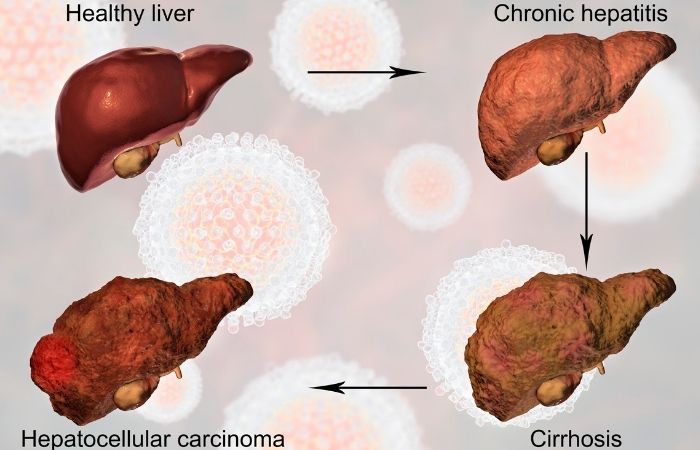
What follows is years, sometimes decades, of low-grade inflammation. Each round of immune attack damages a few liver cells. The liver replaces dead cells with fibrous scar tissue, the way a wound heals on the skin. Scar tissue is durable, but it does not perform liver functions. As scarring spreads, the liver gradually loses capacity. The progression follows recognizable stages, though the timeline varies widely between individuals.
| Stage | What is Happening | Typical Symptoms |
|---|---|---|
| Acute infection (0 to 6 months) | Virus enters liver, inflammation begins | Usually none, occasionally mild flu-like symptoms |
| Chronic infection (6 months to 30+ years) | Ongoing inflammation and slow liver-cell damage | Often none; some report fatigue, joint pain, or vague abdominal discomfort |
| Fibrosis | Scarring of liver tissue progresses | No symptoms or mild liver-enzyme elevation |
| Cirrhosis | Severe scarring, liver begins to fail | Swelling, jaundice, confusion, dark urine, weakness |
Why Late-Stage Symptoms Are Often the First Symptoms
The first unmistakable signs of hepatitis C damage (jaundice, fluid buildup in the abdomen, confusion) often signal cirrhosis that is already advanced. By that point, the liver may need a transplant. Hepatitis C remains one of the leading causes of liver transplants in the United States.
The earlier symptoms (fatigue, mild upper-abdominal discomfort, occasional joint pain) are easy to dismiss. They overlap with stress, aging, mild flu, or just a busy week. That overlap is the reason screening cannot wait for symptoms. By the time symptoms feel concerning enough to bring up at an appointment, years of silent fibrosis may already be behind you.
Beyond IV Drug Use: How Hepatitis C Actually Spreads
The stereotype is that hepatitis C is an injection-drug virus. Sharing needles is genuinely the highest-risk route, and it accounts for the majority of new infections in the U.S. according to CDC surveillance. But it is not the only route, and the stigma around it keeps many people from realizing they should test. Other documented transmission pathways include receiving a blood transfusion or organ transplant in the U.S. before 1992 (when routine HCV donor screening began), perinatal transmission from mother to child during birth, sharing personal items that may carry blood (razors, toothbrushes, nail clippers), tattoo or piercing performed with non-sterile equipment, healthcare exposures including needlestick injuries, and sexual contact involving mucosal trauma, menstrual blood, or HIV co-infection.
Sexual transmission of hepatitis C between heterosexual monogamous partners is uncommon but not zero. The CDC documents elevated sexual transmission risk among men who have sex with men (especially with HIV co-infection), people with multiple sexual partners, and any sexual practice that increases the chance of blood-to-blood contact.
The U.S. Preventive Services Task Force and the CDC both recommend that all adults aged 18 to 79 receive one-time hepatitis C screening, regardless of risk profile (USPSTF Hepatitis C Screening Recommendation). The infection is too common, the consequences are too severe, and the historical stigma has kept too many people away from testing.
If any of these apply to you, hepatitis C testing is reasonable even if you have never injected a drug:
- Blood transfusion or organ transplant in the U.S. before 1992.
- Tattoo or piercing in a non-sterile or informal setting (including overseas or correctional facilities).
- Sharing razors, toothbrushes, or nail clippers in a household where someone has hepatitis C.
- Sexual contact involving anal sex, menstrual blood, multiple partners, or HIV co-infection.
- Born to a mother with hepatitis C.
Is Hepatitis C Really Considered an STD?
This is one of the most confusing questions about hepatitis C. Hepatitis C is sometimes sexually transmitted, and that is enough reason to include it in a sexual-health discussion.
Hepatitis C is primarily a blood-borne virus. The classical sexual fluids (semen, vaginal secretions) carry far less of it than blood does. So if you are imagining STD as something that spreads easily through any sexual contact, hepatitis C does not fit that model.
But sex is not always tidy. Anal sex can cause small mucosal tears. Menstrual blood is present during sex on many days of the cycle. Rough sex, sex with multiple partners, sex during a period of co-infection with HIV or another STI that inflames mucosal tissue, all of these raise the chance that blood could be exchanged. The CDC explicitly documents that hepatitis C can be transmitted through sex, even though the per-act risk for most monogamous heterosexual couples is low.
The practical takeaway: if you are getting an STI screen because of a recent risk event, ask whether hepatitis C is included in the panel. Many comprehensive panels are not actually comprehensive on this front. You may need to request HCV testing specifically or use an at-home kit that names it.
Both the CDC and the U.S. Preventive Services Task Force now recommend that every adult aged 18 to 79 receive at least one hepatitis C antibody test in their lifetime, regardless of perceived risk. If you have never been tested, you are part of the recommended screening group.
The Window Period and When to Test
If you had a possible exposure two weeks ago and want answers right now, you may need to wait. The window period is the gap between exposure and the point at which a test can reliably detect infection. For hepatitis C, two main test types are used, and they have different windows.
| Test Type | What It Detects | Earliest Detection | Best Time to Test |
|---|---|---|---|
| HCV antibody test (lab or rapid) | Anti-HCV antibodies your immune system has produced | About 8 weeks | 12 weeks or later post-exposure |
| HCV RNA (PCR / NAT) test | Viral genetic material directly | 1 to 2 weeks | 3 to 6 weeks post-exposure |
| At-home rapid fingerstick kit | Anti-HCV antibodies on a lateral-flow strip | About 8 to 12 weeks | 12 weeks or later for a confident negative |
Reading That Window Honestly
Antibody tests check whether your immune system has produced anti-HCV antibodies. These are the standard screening tool. Most HCV antibody tests reach reliable accuracy by 12 weeks; follow the specific timing guidance in your test kit's insert, since individual assays vary slightly in their stated window.
RNA tests detect the virus's genetic material directly. They can pick up infection as early as 1 to 2 weeks post-exposure, but they are typically lab-only and more expensive. They are usually used for confirming a positive antibody result, or for testing very recent exposures in clinical settings.
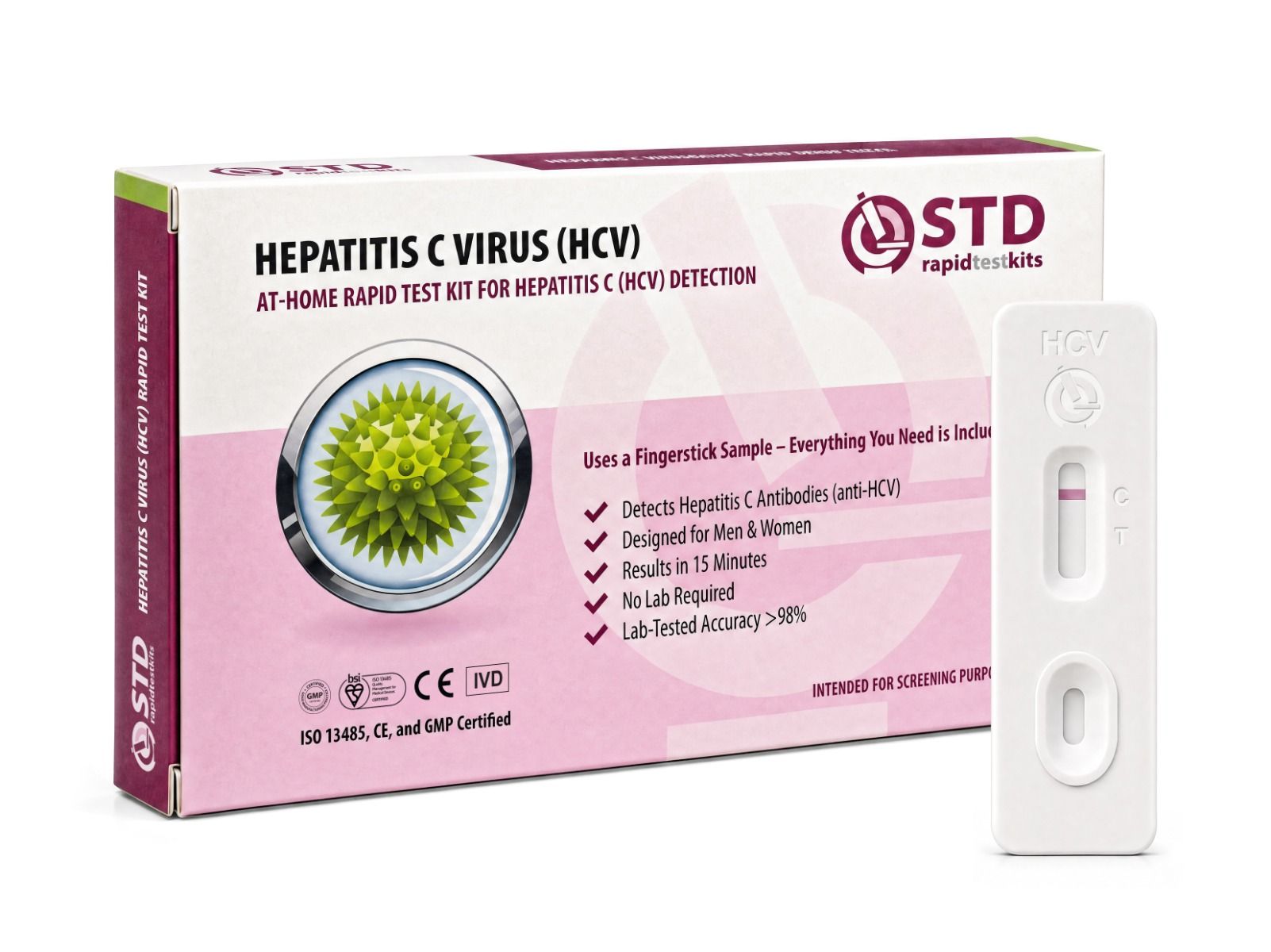
At-home rapid kits use the antibody method. A fingerstick blood drop reacts with antibody-detection chemistry on a lateral-flow strip, and the result reads in about 15 minutes. These are screening tools. A positive antibody result needs follow-up RNA testing to confirm active infection (some people clear the virus naturally and test antibody-positive without ongoing infection).
If your possible exposure was within the last few weeks, the most useful pattern is: test now to establish a baseline, then test again at 12 weeks for a confident result. Early testing does not waste the kit. It gives you a starting point and reassurance during the wait.
This site sells at-home rapid test kits; the products linked below are ours. Recommendations are based on fit for the reader's concern, not commercial benefit.
What Happens If You Test Positive
A positive hepatitis C test is genuinely manageable news in 2026. It is one of the few chronic viral infections that can be cured. Modern direct-acting antiviral medications clear the virus in more than 95 percent of treated patients in 8 to 12 weeks, according to CDC treatment guidance. The treatment is oral, the side effects are usually mild, and the cure is durable.
The first step after a positive antibody result is a confirmatory RNA test. This distinguishes between current infection and past infection that the body cleared on its own (about 15 to 25 percent of people clear acute hepatitis C without treatment). Confirmatory testing also identifies the viral genotype, which informs medication choice.
Cost concerns stop a lot of people, but they should not. Most insurance plans cover hepatitis C treatment as standard of care. State Medicaid programs cover it. Patient assistance programs from manufacturers cover uninsured patients in many cases. Federally Qualified Health Centers offer sliding-scale fees. The medication itself is expensive, but out-of-pocket cost for the patient is often manageable or zero.
The harder part is often emotional. A positive result can bring shame, anger, and confusion, especially if the route of transmission is unclear. Those feelings are normal. The clinical reality is that the virus does not care about morality, only opportunity, and modern treatment makes the disease itself a solvable problem rather than a life sentence. Notifying recent sexual partners and anyone you may have shared personal items with is part of stopping the chain. Most state health departments and several apps offer anonymous partner notification tools.
- Schedule a confirmatory HCV RNA test through a clinic, telehealth provider, or local health department.
- Once active infection is confirmed, see a primary care provider, hepatologist, or infectious disease specialist who can prescribe direct-acting antivirals.
- Begin the 8 to 12 week oral treatment course (cure rates above 95 percent).
- Confirm the cure with a sustained virologic response test 12 weeks after finishing treatment.
- Notify recent sexual partners and anyone you may have shared personal items with, using anonymous tools if preferred.
Why a Normal Liver Panel Does Not Rule Out Hepatitis C
Many people assume that if their annual bloodwork looked fine, they would know about a liver problem. That is not how routine liver panels work.
Standard liver function tests measure enzymes (ALT, AST), bilirubin, and albumin. These reveal how the liver is functioning at the moment of the draw. They do not test for any specific virus. ALT and AST elevation can suggest active liver inflammation, but in chronic hepatitis C the elevation is often mild, intermittent, or entirely absent. People can have years of slow fibrosis with enzyme levels in the normal range.
A clean annual panel might mean your liver is functioning well today. It does not mean you have been screened for hepatitis C. The hepatitis C antibody test is a separate order, and unless your provider explicitly checks the box, it is not run. If your annual labs are routinely fine but you have never been tested for HCV specifically, that is worth raising at your next appointment, or addressing with an at-home antibody screen.
Liver-function tests (ALT, AST, bilirubin) measure how the liver is functioning right now. An HCV antibody test checks whether the virus itself is present. One normal annual panel does not substitute for the other, and the two are typically ordered separately.
How Hepatitis C Differs From Other STDs
Most other STDs follow a faster, more visible course. Chlamydia and gonorrhea typically produce symptoms within days to weeks (when they produce symptoms at all). Syphilis can announce itself with a chancre. Herpes flares periodically. Hepatitis C is the slow burn.
| STD | Time to Symptoms | Curable? | Typical Treatment | Silent Damage Risk |
|---|---|---|---|---|
| Chlamydia | 1 to 3 weeks | Yes | Single-dose or short antibiotic course | Low to moderate (fertility risk if untreated) |
| Gonorrhea | 2 to 7 days | Yes | Antibiotics | Moderate (fertility, joint, eye complications) |
| Herpes (HSV) | 2 to 12 days | No (manageable) | Antivirals for flare-ups | Low |
| Syphilis | 10 to 90 days | Yes | Penicillin injection | High if untreated (neurological damage) |
| Hepatitis C | Often none for years | Yes (DAAs, 95%+ cure) | 8 to 12 weeks of oral antivirals | Very high (cirrhosis, liver cancer, transplant) |
Slow Progression Plus Modern Curability Equals a Strong Case for Screening
The treatment differences between hepatitis C and other STDs matter. Chlamydia, gonorrhea, and syphilis are bacterial and respond to short antibiotic courses. Herpes is a chronic viral infection managed with antivirals as needed. Hepatitis C is the only one in this group that is both fully curable and yet capable of causing irreversible liver damage if left untreated.
That combination, slow silent progression plus modern curability, is exactly why screening matters so much. The test gives you the option to act before the damage becomes permanent. Catching it early, before cirrhosis sets in, is exactly what modern screening is designed to do.
In those people who develop chronic HCV infection, the infection is often undiagnosed because it remains asymptomatic until decades after infection when symptoms develop secondary to serious liver damage.
Privacy, Discreet Testing, and What to Do Next
A lot of people delay hepatitis C testing not because they doubt the science but because they do not want a chart entry, an awkward provider conversation, or anyone in their household seeing a clinic envelope. At-home rapid testing addresses all three concerns.
Modern rapid hepatitis C kits arrive in plain packaging. The instructions are written for a non-clinician. A small fingerstick produces a drop of blood, the strip processes it, and a result appears in about 15 minutes. There is no lab, no appointment, no waiting room. If the result is negative and your possible exposure was more than 12 weeks ago, that is reliable reassurance. If it is positive, you have time and privacy to plan your next step before involving anyone else, and confirmatory lab testing is a straightforward follow-up.
Whether to test is ultimately a personal decision, but the case for getting screened at least once is strong. If you are in the 18 to 79 age band recommended by the USPSTF, you have never been tested, and you have access to either a clinic or an at-home kit, the time to find out is now rather than later. Hepatitis C is one of the few preventable causes of liver failure where one quiet action (a single screening test) can change the trajectory of the next twenty years of your health.

FAQs about hepatitis C testing
- Can you really have hepatitis C and feel completely fine?
- Yes, and that is exactly what makes it dangerous. Many people live with hepatitis C for years or decades without obvious symptoms. CDC surveillance indicates that a large share of chronically infected adults are unaware of their status. By the time clear signs (jaundice, swelling, confusion) appear, significant liver damage may already be present.
- Is hepatitis C truly an STD?
- It is sometimes sexually transmitted. Hepatitis C is primarily a blood-borne virus, so it does not spread through sex as easily as chlamydia or gonorrhea. But sexual contact involving mucosal trauma, anal sex, menstrual blood, or co-infection with HIV does carry documented risk. The CDC includes hepatitis C in sexual-health screening guidance for that reason.
- When is the most accurate time to test after a possible exposure?
- Around 12 weeks post-exposure for an antibody-based home or lab test. That gives your immune system enough time to produce detectable antibodies. RNA tests can detect infection as early as 1 to 2 weeks but are usually lab-only. If your exposure was recent, testing now and retesting at 12 weeks is a reasonable approach.
- Are at-home rapid tests as accurate as lab tests?
- Home rapid antibody tests use the same lateral-flow chemistry as clinical screening tests, and they are accurate when used on the right timeline. They are screening tools, not confirmatory tests. A positive result should be confirmed with a lab RNA test, and a negative result is most reliable at 12 weeks or later after exposure.
- Do most STD panels include hepatitis C automatically?
- Surprisingly, no. Many basic STI panels skip hepatitis C unless you specifically request it or choose a combo kit that names HCV. If you have ever been told you got a full panel, double-check what was actually run. The CDC and USPSTF recommend universal screening, so asking for it is reasonable at any visit.
- Can I get hepatitis C from oral sex or kissing?
- Oral sex carries some theoretical risk, especially with bleeding gums, open sores, or rough contact, but documented cases are rare. Kissing is essentially not a transmission route unless someone is actively bleeding into your mouth. The main sexual-transmission pathways involve blood-to-blood contact during sex, not saliva.
- If the test is positive, is hepatitis C still curable?
- Yes. Modern direct-acting antiviral medications cure hepatitis C in more than 95 percent of treated patients with an 8-to-12-week oral course. The treatment is well-tolerated, and most insurance plans cover it. The key is catching the infection before serious liver damage occurs, which is exactly what screening makes possible.
- Can hepatitis C come back after I have been cured?
- The same infection does not reactivate after a successful cure (sustained virologic response). However, you can be reinfected through new exposures, the same way you can catch a cold more than once. After cure, retesting is reasonable if you have a new known risk event.
How we sourced this article: This guide draws on current public-health guidance from the CDC, the U.S. Preventive Services Task Force, the World Health Organization, and the NIH MedlinePlus consumer-health library. Statements about screening windows, treatment cure rates, and transmission routes are pulled from those sources directly. We do not provide clinical diagnosis. For symptoms or test results that concern you, see a licensed provider.
- U.S. Centers for Disease Control and Prevention. Public-facing hepatitis C overview, including transmission routes, symptoms, and links to clinical and surveillance pages.
- U.S. Centers for Disease Control and Prevention. About hepatitis C, including the proportion of asymptomatic chronic infections and decades-long progression to severe liver disease.
- U.S. Preventive Services Task Force. Hepatitis C virus infection in adolescents and adults: screening recommendation supporting universal one-time screening for adults aged 18 to 79.
- U.S. Centers for Disease Control and Prevention. Hepatitis C treatment overview, including direct-acting antiviral cure rates above 95 percent over 8 to 12 weeks.
- World Health Organization. Hepatitis C fact sheet, including the approximately 70 percent chronic-infection rate after acute infection and the description of chronic HCV as commonly asymptomatic until decades after infection.
- U.S. National Library of Medicine, MedlinePlus. Consumer-health overview of hepatitis C, including transmission routes and testing options.
