






Quick Answer: Herpes often causes painful blisters that appear within 2 to 12 days, while syphilis usually begins with a single painless sore 3 to 6 weeks after exposure. If symptoms are recent and unclear, test for herpes first, then follow with a syphilis test based on exposure timeline.
That Sore You Noticed Might Not Be What You Think
Ashley, 27, noticed a stinging sensation when she peed. The next morning, she saw two tiny blisters at the edge of her vulva. She panicked, “It must be herpes,” she told her roommate. But after an urgent care visit and blood tests, it turned out to be primary syphilis. “I didn’t even know syphilis could look like that,” she said. That’s the crux of the problem, symptom overlap, stigma, and panic often push people toward the wrong assumptions and sometimes, the wrong test.
Let’s be clear: Herpes and syphilis are both sexually transmitted infections that can cause genital sores, ulcers, and skin irritation. But their timing, appearance, and test types are not interchangeable. When you’re scared and unsure, knowing how to read your own symptoms, and when to test, can make all the difference in avoiding false negatives or missed diagnoses.
The confusion isn’t just visual. It’s emotional. Herpes is often lifelong and stigmatized. Syphilis sounds vintage, like something from a 1920s novel. But both are very much here, very real, and increasingly common. In 2023, the U.S. had more than 200,000 new cases of syphilis, the most ever for young adults and pregnant women.
Which Test Should You Take First (And Why Timing Matters)
When deciding between a herpes test and a syphilis test, it's not just about what you see on your body. It's also about when it showed up and how long it's been since you might have been exposed. Let's start by looking at the timelines for both infections.
Herpes (HSV-1 or HSV-2) typically shows symptoms between 2 and 12 days after exposure. The most common signs include clusters of painful blisters, burning during urination, itching, and flu-like symptoms during a first outbreak. Symptoms can come and go, and many people never have visible sores but still carry and spread the virus.
Syphilis, on the other hand, often starts with a single, painless sore, called a chancre, about 3 to 6 weeks after exposure. It doesn’t hurt. It might not even bleed. And it might show up in places you can’t see easily: the cervix, anus, mouth, or under the foreskin. Because it’s painless, people often miss it entirely, until the second stage kicks in with flu-like symptoms and a body-wide rash that doesn’t itch.
| Infection | First Symptoms Appear | Common First Sign | Painful? | Test Type |
|---|---|---|---|---|
| Herpes | 2–12 days | Blisters or ulcers in clusters | Yes, often very | Swab or antibody blood test |
| Syphilis | 3–6 weeks | Single painless sore (chancre) | No, usually not | Blood test (treponemal/non-treponemal) |
Table 1. Initial symptom timeline and test types for herpes vs syphilis.
So what does that mean for testing? If your symptoms started within the first two weeks after a risky encounter, a herpes test will likely give you faster insight. If you're further out, especially past the 21-day mark, consider starting with a syphilis test or doing both, spaced a few days apart. The worst thing you can do? Test too early for both, get a negative, and assume you're clear.
People are also reading: Super Gonorrhea Is Coming, Here’s How to Cure the One You’ve Already Got
What Herpes and Syphilis Look Like (And How They Trick You)
Marcus, 33, had what he described as “a zit that didn’t pop” just below his navel. It didn’t hurt. It didn’t grow. He assumed it was from friction or sweat. A month later, a routine STD panel at a new clinic flagged him positive for syphilis. “I never would’ve guessed that was an STD,” he said. “It looked like an ingrown hair.” His experience isn’t rare. Syphilis sores are often mistaken for razor bumps, insect bites, or simple irritation.
Herpes sores, by contrast, usually evolve quickly. A tingly area becomes a red bump, then a cluster of fluid-filled blisters that break and scab. But in early infections, especially with HSV-1, these blisters can look like shallow ulcers or even paper cuts. For people with dark skin, both herpes and syphilis sores can be harder to identify, sometimes appearing as hypopigmented or pink areas without dramatic swelling or blistering.
Even experienced clinicians sometimes confuse the two. A 2022 study published in the Journal of Infectious Diseases found that 12% of patients initially diagnosed with genital herpes were later confirmed to have early syphilis through serologic testing. That margin of error has real consequences: misdiagnosis leads to delays in treatment, missed partner notification, and ongoing transmission risk.
The emotional toll? Huge. Herpes comes with lifelong management. Syphilis, caught early, is entirely curable. Getting the diagnosis wrong isn’t just a medical issue, it shapes how people view themselves, their relationships, and their health future.
Check Your STD Status in Minutes
Test at Home with RemediumGenital & Oral Herpes Test Kit
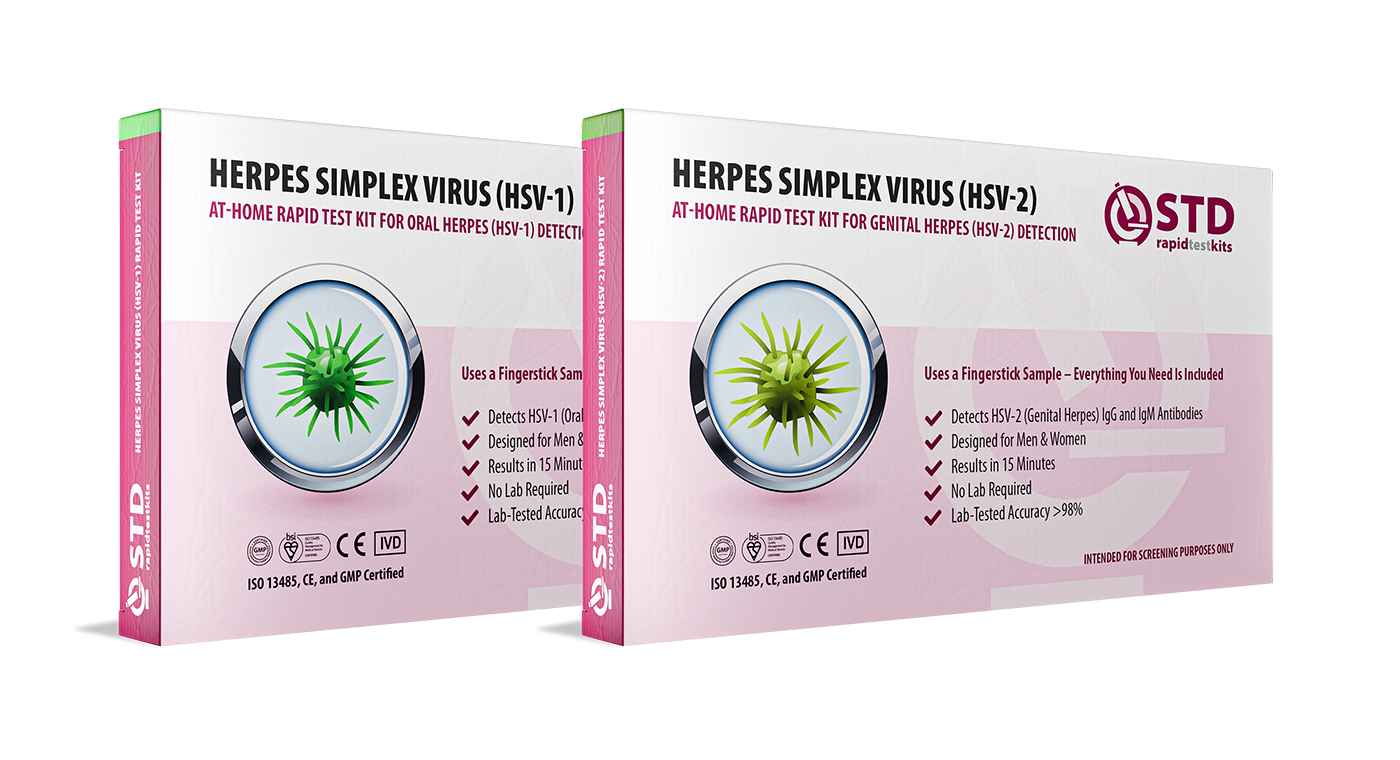
 For Men & Women
 Results in Minutes
 No Lab Needed
 Private & Discreet
Order Now $75.00 $98.00
For all 2 tests
How Accurate Are Herpes and Syphilis Tests?
This is where it gets technical, but in the most human way possible. Testing accuracy depends on three things: the type of test used, the timing of the test, and whether you have visible symptoms when testing.
For herpes, swab tests (PCR) taken from a visible sore are highly accurate, usually over 95% sensitivity, if done within 48 hours of lesion appearance. But most people don’t test that fast. Blood tests (IgG or IgM antibody) are more common, but less reliable in the early window. Antibodies may not show up until 4 to 12 weeks after exposure, meaning you could get a false negative if you test too soon.
With syphilis, the standard is a two-step blood test: first, a non-treponemal test (like RPR), which checks for general infection activity; then a treponemal test to confirm specificity. Syphilis antibodies tend to appear by the 3rd to 6th week post-exposure, and once positive, they usually stay detectable for life, even after treatment. That’s both helpful and tricky: a positive test doesn’t always mean a current infection, but it always warrants attention.
| Test Type | Detects | Best Time to Use | Limitations |
|---|---|---|---|
| Herpes Swab (PCR) | Viral DNA from sore | Within 48 hours of blister | Requires active lesion |
| Herpes Antibody (IgG/IgM) | Immune response | 4–12 weeks post-exposure | Possible false negatives if too early |
| Syphilis Non-Treponemal | Active infection activity | 3–6 weeks post-exposure | Can give false positives |
| Syphilis Treponemal | Specific antibodies | Confirmatory step | Stays positive for life |
Table 2. Comparison of test types and their optimal windows.
Translation? If you have a fresh, visible sore, swab it. If you're beyond the initial window or your symptoms are gone, go with blood tests, but know their limitations. And don’t just test once. If your first test is negative but symptoms persist or evolve, retest after two to four weeks. False reassurance is dangerous. Real reassurance comes from smart timing and follow-up.
If your head is spinning, peace of mind is one test away. You can order a discreet combo test kit that screens for both herpes and syphilis, ideal if you're within the risk window and want answers without delay.
Why Retesting Might Save You From a False Negative
Chloe, 29, tested for herpes five days after a one-night stand when she felt a raw patch on her inner thigh. The result came back negative. A week later, she developed fever and swollen lymph nodes, and the sores multiplied. A second test, done on day 14, confirmed HSV-2. “I wish someone had told me how early was too early,” she said. The first test wasn’t wrong, it was just too soon.
Retesting isn’t about paranoia. It’s about precision. Both herpes and syphilis have windows where the infection is present but undetectable by standard tests. This is especially true with antibody-based herpes tests or syphilis serologies early in infection. If you test negative but had a strong exposure or still have symptoms, don’t dismiss your instincts. Retest at 2, then again at 6 weeks if needed. Testing is care, not confession.
In some cases, symptoms can reappear after a negative test, or new partners may be exposed unknowingly. For those navigating new relationships, open relationships, or serial monogamy, repeat testing isn’t overkill, it’s protective. You’re not overthinking it. You’re listening to your body, your risk, and your future.
Testing From Home: Confidence Without Shame
For many, walking into a clinic for STD testing can feel like a walk of shame. The fluorescent lights. The clipboard questions. The fear of seeing someone you know. That’s why at-home testing has exploded in popularity, and for good reason.
Modern at-home kits use finger-prick or swab samples that you collect in the privacy of your space, on your time. They come with instructions, rapid turnaround, and discreet packaging. Some give you results in minutes; others let you mail your sample to a CLIA-certified lab with online results within 1–3 days. It’s medicine without the middleman, and for many, it’s the only path they trust enough to take.
But not all kits are created equal. Some are designed only for one STD, like a herpes rapid test that detects active antibodies. Others are combo panels that check for multiple infections at once. The most versatile option, especially if you’re stuck between syphilis and herpes, is a combo home STD test kit. It covers the bases without requiring separate orders or repeated sample collection.
More importantly, testing from home gives you control. You decide when to test, who to tell, and how to move forward. That autonomy matters, especially when the thing you’re dealing with already feels like it’s taken over your life.
People are also reading: Everyone Has Herpes (They Just Don’t Know It Yet)
What Happens If You Test Positive?
Let’s slow it down for a second. The thought of a positive test can bring a wave of panic. But here’s the reality: most people who test positive for herpes or syphilis live full, healthy, and sexually active lives. The difference is what they do next, not what the test says.
If you test positive for herpes, it’s a lifelong condition, but it’s manageable. Antiviral medications can suppress outbreaks and reduce transmission. Many people go years without symptoms. Telling partners can be awkward, but it doesn’t have to be a dealbreaker. Herpes is incredibly common, affecting 1 in 6 Americans, and increasingly normalized as part of dating conversations.
If you test positive for syphilis, treatment is straightforward. A round of penicillin injections or oral antibiotics clears the infection in most cases. But follow-up is essential. Syphilis has stages, and untreated infections can lead to long-term complications. You’ll need to notify partners and possibly test for HIV, as syphilis increases HIV risk.
Consider the story of Jordan, 41. He tested positive for both herpes and syphilis after ignoring symptoms for months. The diagnosis rattled him, but it also led him to a new level of care. “Once I stopped hiding from it, everything got easier,” he said. He got treated, disclosed to his partners, and now keeps a test kit on hand “just in case.”
This isn’t about blame. It’s about clarity. You deserve to know what’s going on with your body, without shame, without fear. And if your result is positive, you deserve support, treatment, and respect, not silence.
FAQs
1. Can syphilis look like herpes?
Yes, especially when it first starts. When a syphilis sore (chancre) opens, it may look like a herpes blister, but there are some important differences. Syphilis usually causes one painless sore, while herpes often causes groups of painful blisters. But a lot of patients and even doctors can get them mixed up. That's why it's important to get the timing and the tests right.
2. Is herpes more common than syphilis?
Yes. Herpes, especially HSV-1 and HSV-2, is much more common around the world. About 1 in 6 people in the U.S. have genital herpes. Cases of syphilis are going up, but they are still much lower. But syphilis is spreading quickly, especially among men who have sex with men and people who don't have easy access to health care.
3. How soon after exposure can I test for herpes?
If using a swab test on a sore, within 1 to 5 days of lesion appearance is best. For antibody blood tests, wait at least 4 weeks post-exposure, with the most accurate results appearing between 8 to 12 weeks. Early testing can yield false negatives, so follow-up testing is often recommended.
4. How soon can I test for syphilis?
Blood tests for syphilis become more reliable about 3 to 6 weeks after exposure. Testing earlier may miss antibodies that haven’t formed yet. If you’re at high risk or have symptoms, retest at 6 weeks if the first result is negative.
5. Can I have both herpes and syphilis?
Yes, co-infections are possible. One does not protect against the other. In fact, open sores from one infection can increase your risk of acquiring another. If you’re unsure which infection you might have, or think you may have both, a combo test is the most comprehensive route.
6. Are herpes and syphilis both curable?
Antibiotics can cure syphilis. There is no cure for herpes, but antiviral treatment can help. With the right precautions, people with herpes can live normal lives, have sex, and have kids.
7. Do at-home tests for syphilis and herpes work?
Yes, as long as you use it correctly and within the right time frame. You can get rapid test kits for both, but their accuracy depends on when you use them and what kind of sample you use. If you test positive or keep having symptoms, you should always talk to a doctor.
8. What should I do if I test positive for one but not the other?
Take care of an infection if you know you have one. If you get a negative test result, you might want to test again later, especially if you still have symptoms or were recently exposed. It's a good idea to test again after a few weeks because testing windows can give false negatives at first.
9. Is it possible to have herpes or syphilis without symptoms?
Many people with herpes or syphilis are asymptomatic or mistake symptoms for something else. This is one of the main reasons these infections spread, because people don’t know they have them. Testing is often the only way to know for sure.
10. Can oral sex transmit herpes or syphilis?
Of course. Oral sex can spread both herpes (especially HSV-1) and syphilis, even if there are no visible sores. It's one of the least talked about ways to get sick. If you've had oral sex without protection and notice symptoms in your mouth, genitals, or throat, you should get tested.
You Deserve Answers, Not Assumptions
It's not just a sore. It's all about being clear. You have the right to know what's going on with your body without feeling ashamed, embarrassed, or confused, whether you're starting a new relationship, waking up with a strange symptom, or dealing with the emotional fallout of a hookup.
This discreet combo test kit screens for both syphilis and herpes and can be done from the privacy of home. It’s fast, confidential, and built for moments just like this. Don’t wait in the dark. Give yourself the answer, and the peace of mind, you need.
How We Sourced This Article: We combined current guidance from leading medical organizations with peer-reviewed research and lived-experience reporting to make this guide practical, compassionate, and accurate.
Sources
4. Mayo Clinic: Genital Herpes - Symptoms and Causes
5. ASHA: Understanding Herpes Symptoms and Stigma
6. HIV.gov: STD Co-Infection Risks and Testing Guidance
About the Author
Dr. F. David, MDis a board-certified specialist in infectious diseases who works to stop, diagnose, and treat STIs. He blends clinical precision with a no-nonsense, sex-positive approach and is committed to expanding access for readers in both urban and off-grid settings.
Reviewed by: Lindsay Carrington, NP-C | Last medically reviewed: September 2025
This article is meant to give information and should not be used as medical advice.


