







Quick Answer: You can get certain STDs, like herpes, HPV, and sometimes even chlamydia or syphilis, from hand-to-genital contact, especially if cuts, sores, or infected fluids are involved. Testing is still worth considering even without “sex.”
Why This Article Exists (and Who It’s For)
This guide is for anyone who’s ever worried about an STD after what they thought was “safe” play. For people who touched and were touched, but didn’t go all the way. For folks in new relationships, queer hookups, casual meetups, or exploring intimacy without intercourse. For anyone whose gut says something’s not right, even though their brain says, “but it was only hands.”
It's also for those who’ve been dismissed by doctors or partners, told they're overreacting, or assumed “real sex” has to involve penetration. Your health questions are valid. And you deserve honest answers without shame, stigma, or silence.
In this article, we’ll break down how STDs actually spread through hands, what infections are possible, when testing makes sense, and why mutual masturbation isn’t always zero-risk. Along the way, we’ll walk through lived scenarios, hard data, and real options, including discreet at-home STD testing kits.
Why People Think Hands Are Safe (And Why That’s Half True)
It makes intuitive sense, fingering someone or giving a handjob doesn’t feel like “real sex.” No penetration. No ejaculation inside anyone. No obvious point of entry. For many, it feels intimate but immune to consequences. It’s what we do when we’re not ready for more.
But intimacy isn’t sterilized just because it skips penetration. Our hands can carry, spread, or introduce infections in ways that don’t require traditional “sex.” Skin has microscopic tears. Fingernails harbor bacteria. Hands touch everything, then touch bodies. That’s not about shame, it’s about reality.
In fact, in some studies, herpes and HPV have been found to transmit even when there’s no fluid exchange, just skin-to-skin or skin-to-mucosa contact.

People are also reading: Can You Get an STD from a Toilet Seat or Toilet Paper? A Medical Breakdown
What STDs Can (And Can’t) Spread Through Hands
Let’s get specific. Not every STD spreads through touch, but some do. Here's what the current science tells us:
| STD | Can It Spread from Hand-to-Genital Contact? | How? |
|---|---|---|
| Herpes (HSV-1, HSV-2) | Yes | Skin-to-skin contact with an active sore, or even asymptomatic shedding |
| HPV | Possibly | Through microscopic skin contact, especially if warts are present |
| Chlamydia | Unlikely but possible | If infected fluids on fingers are transferred to genitals |
| Gonorrhea | Unlikely | Possible through fluids, but survival on hands is low |
| Syphilis | Yes | If a syphilitic sore is touched and then rubbed into mucous tissue |
| HIV | No | HIV does not survive well on skin; requires deeper fluid exchange |
| Trichomoniasis | Very unlikely | Typically needs vaginal or urethral transmission |
Figure 1. STD transmission potential through hand-to-genital contact based on current CDC and peer-reviewed data.
This table doesn’t mean panic. It means information. If someone had a cold sore on their lip, then touched themselves, then touched you? That’s not zero risk. If they had untreated syphilis, and a sore made contact with your vulva, penis, or anus, even briefly, that could be enough for transmission.
Check Your STD Status in Minutes
Test at Home with Remedium7-in-1 STD Test Kit

 For Men & Women
 Results in Minutes
 No Lab Needed
 Private & Discreet
Order Now $129.00 $343.00
For all 7 tests
Case Study: “We Only Touched Each Other. I Still Got Herpes.”
Ava, 23, had never had penetrative sex. Her first queer hookup involved mutual masturbation and kissing, but no oral, no toys, no sex.
“I remember feeling so safe with her. We were careful. There was no ‘real’ sex. But a few weeks later, I got a small sore, and my gyno said it was herpes. I was shocked. I still am.”
Ava isn’t alone. Research shows that asymptomatic viral shedding, when someone has no symptoms but still carries and spreads an infection, is a key driver of herpes transmission. And hands can carry that virus if they make direct contact with skin or fluids, then touch a partner’s mucosa.
This doesn’t mean mutual masturbation is “dangerous.” It means that risk isn’t binary. You can have a low-risk moment and still end up exposed.
What the Science Really Says About Fingering and STD Risk
Most people don’t get an STD from hand stuff alone, but that doesn’t mean it’s impossible. Studies on indirect transmission (hands as a “vehicle”) are limited but telling:
- HSV-1 and HSV-2 have been found on fingertips and under fingernails after contact with active sores or genital skin. The virus can remain infectious for short periods depending on moisture and temperature.
- Chlamydia trachomatis DNA has been detected on hands after genital contact, though whether it leads to infection is rare and debated.
- Syphilis transmission via skin contact is medically documented, particularly during the primary stage when sores are present.
So while it’s not the most common route, it’s not just an urban legend. It’s why some experts recommend testing even if you “only used hands,” especially if there was broken skin, visible sores, or new symptoms.
It’s also why routine screening matters, for all bodies, all genders, all practices. And you can start that with an at-home Combo STD Test Kit that checks for the most common infections.
Why Most People Don’t Test After “Just Hands”
If you're reading this, there's a good chance you didn’t test right away, or at all, after hand stuff. And that’s not your fault. Most people don’t. Doctors don’t always ask. Partners downplay it. STD awareness campaigns rarely mention it. The silence itself teaches people that hand-based intimacy doesn't "count."
But here’s what we know: people delay or skip testing after hand contact because of:
- Low perceived risk – They believe hands are clean, or that no fluids = no transmission.
- Lack of symptoms – They don’t see anything unusual, so they assume they’re fine.
- Shame or identity stigma – Especially in queer or first-time contexts, people hesitate to acknowledge risk at all.
- Bad past experiences with providers – Many aren’t believed when they say, “I didn’t have sex but I think I have something.”
We see this especially with younger people, queer women, nonbinary folks, and newly sexually active individuals who may not even label what they did as “sex.” But if you’re touching genitals, yours or someone else’s, STD risk, however small, is real enough to deserve attention.
This is why many choose the privacy of a Herpes Rapid Test Kit or a Chlamydia Rapid Test Kit. No clinic. No judgment. Just answers.

People are also reading: You Trust Your PartnerBut Should You Still Get an STD Test?
When to Test After Hands-Only Contact
There’s no one-size-fits-all answer, but here’s a general guide based on incubation and window periods for the most likely STDs in hand-genital exposure. If you’re unsure, retesting may be safer than waiting on symptoms that never show up.
| STD | When to Test (Earliest) | When to Test (Most Accurate) | Retest Needed? |
|---|---|---|---|
| Herpes | 7–14 days after symptoms | 3–12 weeks (antibody) | Yes, if early test was negative |
| HPV | Visual if warts appear | May take months to detect | Only if symptoms develop |
| Chlamydia | 5–7 days | 14 days | Yes, if tested early |
| Syphilis | 3 weeks | 6 weeks+ | Yes, for confirmation |
Figure 2. Testing windows after hand-to-genital contact, based on CDC timelines and lab sensitivity data.
Testing too early can lead to false reassurance. But waiting too long can mean missed transmission or delayed treatment. If you’re unsure, here’s a safe bet: test at two weeks, and again at six to twelve if your exposure was higher risk or symptoms show up later.
Check Your STD Status in Minutes
Test at Home with Remedium6-in-1 STD Test Kit
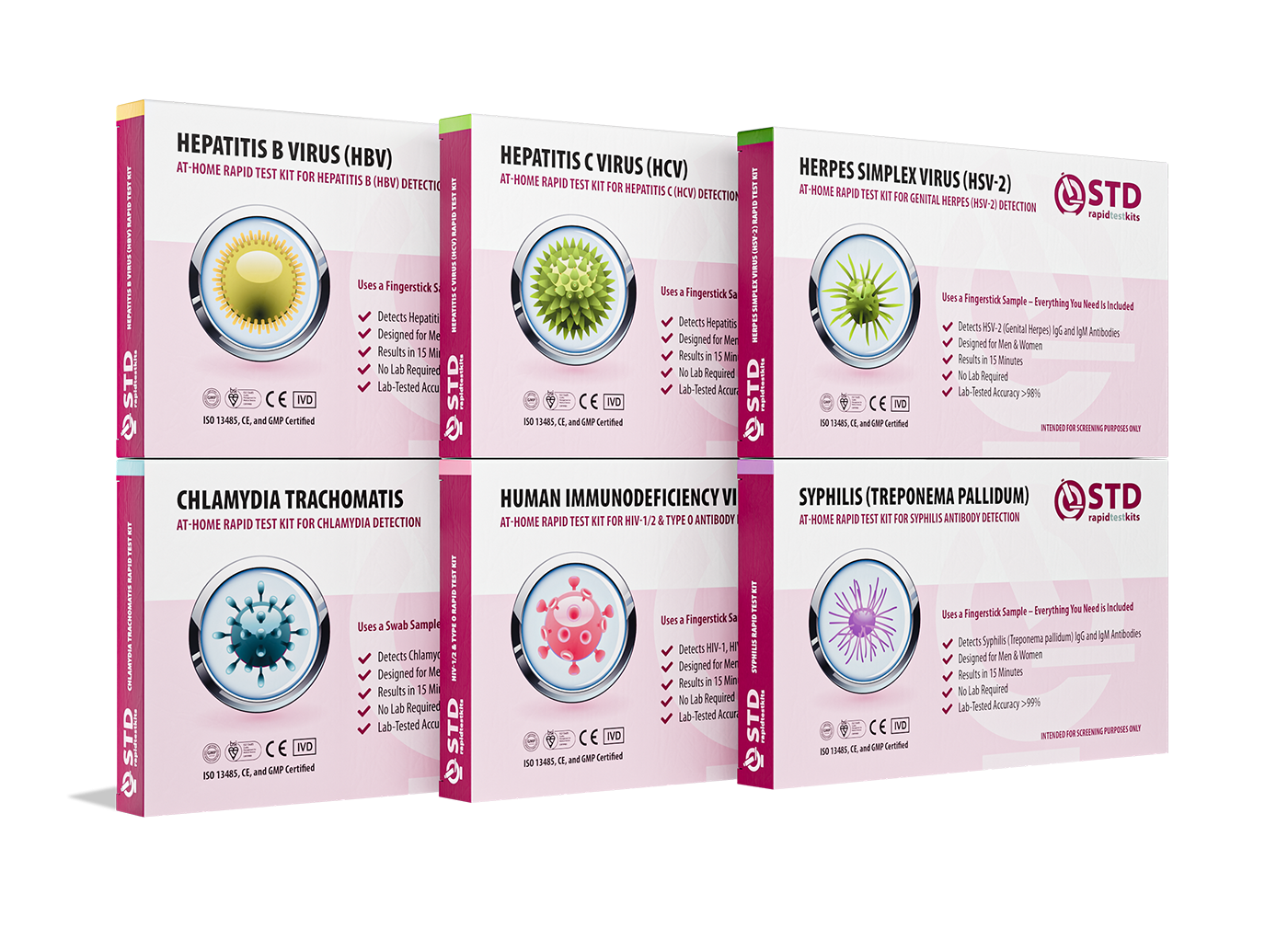 For Men & WomenResults in MinutesNo Lab NeededPrivate & Discreet
Order Now $119.00 $294.00
For all 6 tests
Symptoms That Might Show Up (Even Without Penetration)
If you've noticed any of the following after mutual masturbation or fingering, don’t brush it off just because there was “no sex.” These signs could still mean exposure to an STD, especially herpes, chlamydia, or syphilis:
- Burning sensation while urinating or on skin contact
- Small bumps, sores, or ulcers near the genitals or anus
- Unexpected discharge from the penis or vagina
- Flu-like symptoms including fever or fatigue
- Itching or irritation that doesn’t resolve quickly
These don't always mean you have an STD, but they are enough to get tested. Some diseases, like herpes and syphilis, can show up in a subtle way, especially at first. If you're not sure if something is "just a scratch" or "maybe from shaving," you can be sure that your worry is real.
And remember: you don’t need symptoms to be contagious, or to test.
Call to Action: It Was Just Hands. You Still Deserve Peace of Mind.
We don’t believe in scare tactics. This isn’t about shame or punishment. It’s about truth and choice. You’re allowed to feel confused. You’re allowed to wonder if a touch could mean something. And you’re definitely allowed to get tested just to be sure.
Peace of mind doesn’t require a clinic appointment. You can order a Combo STD Test Kit that covers the most common infections, use it from home, and get clarity in minutes.
Because whether it was just hands, or more, your health matters.
How to Talk to a Partner About Possible Risk
There’s a special kind of awkwardness in saying, “Hey, remember when we just touched each other? I think I might need to get tested.” But intimacy deserves honesty, even the kind wrapped in uncertainty. The goal isn’t to accuse, it’s to communicate. And most people respect clarity more than silence.
If you're not sure how to say it, try something like:
“Hey, I’ve been thinking. I know we didn’t have full-on sex, but I’ve read that some things, like herpes or HPV, can still pass through touch. I’m going to get tested just to be safe. Just wanted to let you know in case you want to do the same.”
This kind of message does more than protect, it builds trust. And if a partner mocks, ghosts, or minimizes your concern? That’s a red flag, not a reassurance.
What If You Already Tested, But Too Soon?
It happens all the time. Someone gets worried, orders a test the next day, and it comes back negative. Relief sets in, until the symptoms show up a week later. That’s not failure. That’s just the reality of window periods. Many STDs take time to show up on a test, especially if you're asymptomatic.
Here’s how to think about retesting:
- Early negative + ongoing symptoms = retest in 10–14 days
- No symptoms but high concern = retest at 4–6 weeks for herpes or syphilis
- Peace of mind only = Combo test at 2 weeks, optional repeat later
Retesting isn’t paranoid. It’s proactive. Especially if you were exposed to fluid, touched a sore unknowingly, or had broken skin on either side. And for most STDs, false positives are rare, but false negatives can happen if you test too early.
STD Rapid Test Kits offers discreet retesting options that let you take control without explaining yourself to anyone.
People are also reading: Rapid At-Home STD Testing Get Immediate Results with These Kits
Preventing Future Risk Without Killing the Mood
You shouldn’t need to glove up just to touch someone. But there are real ways to reduce risk without losing connection, especially if hand stuff is part of your go-to sex routine:
- Wash hands before and after any genital contact
- Keep nails short and clean to avoid micro-tears or bacteria buildup
- Avoid touching open sores, cuts, or unexplained bumps, on anyone
- Use finger cots or gloves for added protection (especially in kink or queer play)
- Don’t go from anus to vagina without cleaning first, yes, even with fingers
None of these tips are about shame. They’re about safety, especially when you can’t always see who’s carrying what. Herpes and HPV don’t require ejaculation, penetration, or even full nudity to spread. They just need access. And fingers can be a vehicle.
Check Your STD Status in Minutes
Test at Home with Remedium6-in-1 STD Rapid Test Kit
 For Men & WomenResults in MinutesNo Lab NeededPrivate & Discreet
Order Now $119.00 $294.00
For all 6 tests
But What If You’re Asymptomatic? Should You Still Test?
Short answer: maybe. Long answer: STDs like chlamydia, HPV, and even early-stage syphilis can show zero symptoms, and still be transmittable. Especially if you’re sexually active in any form, even just touch, testing is a way to close the gap between “I feel fine” and “I know for sure.”
Testing is also protective for your partner(s), present and future. If you’re entering a new relationship, exploring your sexuality, or simply want to start clean, it’s never too late (or too early) to check. And you can start privately, right now, with a Combo STD Test Kit delivered to your door.
What Happens If the Test Comes Back Positive?
Take a breath. A positive result, especially after what you thought was a low-risk encounter, can feel devastating. But it’s not the end of the world. In fact, most STDs are treatable. Some never return. Others are manageable long-term.
If you test positive:
- Confirm the result with a follow-up test (especially if no symptoms)
- Start treatment as soon as possible, many infections clear with one dose
- Tell partners when safe and possible; many platforms offer anonymous tools
- Plan for retesting depending on the STD, some require follow-up
None of this means you’re dirty, reckless, or doomed. It means you’re human. It means your touch matters. And it means you now have a chance to care for yourself in ways you didn’t know you needed to before.
FAQs
1. Can you get an STD from fingering or handjobs?
Yes, it’s possible, especially with STDs like herpes, HPV, and syphilis. If someone has sores, infected fluids, or shedding virus on their skin, those can be transferred during hand-to-genital contact, even without penetration.
2. I only touched them. They never touched me. Am I still at risk?
Here’s the thing: if you touched their fluids or skin with active infection, and then touched yourself before washing up, yeah, there’s a chance. It’s not super common, but it’s also not fiction. If you’re spiraling, a discreet test could be a solid reset button.
3. Is it possible for herpes to spread through hands?
Yes. The herpes virus can still come out of skin even when there are no sores. If someone touched a shedding area and then touched another person's genitals, they could pass the virus on, especially if the mucous membranes were exposed.
4. Should I test even if I have no symptoms?
Yes, especially if you're concerned or the encounter involved possible fluid contact, sores, or new symptoms appeared later. Many STDs are asymptomatic for weeks or even months but are still contagious.
5. How soon should I test after hands-only contact?
Generally, wait at least 7 to 14 days for accurate results, depending on the infection. Some (like syphilis or herpes antibody tests) may require 3–12 weeks for full accuracy. Retesting may be needed if tested too early.
6. Can you get chlamydia from mutual masturbation?
It doesn't happen often, but it can happen, especially if fluids move from one person's genitals to another's fingers. There is a small chance, but not none.
7. Does washing your hands after touching your genitals stop you from getting STDs?
It lowers the risk a lot, but it doesn't make it completely safe. Herpes and HPV are two viruses that can live on skin for a short time, especially under fingernails. You need to wash your hands, but they aren't always safe.
8. Is it safe to test yourself at home if you haven't been exposed to a lot of risk?
Yes, especially for screening. At-home rapid tests for chlamydia, herpes, and other infections are very sensitive and work well when you might have been exposed but aren't sure.
9. Can you get an STD from touching someone through their clothes or dry humping them?
Not very likely. There is almost no chance of getting an STD if there is no skin-to-skin contact or fluid transfer. But rubbing against open wounds, skin irritations, or ripped fabric could still be a little dangerous.
10. Will my doctor take me seriously if I say I didn’t have sex?
Sadly, not always. Many people, especially queer or young patients, report dismissal when explaining hand-only or non-penetrative encounters. This is why at-home testing offers a judgment-free path to answers.
You Don’t Need a “Real Reason” to Get Tested
If you're wondering whether one night, one hand, or one moment could have changed something in your body, you’re allowed to ask. You’re allowed to check. You’re allowed to care.
Testing doesn’t mean you’re dirty. It means you’re diligent. It means you value your body, your peace of mind, and your future partners. So whether you’re feeling symptoms, feeling unsure, or just want to stop spiraling, you have options.
Take control from the privacy of your own space. This Combo STD Home Test Kit checks for the most common infections with fast, discreet results. No appointments. No judgment. Just clarity.
How We Sourced This Article: We combined guidance from the CDC, World Health Organization, and peer-reviewed studies with real experiences from Reddit threads, LGBTQ+ sex-ed blogs, and public health storytelling. Our goal is to offer accurate, trauma-informed info grounded in science and lived truth.
Sources
1. Hand-to-hand transmission of herpes simplex virus type 1
2. A potential cause of Chlamydia trachomatis-positive urine converted by finger contact
3. Herpes simplex virus infection of the hand: a profile of 79 cases
4. Mathematical modeling of indirect Chlamydia transmission via hand contact and shared surfaces
5. WHO: Sexually Transmitted Infections (STIs) Overview
About the Author
Dr. F. David, MD is a board-certified infectious disease specialist focused on STI prevention, diagnosis, and treatment. He blends clinical precision with a no-nonsense, sex-positive approach and is committed to expanding access for readers in both urban and off-grid settings.
Reviewed by: Samantha Lee, NP | Last medically reviewed: September 2025
This article is meant to give information and should not be used as medical advice.


