
Published: November 2025 | Last updated: April 2026 | Editorial review and quality control: Martina N.
Rapid at-home STD test kits promise the answer most people actually want after a possible exposure: a private result, fast, without a waiting room. The technology behind them is real, the limits are also real, and knowing both is the difference between useful screening and false reassurance.
This guide walks through how rapid lateral-flow STI tests work, what they can and cannot detect, the realistic accuracy ranges from product labeling and public-health guidance, and the window periods you need to respect for the result to mean anything. It also covers the situations where a clinic visit is the smarter call, even if testing at home feels easier.
Do rapid at-home STD tests give immediate, reliable results?
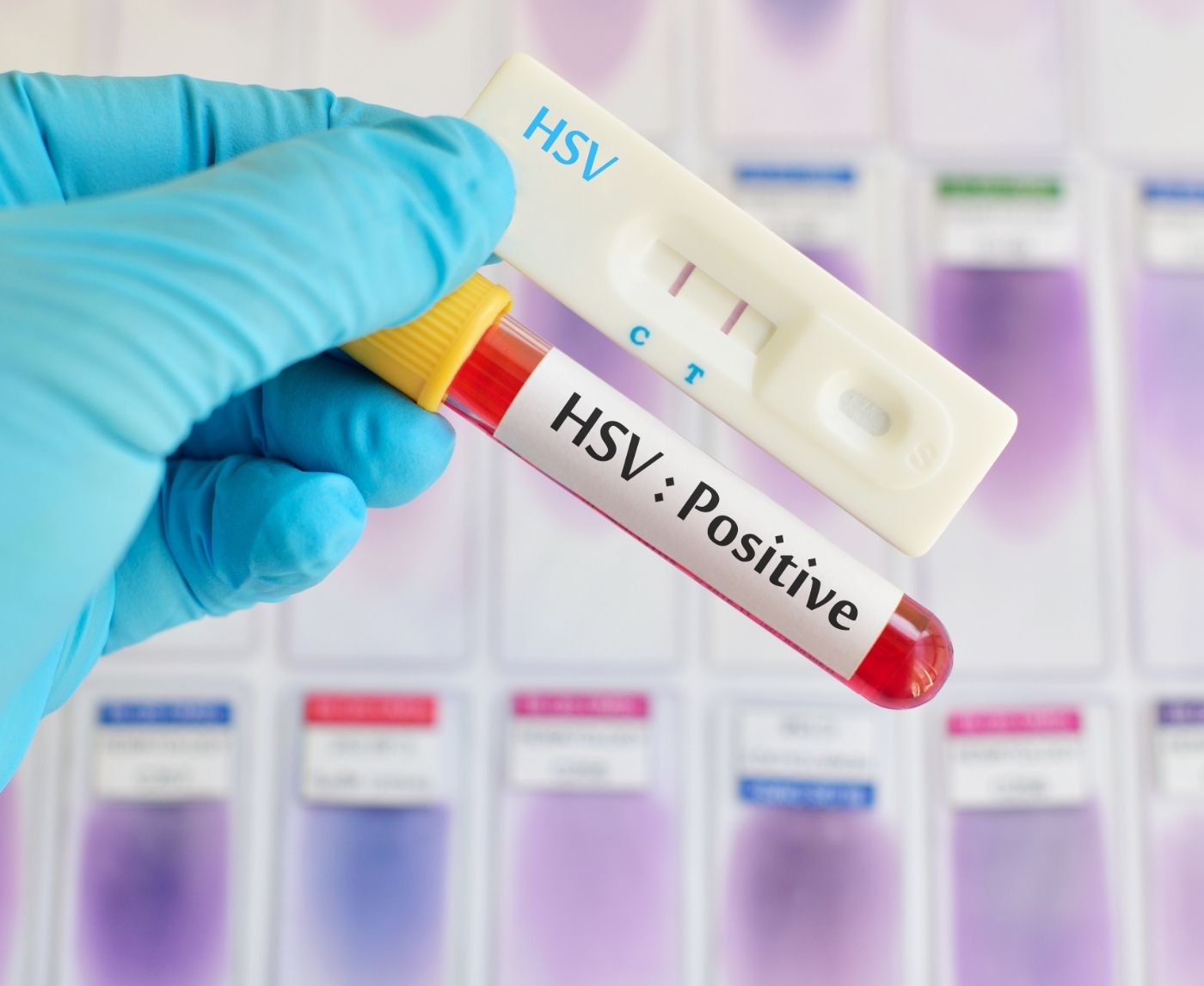
Most rapid at-home STI tests use a lateral-flow strip and return a visible result in 15 to 20 minutes from a self-collected swab or a fingerstick blood drop. Sensitivity and specificity vary by infection and by kit, but rapid HIV self-tests generally report specificity above 99% with sensitivity in the low-to-mid 90s, and rapid swab tests for chlamydia and gonorrhea fall in a similar range when used after the recommended window period. Any positive at-home result should be confirmed by a laboratory test (a Nucleic Acid Amplification Test (NAAT), a clinic blood draw, or a culture) before treatment.
Key Takeaways
- Rapid lateral-flow home STI tests deliver a visible result in about 15 to 20 minutes, but only after the infection's window period has passed (1 to 12 weeks depending on the pathogen).
- Home rapid tests are screening tools, not confirmatory diagnostics. A positive result should be retested at a clinic with a NAAT, a blood draw, or a culture before treatment begins.
Why so many people choose rapid at-home STI testing
About 1 in 5 people in the United States have a sexually transmitted infection, according to CDC's 2025 STI surveillance release, and yet a large share of infections go untested and untreated each year. The reasons are well-studied: clinic hours that conflict with work, fear of being seen at a sexual-health service, embarrassment about discussing exposures with a primary-care provider, and (for the uninsured or underinsured) the bill at the end. Rapid at-home test kits remove most of those friction points.
Privacy is the headline benefit. The kit arrives in plain packaging, the result is read at your kitchen table, and no one logs the visit on a clinic record. For people who have delayed testing for months or years because of stigma, the privacy gap is what finally moves them from worrying to acting.
Speed is the second benefit. A standard clinic workflow involves an appointment, a sample collection, lab transport, and a wait of 2 to 7 days for results. A rapid lateral-flow home test gives a visible read in about 15 minutes, so the answer arrives the same evening as the test. For exposures that fall outside the window period (more on this below), that fast turnaround lets you act quickly: notify partners, schedule confirmation, or stop worrying.
Cost matters too. A clinic visit with lab panel can run several hundred dollars without insurance, while a rapid at-home swab or fingerstick screen for a single infection runs under $40 in most cases. Multi-infection combo kits compress the per-test cost further. Consumer access to rapid HIV self-tests has also expanded substantially over the past decade as more FDA-cleared options have entered the market.
The four most-cited reasons in surveys of self-test users are privacy (no clinic record, no chance of being seen), speed (a visible result in about 15 minutes versus 2 to 7 days for a lab return), cost (under $40 for a single-infection rapid kit versus several hundred dollars for an uninsured clinic panel), and access (no appointment, no time off work, no travel). The trade-off is analytical sensitivity: home rapid screens are screening tools, and a positive screen should always be confirmed at a clinic before treatment.
How rapid lateral-flow STI tests actually work
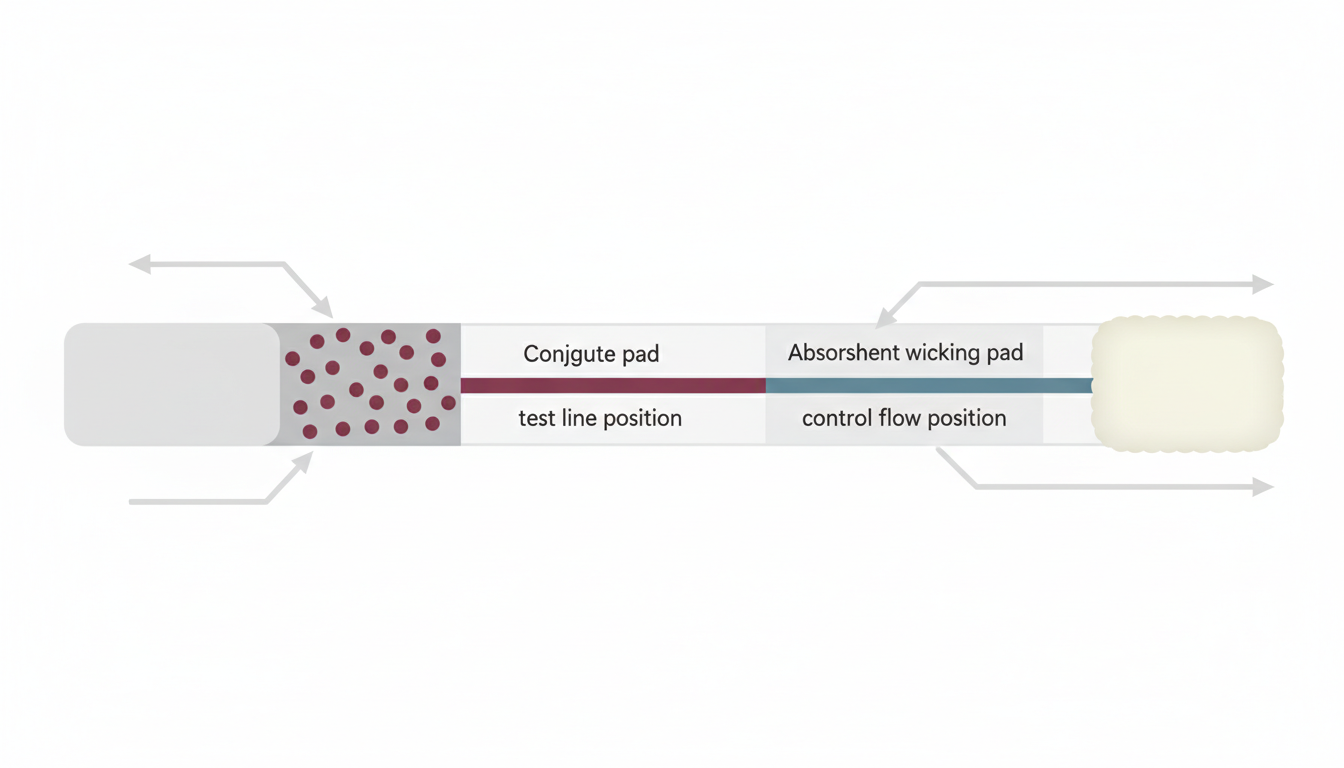
Almost every rapid at-home STI test you can buy today uses the same underlying chemistry: lateral-flow immunoassay. The strip is a paper-based capillary system with three working zones (sample pad, conjugate pad, and reading window) and two visible lines (control line and test line). When you add the buffer-diluted sample to the well, capillary action carries it across colored gold or latex nanoparticle conjugates that have been pre-coated with antibodies specific to the target pathogen.
If the target antigen (or in some kits, antibody) is present in your sample, it binds to the conjugate, the labeled complex flows downstream, and it is captured at the test line by a second antibody. A visible colored line appears within 15 to 20 minutes. The control line tells you the strip is working correctly: the buffer reached the reading window and the chemistry is functional. No control line equals an invalid result, regardless of whether a test line appeared.
The sample type depends on the pathogen and on what part of the body the infection lives in. Antibody-based blood tests detect the immune response your body mounts after infection, so they need a fingerstick blood drop and a window period long enough for antibodies to develop. This is the chemistry behind rapid home tests for HIV, syphilis, hepatitis B, hepatitis C, HSV-1, and HSV-2. Antigen-based swab tests detect surface proteins of the organism itself, so they need a sample from the infected tissue (a self-collected vaginal or penile swab) and a shorter window. This is the chemistry behind rapid home tests for chlamydia, gonorrhea, trichomoniasis, and HPV.
Lateral-flow chemistry is the same technology behind the COVID-19 antigen tests most people used at home during the pandemic, the same idea behind a home pregnancy test, and the same idea behind a clinic-administered rapid strep test. It is well-understood, regulated, and reliable inside its operating range, with the predictable trade-off that the strip cannot detect the target pathogen below the analytical threshold or before the window period closes.
Self-collected samples for chlamydia and gonorrhea NAATs are similar in performance to clinician-collected samples, and self-testing increases screening rates among people who would otherwise not test.
What rapid at-home kits can and cannot detect
The single most useful question to ask before ordering a kit is: which sample type does this infection actually need, and can I collect that sample at home? The answers split cleanly into three groups.
The first group is the four self-collected swab infections. Chlamydia and gonorrhea live on genital mucosal surfaces and are detected from a self-collected vaginal or penile swab. Trichomoniasis (a parasitic vaginal infection) and HPV (cervical human papillomavirus) are detected from a vaginal self-swab; these two kits are validated for female anatomy only. Our at-home trichomoniasis and HPV kits are women-only; readers needing male trich or HPV testing should see a clinic.
The second group is the seven blood-detected infections. HIV, syphilis, hepatitis B, hepatitis C, HSV-1, HSV-2, and combined herpes panels all rely on antibody-based fingerstick blood drops. The lateral-flow strip detects antibodies your immune system produced in response to the infection, which is why these tests need a longer window period than swab tests do.
The third group is the infections you cannot reliably test for at home with current rapid technology. Pharyngeal (throat) gonorrhea or chlamydia and rectal infections both require samples from the affected site, and our home kits do not include validated throat-swab or rectal-swab options. Mycoplasma genitalium currently requires laboratory NAAT testing. If you had an oral or anal exposure and the affected site is the throat or rectum, the right tool is a clinic-administered swab; a fingerstick blood test for HIV or syphilis from a home kit can still cover the bloodborne risk from the same exposure event, but it does not replace site-specific swabbing.
The table below maps the most common pathogens to the sample type and the home-test option, so you can match your concern to the right kit instead of buying the wrong sample type and getting an unreadable answer.
| Infection | Home-test sample type | Available at home? |
|---|---|---|
| Chlamydia | Self-collected genital swab | Yes (swab kit) |
| Gonorrhea (genital) | Self-collected genital swab | Yes (swab kit) |
| Trichomoniasis | Vaginal self-swab | Yes, women only |
| HPV (cervical) | Vaginal self-swab | Yes, women only |
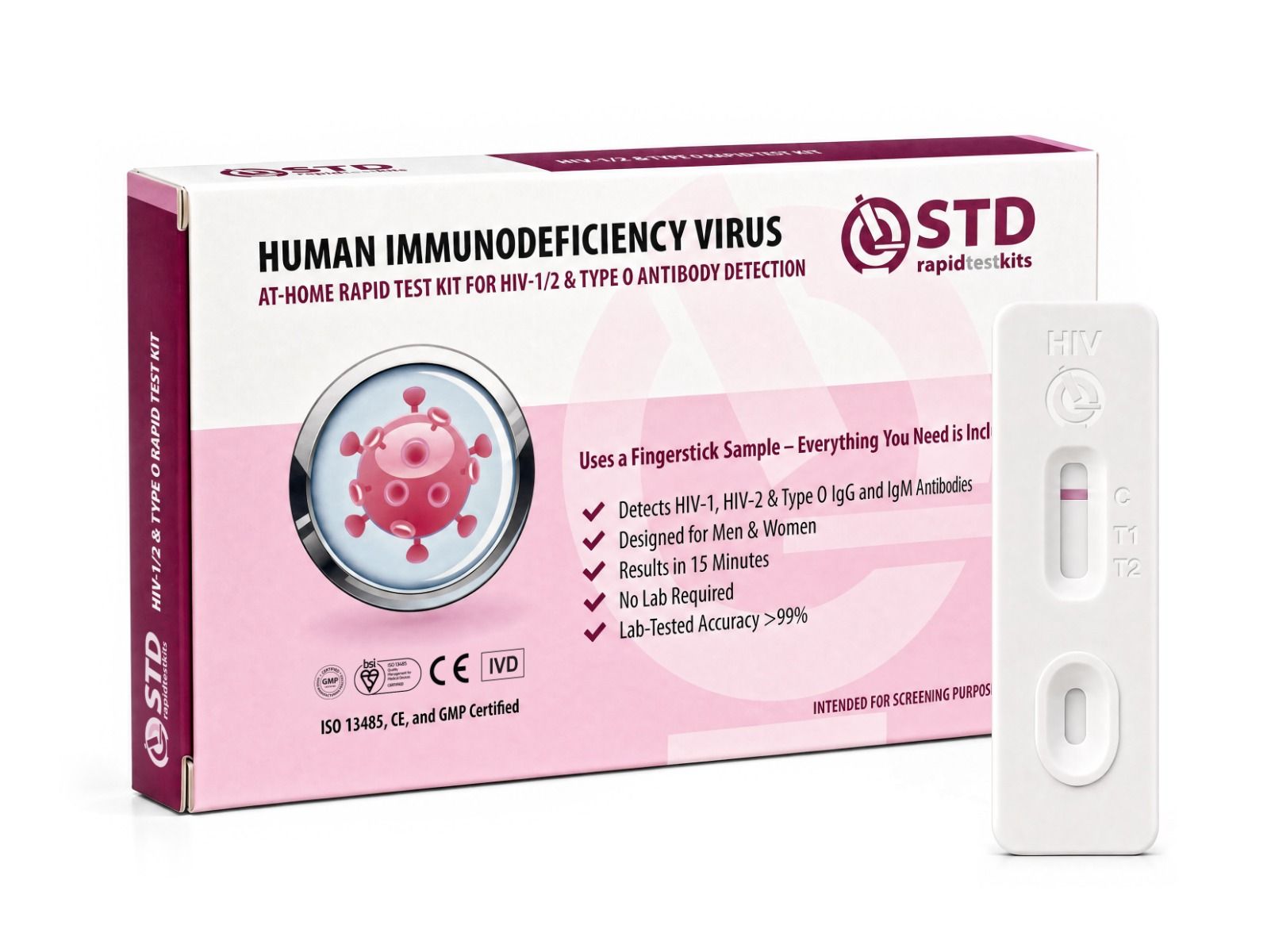
| HIV | Fingerstick blood | Yes (antibody screen) |
| Syphilis | Fingerstick blood | Yes (antibody screen) |
| Hepatitis B / C | Fingerstick blood | Yes (antibody screen) |
| HSV-1 / HSV-2 | Fingerstick blood | Yes (antibody screen, 12+ week window) |
| Pharyngeal or rectal gonorrhea/chlamydia | Throat or rectal swab | Clinic only |
| Mycoplasma genitalium | Laboratory NAAT | Clinic only |
Accuracy: what the labels and the research show
Two numbers describe how a test performs, and they should never be collapsed into a single "accuracy" figure. Sensitivity is the share of truly infected people the test correctly flags as positive (it answers: will this test miss me if I am infected?). Specificity is the share of truly uninfected people the test correctly flags as negative (it answers: will this test falsely accuse me of an infection I do not have?). Most rapid lateral-flow STI tests have very high specificity (above 99% in FDA-cleared kits), which means false positives are uncommon, and somewhat lower sensitivity than a laboratory NAAT or HIV nucleic-acid test, which means false negatives are the more realistic concern.
For HIV, rapid antibody self-tests generally report specificity above 99% and sensitivity in the low-to-mid 90s in self-use conditions per the manufacturer's product labeling. CDC HIV testing guidance recommends that any positive rapid HIV result is confirmed with a laboratory antibody/antigen test, and that a negative result close to a high-risk exposure is retested after the full window period (usually 23 to 90 days for antibody-based tests).
For chlamydia and gonorrhea, the CDC's 2021 STI Treatment Guidelines for chlamydia identifies NAATs as the most sensitive tests and the recommended diagnostic method for detecting Chlamydia trachomatis. Rapid lateral-flow swab tests do not match NAAT analytical sensitivity, but they are useful screening tools when used correctly and on time. The same pattern holds for syphilis: rapid treponemal antibody tests are sensitive screens, and any positive screen is followed by a confirmatory non-treponemal RPR or VDRL test at a lab to determine active infection versus past infection.
In practice, a negative rapid home-test result, taken after the recommended window period, is reassuring within the limits of that test's sensitivity. A positive rapid home-test result is reason to schedule a clinic confirmation rather than to start treatment on your own.
Typical accuracy figures for rapid home STI tests
- Specificity (true negative rate): typically above 99% for FDA-cleared rapid lateral-flow STI kits, so false positives are uncommon.
- Sensitivity for HIV antibody self-tests: in the low-to-mid 90s in self-use conditions per manufacturer product labeling.
- Sensitivity for rapid swab tests (chlamydia, gonorrhea): lower than laboratory NAAT, the gold-standard analytical method per CDC's 2021 STI Treatment Guidelines.
- Workflow: rapid home screen plus clinic confirmation for any positive is the standard CDC-aligned approach.
stdrapidtestkits.com sells the rapid at-home STI test kits described in this article. Recommendations here are based on fit-for-purpose for your specific concern, not on commercial benefit, and we are explicit about the cases where a clinic visit is the right tool.
Window periods: the rule that decides whether your test result means anything
The window period is the time between exposure and the moment the test can reliably detect the infection. Test before the window has closed and a negative result tells you nothing useful: the pathogen may already be there, but at a level the strip cannot see yet. The window depends on the chemistry. Antibody tests need time for your immune system to produce detectable antibodies. Antigen and nucleic-acid tests can detect the organism earlier, but home rapid tests almost always rely on antibody chemistry for the bloodborne infections.
The mid-article box below summarizes the most-asked windows. These are typical FDA-cleared and CDC-referenced ranges; check the specific kit's instructions, since the long end of the range is the safer testing point for high-anxiety exposures.
Typical window periods for at-home rapid STI tests
- Chlamydia and gonorrhea (swab): test 1 to 2 weeks after exposure for the most reliable rapid-test result.
- Syphilis (rapid antibody blood): test 3 to 6 weeks after exposure; retest at 90 days for full reassurance.
- HIV (rapid antibody self-test): retest at 12 weeks (around 90 days) after a high-risk exposure for confidence in a negative result, per CDC HIV testing guidance.
- Hepatitis B and C (antibody blood): test at 6 weeks; retest at 12 weeks for hepatitis C.
- HSV-2 (antibody blood): test at 12 weeks or later. Antibodies for HSV develop slowly and a too-early test misses recent infections, per CDC HIV testing window-period guidance.
When at-home testing is enough, and when to see a clinic
At-home rapid testing is the right tool for several common situations: routine periodic screening when you have multiple partners or a new partner, a known low-to-moderate-risk exposure where you want a fast initial answer, partial confirmation that pre-exposure prophylaxis (PrEP) is still appropriate, or as a privacy-preserving entry point for someone who has been delaying testing. In any of those cases, a 15-minute home result genuinely answers the question.
A clinic is the right tool when the situation needs more than a screen. A few examples: any positive home-test result needs laboratory confirmation before treatment is started; recurring or worsening symptoms after a negative home test (that combination usually means the home test missed something or the symptoms have a non-STI cause); pharyngeal or rectal exposures where the swab site is the throat or rectum, neither of which is in the home-kit catalog; pregnancy screening, which has its own evidence-based panel and timing requirements; sexual assault or other situations where forensic-grade documentation matters; and post-exposure prophylaxis (PEP) decisions for HIV, which need same-day clinical evaluation rather than a 15-minute home read.
If you have a high-risk HIV exposure within the last 72 hours, a clinic same-day visit for post-exposure prophylaxis (PEP) is the priority. Per <a href="https://www.cdc.gov/hiv/prevention/pep.html" target="_blank" rel="noopener">CDC PEP guidance</a>, PEP must be started within 72 hours (3 days) of exposure to be useful, and the sooner it is started the better. A home rapid HIV test inside that window will be negative regardless of whether you were exposed, so it cannot inform the PEP decision.
Choosing the right at-home STI test for your situation
The right kit depends on the exposure type, the time elapsed, and how many infections you want to cover in one go. A few patterns keep coming up among people who buy these tests, and matching one of them is usually the fastest route to the right product.
One known-risk exposure to one infection. If you are worried about a single specific infection (a partner just disclosed chlamydia, for example), a single-infection swab or blood kit is the most economical option. Match the sample type to the pathogen using the table earlier in this article.
Recent unprotected sex with a new partner, no specific concern. A multi-infection combo kit covers the highest-prevalence panel in one shipment. The 6-in-1 combination panel covers chlamydia, gonorrhea, syphilis, HIV, hepatitis B, and hepatitis C, which together account for the majority of new STI diagnoses tracked in CDC surveillance.
Periodic screening for sexually active adults. Many people on PrEP or with multiple partners screen every 3 to 6 months. A combo kit two to four times a year is more cost-effective than scheduling clinic visits at the same cadence, and it fits the screening interval of every 3 to 6 months stated in the CDC's 2021 STI Treatment Guidelines screening recommendations for sexually active people at increased risk (including PrEP users and MSM).
Symptomatic case (discharge, sore, ulcer, painful urination). A home test can be a first screen, but symptomatic infections almost always benefit from a clinic visit. The clinic can swab the lesion directly, prescribe treatment the same day, and check for site-specific infections that home kits do not cover.
Frequently asked questions
- How soon after a possible exposure can I take a rapid at-home STD test?
- It depends on the infection. Chlamydia and gonorrhea swab tests are most reliable from 1 to 2 weeks after exposure. Syphilis blood tests are most reliable from 3 to 6 weeks, with a retest at 90 days for full reassurance. HIV rapid antibody self-tests are most reliable at 12 weeks (around 90 days). HSV-2 antibody tests need 12 weeks or longer. Testing before the window closes risks a false negative.
- Are rapid at-home STD test results immediate?
- For lateral-flow rapid kits, yes. The strip develops a visible result in 15 to 20 minutes, read at home. Mail-in lab tests are different: those involve shipping a sample to a laboratory and waiting 2 to 5 days for a portal result. Our kits are rapid lateral-flow, not mail-in.
- What should I do if my at-home STD test comes back positive?
- Schedule a clinic confirmation before starting any treatment. Rapid lateral-flow tests have very high specificity but they are screening tools, not confirmatory diagnostics. The clinic will run a NAAT, a confirmatory blood test, or a culture, and prescribe treatment based on the confirmed result. Notify recent partners once the diagnosis is confirmed.
- Can rapid at-home tests detect every STD?
- No. Home rapid kits cover the most common infections (chlamydia, gonorrhea, syphilis, HIV, hepatitis B, hepatitis C, HSV-1, HSV-2, trichomoniasis, and HPV) using either a self-collected genital swab or a fingerstick blood drop. Pharyngeal and rectal infections need site-specific swabs that are clinic-administered, and mycoplasma genitalium requires a laboratory NAAT.
- How accurate are rapid at-home STD tests compared to clinic tests?
- Specificity is the stronger suit: false positives are uncommon. The bigger gap is sensitivity. For HIV, home rapid antibody self-tests perform in the low-to-mid 90s per manufacturer product labeling, while a laboratory antigen/antibody combo or nucleic-acid test approaches 100%. The same directional gap applies to chlamydia and gonorrhea swab kits versus laboratory NAATs (the CDC-recommended diagnostic method). Use rapid home tests to screen; confirm any positive at a clinic.
- Is the packaging discreet?
- Yes. Reputable home-test sellers ship in plain unmarked packaging without any indication of the contents on the outside, and order records are not shared with third parties. Privacy is one of the main reasons people choose at-home testing over a clinic visit.
- Are at-home STD tests covered by HSA or FSA?
- Most at-home STI test kits are eligible for HSA and FSA reimbursement because they are recognized medical screening devices. Save the receipt and the kit's documentation for your administrator's records. Coverage details vary by plan, so check with your HSA or FSA administrator if you are unsure.
- Can I test multiple infections in one session?
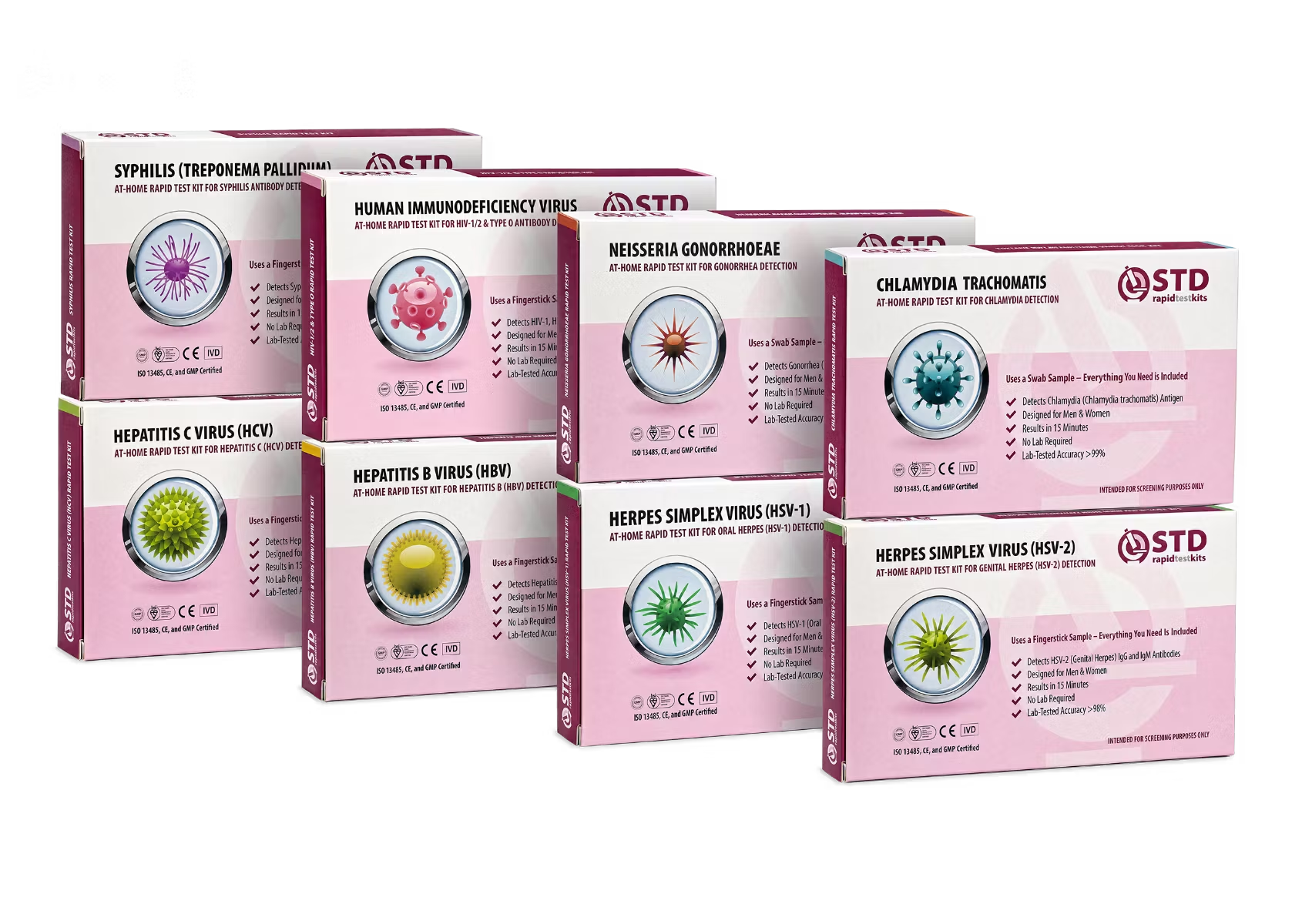
- Yes. Combination kits group several rapid lateral-flow tests in one box (commonly 6, 7, 8, or 10 tests per panel), so you can run blood and swab tests in one sitting and read each result individually. This is the most cost-effective approach for periodic screening or after a new-partner exposure.
- U.S. Centers for Disease Control and Prevention. CDC Reports Latest National Data on Syphilis in Newborns and Sexually Transmitted Infections (2025 release). Source for the 'about 1 in 5 people in the United States have an STI' figure cited in the introduction.
- U.S. Centers for Disease Control and Prevention. HIV Testing. Source for rapid HIV self-test workflow, the 23 to 90 day antibody window period, and the recommendation to confirm any positive rapid result with a laboratory antibody/antigen test.
- U.S. Centers for Disease Control and Prevention. Sexually Transmitted Infections Treatment Guidelines, Chlamydial Infections. Source for the statement that NAATs are the most sensitive tests and the recommended diagnostic method for Chlamydia trachomatis.
- U.S. Centers for Disease Control and Prevention. STI Treatment Guidelines, Screening Recommendations. Source for the 'every 3 to 6 months' screening interval for sexually active people at increased risk including PrEP users and MSM.
- U.S. Centers for Disease Control and Prevention. HIV Post-Exposure Prophylaxis (PEP). Source for the 72-hour PEP treatment-window guidance for high-risk HIV exposures.
- UK National Health Service. Sexually Transmitted Infections (STIs). Reference for window periods, symptom overviews, and clinical-confirmation guidance for common infections.
