





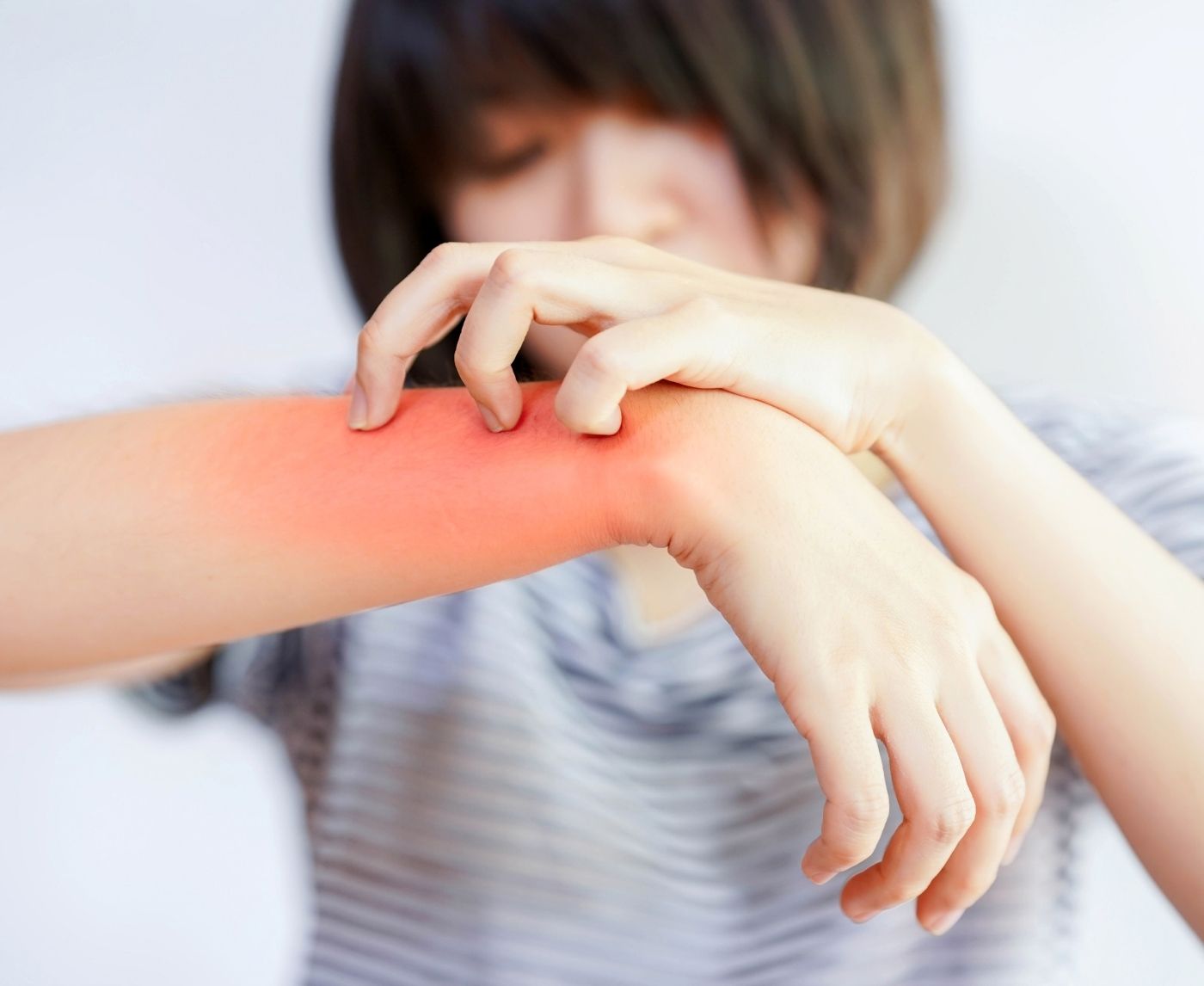

Quick Answer: HIV rash often appears as flat, red or purple blotches on the upper body and is usually accompanied by flu-like symptoms. But similar rashes can come from secondary syphilis, shingles, or seborrheic dermatitis, conditions that are common, confusing, and still worth testing for.
This Isn’t Just Razor Burn, And Here’s Why
The internet can make you paranoid. Type “rash after sex” and you're instantly fed a buffet of STD horror stories. What rarely shows up first? Nuance. Some of the most common skin reactions get tangled in HIV panic, especially among young people, queer folks, and anyone who’s already been taught to fear their sexuality. Let’s start with the skin itself.
An HIV rash usually shows up 2–6 weeks after exposure, often during the acute seroconversion phase. It’s typically flat, non-itchy, and red or purplish, and often spreads across the chest, back, and arms. But that’s not a rule. Real-life presentations vary. According to a study published in the Journal of the American Academy of Dermatology, HIV-related skin conditions occur in 90% of patients at some point during infection, but they are not specific enough for diagnosis on their own.
And here’s where things get tricky: other conditions can look nearly identical, and they’re a hell of a lot more common. Let’s walk through three of the top offenders, starting with the one that causes the most false alarms: secondary syphilis.
Case Study: “It Was on My Palms. I Thought I Was Dying.”
Monica, 24, noticed her rash after a sweaty music festival hookup. It started on her lower back, then crept to her chest, then her palms. Small, reddish-brown spots, not itchy, but definitely not subtle. She googled “HIV rash on palms” and immediately spiraled.
“I was shaking. Everything said palms meant HIV or syphilis. I didn’t even know syphilis was still a thing people got,” she admitted.
It turns out palmar and plantar rashes, on the hands and feet, are classic signs of secondary syphilis. The rash isn’t usually itchy. It spreads out in round, flat patches. In some people, it also shows up as moist, warty growths around the groin or anus, called condyloma lata. According to the CDC, these symptoms usually occur weeks to months after initial infection, and they often disappear on their own. But that doesn’t mean the infection is gone, it’s just gone deeper.
Syphilis rates are on the rise, especially among men who have sex with men and bisexual communities. But cases among women have also skyrocketed, especially since 2020. The CDC’s 2023 surveillance report noted a 32% increase in syphilis cases in just one year.
So no, it probably isn’t HIV. But it could be syphilis. And either way, testing is the only way to know.
People are also reading: The History of Syphilis From Origins to Modern Medicine
When It Burns Before It Blisters: The Shingles Confusion
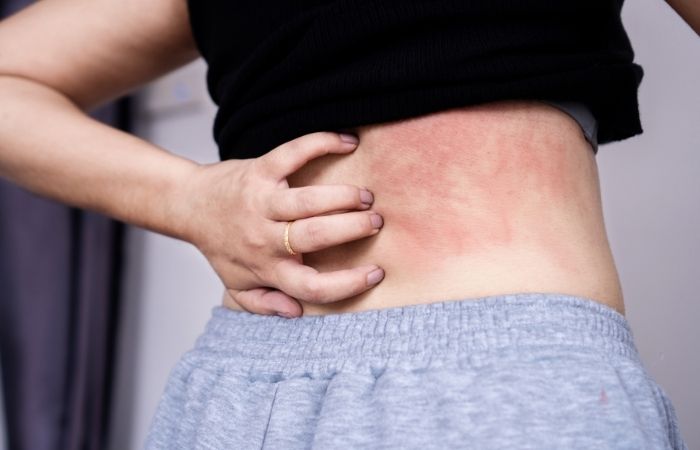
Let’s talk about pain, the kind that makes you think your skin is haunted. Shingles, also known as herpes zoster, doesn’t play fair. It can start with a weird tingling, then turns into raw, blistering agony that hugs one side of your body like a belt made of fire. And here’s the twist: it can show up in your 20s, even if you're otherwise healthy.
Alicia, 28, remembers thinking she had scratched herself in her sleep. Then the area along her left ribcage turned red. The next day, it blistered.
“I thought it was a spider bite at first. Then it started burning, like lightning under my skin. I googled and convinced myself it had to be an HIV rash. I was shaking while reading the symptoms. It didn’t make sense, but it also... kind of did.”
What Alicia didn’t know is that shingles can absolutely mimic an HIV-related skin reaction, especially during primary HIV infection, when the immune system is under siege. In fact, research in HIV Medicine confirms that shingles can sometimes be the first visible sign of undiagnosed HIV, particularly in younger adults with no prior health issues. That doesn’t mean shingles equals HIV. But if your rash fits that electric-fire pattern and you’ve had recent risk exposure? It’s worth ruling things out.
Shingles typically follows a nerve path, meaning it only appears on one side of the body. The pain usually comes before the rash. And the blisters? Small, grouped, and crust over after a few days. Not flat or widespread like a classic HIV rash, but easy to confuse if you’re already spiraling.
Check Your STD Status in Minutes
Test at Home with RemediumGenital Herpes Test Kit
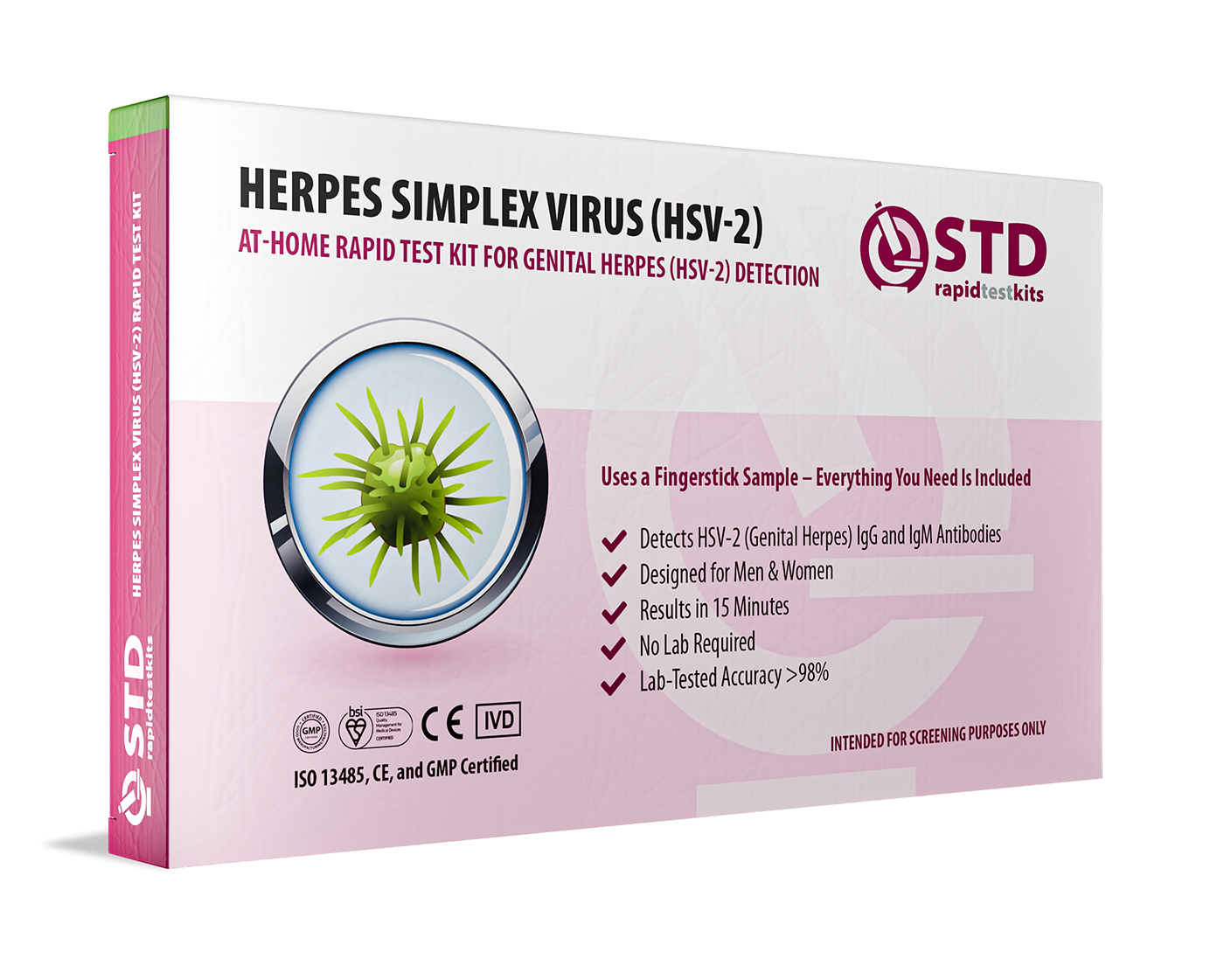
 For Men & Women
 Results in Minutes
 No Lab Needed
 Private & Discreet
Order Now $45.99 $49.00
Greasy, Red, and Misunderstood: Seborrheic Dermatitis
This one doesn’t get the same panic press, but it shows up constantly in HIV clinics. Seborrheic dermatitis is a chronic skin condition linked to inflammation and yeast overgrowth on the skin. It causes red, scaly, itchy patches, often around the nose, eyebrows, scalp, and chest. In people living with HIV, it tends to be more intense and widespread, but it can absolutely occur in people with zero immune compromise too.
Danny, 35, had lived with facial flaking for years. He thought it was eczema or just bad skin. But when he started developing crusty patches on his chest and behind his ears, he freaked out.
“I thought, what if this is my body breaking down? I saw ‘seborrheic dermatitis’ on an HIV forum and my brain ran wild. I went from dry skin to doom in three clicks.”
Spoiler: Danny tested negative. But the flare-up was real, and uncomfortable. According to University of Washington’s HIV Dermatology Guide, seborrheic dermatitis appears in up to 83% of HIV-positive individuals, particularly in advanced stages or if untreated. It’s one of the reasons early flare-ups sometimes ring alarm bells. Still, it's treatable with antifungal creams or shampoos. And in many cases, it’s just... skin doing what skin does.
So Why Does Everything Feel Like HIV?
Because HIV stigma is powerful. Because sex still feels dangerous for many of us. And because your brain wants a clean answer when your body feels off. In one 2020 study on symptom attribution and testing anxiety, researchers found that even low-risk individuals were more likely to assume worst-case scenarios when symptoms aligned with STI narratives. The spiral is real.
That’s why context matters. Did the rash show up after a new partner? Did it follow flu-like symptoms? Did it appear in places known for specific conditions, like palms, nerve lines, or oily skin zones? That information is more useful than pixel-matching Google Images.
But even if you can't pin it down, your fear is still valid. What matters is what you do with it.
Testing Is Not Just for “Bad” Scenarios
Ty, Monica, and Alicia all got tested. Not because they were sure something was wrong, but because the not-knowing was worse. The relief? Even bigger than the panic.
This is where we pivot from guessing to acting. From spiraling to caring. Testing is not punishment. It’s not shame. It’s clarity. It’s peace of mind.
This at-home combo STD test checks for multiple infections, including HIV, syphilis, chlamydia, and gonorrhea. It’s discreet, doctor-trusted, and can be done from your bathroom counter. No waiting room sweat. No judgment.
Peace of mind is one test away. And if something does show up? You’re not alone, and you’re not dirty. You’re human. You’re healing.
What Google Doesn’t Tell You About Rash Timing
Here’s the part that trips everyone up: timing. If your rash shows up the day after a hookup, chances are it’s not HIV. That’s not how the virus works. HIV’s acute rash, when it does appear, usually arrives 2 to 6 weeks after exposure. And even then, it’s only one symptom among many.
According to the CDC, early HIV symptoms mimic a bad flu: sore throat, fever, fatigue, swollen lymph nodes. The rash? It’s often described as flat red spots, sometimes with tiny bumps, usually on the chest, back, or arms. Not painful. Not blistered. Not limited to palms, soles, or the scalp. That’s why so many people panic when their rash doesn’t fit the “typical” description, but still feels wrong.
STDs like syphilis or herpes can emerge much faster. So can conditions totally unrelated to STDs, like contact dermatitis, eczema, or fungal infections. But HIV has a longer runway. If your rash came on suddenly, just a day or two post-sex, the real question might be: what else have you touched, worn, shaved, eaten, or stressed about recently?
Still, if anxiety is gnawing at you, test. Not because it’s likely. Because it’s kind.
People are also reading: Safe Herpes Treatment and Prevention: All You Need to Know
You’re Not “Overreacting.” You’re Human.
We live in a world that treats symptom-checkers as paranoid. But hypervigilance is a trauma response, and in sex, that trauma is often inherited. Whether it’s fear from past partners, religious shame, queerphobia, or the weaponized silence of sex ed, you didn’t invent the panic. It was handed to you.
“I wasn’t scared of getting sick. I was scared of what it would mean about me,” said Andre, 29, who once kept a rash hidden for weeks out of shame. “Like, if I had something, it proved I was careless. Or dirty. Or too gay. I didn’t even realize I thought those things until I couldn’t sleep.”
This shame spiral is common, especially among people who grew up hearing STDs as jokes or consequences. But STDs are just infections. They respond to treatment. They don’t care who you slept with. They don’t assign moral value. And neither should we.
If your body is telling you something, it deserves your attention. Not judgment. Not suppression. Care.
Check Your STD Status in Minutes
Test at Home with Remedium7-in-1 STD Test Kit
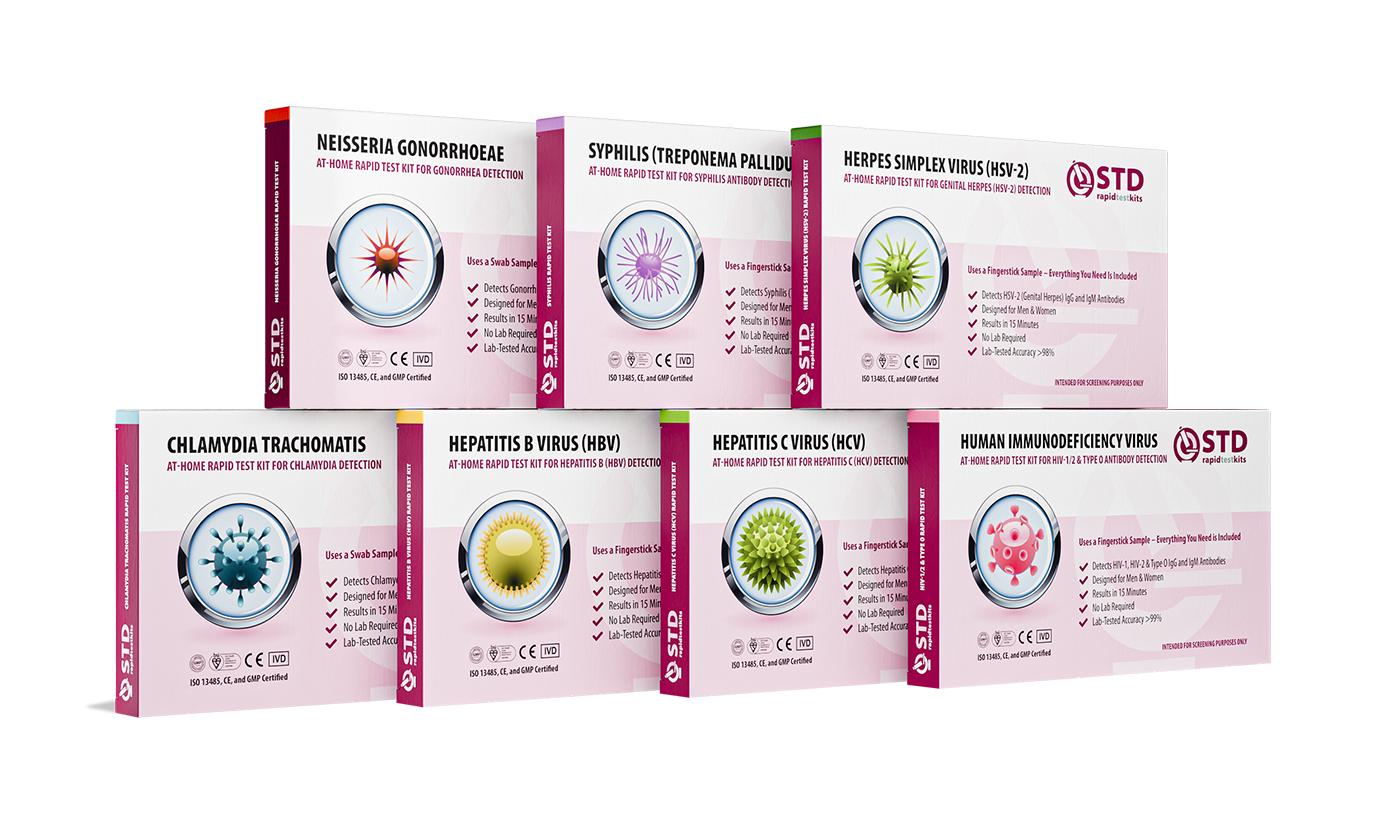 For Men & WomenResults in MinutesNo Lab NeededPrivate & Discreet
Order Now $129.00 $343.00
For all 7 tests
Sex-Positive Doesn’t Mean Risk-Blind
Talking openly about sexual health doesn't mean pretending STDs don’t happen. It means knowing what to look for, how to respond, and how to protect both your peace and your partners. That means knowing that prevention isn’t perfection.
Using condoms reduces the risk of HIV, chlamydia, and gonorrhea, but not all STDs. Syphilis and herpes, for example, can spread through skin-to-skin contact in areas condoms don’t cover. Same goes for HPV. And yes, even oral sex can transmit certain infections, especially if there are cuts, sores, or bleeding gums involved.
That’s not meant to scare you. It’s meant to prepare you. Safe sex isn’t a binary, it’s a toolbox. And testing is part of that toolbox.
STD Rapid Test Kits offers confidential at-home solutions that let you test on your terms, in your time. Because testing isn’t just for symptoms. It’s for every season. Every status. Every person who cares enough to ask, “Am I okay?”
Whether you’re celebrating your body, grieving a betrayal, re-entering the dating scene, or just being cautious, testing is care. And it’s never a bad idea.
Real Prevention Starts With Real Information
STI prevention campaigns used to be built on fear. Today, we build them on facts. You deserve to know that:
Secondary syphilis can cause palm rashes that look terrifying, but vanish after a penicillin shot. Shingles can make you feel like you’re falling apart, but it isn’t sexually transmitted. Seborrheic dermatitis can flare in anyone, whether they’ve had sex or not. And HIV doesn’t jump out after one condomless night. But it does thrive in silence.
Testing, treatment, and open communication are the new gold standard of sexual self-care. They’re not just for when something “feels off.” They’re part of the rhythm of staying connected, to your body, your partners, and your future.
If you’re still wondering what your rash means, it’s time to stop searching pixels and start with clarity. Even if it’s not HIV, it’s not “nothing.” And you don’t have to guess.
FAQs
1. So… what does an HIV rash really look like?
Think flat red spots, not itchy, not raised, not blistering, and mostly on the chest, back, or arms. But here’s the kicker: tons of people with HIV never get a rash at all. And even when it does show up, it’s easy to mistake it for allergies, heat, or a viral flu. Moral of the story? Don’t try to diagnose HIV with your camera roll.
2. How fast would a rash appear after unprotected sex?
Not instantly. If it were HIV, you’re looking at 2 to 6 weeks after exposure for symptoms to show up. So if a rash popped up the next day, it’s probably irritation, contact dermatitis, or your anxiety in high gear, not HIV.
3. Why do I have a rash on my palms?!
That feels… ominous. We get it, it’s freaky. And yes, palm rashes can signal secondary syphilis, especially if they’re non-itchy, flat, and sort of reddish-brown. But you know what else shows up on palms? Allergies. Eczema. Hand sanitizer overload. Don't jump to the worst-case scenario, just get tested and skip the spiral.
4. Can shingles really be a sign of HIV?
Sometimes, but not always. Shingles (herpes zoster) happens when your old chickenpox virus wakes up, usually because your immune system’s under stress. If you’re under 30 and get a painful one-sided blistery rash? Yeah, it’s worth checking your immune status, including an HIV test. But shingles ≠ HIV by default. Chill, but follow through.
5. My scalp is flaky and my skin’s red. Is that a symptom?
Probably not a big deal, but if it’s new, greasy, and all over your face, scalp, or chest, it could be seborrheic dermatitis. HIV doesn’t cause it directly, but it can make it worse. Still, a lot of HIV-negative folks deal with this too. Think less panic, more head & shoulders.
6. Can I really get HIV from oral?
It’s low risk, but not zero. Oral sex can transmit HIV if there's bleeding gums, cuts, or mouth sores involved. That said, it’s way less risky than anal or vaginal sex. Still: if something feels off, or if it was a high-risk situation, don’t overthink, just test.
7. My rash looks nothing like the pictures online. Should I still worry?
Honestly? Online rash photos are a disaster. Lighting, skin tone, and camera angles make everything look dramatic. If something feels wrong in your body, even if it doesn’t look “textbook”, listen to that. But don’t panic-diagnose. Let a test or a real human help.
8. I feel fine. Should I even bother testing?
Yes. So many STIs, like chlamydia, gonorrhea, HPV, don’t come with symptoms at all. You don’t test because you feel sick. You test because you care about yourself and your partners. It’s like brushing your teeth: basic hygiene, babe.
9. Is at-home testing even accurate?
Yep, when you use a trusted kit and follow instructions, at-home tests are legit. The ones from STD Rapid Test Kits are FDA-approved and discreet. For HIV and syphilis especially, they’re great first steps. If something pops positive, follow up with a clinic or doctor.
10. What if I’m too scared to know?
Totally normal. But the fear of not knowing is often way worse than knowing. Most STDs are treatable. Even HIV is manageable with early care. Getting tested doesn’t mean something is wrong. It means you’re strong enough to face it if it is, and protect your future if it’s not.
You Deserve Answers, Not Assumptions
Whether it’s fear, a rash, or just something that won’t stop itching at your brain, this much is true: your anxiety deserves care, not shame. Not all rashes mean HIV. But not all rashes are harmless, either. And when the unknown starts to eat away at your peace, that’s the sign it’s time to take the reins.
Order your Combo STD Home Test Kit today and get answers from the privacy of home. One step, multiple infections checked, total discretion. Don’t let fear make your decisions. Let facts do the talking.
Your results, your privacy, your power.
Sources
1. University of Washington: HIV Cutaneous Conditions
2. Verywell Health: HIV Rash vs. Syphilis
3. Verywell Health: Shingles and HIV
4. DermNet NZ: HIV Skin Manifestations


