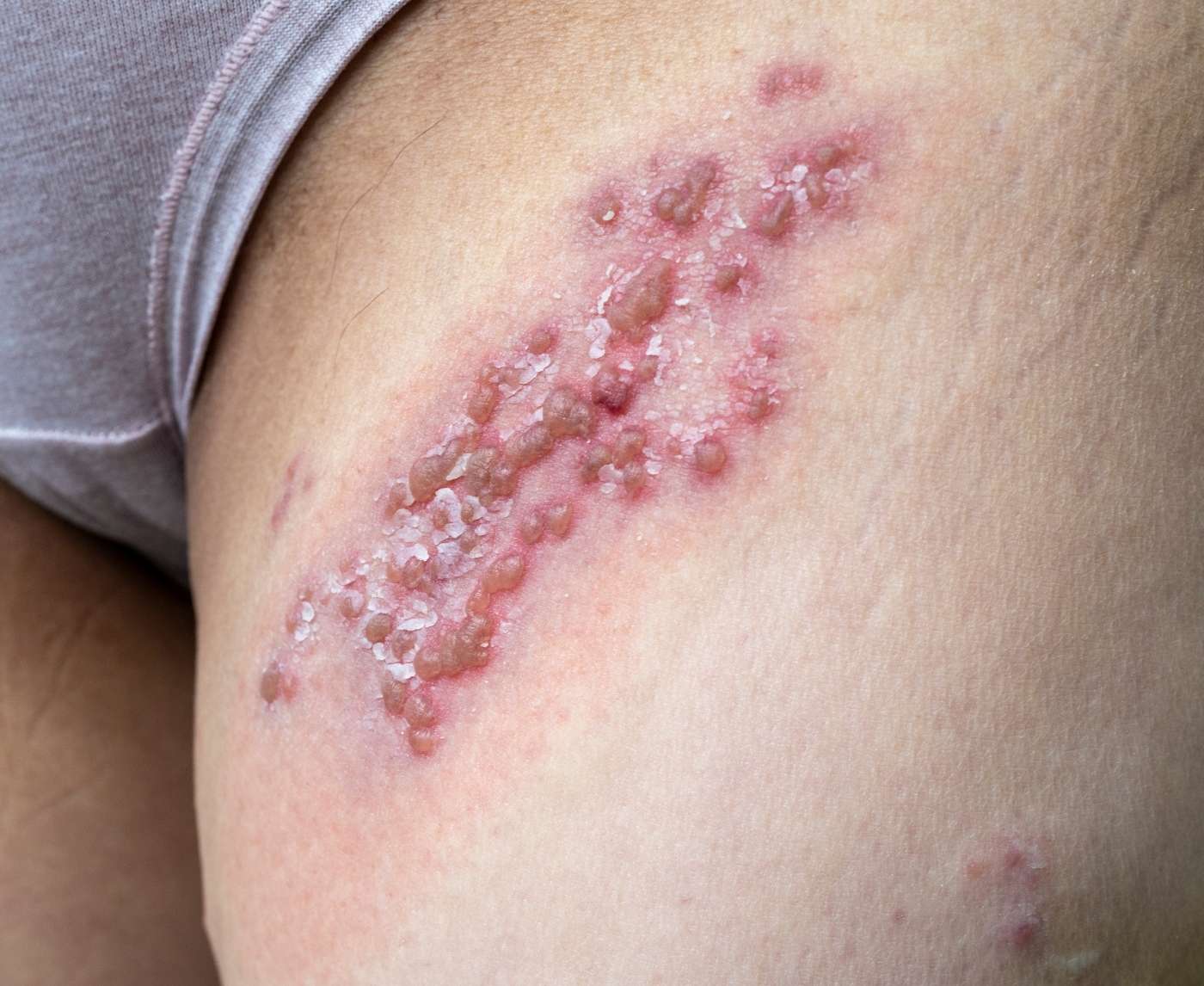
Published: August 2025 | Last updated: May 2026 | Editorial review and quality control: Martina N.
What is the most effective treatment for a herpes outbreak?
Oral antiviral medication (acyclovir, valacyclovir, or famciclovir) is the most effective treatment. Starting within 24 hours of the first symptom shortens the outbreak by 1 to 2 days and reduces pain. Daily suppressive therapy reduces recurrences by 70 to 80 percent and roughly halves HSV-2 transmission to a seronegative partner.
Herpes outbreaks are uncomfortable, often unpredictable, and almost always carry more anxiety than they deserve. The good news is that modern antiviral treatment is genuinely effective. It shortens outbreaks, makes them less painful, and can lower how often they come back. For many people the first outbreak is the worst one, and the right approach over time turns herpes into a manageable, mostly quiet condition rather than a recurring crisis.
This guide walks through what works for both oral herpes (HSV-1) and genital herpes (HSV-2). Which medications doctors prescribe, when to take them, the realistic side-effect profile, how to think about long-term management, and the prevention math for partners. Numbers and dosing are drawn from current CDC STI Treatment Guidelines, the WHO herpes fact sheet, and NHS guidance, not personal clinical advice.
Key Takeaways
- Three antiviral medications (acyclovir, valacyclovir, famciclovir) treat herpes outbreaks. Starting within the first 24 hours of symptoms gives the biggest benefit, per CDC treatment guidelines.
- Daily suppressive therapy reduces recurrences by 70 to 80% and roughly halves HSV-2 transmission to a seronegative partner (one who does not yet carry HSV-2 antibodies). Layering it with consistent condom use lowers risk further.
How antiviral medications work against herpes
The three antiviral medications doctors prescribe for herpes (acyclovir, valacyclovir, and famciclovir) all work the same way at the cellular level. They interrupt the virus's ability to copy its DNA inside your cells. Herpes simplex virus relies on a viral enzyme called thymidine kinase to activate these drugs preferentially in infected cells, where they get incorporated into the growing DNA strand and terminate it. The result is fewer viral particles, shorter outbreaks, and less of the inflammation that causes pain and visible sores.
Antivirals work best when started early. The CDC's STI Treatment Guidelines emphasize that for cold sores and genital outbreaks, starting medication within 24 hours of the first symptom (often a tingle, itch, or vague burning sensation before any visible sore) gives you the biggest benefit. Wait three days and you'll still get some help, but the outbreak is already well underway and the medication has less viral activity left to interrupt.
Antivirals don't cure herpes. The virus stays in your nerve cells for life, where it can reactivate later. HSV-1 establishes latency in the trigeminal ganglion behind the face, HSV-2 in the sacral ganglia at the base of the spine, and both can reactivate periodically over a lifetime. What antivirals do is suppress that reactivation in three useful ways. They shorten the active outbreak. They make individual outbreaks less severe. And when taken daily as suppressive therapy, they make outbreaks less frequent overall while also reducing the amount of virus you shed when you have no visible symptoms. That last effect is why daily therapy lowers the chance of passing herpes to a partner.
All three antivirals are roughly equivalent in effectiveness for typical use. The differences are in dosing convenience, brand history, and cost. Acyclovir (brand name Zovirax) is the oldest of the three, FDA-approved in 1982, generic and inexpensive, but it requires taking pills three to five times a day. Valacyclovir (Valtrex) is acyclovir's chemical prodrug; your body converts it more efficiently, so you only need it once or twice daily, which is why it is the most commonly prescribed option today. Famciclovir is a prodrug of penciclovir on a similar twice-daily schedule, often used when valacyclovir is not tolerated or unavailable. For most people on long-term suppressive therapy, the once-daily option wins on adherence, which matters more than the small pharmacological differences between drugs.
Doctors choose between these based on what you're treating: a first outbreak, a recurrent flare, or ongoing suppression. The doses differ for each scenario, and they differ between oral and genital herpes. The next two sections walk through the standard approach for each, and a summary table later in the article lays out all three drugs side by side.
Episodic therapy for recurrent herpes is most effective when initiated within one day of lesion onset or during the prodrome that precedes some outbreaks. Daily suppressive therapy can decrease the frequency of genital herpes recurrences by 70 to 80 percent in patients with frequent recurrences.
Treating HSV-1 outbreaks: cold sores and oral herpes
HSV-1 causes most cold sores. According to the WHO, an estimated two-thirds of the global population under age 50 carries HSV-1, although most people who carry it have few or no symptoms. When the virus does reactivate, it usually shows up as a cluster of small blisters around the lips, on the chin, or sometimes inside the mouth. The blisters break, crust over, and heal in roughly 7 to 10 days without treatment.
With antiviral treatment, that timeline shortens and the symptoms feel milder. The standard approach for an episodic cold sore is a short course of oral antivirals at the first sign of tingling. The CDC's treatment guidelines outline three options that have been studied in clinical trials. Acyclovir 400 mg taken five times a day for five days. Valacyclovir 2 grams taken twice in one day (a single-day course). Famciclovir 1.5 grams as a single dose. The single-day options are popular because adherence is easy.
Topical creams matter less than people expect. Over-the-counter docosanol cream (Abreva) is FDA-approved and shortens healing by roughly half a day when started early. Prescription topical acyclovir or penciclovir gives a similar small benefit. Most people get more relief from oral antivirals than from creams, but creams are useful as an add-on or for people who can't take pills.
For comfort during an outbreak, the NHS guide on cold sores recommends drinking plenty of fluids and avoiding acidic or salty foods that sting the sore. General hygiene steps also help: use a separate towel and lip balm, and avoid touching the sore and then your eyes or another person, to keep the virus from spreading to other sites. Over-the-counter pain relievers like ibuprofen or acetaminophen ease discomfort.
People who get more than six cold sores a year, or whose outbreaks are unusually painful, may benefit from daily suppressive therapy. Valacyclovir 500 mg once daily is the typical regimen, and it can be continued long-term. Sun exposure is the most common cold-sore trigger, so a high-SPF lip balm is a low-effort prevention layer for people whose outbreaks follow beach days or skiing.
Oral antiviral pills shorten a cold sore by 1 to 2 days. OTC docosanol (Abreva) gives roughly half a day. Creams work best as an add-on or for people who can't take pills, not as a primary treatment. Whichever option you choose, applying it at the first tingle, rather than after the blister has formed, is what makes the difference.
Treating HSV-2 outbreaks: genital herpes
HSV-2 is the more common cause of genital herpes, although HSV-1 increasingly causes genital infection too (via oral-genital contact). A first (primary) genital herpes outbreak tends to be the most severe one a person will have. Multiple painful sores, fever, body aches, swollen lymph nodes, and burning with urination are common, and the primary episode often runs 2 to 4 weeks before fully resolving. The CDC's STI Treatment Guidelines note that subsequent outbreaks are typically shorter (often under a week) and milder, because the immune system already recognizes the virus.
The treatment strategy depends on which outbreak it is.
For a first (primary) outbreak, the CDC recommends 7 to 10 days of antivirals: acyclovir 400 mg three times daily, valacyclovir 1 gram twice daily, or famciclovir 250 mg three times daily. Treatment can be extended if sores haven't healed by day 10. Starting medication early reduces the duration and severity of the primary episode significantly.
For recurrent (episodic) outbreaks, the regimen is shorter, often a single day or up to five days, because the immune system already recognizes the virus. Common options include valacyclovir 500 mg twice daily for three days, valacyclovir 1 gram once daily for five days, famciclovir 1 gram twice in one day, or acyclovir 800 mg three times daily for two days. Whichever you choose, the principle is the same: start at the first symptom (a tingle, an itch, a sense of pressure), not after the sores are fully developed.
For people with frequent outbreaks (typically six or more per year), or anyone whose partner does not have herpes, daily suppressive therapy is the option that changes daily life the most. Valacyclovir 500 mg or 1 gram once daily is the most common regimen. Acyclovir 400 mg twice daily is the older alternative. Per CDC treatment guidelines, suppressive therapy reduces outbreak frequency by 70 to 80% in patients with frequent recurrences and decreases the rate of HSV-2 transmission in discordant heterosexual couples by roughly half, based on the landmark valacyclovir transmission trial that anchors the guideline. Combining suppressive therapy with consistent condom use lowers transmission risk further.
Pain management during a genital outbreak matters. Warm sitz baths (sitting in shallow warm water for 10 to 15 minutes) ease soreness. Loose-fitting cotton underwear reduces friction. Topical lidocaine gel can numb a painful sore before urination, which is often the most painful moment of a primary outbreak. The NHS genital herpes page recommends pouring water over the area while urinating to ease stinging.

Transmission, asymptomatic shedding, and the prevention math
The most useful single fact about herpes is one most prevention advice glosses over: the virus can pass to a partner even when no sore is visible. The CDC's STI Treatment Guidelines note that most new HSV-2 infections come from people who don't know they are infected or are asymptomatic when transmission occurs. Clinical research using daily PCR sampling has shown that seropositive people shed virus on a meaningful fraction of days without any symptoms, with shedding rates highest in the first year after acquisition and declining over time. This is why newly diagnosed people often pass the virus before they realize they have it.
This complicates the intuitive prevention strategy of "avoid sex when there's a visible sore." That advice catches the obvious cases but misses most transmission events. The better approach is layered, and each layer adds protection on top of the others.
- Daily suppressive antivirals roughly halve HSV-2 transmission to a seronegative partner, per the valacyclovir transmission trial referenced by the CDC. They also reduce the amount of virus shed during asymptomatic days, which is the mechanism behind that 50% figure.
- Consistent condom use reduces HSV-2 transmission by about 30% in observational studies cited by the CDC. The 30% figure is lower than condom efficacy for, say, HIV because herpes spreads from skin areas the condom does not cover (the perineum, scrotum, base of the penis, vulva, and surrounding genital skin).
- Avoiding sex during recognized outbreaks closes the high-risk window when viral loads at the lesion are highest.
- Dental dams (a thin square of latex or polyurethane placed over the vulva or anus during oral-genital sex) reduce HSV-1-to-genital and HSV-2-to-oral transmission similarly.
No single layer is 100% effective, which is why couples where one partner is HSV-2 seronegative usually combine all three. The randomized valacyclovir transmission trial that anchors current CDC guidance found roughly a 50% reduction in HSV-2 transmission to seronegative partners on suppressive therapy versus placebo. Adding consistent condom use and outbreak avoidance reduces residual annual risk further, with most clinically informed couples landing in the low single digits per year.
Things that do not transmit HSV: toilet seats, swimming pools, hot tubs, or shared bedding once it has dried. The virus needs warm moist tissue and direct contact with a mucous membrane or broken skin to establish a new infection. It does not survive long on dry surfaces.
Suppressive antivirals roughly halve HSV-2 transmission to a seronegative partner. Consistent condom use adds another ~30% reduction on its own. Avoiding sex during recognized outbreaks closes the highest-risk window. No single layer is enough on its own for couples where one partner is HSV-2 negative and wants to stay that way; the compounded effect of using all three is what pushes annual residual risk down to the low single digits.
Episodic vs daily suppressive therapy: choosing your approach
Once you've had a few outbreaks, you and your doctor will pick between two treatment strategies. Episodic therapy means keeping antivirals on hand and starting a short course at the first sign of a flare. Daily suppressive therapy means taking a low-dose antiviral every day to prevent outbreaks from happening in the first place. Both are evidence-based, and the right one depends on how often you have outbreaks, how severe they are, and your relationship situation.
Episodic therapy works well for people who get fewer than six outbreaks a year and can reliably catch outbreaks early. It costs less because you're only buying medication when you need it. The downside is that even with quick treatment, an outbreak still happens; you're just making it shorter and milder.
Suppressive therapy is the better choice if your outbreaks are frequent, painful, or emotionally disruptive, or if you have a partner who does not have herpes and you want to reduce their transmission risk. The CDC's guidelines note that suppressive therapy can be continued safely for years without losing effectiveness. Some people start on suppressive therapy for the first six to twelve months after a new diagnosis, when shedding rates are highest, then taper to episodic therapy if outbreaks settle into a manageable pattern. Others stay on it indefinitely. Both approaches are reasonable.
The two strategies compare like this:
| Question | Episodic therapy | Daily suppressive therapy |
|---|---|---|
| When you take it | At the first sign of an outbreak | Every day, ongoing |
| Main goal | Shorten the current outbreak | Prevent outbreaks from happening |
| Typical regimen | 1 to 5 day course | Once or twice daily, indefinitely |
| Best for | Infrequent outbreaks (fewer than 6 per year) | Frequent outbreaks, severe outbreaks, or a seronegative partner |
| Transmission impact | Limited (only during the dose) | Roughly halves HSV-2 transmission; reduces asymptomatic shedding |
| Relative cost | Lower (short courses only) | Higher (daily medication, ongoing) |
The three antivirals at a glance
Drug-of-choice and exact dosing depend on individual factors, so the table below is illustrative rather than prescriptive. The doses shown are common starting points for HSV-2; cold-sore regimens differ. Discuss any new prescription with the clinician who is writing it.
| Medication | Episodic dose (recurrent HSV-2) | Suppressive dose | Notes |
|---|---|---|---|
| Acyclovir (Zovirax) | 800 mg three times daily for 2 days | 400 mg twice daily | FDA-approved 1982, generic, inexpensive, multiple daily doses |
| Valacyclovir (Valtrex) | 500 mg twice daily for 3 days, or 1 g once daily for 5 days | 500 mg to 1 g once daily | Acyclovir prodrug, once-daily convenience, most commonly prescribed |
| Famciclovir | 1 g twice in one day | 250 mg twice daily | Penciclovir prodrug, useful alternative if valacyclovir is not tolerated |
Side effects, safety, and drug interactions
All three herpes antivirals have an unusually good long-term safety record. Most people who take them report no side effects at all. When side effects do occur, they are typically mild: headache, nausea, fatigue, and occasionally diarrhea. These are more common in the first week of treatment and usually fade. The CDC's STI Treatment Guidelines note that long-term safety and efficacy of daily acyclovir, valacyclovir, and famciclovir have been documented in adults.
The most important precaution involves the kidneys. All three drugs are cleared by the kidneys, so people with reduced kidney function need a dose adjustment. Dehydration during high-dose treatment can also stress the kidneys, which is why doctors recommend drinking plenty of water while taking these medications. Severe but rare reactions include acute kidney injury and, in very high doses, neurological effects like confusion or hallucinations. These are essentially unheard of at standard outpatient doses in healthy adults but can occur in older patients or those with kidney disease who haven't had their dose adjusted.
Drug interactions are minimal. The main one to flag is probenecid, which slows clearance and raises antiviral blood levels. Routine medications like blood pressure pills, statins, antidepressants, and oral contraceptives don't interact with herpes antivirals in any clinically meaningful way. MedlinePlus drug information for acyclovir covers the side-effect profile and pregnancy compatibility in more detail.
For nursing parents, acyclovir and valacyclovir are considered compatible with breastfeeding. The amount that passes into breast milk is small and well below the dose that would be given directly to an infant for clinical reasons.
Suppressive therapy is worth pairing with an annual provider check-in. Standard labs (kidney function, basic metabolic panel) once a year is enough for most people, and there's no need for elaborate monitoring beyond that.
Kidneys. All three antivirals are cleared by the kidneys. Stay well hydrated while taking them, and tell your doctor about any kidney disease so the dose can be adjusted.
Pregnancy. Acyclovir and valacyclovir are considered safe in pregnancy and are commonly prescribed in the third trimester (around 32 to 36 weeks, depending on the guideline) to reduce the risk of an outbreak around delivery. Discuss any medication with the clinician managing your pregnancy.
Pregnancy, delivery, and herpes
Pregnancy adds a specific clinical consideration that's worth its own section. Women who acquire genital herpes near term face a meaningfully higher risk of transmitting HSV to the newborn during vaginal delivery, which is why obstetric providers commonly prescribe suppressive antivirals (typically valacyclovir) starting somewhere between 32 and 36 weeks of gestation in women with a history of genital herpes. The exact start week varies by guideline: NHS patient guidance tends to specify around 32 weeks, while the US CDC STI treatment guidelines and US obstetric practice commonly cite 36 weeks.
Disclose any herpes history to your obstetric team early in pregnancy so they can plan accordingly. Most women with a known long-standing diagnosis go on to have uncomplicated vaginal deliveries, often with suppressive antivirals in the last few weeks of pregnancy as a precaution. The higher-risk scenario is a first infection acquired in the third trimester, when the mother has not yet developed protective antibodies that would otherwise cross the placenta. If active genital lesions are present at the time of labor, a clinician may recommend cesarean delivery to reduce transmission risk to the newborn.
Disclose any herpes history at your first antenatal visit, not later. Suppressive antivirals are typically prescribed between 32 and 36 weeks gestation; the exact start week depends on which guideline your provider follows. Discuss all medications with the clinician managing your pregnancy, and ask specifically about what happens if a lesion appears around your due date.
Beyond medication: triggers, partners, and emotional management
Antivirals are the foundation of treatment, but they aren't the entire picture. The virus reactivates in response to specific triggers, and identifying yours can reduce how often you need treatment in the first place. The triggers most reliably reported across CDC, WHO, and NHS sources are listed in the fact-list below.
Sleep matters: people who consistently sleep fewer than six hours have higher reactivation rates. So does sustained psychological stress, so any stress-management practice that you'll actually do (a daily walk, talking to a therapist, a 10-minute meditation app) is worth more than an elaborate routine you abandon after three weeks. Sun protection (a lip balm with SPF 30 or higher) is a low-effort, high-impact step for people whose cold sores follow sun exposure. And during an active outbreak, keeping the area clean and dry, wearing loose cotton clothing, and avoiding shared towels reduce both your discomfort and the chance of self-spreading the virus to your eyes or fingers.
Partner disclosure is awkward and necessary. The CDC and most clinicians recommend disclosing before sex, not weeks or months into a relationship. Practical scripting helps. Lead with the medical fact (you have antibodies to HSV-1 or HSV-2; you may or may not be on suppressive therapy), follow with what the partner can do (their own type-specific testing, condom use, sex avoidance during outbreaks), and answer questions honestly. Most partners react better than people fear, especially when the disclosure is paired with a clear plan for reducing transmission risk. Documented disclosure (a saved text message, an email exchange) is also a meaningful legal protection in jurisdictions where transmission without disclosure can carry civil or criminal consequences.
The emotional side of a herpes diagnosis deserves direct attention. Many people feel shame, fear of disclosure, or worry about future relationships. These reactions are normal and they're also disproportionate to the medical reality of the condition. Herpes is extremely common (the WHO estimates that an estimated 3.8 billion people worldwide have HSV-1 and an estimated 520 million people aged 15 to 49 have HSV-2), almost always manageable with treatment, and not a barrier to relationships, fertility, or a normal sex life. Talking to a therapist who specializes in sexual health, or joining one of the moderated peer-support communities (such as those run by the American Sexual Health Association), helps many people more than they expect.
Common reactivation triggers
- Stress, both acute (a hard work week) and chronic (sustained life pressure).
- Illness or fever (the older term for cold sores, fever blisters, captures this pattern).
- Sunlight exposure (the classic cold-sore trigger after beach days or skiing).
- Hormonal shifts, particularly the days before menstruation in some women.
- Physical irritation of the affected area (friction during sex, shaving, tight clothing).
- Immune suppression (illness, chemotherapy, transplant medications, severe sleep deprivation).
Common myths worth correcting
Myths persist because herpes carries stigma and accurate information is harder to find than alarming claims. The table below addresses the most common misconceptions.
| Myth | Reality |
|---|---|
| Toilet seats can transmit herpes | HSV does not survive long on dry surfaces. Transmission requires direct skin-to-skin contact with infected tissue or mucous membranes. |
| Condoms eliminate transmission risk | Condoms reduce risk by about 30% in observational studies referenced by the CDC. They don't cover all genital skin where shedding can occur. |
| You can only transmit during a visible outbreak | Asymptomatic shedding accounts for most new HSV-2 infections, per the CDC's STI Treatment Guidelines. |
| HSV-1 stays above the waist | Oral-genital contact transmits HSV-1 to the genital area routinely. HSV-1 is now a leading cause of new genital herpes diagnoses in some populations. |
| Herpes equals promiscuity | Most adults are exposed to HSV-1 by middle age. WHO estimates roughly 520 million people aged 15 to 49 carry HSV-2. |
| A herpes diagnosis ends a relationship | Suppressive therapy plus disclosure plus barrier use makes herpes manageable for the vast majority of serodiscordant couples, often without transmission. |
When to test and when to talk to a clinician
If you suspect a first outbreak, see a clinician as soon as possible. Sores can be swabbed for direct viral testing (PCR or culture), which is the most accurate way to confirm herpes during an active outbreak. The swab also tells you which type (HSV-1 or HSV-2), which affects long-term outlook and partner-discussion specifics. Early diagnosis also unlocks early treatment, which is when antivirals work best.
If you have no visible outbreak but have had a possible exposure (sexual contact with someone who has herpes, or a new partner whose status you don't know), the test type is different. Blood antibody (IgG) tests look for evidence that your body has produced antibodies against HSV-1 or HSV-2. These tests are reliable from 12 weeks after the suspected exposure for most people. A small proportion may take up to 16 weeks to seroconvert, so a negative result at 12 weeks is reassuring but a confirmatory retest at 16 weeks can be worthwhile after a known recent exposure. A positive result means you carry the virus, although it can't tell you exactly when you acquired it.
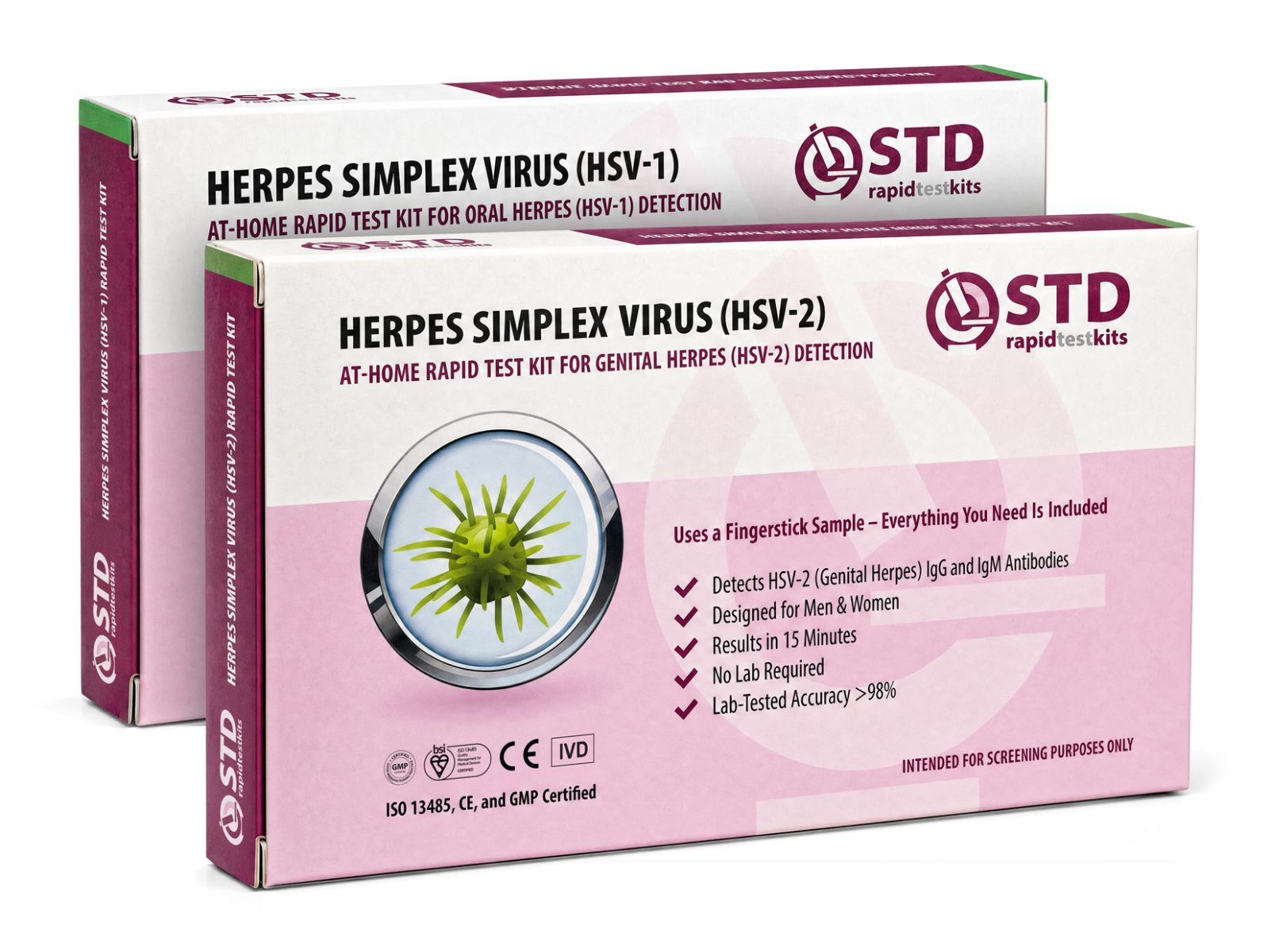
At-home rapid blood antibody tests offer a convenient way to check seroconversion privately. They are screening tests, useful for personal awareness and reassurance, and a positive result is worth confirming with a clinician who can order a confirmatory lab test and (if you want it) start you on a treatment plan. Note that the CDC does not recommend routine blood-antibody screening of people without symptoms, because false-positive results are common at low pretest probability. Testing makes the most sense when you have a specific reason to test: a known exposure, a new partner, or symptoms you want to investigate.
This article is published by stdrapidtestkits.com, which sells at-home STI testing kits. We recommend products based on fit-for-purpose for the reader's concern, not commercial benefit. The herpes blood antibody test we sell is a fingerstick screening test; it does not diagnose an active outbreak (which requires a swab from a clinician) and is most useful 12 or more weeks after a potential exposure.
Next steps
Have you had a possible exposure but no current symptoms?
Yes: Take a blood antibody test at 12 weeks after the exposure. Consider a confirmatory retest at 16 weeks if the first one is negative and the exposure was known and recent.
Do you have a seronegative partner, or more than six outbreaks per year?
Yes: Talk to your clinician about episodic versus daily suppressive therapy. Suppressive therapy reduces outbreak frequency by 70 to 80 percent and roughly halves HSV-2 transmission to a seronegative partner.
Are you pregnant or planning a pregnancy and have a herpes history?
Yes: Disclose at your first antenatal visit so your obstetric team can plan suppressive antivirals for the third trimester (around 32 to 36 weeks, depending on the guideline your provider follows).
No: If your situation changes (new exposure, new partner, planning a pregnancy), return to these steps and pick the action that fits.
Practical actions to take based on your situation.
Frequently asked questions
- Is there a cure for herpes?
- Not yet. As of early 2026, there is no licensed medication or vaccine that eliminates the herpes virus from the body. Current treatments suppress the virus, shorten outbreaks, reduce transmission risk, and (with daily therapy) prevent most recurrences. Therapeutic and prophylactic vaccine candidates and gene-editing approaches are in early clinical trials but none has been approved by the FDA.
- Will my first outbreak be the worst?
- For most people, yes. The primary outbreak is typically the most painful and longest-lasting (often 2 to 4 weeks), with systemic symptoms like fever and lymph node tenderness. Recurrences tend to be shorter (often under a week) and milder, with many people experiencing fewer outbreaks over time as the immune system establishes a stable equilibrium with the virus.
- How fast do antiviral medications start working?
- Symptom relief usually begins within 24 to 48 hours of the first dose, with sores typically healing 1 to 2 days faster than they would without treatment. The earlier you start (ideally during the prodrome, that tingling stage before any visible sore), the bigger the benefit.
- Does daily suppressive therapy completely prevent transmission?
- It roughly halves it, it doesn't zero it out. The randomized valacyclovir transmission trial that anchors current CDC guidance found roughly a 50% reduction in HSV-2 transmission to a seronegative partner on suppressive therapy versus placebo. Stack suppressive antivirals with consistent condom use and outbreak avoidance and you compound those reductions; rely on antivirals alone and you still have meaningful residual risk.
- How effective are condoms at preventing herpes?
- About a one-third reduction. Condoms only protect the skin they actually cover, so the parts of the genital region they leave exposed (the scrotum, perineum, vulva, base of the penis) remain shedding-vulnerable. That's why per-act risk reduction is closer to 30% than the higher numbers people associate with HIV prevention.
- Can I have sex with my partner if I have herpes?
- Yes, with reasonable precautions. Disclose before sex. Consider daily suppressive therapy, especially in the first year after diagnosis when shedding is highest. Use condoms or dental dams consistently. Avoid sex during recognized outbreaks. Many serodiscordant couples maintain long-term relationships without transmission.
- Can I take herpes antivirals during pregnancy?
- Yes, with an obstetrician's guidance. Acyclovir and valacyclovir are commonly prescribed in the third trimester (somewhere between 32 and 36 weeks, depending on the guideline followed) to reduce the risk of an outbreak around delivery and the risk of neonatal herpes. Always discuss any medication with the clinician managing your pregnancy.
- When should I get tested for herpes?
- If you have an active sore, see a clinician for a swab (PCR or culture) right away, which is the most accurate test during an outbreak. If you have no symptoms but had a possible exposure, a blood antibody test is reliable from 12 weeks after exposure for most people, with a small proportion taking up to 16 weeks to seroconvert. Routine blood-antibody screening of people without symptoms is not recommended by the CDC because false-positive results are common at low pretest probability.
- U.S. Centers for Disease Control and Prevention. STI Treatment Guidelines, genital herpes section. Source for dosing for first-episode, episodic, and suppressive therapy; long-term safety of daily therapy; the 70 to 80% recurrence-reduction figure; the transmission-reduction note referencing the valacyclovir transmission trial that found roughly a 50% reduction in transmission to seronegative partners on suppressive therapy; the statement that most new HSV-2 infections come from asymptomatic or undiagnosed partners; and the recurrence-pattern guidance for primary versus subsequent outbreaks.
- World Health Organization. Herpes simplex virus fact sheet. Source for global prevalence figures (3.8 billion with HSV-1, 520 million aged 15 to 49 with HSV-2), transmission, and pharmacological management overview.
- U.K. National Health Service. Genital herpes: symptoms, treatment, and self-care. Source for practical pain-relief steps during outbreaks, third-trimester suppressive antiviral guidance (around 32 weeks), and supportive care advice.
- U.K. National Health Service. Cold sores: causes, treatment, and prevention. Source for cold-sore prevention, sun-trigger guidance, fluid and dietary suggestions, and OTC vs prescription topical treatment overview.
- Mayo Clinic. Genital herpes: symptoms and causes. Patient-facing context on primary versus recurrent outbreak duration, severity, and management overview.
- U.S. National Library of Medicine, MedlinePlus. Acyclovir drug information. Source for side-effect profile, kidney-clearance considerations, and pregnancy/breastfeeding compatibility.
