What to Know If You've Just Been Diagnosed with Herpes
A positive herpes test feels enormous in the moment. The actual virus is usually less dramatic than the panic surrounding it. Most people with herpes never have symptoms, manage outbreaks easily when they appear, and continue to have full romantic and sex lives. This guide covers the medical facts, the practical first steps, and what to say when it is time to tell someone.




- Herpes is one of the most common viral infections in the world: about 11.9% of U.S. adults aged 14 to 49 carry HSV-2 (roughly 1 in 8), and roughly half carry HSV-1.
- There is no cure, but daily antiviral medication can reduce outbreaks substantially and meaningfully lower transmission risk to a regular sexual partner.
Published: July 2025 | Last updated: May 2026 | Editorial review and quality control: Martina N.
Finding out you have herpes can feel like everything has shifted. Your stomach drops, your mind races, and the next sexual encounter suddenly seems impossible to imagine. That reaction is normal, and it almost always fades. Herpes is one of the most ordinary viruses humans carry: treatable, manageable, and rarely dangerous to general health.
This guide is written for the person who just opened a positive test result and is trying to figure out what comes next. The medical facts are simpler than the cultural baggage suggests. The practical steps are clearer than the panic implies. For the great majority of people who live with herpes, the long-term reality is genuinely close to normal.
What does a herpes diagnosis actually mean?
It means you have one of two extremely common viruses (HSV-1 or HSV-2) that millions of people in the U.S. live with. Most carriers have no symptoms. The infection is lifelong but manageable, with antiviral medication available to reduce outbreaks and substantially lower transmission risk to a regular partner. A positive test does not change your worth, your dating prospects, or your ability to have a satisfying sex life.
Key Takeaways
- Herpes is one of the most common viral infections in the world: about 11.9% of U.S. adults aged 14 to 49 carry HSV-2 (roughly 1 in 8), and roughly half carry HSV-1.
- There is no cure, but daily antiviral medication can reduce outbreaks substantially and meaningfully lower transmission risk to a regular sexual partner.
How common herpes actually is
Herpes is everywhere, in numbers most people would not guess. The U.S. National Center for Health Statistics reports that HSV-2 prevalence among Americans aged 14 to 49 was 11.9% during 2015 to 2016, or roughly 1 in 8 people in that age group (CDC NCHS Data Brief 304). The CDC also estimates around 572,000 new genital herpes infections each year in the same age group (CDC genital herpes overview). The World Health Organization puts global HSV-1 prevalence among people under 50 at about 64% (approximately 3.8 billion people), and HSV-2 at around 520 million people aged 15 to 49 (WHO herpes simplex virus fact sheet).
Most of those carriers never know. CDC guidance notes that most people with genital herpes have no symptoms or have very mild symptoms, often mistaken for razor bumps, ingrown hairs, or yeast infections. The same is true at scale for HSV-1, which most people pick up in childhood from a parent or sibling kiss.
So the moment you hear a positive result, remember this. You are joining one of the largest groups of people on earth who share a specific medical condition. The cultural silence around herpes is what makes it feel rare; the actual numbers tell a very different story.
HSV-1 versus HSV-2: what the test actually showed
There are two strains of herpes simplex virus, and they behave somewhat differently in the body, even though they look almost identical at the molecular level.
HSV-1 most often causes oral herpes, the cold sores or fever blisters that appear on the lip or around the mouth. About half of U.S. adults under 50 carry it, usually picked up well before adolescence. HSV-1 can also spread from the mouth to the genitals through oral sex; this is why some cases of genital herpes are due to HSV-1 rather than HSV-2 (CDC genital herpes overview; see also MedlinePlus genital herpes).
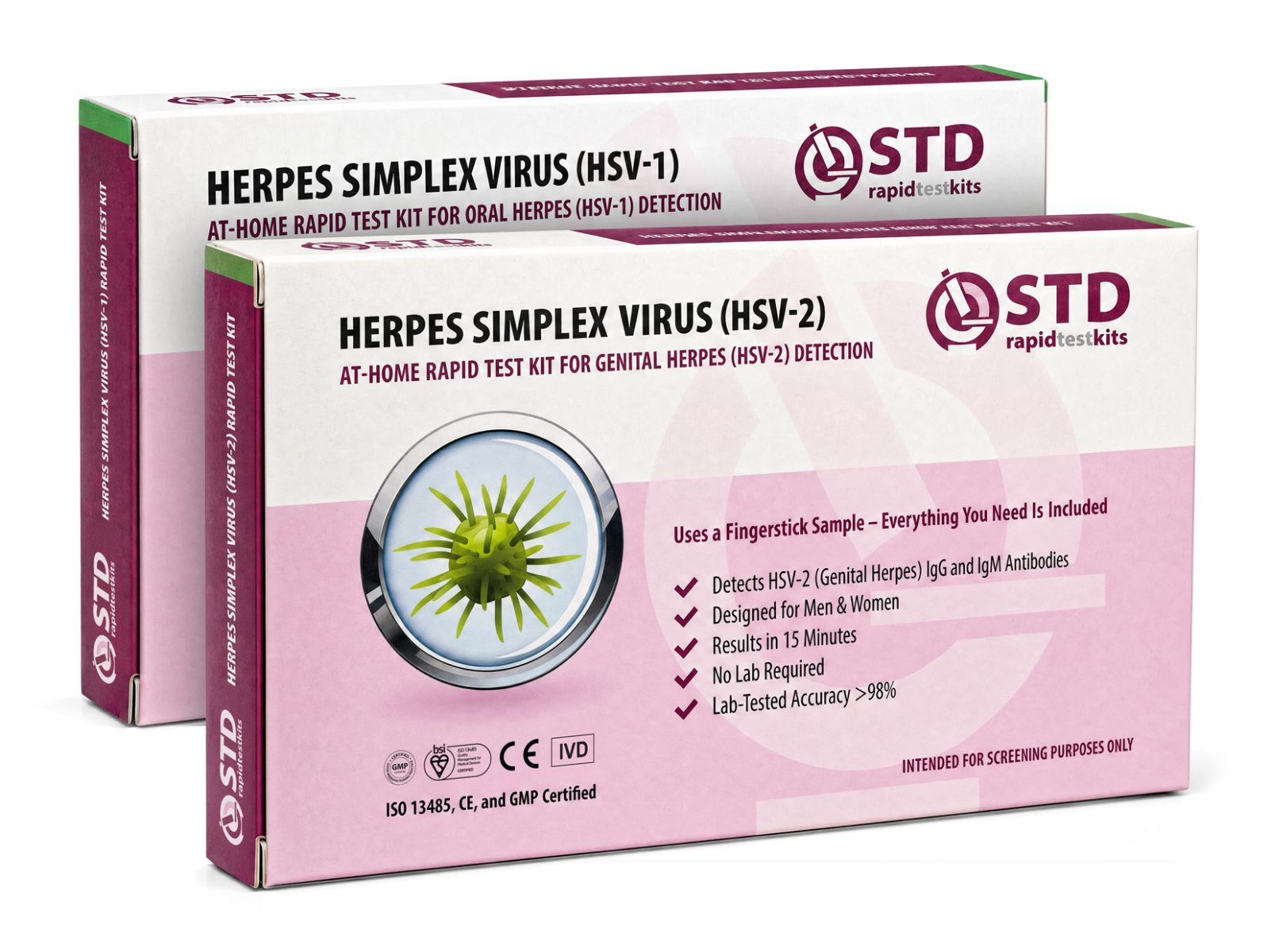
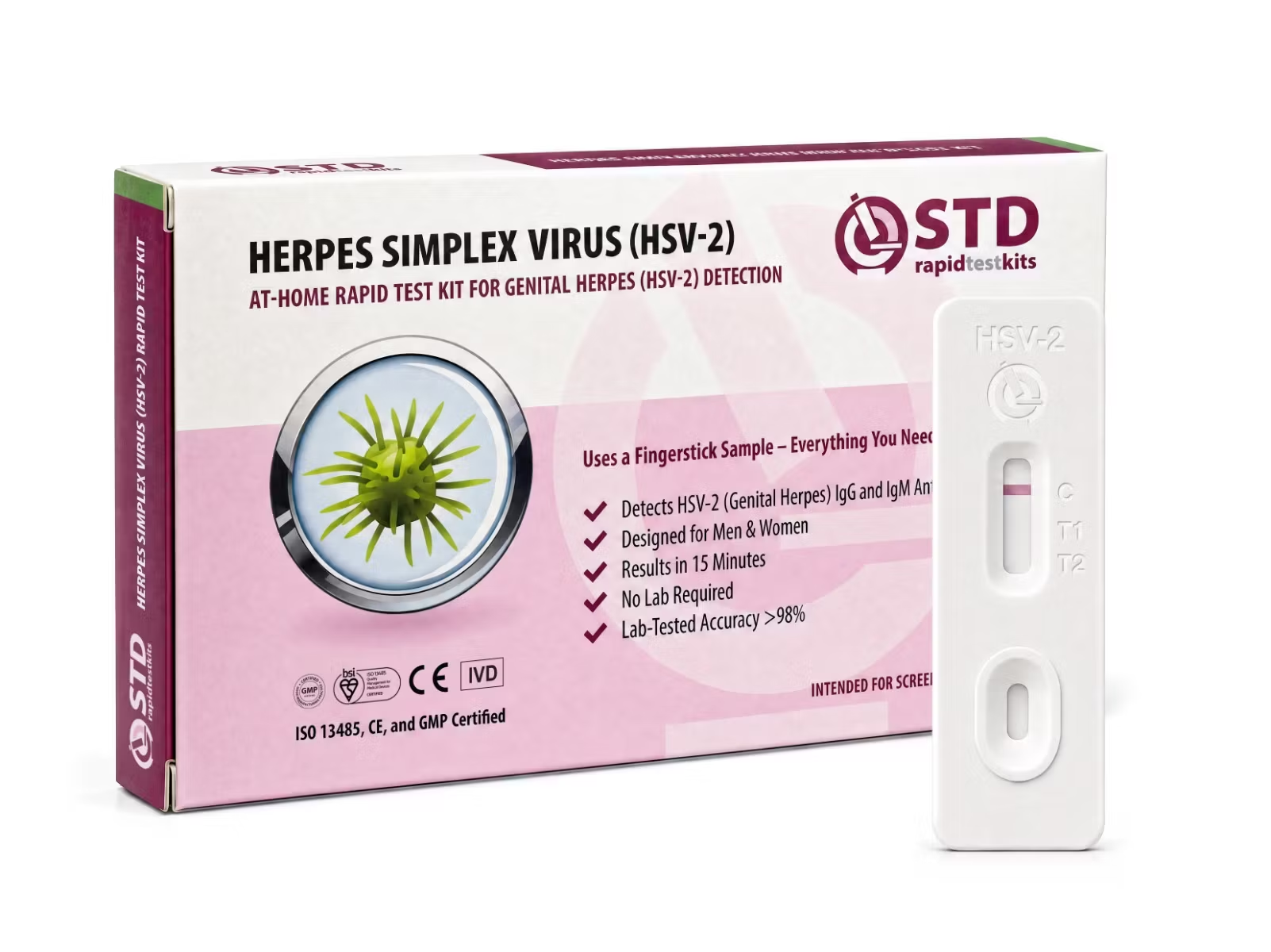
HSV-2 is more often associated with genital herpes. It tends to cause outbreaks more frequently than genital HSV-1, especially in the first year, but recurrences usually become less frequent and milder over time. HSV-2 antibody testing is the standard at-home blood screening method; the immune response builds over a few weeks to a few months after exposure, so timing matters.
If your result identified HSV-1, the location of any symptoms (oral or genital) matters more than the strain itself for transmission planning. If your result was HSV-2, you can expect a more predictable pattern of genital outbreaks (when they occur) and clearer guidance on suppressive therapy. Either way, the long-term management toolkit is similar.
The first week after a positive result
The first few days are the hardest, mostly because the brain is doing more work than the immune system. A positive herpes result rarely demands urgent medical action. It does benefit from a calm, ordered checklist.
Confirm the result with a clinician. Home rapid antibody tests are useful screens, but a healthcare provider can repeat the test, distinguish HSV-1 from HSV-2 if that was unclear, and rule out a false positive (which happens occasionally, especially with low-titer results). Bring up the timing of any possible exposures so the clinician can interpret antibody levels in context.
Ask about antiviral medication. Even if you are not having an active outbreak, a clinician can prescribe a short course of acyclovir, valacyclovir, or famciclovir to have on hand. These shorten outbreaks meaningfully when started in the first 24 hours of prodromal symptoms (the tingling, itching, or burning that often precedes a sore).
Pause sex during any active outbreak, including the prodromal phase before sores appear. Once skin is fully healed, normal protection (condoms plus barrier methods for oral contact) returns most of the safety, especially when paired with suppressive therapy if you choose it.
Do not rush partner conversations. The right moment is private, calm, and unhurried. Practicing the words first is genuinely useful.
- Confirm the result with a clinician and ask whether a repeat or PCR test is needed.
- Request an antiviral prescription (acyclovir, valacyclovir, or famciclovir) to keep on hand.
- Pause sex during any active outbreak or prodromal symptoms (tingling, itching, burning).
- Take a beat before partner conversations. Calm timing makes the talk meaningfully easier.
Antiviral treatment and outbreak care
Three antiviral medications are the standard of care for genital herpes: acyclovir, valacyclovir (often sold as Valtrex), and famciclovir. They work the same way, blocking the virus from replicating during an outbreak. Valacyclovir is the most commonly prescribed because of its convenient dosing.
There are two ways your clinician may prescribe these:
- Episodic therapy: you take the medication for a few days at the start of each outbreak. This shortens the outbreak by 1 to 2 days on average and reduces symptom severity.
- Suppressive therapy: you take a low daily dose to prevent outbreaks altogether. This approach reduces the frequency of outbreaks substantially and, based on clinical trial data, decreases the rate of HSV-2 transmission to a regular sexual partner (CDC STI treatment guidelines).
Suppressive therapy is generally recommended for people who have frequent outbreaks (more than six per year), people in serodiscordant relationships (where one partner has herpes and the other does not), and people who simply prefer the predictability of fewer outbreaks.
Outbreak self-care helps in parallel. Keep the affected area clean and dry, wear loose breathable clothing, avoid scratching or popping sores, and use a topical lidocaine product or cool compresses for pain. Stress, sleep loss, illness, friction, and (for some women) menstruation are common triggers worth tracking.
When daily suppressive therapy makes sense
- You have frequent outbreaks, generally defined as six or more per year.
- You are in a serodiscordant relationship and want to lower transmission risk to your partner.
- You prefer the predictability of fewer outbreaks over the as-needed pattern of episodic therapy.
Talking to a partner about your status
Disclosure is the part that most people dread. The good news is that a calm, factual conversation usually goes better than the imagined worst-case version.
Choose a private moment, not in bed and not minutes before sex. Many people prefer a casual setting, a walk or quiet coffee, where either of you can step away if needed. Use direct language. "I have herpes, and I want you to have all the information before we go further" is concise, honest, and respectful of the other person's autonomy.
Share the medical context briefly. The points that matter most: it is extremely common, you take steps to manage it (whether that is suppressive therapy, condom use, or simply not having sex during outbreaks), and the actual transmission risk to a careful partner taking these steps is in the low single digits per year.
Be ready for any reaction. Some people will be relaxed about it, especially those who are also informed about HSV-1 prevalence. Others will need time to think. A small minority will not want to continue. If that happens, give yourself a day or two before the next conversation, and remember the math: most people, given accurate information, do continue.

Sex with herpes: what is and is not safe
Plenty of people with herpes have active, satisfying sex lives. The risk-reduction toolkit has several layers, and using them together is what brings transmission risk to manageably low levels.
Avoid sex during prodromal symptoms and active outbreaks. The virus is most contagious when sores are present or about to appear, so noticing the early tingling or itching matters. Wait until the area has fully healed, usually a few days after the last sore has scabbed and the skin looks normal again.
Use barrier protection. Condoms reduce the risk of HSV-2 transmission, although coverage is partial because herpes can spread from skin not covered by latex (CDC genital herpes overview). Dental dams reduce risk during oral-genital contact. Partial protection plus suppressive therapy is meaningfully different from neither.
Consider daily suppressive antivirals if you have a regular partner who is not infected. The combination of suppressive therapy plus condoms plus avoiding sex during outbreaks is what brings the per-year transmission rate to roughly 1 to 4% in serodiscordant heterosexual couples per published clinical trials.
Keep lubricant on hand. Friction is a common outbreak trigger, and lubrication reduces both physical irritation and the microabrasions that can facilitate transmission.
The emotional weight of a diagnosis
The mental health response to a herpes diagnosis is often heavier than the medical response. Research on newly diagnosed patients consistently shows that anxiety, depression, and self-stigma are common in the weeks and months after diagnosis, and that these effects fade for most people once they are armed with accurate information and have spoken with at least one supportive person.
What helps, in the order most people benefit:
- Accurate information from non-sensationalist sources. The CDC, WHO, and NHS sites all approach herpes as a medical issue rather than a moral one.
- Talking to one trusted person. The relief of saying it out loud once is often dramatic.
- Online peer communities. Subreddits and forums dedicated to herpes support normalize the condition fast and replace catastrophic thinking with practical advice.
- A short course of therapy if shame is severe. Cognitive behavioral therapy is well suited to this kind of stigma-driven distress.
Self-stigma is real, and it is also responsive to the same techniques that work on most stigma-driven distress: accurate information, social connection, and time. The first month is usually the hardest. By month three, most people report that the diagnosis feels much smaller than it did at the start.
Most people with genital herpes have no symptoms or have very mild symptoms. Mild symptoms may go unnoticed or be mistaken for other skin conditions.
Why herpes carries so much stigma
The cultural weight herpes carries is not proportional to its medical reality, and understanding why can take some of its sting away.
Before the early 1980s, herpes was treated as a minor skin condition. A 1982 Time magazine cover story popularized the framing of herpes as a kind of moral marker, and the cultural script reshaped public perception almost overnight. Pharmaceutical advertising for the first wave of antivirals that decade reinforced fear-driven messaging. The combination produced a cultural narrative that the medical facts never supported.
The actual clinical picture is closer to what dermatology textbooks describe: a viral skin infection with intermittent symptoms that most people manage without significant disruption to their lives. Genital herpes does not impair fertility, does not raise cancer risk, and very rarely causes serious illness in healthy adults. It can complicate pregnancy if outbreaks occur near delivery, which is why obstetricians screen and prescribe suppressive therapy in late pregnancy when needed (NHS genital herpes guidance).
The stigma persists partly because most public discussion of herpes happens in fear-based contexts: comedians' punchlines, dating-app horror stories, abstinence-only sex education. Calmer, accurate conversation is steadily becoming more common, particularly online, and the cultural shift is slow but visible.
Genital herpes does not affect fertility, does not raise cancer risk, and rarely causes serious illness in healthy adults. Most people with HSV-2 have either no symptoms or symptoms mild enough to miss entirely. The condition is closer to a manageable skin issue than the cultural narrative suggests.
Common misconceptions cleared up
A short list of the inaccurate beliefs that cause unnecessary worry. The callout below summarizes the five myths that most often drive shame and confusion in newly diagnosed patients, with the actual evidence-based answer for each.
- "Herpes is only contagious during an outbreak." The virus can shed asymptomatically, meaning transmission is possible without visible sores. This is why suppressive therapy and barrier methods matter even when the skin looks normal.
- "If you have HSV-1, you can't get HSV-2." Prior HSV-1 infection may slightly reduce the severity of a later HSV-2 infection, although it does not prevent it. Many people carry both.
- "Herpes is always painful and visible." Most people with HSV-2 have either no symptoms or symptoms so mild they go unrecognized. A clearly painful first outbreak is one presentation among several.
- "You can't have sex anymore." Not true. With protection, suppressive therapy, and outbreak avoidance, sex with herpes is normal, frequent, and safe enough that millions of serodiscordant couples have continued without transmission for years.
- "Only people with multiple partners get herpes." Single partners, monogamous relationships, and first sexual experiences all account for many transmissions. The infection does not track partner count; it tracks contact with someone who is shedding the virus, who often does not know they are.
If you take one fact from this list: herpes can transmit without visible sores, through asymptomatic viral shedding. Waiting only for visible outbreaks to take precautions is the single most common reason transmission happens between informed partners.
What current research is exploring
Several lines of investigation are progressing, although none has produced an approved cure yet.
Therapeutic and preventative herpes vaccines are in clinical trials, including mRNA-based candidates that target HSV-2 specifically. Early-phase results from one mRNA candidate showed reductions in viral shedding in animal models, and human trials are ongoing through the late 2020s. A preventative vaccine is unlikely to be widely available in the immediate term, but the pipeline is more active than it has been in two decades.
Improved diagnostic technology is also evolving. Polymerase chain reaction (PCR) testing of swab samples from active sores is highly accurate and increasingly available; type-specific blood antibody testing has improved as well. At-home rapid antibody tests work as a screen and are well suited to confirming long-standing infection or convenient screening between clinical visits, although active outbreaks are still best evaluated by a clinician with PCR.
The cultural shift toward calmer, more accurate conversation about herpes is itself a research-relevant trend. Studies on stigma reduction in STI care consistently find that direct, nonjudgmental clinical communication and peer support produce better mental-health outcomes for newly diagnosed patients (WHO herpes simplex virus fact sheet).
No approved herpes vaccine exists yet. Several candidates (including mRNA platforms) are in clinical trials through the late 2020s. A widely available preventative vaccine is not expected in the immediate term, although the research pipeline is more active than it has been in 20 years.
FAQs
- Can I still have children if I have herpes?
- Yes. Herpes does not affect fertility, and most pregnancies in people with HSV-2 progress normally. The main concern is preventing transmission to a newborn during delivery, which obstetricians manage by prescribing suppressive antiviral medication in the final weeks of pregnancy and considering cesarean delivery if an active outbreak is present at labor. Tell your obstetrician at the first prenatal visit so the plan can be put in place early.
- How long do herpes outbreaks usually last?
- A first outbreak (primary infection) is the longest, usually 2 to 4 weeks from first symptom to fully healed skin. Recurrent outbreaks are typically much shorter, around 5 to 10 days. Antiviral medication can shorten any outbreak by 1 to 2 days when started during prodromal symptoms or within 24 hours of the first sore appearing.
- Can I get herpes from kissing?
- HSV-1 is commonly transmitted through kissing, especially when one person has an active cold sore. The virus can also shed without visible symptoms, which is how most childhood HSV-1 transmission happens (parent kissing child). HSV-2 is rarely transmitted by kissing because it prefers genital tissue.
- Should I tell every future partner I have herpes?
- Yes, before any sexual contact that could transmit the virus. Disclosure is both ethically appropriate and protects you from legal claims of nondisclosure (which exist in many U.S. states). Choose a calm, private setting before clothes come off, with the medical context ready to share.
- Will I always have outbreaks?
- Outbreak frequency varies widely. Some people have one outbreak and never another. Many people have several in the first year and then far fewer over time as the immune system adapts to the virus. Roughly 20 to 25% of people with HSV-2 have frequent recurrences (six or more per year), which is the group most likely to benefit from daily suppressive therapy.
- What is the difference between an at-home rapid test and a clinic test?
- At-home rapid tests detect antibodies in a fingerstick blood sample and give a result in about 15 minutes. They are most useful for screening once antibody levels have built up, typically 12 to 16 weeks after exposure. Clinic testing can include both antibody testing and PCR swab testing of an active sore, the latter being the gold standard during an outbreak. Use the at-home test as a convenient screen and confirm any positive with a clinician.
- Can stress trigger an outbreak?
- Yes. Stress is one of the most consistently reported outbreak triggers, alongside illness, lack of sleep, friction, sun exposure, and (for some women) menstruation. Stress management does not cure herpes, although it does measurably reduce outbreak frequency for many people who track their triggers carefully.
- U.S. Centers for Disease Control and Prevention, National Center for Health Statistics. Data Brief 304: Prevalence of Herpes Simplex Virus Type 1 and Type 2 in Persons Aged 14-49, United States, 2015-2016. Source for HSV-2 prevalence figure of 11.9%.
- U.S. Centers for Disease Control and Prevention. About Genital Herpes, including U.S. incidence figure (572,000 new infections per year), oral-genital transmission of HSV-1, and asymptomatic-shedding guidance.
- U.S. Centers for Disease Control and Prevention. STI treatment guidelines for genital herpes, including episodic and suppressive antiviral regimens and partner-transmission risk reduction.
- World Health Organization. Herpes simplex virus fact sheet, including global HSV-1 (~64% / 3.8 billion) and HSV-2 (~520 million) prevalence among people under 50.
- NHS. Genital herpes overview, including symptoms, treatment, and pregnancy guidance.
- MedlinePlus, U.S. National Library of Medicine. Genital herpes overview, including diagnostic options, oral-genital HSV-1 transmission, and patient-facing FAQs.