







Quick Answer: STD testing is critical for men because many infections are silent and can cause complications or spread to partners without symptoms. Waiting for signs can leave both you and your partner at risk. Discreet at‑home testing is an easy, private solution.
The Silent Problem Men Don’t Talk About
For decades, sexual health conversations have been framed as a women’s responsibility. Pap smears, annual gynecologist visits, and birth control appointments created a natural path for women to get tested regularly. Men, meanwhile, were left with a cultural script that whispered, “If you don’t see a problem, you don’t have one.” The truth is quieter and more dangerous: many STDs in men show no symptoms at all.
Chlamydia is one of the most common examples. According to the CDC, most men who carry chlamydia will never notice discharge, burning, or pain. The same goes for gonorrhea, HPV, and trichomoniasis. Even herpes can slip by without obvious sores, leaving a man to unknowingly pass the virus to his partner. The problem isn’t just medical, it’s emotional. Every time a man skips testing, he trades short‑term comfort for long‑term anxiety he doesn’t talk about.
Marcus, 31, thought he was fine. No pain. No rash. No reason to worry, until his girlfriend tested positive for chlamydia during a routine checkup. “I felt like a ghost,” he says. “Like I’d been walking around carrying something I didn’t even know about."
"I was embarrassed and angry at myself for thinking testing was just for women.”
His story isn’t rare. Research shows that gendered stigma and silent symptoms fuel a cycle where men delay or avoid STD testing, often until a partner forces the conversation.

People are also reading: The Important Role Vaccines Play in Preventing STDs
The Myth That Hurts Men and Their Partners
Some men avoid STD testing because they assume risk lives elsewhere, with women, with other people, with visible symptoms. This myth is reinforced by locker‑room jokes, outdated sex‑ed, and the simple fact that most men don’t have annual sexual health appointments built into their lives. Skipping testing feels harmless until it isn’t. The consequences can be physical, like untreated infections that affect fertility or trigger long‑term complications. But they can also be relational, eroding trust when a silent infection surprises a partner.
Jared, 29, remembers the conversation that changed his perspective. His girlfriend sat on the edge of his bed, test results in her hand. “She wasn’t angry,” he recalls. “She was hurt. She said, ‘I thought we were being safe.’ I realized that by avoiding testing, I wasn’t just risking my health, I was risking her trust.” Moments like that are the wake‑up calls men rarely get until it’s too late. They don’t feel like medical emergencies. They feel like moral gut punches.
Breaking the myth means reframing testing as a sign of strength, not weakness. A man who gets tested isn’t overreacting or acting guilty. He’s taking ownership of his health, his relationships, and his peace of mind. He’s refusing to let silence decide the outcome.
The Anxiety Men Don’t Admit
Eric, 24, walked past the city clinic three times before he went in. Each lap around the block felt like a spotlight was following him. “I kept thinking someone would see me and assume the worst,” he said later.
“In my head, I was already guilty of something.”
The truth is, many men carry that same invisible weight. Even when they know testing is the smart move, stepping through that door feels like a confession, not a precaution.
This fear is why so many men avoid testing entirely. They wait for pain, discharge, or a visible sore to give them “permission” to act. But most STDs in men are quiet passengers. Studies show that up to 50% of chlamydia cases and a significant portion of gonorrhea infections in men show no early symptoms. Meanwhile, partners can be exposed without ever realizing the risk. Silence doesn’t protect anyone. It just stretches the gap between exposure and responsibility.
Even in relationships, the anxiety never fully disappears. Some men carry a low hum of worry after every new partner, every unprotected moment, every “I’m sure I’m fine” shrug. It builds into a private ritual of late‑night searches, nervous self‑checks in the mirror, and imaginary conversations about what they’d say if something showed up. This mental toll is the part nobody talks about, and the part that makes testing feel like a relief once it’s finally done.
Check Your STD Status in Minutes
Test at Home with Remedium3-in-1 STD Test Kit
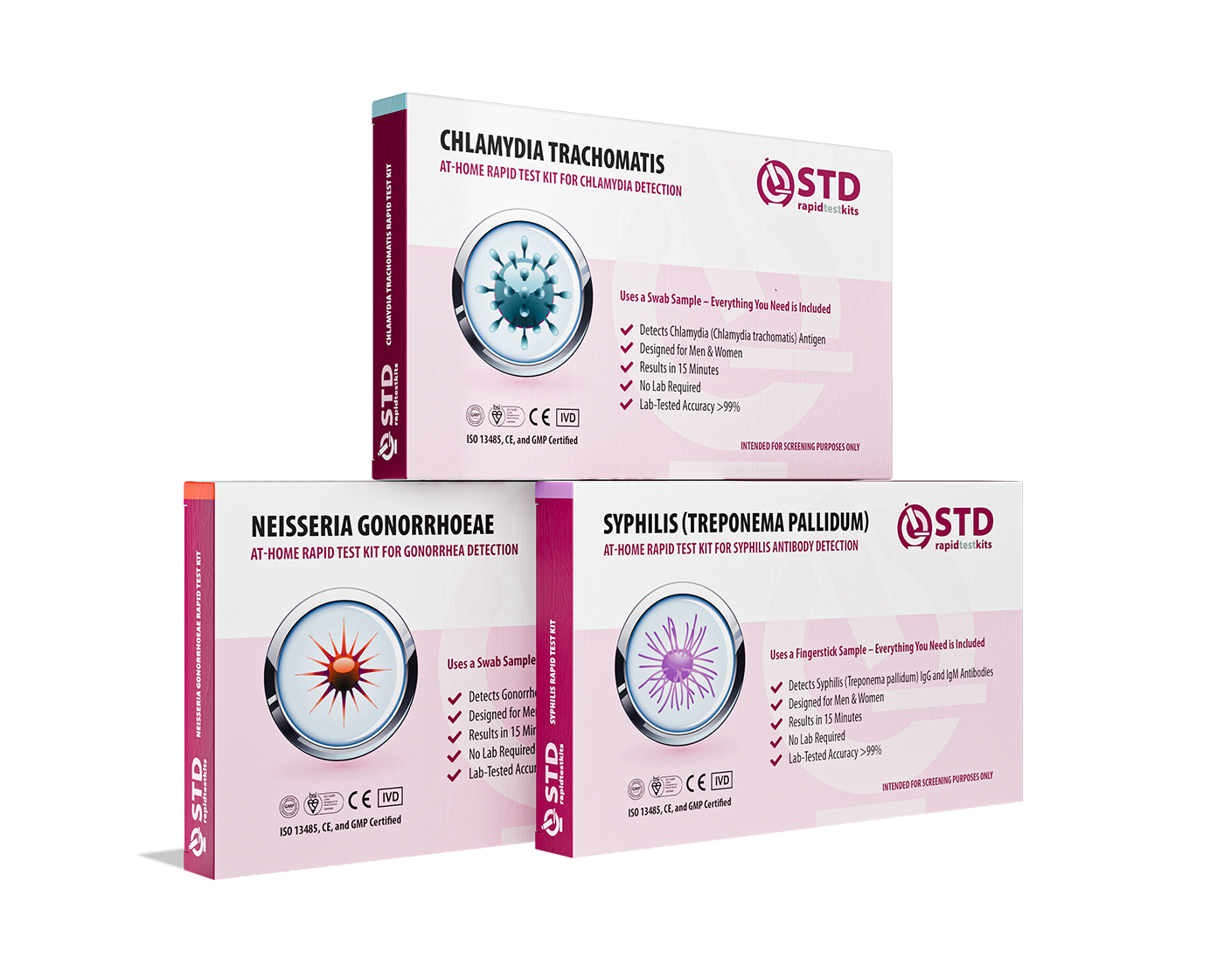
 For Men & Women
 Results in Minutes
 No Lab Needed
 Private & Discreet
Order Now $69.00 $147.00
For all 3 tests
Silent STDs and the Male Burden
The danger of skipping testing isn’t always dramatic. It’s the slow burn of hidden infections that never get addressed. HPV can linger in a man’s system without symptoms, passing silently to partners who may face long‑term risks like cervical cancer. Trichomoniasis is another stealth infection; many men carry it without discomfort, yet it can trigger complications and spread through unprotected sex. And while HIV is less common than these other STDs, early detection is critical for treatment and for protecting future partners.
Men often assume that feeling “normal” means being safe. That assumption can stretch for months or years. By the time a partner tests positive, the infection trail often leads back to a man who never had symptoms and never got screened. It’s not malicious, it’s the result of a cultural blind spot where sexual health is painted pink, handed to women, and left out of the male playbook entirely.
Chris, 35, didn’t learn this lesson until after a breakup. His ex told him she had tested positive for gonorrhea. He had no symptoms, no discomfort, nothing. “I went straight to the clinic and sure enough, I had it too,” he said.
“I was shocked. I realized I could’ve been spreading this for months without knowing.”
Stories like Chris’s are the reason public health experts emphasize that STD testing is as much about protecting others as it is about protecting yourself.
Relationships, Trust, and Responsibility
STD testing isn’t just a medical decision, it’s a relationship choice. Every time a man skips testing, he gambles with trust. The fallout isn’t always a fight or a breakup; sometimes it’s just a silent wedge of doubt that slips between two people. Even casual dating can carry this weight. A single untested encounter can spiral into days of self‑doubt and nervous waiting, especially if you’re the kind of man who Googles symptoms in the dark and then clears the history before sunrise.
The irony is that men who get tested often feel relief, not shame. Testing flips the story from passive worry to active control. It says, “I take this seriously. I care about my partners. I value my health enough to know the truth.” That kind of energy doesn’t just prevent infections, it strengthens relationships and restores confidence.
Breaking the “Testing Is for Women” Myth
Men inherit a dangerous story about sexual health: that tests and checkups are for women. Maybe it starts in high school sex ed, where girls hear about Pap smears and birth control while boys are told to “use protection” and move on. Maybe it’s reinforced by TV and movies, where women get tearful calls from doctors and men stay in the background, immune to consequence. That story is a lie, and it’s one that leaves men exposed.
Liam, 26, believed it. He joked with friends that “if something was wrong, I’d know.” But when his new girlfriend suggested they get tested together, he panicked. “I realized I’d never been tested in my life,” he admitted. “I felt embarrassed, like I’d been walking around irresponsible without even realizing it.” That’s the trap: silence and assumption masquerading as safety. And breaking the myth starts with acknowledging that real strength isn’t pretending you’re fine, it’s proving it.
When men finally challenge this narrative, the shift is powerful. They stop seeing testing as a punishment and start seeing it as armor. They realize it’s not about fear; it’s about freedom. A simple check replaces months of worry with clarity. And in a world where many STDs don’t announce themselves, that clarity is the only way to reclaim control.
People are also reading: How At-Home STD Tests Work: Everything You Need to Know.
What It Feels Like to Finally Test
The first time a man gets tested, the emotions can be intense: dread on the way there, relief on the way out. Alex, 29, remembers sitting in the clinic parking lot for twenty minutes, rehearsing excuses in his head in case someone asked why he was there. “I realized how ridiculous it was,” he said. “Nobody cared. Nobody was judging me. I was the only one judging myself.” He walked out with negative results and a sense of lightness he didn’t expect.
For other men, the first test brings answers they didn’t want, but also a path forward. Modern treatments make most STDs highly manageable, and early detection prevents complications that can sneak up after years of neglect. Whether the results are clear or not, testing takes a man out of the dark and into a place where action is possible. That’s the difference between carrying quiet fear and owning your sexual health like a man who takes himself seriously.
The relief doesn’t just live in the body; it spreads to relationships. Men who get tested often describe feeling more confident with partners, more comfortable having honest conversations, and less likely to spiral into the late‑night “what if” searches that used to haunt them. In other words, testing doesn’t just protect your health, it rebuilds your peace of mind.
Taking Control with Discreet Testing
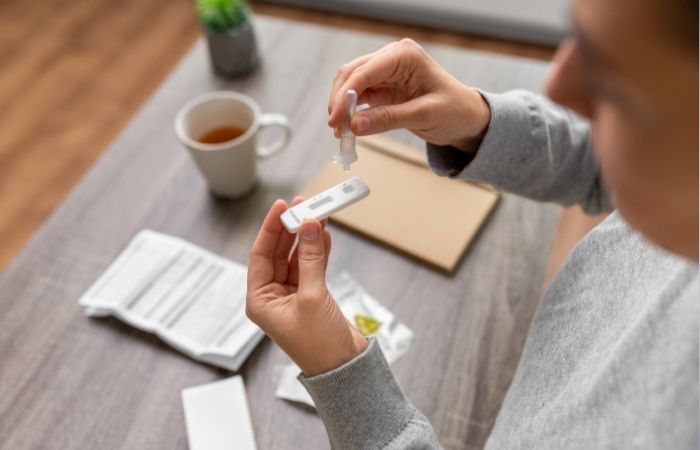
Even with this knowledge, some men hesitate to walk into a clinic. That’s where at‑home testing changes the game. Modern test kits let men screen for the most common STDs from the privacy of their own space. No waiting rooms, no awkward encounters, no judgment, just clear results that put the power back in your hands.
If you’re a man who’s been avoiding testing out of fear or inconvenience, consider the control that comes with knowing your status. A discreet kit like the at‑home combo STD test checks for multiple infections quickly and privately. For men juggling work, relationships, or just a bit of old‑fashioned anxiety, this is the simplest path to clarity.
Testing doesn’t make you weak. It makes you a man who refuses to gamble with his health or someone else’s. Once you know, you know, and the weight you’ve been carrying in silence finally lifts.
Check Your STD Status in Minutes
Test at Home with Remedium8-in-1 STD Test Kit
 For Men & WomenResults in MinutesNo Lab NeededPrivate & Discreet
Order Now $149.00 $392.00
For all 8 tests
FAQs
1. Do men really need STD testing if they feel fine?
Yes. Many STDs in men are silent and show no symptoms. Feeling fine doesn’t guarantee you’re clear.
2. Which STDs can men carry without symptoms?
Chlamydia, gonorrhea, HPV, and trichomoniasis are often asymptomatic in men, which makes testing all the more important.
3. How often should a man get tested for STDs?
Sexually active men should test at least once a year, though you should really be testing more often if you have mulitple sex partners.
4. Can a man give a woman an STD without knowing?
Yes. Silent infections can transmit even if he has no discharge, pain, or sores.
5. Does using condoms mean I never need to test?
No. Condoms lower risk but don’t protect against all STDs, like herpes or HPV, which spread by skin‑to‑skin contact.
6. Will getting an STD test go on my medical record?
Clinic tests may be recorded in your chart, but at‑home kits offer complete privacy.
7. What if I test positive for an STD?
You get treated. Most STDs are either completely treatable or, at the very least, manageable, so don't be afraid to go to the doctor for meds of you've tested positive.
8. Can I get tested without anyone knowing?
Yes. At‑home STD test kits let men test privately without clinic visits or public disclosure.
9. Does getting tested mean I’m guilty of something?
Absolutely not. Testing is about responsibility, self‑respect, and protecting your partners, not shame.
10. Will testing make me more confident with partners?
Yes. Knowing your status allows honest conversations, peace of mind, and stronger trust in relationships.
Real Strength Is Knowing, Not Guessing
Men carry the weight of silence when it comes to sexual health, and that silence serves no one. STDs don’t care about confidence or appearance, they spread in the spaces where pride keeps you from acting. Getting tested is not a confession. It’s a decision to stop gambling with your health, your relationships, and your peace of mind.
You don’t have to wait for a symptom or a scare. You don’t have to walk into a clinic if that feels overwhelming. You just have to decide that your health and your partners are worth the clarity. This discreet at‑home STD test kit lets you take control on your terms, in private, and without judgment.
Strength isn’t pretending nothing could happen. Strength is knowing, and moving forward without fear.
Sources
1. CDC – 2023 STI Surveillance Summary
2. CDC – STI Testing Guidelines for All Adults & MSM
3. ASHA – Why Routine Testing Should Include Heterosexual Men
4. Cleveland Clinic – STD Testing: Why Men Often Miss Screening


