Published: July 2025 | Last updated: April 2026 | Editorial review and quality control: Martina N.
Sex toys can absolutely transmit sexually transmitted infections. The biology is simple: if a toy carries enough infectious material from one body and contacts another body's mucous membranes or microscopic skin tears, transmission becomes possible. Most people never learn this in sex ed, because toys sit in a cultural blind spot somewhere between private and embarrassing. The result is a steady stream of preventable infections in monogamous couples, queer partnerships, group-play settings, and even solo users who switch a toy between body parts in the same session. Clinicians put it bluntly: if you share toys with a partner, you are sexually active for the purposes of STI risk and screening, regardless of whether penetration was involved. This article walks through what survives on toys, how long, which materials make a difference, when to test after a toy exposure, and how condoms and cleaning fit together.
Can you get an STD from a sex toy?
Yes. Toys shared between partners (or used between body parts) without proper cleaning can transmit chlamydia, gonorrhea, herpes, HPV, and trichomoniasis. The riskiest scenarios are porous toys (jelly, rubber, soft PVC) used immediately between people, and non-porous toys cleaned only with a quick wipe. Testing windows after a toy exposure mirror those for sex: 7 to 14 days for chlamydia and gonorrhea, longer for herpes and HIV. Cleaning, drying, and a fresh condom on a shared toy reduce risk substantially.
Key Takeaways
- Bacterial STIs (chlamydia, gonorrhea) and parasites (trichomoniasis) can survive minutes to several hours on moist toy surfaces; herpes and HPV can persist longer on non-porous materials.
- Soap and water removes most surface contamination, but a fresh condom changed between partners or body parts is the most reliable barrier when sharing a toy.
How STIs Travel from Toy to Body
Pathogens spread from toys to bodies through two factors: how long the organism survives outside a host, and whether it reaches a vulnerable surface (mucous membrane, microscopic abrasion, or recently irritated tissue). Some organisms die within minutes once exposed to air. Others persist for hours, especially when fluid residue keeps the surface moist. A toy does not need to look dirty for transmission to be possible. Trace fluids invisible to the naked eye contain enough bacterial or viral particles to seed an infection in the next user.
The riskiest scenarios are predictable: a toy passed quickly between partners with no cleaning step in between; a toy moved from anal to vaginal use within the same session; a toy used externally on irritated skin or fresh waxing abrasions; a porous toy reused after months in a drawer. CDC guidance acknowledges shared sexual devices as potential transmission routes for bacterial STIs including chlamydia and gonorrhea (CDC STI Treatment Guidelines).
How long any single pathogen survives depends on the toy's surface, ambient temperature, and whether residual fluid keeps things moist. The table below summarizes survival ranges drawn from CDC guidance, the NHS sex-activities-and-risk page, and microbiology literature. The longer-end figures (Hep B persistence on dry surfaces, HPV detectability after standard cleaning) come from CDC fact sheets on hepatitis B and from peer-reviewed studies cited in the references.
| Pathogen | Surface survival on toys | Practical risk window |
|---|---|---|
| Chlamydia trachomatis | Hours on moist non-porous surfaces | Same-session reuse without cleaning |
| Neisseria gonorrhoeae | 1 to 2 hours on moist surfaces | Same-session reuse without cleaning |
| Herpes simplex virus (HSV-1, HSV-2) | Minutes to several hours on non-porous surfaces | Reuse during outbreak or asymptomatic shedding |
| Human papillomavirus (HPV) | Detectable on toys after standard washing in research studies | Shared use, even after a basic rinse |
| Trichomonas vaginalis | Research suggests up to 45 minutes on damp surfaces | Quick toy passes between partners |
| Hepatitis B virus | Up to 7 days on dry surfaces (CDC) | Reuse of blood-exposed toys (rough anal play, menstrual periods) |
Material Matters: Porous vs Non-Porous
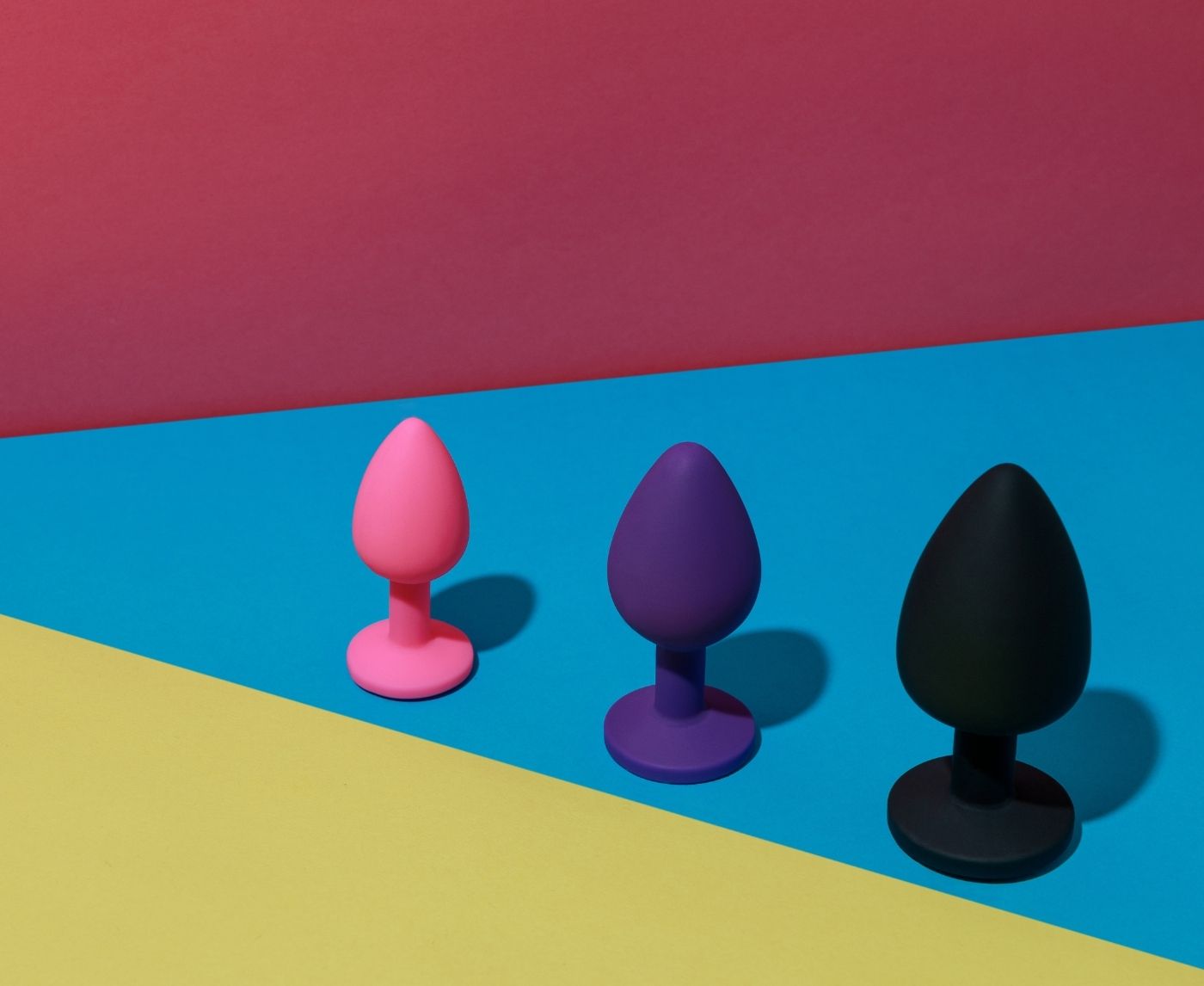
Sex toy materials sort into two big categories: porous and non-porous. The distinction is not cosmetic; it changes what cleaning can and cannot achieve.
Non-porous materials (medical-grade silicone, tempered glass, stainless steel, ABS plastic) have sealed surfaces. Bacteria, viruses, and parasites have fewer hiding places. These toys can be washed thoroughly with soap and water, sometimes boiled (3 to 5 minutes if the toy has no electronics), and disinfected with toy-safe cleaners. They cost more upfront, and they last for years.
Porous materials (jelly rubber, PVC, TPE, cyberskin) feel softer and often cost less. Microscopic pores throughout the material trap fluid, bacteria, and viral particles, and surface washing cannot reach them. Many porous toys also degrade over time, releasing chemicals (including phthalates in some lower-quality products) that can irritate sensitive tissue and create the small abrasions infections exploit.
Practical implication: porous toys should be treated as single-user, or always covered with a fresh condom that is changed between partners and between body parts. If a porous toy was shared without protection, replacing it is more reliable than trying to disinfect it.
Toy design also matters. Textured surfaces with deep ridges, multi-part toys with seams, and harness-mounted dildos all have crevices where fluid lingers. Smoother shapes are easier to clean. The base of a toy (often the part you grip with bare hands) is frequently missed during cleanup; if your hand touched a partner's fluids, that residue moves to the next contact point too. Even on premium silicone, microscopic scratches and biofilm (thin bacterial colonies that cling to surfaces) build up over months of use, so a worn favorite eventually needs replacement.
Material quick guide
- Medical-grade silicone, glass, stainless steel, ABS plastic: non-porous, cleanable, generally durable
- Jelly rubber, PVC, TPE, cyberskin: porous, not fully sanitizable, treat as single-user or always wrap
- Textured surfaces and seams trap fluid; the toy's base is the spot most often missed during cleanup
- Replace, do not 'deep clean,' a porous toy that was shared without a condom
What Cleaning Removes (and What It Misses)
Soap and warm water removes the majority of surface contamination on a non-porous toy. That makes it the right baseline routine for any toy with no electronics. Storing a damp toy in a drawer creates the warm, moist environment many pathogens prefer, so drying is as important as washing.
What cleaning does not reliably do: kill every viral particle, especially in microscopic surface scratches; sanitize a porous toy down to the fibers; remove organic residue inside seams and motors. A quick rinse under the bathroom faucet does almost none of this. A baby wipe is even less effective; wipes are designed to lift visible residue, not to disinfect.
Boiling is reliable for materials that tolerate it (medical-grade silicone, glass, stainless steel) but ruins toys with motors, batteries, or porous surfaces. Toy-safe sprays and wipes are useful between full washes, particularly on non-electronic toys, but they need enough contact time to actually kill the organisms claimed (often 30 seconds to a few minutes; check the product label). The dishwasher works for some non-vibrating non-porous toys on the top rack with no detergent, but check manufacturer guidance first.
Some pathogens deserve specific attention. Hepatitis B virus is unusually persistent on dry surfaces and warrants extra care for any toy that may have contacted blood (anal play during menstrual periods, for example). HPV has shown the ability to remain detectable on toy surfaces after standard washing in research studies.
Four-step cleaning protocol (non-electronic, non-porous toys)
- Rinse the toy under running water to dislodge fluid before soap touches the surface
- Scrub with mild fragrance-free soap, paying attention to the base, seams, and any textured ridges
- Rinse again until no soap residue remains, especially around seams and around the grip end
- Dry completely with a clean towel and let the toy finish air-drying before it goes back into storage
When and Why to Use Condoms on Toys
A condom on a shared toy is the single most reliable risk reduction step besides not sharing at all. The condom captures fluid; the toy underneath stays cleaner; and changing the condom between partners or between body parts blocks the cross-contamination that turns one exposure into two.
Pinch the tip (or trim the reservoir tip if the toy has no use for it), roll the condom down the shaft, and smooth out air bubbles to prevent tearing during use. Choose latex or polyurethane based on allergies; avoid silicone-based lubes with silicone toys (the lube degrades the toy material). Water-based or hybrid lubes work with everything.
Condoms on toys are not just for casual encounters. Long-term monogamous couples sometimes pass infections like trichomoniasis, bacterial vaginosis, or yeast back and forth through shared toys without realizing the toy is the carrier. Wrapping the toy is a small step that breaks that loop. Group play settings amplify the case for condoms further: in chaotic, low-light environments, even well-intentioned hygiene routines slip. People place a condom, then forget to swap it, or handle the uncovered base with fluid-coated hands. Each missed step is an opening. Some kink and play-party communities now designate a 'sanitation switch,' a person whose job is to track cleaning and condom swaps between scenes, exactly because the friction of remembering in the moment is so high.
Most people do not notice the condom in use; many find it makes cleanup faster and the toy easier to handle. Storing a small stash of condoms with your toys removes the friction of remembering them in the moment.
Change the condom whenever
- A new person is using the toy
- The toy is moving from anal to vaginal use, or vice versa
- The toy is moving between body parts (genital to mouth, for example)
- The condom shows any visible damage
Solo Use Is Not Always Risk-Free
Solo play removes the partner-to-partner transmission risk, but it does not zero out toy-related infection risk. Three solo scenarios cause most of the trouble: cross-site cross-contamination between anus and vagina, auto-inoculation during a viral outbreak, and reintroducing residue from an unwashed toy stored damp.
Cross-site cross-contamination. A toy used anally and then vaginally in the same session can introduce gut bacteria (E. coli, Klebsiella) into the vagina, triggering bacterial vaginosis or urinary tract infections. The vaginal and rectal microbiomes are different ecosystems; what is harmless in one can be disruptive in the other. The fix is the same as for sharing: a fresh condom between sites, or a thorough wash and dry.
Auto-inoculation during a viral outbreak. People with herpes (HSV-1 or HSV-2) or HPV can transfer viral particles between body parts via a toy. This is uncommon but documented. Viral shedding continues even after visible sores fade, so a toy used during a healing-phase herpes outbreak can still carry virus to another site. If you are mid-outbreak, wrapping the toy and dedicating it to one site reduces the risk.
Reintroducing residue. A toy stored damp, or one used recently with a partner who tested positive afterward, can reintroduce the same infection. People treating recurrent BV, trich, or yeast infections often discover that an unwashed toy in a drawer is part of the cycle. Treat the toy at the same time you treat yourself.
Solo users need a basic cleaning routine before and after each session, plus replacement of older porous toys with non-porous alternatives that you can actually sanitize.
Recurring BV, trichomoniasis, or yeast infections often track back to a toy that was not cleaned alongside the body. While you are taking the prescribed medication, give every toy used in the previous month the full cleaning protocol (or replace porous ones outright). Otherwise the toy can reintroduce the same infection the day after you finish treatment.
Sharing, Consent, and Honest Conversations
Shared toys raise questions that go beyond hygiene. If a partner used your toy with someone else without telling you, the physical exposure is one issue and the consent breach is another. Both deserve attention. Your reaction (anger, hurt, the urge to test, or all three) is valid regardless of how the relationship is structured. Consent for toy use with one person does not automatically extend to others, and discovering otherwise is its own kind of betrayal that sits alongside the medical question of what to test for.
A useful framing for the hygiene conversation, before anything goes wrong, sounds like this: 'When we share toys, here is how I want them cleaned and used. Can we agree on that?' Concrete agreements work better than assumed standards. Different people have very different ideas about what 'clean' means in practice.
For non-monogamous, queer, and group-play contexts, hygiene is part of community care. Sex educators in kink and play-party communities often frame it as 'treat every toy as if it just came out of someone's body,' which is graphic but practical. Carrying your own wipes, cleaner, gloves, and condoms; asking for a clean surface; and rinsing toys between scenes are visible signals that you take your partners' health seriously. In many communities those signals build trust rather than break the mood.
If a boundary was crossed (a partner used your toy with someone else, or a session went further than agreed), testing is part of the response, not the whole response. Decide separately what the relationship outcome is.
Open with shared expectations rather than rules: 'When we share toys, I want us to wash them with soap, dry them, and use a fresh condom between body parts. Does that work for you, or is there something you want different?' Different people genuinely have different defaults; naming yours out loud is the only way to find out where you actually agree.
Symptoms to Watch For After a Toy Exposure
Symptoms of toy-transmitted infections look the same as symptoms from any other route, because the infection is the same. The exposure event does not change the clinical picture.
Within days to a few weeks after a shared or unsanitized toy use, watch for burning during urination; unusual discharge from the vagina, urethra, or rectum (color, smell, or amount different from your baseline); itching or irritation that does not match your usual cycle pattern; sores, bumps, or blisters on the genitals, anus, or thighs (with or without pain); pain during penetration that was not there before; spotting between periods; or a strong or 'fishy' odor (often a marker for bacterial vaginosis or trichomoniasis).
Many infections cause no symptoms at all. The CDC notes that many STIs cause no symptoms or only mild symptoms, which is why testing is the only reliable way to know your status (CDC About STIs). Feeling fine is not a reliable signal that nothing happened.
If symptoms appear, do not self-treat with over-the-counter yeast cream as a default. Burning, discharge, and irritation can come from yeast, BV, trich, chlamydia, gonorrhea, or even a urinary tract infection (which a contaminated toy can also seed). The treatment for each is different.
- Burning during urination
- Unusual discharge: vagina, urethra, or rectum, with new color, smell, or volume
- Itching or irritation that does not match your usual cycle
- Sores, bumps, or blisters on the genitals, anus, or thighs
- Pain during penetration that was not there before
- Spotting between periods
- Strong or 'fishy' odor, often a marker for bacterial vaginosis or trichomoniasis
When to Test and What to Test For
Testing too early after an exposure produces false negatives because the body has not produced enough antigen, antibody, or DNA for the test to detect. Testing too late lets the infection spread to other partners. The right window depends on which infection you are checking for and which test you use.
For most readers concerned about a recent toy exposure, the practical sequence is:
- If symptoms are present, test now. Symptomatic infections have enough biological signal to detect.
- If no symptoms, wait at least 7 days before the first test for bacterial infections.
- Plan a confirmatory test 2 to 3 weeks later if early results are negative; this catches infections still in the window period.
- For HIV and syphilis, a 3-month confirmatory test gives the most reliable answer (CDC HIV testing).
The table below summarizes typical post-exposure windows.
| Infection | Earliest reliable test | Confirmatory window | At-home rapid test |
|---|---|---|---|
| Chlamydia | 7 to 14 days | 3 weeks post-exposure | Yes (swab, any gender) |
| Gonorrhea | 7 to 14 days | 2 to 4 weeks post-exposure | Yes (swab, any gender) |
| Trichomoniasis | 5 to 14 days | 2 to 3 weeks post-exposure | Yes (vaginal swab, women only) |
| Herpes (HSV) | Within days if symptomatic; 4 to 6 weeks for antibody blood test | 8 to 12 weeks | Yes (blood or swab) |
| HIV | About 18 to 45 days (lab antigen/antibody test); 18 to 90 days (rapid fingerstick) | 3 months conclusive | Yes (fingerstick blood) |
| Syphilis | 3 to 6 weeks | 3 months | Yes (fingerstick blood) |
| Hepatitis B | 3 to 10 weeks | 6 months | Yes (fingerstick blood; standalone or combo containing Hep B) |
| HPV | Not reliably testable except via Pap or visible lesions | Pap or clinical exam | Cervical swab kit (women only); no male home test |
About the Test Tech and Scope Limits
For toy-related exposures specifically, a multi-infection panel is often more practical than picking one test. The exact combination of pathogens that may have transferred can be hard to know in advance, especially when toys moved between partners or between body parts.
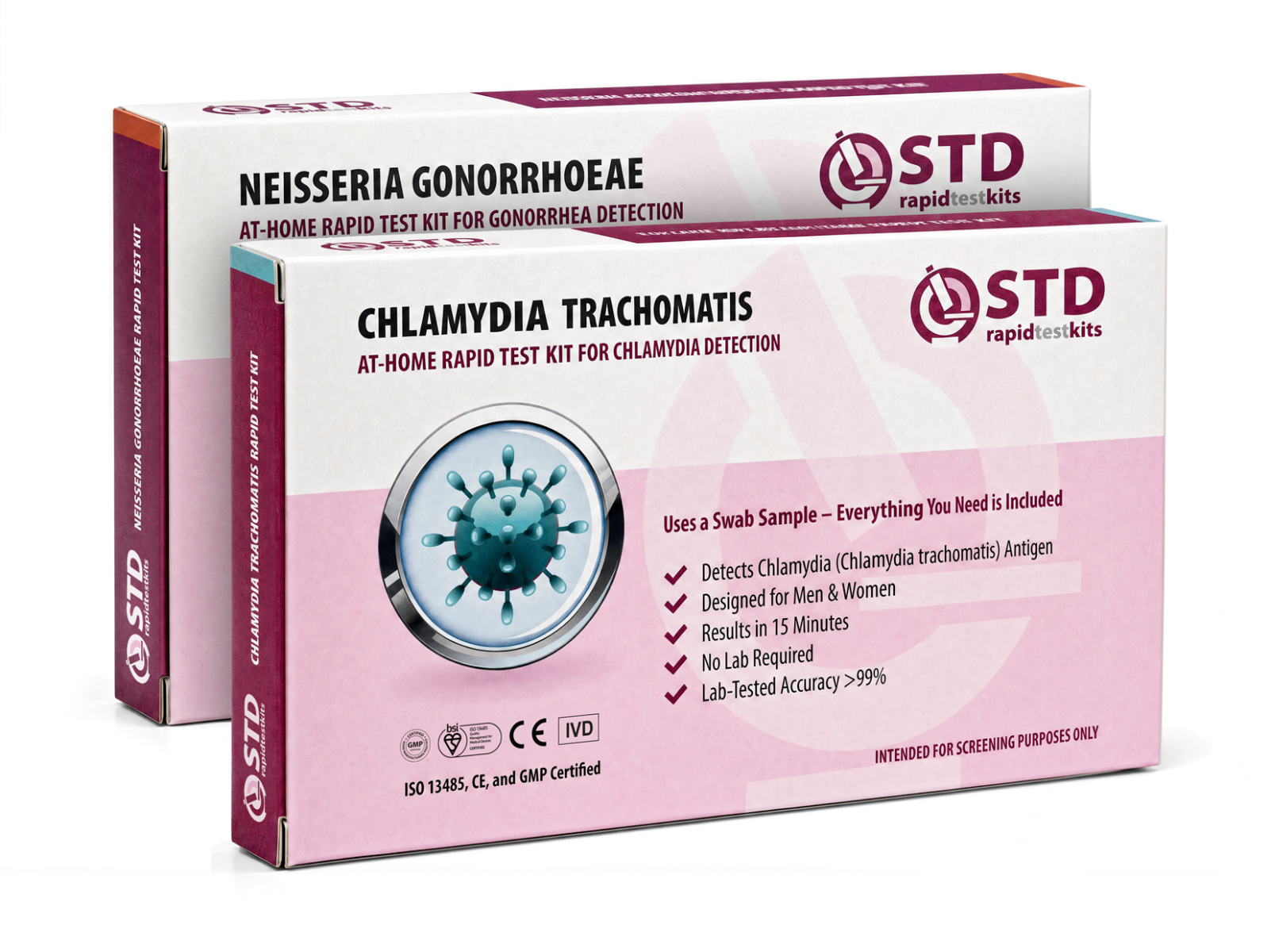
Our at-home rapid kits use lateral-flow chemistry, which is fast and private but less analytically sensitive than the lab-based NAAT (nucleic acid amplification) tests that clinics use. A negative rapid screen during the window period is worth confirming later, and a positive result is worth confirming with a clinic NAAT when possible. The two test types are complementary, not interchangeable.
Our at-home trichomoniasis and HPV swab kits are validated for vaginal self-swab only, so male readers concerned about trich or HPV need a clinic visit for testing. We also do not sell pharyngeal (throat) swabs or rectal NAAT panels; for those exposures specifically, a clinic visit is the right route. Our blood-based kits and any-gender genital swab kits cover the rest. This article is published by stdrapidtestkits.com, which sells at-home rapid lateral-flow STI test kits; the panels recommended below cover the infections most commonly associated with toy exposures.
A home lateral-flow strip looks for an antigen or antibody and produces a colored line in 15 minutes. A laboratory NAAT amplifies the pathogen's DNA or RNA and detects much smaller amounts. The two tools work together: a rapid kit gives you a fast, private screen; a NAAT confirms an unclear or positive result. Use the rapid kit when speed and privacy matter; book a clinic NAAT when the rapid is positive, when symptoms persist after a negative rapid, or when the exposure was high-risk.
If You Test Positive: Your Next Steps
A positive result after a toy-related exposure does not make you reckless or dirty. It is a piece of information you can act on. Most toy-transmissible infections are treatable.
Bacterial infections (chlamydia, gonorrhea, trichomoniasis, syphilis) are treated with antibiotics prescribed by a clinician. Treatment is usually short (a single dose for some, a week-long course for others). Avoid sexual contact and shared toys until treatment is complete and your provider gives the all-clear, often a follow-up test of cure.
Viral infections (herpes, HPV, HIV, hepatitis B) are managed long-term rather than 'cured' in the traditional sense. Antiviral medications reduce outbreaks, transmission risk, and progression. HIV in particular has effective once-daily treatment that suppresses the virus to undetectable levels, which means untransmittable to sexual partners (the U=U principle, meaning Undetectable equals Untransmittable).
Other steps after a positive result:
- Notify recent partners so they can test (anonymous notification services exist in many regions)
- Replace porous shared toys; thoroughly disinfect non-porous ones, or wrap them with a fresh condom going forward
- Plan a follow-up test of cure for bacterial infections, typically 3 months after treatment
- For BV, trich, or yeast that keeps recurring, treat the toy at the same time you treat yourself, otherwise reinfection is likely
If you're sharing sex toys, make sure you wash them between each use and always put a new condom on them each time.
Frequently Asked Questions
- Can I really get a bacterial STI from a toy if no one ejaculated?
- Yes. Bacterial infections like chlamydia and gonorrhea live in genital fluids and mucosal surfaces, not just semen. Vaginal fluid, anal mucus, and discharge from a urethra all carry enough bacterial particles to transfer through a contaminated toy. Penetration depth and ejaculation are not requirements for transmission.
- How long should I wait between toy uses to be safe?
- Cleaning and a fresh condom matter more than the gap between uses. Some pathogens (HSV, HPV) can survive for several hours on toy surfaces, and Hepatitis B can persist up to a week on dry surfaces. Wash the toy thoroughly between uses, dry it completely, and use a fresh condom when sharing. If you must reuse a toy quickly between partners or body parts, the condom swap is more important than the time gap.
- We are monogamous and both tested negative six months ago. Do we still need to wrap toys?
- Probably not for STI prevention if neither of you has had an exposure since the test. Wrapping is still useful for cross-site contamination (anal to vaginal, for example), since gut bacteria can disrupt vaginal flora and trigger BV or UTIs even without an STI in the picture. Cleaning between sites is the minimum; a fresh condom is the easier route.
- I rinsed my toy after my partner used it on someone else. Is that enough?
- No. Wash with mild soap, scrub the seams and base, rinse again, then dry completely. A surface rinse alone leaves residue. For porous materials (jelly, rubber, soft PVC), even a thorough wash may not fully sanitize. If you are uncertain about the toy's material or the previous exposure, replacing it is more reliable than trying to disinfect it. Get tested at the appropriate window for any infections of concern.
- Can a toy give me herpes if my partner has no visible sores?
- Yes. Herpes simplex virus sheds asymptomatically, meaning the virus can be present and transmissible on skin or in secretions even when no sore is visible. A toy used during an asymptomatic shedding period can carry viral particles to the next user. Wrapping the toy is the most practical protection in mixed-status partnerships.
- What about HIV? Is the toy a real route?
- HIV transmission via toys is uncommon but documented, particularly when fresh blood is involved (rougher anal play, menstrual periods, recent piercings or microabrasions). HIV does not survive long on dry surfaces, so the highest-risk scenario is a toy passed quickly between partners with visible blood involvement. Standard cleaning plus a condom drops the risk substantially. Effective treatment-as-prevention (U=U, Undetectable equals Untransmittable) means an HIV-positive partner with an undetectable viral load does not transmit through any sexual route.
- Can sex toys spread HPV?
- Research has detected HPV DNA on sex toys after standard cleaning, which makes transmission via shared toys plausible even when both users feel asymptomatic. HPV is also extremely common (most sexually active adults will have it at some point) and most strains clear on their own. Routine HPV vaccination is recommended through age 26, with shared clinical decision-making for adults through age 45 (CDC ACIP immunization schedules, <a href='https://www.cdc.gov/vaccines/hcp/imz-schedules/index.html' target='_blank' rel='noopener'>cdc.gov/vaccines/hcp/imz-schedules</a>). Vaccination matters more than perfect toy hygiene for the high-risk strains that cause cervical and other cancers.
- Should I throw out a porous toy after a shared use?
- If the toy is jelly rubber, soft PVC, TPE, or cyberskin, and it was used on someone else without a condom, replacing it is more reliable than trying to disinfect it. These materials trap fluids and microbes inside the surface in ways that surface cleaning cannot reach. Going forward, choose non-porous materials (medical-grade silicone, glass, stainless steel) for any toy you intend to share.

- U.S. Centers for Disease Control and Prevention. STI treatment guidelines, including transmission considerations for shared sexual devices.
- U.S. Centers for Disease Control and Prevention. About sexually transmitted infections; many STIs cause no symptoms or only mild symptoms, making testing the only reliable way to know your status.
- UK National Health Service. Sex activities and risk page; guidance on washing sex toys and using a new condom on them between each use.
- U.S. Centers for Disease Control and Prevention. HIV testing windows for fourth-generation antigen-antibody and rapid fingerstick assays.
- U.S. Centers for Disease Control and Prevention. Hepatitis B information page including environmental persistence of HBV on dry surfaces.
- U.S. Centers for Disease Control and Prevention. ACIP immunization schedules, including HPV vaccination recommendations through age 26 and shared clinical decision-making through age 45.
