
Published: September 2025 | Last updated: May 2026 | Editorial review and quality control: Martina N.
A chlamydia infection in one person might cause burning urination and visible discharge within days. In another person with the same exposure, the infection stays silent for months, then surfaces years later as fertility trouble or pelvic pain that finally pushes them into a clinic.
That gap shows up consistently across studies of STI symptom prevalence. Signs vary by anatomy, hormones, immune response, skin pigmentation, and how easily someone can get into care. The CDC's information page on chlamydia, available at cdc.gov/std/chlamydia, states that chlamydia often has no symptoms at all and can damage the female reproductive system without warning. Men with the same infection more often report early signs like urethral discharge or testicular discomfort that prompt a clinic visit.
What that means in practice is simple: feeling fine is not the same as being clear. Regular testing, regardless of what you do or do not notice between exposures, is what actually catches an infection in time to treat it.
Why do STDs look so different in different bodies?
Anatomy, hormones, skin tone, immune response, and healthcare access all change how an STI presents. The CDC reports that most women with chlamydia or gonorrhea have no symptoms, while men more often notice discharge, burning, or testicular pain that drive them to a clinic. Many infections in both sexes stay silent and still spread. Regular testing, not symptom watching, is the practice that actually catches them.
Key Takeaways
- Most women with chlamydia or gonorrhea have no symptoms; men more often notice early signs, but plenty of male infections are also silent.
- STI signs also vary by skin tone, hormones, age, and route of exposure, which is why testing matters more than how you feel.
Why one infection looks different in two bodies
Most sexually transmitted infections settle into mucosal tissue first, and that is where the asymmetry begins. In male anatomy, the urethra runs along the inside of the penis and exits at the tip, so any inflammation or pus produced by chlamydia or gonorrhea drips out where it can be seen. In female anatomy, the urethra is a separate, very short tube. Most early infection lives in the cervix, which sits deep inside the vagina, out of sight and out of immediate sensation.
Hormones change the picture again. The vaginal microbiome shifts across the menstrual cycle, after pregnancy, and during perimenopause. A discharge that would feel obviously abnormal at one point in the cycle can blend in at another. Many women describe their first chlamydia signs as a little extra discharge or spotting that arrived earlier than expected. A urethral drip in a man is much harder to dismiss as normal cycle variation.
Skin pigmentation matters too. Conditions like syphilis, herpes, and secondary STI rashes are often described in textbooks using the words red or pink. On darker skin, the same lesions can look brown, violet, gray, or simply darker than surrounding tissue. Patients and providers who learned dermatology from images of light skin may overlook real findings in melanin-rich skin, which contributes to delayed diagnoses.
Immune response varies as well. Two people exposed on the same night to the same partner can clear the pathogen, develop mild local inflammation, or progress to systemic infection. Genetic factors, baseline health, prior exposures, and even acute stress all influence how loudly the body reacts.
Add gendered patterns of healthcare access on top of the biology. Women are more likely to attend annual reproductive-health visits, but those visits do not always include a full STI panel unless the patient asks. Men are less likely to see a primary-care provider regularly at all.
In male anatomy the urethra exits at a visible tip, so urethral inflammation is seen and felt early. In female anatomy, early infection lives in the cervix, out of sight and out of routine sensation, which is why so many women's infections are caught only after they have already done damage.
Why silent infections happen more often in women
If you have a vulva, the most likely first signal of an STI is no signal at all. The CDC notes on its chlamydia information page that chlamydia often has no symptoms, and even when symptoms appear they are easily mistaken for something else. That confusion is what causes silent STIs to do more long-term harm in women than in men.
Three patterns explain most of the missed diagnoses:
- Symptom overlap with non-STI conditions. Yeast infections, urinary tract infections, and bacterial vaginosis all produce burning, itching, abnormal discharge, and pelvic discomfort. The first guess from a clinician (or from a patient self-treating with over-the-counter remedies) is usually the most common cause, and chlamydia or gonorrhea sits behind that first guess.
- Internal anatomy hides damage. Cervicitis, salpingitis (infection of the fallopian tubes), and early pelvic inflammatory disease can be present without external signs visible during a routine visual exam. The cervix is past where most patients can see, and most clinicians don't perform a full speculum exam at every visit.
- Routine annual testing is not standard. Many providers screen only for the infections their guidelines flag for the patient's age and history. Chlamydia and gonorrhea checks do happen for sexually active women under 25, but herpes, HPV beyond Pap, and trichomoniasis are typically not screened unless the patient asks.
The downstream consequences land mostly on the reproductive system. Untreated chlamydia or gonorrhea can ascend from the cervix into the fallopian tubes, causing pelvic inflammatory disease (PID). The CDC's overview of PID states that 1 in 8 women with a history of PID experience difficulty getting pregnant later, and PID also raises the risk of ectopic pregnancy and chronic pelvic pain. Untreated high-risk HPV can drive cervical cell changes that, if not caught by Pap or HPV screening, progress to cervical cancer over years. Even a single subclinical herpes infection can establish lifelong viral persistence that transmits during shedding episodes the person never feels.

When men spot something first
For people with a penis, bacterial STIs tend to announce themselves through inflammation of the urethra, which produces signs that are hard to ignore. The CDC's gonorrhea overview emphasizes this asymmetry: most women with gonorrhea have no symptoms, while men typically notice burning during urination or a white, yellow, or greenish penile discharge. The first warnings men experience are usually:
- Penile discharge, often white, yellow, or greenish, especially noticeable in the morning
- Burning, stinging, or sharp pain during urination
- Testicular swelling, ache, or one-sided pain (epididymitis)
- Sores, blisters, ulcers, or wart-like bumps anywhere on the shaft, glans, or scrotum
Gonorrhea in particular tends to produce a thicker, more obvious discharge within two to seven days of exposure, a relatively short window compared with how slowly it can show in women. Visible signs drive earlier clinic visits, and earlier visits mean earlier antibiotics, which limits damage and reduces transmission to partners.
Men are not immune to silent STIs, though. Roughly half of male chlamydia infections still produce no symptoms, and HPV in men frequently runs without any visible warts at all. Herpes simplex virus type 2 can sit dormant for months or years before the first outbreak, and even then the lesions may be subtle enough to mistake for ingrown hairs or razor irritation. Syphilis chancres are notoriously painless, which is exactly why people skip the clinic when they appear and miss the early-treatment window.
The takeaway: visible signs in men are useful when they appear, but their absence proves nothing. Men benefit from regular STI testing on the same schedule recommended for women, especially when partners change.
In men, gonorrhea typically produces visible urethral discharge within 2 to 7 days of exposure. That short window is why male infections get caught and treated faster than female ones, where the same bacterium often produces nothing visible at all for weeks.
HPV: the most common STI behaves very differently by anatomy
Disclosure: STD Rapid Test Kits sells at-home rapid tests for several of the infections discussed in this article; product references below appear where they are clinically relevant to the section's topic.
Human papillomavirus is the most common sexually transmitted infection in the world. The CDC's HPV resource page states that nearly every sexually active person who isn't vaccinated will contract at least one HPV strain in their lifetime, with about 13 million new infections each year in the United States alone. Most clear naturally within two years. The cases that don't clear can cause serious downstream cancers, and the pattern of which cancers and who is at risk depends heavily on anatomy.
In women, persistent high-risk HPV (especially types 16 and 18) drives the vast majority of cervical cancers. Cervical screening through Pap or HPV testing catches precancerous changes years before they become invasive disease, which is why national programs that screen women on schedule have dramatically reduced cervical cancer mortality. Cervical screening only works for people with a cervix.
In men, HPV-related cancers concentrate in the oropharynx (the back of the throat and base of the tongue), the anal canal, and less commonly the penis. There is no equivalent routine screening test for any of these in healthy men, partly because it is hard to access these tissues for cytology and partly because the public-health infrastructure was built around cervical cancer first. According to CDC cancer surveillance, HPV-related oropharyngeal cancer rates have been climbing in men over the past two decades.
HPV vaccination is the most effective prevention tool we have for any anatomy. The Advisory Committee on Immunization Practices recommends routine vaccination through age 26, with shared clinical decision-making between provider and patient through age 45. Vaccination after sexual debut still offers protection against strains the person has not yet encountered.
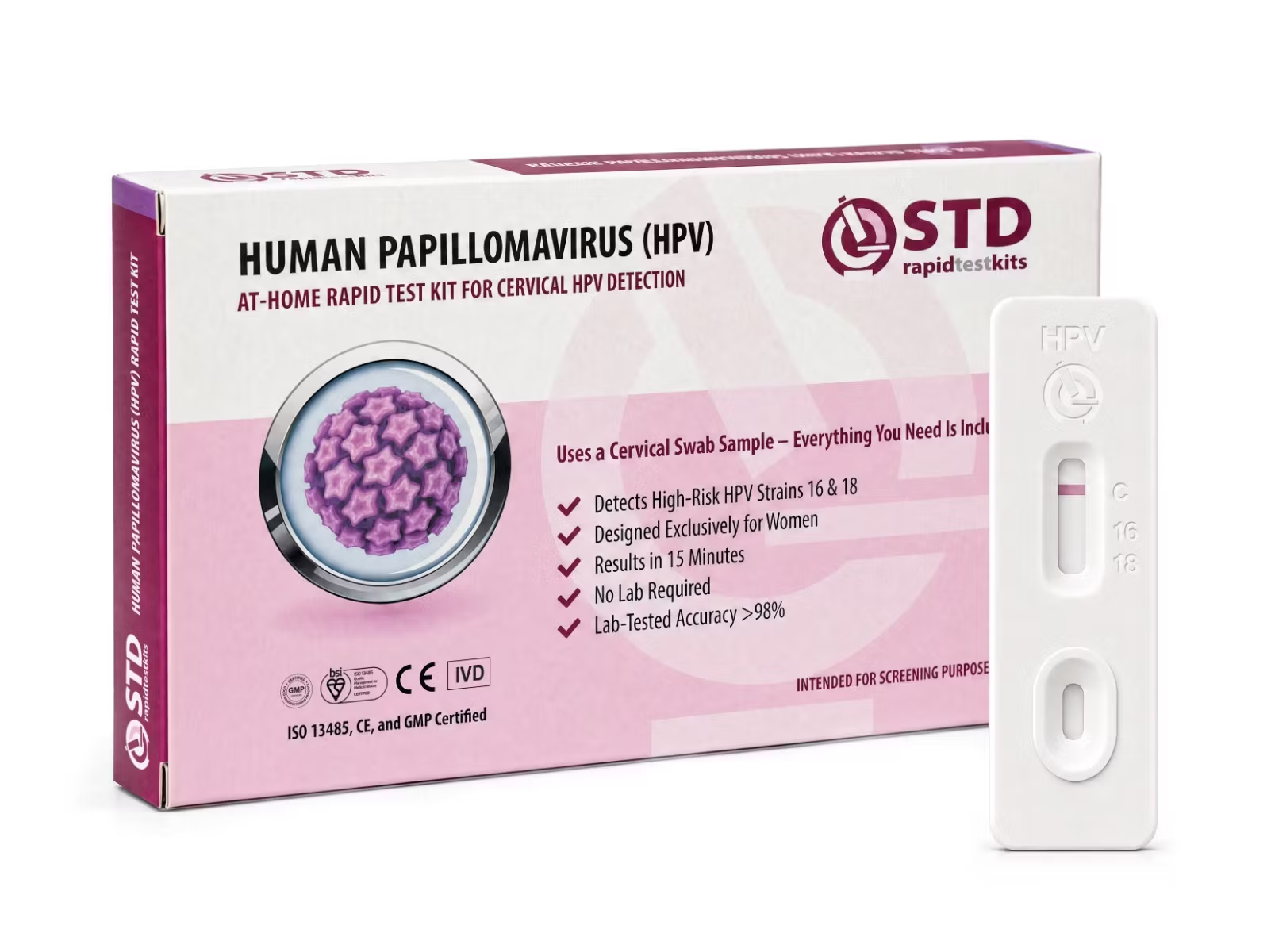
Our at-home HPV self-test is a vaginal swab validated for women only. We do not sell a male-compatible HPV home test, because no equivalent self-collected sample type for men currently has reliable screening performance. Men concerned about HPV exposure should ask a provider about anal cytology if they are at higher risk (for example, men who have sex with men, or immunosuppressed individuals) and discuss vaccination if not yet completed.
When the signs are absent but the risk is still there
One of the most uncomfortable facts in sexual health is that most STIs are easier to transmit than to detect. The World Health Organization's fact sheet on sexually transmitted infections states that the majority of STIs acquired worldwide each year are asymptomatic. That is true for both sexes; women are simply on the worse end of an unequal distribution.
Asymptomatic infections still spread. The CDC's herpes overview notes that most people don't know they have a herpes infection because signs are absent or mild enough to be mistaken for a pimple or ingrown hair, and the virus can shed from skin that has no visible sore. A person with no chlamydia symptoms still passes live bacteria during unprotected vaginal, anal, or oral contact. HPV transmits through skin-to-skin contact in genital areas without any visible warts. Syphilis chancres are painless, can sit inside the vagina or rectum where they go unseen, and disappear on their own after a few weeks even though the bacteria stay in the body.
Treat "I feel fine" the same way you treat "the test was negative six months ago." Both are useful data points, but neither is current evidence that you are clear today. Test after a new partner, after barrier-method failure, or as part of an annual checkup if you are sexually active with multiple people.
STIs are often asymptomatic. When symptoms occur, they can be non-specific.
How STIs get misdiagnosed (and who tends to be dismissed)
Symptom overlap is a real clinical problem, and it gets worse when bias enters the room. Diagnostic disparity studies show that women, particularly young women and women of color, are more likely to have their pelvic and reproductive complaints dismissed or attributed to non-infection causes on a first visit. The same patterns affect LGBTQ+ patients who may not be asked the right sexual-history questions, and trans patients whose anatomy doesn't match their provider's assumptions.
The most common misfires include:
- Genital herpes mistaken for a yeast infection or razor irritation, especially when sores are internal, small, or atypical in appearance.
- Chlamydia or gonorrhea cervicitis assumed to be a urinary tract infection because the burning sensation overlaps. Antibiotics aimed at the wrong target leave the actual infection untreated and free to ascend.
- HPV in men dismissed as a "just a carrier" problem, even though persistent infection elevates that man's anal or oropharyngeal cancer risk.
- Trichomoniasis missed entirely in men because clinicians assume only the female partner needs treatment, which guarantees reinfection in the couple.
A second source of missed diagnoses is the panel itself. A "standard STI panel" rarely tests for everything. Herpes serology is usually omitted because asymptomatic positive results can be hard to counsel on. HPV testing is generally only run on women through Pap co-testing. Trichomoniasis testing is inconsistent. If you want a fuller picture, you have to ask specifically, and you may need to advocate for yourself when a provider is reluctant to expand the panel.
Patients who suspect they've been brushed off should ask three questions: which infections did you test for, which ones did you not test for, and what would change the decision to test for more? Getting those answers in writing helps if a missed diagnosis turns up later.
If a clinician sends you home with reassurance, ask: which infections did you test for, which ones did you not test for, and what would change the decision to test for more? Get the answers in writing or in your patient portal. Documented gaps protect you if a missed diagnosis turns up later.
Skin tone changes how visible STIs really are
Most dermatology and STI textbooks were built using photographs of light skin, which is a structural problem in clinical training. Lesions described as erythematous (red) or pink can appear in many other shades on darker skin: brown, violet, gray, deep purple, or simply hyperpigmented relative to surrounding tissue. The lesion is the same; the color cue is not.
This matters for several common STIs:
- Secondary syphilis rash on the palms and soles is classically described as copper-colored. On darker skin, the rash may appear as deep brown or violet macules that contrast subtly with the surrounding palm. Without a clinician trained on diverse skin tones, the rash can be missed entirely.
- Genital herpes vesicles look smaller and less obviously fluid-filled on darker skin. Crusted-over lesions may look like dark scabs rather than the classic cluster of clear blisters.
- Primary syphilis chancres are painless ulcers that can look slightly different in color and contrast on darker skin, especially in the genital area where pigmentation is naturally variable.
- Inflammatory rashes from other STIs, like the disseminated rash of acute HIV infection, can blend into normal skin tone variation if a viewer is searching for the textbook pink or red.
Two practical implications follow. First, a patient looking at their own skin should not rely on textbook color descriptions to rule something in or out. If a sore, bump, or rash is new, asymmetric, painless, or persistent, that is reason enough to test. Second, when you can choose your provider, look for clinicians and clinics that publicly highlight training and image libraries that include diverse skin tones. Specialty dermatology atlases that focus on skin of color are increasingly available, and good clinics now reference them in their training.
Lesions textbooks describe as red or pink frequently appear brown, violet, or gray on darker skin. That gap in clinical training routinely delays diagnosis for patients with melanin-rich skin, especially for secondary syphilis rashes and early herpes vesicles.
Testing access isn't equal, even when symptoms don't differ
Even with identical symptoms, two patients can leave the same clinic with very different outcomes. Insurance status, geography, race, gender identity, language, and provider bias all shape who gets a comprehensive STI panel and who gets sent home with reassurance. Common patterns include:
- Uninsured and underinsured patients face out-of-pocket costs for testing that lead them to skip parts of the panel, particularly add-ons like trichomoniasis or herpes serology.
- Men, particularly straight men, are not routinely offered extragenital (oral or anal) testing even when their exposure history would warrant it.
- Women without obvious "high-risk" factors are sometimes denied STI screening because the provider does not consider it indicated, despite CDC guidance recommending annual screening for sexually active women under 25.
- Trans and nonbinary patients may receive testing based on outward gender presentation rather than current anatomy or sexual practice, which leads to missed diagnoses.
- Rural patients drive long distances for any sexual-health clinic and may not have a discreet option that doesn't risk disclosure to neighbors or family.
At-home testing fills part of this gap. A self-collected swab or fingerstick sample, read at home, removes the geographic barrier and the in-person interaction. It does not replace clinical care for confirmed infections (treatment requires a prescription) or for symptoms that need physical examination. What an at-home rapid test removes is the wait for an appointment, the disclosure to staff and neighbors at a small-town clinic, and the cost of an in-person visit a person may not be able to take time off work to attend.

STI signs by infection: a quick reference (with caveats)
The table below summarizes the most common visible patterns for each major STI, by anatomy. Treat it as a starting point for conversation with a clinician or for choosing a test kit, not as a definitive checklist. Asymptomatic infections do not show up well in any table because, by definition, they have nothing visible to summarize.
| Infection | Most common in male anatomy | Most common in female anatomy | Asymptomatic rate |
|---|---|---|---|
| Chlamydia | Penile discharge, urethral burning, testicular pain | Often none; abnormal discharge, intermenstrual bleeding, pelvic pain | Around half in men, majority in women |
| Gonorrhea | Thick yellow or green discharge, painful urination, testicular pain | Often none; cervicitis, abnormal discharge, pelvic pain | Common in both, more so in women |
| High-risk HPV | Usually no symptoms; rare visible warts | Usually no symptoms; cervical changes detected by Pap or HPV test | Very high in both |
| Genital herpes (HSV-2) | External vesicles or ulcers on the penis, scrotum, or buttocks | Internal or external lesions; often subtle on the cervix or labia | Most first infections are unrecognized |
| Primary syphilis | Painless chancre on the penis or rectum | Painless chancre on the cervix or vagina, often unseen | Easy to miss in either sex |
| Trichomoniasis | Often none; mild urethral irritation | Frothy discharge, itching, vulvar irritation | Mostly silent in men |
| Acute HIV | Flu-like illness 2 to 4 weeks after exposure: fever, sore throat, rash | Same flu-like presentation; pattern doesn't differ much by anatomy | Many cases mistaken for flu |
You can't see risk, but you can act on it
STIs distribute their warning signs unfairly. Some people get loud, early symptoms that send them to a clinic within days. Others go years between exposure and diagnosis, sometimes only finding out during a fertility workup or an unrelated blood draw. Skin tone, anatomy, hormones, and access to good clinical care all influence which group you fall into for any given infection.
What you can control is your own testing cadence. Public-health bodies recommend at least annual STI testing for anyone who is sexually active outside a long-term mutually monogamous relationship that started after both partners tested negative, and more frequent testing (every three to six months) for people with multiple partners or higher-risk exposure. Testing after a new partner, after barrier-method failure, or after any specific concern is also reasonable regardless of how you feel.
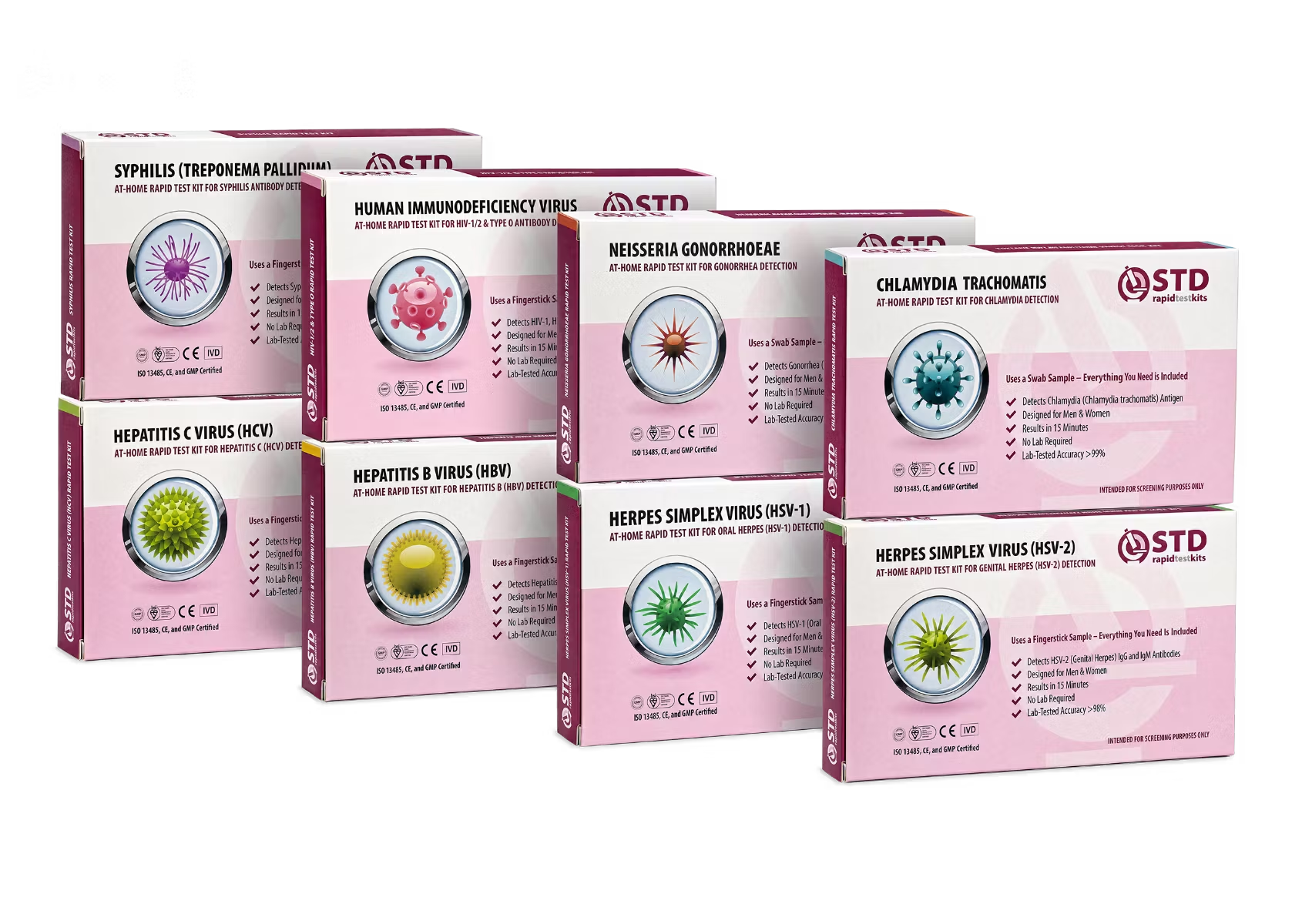
An at-home rapid panel covers the most common infections in one go, returns a result in about 15 minutes per test, and skips the clinic visit entirely for the screening step. Confirmed positives still need clinical follow-up for treatment, but you do not need a clinic to get the first answer.
FAQs
- Why do STDs show up so differently in men and women?
- Anatomy is the largest single factor. The male urethra runs along the length of the penis, so urethral inflammation produces visible discharge. The female cervix sits inside the vagina, so similar inflammation isn't visible without a speculum exam. Hormones, immune response, and skin tone add further variation on top of anatomy.
- Which STDs are most likely to be missed in women?
- Chlamydia, gonorrhea, and trichomoniasis are the most commonly missed bacterial infections, and high-risk HPV is the most commonly missed viral infection. All four can sit in cervical or vaginal tissue without producing external symptoms while still causing long-term reproductive damage.
- Can men carry HPV without knowing?
- Yes. Most male HPV infections clear naturally and never produce visible warts. The strains that cause cancer (mainly types 16 and 18) usually have no early symptoms in men, which is part of why HPV-related oropharyngeal and anal cancers are often diagnosed at later stages in male patients.
- Why don't standard STI panels cover everything?
- Standard panels are typically built around chlamydia, gonorrhea, syphilis, and HIV because those four have well-validated screening tests and clear treatment pathways. Herpes serology is often excluded because asymptomatic positive results are hard to counsel on, HPV testing is usually run only on women through Pap co-testing, and trichomoniasis testing is inconsistent. If you want a fuller panel, you usually have to ask for it specifically.
- Do condoms protect against every STD?
- Condoms substantially reduce the risk of STIs spread through bodily fluids (HIV, gonorrhea, chlamydia, hepatitis B). They reduce but don't eliminate risk for STIs spread through skin-to-skin contact (herpes, HPV, syphilis), because these can transmit from areas the condom doesn't cover. Condoms remain the most cost-effective single preventive tool, but they are not a substitute for testing.
- Should I get tested even if I don't have any symptoms?
- Yes, especially if you have had a new partner in the past three months, multiple partners in the past year, or any condom failure. The CDC recommends annual screening for all sexually active women under 25 and for men who have sex with men, with more frequent screening (every three to six months) for higher-risk exposure.
- Can untreated STDs affect future fertility?
- Untreated chlamydia or gonorrhea is the leading preventable cause of tubal-factor infertility, and the CDC links a PID history to difficulty conceiving in 1 in 8 affected women. Untreated syphilis in pregnancy adds risk of stillbirth, neonatal death, or congenital syphilis. Early testing and treatment prevent almost all of these outcomes.
- Do STD symptoms look different on darker skin?
- Often yes. Lesions described in textbooks as red or pink frequently look brown, violet, or gray on darker skin. Secondary syphilis rashes, herpes vesicles, and other inflammatory STI rashes all change appearance with skin pigmentation. This contributes to delayed or missed diagnoses, particularly when a patient or provider relies on textbook color cues alone.
- U.S. Centers for Disease Control and Prevention. About Chlamydia. Confirms that chlamydia often has no symptoms and can damage the female reproductive system without warning.
- U.S. Centers for Disease Control and Prevention. About Gonorrhea. Confirms that most women with gonorrhea have no symptoms while men typically notice burning urination or penile discharge.
- U.S. Centers for Disease Control and Prevention. About Pelvic Inflammatory Disease. Source for the 1-in-8 statistic on PID and difficulty getting pregnant later.
- U.S. Centers for Disease Control and Prevention. About HPV. Confirms HPV prevalence (about 13 million new infections per year in the U.S.), the link to cervical and oropharyngeal cancers, and the role of vaccination.
- U.S. Centers for Disease Control and Prevention. About Genital Herpes. Confirms asymptomatic viral shedding and that most people don't know they have a herpes infection.
- U.S. Centers for Disease Control and Prevention. About Syphilis. Confirms that primary syphilis chancres are usually painless and can be hard to see, particularly when located internally.
- World Health Organization. Sexually transmitted infections (STIs) fact sheet. Source for the statement that STIs are often asymptomatic.
- National Health Service (UK). Sexually transmitted infections (STIs). General reference on STI presentation, testing windows, and clinical follow-up.
