

Published: December 2025 | Last updated: April 2026 | Editorial review and quality control: Martina N.
A red, sticky eye that shows up the morning after a hookup is one of those symptoms that gets brushed off as allergies, dry air, or a dirty pillowcase. Sometimes it really is one of those things. But sexually transmitted infections can absolutely cause conjunctivitis, and the timeline (often 12 hours to two weeks after exposure, depending on the pathogen) is one of the strongest clues that what you are looking at is not seasonal pollen.
This guide covers what is actually happening when gonorrhea, chlamydia, or herpes simplex reach the eye, how the symptoms differ from ordinary pink eye, why hand-to-eye transfer is the most common route (not direct fluid splash), and exactly how to phrase your concern in a clinic so the right swab gets ordered the first time. The 80% reassurance up front: most red eyes are not STI-related. The 20% that are need fast, specific treatment, and that is what this article is built to help you spot.
Is a red eye after oral sex always an STI?
No. Most cases of pink eye come from common viruses, allergens, or non-sexual bacteria. But gonorrhea and chlamydia (and less commonly herpes simplex) can infect the conjunctiva when infected fluid reaches the eye, usually via hand contact rather than direct splash. Suspicion is highest when symptoms appear within 12 to 24 hours of exposure (the gonorrhea pattern) or build gradually over 5 to 14 days (the chlamydia and herpes pattern), affect one eye, produce thick yellow-green discharge, and do not improve with standard over-the-counter drops. If that fits, ask your provider specifically for gonorrhea, chlamydia, and HSV testing on the affected eye, and on your throat if you gave oral sex.
Key Takeaways
- Gonococcal conjunctivitis can develop in 12 to 24 hours after fluid reaches the eye and is a medical emergency due to the risk of corneal damage; thick yellow-green pus in one eye is the classic sign.
- Most clinics do not automatically test eye discharge for STIs. You have to specifically mention recent oral sex and request gonorrhea and chlamydia testing on the eye to get the correct swab and treatment.
What's actually happening when an STI reaches the eye
The conjunctiva is the thin transparent membrane covering the white of your eye and the inner surface of your eyelids. It is mucosal tissue, the same general category as the lining of your mouth, throat, urethra, and rectum. Pathogens that thrive in those environments can also colonize the conjunctiva when they get there.
For Neisseria gonorrhoeae, ocular infection is particularly aggressive. The bacterium is one of the few that can penetrate intact corneal epithelium, which is why providers treat gonococcal conjunctivitis as an ophthalmic emergency. The CDC's clinical overview of conjunctivitis identifies Neisseria gonorrhoeae among the bacterial causes that warrant urgent referral. Untreated, it can progress to corneal ulceration and vision loss within days.
Chlamydia trachomatis behaves more slowly. Adult inclusion conjunctivitis is the term for chlamydia infection of the eye in adults, and it tends to present as a low-grade chronic conjunctivitis that does not respond to typical bacterial pink eye treatments. The same organism is also the leading cause of trachoma, a chronic eye disease in regions with limited sanitation, but the genital-strain inclusion form behaves differently and is what shows up after sexual contact.
Herpes simplex virus (HSV-1 more often than HSV-2) can cause herpetic conjunctivitis, blepharitis (eyelid involvement), or, more seriously, herpes simplex keratitis, an infection of the cornea itself. The CDC's clinical guidance on genital herpes notes that ocular HSV can recur and cause permanent corneal scarring without correct antiviral therapy.
How symptoms differ by infection
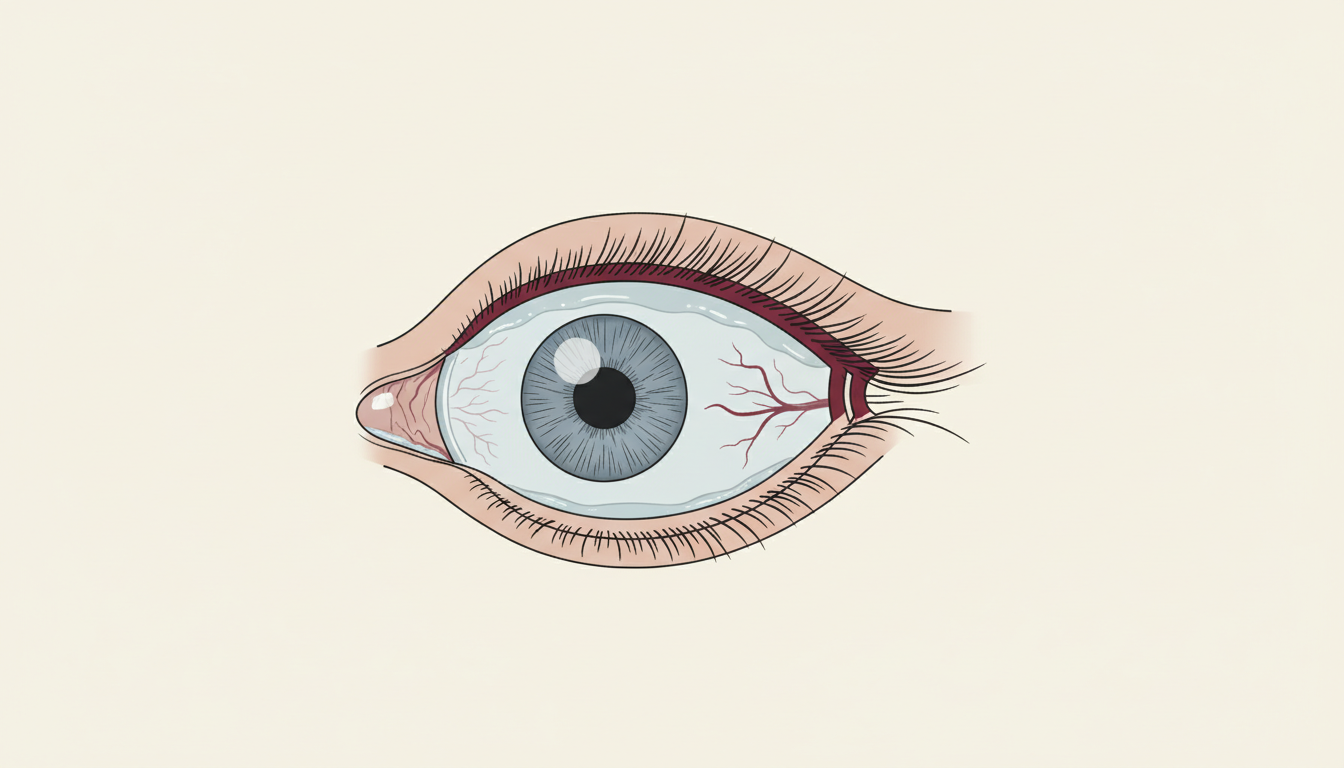
The single most useful pattern to recognize is gonococcal conjunctivitis, because it is the most aggressive of the STI-related eye infections and the one where speed of treatment matters most. The classic picture is a hyperacute conjunctivitis: thick, copious, yellow-green purulent discharge that re-accumulates within minutes of being wiped away, marked eyelid swelling, severe pain, and almost always a single eye affected first. Symptoms typically appear within 12 to 24 hours of inoculation.
Chlamydial conjunctivitis is slower and quieter. Mild to moderate redness, scant mucus discharge, occasional itch, and a feeling that something is in the eye. It often gets misdiagnosed as ordinary bacterial or viral pink eye, then fails to clear with standard treatment over a week or two. Adult cases of chlamydial conjunctivitis can persist for months without correct antibiotic therapy.
Herpetic eye disease has its own pattern. Early symptoms include burning, gritty sensation, light sensitivity (photophobia), watery rather than purulent discharge, and sometimes vesicles on the eyelid. The cornea may show a characteristic dendritic ulcer pattern that an ophthalmologist can spot with fluorescein staining. The CDC's clinical guidance on herpes simplex covers the recurrence pattern and the specific antiviral regimens used for ocular involvement.
Ordinary viral pink eye, the most common cause overall, usually affects both eyes within a day or two of each other, comes with a cold or sore throat, produces watery clear discharge, and itches more than it hurts. Allergic conjunctivitis is bilateral, intensely itchy, often seasonal, and clears with antihistamine drops.
| Cause | Typical onset | Discharge | Pain or itch | Eye involvement |
|---|---|---|---|---|
| Gonococcal conjunctivitis | 12 to 24 hours | Thick yellow-green pus, copious, re-accumulates fast | Severe pain, marked swelling | Usually one eye first |
| Chlamydial conjunctivitis | Several days to two weeks | Scant mucus, mild redness | Mild irritation, foreign-body feeling | One eye, can become chronic |
| Herpes simplex (ocular) | 2 to 12 days | Watery, may have eyelid vesicles | Burning, photophobia, gritty pain | Usually one eye, may recur |
| Common viral pink eye | 1 to 3 days after a cold | Watery and clear | Mild itch, low pain | Usually both eyes |
| Allergic conjunctivitis | Variable, often seasonal | Watery, clear | Intense itch, no pain | Both eyes equally |
How fluid actually reaches the eye
The intuitive image of an STI in the eye is direct fluid splash during oral sex: ejaculate or vaginal fluid landing on or near the eye. That does happen, and it is the highest-risk single event. But it is not the most common route. Most adult ocular STI infections come from auto-inoculation: you touch a partner's genitals or mouth, then later touch your face. The pathogen needs only a trace amount of mucosal secretion on a finger, a contact lens, or a shared towel to colonize the conjunctiva.
The other commonly missed route is sequence: you give oral sex, your hands are in contact with your partner's genital fluid, and at some point in the next hour you rub your eye, take out a contact lens, or wipe a tear. Pre-ejaculate and vaginal secretions both contain the bacterial loads needed to seed an infection. The CDC's overview of STI risk during oral sex notes that gonorrhea and chlamydia are the most consistently transmitted infections through oral routes, with HSV close behind.
Contact lens wearers carry an additional risk. Bacteria adhere to lens surfaces, and a contaminated finger handling a lens before insertion delivers a much higher inoculum to the conjunctiva than a single rub.
Remove lenses before any sexual activity that involves the face area, and wash hands with soap and water before reinserting them. Lens surfaces concentrate bacteria from contaminated fingers and deliver them directly to the conjunctiva, which is the route most likely to seed an ocular infection. If this scenario comes up regularly, daily disposables are worth considering so a contaminated lens never goes back in.
How fast STI eye symptoms appear
Timing is one of the more useful diagnostic clues, because the incubation periods cluster differently from non-STI causes. Gonorrhea is the fastest, often presenting clinical symptoms within 12 to 24 hours of inoculation. By the second morning after exposure, the eye is typically obviously affected, with eyelid swelling and a discharge thick enough to crust the lashes shut overnight.
Chlamydia takes longer. Adult inclusion conjunctivitis often has an incubation of 5 to 14 days, sometimes longer. The slower pace is part of why it gets misdiagnosed: by the time the eye is bothering you, the link to a sexual encounter two weeks ago is not the first thing on your mind.
Herpes simplex of the eye usually appears within 2 to 12 days after a primary exposure, though recurrences can happen years later. If you have a history of cold sores, it is worth flagging that on a clinical visit, because HSV-1 from your own oral lesions can also auto-inoculate the eye via hand contact.
Get same-day in-person care, not over-the-counter drops, if any of these apply: thick yellow-green discharge that re-accumulates within minutes of wiping; eyelid swollen enough that you cannot fully open the eye; pain rated severe rather than annoying; vision blurry, hazy, or sensitive to light; symptoms appeared within 24 hours of recent oral sex. These features fit gonococcal or herpetic involvement and need targeted antibiotic or antiviral therapy fast to protect the cornea.
What to say in the clinic so you get the right swab
Most urgent care visits for red eye are short. The provider looks at the eye, considers viral vs allergic vs ordinary bacterial pink eye, and either offers reassurance or prescribes a generic antibiotic drop. Standard bacterial conjunctivitis treatment will not cover gonorrhea, will not cover chlamydia adequately, and is the wrong category of drug for HSV.
The single sentence that changes the workup is something like: "I had oral sex about [time] ago, and now my eye is red with discharge. Could this be gonorrhea or chlamydia in the eye, and can you do the right swab?" That phrasing prompts the provider to order a NAAT (nucleic acid amplification test) on conjunctival fluid for gonorrhea and chlamydia rather than a generic culture, and to consider HSV PCR if the picture is more vesicular than purulent.
If you also gave oral sex, ask for a pharyngeal (throat) swab too. Gonorrhea and chlamydia in the throat are often asymptomatic but commonly co-occur with the ocular form, and the CDC's treatment guidelines for chlamydial infections support extra-genital screening at all anatomic sites of exposure. If your clinic does not stock conjunctival NAAT collection kits, an ophthalmology referral is appropriate.
One practical note: skip the over-the-counter pink eye drops while you are working out a diagnosis. They will not help a gonorrhea or chlamydia infection, they can slightly delay healing, and steroid-containing drops in particular can dramatically worsen an undiagnosed herpetic infection.
Treatment by pathogen
Once a diagnosis is made, treatment moves quickly. Gonococcal conjunctivitis is typically treated with a single intramuscular dose of ceftriaxone, often combined with copious saline eye irrigation and sometimes topical antibiotic drops. Improvement is usually visible within 24 to 48 hours of the injection. Because gonorrhea frequently co-occurs with chlamydia, providers commonly add doxycycline to cover both pathogens, in line with the CDC's STI treatment guidelines for gonococcal infections in adolescents and adults.
Adult chlamydial conjunctivitis is typically treated with a course of oral doxycycline or, in some protocols, single-dose azithromycin. Topical antibiotic drops are sometimes added for symptomatic relief, but the systemic antibiotic is what clears the infection. Treatment courses run roughly seven days for doxycycline regimens.
Herpetic eye disease is treated with antivirals, not antibiotics. Oral acyclovir or valacyclovir, sometimes paired with topical antiviral drops such as ganciclovir or trifluridine, are standard. Steroid drops have a role only when prescribed by an ophthalmologist who has confirmed a stromal (deeper corneal) presentation; they are dangerous in epithelial herpetic disease and should never be self-applied.
Across all three pathogens, finishing the full prescribed course matters. Symptoms improve well before the infection is cleared, and stopping early is the most common cause of relapse and antibiotic-resistant follow-up infections.
Co-infection is common: a meaningful share of patients with genital gonorrhea also have chlamydia at the same site, often without separate symptoms. CDC treatment protocols for confirmed gonococcal infections therefore include doxycycline for chlamydia coverage by default, unless chlamydia has been specifically ruled out. If you are diagnosed with gonococcal conjunctivitis and your provider does not mention doxycycline, ask whether chlamydia coverage is included or has been ruled out.
Telling your partner, without the blame
If you developed an STI-related eye infection after a recent sexual encounter, your partner almost certainly has the same infection somewhere on their body, often without symptoms. Pharyngeal gonorrhea is asymptomatic in the majority of cases, and chlamydia is similarly quiet in both throat and genital infections. They are not necessarily lying about a clean status. Many people genuinely do not know.
A workable script is something like: "I developed an eye infection that turned out to be [gonorrhea / chlamydia / herpes], and the most likely route is from our recent contact. I am not assuming anything about how it got there. I would feel better if we both got tested and treated so we are not passing it back and forth." That framing is honest, non-accusatory, and gives the other person a clear path forward.
If your diagnosis is chlamydia (and in some U.S. states, gonorrhea), most clinics can prescribe medication for your partner without requiring them to come in for their own positive test. This is called expedited partner therapy and is supported by the CDC's STI treatment guidelines. Ask your provider directly: "Is expedited partner therapy available here for my partner?" If your partner cannot easily access a clinic, a self-collected at-home test can also confirm their status and guide their own treatment.
Prevention you can actually use
The realistic preventions for ocular STI exposure are not dramatic. They are habits.
First, hand hygiene around sex is the single largest lever. Wash hands with soap and water before touching your face, your contact lenses, or the eyes of a partner after any genital or oral contact. Hand sanitizer alone is less effective at removing organic mucosal secretions than soap and water.
Second, contact lens wearers should remove lenses before sex involving the face area, and handle them with washed hands afterwards. Daily disposables are worth considering if this happens often.
Third, use barrier protection during oral sex when feasible. The CDC's overview of oral sex and STI risk notes that condoms and dental dams reduce transmission of gonorrhea, chlamydia, and HSV at all sites of contact, including the eye route via secondary hand transfer.
Fourth, do not share towels, washcloths, or pillowcases between sexual partners until any active infection has been treated. The bacterial inoculum on a freshly-used washcloth is small but real, and ocular conjunctiva is unforgiving of small inocula.
None of this requires changing your sex life. It is mostly a matter of when you wash your hands and whether you keep lenses out during sex.
Recovery timeline after treatment
For gonococcal conjunctivitis, dramatic improvement within 24 to 48 hours of the ceftriaxone injection is the norm. Discharge thins, eyelid swelling drops, and pain eases. Full healing of the conjunctiva and any associated corneal involvement can take a week to ten days. Follow-up at 48 to 72 hours is standard to confirm response, especially if there was any corneal involvement on the initial exam.
Chlamydial conjunctivitis improves more slowly. Patients typically notice meaningful symptom reduction within five to seven days of starting doxycycline, with full resolution over two to three weeks. Persistent symptoms past that window warrant retesting and consideration of treatment failure or reinfection.
Herpetic eye disease is the most variable. Epithelial keratitis often resolves within one to two weeks of antiviral therapy. Stromal disease can take months and may require ongoing low-dose antiviral suppression. Recurrence is part of the disease, not a sign of treatment failure, and chronic management is sometimes needed.
Across all three, do not return to wearing contact lenses until your treating provider gives the green light. Reinsertion of a lens into a healing conjunctiva is the most common cause of relapse and reinfection.
Gonococcal conjunctivitis is a sight-threatening ocular infection because Neisseria gonorrhoeae is one of the few bacteria that can penetrate intact corneal epithelium. Without prompt antibiotic therapy, the infection can progress to corneal ulceration, perforation, and permanent vision loss within days. This is why a same-day clinic or ophthalmology visit is the right move when the timeline and discharge pattern fit, rather than waiting to see whether over-the-counter drops help. For background reading on bacterial causes of conjunctivitis and referral guidance, see the <a href="https://www.cdc.gov/conjunctivitis/hcp/clinical-overview/index.html" target="_blank" rel="noopener">CDC clinical overview of conjunctivitis</a>.
Frequently asked questions
- Can you really catch an STI in your eye from oral sex?
- Yes. The conjunctiva is mucosal tissue, biologically similar to the lining of the throat or genitals. Gonorrhea and chlamydia transfer most often through hand-to-eye contact during or shortly after oral sex, not through direct fluid splash. Herpes simplex can also reach the eye, particularly via auto-inoculation from active oral lesions. The route is real and well-documented in the CDC's clinical literature on conjunctivitis.
- How fast would symptoms appear if it were gonorrhea?
- Gonococcal conjunctivitis typically presents within 12 to 24 hours of inoculation. By the second morning after exposure, the eye is usually obviously affected, with thick yellow-green pus and noticeable eyelid swelling. If your eye looked fine for several days before becoming irritated, gonorrhea is much less likely than chlamydia, herpes, or a non-STI cause.
- Will the standard pink-eye drops fix this if it is an STI?
- No. Common over-the-counter drops cannot clear a gonorrhea or chlamydia infection, and steroid-containing drops can dramatically worsen herpetic eye disease. If your symptoms could be STI-related, skip the OTC drops, get a clinic-confirmed diagnosis with a NAAT swab, and accept the targeted antibiotic or antiviral your provider prescribes.
- Can a home test kit diagnose an STI in my eye?
- No. At-home rapid tests are validated for genital, oral, or fingerstick samples, not conjunctival samples. Diagnosing an ocular infection requires an in-person eye exam and a clinic-collected swab. What home tests can do is confirm whether a sexual partner has an active gonorrhea or chlamydia infection, which is useful evidence to bring to your eye appointment and useful information for the partner to act on.
- Do I have to mention oral sex when I see a doctor?
- Yes, or at least give a clear hint. The default workup for red eye is viral or allergic conjunctivitis. Without the sexual history, providers will not order the gonorrhea or chlamydia NAAT swab that actually identifies the cause, and you will leave with a generic antibiotic drop that does not work. A single sentence about a recent oral encounter is enough to change the entire diagnostic pathway.
- What if my eye started getting better on its own?
- Bacterial STI eye infections rarely resolve on their own. They can fluctuate (a quiet day or two, then worse again), but the underlying infection persists and can damage the cornea over time. If symptoms returned after a brief improvement, that is the pattern of a partially controlled infection rebounding, not of healing. Get evaluated.
- How long am I contagious after starting treatment?
- For bacterial gonococcal or chlamydial conjunctivitis, infectivity drops sharply within 24 hours of starting the correct antibiotic. Until then, treat the eye discharge as contaminated: do not share towels, pillowcases, or eye makeup, and wash hands carefully after any contact with the eye. For herpes simplex, infectivity is highest when there is active discharge or visible vesicles; viral shedding can be present without symptoms, so good hand hygiene around the eye matters even between flare-ups.
- Will untreated gonorrhea in the eye cause permanent damage?
- It can. Gonococcal conjunctivitis is one of the few bacterial infections that can penetrate intact corneal epithelium and cause ulceration, perforation, or vision loss within days if untreated. This is why the CDC and ophthalmology specialists treat it as an emergency. Treated promptly, full visual recovery is the norm. The window for that good outcome is short, often just a few days, which is why the trip to urgent care or an eye specialist should not be put off.
- U.S. Centers for Disease Control and Prevention. Clinical overview of conjunctivitis for healthcare providers, covering bacterial (including Neisseria gonorrhoeae), viral, and allergic forms with differentiating signs and symptoms.
- U.S. Centers for Disease Control and Prevention. Gonorrhea fact sheet covering transmission routes, symptoms across anatomic sites, and current treatment recommendations.
- U.S. Centers for Disease Control and Prevention. Chlamydia fact sheet covering transmission, symptoms, and prevention.
- U.S. Centers for Disease Control and Prevention. STI risk and oral sex: routes of transmission for gonorrhea, chlamydia, syphilis, and HSV during oral sexual contact.
- American Academy of Ophthalmology. Conjunctivitis (pink eye) overview, including bacterial, viral, allergic, and STI-related forms with differentiating clinical features.
- U.S. Centers for Disease Control and Prevention. Clinical guidance on genital herpes, including HSV-1 and HSV-2 transmission, ocular involvement, and antiviral treatment regimens.
- World Health Organization. Gonorrhoea (Neisseria gonorrhoeae infection) fact sheet covering global epidemiology, transmission, and complications including ocular disease.
- U.S. Centers for Disease Control and Prevention. Chlamydial Infections: STI Treatment Guidelines covering recommended antibiotic regimens for urogenital, rectal, and oropharyngeal infections, including doxycycline first-line protocols and expedited partner therapy guidance.
- U.S. Centers for Disease Control and Prevention. Gonococcal Infections Among Adolescents and Adults: STI Treatment Guidelines, covering ceftriaxone first-line regimens and recommended doxycycline co-treatment when chlamydia has not been excluded.
