
Published: August 2025 | Last updated: May 2026 | Editorial review and quality control: Martina N.
Antibiotics can clear a sinus infection or a stubborn UTI and still leave you feeling like something is off vaginally. You might notice a new sour or fishy smell, unfamiliar discharge, or mild burning and itching that started a few days after the last pill. None of this is in your head, and none of it means you did something wrong.
Your vaginal ecosystem runs on a working majority of Lactobacillus, the bacteria that keep the local pH low and the environment hostile to yeast and to opportunistic anaerobes. A broad-spectrum antibiotic does not know which bacteria are protecting you. It clears the field. What grows back next depends on what is left behind, what you do in the following weeks, and a fair amount of luck.
This guide walks through what is actually happening, the differences between bacterial vaginosis, a yeast infection, and an STI that can look like one of those, plus the recovery steps with evidence behind them. If you are reading this because something feels wrong right now, the good news is that most post-antibiotic imbalance resolves within a few weeks with gentle care. The cases that do not are still fixable; they just need a clinician and the right test.
Key Takeaways
- Antibiotics often clear out the protective Lactobacillus that keep vaginal pH acidic. When the pH rises above the 4.5 threshold the CDC uses to flag bacterial vaginosis, a sour smell, unfamiliar discharge, or itching can appear in the days after a course ends.
- Most post-antibiotic imbalance settles within two to four weeks with gentle care. If symptoms last past three weeks or keep returning, testing for an STI and seeing a clinician is the right next step.
How antibiotics disturb the vaginal microbiome
The vagina is not a sterile place. A healthy adult vagina hosts roughly a hundred billion bacterial cells, most of them species of Lactobacillus. These bacteria do quiet, useful work. They produce lactic acid, which keeps the local pH low enough that, per the CDC STI Treatment Guidelines, a reading above 4.5 is one of the criteria used to diagnose bacterial vaginosis. They produce hydrogen peroxide, which interferes with anaerobic bacteria. They occupy space and consume nutrients that would otherwise be available to yeast and to the polymicrobial mix (the cluster of multiple bacterial species) linked to bacterial vaginosis.
Antibiotics treat the infection they were prescribed for, but most of the common ones cannot tell the difference between a Streptococcus in your throat and a Lactobacillus in your vagina. A few days into a course of amoxicillin, clindamycin, doxycycline, or metronidazole, the Lactobacillus population can fall. The pH starts to rise. The local environment becomes friendlier to Candida albicans (yeast) and to Gardnerella vaginalis and the anaerobic species associated with bacterial vaginosis (BV).
What you feel during that window depends on what grows back first. If yeast outpaces Lactobacillus, the result is textbook itching with thick, cottage-cheese-like discharge. If anaerobes outpace Lactobacillus, the result tends to be a thin gray discharge with a fishy odor that gets stronger after sex or during your period. In some people the recovery is uneventful and they notice nothing at all. The rate of post-antibiotic vaginal symptoms varies by drug, by dose, by the state of the microbiome going in, and by individual susceptibility.
When Lactobacillus drops, vaginal pH rises above the protective acidic baseline. Once pH crosses the 4.5 threshold the CDC uses to flag BV, yeast and anaerobic bacteria gain a foothold the local environment normally suppresses.
What you might feel after the prescription ends
The symptoms break into three loose patterns, and recognizing which pattern fits yours makes the next step easier.
Yeast overgrowth. The discharge is thick, white, and clumpy, often compared to cottage cheese. The vulva itches in a way that feels deeper than ordinary irritation, sometimes with redness, swelling, or small fissures around the labia. Burning during urination is common and is more often the result of urine touching irritated skin than of a urinary tract infection. The NHS lists antibiotics among the common triggers for vaginal thrush, alongside pregnancy, uncontrolled diabetes, and a weakened immune system.
Bacterial vaginosis. The discharge is thinner, off-white or gray, and carries a fishy or sour smell that is more noticeable after intercourse or during the menstrual period. Itching is usually mild or absent. The CDC notes that the majority of women with BV are asymptomatic, which is part of why post-antibiotic BV often goes uncounted.
General irritation without infection. The pH is off, the tissue feels raw, sex may be uncomfortable, and there is no clear discharge change. This usually resolves on its own as Lactobacillus recovers over a few weeks.
There is a fourth pattern worth naming: symptoms that look like BV or yeast but are actually a sexually transmitted infection the antibiotic course did not touch. Trichomoniasis in particular produces frothy yellow-green discharge with itching and a strong odor, and it can hide behind a "this must be BV" assumption. Chlamydia and gonorrhea more often cause no symptoms at all, but when they do show up, the discharge changes can mimic the picture above.
If the dominant symptom is smell (fishy, sour, stronger after sex), it leans toward bacterial vaginosis. If the dominant symptom is itch (intense, deep, with thick white discharge), it leans toward yeast. If the discharge is frothy yellow-green with a strong odor and itching, trichomoniasis should be on the list. Self-treatment is reasonable for a first uncomplicated case; recurrence or persistent symptoms past three weeks deserve testing rather than another guess.
Probiotics, boric acid, and what actually rebuilds balance
The temptation, scrolling through wellness content, is to assume the answer is one bottle of probiotics and a few weeks of waiting. That is part of the picture, but the evidence is more specific than the marketing.
Oral probiotics work systemically. They pass through the gut and only a fraction of the bacteria reach the vaginal mucosa. Two strains have been studied with vaginal-health endpoints: Lactobacillus rhamnosus GR-1 and Lactobacillus reuteri RC-14. Trials suggest these strains modestly reduce BV recurrence when combined with standard antibiotic treatment. The effect is real but not dramatic, and the strain identity on the label matters more than the brand name on the front of the bottle.
Vaginal probiotic suppositories deliver bacteria directly to the site. Lactobacillus crispatus preparations have been studied for recurrent BV with somewhat stronger results than oral courses. The FDA approved Lactin-V, a live biotherapeutic containing L. crispatus CTV-05, for recurrent BV; it is available by prescription only and used under clinician supervision. Over-the-counter vaginal probiotic quality is uneven and label claims are often vague; if you are using one, look for the specific strain rather than a proprietary blend.
Boric acid suppositories are not probiotics. They lower vaginal pH and disrupt the biofilm that Gardnerella uses to persist between BV episodes. Per the CDC STI Treatment Guidelines, the regimen for recurrent BV is intravaginal boric acid 600 mg daily for 21 days, often paired with or following a course of metronidazole. Boric acid is contraindicated in pregnancy and is dangerous if swallowed; use it only after a clinician confirms BV or recurrent yeast and recommends it.
What does not help: vaginal douching of any kind, vinegar rinses, scented washes, and most products marketed as feminine hygiene. These either push the pH in the wrong direction or strip the residual Lactobacillus that is trying to recover. Per NHS guidance and ACOG patient education, douching is on the list of habits to drop in any context.

Daily habits that genuinely support recovery
The microbiome rebuilds on its own timeline, and most of what you can do is get out of its way.
Use plain water on the vulva, or a fragrance-free pH-aware wash if you want one. The inside of the vagina cleans itself. Skip douching of any kind, including water-only douches; the act of flushing disrupts the bacteria you are trying to protect.
Choose cotton underwear and skip the daily pantyliner. Synthetic fabrics and plastic-backed liners trap moisture and heat, both of which favor yeast. Change wet swimwear or sweaty workout clothes promptly, and avoid sleeping in tight, non-breathable underwear.
Cut back on added sugar and refined carbohydrates while symptoms are active. The connection between dietary sugar and recurrent yeast is more modest than wellness blogs claim, but for people prone to repeated infections it is real enough to be worth pulling for a few weeks. Fermented foods such as plain yogurt, kefir, sauerkraut, and kimchi are reasonable additions, although they are not a substitute for clinical treatment.
If you are sexually active, use condoms during the recovery window. Semen is alkaline, which temporarily raises vaginal pH precisely when you are trying to recover it. Condoms also lower the chance that an undiagnosed STI is the underlying driver of symptoms you are blaming on the antibiotic.
Give it time. Most people feel meaningfully better within two to four weeks of finishing the antibiotic. Some take longer, particularly after long courses or repeated courses. Recovery measured in days is unusual; recovery measured in months also is.
Recovery habits at a glance
- Plain water or a fragrance-free wash on the vulva. No douching, no scented products.
- Cotton underwear, no daily pantyliner, change out of damp clothes promptly.
- Pull added sugar and refined carbs while symptoms are active; add fermented foods if they agree with you.
- Condoms during the recovery window so alkaline semen does not undo your pH progress.
- Two to four weeks is the usual recovery window. Past three weeks with no improvement, see a clinician.
When the picture looks like BV but might be an STI
This is the section that matters most, because the cost of getting it wrong is the highest.
The symptoms of bacterial vaginosis, of post-antibiotic yeast, and of trichomoniasis overlap to the point that even experienced clinicians do not diagnose by sight alone. Trichomoniasis in particular is one of the most common curable STIs in the world, it shares the discharge-and-odor profile of BV, and it does not respond to the standard BV antibiotic regimens used empirically. The longer it goes untreated, the longer a partner remains exposed.
Chlamydia and gonorrhea behave differently. The CDC STI Treatment Guidelines note that most chlamydia and gonorrhea infections in women cause no symptoms, but when they do, the discharge changes can look like a routine post-antibiotic shift. That overlap is exactly why a 14-day course of amoxicillin for sinusitis does not rule out a coincident or pre-existing STI.
A reasonable rule of thumb: if symptoms have not improved within three weeks of finishing antibiotics and reasonable home care, or if symptoms keep returning, get tested rather than continuing to treat empirically. An at-home rapid screen can catch the most common organisms on a similar timeline to a clinic visit. A negative result on a properly used home screen for trichomoniasis, chlamydia, and gonorrhea is meaningful information that shifts the next step toward BV or yeast management rather than ongoing STI uncertainty.
In a nationally representative survey, the majority of women with BV were asymptomatic. Women with BV are at increased risk for STI acquisition, such as HIV, N. gonorrhoeae, C. trachomatis, T. vaginalis, M. genitalium, HPV, and HSV-2.
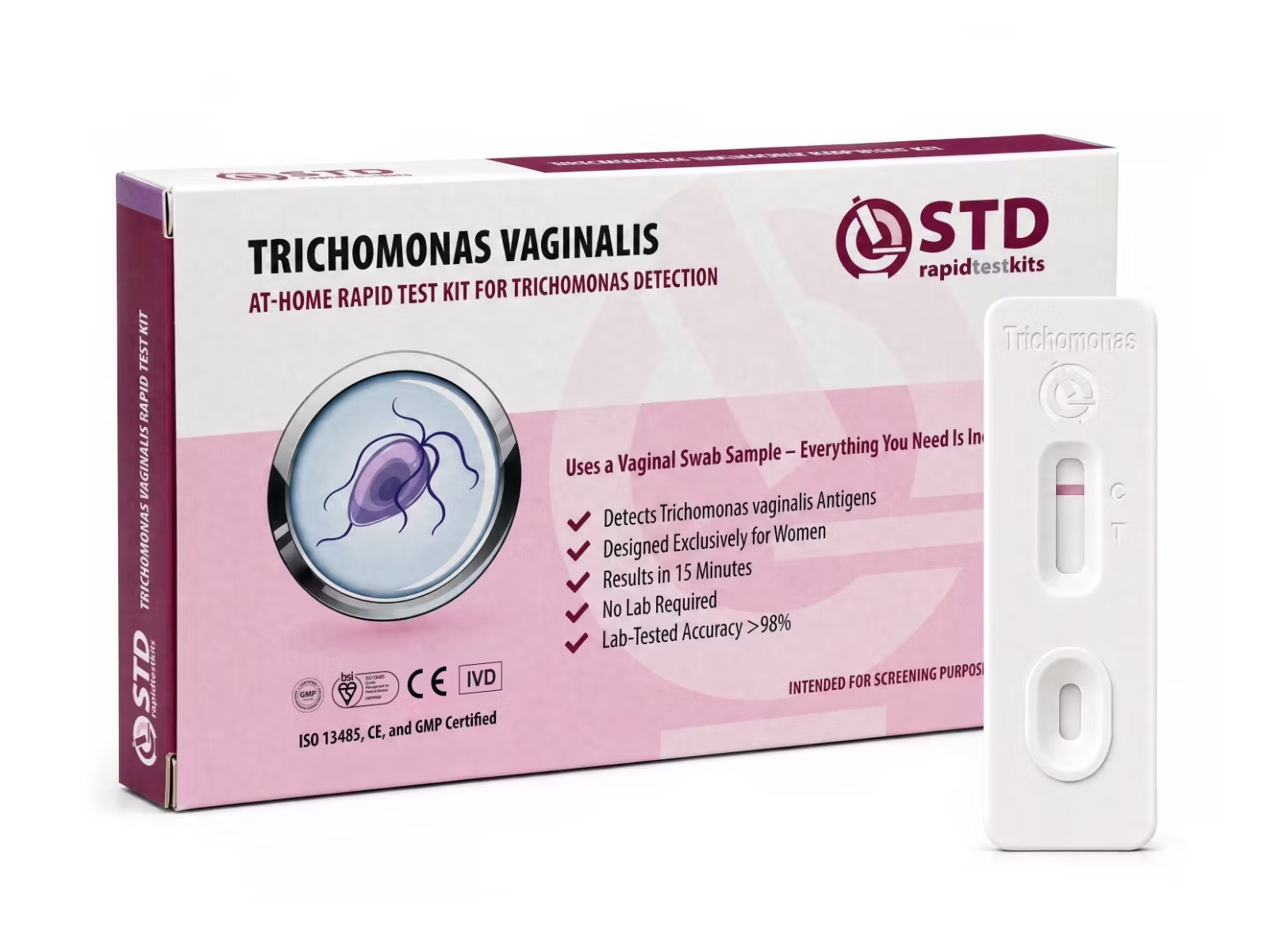
stdrapidtestkits.com sells at-home rapid tests, including the trichomoniasis kit shown below. The editorial content above is independent of the product listing. We recommend tests based on what the symptoms suggest, not the other way around.
When to call a clinician
Self-care has limits, and they are recognizable. Make an appointment, or use a telehealth visit, if any of the following apply:
- Symptoms last longer than three weeks despite gentle care and the home steps above
- Pelvic or lower abdominal pain, fever, or pain on deep penetration during sex
- Bleeding between periods or after sex
- You are pregnant or trying to conceive
- This is your third or more BV or yeast episode in the past year
- You have a new sexual partner and the symptoms started after that exposure
- Discharge is yellow-green, frothy, or has a strong odor that does not match your usual pattern
Recurrent BV is treatable, but the treatment changes from one-and-done. The CDC STI Treatment Guidelines describe a maintenance approach: a standard course of metronidazole to clear the active episode, followed by either boric acid suppositories, intravaginal metronidazole gel twice weekly for several months, or L. crispatus live biotherapeutic. The right plan depends on pregnancy status, allergies, and how often episodes recur.
Frequently asked questions
- Why does my vagina smell different after antibiotics?
- Antibiotics often kill the Lactobacillus species that keep vaginal pH acidic. When pH rises above the 4.5 threshold the CDC uses to flag bacterial vaginosis, anaerobic bacteria associated with BV can multiply, producing the sour or fishy odor most people notice. The smell usually fades as Lactobacillus recovers, which takes one to four weeks in most cases.
- Can antibiotics cause a yeast infection?
- Yes. Antibiotics that suppress vaginal Lactobacillus make it easier for Candida albicans to overgrow. The NHS lists antibiotics among the common triggers for vaginal thrush. The result is thick white discharge, intense itching, and sometimes burning. Over-the-counter antifungal treatments work for a first uncomplicated case.
- How long does the vaginal microbiome take to recover?
- Most people feel meaningfully better within two to four weeks. Complete microbiome restoration can take longer, especially after long courses, repeat courses, or in people whose baseline Lactobacillus dominance was lower. Recovery measured in days is unusual; recovery dragging past two months deserves a clinician visit.
- Do I need to see a doctor if symptoms get worse after antibiotics?
- If symptoms worsen rather than improve in the week after finishing the course, or if they have not improved after three weeks, see a clinician. Worsening can mean the original infection was not fully treated, a secondary infection has taken hold, or the symptoms are from an STI the antibiotic did not cover.
- Can oral probiotics alone fix the imbalance?
- Sometimes, but the evidence is modest. Oral probiotics containing Lactobacillus rhamnosus GR-1 and L. reuteri RC-14 have small but measurable effects on vaginal flora in clinical trials. Vaginal probiotic suppositories with L. crispatus reach the site directly and have stronger evidence for recurrent BV. Many people use both.
- Can BV or yeast come back after antibiotic treatment?
- Recurrence is common, and many people experience a repeat episode within the first year. The risk is higher if the underlying drivers (sexual partner, douching, scented hygiene products, smoking) are not addressed. Recurrent BV often responds to a longer maintenance plan combining standard antibiotics with boric acid or L. crispatus, per CDC STI Treatment Guidelines.
- Is my partner causing my symptoms to come back?
- It depends on the diagnosis. Trichomoniasis is sexually transmitted and partners must be treated to prevent ping-pong reinfection. BV is not classified as an STI, but penile-vaginal sex can disrupt the vaginal microbiome enough to trigger recurrence; consistent condom use during the recovery window helps. Yeast infections are not typically passed between partners.
- Is boric acid safe to use?
- When used as a vaginal suppository at standard 600 mg dosing, boric acid is generally regarded as safe for non-pregnant adults. It is dangerous if swallowed and is contraindicated during pregnancy. Use it only as part of a plan from a clinician, particularly if you have recurrent BV or recurrent yeast that has not responded to standard treatment.
- U.S. Centers for Disease Control and Prevention. Sexually Transmitted Infections Treatment Guidelines, Bacterial Vaginosis section. Used for the pH >4.5 BV diagnostic criterion, asymptomatic BV prevalence, increased STI risk associated with BV, and the 600 mg intravaginal boric acid regimen for recurrent BV.
- U.S. Centers for Disease Control and Prevention. STI Treatment Guidelines landing page. Used for general chlamydia, gonorrhea, and trichomoniasis presentation and treatment information.
- NHS. Bacterial vaginosis overview. Used for general BV information and guidance against douching.
- NHS. Vaginal thrush information sheet. Used to confirm antibiotics are a recognised trigger for vaginal thrush, alongside pregnancy, uncontrolled diabetes, and immunocompromise.
- American College of Obstetricians and Gynecologists. Used as the public-facing authority for patient guidance on differentiating bacterial vaginosis, yeast, and trichomoniasis. The detailed vaginitis FAQ page on the ACOG site may require login; this entry references the organization's general patient-education domain.
- Mayo Clinic. Bacterial vaginosis symptoms and causes overview. Used for general symptom range and maintenance treatment approaches.
