
Published: November 2025 | Last updated: May 2026 | Editorial review and quality control: Martina N.
There’s a phrase that shows up everywhere in dating-app messages, hookup texts, and locker-room talk: “I’m clean.” It sounds reassuring. It sounds responsible. It’s meant to close the loop on an awkward question so two people can move on to the fun part. The problem is that “clean” isn’t a medical status, and the word doesn’t tell anyone what a recent test result says. It also builds a quiet wall between people who get tested and stay informed, and people who happen to live with a common, often-treatable infection. The good news: replacing “clean” with a real sentence about testing is straightforward, and it usually makes the conversation easier rather than harder.
This guide walks through why the word lands the way it does, what an honest status sentence looks like, how the most common infections hide from people who feel fine, and how to think about testing as a routine kindness rather than a confession.
Key Takeaways
- “I’m clean” is not a test result. It’s usually a guess based on no recent testing, no symptoms, or a partial panel from many months ago.
- A useful status sentence names the specific infections tested, the date of the test, and any exposures since. Anything shorter is just a vibe.
Why “clean” lands so hard for the people on the other side of it
If “clean” is shorthand for someone without an STI, the silent companion word for everyone else is “dirty.” Most people don’t intend that subtext, and the phrase feels neutral if you’ve never been on the receiving end of it. For anyone living with HSV-1, HSV-2, HPV, or a treated infection that has since resolved, hearing a new partner volunteer “don’t worry, I’m clean” can land like a closed door. The implication is the part that hurts: that someone with an STI is the opposite of clean.
This isn’t a small audience. In the US alone, the CDC’s 2024 STI surveillance figures recorded roughly 1.5 million chlamydia cases, 543,000 gonorrhea cases, and 190,000 syphilis cases reported in a single year. Genital HPV is so common that the CDC describes it as the most common STI, and notes that anyone who is sexually active can get it. Most never know, because the infection clears on its own. The math means “clean” is being used about a meaningful share of the people you might date, or already have.
Stigma also has measurable downstream effects. People who anticipate rejection are less likely to disclose a positive status, less likely to test again after a diagnosis, and more likely to drop out of regular screening. Each of those outcomes raises the chance of onward transmission.
Three downstream effects make sex less safe, not more: fewer people disclose a positive status to new partners; fewer return for re-testing after a diagnosis; and more drop out of routine screening. Each effect quietly increases transmission in the same population the stigma was meant to identify.
What “I’m clean” actually tells you (almost nothing)
Most people who use the phrase haven’t tested recently, and many haven’t been tested for everything they’re implying. A common pattern: someone had a checkup a year ago, the doctor ordered a urine NAAT for chlamydia and gonorrhea, the result came back negative, and that has become “I’m clean” in every conversation since. That sentence doesn’t address HIV, syphilis, herpes, HPV, hepatitis B, hepatitis C, or trichomoniasis. It doesn’t account for exposures since the test. Depending on the timing, even the chlamydia and gonorrhea result may have predated the window period when a more recent infection could be detected.
The asymptomatic question is the bigger issue. Most chlamydia and gonorrhea infections produce no obvious symptoms, especially at non-genital sites, per the CDC’s clinical overview of STIs. The first stage of syphilis can be a single painless sore that heals on its own and is easy to miss. HIV produces a flu-like illness in some people during seroconversion, but plenty of people pass through that window with no recognizable symptoms at all. “Feeling fine” is not a result.
| Infection | Often asymptomatic? | What a home rapid test does |
|---|---|---|
| Chlamydia | Yes, in most infected people | Self-collected vaginal or penile swab, lateral-flow read in about 15 minutes |
| Gonorrhea | Yes, especially at non-genital sites | Self-collected vaginal or penile swab, lateral-flow read |
| HIV | Yes, throughout the pre-seroconversion window | Fingerstick blood antibody test, useful from roughly 4 to 12 weeks post-exposure depending on assay |
| Syphilis | Often. The primary chancre is easy to miss | Fingerstick blood antibody test, useful from roughly 3 to 6 weeks post-exposure |
| HSV-1 / HSV-2 | Yes, most infections are subclinical | Fingerstick blood antibody test, useful around 12 weeks for seroconversion |
| HPV (high-risk cervical types) | Yes, almost always | Self-collected vaginal swab (women’s kit) for high-risk types |
What an honest status sentence sounds like
Replacing “clean” isn’t about memorizing a script. It’s about saying what you actually know. The shape that works is short, specific, and dated:
- “I tested negative for chlamydia, gonorrhea, HIV, and syphilis about six weeks ago, and I’ve used condoms with one new partner since.”
- “I do a four-panel every three months and I’m due next week. Want to do the next one together?”
- “I had an HSV-2 diagnosis two years ago. I take daily suppressive medication, and we’ll use condoms.”
None of those are dramatic. None require clinical training to say. They give the person across from you something to work with, which is the actual point of the conversation. If the answer doesn’t feel ready yet, the most respectful version is also the most honest: “I haven’t tested since my last partner. Would you want to test together before we sleep together?”
What should I say instead of “I’m clean”?
Name the specific infections you tested for, when the test happened, and what’s happened since. For example: “I tested negative for chlamydia, gonorrhea, HIV, and syphilis about six weeks ago, and I’ve used protection with anyone new since then.” That sentence gives a partner something to work with. “Clean” doesn’t.
Why asking about testing is a green flag, not a warning sign
There’s a worry that bringing up testing will kill the vibe. In practice the opposite tends to be true. Asking about testing signals two things at once: you care enough about the other person to bring it up, and you take your own health seriously enough to mention yours. Both are attractive in someone you’re considering having sex with.
The “kills the vibe” fear usually reflects discomfort with the word more than discomfort with the topic. A direct question about testing, asked without judgment, is the opposite of an accusation. “When did you last test, and for what?” is a fact-finding question. “Are you clean?” is a purity question. People can feel the difference even when they can’t name it. The same is true if you’re on the receiving end: a partner who asks specifically when you tested is treating you like an adult who keeps track of their own health, which is what you wanted in the first place.
| Sentence | What it actually communicates | How a partner can respond |
|---|---|---|
| “I’m clean.” | Vague. No tests named, no date. | Hard to answer honestly without sounding pushy. |
| “I tested negative for chlamydia and gonorrhea two weeks ago.” | Specific tests, specific timing. | Easy to mirror with your own tests and date. |
| “I screen every three months and I’m due next week.” | Habit of regular testing, current gap acknowledged. | Opens the door to testing together. |
| “I have HSV-2. I’m on daily suppression and we’ll use condoms.” | Honest disclosure plus a risk-reduction plan. | Lets the partner decide with real information. |
The asymptomatic problem, in more detail
This deserves a closer look because it’s the single biggest reason “clean” is misleading. The CDC’s screening recommendations exist precisely because the infections most commonly screened for are the ones that often produce no symptoms in the people carrying them. Annual chlamydia and gonorrhea screening is recommended for all sexually active women under 25, and for older women with risk factors. HIV testing is recommended at least once in the lifetime of every 13- to 64-year-old, with more frequent testing for anyone with ongoing exposure risk. Syphilis testing is part of the standard prenatal panel and is recommended for adults based on partner number and partner risk.
If you’ve been screened on schedule and have a recent set of negative results, you aren’t just “clean.” You have a specific set of data you can share. That sentence is more useful, more accurate, and more respectful to the person asking.
It also matters which test you had. A urine NAAT for chlamydia and gonorrhea is a different question from an HIV antigen-antibody combo test, which is a different question again from a syphilis RPR or a herpes antibody panel. Many people who say “I got tested” mean a single-infection screen for the most likely culprit at the time, not a full panel. Asking “what tests did your provider run?” is a normal, kind follow-up question, and it usually surfaces helpful detail rather than offense.

Testing at home isn’t a confession, it’s a routine
The framing that helps most is moving testing into the same mental bucket as a dental cleaning or a flu shot. It’s something you do on a schedule because it makes future you’s life easier, not because something has gone wrong. CDC’s testing guidance frames screening as part of routine sexual health, not as a response to symptoms.
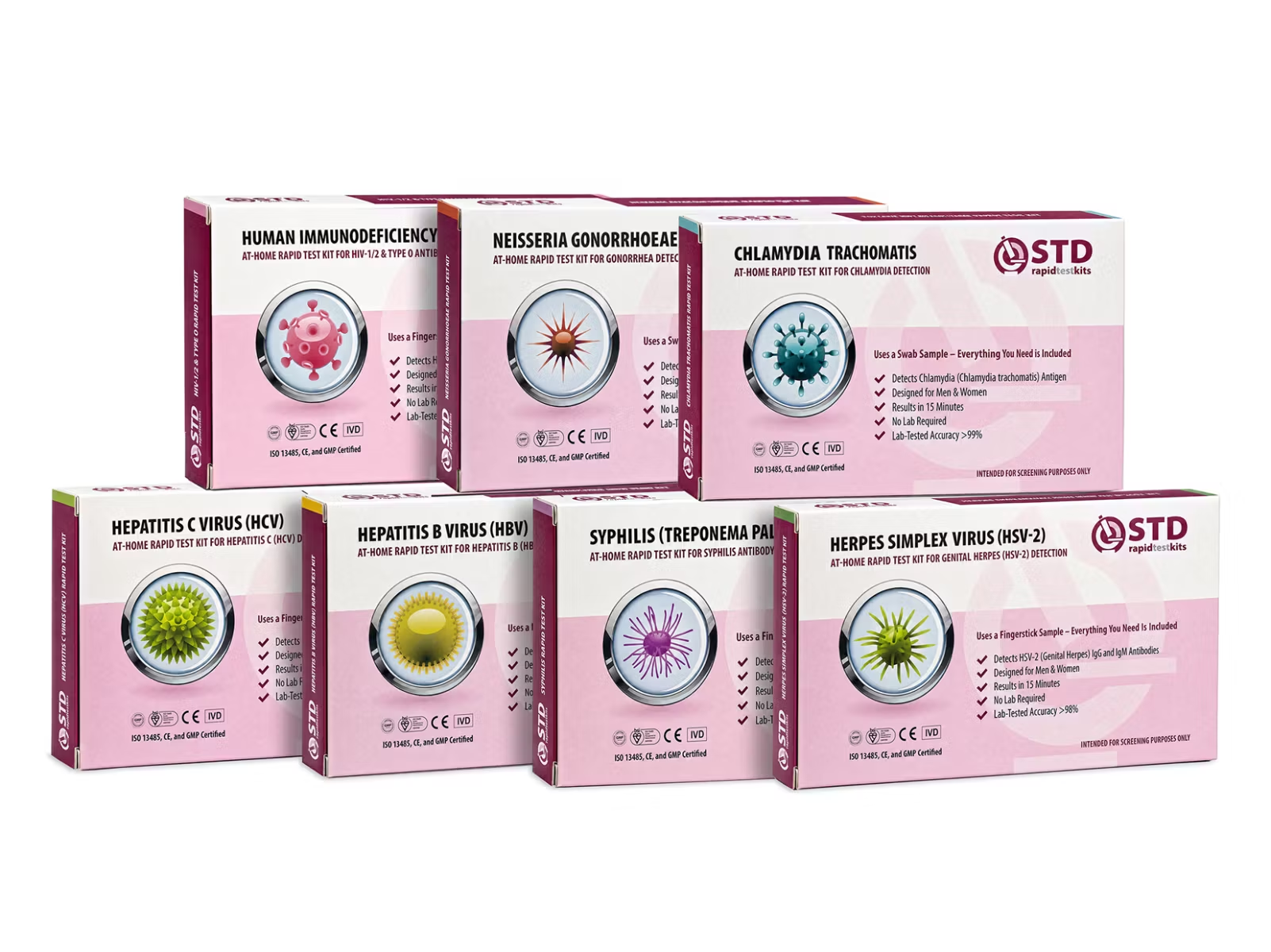
Home rapid tests are useful for the part of the conversation where you’re filling in a current set of results between clinic visits. They’re lateral-flow immunoassay tests, the same general kind of strip-based chemistry as a home pregnancy test. They’re not the same technology as the NAAT (nucleic acid amplification) tests a lab uses, and a positive result from a home rapid test is worth confirming with a lab when possible. For an evening when you want to know your current status before a new exposure, or want to retest after a window period, they fill a gap that a clinic appointment three weeks out doesn’t.
Disclosure: stdrapidtestkits.com sells the at-home lateral-flow panels referenced in this article and the kit below.
Detection windows for the main tests
- HIV (fingerstick antibody): roughly 4 to 12 weeks after exposure, depending on assay generation.
- Syphilis (fingerstick antibody): roughly 3 to 6 weeks after exposure.
- HSV-1 / HSV-2 (fingerstick antibody): around 12 weeks for reliable seroconversion.
- Chlamydia and gonorrhea (swab): roughly 1 to 2 weeks after exposure for the sample to carry detectable infection.
What changes when “clean” leaves the conversation
Two things tend to happen when a couple or a group of friends drops “clean” from their vocabulary. First, the people in that group test more often, because “when did you last test?” is now a normal question with a normal answer. Second, the people in that group are more likely to disclose accurately, because there’s no implicit purity line they’re now on the wrong side of by saying yes to a positive status.
That’s the whole shift. No campaign, no hashtag. One word swapped for a sentence that says what you actually know. The word “clean” is everywhere because we picked it up from movies, from porn scripts, and from pickup conversations where nobody wanted to slow down enough to be precise. Retiring it is a small thing that changes the texture of how a lot of conversations go.
For queer readers who have spent years watching “UB2 + DDF” on hookup profiles, the swap also lifts a particular kind of weight. Language that treats negative status as purity has historically hurt the communities that already carry the most stigma in sexual-health systems, including people living with HIV who are undetectable and untransmittable. Replacing a moral label with a factual sentence is a small, durable kindness toward people who have heard the moral label too often.
If you’ve used the word in the past, you’re not the villain of the story. Most of us have. The fix is the next conversation: trade the label for a sentence, and ask a partner the same way you’d want to be asked.
Many STIs have no symptoms. Getting tested is the only way to know for sure.
FAQs
- Is “I’m clean” really that loaded? It’s just a word.
- It’s one word, and the flip side, “dirty,” is the part that lands hard for people living with a common infection like HSV-2 or HPV. “Clean” treats an STI result as a moral status rather than a medical one. Swapping it for a sentence about when you last tested and what you tested for keeps the conversation about facts, which is what you need to make a decision together.
- What should I actually say instead?
- Include the date and the panel. Six weeks is roughly when chlamydia, gonorrhea, syphilis, and HIV results from the same exposure window become reliable, so naming the date is part of the information. A sentence like “I had a four-infection screen on April 14 and everything came back negative, and I’ve used condoms since” lets a partner evaluate the gap on their own instead of guessing. The date and the panel matter more than the exact wording.
- If someone tells me they’re “clean,” should I take them at their word?
- Only if they can tell you when they tested and what they were tested for. Most people who use the phrase haven’t been tested for everything they’re implying, and many haven’t tested recently enough for a recent exposure to show up. A friendly follow-up like “when was your last test and what was it for?” is reasonable. Offering to test together is also reasonable.
- Can I have an STI without any symptoms?
- Yes, very commonly. Chlamydia and gonorrhea are often silent, especially at non-genital sites. HIV produces no obvious symptoms for many people during the early window. The first sore of syphilis is painless and easy to miss. HSV-1, HSV-2, and HPV are subclinical in most infected people. Symptoms can’t rule infection in or out, which is why a tested result is the only honest version of “I don’t have anything.”
- How often should I test?
- It depends on your sex life. If you have new or multiple partners, the CDC recommends regular screening for chlamydia and gonorrhea every 3 to 12 months depending on risk, plus at least annual HIV testing for anyone with ongoing exposure risk. Pregnant adults are screened during the prenatal panel. If you and a partner are in a long-term mutually monogamous relationship and both have current negative panels, the recommended cadence drops.
- How do I bring up testing without making it weird?
- The same way you’d bring up any other practical thing: directly, in a low-stakes moment, without apology. “When did you last test?” is a fact-finding question, not an accusation. If you’re uncomfortable asking, that probably means the conversation is overdue rather than badly timed.
- What if I already know I have something like HSV-2 or HPV? How do I disclose?
- Lead with the facts, including any treatment you take and how it changes transmission risk. For example: “I have HSV-2. I take daily suppressive medication, which significantly reduces transmission, and we’ll use condoms.” The right partner will treat that as useful information rather than a confession.
- Are home rapid tests good enough to base a conversation on?
- For a current-status check before a new exposure, yes. The lateral-flow strip produces a result in about 15 minutes, and major manufacturers publish sensitivity figures in the mid-to-high 90s when the test is used inside the correct window for each infection. A negative inside that window is solid enough to have the conversation honestly. A positive should go to a clinic for confirmatory testing before any final disclosure. Think of the home test as the starting point of the conversation, not the last word.
- U.S. Centers for Disease Control and Prevention. The State of STIs: 2024 US surveillance case counts for reportable infections, including the 1.5 million chlamydia, 543,000 gonorrhea, and 190,000 syphilis figures cited in this article.
- U.S. Centers for Disease Control and Prevention. About STIs: clinical overview of common infections and their typical symptom patterns, including the asymptomatic-presentation language referenced above.
- U.S. Centers for Disease Control and Prevention. About Genital HPV Infection: prevalence framing and the ‘anyone who is sexually active can get HPV’ language used in this article.
- U.S. Centers for Disease Control and Prevention. STI Treatment Guidelines: screening recommendations for chlamydia, gonorrhea, HIV, and syphilis by population and risk profile.
- U.S. Centers for Disease Control and Prevention. Getting Tested for STIs: how routine testing fits into sexual-health care, including what tests are typically ordered.
- World Health Organization. Sexually Transmitted Infections (STIs) Fact Sheet: global burden, asymptomatic transmission, and the testing-as-the-only-way-to-know framing referenced in the pull quote.
