Published: October 2025 | Last updated: May 2026 | Editorial review and quality control: Martina N.
Yes. Oral herpes appears as a cluster of small painful blisters on or near the lip that crust over in 1 to 2 weeks. A syphilis chancre is a single firm, painless ulcer that heals in 3 to 6 weeks while the infection stays active. Throat gonorrhea often causes no symptoms at all. Visual cues narrow the possibilities; only testing confirms.
Most mouth sores are completely harmless. Stress, biting your cheek, brushing too hard, or eating something acidic can all leave behind ulcers that look alarming for a few days and then fade. The mouth is one of the body's most sensitive surfaces, and irritation is normal.
What gets people worried is timing. A sore that shows up a week after oral sex. A sore throat that won't fade. White patches on the tonsils that have you up at night searching for matching photos. That pattern raises a different question. Could this be a sexually transmitted infection?
Three oral STIs come up most often: herpes (usually HSV-1, occasionally HSV-2), syphilis, and gonorrhea. They look very different from each other, and each is easy to confuse with non-STI conditions like thrush, strep throat, mono, or a canker sore. Below is what each looks like, how the timing tends to play out, when a mouth or throat symptom is worth getting checked, and what testing actually involves.
Key Takeaways
- Oral STIs often look like ordinary mouth ulcers, cold sores, strep throat, or thrush. Pain, timing, location, and how a sore heals are the clues that separate them.
- Most throat gonorrhea and oral chlamydia infections cause no symptoms at all. After oral exposure, testing matters more than how your throat feels, and the right tool for a throat-site infection is a clinic NAAT swab, not a home kit.
How Oral STIs Usually Show Up in the Mouth
The mouth and throat are lined with the same kind of mucous membrane as the genitals, so the bacteria and viruses behind genital STIs can take hold there too after oral contact. Many of them produce no symptoms at all, which the WHO notes is true for the majority of new STIs worldwide. That silence is exactly why oral-site infections so often slip past notice.
When something does show up, oral STIs tend to appear in one of five basic shapes: clusters of blisters, a painless ulcer, an inflamed throat with swollen tonsils, white or yellow patches near the tonsils, or small flesh-colored growths. Each pattern points toward a different infection.
The trouble is that each pattern also overlaps with non-STI conditions. Cold sores from a non-sexual HSV-1 exposure look identical to oral-sex transmission. Strep throat looks a lot like throat gonorrhea. Oral thrush can resemble the white patches gonorrhea sometimes produces. Canker sores can mimic a mild syphilis chancre.
| Visual pattern | What it looks like | Most likely STI cause |
|---|---|---|
| Cluster of blisters | Small fluid-filled bumps that burst and crust | Herpes (HSV-1 or HSV-2) |
| Single painless ulcer | Round firm sore with smooth raised edges | Syphilis (chancre) |
| Red inflamed throat with swollen tonsils | Often looks like strep throat | Gonorrhea or chlamydia |
| White or yellow patches near tonsils | Spots on the tonsillar pillars or surface | Pharyngeal gonorrhea |
| Small flesh-colored growths | Cauliflower-like bumps on lips, tongue, or palate | HPV |
What Oral Herpes Looks Like
When people picture an oral STI, they're usually picturing herpes. It's the most visible of the bunch and the most commonly recognized. Oral herpes is typically HSV-1, the same virus behind most cold sores; HSV-2, the strain more often linked to genital infection, can also infect the mouth through oral sex, though that's less common.
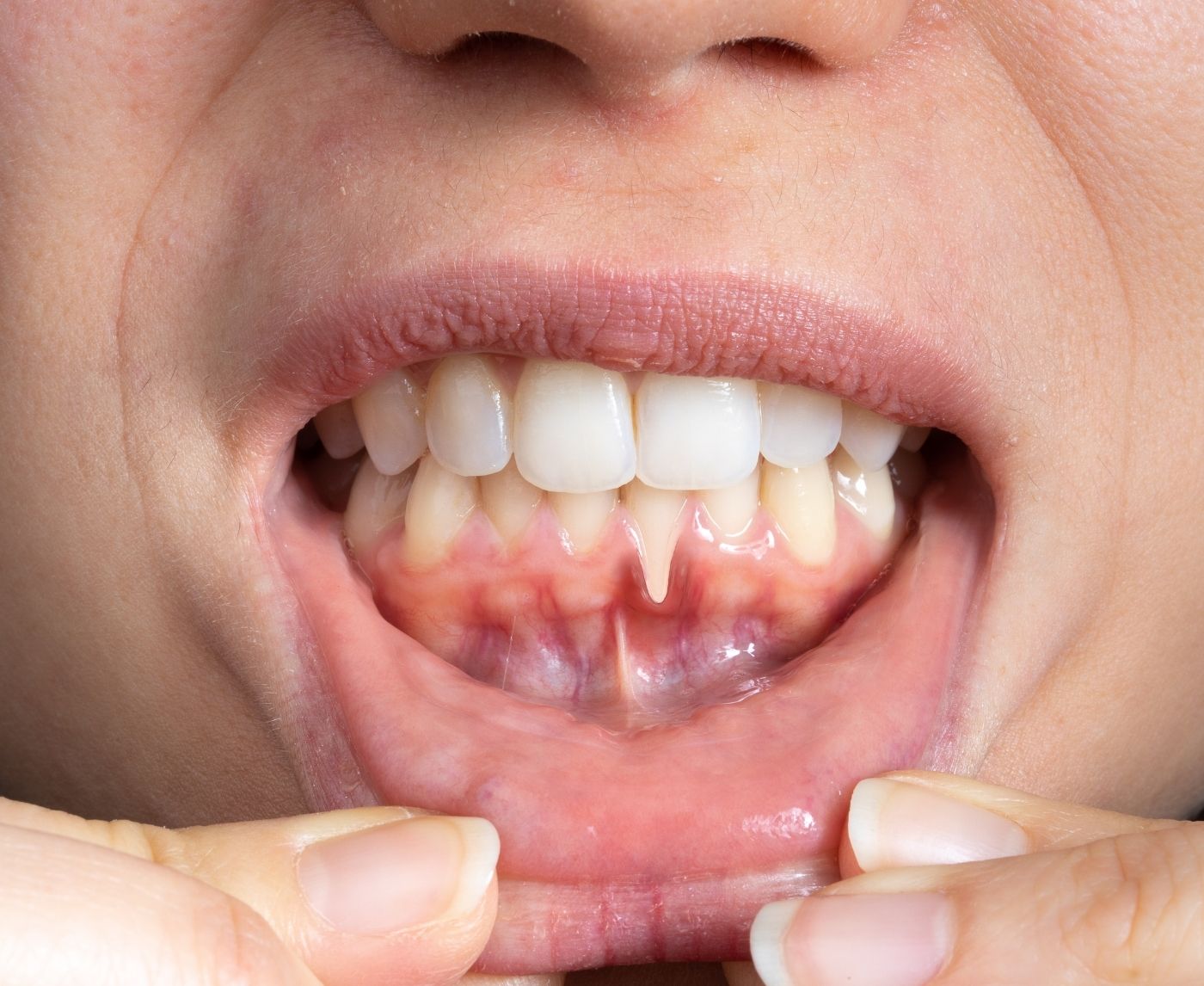
A first outbreak tends to be the most dramatic. People often feel a tingling, burning, or itching spot on the lip or gumline a day or two before anything visible appears. Then small clustered fluid-filled vesicles form, usually on the vermillion border of the lip (the colored edge where lip skin meets the surrounding skin) but sometimes inside the mouth on the gums or hard palate. Within a few days the blisters break, leave shallow ulcers, and crust over. The whole cycle typically takes one to two weeks per CDC guidance.
First outbreaks can come with flu-like symptoms: fever, swollen neck lymph nodes, fatigue, and tender gums. Later outbreaks are usually milder and shorter, often three to seven days, with a smaller cluster and less systemic illness.
Cold sores and oral herpes are the same family of viruses; the term "cold sore" doesn't change the biology. The virus can also shed from the mouth without a visible sore, which is why someone with a known cold sore history should avoid oral sex during a tingling phase or an active outbreak.
Disclosure: stdrapidtestkits.com publishes this article and sells the rapid home tests linked below; we recommend products by fit for the reader's concern, not commercial benefit.
Syphilis: The Sore That Doesn't Hurt
Syphilis is the trickiest of the three because the early lesion, called a chancre, is usually painless. People notice it, decide it's a small mouth ulcer, and stop thinking about it.
A primary syphilis chancre typically appears as a single firm, round, painless ulcer with raised rolled edges and a clean center, anywhere oral contact occurred: the lip, tongue, gums, or tonsils. It's most often 0.5 to 2 cm across. Within three to six weeks the chancre heals on its own, which is the most dangerous part of the disease's pattern. The body has cleared the visible sore. The bacteria (Treponema pallidum) has not been cleared from the body. Without treatment, syphilis moves into a secondary stage weeks to months later that can include rash, swollen lymph nodes, fever, and patchy hair loss.
The chancre usually shows up around three weeks after exposure, but clinical references put the full range at 10 to 90 days, with a median of about 21 to 25 days (StatPearls clinical reference). A painless ulcer in the mouth that appeared a few weeks after oral contact with a new partner is a strong reason to test, even if the sore has already healed.
Syphilis testing is a blood antibody test. It's accurate, fast, and a positive result is treated with a single intramuscular dose of penicillin in most early cases.
A primary syphilis chancre resolves on its own in 3 to 6 weeks, but Treponema pallidum remains active in the body and progresses to a secondary stage if untreated. If a painless mouth ulcer appeared after a possible oral exposure and has since healed, a blood antibody test is still the right next step.
Pharyngeal Gonorrhea: An Infection That Often Looks Like Strep
Pharyngeal gonorrhea (gonorrhea of the throat) doesn't typically cause sores. It causes throat irritation, and a lot of the time it causes nothing at all. Per CDC gonorrhea guidance, gonorrhea often causes no symptoms, and throat infections in particular are frequently silent. Sexual health clinics consistently find that pharyngeal cases turn up through targeted screening after a partner diagnosis or routine check, not because the person felt ill.
When symptoms do appear, they look like garden-variety throat infections: persistent sore throat that doesn't get better with rest, redness across the tonsillar pillars, mild swelling, sometimes white or yellowish patches on the tonsils, and tender lymph nodes under the jaw. Resistance to standard strep antibiotics is sometimes the first clue. Someone treated for presumed strep keeps having symptoms a week later, gets tested for gonorrhea, and finds the answer.
Pharyngeal gonorrhea is treatable, usually with a single ceftriaxone injection plus an oral antibiotic, but it has to be diagnosed first. Because it's so often silent, the only reliable way to find it is a throat swab.
To detect pharyngeal gonorrhea or oral chlamydia, the sample has to come from a swab of the throat itself. We don't sell a home pharyngeal swab; that test is done at sexual health clinics, urgent care, or a primary care office. If your concern is specifically a throat infection after oral exposure, book a clinic visit and ask for a throat NAAT swab. The home kits we offer cover the systemic infections (HIV, syphilis, HSV antibodies, hepatitis) and the genital infections that often need to be checked alongside an oral exposure.
Side-by-Side: What These Symptoms Actually Look Like
It's one thing to read a description and another to see the pattern. The gallery below shows what oral herpes vesicles, a primary syphilis chancre, pharyngeal gonorrhea, and a common canker sore look like, set next to each other. The fourth image is included on purpose; the most common reason people search for these images late at night is to rule a canker sore in or out before deciding what to do next.
White Patches in the Mouth: What They Can Mean
White patches are one of the symptoms that sends people to a 2 a.m. search bar. They show up across a lot of conditions, most of them not sexually transmitted.
The most common cause is oral thrush (Candida overgrowth), which produces a creamy white coating that can be wiped or scraped off, often leaving a red base underneath. It tends to follow antibiotics, dry mouth, inhaler use, or anything that weakens the immune system. Strep throat tends to produce white spots or pus on the tonsils paired with sudden severe pain and fever. Oral herpes can cause white-edged ulcers, often preceded by tingling, that crust over within days. Pharyngeal gonorrhea is usually silent, but when it does cause findings, redness is more common than dramatic patches; when patches appear they sit on the tonsillar surface. Mononucleosis can produce a heavy white coating on the tonsils paired with profound fatigue. Primary syphilis can produce a single painless ulcer that lingers for weeks.
The table below lays out the most common causes side by side. None is a definitive home diagnosis; it narrows the possibilities before deciding next steps.
| Possible cause | Typical look | Other clues | Likely STI? |
|---|---|---|---|
| Oral thrush (Candida) | Creamy white coating; can be wiped off; red base underneath | Recent antibiotics, dry mouth, inhaler use, or weakened immunity | No |
| Strep throat (group A) | White spots or pus on tonsils | Sudden severe pain, fever, headache, no cough | No |
| Oral herpes (HSV-1 or HSV-2) | White-edged blisters or ulcers, often clustered | Tingling before lesions appear; recurring outbreaks | Yes |
| Pharyngeal gonorrhea | Often no visible patches; redness, sometimes yellowish spots on tonsils | Recent unprotected oral sex; usually asymptomatic | Yes |
| Primary oral syphilis | Single painless ulcer (chancre) | Appears 10 to 90 days after exposure; heals on its own | Yes |
| Mononucleosis (mono) | Heavy white tonsillar coating | Profound fatigue, swollen lymph nodes, fever | Sometimes (kissing route) |
Swollen Glands After Oral Sex: When It's a Red Flag
Lymph nodes under the jaw and behind the ears are part of your immune system's frontline. They swell when they're filtering out infections from anywhere they drain (mouth, throat, scalp, ears). After oral sex, mild tenderness for a few days isn't unusual; your body may be reacting to a minor abrasion or to harmless bacteria.
One specific concern worth naming: HIV. The per-act transmission risk from oral sex is low. The CDC's guidance on STI risk and oral sex describes the chance of getting HIV from oral sex as much lower than from vaginal or anal sex, though not zero. The CDC notes the risk may be higher with factors like poor oral health, bleeding gums, or sores in the mouth or on the genitals, though it cautions that no scientific studies have confirmed how much any individual factor changes the risk. If exposure timing fits and any flu-like symptoms appear within two to four weeks, a 4th-generation HIV antigen/antibody test is reliable from 18 to 45 days post-exposure, with a definitive negative at 90 days.
What's worth a closer look:
- Swelling that lasts longer than two weeks, especially when paired with a sore throat or visible mouth lesions.
- Glands the size of a small grape or larger, particularly on both sides of the neck.
- Swollen glands plus fever, fatigue, night sweats, or an unexplained body rash. These can be signs of early HIV, secondary syphilis, or mono.
- Glands that feel hard or rubbery and don't shrink once the surrounding tissue calms down.
Most cases are still benign, especially if you're otherwise feeling well. But the combination of throat findings, persistent swelling, and unprotected oral exposure is a reasonable trigger to test, even when the individual symptoms feel mild.
Any one of these is enough to bring forward a test or a clinic visit: swelling that lasts more than two weeks, glands grape-sized or larger on both sides of the neck, swelling paired with fever or rash or night sweats, or glands that stay hard and rubbery after surrounding tissue has calmed down.
Chlamydia and HPV in the Mouth
Two more infections deserve mention because they show up often in oral STD searches but behave very differently from the three above.
Oral chlamydia is real, though less common than throat gonorrhea. It almost always produces no symptoms at all. When something is noticed, it's mild throat irritation or vague soreness that feels like the early hours of a cold. Pharyngeal chlamydia is usually detected through screening rather than symptoms, and like throat gonorrhea it requires a throat swab to find.
Oral HPV is different again. Most HPV oral exposures clear on their own within a year or two without symptoms. A small minority cause visible warts: small flesh-colored cauliflower-shaped growths on the lips, tongue, palate, or inside the cheeks. The bigger long-term concern is that certain high-risk HPV strains can drive oropharyngeal cancers years to decades after infection, particularly cancers at the base of the tongue and tonsils. The HPV vaccine substantially reduces this risk; see the CDC's HPV information for current vaccination recommendations.
Our at-home HPV swab kit is validated for vaginal self-swab only; we don't sell an oral HPV test. For an oral wart concern, see a dentist or primary care provider for visual evaluation.
Oral chlamydia is silent and requires a clinic throat NAAT swab to detect. Oral HPV usually clears on its own within a year or two; the long-term concerns are visible warts and, with high-risk strains, oropharyngeal cancer years later. Neither is detectable with a home rapid test.
How Long After Exposure Symptoms Appear
Different infections incubate at different speeds, and that timeline is one of the most useful clues when figuring out whether a mouth symptom is connected to a recent exposure.
If a sore showed up the day after oral contact, an STI is unlikely. Most need at least a few days to incubate. If a sore appeared three weeks after oral contact, the timing fits several infections. The table below summarizes the typical windows.
| Infection | Typical symptom window after exposure | Common oral presentation |
|---|---|---|
| Oral herpes (HSV-1 or HSV-2) | 2 to 12 days | Cluster of small painful blisters on lip or gums |
| Pharyngeal gonorrhea | 2 to 7 days (often silent) | Persistent sore throat, sometimes with white patches |
| Pharyngeal chlamydia | 1 to 3 weeks (often silent) | Mild throat irritation, often no symptoms |
| Syphilis (oral chancre) | 10 to 90 days (median about 21) | Single painless firm-bordered ulcer |
| Oral HPV warts | Months to years | Small flesh-colored growths |
| Strep throat (not an STI) | 1 to 3 days | Sudden severe pain, fever, white pus on tonsils |
| Mononucleosis (not strictly an STI) | 4 to 6 weeks | Heavy tonsil coating, profound fatigue, large neck nodes |
Oral STIs vs Ordinary Mouth Problems
The mouth produces a lot of sores that have nothing to do with sex. Stress canker sores, traumatic ulcers from a sharp tooth or a hot drink, viral pharyngitis (the standard sore throat from a cold), strep throat, oral thrush from antibiotic use, lichen planus, and mono all create lesions that can look suspicious for a few days.
Pain is one separator: cold sores and canker sores hurt; syphilis chancres usually don't. Number and location matter too. Canker sores are usually solitary and inside the mouth on movable mucosa, herpes shows up as a cluster on or near the lip, and syphilis is typically one ulcer wherever oral contact occurred. Healing time helps as well: canker sores are gone in 7 to 10 days, herpes blisters heal in 1 to 2 weeks, and syphilis chancres take 3 to 6 weeks.
None of those rules is reliable enough to make the call alone. A painful single sore on the lip could be a herpes outbreak that's only producing one blister. A painless ulcer could be a traumatic injury you don't remember. Pattern recognition narrows the possibilities; testing is what closes the question.
Pharyngeal gonococcal infections are usually asymptomatic, and screening of the pharynx is recommended for persons at increased risk.
When a Mouth Symptom Is Worth Testing
Most mouth ulcers don't need an STI workup. The patterns below are the ones that change that calculation, especially after recent oral exposure with a new or untested partner:
- A sore that hasn't healed after two weeks.
- A painless firm ulcer that appeared a few weeks after oral contact.
- A cluster of blisters on the lips or gums, with or without flu-like symptoms.
- A sore throat lasting more than two weeks, especially one that didn't respond to antibiotics for presumed strep.
- White or yellowish patches near the tonsils after recent oral exposure.
- Swollen neck lymph nodes paired with any of the above, or with fever, fatigue, night sweats, or an unexplained body rash.
- A partner who recently tested positive for any STI.
The point of testing isn't to confirm a worst-case scenario. It gives you a definitive answer in a few days instead of weeks of guessing. Most bacterial oral infections are easily treated. The viral ones are manageable. The hardest part for most people is the uncertainty before they know.
If a symptom fits two or more of the patterns above and followed a recent oral exposure, a test gives you a definitive answer in a few days, faster than waiting weeks to see whether the sore resolves on its own.
How Testing for Oral STIs Works
Different oral STIs need different tests, and the right one depends on what you're checking for.
Throat swabs (the test for pharyngeal gonorrhea or chlamydia) are done at a clinic. A clinician runs a soft swab along the back of the throat and tonsils, similar to a strep test, and the lab runs nucleic acid amplification testing (NAAT) on the sample. Lab NAAT is the diagnostic gold standard for these infections. Home rapid lateral-flow chemistry isn't equivalent to lab NAAT in analytical sensitivity, especially in asymptomatic pharyngeal infections.
Blood tests cover the systemic infections that pass through oral exposure. Syphilis is diagnosed via a blood antibody test; HSV-1 and HSV-2 antibody status is diagnosed via blood; HIV is diagnosed via blood. These are testable from home with rapid fingerprick kits, with results in about 15 minutes. A reactive (positive) home result needs a confirmatory clinic test before any treatment decision; lateral-flow technology is screening-grade, not laboratory NAAT, and the two are complementary rather than equivalent.
If you have never done a fingerstick or a self-swab, the process is quicker than most people expect. The blood tests use a small sterile lancet that nicks the side of a fingertip; you add a few drops to the test cassette, add the buffer fluid, and read the result line after the time listed in the instructions. The genital-swab tests use a soft-tipped applicator about the size of a long cotton bud. Start to finish, most home tests take 10 to 20 minutes, and you read the result yourself.
Visual diagnosis (a clinician looking at a sore) can identify likely herpes or HPV warts, but confirmation usually requires a lesion swab or a blood antibody test depending on what's being checked. If you have a visible lesion, a clinic visit gives you both the visual exam and the swab in one appointment.
Window periods matter as much as picking the right test. A negative result taken too early can be falsely reassuring; each test has a time-from-exposure threshold below which a true infection may not yet show up. The NHS notes some STIs can take up to seven weeks to show up on a test, and the CDC's 2021 STI Treatment Guidelines, linked from its STI clinical guidance hub, cover the recommended windows for the systemic and genital infections an oral exposure might also transmit. The table below summarizes them for the tests we sell.
| Test | Earliest reliable window | Confirm with retest at |
|---|---|---|
| HIV (4th-generation antigen/antibody blood) | 18 to 45 days post-exposure | 90 days for a definitive negative |
| Syphilis (treponemal antibody blood) | 3 to 6 weeks | 12 weeks if exposure was high-risk |
| HSV-1 / HSV-2 (antibody blood) | 6 to 12 weeks (some assays up to 16) | 16 weeks if outside the initial window |
| Chlamydia (genital swab) | 7 to 14 days | Three months after treatment |
| Gonorrhea (genital swab) | 5 to 7 days | Three months after treatment |
| Hepatitis B / Hepatitis C (blood) | 6 to 9 weeks (Hep B); 8 to 11 weeks (Hep C) | Six months for a definitive Hep C negative |
If You Test Positive: Telling a Partner
A positive result usually comes with a second worry: how to tell a recent partner. The frame that makes it easier is simple. You're not accusing anyone; you're passing along information that affects both of you, and the sooner they know, the sooner they can get checked and treated.
Prompt notification is one of the most reliable ways to stop an infection from bouncing back and forth between partners, and it gives the other person a chance to act before any complications develop.
A short, factual message works better than a long apology. Something like, "I tested positive recently, so it's worth you getting tested too," is enough. If a direct conversation feels too charged, the CDC and most state and local health departments run anonymous notification services that will pass the message along on your behalf.
Your Next Steps
For a recent oral exposure with no visible mouth symptoms, the practical screen is a combo blood panel covering HIV, syphilis, and HSV antibodies, paired with a clinic throat swab if pharyngeal infection is a specific concern. You can start the systemic and genital piece at home with at-home combination STI test kits; the clinic throat NAAT handles what our home tests can't.
Match Your Situation to the Right Test
Do you have an active blister or sore on your lip or in your mouth right now?
Yes: See a clinic for a lesion swab. It can confirm herpes or identify a syphilis chancre directly while the sore is present.
Did a painless, firm ulcer appear about two to six weeks after oral contact, even if it has since healed?
Yes: Get a syphilis blood antibody test. The chancre heals on its own while the infection continues, so a healed sore does not mean you are clear.
Has a sore throat lasted more than two weeks, or failed to respond to strep antibiotics?
Yes: Book a clinic pharyngeal NAAT swab for gonorrhea and chlamydia.
No: With no lingering symptoms after an oral exposure, a home blood panel covering HIV, syphilis, and HSV antibodies screens the systemic infections; add a clinic throat NAAT if pharyngeal infection is a specific concern.
Guidance only; a healthcare provider can advise based on your specific situation.
Frequently Asked Questions
- Can you really get an STI in your mouth from oral sex?
- Yes. Herpes, syphilis, gonorrhea, chlamydia, and HPV can all transmit through oral contact. Most of the time the visible response is mild or absent: a small blister, a stubborn sore throat, an ulcer that came and went. People often only make the connection between a symptom and an exposure once a test result confirms it.
- What does oral herpes look like in real life?
- The prodrome is the tell: a tingling or burning patch appears on the lip or gumline 24 to 48 hours before any blister is visible. Once vesicles form, they cluster in a coin-sized area rather than appearing as one big sore, break open within 2 to 3 days, and crust over. Unlike a canker sore, which sits on the inside of the cheek as a single smooth ulcer, a herpes outbreak clusters on or near the lip border.
- White patches in my mouth: is it always thrush?
- Most often, yes. Oral thrush (Candida overgrowth) is the most common cause, especially after antibiotics, with inhaler use, or in someone with a weakened immune system. The white coating is usually wipeable and reveals red tissue underneath. But strep throat, mono, oral herpes, and (less commonly) pharyngeal gonorrhea or primary syphilis can produce white-tinged findings too. If patches don't improve in a week, or if they're paired with a sore that doesn't heal, that's a reason to test or see a clinician.
- Is bad breath after oral sex a sign of an STI?
- Bad breath on its own is rarely an STI marker. It usually traces back to dehydration, oral hygiene, post-nasal drip, or a harmless shift in mouth bacteria. It's worth a closer look only when persistent bad breath comes alongside white patches, a sore throat, or swollen glands within a couple of weeks of unprotected oral sex, which can point to oral thrush or, less often, pharyngeal gonorrhea. Testing settles it.
- Is a painless sore in the mouth something to worry about?
- A mouth sore that appeared without pain, lingered a few weeks, and then disappeared should not be dismissed as resolved. The visible sore from primary syphilis clears on its own; the bacteria does not. A blood antibody test remains the right next step even weeks after the ulcer has healed, because the infection will progress to a secondary stage if it is left untreated.
- What does throat gonorrhea feel like?
- For most people, nothing at all. When symptoms do show up, it tends to feel like a stubborn sore throat that doesn't fade with rest. Some people notice red or swollen tonsils, mild pain when swallowing, or white-yellowish patches that look a lot like strep. A clue is that it doesn't respond to standard strep antibiotics.
- How soon after oral sex would symptoms show up?
- Herpes can appear as soon as 2 to 12 days. Throat gonorrhea symptoms, when they appear at all, usually show up within about a week. Syphilis is slower; the chancre shows up around three weeks on average but can appear anywhere from 10 to 90 days after exposure. Chlamydia in the throat usually causes no symptoms but can produce mild irritation within one to three weeks. Symptoms that appear within 24 hours are unlikely to be an STI.
- Will a regular STI test catch oral infections?
- Not for the throat. A urine sample or a genital swab tests a different anatomical site and will miss the pharynx entirely. The site of the sample has to match the site of the suspected infection. For the throat, that means a clinician-collected pharyngeal swab run through a lab NAAT, available at sexual-health clinics, urgent care, and many telehealth providers. Blood tests (HIV, syphilis, HSV antibodies) do detect systemic infections that an oral exposure could have transmitted.
- If a mouth sore disappeared, am I in the clear?
- Not necessarily. Syphilis specifically is known for chancres that heal while the infection continues quietly through the body. If a painless sore showed up after a possible oral exposure and then went away on its own, it's still worth a blood antibody test. Herpes outbreaks also resolve and recur; the virus stays in the body even when no sore is visible.
- U.S. Centers for Disease Control and Prevention. Genital and oral herpes information, including HSV-1 and HSV-2 presentation and outbreak progression.
- U.S. Centers for Disease Control and Prevention. Syphilis. Primary chancre features (firm, round, painless; heals in 3 to 6 weeks) and disease staging.
- U.S. Centers for Disease Control and Prevention. Gonorrhea. Confirms gonorrhea can infect the throat and is often asymptomatic.
- U.S. Centers for Disease Control and Prevention. STI Risk and Oral Sex. Characterizes HIV risk from oral sex as much lower than vaginal or anal sex, and notes that no studies confirm how much any individual factor changes the risk.
- U.S. Centers for Disease Control and Prevention. STI clinical guidance hub linking to the 2021 STI Treatment Guidelines, which cover pharyngeal screening recommendations and testing windows for the systemic STIs an oral exposure may transmit.
- U.K. National Health Service. Sexually transmitted infections (STIs). Patient-facing summary of common STI symptoms, testing options, and the up-to-seven-week testing window.
- World Health Organization. Sexually transmitted infections (STIs) fact sheet. Documents that the majority of new STIs are asymptomatic.
- Tudor ME, Al Aboud AM, Leslie SW, Gossman W. Syphilis. StatPearls (NCBI Bookshelf). States the primary chancre appears 10 to 90 days after exposure, with a median of 21 to 25 days.
