Published: September 2025 | Last updated: May 2026 | Editorial review and quality control: Martina N.
If your UTI test was negative but it still burns when you pee, what else could it be?
Most often a sexually transmitted infection. Chlamydia, gonorrhea, and trichomoniasis inflame the urethra and feel almost identical to a bladder infection, and standard UTI dipsticks do not screen for them. If a UTI antibiotic has not helped within 48 to 72 hours, or you have had a new partner recently, test for chlamydia, gonorrhea, and trichomoniasis next.
You peed in a cup. The strip did not react. Your urgent care provider sent you home with no diagnosis, or with antibiotics for a bladder infection that may not have existed, and the burning is still there. This is one of the most common diagnostic gaps in primary care, because a UTI dipstick and an STI test look for completely different things, and most clinics run only the first one unless you ask for the second.
This guide covers which infections mimic a UTI, why a negative result early in the timeline can still be wrong, when failing antibiotics are themselves a clue, which non-infectious causes produce the same burn, and how at-home STI test kits fit alongside clinic testing. Most readers fall into one of three buckets, and the path forward differs for each.
Key takeaways
- In a peer-reviewed study of sexually active young women with urinary symptoms, 36% turned out to have a sexually transmitted infection, a higher share than the 26% who had a urinary tract infection. Chlamydia and gonorrhea inflame the urethra the same way a bladder infection does.
- If UTI antibiotics have not eased symptoms within 48 to 72 hours, that is a diagnostic clue, not a reason for a second prescription. The next test is a chlamydia, gonorrhea, and trichomoniasis swab or NAAT, ideally 7 to 14 days after exposure (2 to 4 weeks for trich).
When a Negative UTI Test Does Not Rule Anything Out
A standard UTI dipstick checks urine for three things: nitrites (a byproduct of certain bacteria), leukocyte esterase (a marker for white blood cells), and, on culture, visible bacterial growth. That is the whole panel. It is built to catch E. coli and a small handful of other urinary pathogens. It is not built to catch chlamydia, gonorrhea, trichomoniasis, mycoplasma genitalium, or herpes, even though every one of those can produce the same burning.
So when the strip comes back clean, it means one specific thing: your urine does not contain the bacteria that cause a typical bladder infection. It does not mean nothing is wrong, and it does not mean an antibiotic will help, since UTI drugs like nitrofurantoin and trimethoprim-sulfamethoxazole have no reliable activity against chlamydia or gonorrhea (azithromycin and doxycycline do, but they are not standard UTI first-line drugs, per the CDC STI treatment guidelines).
There is a second pattern worth knowing. Even when a dipstick is positive, providers sometimes hand out empiric antibiotics for a presumed bladder infection without culturing the urine. If those antibiotics do not ease symptoms within 48 to 72 hours, the working diagnosis deserves a second look. A second prescription that also fails is the warning signal most people miss, and the moment an STI test should move ahead of a third round of cystitis drugs.
The single most useful question after a negative UTI result with persistent symptoms: have you had a new sexual partner, or unprotected sex with a partner whose status you do not know, in the past 30 to 60 days? If yes, an STI screen is the next test.
If a UTI antibiotic course has not eased your symptoms within 48 to 72 hours, ask by name for a chlamydia and gonorrhea NAAT, plus a trichomoniasis swab if vaginal symptoms are present. Generic requests for STD testing sometimes get reduced to whatever bloodwork the clinic bundles, which often leaves out the swab or urine NAAT you actually need.
How Chlamydia and Gonorrhea Mimic a UTI
The reason these two infections feel so much like a bladder infection is anatomical. The urethra, the tube urine passes through on its way out, sits roughly one centimeter from the cervix in female anatomy, and it is also where chlamydia and gonorrhea attach and reproduce. When the lining of the urethra or the adjacent cervix gets inflamed, the same pain receptors fire that fire during a UTI: burning, stinging, that almost-electric feeling at the end of urination. The brain reads those signals as urinary discomfort regardless of which structure is actually colonized.
The differences are real but subtle enough that most people miss them. A bacterial UTI often brings cloudy or foul-smelling urine, sometimes a low-grade fever, and pain centered in the bladder. Chlamydia tends to add abnormal discharge, pain during sex, light bleeding after sex, and a lower-belly ache. Gonorrhea behaves similarly, with discharge that is often thicker and more visibly purulent. Most people with chlamydia never notice any symptoms at all, according to the NHS (NHS chlamydia), which is exactly why the cases that do flare are routinely mistaken for UTIs.
The overlap is well documented. In a peer-reviewed study of sexually active young women presenting with urinary symptoms, 36% turned out to have a sexually transmitted infection, a higher proportion than the 26% who had a urinary tract infection (NIH/PMC, urinary symptoms in adolescent and young adult females). When urinary symptoms appear, neither diagnosis is automatic, and testing for both at the same visit is the safer move.
UTI vs Chlamydia or Gonorrhea: Reading the Symptoms
| Symptom or feature | More common with a UTI | More common with chlamydia or gonorrhea |
|---|---|---|
| Burning while urinating | Yes | Yes |
| Urgency and frequent urination | Yes | Sometimes |
| Cloudy or strong-smelling urine | Yes | Rare |
| Vaginal or penile discharge | Rare | Yes |
| Pain during sex | Rare | Yes |
| Light bleeding or spotting after sex | Rare | Yes |
| Lower-belly or pelvic ache | Sometimes | Yes |
| Fever or chills | Sometimes (kidney involvement) | Rare |
| Symptoms persist after UTI antibiotics | Rare | Common |
Burning overlaps completely; discharge, post-sex bleeding, and antibiotics that do not work are the signals that tilt toward an STI.
Signs That Tilt Toward an STI
No single symptom proves it is an STI rather than a bladder infection, but a few patterns make an STI more likely. If you recognize several of these alongside the burning, an STI screen should move to the front of the line.
Symptoms That Point Toward an STI Rather Than a UTI
Having one or more does not confirm an infection. Only a chlamydia, gonorrhea, or trichomoniasis test can do that.
- Unusual vaginal or penile discharge Common
- Burning that persists or returns after a full course of UTI antibiotics Common
- Pain during sex Common
- Light bleeding or spotting after sex Less common
- Lower-belly or pelvic ache Less common
- Frothy or yellow-green discharge with a faint musty odor (suggests trichomoniasis) Less common
- A sharp external burn rather than deep bladder pain (possible herpes sore near the urethra) Rare
Other Infections That Look Like a UTI
Chlamydia and gonorrhea are not the only candidates. A short list of what else produces burning when you pee:
Trichomoniasis is a parasitic infection that often goes undiagnosed because clinicians test for it less often. It can cause burning, frothy or yellow-green discharge, vulvar itching, and a faint musty odor. Most people with the infection have no symptoms at all, which is part of why it spreads so quietly, and it is the most common curable STI worldwide, with an estimated 156 million new infections in 2020 (WHO STI fact sheet). It also needs a different drug (metronidazole) than UTI or chlamydia treatments.
Genital herpes is another one people miss. If a herpes sore sits near the urethral opening, urine passing over it triggers a sharp burn that feels almost identical to cystitis. The clue is usually that the burn is external rather than deep, and it worsens the longer urine is in contact with the area. Some first-episode infections cause urinary burning days before any visible blister appears.
Mycoplasma genitalium is a lesser-known bacterial cause of urethritis that is increasingly recognized. It does not show up on a UTI dipstick or a standard chlamydia and gonorrhea swab unless specifically ordered.
Yeast infections and bacterial vaginosis bring overlapping discomfort with different signatures. Yeast typically causes thick white discharge with heavy itching and no fever. Bacterial vaginosis produces a thin gray discharge with a fishy odor. Neither responds to UTI antibiotics, and neither appears on a urine dipstick.
Non-infectious irritation covers a wide bucket: spermicidal lubricants, scented soaps, bubble baths, vigorous or prolonged sex, dehydration that concentrates the urine, and, for postmenopausal or breastfeeding women, the thinning of vaginal and urethral tissue from low estrogen, known as genitourinary syndrome of menopause.
Why Timing Can Make Your Test Wrong
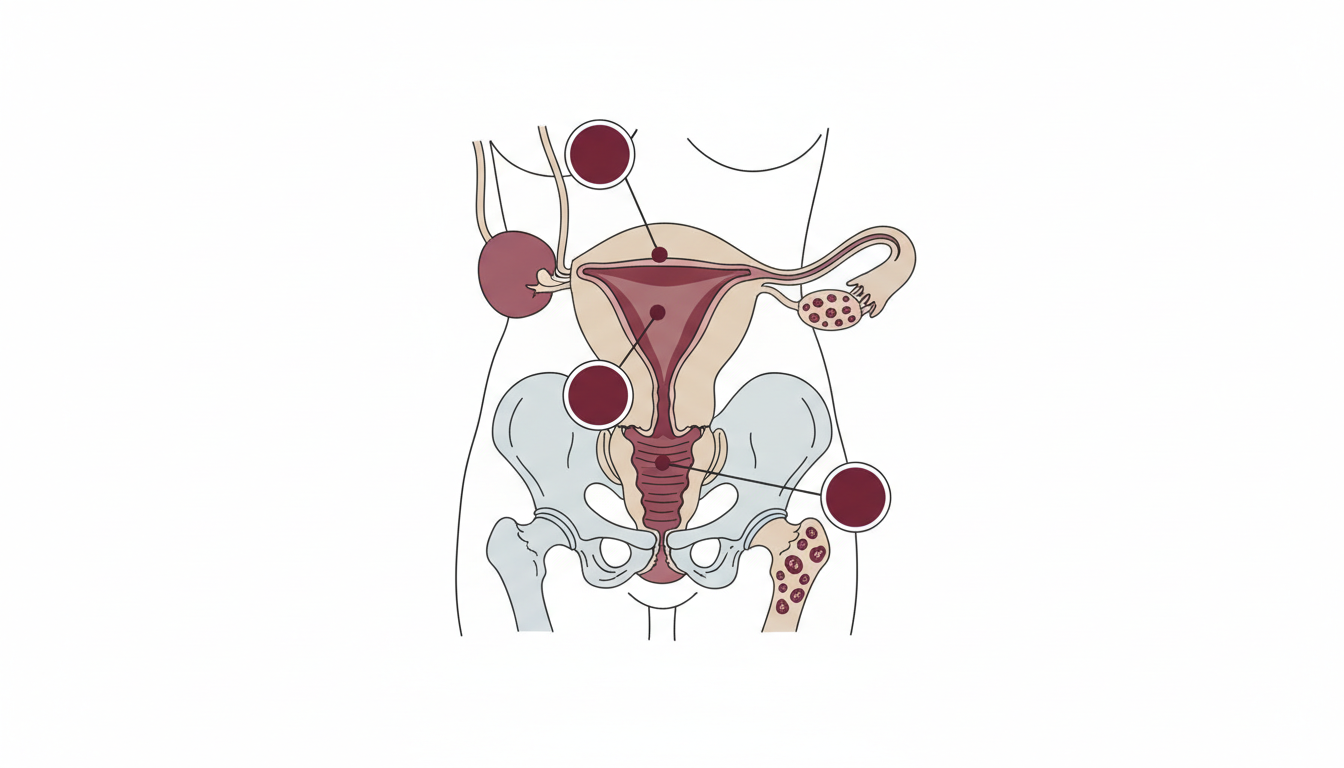
Every infection has a window period, the gap between exposure and when a test can reliably detect it. Test before that window closes and you can get a false negative even when the infection is genuinely present. This is why a clean STI panel a few days after an exposure can flip to positive two weeks later. The window period is different from the incubation period, which is when symptoms might appear. For a symptomatic infection there is usually enough pathogen present to detect even inside the typical window, so if symptoms are urgent, test now and retest at the full window if the first result is negative.
For the infections that mimic a UTI, here is roughly when testing becomes reliable:
| Infection | Earliest reliable detection | Recommended test timing |
|---|---|---|
| Chlamydia | About 7 days after exposure | 14 days for higher confidence |
| Gonorrhea | About 5 to 7 days | 10 to 14 days |
| Trichomoniasis | 5 to 7 days | 2 to 4 weeks |
| Mycoplasma genitalium | 1 to 3 weeks | 3 weeks recommended |
| Herpes (lesion swab) | While the lesion is active | Swab the outbreak directly for the most reliable result |
| Herpes (HSV-2 blood antibody) | Variable; some assays detect earlier | Up to 16 weeks or more (CDC) |
| Bacterial UTI | Same day, symptoms and detection align | Test as soon as symptoms appear |
You Can Have a UTI and an STI at the Same Time
It is worth saying plainly: a UTI and an STI are not mutually exclusive. Sex itself raises UTI risk through mechanical irritation of the urethra and the introduction of skin and gut bacteria into the urinary tract. The same encounter can transmit chlamydia, gonorrhea, or trichomoniasis. So a positive UTI dipstick does not rule out an STI any more than a negative one does.
The pattern that most often goes wrong: someone takes UTI antibiotics, feels partial relief because the bladder side clears, then the burning returns or never fully resolves because the second infection was never treated. If symptoms persist past a finished course of antibiotics, that is the moment to add an STI test rather than ask for a repeat of the same drug. A practical rule: if a treated UTI relapses within about 30 days, retest for chlamydia, gonorrhea, and trichomoniasis before starting another cystitis course.
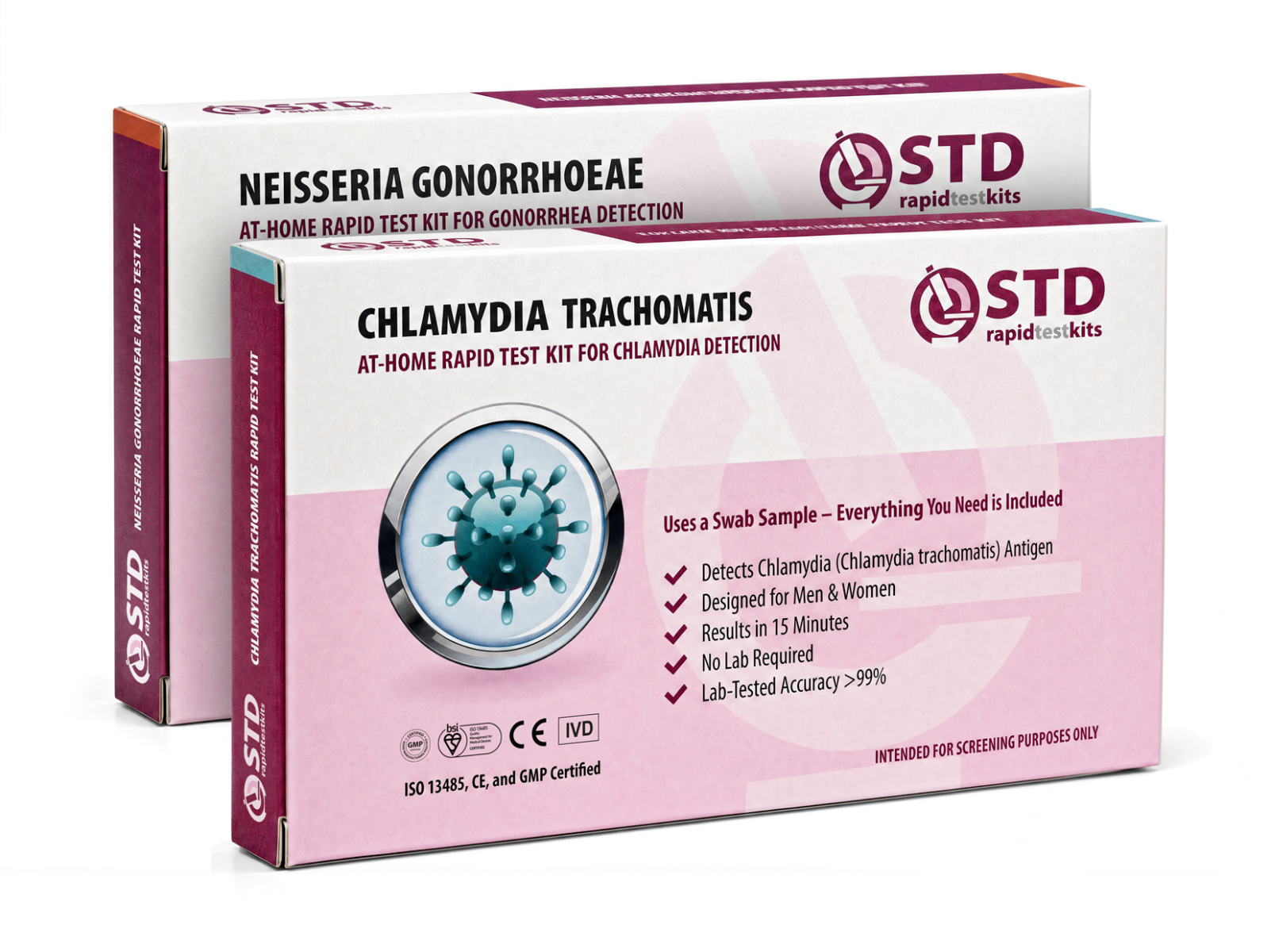
This article is published by stdrapidtestkits.com, which sells at-home STI testing kits. Our chlamydia, gonorrhea, trichomoniasis, and HPV kits are rapid lateral-flow swab tests; trich and HPV are validated for vaginal self-swab only (women's anatomy). Our HIV, syphilis, hepatitis, and herpes kits are rapid fingerstick blood tests. We don't sell urine NAATs, throat swabs, rectal swabs, or mail-in lab panels. If your situation needs one of those, see a clinic. Product mentions are picked for fit-for-purpose, not commercial alignment.
What Each Test Actually Sees
The reason a UTI gets missed as an STI, or the reverse, almost always comes down to the sample collected. A dipstick reads urine for the byproducts of bacterial cystitis and stops there. A NAAT amplifies the genetic material of a specific pathogen. A lesion swab catches an active herpes outbreak. A blood antibody test looks for past or established infection. Each answers a different question, and matching the sample to your question is what produces a clear result.
| Sample type | What it detects | What it misses |
|---|---|---|
| Urine dipstick | Bacterial cystitis (E. coli and similar) | Chlamydia, gonorrhea, trichomoniasis, herpes |
| Urine NAAT | Chlamydia, gonorrhea (sometimes trichomoniasis) | Herpes; some early-window infections |
| Vaginal or urethral swab (NAAT) | Chlamydia, gonorrhea, trichomoniasis | Herpes between outbreaks |
| Lesion swab | Active herpes outbreak (HSV-1 or HSV-2) | Past infection between outbreaks |
| Blood antibody test | Past or established herpes, syphilis, HIV, hepatitis B and C | Active local infection at a specific site |
Which Test You Need, and the Wider-Net Option
The right test depends on what you are trying to rule in or out, and you can combine them.
UTI: a urine dipstick, or a urine culture for recurrent cases, is the right tool. Available at urgent care, primary care, and as home strips, with a same-day result.
Chlamydia and gonorrhea: in a clinic, a nucleic acid amplification test (NAAT) on urine or a vaginal or penile swab is the laboratory gold standard for chlamydia and gonorrhea. At home, our rapid lateral-flow swab kits use the same sample type a clinic NAAT uses; the chemistry differs (immunoassay rather than DNA amplification), so a positive at-home result is worth confirming with a lab NAAT before treatment. The two tools are complementary, not interchangeable.
Trichomoniasis: in a clinic, NAAT is most sensitive, though wet-mount microscopy and rapid antigen tests are also used. Our at-home trichomoniasis swab is validated for vaginal self-swab only, so it is a women's test; male readers who need a trich test should see a clinic.
Herpes: a swab-and-PCR of a visible sore is the most direct test. With no sore, a blood antibody test can detect HSV-2 antibodies after seroconversion, which the CDC notes can take up to 16 weeks or more after exposure (CDC herpes testing). At-home blood-spot herpes tests use that same antibody chemistry, useful for retrospective status, not for diagnosing an active outbreak.
Mycoplasma genitalium: lab-based NAAT only, and you usually have to ask for it specifically.
If you are casting a wider net, after more than one recent partner or when you want one screening pass over the common infections, a multi-STI rapid panel covers chlamydia, gonorrhea, syphilis, HIV, and hepatitis in a single kit.
Chlamydia often has no symptoms, but it can cause serious health problems, even without symptoms. If symptoms occur, they may not appear until several weeks after having sex with a partner who has chlamydia.
Why You Should Not Wait It Out
The point here is not panic. Most STIs that mimic UTIs are easily treatable with a short course of the right antibiotic, and early treatment matters because untreated chlamydia and gonorrhea can reach the fallopian tubes or epididymis long before symptoms become obvious. There is a transmission angle too: someone who believes they have a UTI does not pause sex the way a person diagnosed with chlamydia would, so one missed diagnosis can quietly multiply through a partner network.
For people with vaginas, untreated chlamydia or gonorrhea can ascend from the cervix into the uterus and fallopian tubes and cause pelvic inflammatory disease (PID), which scars the tubes and raises the risk of ectopic pregnancy and infertility. The CDC reports that about 1 in 8 women with a history of PID have difficulty getting pregnant (CDC PID overview). PID can develop with nothing more dramatic than intermittent low-grade pelvic pain.
For people with penises, untreated chlamydia and gonorrhea can cause epididymitis (painful inflammation of the tube behind the testicle), urethral stricture, and, rarely, reactive arthritis. Untreated gonorrhea can also disseminate through the bloodstream to the joints and skin.
For everyone, untreated trichomoniasis raises the risk of acquiring or passing on HIV by creating local inflammation that helps the virus cross mucosal barriers. A 15-minute rapid test takes less time than the average urgent-care visit; treating PID or epididymitis takes months.
People with vaginas: pelvic inflammatory disease, ectopic pregnancy risk, and reduced fertility (the CDC reports about 1 in 8 women with a history of PID has trouble conceiving).
People with penises: epididymitis, urethral stricture, occasional reactive arthritis, and (with gonorrhea) the rare possibility of disseminated infection in joints and skin.
Everyone: untreated trichomoniasis increases the risk of acquiring or transmitting HIV through local inflammation, and untreated gonorrhea contributes to rising antimicrobial resistance.
When to Skip the Home Test and See a Clinician
A home test is a good first move when the obstacle is simply getting back to a clinic. Some situations call for in-person care instead, because they need an exam, urgent treatment, or a test we do not sell. If any of the following apply, book a same-day visit rather than reaching for a swab.
Fever, chills, or vomiting alongside pelvic pain. Severe lower-abdominal pain. Visible blistering sores or ulcers. Pregnancy or possible pregnancy with new symptoms. A known exposure in the past 72 hours to a partner who tested positive for HIV, where post-exposure prophylaxis may still be an option. Each of these needs a clinical exam or time-sensitive treatment that a home kit cannot provide.
If All Your Tests Come Back Negative
A meaningful share of people in this exact situation, burning that matches neither a UTI nor an STI, land here for a non-infectious reason. If your UTI test, STI panel, and a urine culture all come back negative and the burning continues, that is the point to ask for a fuller pelvic and bladder workup rather than another empiric antibiotic. Ask about mycoplasma genitalium testing too, since it is not part of standard panels. The most common non-infectious causes to raise with a clinician:
Non-Infectious Causes of Persistent Burning
- Genitourinary syndrome of menopause: low estrogen thins the vaginal and urethral lining, causing chronic burning, urgency, and recurrent UTI-like symptoms. Common after menopause or during breastfeeding, and topical estrogen often resolves it.
- Interstitial cystitis (painful bladder syndrome): chronic bladder irritation without infection. Symptoms come and go and often track with diet (caffeine, citrus, spicy food) and stress.
- Contact irritation: spermicides, scented soaps, douches, fabric softeners, latex condoms, or new lubricants can all irritate the urethra.
- Kidney or bladder stones: tend to cause sharper, more intermittent pain, often with blood-tinged urine.
- Vulvodynia or pudendal neuralgia: nerve-driven pelvic pain that can be misread as urinary in origin.
Telling a Recent Partner and Retesting
If a test comes back positive for an STI, the next step nobody loves is partner notification. CDC guidance is to notify sexual partners from the past 60 days for chlamydia and gonorrhea, and from the past 3 months for trichomoniasis. Re-infection from an untreated partner is one of the most common reasons people cycle through testing positive, treating, and testing positive again, so the conversation is what breaks the loop.
A few things help. Leading with how it affects you rather than assigning blame lands better; a line like 'I tested positive and wanted you to know so you can get checked too' reads cleaner than anything that implies fault. Anonymous services such as TellYourPartner.org let you send a heads-up by text or email without revealing your identity, useful when the relationship is over or was brief. And in many U.S. states, expedited partner therapy lets a clinician prescribe treatment for a partner without examining them, often the fastest way to stop a re-infection loop. Most partners are relieved to be told so they can get tested, rather than find out later.
The CDC recommends retesting about three months after treatment for chlamydia, gonorrhea, and trichomoniasis, even if symptoms have cleared (CDC STI treatment guidelines). That follow-up catches re-infection and confirms the original infection cleared. Sexually active women under 25 should screen for chlamydia and gonorrhea every year regardless of symptoms; anyone with new or multiple partners should test more often.
Chlamydia and gonorrhea: notify partners from the past 60 days.
Trichomoniasis: notify partners from the past 3 months.
Anonymous notification: TellYourPartner.org lets you send a heads-up by text or email without revealing your identity.
Expedited partner therapy: in many U.S. states a clinician can prescribe treatment for a partner without examining them. Ask whether your state allows it.
What to Do Now, in Plain Steps
If you are here because an urgent-care visit did not give you an answer, this is the cleanest version of the next move. Work through the questions below in order to land on the right action.
Home Test or Clinic? Work It Through
Do you have a fever, severe pelvic or abdominal pain, visible sores, or a possible pregnancy?
Yes: See a clinician the same day instead of using a home test. These need a physical exam or time-sensitive treatment that a home kit cannot provide.
Have you already tested for chlamydia, gonorrhea, and trichomoniasis?
Yes: If the result was negative but symptoms persist, retest at the full window: 7 to 14 days after exposure, or 2 to 4 weeks for trichomoniasis. A result taken too early can be falsely negative.
Ready to test now?
Yes: Use a self-collected swab at home (results in about 15 minutes) or ask a clinician for a NAAT on a vaginal/urethral swab or first-void urine. If a home test is positive, confirm with a lab NAAT before treatment, then see a clinician for the prescription, partner-notification guidance, and a plan to retest at three months.
No: Book a clinic or telehealth visit and ask specifically for a chlamydia, gonorrhea, and trichomoniasis NAAT rather than another round of UTI antibiotics.
Guidance only. A clinician can advise based on your specific situation.
Frequently asked questions
- Can chlamydia really feel exactly like a UTI?
- Yes. Burning, urgency, and pelvic pressure are the overlapping symptoms, and they can be indistinguishable without a lab test. The clearest tell that it's not a UTI: the burn persists or returns after standard UTI antibiotics, or you also have unusual discharge, pain during sex, or post-sex spotting.
- If my UTI test was negative, should I take antibiotics anyway just in case?
- No. Empirically taking UTI antibiotics for a negative UTI test means treating an infection that the test couldn't find, with drugs that don't reliably treat the most likely STI alternatives. Get an STI test instead. If the STI test is positive, you'll get the right antibiotic for that specific infection.
- How long after sex should I wait to test?
- The safest rule of thumb is to plan a test at 14 days after exposure for chlamydia and gonorrhea, 2 to 4 weeks for trichomoniasis, and up to 16 weeks or more for an HSV blood antibody test per CDC guidance. If symptoms feel urgent you can test sooner, but a negative result that early should be retested at the full window before you trust it.
- Can men have a UTI, or is burning always an STI in men?
- Men can have UTIs, but they're much less common than in women, especially in men under 50 without a prostate or kidney issue. In a sexually active man with new burning when urinating, the more likely cause is urethritis from chlamydia, gonorrhea, or mycoplasma genitalium. STI testing should be the first step, not the last.
- Will the antibiotic I got for my UTI also treat chlamydia?
- Sometimes, but not reliably. Doxycycline and azithromycin (used for chlamydia) are different from nitrofurantoin and trimethoprim-sulfamethoxazole (the most common UTI first-line drugs). If you were given nitrofurantoin or trimethoprim-sulfamethoxazole, it won't treat chlamydia or gonorrhea. Trichomoniasis needs metronidazole, a different drug class entirely.
- I've only had one partner in years, could it still be an STI?
- Yes. Chlamydia in particular can stay in the body for months or years without symptoms before flaring. A long monogamous relationship doesn't rule out an infection that was acquired before the relationship started, or a partner who acquired one earlier and is asymptomatic.
- Do at-home rapid tests work as well as clinic NAATs?
- Less sensitive, but useful as a first screen. Clinic NAATs amplify pathogen DNA and catch low-level infections that immunoassay strips can miss. Use the at-home kit to screen; if it's positive, confirm with a clinic NAAT before starting antibiotics.
- I tested negative for everything but I'm still burning. Now what?
- If UTI, chlamydia, gonorrhea, and trichomoniasis are all negative and symptoms continue, the next step is a clinician's evaluation for non-infectious causes: low-estrogen tissue thinning (especially postmenopausal or breastfeeding), interstitial cystitis, contact irritation from soaps or spermicides, kidney stones, or vulvodynia. Ask for mycoplasma genitalium testing too, since it's not covered by standard panels.
- U.S. Centers for Disease Control and Prevention. STI Treatment Guidelines, supporting antibiotic choices, diagnostic recommendations, and the 3-month retesting interval after treatment.
- U.S. Centers for Disease Control and Prevention. Pelvic inflammatory disease overview, supporting the 1-in-8 difficulty-conceiving figure.
- U.S. Centers for Disease Control and Prevention. Herpes testing: type-specific antibody testing can take up to 16 weeks or more after exposure to detect infection.
- National Health Service (UK). Chlamydia: most people with chlamydia notice no symptoms, and testing uses a urine sample or swab rather than symptoms alone.
- World Health Organization. Sexually transmitted infections fact sheet, supporting that most STIs are asymptomatic and that trichomoniasis was the most common curable STI with an estimated 156 million new infections in 2020.
- NIH/PMC. Peer-reviewed evidence on urinary symptoms in adolescent and young adult females, documenting that 36% of those with urinary symptoms had a sexually transmitted infection, a higher share than the 26% with a urinary tract infection.
