

Published: November 2025 | Last updated: April 2026 | Editorial review and quality control: Martina N.
Foamy discharge is one of those changes that is hard to ignore once you notice it. The texture looks bubbly, sometimes tinged yellow or green, and it does not match what your body usually produces. The instinct to type symptoms into a search bar at midnight is universal. Most people land on one suspect first: trichomoniasis. They are usually right to consider it, though the picture is more nuanced than a single diagnosis.
This guide walks through what foamy discharge actually signals, how it differs from bacterial vaginosis and yeast, when testing makes sense, and what to do whether the test comes back positive or negative. The aim is calm clarity, not a worsening Google spiral.
Is foamy discharge always a sign of an STD?
Foamy or frothy discharge is most strongly associated with trichomoniasis, a treatable sexually transmitted infection caused by a parasite. Bacterial vaginosis (a non-STI imbalance) and simple irritation can also produce thinner, off-color discharge that looks similar.
If the change appeared once and resolved within 24 hours with no odor or irritation, it may be nothing. Persistent change over several days, especially with a green or yellow tint or a stronger-than-usual odor, is what warrants a test. An at-home swab test or a clinic visit is the fastest way to know.
Key takeaways
- Foamy discharge points to trichomoniasis more often than any other single cause, with bacterial vaginosis and irritation as common runners-up; smell, color, and burning sensation help distinguish them.
- Trichomoniasis is curable with a short course of prescription antibiotics, and an at-home swab test (women only) gives a private result in about 15 minutes when symptoms appear.
When discharge changes, your body is sending a signal
Vaginal discharge is constantly adapting. It thickens around ovulation, thins after a period, increases during pregnancy, and shifts in response to stress, antibiotics, or new hygiene products. Most days the baseline is clear to milky white, mildly scented or odorless, and stretchy or creamy depending on cycle phase.
Foamy discharge sits outside that baseline. The bubbles come from inflammation thinning the fluid and changing how it mixes with air, often paired with a color shift toward yellow, green, or gray. Two conditions drive most cases: trichomoniasis, which is a sexually transmitted parasitic infection, and bacterial vaginosis, which is a microbial imbalance. Yeast infections, despite frequent social-media confusion, almost never produce true foaming. Normal cycle variation is not foamy either.
The takeaway is simple. A bubbly, off-color discharge is unlikely to resolve on its own and is worth investigating, though it is also rarely an emergency. Most underlying causes are treatable in a single short course of medication.
Yeast infections almost never produce true foaming. They tend to be thick, white, and clumpy, with intense itching and redness as the dominant complaints. If the discharge looks bubbly, the cause is far more likely to be trichomoniasis or bacterial vaginosis than yeast.
What causes foamy discharge: trichomoniasis, BV, yeast, or irritation?
Texture alone does not diagnose anything. When you layer in color, smell, and how the area feels, the picture sharpens. Most foamy-discharge cases sort into one of four buckets, and the table below is the quickest way to see which one your symptoms most resemble.
| Condition | Discharge appearance | Odor | Other symptoms | Sexually transmitted? |
|---|---|---|---|---|
| Trichomoniasis | Foamy, thin, yellow-green or gray | Strong, sometimes musty; often louder after sex | Itching and burning when present, often mild or absent | Yes (parasite) |
| Bacterial vaginosis | Thin, gray-white, rarely truly bubbly | Distinctly fishy, intensifies after sex | Mild irritation or none | No, though sexual activity influences it |
| Yeast infection | Thick, clumpy, cottage-cheese texture | Usually no strong odor | Intense itching, redness, soreness | No |
| Cycle variation or irritation | Clear to milky, occasionally slightly aerated | Mild or neutral | No persistent discomfort | No |
Why trichomoniasis usually sits at the top of the list
Trichomoniasis is caused by a microscopic parasite called Trichomonas vaginalis. It transmits through vaginal sex and sometimes through shared sex toys; it does not spread through toilet seats, towels, or pools. The CDC describes it as one of the most common curable STIs in the United States, and most people who have it experience few or no symptoms (CDC trichomoniasis fact sheet).
What makes trich distinctive is the combination of thin, bubbly discharge with an odor that can intensify after intercourse. The parasite triggers low-grade inflammation in the vaginal lining, which alters how fluid mixes with air. Itching and burning during urination can be present, mild, or completely absent. Many people delay testing because they expect dramatic pain that never arrives.
Untreated, trichomoniasis can persist for months or longer. It rarely causes catastrophic complications on its own, though it raises susceptibility to other STIs (including HIV) and is associated with preterm birth and low birth weight in pregnancy, which is why CDC and WHO guidance treat screening seriously (WHO trichomoniasis fact sheet).
The CDC estimates that roughly 70 percent of people with trichomoniasis have minimal or no symptoms at the time of infection. Quiet presentation is the rule, and a texture or color change in discharge can be the only practical clue (<a href="https://www.cdc.gov/trichomoniasis/about/" target="_blank" rel="noopener">CDC trichomoniasis fact sheet</a>).
BV vs trich: same color, very different feel
BV and trich both produce thin, off-color discharge, and the colors overlap enough that texture alone will not separate them. The clearer signal usually comes from the dominant complaint.
Bacterial vaginosis tends to announce itself through smell. The classic description is a fishy odor that gets stronger after intercourse. That happens because the protective lactobacillus bacteria that keep the vagina acidic decrease, while other anaerobic bacteria (microbes that thrive without oxygen) overgrow and release amines that volatilize when pH rises (CDC bacterial vaginosis fact sheet). Itching is usually mild or absent.
Trichomoniasis tends to announce itself through irritation as much as odor. The parasite attaches to the vaginal lining and provokes inflammation, which is why burning during urination, pain or discomfort during sex, and visible redness are more common with trich than with BV. The discharge is more likely to look genuinely frothy and to lean greenish, while BV discharge stays thin and gray.
Bodies, of course, do not always read the textbook. Some people with trich have only mild symptoms and some with BV report itching. The two conditions can also coexist. When the dominant symptom is unmistakable smell with little discomfort, BV is the leading guess; when irritation and frothiness are present together, trich climbs the list.
Color decoded: green, yellow, gray, or just bubbly
Foam is one clue, color is another. Green or yellow discharge carries different implications than clear or white fluid, and the urgency to test changes accordingly. The table below pairs each color pattern with the most likely cause and a reasonable testing window.
| Color | Most likely causes | When to test | Urgency |
|---|---|---|---|
| Green | Trichomoniasis; occasionally gonorrhea | As soon as it persists more than a day or two | High |
| Yellow | Trichomoniasis; sometimes cervical infection | Within a few days | Moderate to high |
| Gray | Bacterial vaginosis (especially with fishy smell) | When odor or discomfort appears | Moderate |
| Clear or white but bubbly | Irritation, mild pH shift, or early infection | If it persists beyond 3 to 5 days | Low to moderate |
Foamy discharge but no smell at all?
Not every case of foamy discharge smells strong, and not every infection announces itself dramatically. If the discharge looks bubbly but there is no odor and no irritation, the probability of trichomoniasis drops, though it does not go to zero. Roughly seven in ten people with trich have minimal symptoms (CDC), so a quiet presentation is normal.
Sometimes semen mixing with vaginal fluid after sex can temporarily change texture. It can look thinner or slightly aerated for a short period. True persistent foaming over several days is rarely just leftover semen.
Soaps, douches, and new lubricants can also irritate the lining and shift discharge briefly. The vagina is a pH-balanced ecosystem; throw the balance off and discharge can change for a few days. Chemical irritation usually settles once the irritant is removed. Infection persists. Duration is the easiest tell.
1. Has the texture or color change persisted for more than three days?
2. Was there a possible exposure (new partner, unprotected sex) within the past month?
If either answer is yes, an at-home swab test or a clinic visit is the next step. If both answers are no and the change resolves on its own within a couple of days, watchful waiting is reasonable.
How long has this been going on?
Duration matters as much as appearance. A one-day shift after unprotected sex might just be temporary fluid mixing or mild irritation. Discharge that stays foamy for more than three to five days without improving deserves attention. Infection rarely resolves spontaneously, especially when caused by a parasite like Trichomonas vaginalis.
People often wait to test because the discomfort is mild. The most common pattern in clinical guidance is that mild trich can sit unnoticed for weeks before someone connects the texture change to a possible infection. By the time testing happens, the infection has likely been present long enough to risk transmission to a partner.
This guide is published by stdrapidtestkits.com, which sells at-home STI testing kits. Product recommendations below are picked because they fit the symptoms this article describes, not for commercial benefit. We also flag where a clinic is the better choice.
When to test, and what the window period actually means
Testing too early can give false reassurance. Testing too late prolongs uncertainty. For trichomoniasis, the time between exposure and symptom onset is roughly 5 to 28 days (CDC trichomoniasis fact sheet). Testing is generally reliable from about a week after exposure, with accuracy improving over the following two weeks.
If it has been less than five days since a possible exposure and a test comes back negative, that result does not fully rule trich out. Plan a follow-up test about a week or two later. If it has been more than two weeks, a modern rapid or laboratory test should detect infection reliably when it is present. Bacterial vaginosis does not have a strict window period in the same way, because it is not transmitted person-to-person; if BV-style symptoms are present, testing makes sense immediately.
| Time since possible exposure | Likelihood symptoms appear | Testing reliability | Recommended action |
|---|---|---|---|
| 0 to 4 days | Usually none | Low | Monitor and plan testing at 7 to 14 days |
| 5 to 7 days | Possible early changes | Moderate | Test if symptomatic; consider a retest later |
| 8 to 14 days | Common symptom window | High | Test now for a reliable result |
| 15+ days | Symptoms often established | Very high | Test as soon as possible if not already done |
At-home swab or clinic visit?
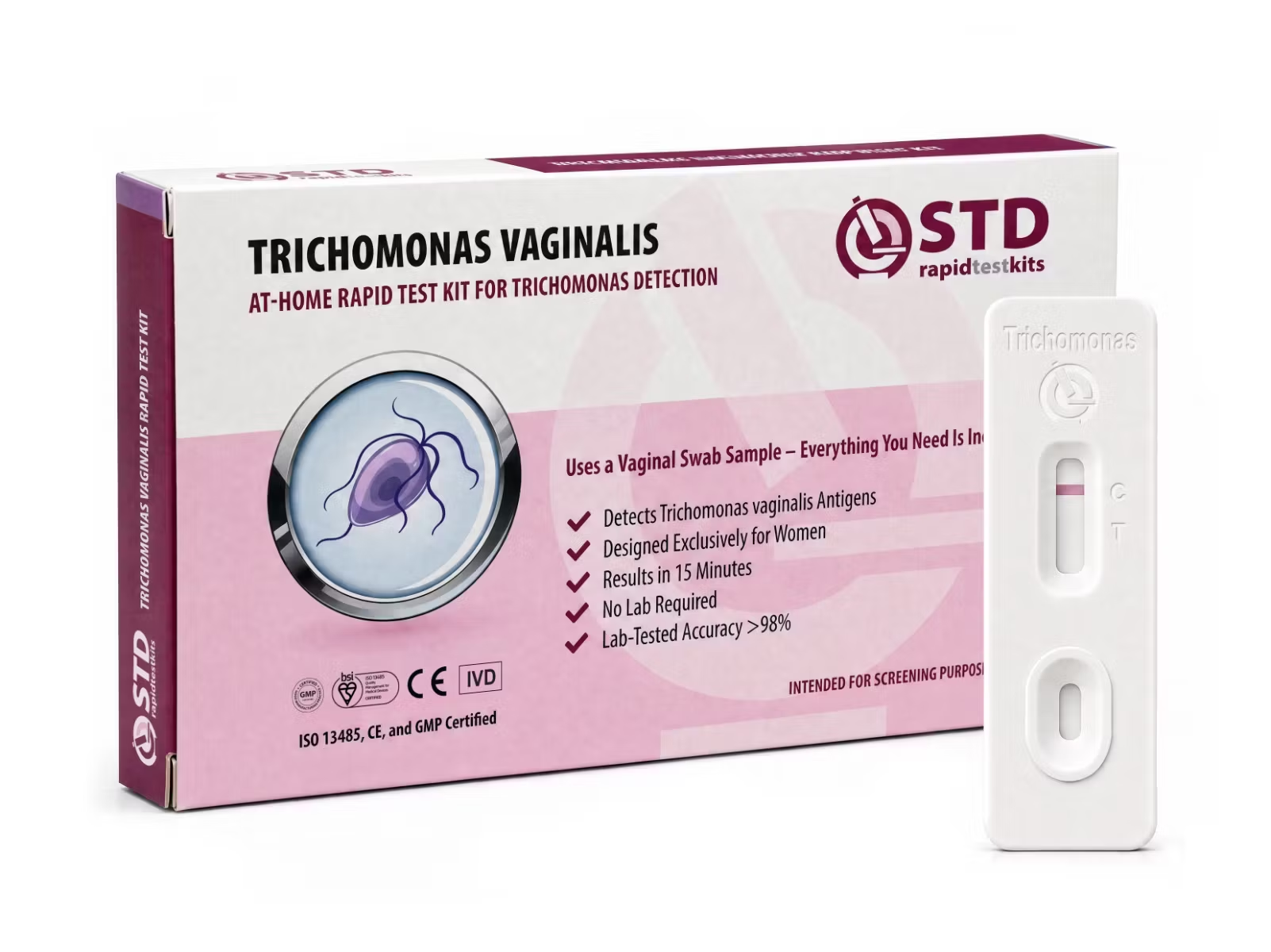
Some people prefer the reassurance of a clinician visit. Others find the prospect of explaining discharge to a receptionist unbearable enough that they avoid testing altogether. Modern at-home options have changed that math. Rapid self-collected swab kits allow private collection without rearranging your week, and laboratories now use highly sensitive nucleic acid amplification tests (NAAT) for trichomoniasis confirmation when needed.
One important distinction: at-home rapid kits use lateral-flow chemistry, which is fast and convenient yet not identical to laboratory NAAT in analytical sensitivity. The two are complementary. A rapid test is a strong screening tool; a positive result, or a negative result with persistent symptoms, is worth following up with a clinician for confirmatory testing and a treatment prescription.
For isolated discharge changes without systemic symptoms, an at-home test is a reasonable first step. The next callout lists the situations where a clinic is the better starting point regardless of convenience.
Four signs that warrant in-person care without delay:
- Severe pelvic or lower-abdominal pain
- Fever above 100.4 °F (38 °C)
- Heavy or unusual bleeding outside your normal cycle
- Pregnancy with new abnormal discharge
These can signal pelvic inflammatory disease or another complication that needs clinician evaluation, imaging, or both.
What happens if the test comes back positive
The word positive can hit hard, even when expected. Trichomoniasis is treatable. According to the CDC's 2021 STI Treatment Guidelines, the standard treatment is a short course of oral metronidazole or tinidazole. It is not a lifelong viral infection and it does not permanently alter the body.
Partner treatment matters as much as personal treatment. Reinfection is the single most common reason trich symptoms return: one partner clears the infection while the other still has it, and the cycle restarts. CDC guidance recommends that current sexual partners be referred for presumptive therapy, regardless of whether they have symptoms. Direct messages tend to work best for delivering the news. Something like, Hey, I tested positive for trich, it is treatable but we both need to be on medication so it does not bounce back, accomplishes the medical goal without turning into a confrontation.
Symptoms typically resolve within a week of starting treatment. CDC guidance also recommends a retest about three months later because reinfection within that window is common.
First-line: a short course of oral metronidazole or tinidazole, prescribed by a clinician. Symptoms typically resolve within a week. Current sexual partners are treated at the same time to prevent reinfection. Retest about three months after treatment, since reinfection within that window is common (<a href="https://www.cdc.gov/std/treatment-guidelines/trichomoniasis.htm" target="_blank" rel="noopener">CDC 2021 STI Treatment Guidelines</a>).
When the test is negative but something still feels off
Sometimes relief does not arrive with a negative result. The discharge is still there. The texture still feels strange. A negative test does not mean the symptoms are imaginary. It usually means the cause is not the infection that was tested for.
Bacterial vaginosis remains the most common non-STI cause of recurring discharge change. Hormonal shifts, antibiotics, douching, and even chronic stress can alter the vaginal microbiome. If a trichomoniasis test is negative and discharge persists, the next step is either a BV-focused at-home test or a clinic visit for a wet-mount or pH evaluation.
It is also worth widening the panel when the symptom pattern is unclear. Green or yellow discharge can occasionally point to gonorrhea or chlamydia, which need to be tested for separately because they require different treatments. A multi-infection screening kit is sometimes the most efficient next step.
If trichomoniasis is ruled out and discharge persists, three explanations come up most often:
- Bacterial vaginosis when fishy odor is the loudest symptom
- Gonorrhea or chlamydia when the discharge stays green or yellow, especially after a recent new partner
- Hormonal or irritation-related shifts when there is no odor and no other STI risk
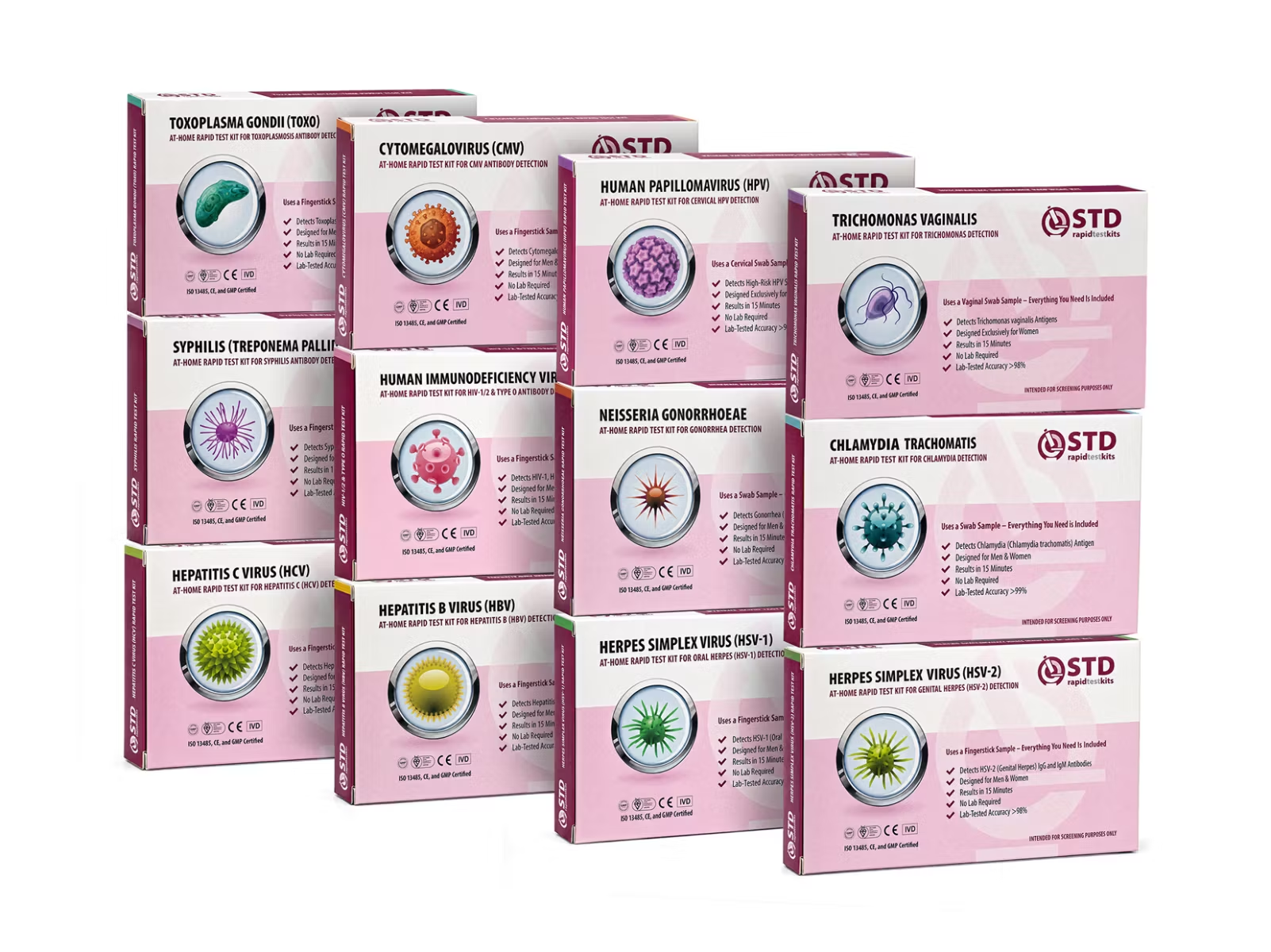
A multi-infection swab kit covers the first two in one go; persistent symptoms after that point are worth a clinician visit for pH and microscopy.
Foamy discharge during pregnancy
Pregnancy changes discharge. It increases overall, often becomes thinner, and can feel more noticeable day to day. That alone can cause anxiety. Foamy discharge during pregnancy still deserves a closer look, especially when it is green or yellow or comes with a strong odor.
Untreated trichomoniasis during pregnancy has been associated with preterm birth and low birth weight (CDC). Most pregnancies with trich progress normally when treatment starts promptly; the inflammation associated with infection raises risk without guaranteeing complications. Treatment with metronidazole during pregnancy is generally considered safe, and CDC recommends treating symptomatic pregnant patients.
If you are pregnant and unsure whether discharge changes are hormonal or infectious, testing is the protective step. Talk through any positive result with the obstetric provider managing the pregnancy so treatment is coordinated with the rest of prenatal care.
Two-step plan:
- Test for trichomoniasis, either at home with a women's swab kit or through your obstetric provider.
- Coordinate any positive result with the provider managing your pregnancy so treatment is integrated with prenatal care, not run in parallel to it.
Symptomatic pregnant patients are routinely treated under CDC guidance; metronidazole is generally considered safe in pregnancy when treatment is indicated.
Partners, reinfection, and the ping-pong cycle
BV and trich behave differently when it comes to partners. BV is not classified as an STI, and partner treatment is not routinely recommended; recurrence usually traces back to pH shifts, antibiotic use, or microbiome instability rather than re-exposure. Some couples notice BV episodes after unprotected sex and fewer episodes when condoms are used consistently, which is consistent with the pH-shift mechanism.
Trichomoniasis, on the other hand, requires partner treatment to break the cycle. Resuming sex before both people finish their medication is the most common cause of recurrence. Waiting until everyone has completed treatment and symptoms have cleared is a small inconvenience that prevents weeks of repeating the same infection.
When symptoms come back after a confirmed treatment course, the partner's treatment status is the first thing to check before assuming the medication itself failed.
- Both partners take medication on the same timeline.
- Avoid sex until everyone has finished the full prescribed course.
- Wait until symptoms have cleared before resuming sexual activity.
- Retest about three months later, even if you feel fine, because reinfection within that window is common.
When to skip the home kit and head to a clinic
At-home testing handles a lot of cases well, though a few situations call for in-person care without delay. Severe pelvic pain, high fever, heavy or unusual bleeding, or rapidly worsening symptoms can signal pelvic inflammatory disease or another complication that needs prescription treatment, imaging, or both. Pregnancy with new abnormal discharge is also a reason to talk to a provider quickly so any treatment is coordinated with prenatal care.
For everyone else, the decision tends to come down to access and comfort. If a clinic visit is realistic and a clinician can swab and prescribe in one appointment, that is often the fastest path. If the friction of a clinic visit is what has been delaying action, an at-home kit removes the barrier and answers the immediate question.
Most people who have trichomoniasis cannot tell they are infected. Without treatment, the infection can last for months or even years.
FAQs
- Is foamy discharge always trichomoniasis?
- Trichomoniasis is the most common single cause of foamy or frothy discharge, especially when it is greenish and the odor gets stronger after sex. Bacterial vaginosis can produce thin gray discharge that occasionally looks slightly bubbly, especially after intercourse, and irritation from soaps or new lubricants can mimic both. Persistent foaming for more than a few days is the most reliable signal that something is worth testing.
- Can I have trichomoniasis without itching or burning?
- Yes, and it is common. The CDC estimates that roughly 70 percent of people with trichomoniasis have minimal or no symptoms. Discharge changes can be the only clue, and pain or itching are often absent entirely. That is why texture changes that persist for several days deserve a test.
- Could foamy discharge just be leftover semen after sex?
- Briefly, yes. Semen mixing with vaginal fluid can temporarily make discharge look thinner and slightly aerated for a few hours. True foaming that persists for several days, especially without recent intercourse, is unlikely to be just leftover semen. Persistence is the tell.
- What does it mean if the smell is specifically fishy?
- A distinctly fishy odor that gets louder after sex is the textbook description of bacterial vaginosis. The amines that BV-associated bacteria produce volatilize when vaginal pH rises, which is what semen does briefly. A musty or unpleasant odor paired with greenish foam leans toward trichomoniasis instead. Either way, an odor that does not match your baseline is worth testing.
- How long can untreated trichomoniasis last?
- It can last for months or even years without treatment. Symptoms can come and go, sometimes disappearing for weeks before returning. Long-standing infection raises the risk of acquiring other STIs (including HIV) and is associated with adverse pregnancy outcomes, which is why guidance treats screening seriously even when symptoms are mild.
- If I test positive, does that mean my partner cheated?
- Not necessarily. Trich can sit in the body for months with little or no symptoms, so a positive result does not pin down when transmission happened. The most productive next step is treating both partners and any other recent partners, rather than relationship forensics. A simple direct message about the result is the most efficient way to start that conversation.
- I tested negative for trich but discharge still looks off. What now?
- A negative trichomoniasis test rules out trich, not all causes. The next likely explanation is bacterial vaginosis, especially when there is fishy odor without much itching. Hormonal shifts, antibiotics, and irritation from soaps or lubricants can also change discharge. A combination home panel or a clinic visit for pH and microscopy can pinpoint a non-STI cause.
- Is foamy discharge ever normal during ovulation or pregnancy?
- Ovulation discharge is usually clear, slippery, and stretchy, similar to egg whites. It can be plentiful and is not typically bubbly. Pregnancy discharge often increases in volume and thins out, and a brief bubbly look after intercourse is not unusual. Persistent foaming, color changes toward green or yellow, or a strong odor are not part of normal hormonal variation and are worth testing.
- U.S. Centers for Disease Control and Prevention. Trichomoniasis fact sheet, including symptom prevalence (about 70 percent asymptomatic), the 5 to 28 day incubation window, and partner-treatment guidance.
- U.S. Centers for Disease Control and Prevention. Bacterial vaginosis fact sheet covering symptom presentation, the fishy-odor mechanism, and recurrence patterns.
- U.S. Centers for Disease Control and Prevention. 2021 Sexually Transmitted Infections Treatment Guidelines: trichomoniasis, including first-line oral metronidazole or tinidazole regimens, presumptive therapy for current sex partners, and three-month retesting guidance.
- World Health Organization. Trichomoniasis fact sheet covering global burden, treatment, and pregnancy-related complications.
- U.K. National Health Service. Bacterial vaginosis overview, including symptoms, treatment, and reasons recurrence is common.
- U.K. National Health Service. Trichomoniasis overview, including symptom range and treatment.
