Published: July 2025 | Last updated: May 2026 | Editorial review and quality control: Martina N.
Walking out of a clinic, or closing the box on an at-home kit, feels like an exhale. You've done the responsible thing. Your status is known. Except for one infection that most 'full' STD panels quietly leave out.
Hepatitis B is sexually transmissible, it's substantially more transmissible than HIV per drop of infected blood, and it can damage the liver for years before anyone notices. Yet a typical four-panel screen, chlamydia, gonorrhea, syphilis, and HIV, doesn't include it. Neither does the five-panel version with herpes added.
The good news: that gap is fixable. The CDC now recommends every adult get tested for Hepatitis B at least once, and at-home kits exist that include it. This article walks through what Hep B testing actually checks, why it matters even if you think you were vaccinated as a baby, and how to ask for the screening you may already have been assuming you got.
Key Takeaways
- Hepatitis B is a sexually transmitted infection that's left off most standard STI panels by default. You usually have to ask for it by name or choose a kit that lists it explicitly.
- The CDC now recommends every adult be screened for Hep B at least once. A complete check uses a three-marker panel (HBsAg, anti-HBc, anti-HBs) that distinguishes current infection from past exposure and from vaccine-only immunity.
How Hep B Spreads, and Why It Counts as an STI
Hepatitis B is a virus that infects the liver. It travels in blood, semen, vaginal fluids, and saliva, which is why the U.S. Centers for Disease Control and Prevention classifies it as a sexually transmitted infection alongside HIV, syphilis, and the others (CDC, Hepatitis B).
Three properties make Hep B particularly worth screening for. First, it's highly transmissible: the CDC notes Hep B is substantially more concentrated in infected blood than HIV, so smaller exposures can still transmit it (CDC, Hepatitis B). Second, it can survive outside the human body, on a razor edge, a toothbrush head, a contaminated surface, for up to seven days and still cause infection. Third, in adults, acute Hep B can either resolve fully or move into a long quiet phase where the virus continues replicating without producing symptoms.
The transmission routes that account for adult-onset cases are sexual and blood-borne:
- Unprotected vaginal, anal, or oral sex with a partner who has Hep B
- Sharing needles, syringes, or other injection equipment
- Sharing personal items that may carry trace blood (razors, toothbrushes, nail clippers, glucose monitors)
- Sharing sex toys without cleaning or barrier protection between users
- Childbirth: a person with chronic Hep B can pass the virus to their baby without immediate post-exposure prophylaxis
Why Most 'Full' STD Panels Skip Hep B
The omission isn't arbitrary. It comes from a few practical and historical factors that have hardened into convention:
- Vaccination assumption: Universal childhood Hep B immunization was recommended in the U.S. starting in 1991, so providers often default to assuming current adults are protected. In practice, vaccination coverage is uneven, immunity can wane, and a meaningful share of adults over 35 were never immunized at all.
- Panel scope by design: Standard STI panels were built around the four most actionable infections that present with genital symptoms or acute consequences (chlamydia, gonorrhea, syphilis, HIV). Hep B falls outside that frame, even though it spreads sexually.
- Billing categories: Many clinics route hepatitis tests into a separate 'liver work-up' or hepatology category, which has its own ordering pattern and insurance coding distinct from a sexual-health visit.
Does a standard 'full' STD panel test for Hepatitis B?
Usually no. The default full panel at most clinics and at-home services covers chlamydia, gonorrhea, syphilis, and HIV, sometimes plus herpes. Hep B (and Hep C) are included only when you request them by name or order a kit that lists them explicitly on the box. The CDC's 2023 guidance recommends every adult be screened for Hep B at least once, regardless of vaccination history.
How Common Hep B Actually Is
Globally, around 254 million people lived with chronic Hepatitis B infection in 2022, and the virus contributed to roughly 1.1 million deaths that year (WHO Hepatitis B fact sheet). Most of those deaths come from cirrhosis or liver cancer, both downstream of long-running chronic infection that was never identified in time.
In the United States, the CDC estimates hundreds of thousands of Americans live with chronic Hep B, and a substantial share don't know it. New acute cases have not fallen as far as public-health planners hoped, driven in part by injection drug use and unscreened sexual exposure (CDC, Hepatitis B).
The pattern is consistent worldwide: most chronic Hep B is silent. People who are infected typically feel fine for a decade or more while the virus continues damaging liver tissue. Without testing, the first signal is often a routine blood test showing elevated liver enzymes, an unexplained fatigue episode, or in the worst cases, advanced fibrosis showing up on an imaging study.
Why Hep B Belongs in Every Adult's Screening Plan
Four features of Hep B together justify treating it as a baseline screen, not an opt-in add-on:
- It's transmissible through normal sexual contact. Any infection that meets that bar belongs in a sexual-health screen by definition.
- It's silent. Most chronic carriers feel fine for years. Without testing, the diagnosis arrives only when liver damage is already advanced.
- It's serious if untreated. Chronic Hep B raises lifetime risk of cirrhosis, liver failure, and hepatocellular carcinoma. The CDC and WHO both classify it as a leading driver of preventable liver cancer.
- It's actionable. The Hep B vaccine works for susceptible people, and antiviral treatment for chronic infection works to suppress the virus and reduce long-term liver damage. Neither matters if status is unknown.
Who Should Get a Hep B Test
The 2023 CDC update is unusually broad: every adult should be screened for Hep B at least once, period (CDC 2023 Universal Hep B Screening Recommendation). The guidance moved away from the older risk-only framework because too many cases were being missed in people who didn't fit the standard risk profile. Disclosure: stdrapidtestkits.com sells at-home Hep B test kits; the products linked throughout this article are ours, recommended on fit for the reader's concern rather than commercial benefit.
Within that universal recommendation, the CDC also flags higher-priority groups for whom screening matters more and may need to happen more than once:
- People with more than one sexual partner in the last six months
- Anyone who has had unprotected sex with a new partner
- Men who have sex with men
- Anyone with a sexual partner who has chronic Hep B, Hep C, or other liver disease
- People who inject drugs, currently or in the past
- People born, or whose parents were born, in regions where Hep B is endemic (parts of East and Southeast Asia, sub-Saharan Africa, the Pacific Islands, parts of Eastern Europe, and the Caribbean)
- People living with HIV or another immune-suppressing condition
- People on hemodialysis, or anyone who received blood products before 1992 when broader donor screening took effect
What an At-Home Hep B Test Actually Measures
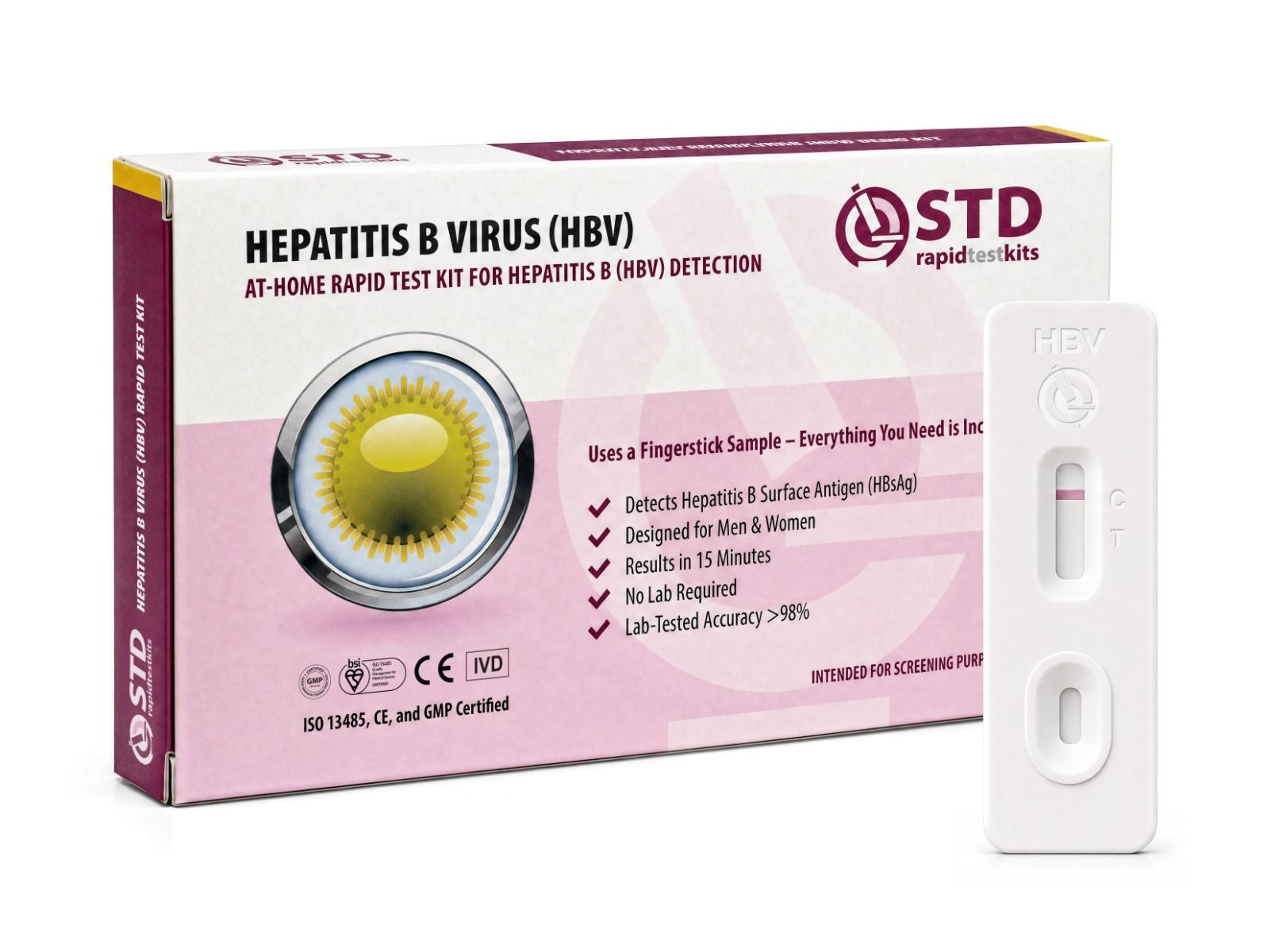
Most home Hep B kits are lateral-flow rapid tests run from a fingerstick blood sample. They detect Hepatitis B surface antigen (HBsAg), the protein that indicates active virus in the bloodstream. A positive HBsAg result means current infection: either an acute case in progress or a chronic one.
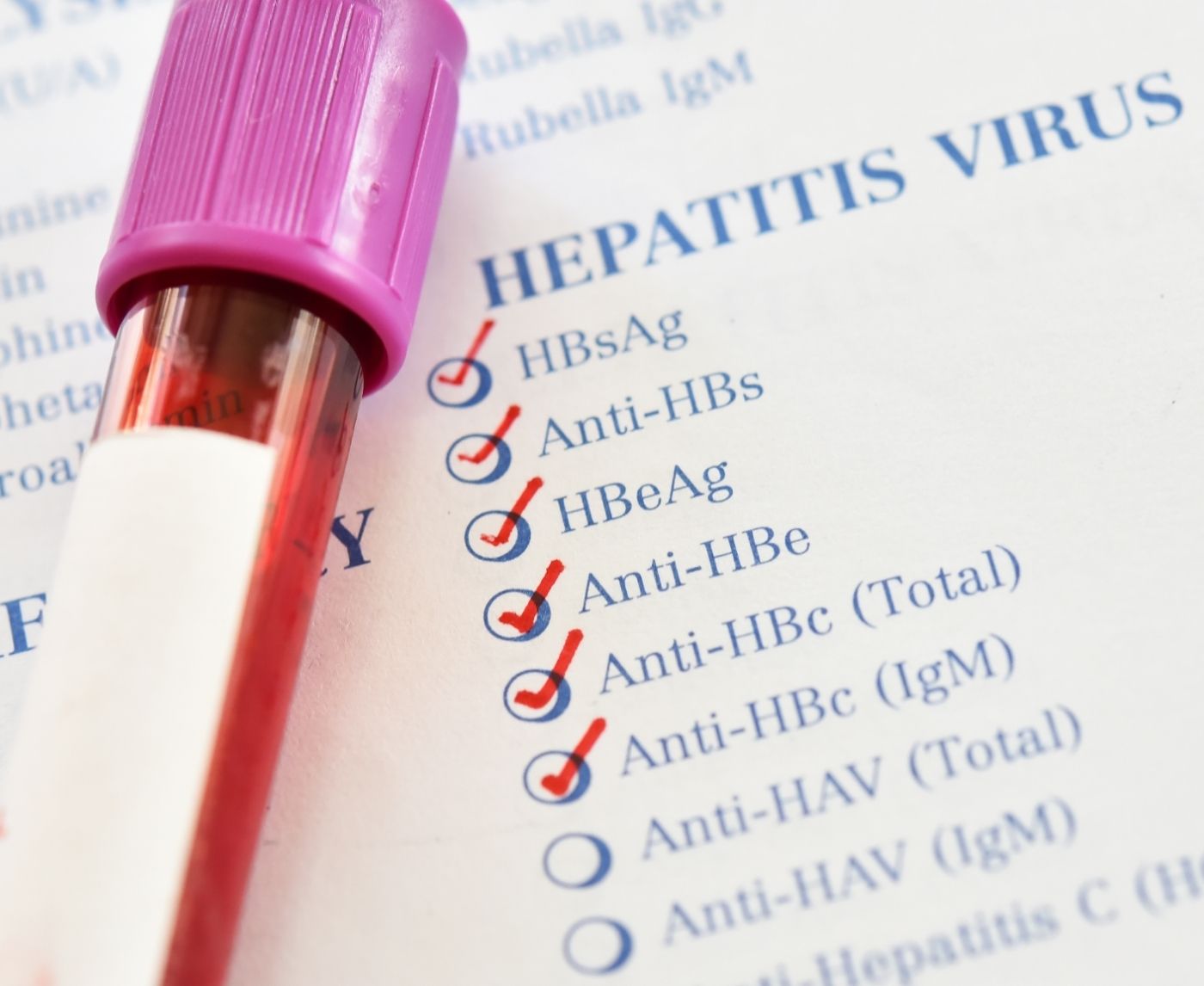
A complete clinical picture, the kind the CDC's 2023 universal-screening guidance recommends, uses a three-marker panel from a laboratory blood draw (CDC, Clinical Testing for Hep B):
- HBsAg (Hepatitis B surface antigen): positive if the virus is currently active in your body
- Anti-HBc (antibody to Hepatitis B core antigen): positive if you've ever been exposed to the virus, regardless of whether you cleared it
- Anti-HBs (antibody to Hepatitis B surface antigen): positive if you have protective immunity, either from a past resolved infection or from the vaccine
How the Three Markers Combine to Tell Your Status
Reading the triple panel comes down to which combinations come back positive. The table below shows the four most common patterns and what each means clinically.
| HBsAg | anti-HBc | anti-HBs | Interpretation |
|---|---|---|---|
| Positive | Positive | Negative | Active infection (acute or chronic) |
| Negative | Positive | Positive | Past resolved infection, now immune |
| Negative | Negative | Positive | Vaccine-only immunity, never infected |
| Negative | Negative | Negative | Susceptible, no immunity yet |
Single-Marker Home Tests vs. the Full Lab Panel
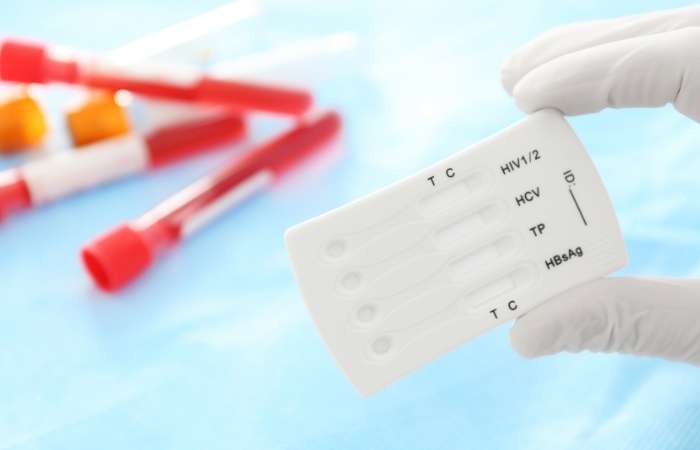
Rapid home cassettes typically test only for HBsAg as a single marker. That answers the question 'am I infected right now?' but doesn't distinguish vaccinated-and-immune from susceptible-and-unvaccinated. If you want the full picture in one go, look for a laboratory triple-panel order, or pair the home rapid test with a separate immunity check at your next provider visit.
Vaccinated as a Kid? Don't Assume You're Still Protected
Universal childhood Hep B vaccination became standard practice in the United States in 1991, in the United Kingdom much later, and in many other countries not at all (NHS, Hepatitis B). Anyone born before about 1990 in the U.S. probably wasn't vaccinated as an infant. The catch-up programs that followed reached some adolescents and young adults but missed plenty.
Even when vaccination did happen, immunity is not guaranteed for life. A share of people show declining anti-HBs antibody levels by their late twenties or thirties, particularly if their immune system was suppressed at any point or if they didn't complete the three-dose series. The CDC's general guidance is that healthy adults with a documented full series don't need a booster, although a positive anti-HBs result is the only way to be sure where you actually stand. Vaccination also provides no protection against exposures that preceded it, including perinatal transmission from a parent who had undiagnosed chronic Hep B.
Testing simply confirms whether the vaccine actually took, whether you were exposed before it could protect you, and whether your immunity has held up decades later.
CDC recommends screening all adults aged 18 and older for hepatitis B virus infection at least once during their lifetime using a triple panel of HBsAg, anti-HBc, and anti-HBs.
Hepatitis B and Pregnancy: A Mandatory Check
If you're pregnant or planning a pregnancy, Hep B testing isn't optional in any modern obstetric protocol. The virus can pass from a parent to a baby during childbirth, and without immediate post-exposure prophylaxis, infants born to HBsAg-positive parents face high risk of chronic infection (CDC, Hepatitis B).
The standard prenatal protocol the CDC and major obstetric bodies endorse:
- Test every pregnant person for HBsAg as part of standard first-trimester prenatal labs
- If the parent tests positive, administer the Hepatitis B vaccine and hepatitis B immune globulin (HBIG) to the newborn within twelve hours of birth
- Complete the infant's three-dose Hep B vaccine series in the first six months of life
- Re-screen at delivery for any pregnant person at higher exposure risk who tested negative earlier in the pregnancy
How the Prenatal Catch Often Comes Late
In a fully resourced prenatal-care system, the standard protocol catches almost every case. The real gap is upstream: many people don't know they have Hep B because they were never screened as adults outside pregnancy. By the time it's caught in routine first-trimester labs, decisions about disclosure, transmission risk, and family planning have to be made in compressed time, often during a pregnancy that's already emotionally loaded.
The simpler path: get a Hep B test as a baseline adult screen well before any planned pregnancy. Knowing your status reduces the surprise and gives you and your provider room to choose the next steps without time pressure.
The post-exposure protocol is highly effective. The critical step is ensuring the newborn receives both the Hep B vaccine and hepatitis B immune globulin (HBIG) within twelve hours of birth, followed by completion of the three-dose infant vaccine series in the first six months.
Stigma, Access, and the Silent Spread
Hepatitis B is also a story about who gets screened and who doesn't. The U.S. population most affected by chronic Hep B is also the population least often offered screening as part of routine care.
The CDC and major Hep B advocacy organizations report:
- Asian American and Pacific Islander communities account for roughly more than half of chronic Hep B cases in the United States while being about 6% of the population, driven by higher endemic prevalence in many countries of origin and lower rates of childhood screening among older immigrants
- Black Americans have higher rates of advanced Hep B-related liver disease and lower documented vaccination coverage compared to white Americans
- People who immigrated from sub-Saharan Africa, parts of Asia, and the Caribbean are at substantially elevated risk of having Hep B that was acquired in early childhood and never identified

Why the Gap Persists, and How Patients Close It
The reasons are mostly structural: clinicians often don't follow up on vaccination status with immigrant patients, language and cultural barriers compound a topic that already carries stigma, and risk-based screening models systematically miss people whose primary risk is country of birth rather than current behavior. The CDC's switch to universal adult screening in 2023 was designed in part to fix this gap. The implementation lag is real, and getting Hep B added to a routine visit still often comes down to the patient asking.
For individual readers, if you fall into any of these groups, or if your family does, treat at-home or clinic Hep B testing as a one-time baseline check you owe yourself, regardless of whether a provider has ever brought it up. Most people diagnosed late with chronic Hep B were never offered a screen earlier. The gap is structural; nobody put the test in front of them, and that reflects healthcare access patterns rather than personal carelessness.
How to close the gap on your own
- Ask your provider explicitly whether HBsAg is on the order. If it isn't, ask to add it.
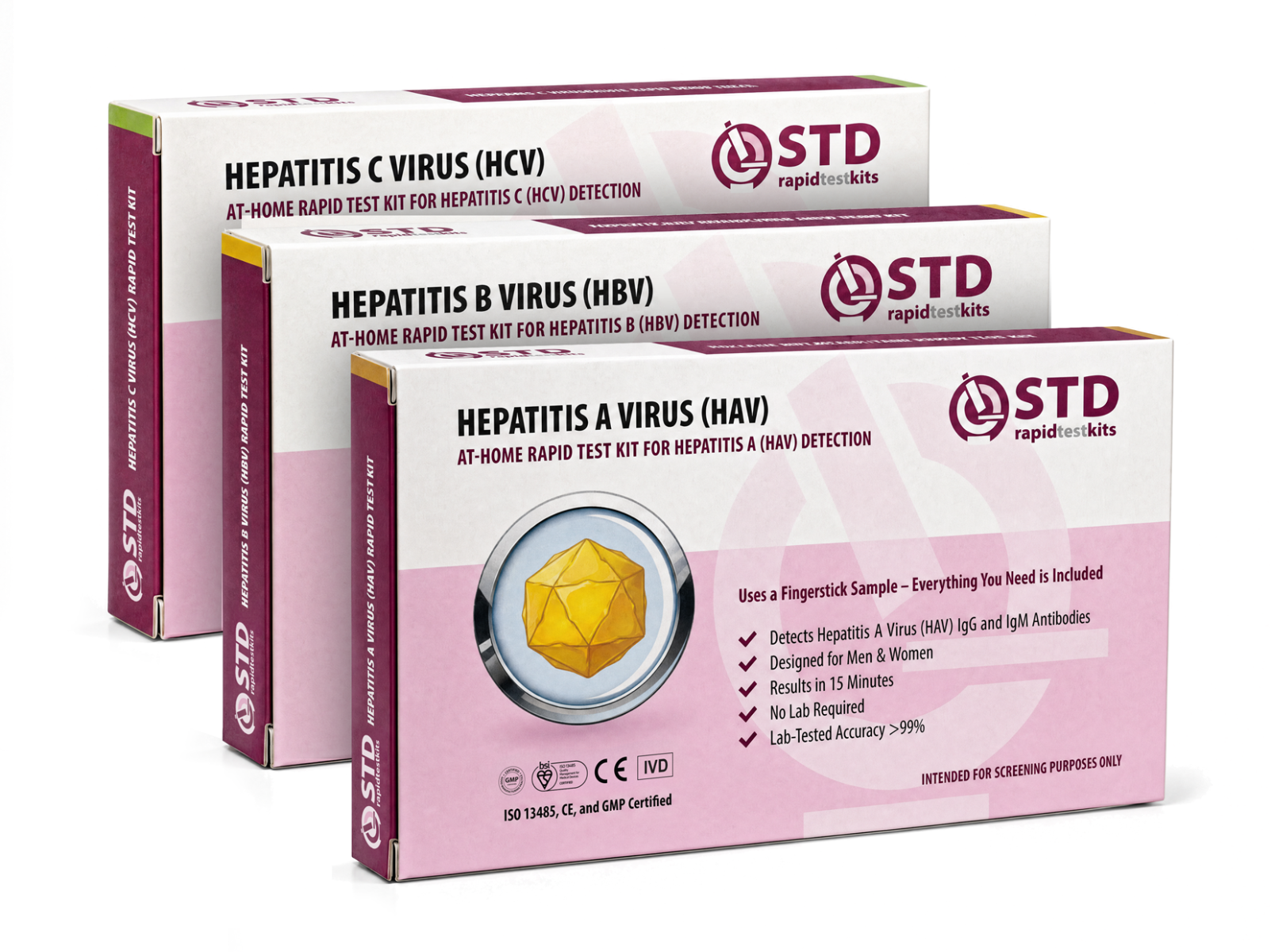
- If testing at home, choose a kit that lists Hep B on the label, or pair a separate Hep B rapid test with the rest of your screening.
- If you or your parents were born in an endemic region, treat this as a baseline check regardless of whether a provider has raised it.
The Bottom Line: Ask for Hep B by Name
A 'full' STD panel that doesn't include Hep B reflects older convention, where ordering hepatitis screening separately from sexual health was standard. For most adults under fifty, that separate screening never happened, which is the reason the CDC moved to universal adult screening in 2023 (CDC 2023 Universal Hep B Screening Recommendation).
If you test through a provider, ask explicitly whether the order includes Hep B markers. If it doesn't, ask to add HBsAg (and ideally the three-marker triple panel). If you test at home, choose a kit that lists Hep B on the box, or pair a Hep B rapid test with the rest of your screening.
This is a one-time ask for most adults. Once you know your status (currently infected, previously exposed and resolved, vaccinated and still immune, or susceptible), you can act on it: treatment for active infection, vaccination if you're susceptible, or peace of mind if you're already protected. The CDC's universal-screening recommendation exists because the current default leaves too many people uncertain about which of those four categories they actually fall into.
FAQs
- Is Hepatitis B actually an STD?
- Yes. The CDC classifies Hep B as a sexually transmitted infection because sexual contact (vaginal, anal, oral) is one of its most common transmission routes among adults, alongside blood-to-blood exposure and perinatal transmission.
- Why isn't Hep B always included in 'full' STD panels?
- Most standard panels were built around chlamydia, gonorrhea, syphilis, and HIV. Hep B sits in a separate billing and testing category in many clinics, and providers often assume adult patients were vaccinated as children. Unless Hep B is listed on the order or the kit, it usually isn't included.
- Can I test for Hep B at home?
- Yes. At-home rapid lateral-flow kits using a fingerstick blood sample detect HBsAg, the marker for active infection. For a complete picture (current infection, past exposure, and immunity status), the CDC recommends a three-marker triple panel done through a laboratory.
- What if I test positive for Hep B?
- A positive HBsAg result means active infection. You'll need follow-up testing to determine whether the infection is acute (likely to clear on its own in healthy adults) or chronic (longer-term, often manageable with antiviral medication). A provider can help interpret results and plan next steps.
- If I was vaccinated as a child, do I still need to test?
- Yes, at least once. Vaccination is very effective, but immunity can wane and some people don't mount a strong response. Checking anti-HBs confirms whether your immunity is still in the protective range. If it isn't, a booster can usually restore it.
- What does a 'full panel' STD test usually include?
- Most full panels include chlamydia, gonorrhea, syphilis, and HIV; some add herpes. Hepatitis B (and Hepatitis C) are usually only included when you request them by name or order a kit that lists them on the box.
- How often should I get tested for Hep B?
- The CDC recommends every adult be screened at least once. People with ongoing risk factors (multiple partners, injection drug use, partners with chronic Hep B, sex with men who have sex with men) should be screened more frequently, typically annually or per the screening cadence their provider recommends.
- Is Hep B worse than HIV?
- They're different infections with different management paths. Hep B is generally more transmissible per exposure event than HIV. Both can be serious without treatment, and both have effective management options when diagnosed. Comparing them isn't really useful: screening for both is the actual answer.
- U.S. Centers for Disease Control and Prevention. Hepatitis B overview, including transmission routes, infectiousness relative to HIV, surface survival, and U.S. epidemiology.
- U.S. Centers for Disease Control and Prevention. Clinical Testing and Diagnosis for Hepatitis B, including the triple-panel (HBsAg, anti-HBc, anti-HBs) and how to interpret marker combinations.
- U.S. Centers for Disease Control and Prevention. 2023 Updated Universal Hepatitis B Screening Recommendations for all adults aged 18 and older.
- World Health Organization. Hepatitis B Fact Sheet, global prevalence (254 million chronic infections in 2022), mortality, and transmission overview.
- United Kingdom National Health Service. Hepatitis B information page, including UK vaccine schedule history and risk-group guidance.
