Can Oral Sex Cause Conjunctivitis? What the Science Actually Says
Pink eye is almost always something ordinary, like a cold-season virus or an allergy flare. A small minority of cases trace back to an STI reaching the conjunctiva through saliva, genital fluid, or a contaminated finger. This guide explains what is actually happening, which symptoms warrant urgent care, and what at-home testing can and cannot do alongside a clinic visit.
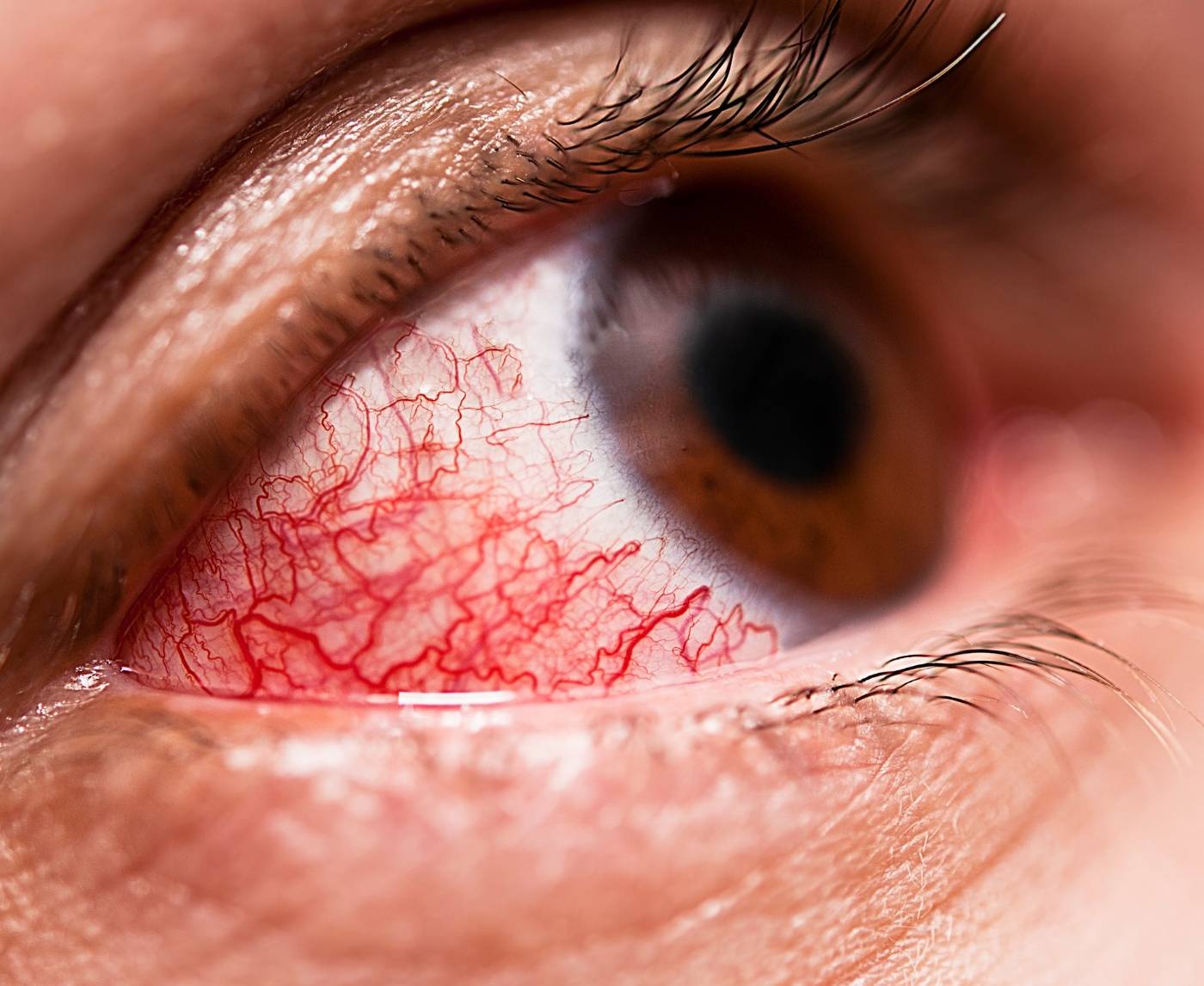



- STI-related conjunctivitis is uncommon, but gonococcal pink eye can threaten vision within 12 to 48 hours and needs same-day clinical care.
- The most common transmission route is hand-to-eye contact after touching infected genital fluid or saliva, not a direct splash to the eye.
Published: November 2025 | Last updated: May 2026 | Editorial review and quality control: Martina N.
Can oral sex cause conjunctivitis?
Yes, but rarely. Chlamydia, gonorrhea, herpes simplex, and (less commonly) syphilis can reach the eye through saliva, genital fluid, or hand-to-eye transfer. Onset ranges from 12 to 48 hours for gonorrhea to weeks for syphilis. Any pink eye with thick pus, severe pain, or vision changes needs same-day clinical care.
Pink eye is almost always something ordinary. A virus you caught from a coworker. An allergy flare. A contact lens that scratched your cornea. The vast majority of conjunctivitis cases have nothing to do with sex.
A small minority do. Sexually transmitted infections such as chlamydia, gonorrhea, herpes simplex, and (less commonly) syphilis can reach the conjunctiva, the thin transparent tissue lining the inside of your eyelid and covering the white of your eye. Oral sex is one of the routes that can carry them there. The risk per encounter is low, the symptoms can be subtle, and the treatment is usually straightforward once a clinician knows what they are looking at. The trouble is getting to the right diagnosis. The U.S. Centers for Disease Control and Prevention treats adult gonococcal eye infection as a sight-threatening condition that needs same-day care (CDC 2021 STI Treatment Guidelines).
This guide covers what is happening, when to be concerned, and what to do next.
How an STI Actually Reaches Your Eye
Most pink eye starts the same way regardless of cause: a pathogen meets the conjunctiva, an immune response kicks in, and the eye turns red. The interesting question is how a sexually transmitted bacterium or virus gets to that membrane in the first place.
Three pathways matter for adults.
Hand-to-eye contact. This is the route behind most STI-related conjunctivitis cases. Genital secretions, saliva, or another bodily fluid carrying the pathogen lands on the fingers during sex, and the same fingers later touch or rub the eye to remove a contact lens, wipe sleep crust the next morning, or scratch an itch. The conjunctiva is a mucous membrane biologically similar to the lining of the urethra or cervix, so a bacterium that thrives in those tissues can establish infection in the eye too. Ophthalmology case reviews attribute the majority of adult ocular chlamydia cases to this kind of accidental autoinoculation rather than direct splash.
Direct splash or droplet exposure. Less common but documented. Fluid containing chlamydia or gonorrhea reaches the eye directly during oral or genital contact. Even a small droplet near the face can carry enough viable bacteria or virus to start an infection, per public-education guidance from the American Academy of Ophthalmology. Reducing this exposure is part of why dental dams and barrier methods lower risk during oral sex on a partner who may be infected.
Autoinoculation from an active oral or genital lesion. Someone with an active cold sore (HSV-1 oral lesion) can transfer the virus to their own eye by touching the sore and then the eye, especially around contact-lens insertion. The same logic applies to a person with active genital chlamydia or a herpes outbreak who handles infected fluid and later rubs an eye. Herpetic eye disease is more often acquired this way than from someone else's mouth during sex.
One scenario people often ask about is whether you can get pink eye from being on the receiving end of oral sex. The bacterial pathway requires the partner's saliva to contain the organism, which means the partner would need an oral chlamydia or oral gonorrhea infection (both can occur, and both are often asymptomatic per CDC gonorrhea guidance). The risk is low per individual encounter but plausible. The same logic runs in reverse: the person performing oral sex risks acquiring an oral infection that could later spread to their eye via their own hand.
Newborn conjunctivitis (called ophthalmia neonatorum) is a related but separate scenario. It happens when a baby passes through a birth canal carrying chlamydia or gonorrhea, and it has nothing to do with the adult oral-sex pathway covered here. We address it in detail toward the end of this guide.
The Four Infections Behind STI-Related Pink Eye
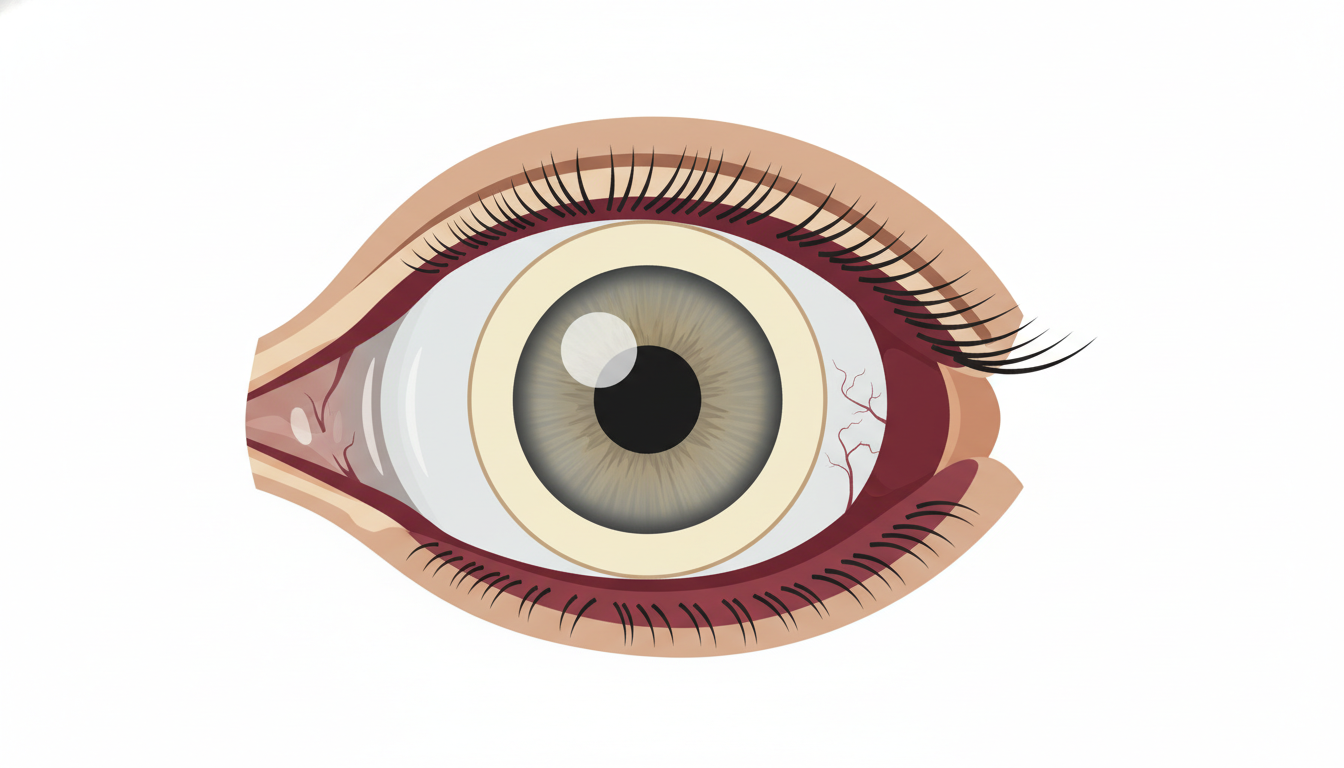
Most discussions lump every STI into one bucket, which makes the symptoms sound interchangeable. They are not. Four infections account for nearly every documented case of adult ocular STI, and each behaves differently in the eye. Recognizing the differences matters for both urgency and treatment.
Chlamydial conjunctivitis (adult inclusion conjunctivitis). Caused by Chlamydia trachomatis, serotypes D through K, the same serotypes that cause genital chlamydia. It tends to be mild to moderate, develops over a week or two, and often affects only one eye at first before spreading to the second (see CDC chlamydia overview for transmission and screening context). Discharge is usually mucopurulent (a mix of mucus and pus) rather than the profuse pure pus seen with gonorrhea. A follicular reaction on the inner eyelid and a swollen preauricular lymph node (a small node in front of the ear) are common supporting clues. Without treatment, chlamydial conjunctivitis can persist for months and cause scarring, which is why a clinician will typically prescribe oral azithromycin or doxycycline rather than relying on eye drops alone.
Gonococcal conjunctivitis. Caused by Neisseria gonorrhoeae. This is the form to take seriously. Onset is hyperacute, meaning symptoms develop over 12 to 48 hours rather than days. The eye produces copious thick yellow-green pus that can re-accumulate within minutes of being wiped away. Pain is significant, the eyelid swells, and the cornea is at real risk: the bacterium can penetrate intact corneal epithelium, perforate the cornea, and cause permanent vision loss. The CDC's 2021 STI Treatment Guidelines call for a single 1g intramuscular dose of ceftriaxone plus one-time saline lavage of the eye, with infectious disease specialist consultation (CDC 2021 STI Treatment Guidelines, gonococcal infections in adolescents and adults). Anyone with these symptoms should not wait for a routine appointment.
Herpetic keratoconjunctivitis (HSV-1 most often). Caused by herpes simplex virus, usually type 1, the same virus behind cold sores. HSV-2 ocular infection happens too, usually after autoinoculation from a genital lesion. The classic presentation is a unilateral red eye with watery (rather than purulent) discharge, often accompanied by light sensitivity, blurred vision, and a foreign-body sensation. A clinician examining the cornea with fluorescein dye may see a dendritic ulcer, the branching corneal lesion that is essentially diagnostic of HSV (described in detail in the StatPearls clinical reference on herpes simplex keratitis). Treatment is topical or oral antiviral medication. Steroid eye drops, often used reflexively for red eyes, are dangerous in herpes keratitis because they can dramatically worsen the corneal damage. Recurrent episodes can scar the cornea over years, and the American Academy of Ophthalmology ranks ocular HSV among the leading infectious causes of corneal blindness in high-income countries.
Ocular syphilis. Caused by Treponema pallidum. Rare but rising along with overall U.S. syphilis case counts. Unlike the other three, ocular syphilis often does not look like pink eye at all. It can present as anterior or posterior uveitis (inflammation inside the eye), optic neuritis, or retinitis, with symptoms ranging from blurred vision to eye pain to floaters. The CDC and other public-health agencies have issued repeated clinical advisories about ocular syphilis since 2015 because it is easy to miss when the only symptom is blurred vision. Treatment is intravenous penicillin G for 10 to 14 days, managed as neurosyphilis. A single intramuscular dose of benzathine penicillin (the standard for uncomplicated syphilis) is not sufficient when the eye is involved.
Two other STIs come up in this context but rarely cause classic pink eye:
- HPV can occasionally cause papillomatous lesions on the conjunctiva, but this is unusual and unrelated to the typical pink-eye pattern.
- Trichomoniasis does not meaningfully cause eye infection. The parasite cannot establish in the conjunctiva.
| Pathogen | Onset speed | Eye presentation | First-line treatment |
|---|---|---|---|
| Chlamydia | 5 to 14 days | Mucopurulent discharge, mild to moderate redness, often one eye then both, follicular reaction on inner lid | Oral azithromycin or doxycycline |
| Gonorrhea | 12 to 48 hours (hyperacute) | Profuse yellow-green pus, severe pain, marked eyelid swelling, real corneal risk | Ceftriaxone 1g IM plus saline lavage, same-day |
| Herpes (HSV) | A few days, can recur from latent virus | Watery discharge, light sensitivity, dendritic corneal ulcer on fluorescein stain, almost always one eye | Topical or oral antiviral (avoid steroid drops) |
| Syphilis | Weeks to months | Often not classic pink eye: uveitis, blurred vision, optic neuritis, sometimes both eyes as disease progresses | IV penicillin G for 10 to 14 days |
How STI Pink Eye Looks Different From Ordinary Pink Eye
Most pink eye in adults is viral, the same type of conjunctivitis that spreads through schools and offices in winter. It usually starts in one eye, jumps to the other within a few days, comes with a watery discharge, and resolves on its own in a week or two. Allergic conjunctivitis is the second most common form. It itches more than it burns, affects both eyes simultaneously, and tracks with the rest of someone's allergy season.
STI-related conjunctivitis can look similar at first glance, especially the chlamydial form, which is why it is frequently misdiagnosed as ordinary bacterial pink eye and prescribed standard antibiotic eye drops. The drops often improve symptoms partially without curing the infection, and the conjunctivitis returns or persists. The NHS conjunctivitis guidance explicitly notes that STI-related conjunctivitis takes longer to clear than the common bacterial or viral form. The table below highlights the practical differences a non-clinician can use as triage.
Viral Pink Eye vs STI-Related Conjunctivitis
| Feature | Common viral pink eye | STI-related conjunctivitis |
|---|---|---|
| Onset after exposure | 1 to 3 days, gradual | Often within 24 to 72 hours; can be sudden overnight |
| Discharge type | Watery or stringy clear mucus | Thick yellow to green pus, especially with gonorrhea |
| Eyelid swelling | Mild to moderate | Often significant, may seal the eye shut |
| Sensation | Itchy, gritty | Burning, stinging, or sharp ache |
| Other clues | Recent cold or upper-respiratory illness | Sore throat, urethral discharge, pelvic pain, or genital sores |
| Eyes affected | Usually both eyes within a few days | Often one eye at first, especially when from hand transfer |
A starting point for triage, not a diagnosis. Any sudden, severe, or vision-affecting eye symptom needs in-person evaluation.
Symptoms That Should Send You to a Clinic Today
The general advice for ordinary pink eye is to wait it out unless symptoms worsen. STI-related conjunctivitis flips that logic: the cases where an STI is the cause are also the cases where waiting can lead to vision loss or persistent infection. Several symptom patterns should not wait. None of these is diagnostic on its own, but each is a reason to ask the clinician to consider, and ideally test for, STI causes rather than treating empirically.
If you have pink eye with mild redness, watery discharge, and a recent cold or upper-respiratory infection, you almost certainly have viral conjunctivitis. The same applies if both eyes turned itchy and red during your usual allergy season. STI-related conjunctivitis is real but uncommon. The 80 percent of pink eye that resolves on its own with cool compresses, lubricating drops, and basic hygiene does not need an STI workup. The red-flag patterns below describe the remaining 20 percent.
Signs that warrant urgent or near-urgent care
Treat any sudden, severe, or vision-affecting eye symptom as a reason for same-day evaluation, regardless of suspected cause.
- Profuse, thick, yellow-green pus that returns within minutes of wiping the eye Common
- Severe eye pain, especially with eyelid swelling that obscures vision Common
- Blurred vision, halos around lights, floaters, or any sense that vision is changing Common
- Severe light sensitivity (photophobia) Less common
- A red eye in someone with an active cold sore on the lip or nose Less common
- Hyperacute onset (severe symptoms within 12 to 48 hours) in a sexually active adult Common
- Unilateral red eye with foreign-body sensation, especially with a history of cold sores Common
- Pink eye that has not improved after 5 to 7 days of standard antibiotic drops Common
- Recurrent pink eye in the same eye, particularly after a new sexual partner Less common
- Eye pain or blurred vision with a recent painless genital sore or palm-and-sole rash (consider syphilis) Rare
If you wake up with a heavily swollen eyelid, copious yellow-green discharge that re-pools within minutes of being cleaned, and significant pain, do not wait. Gonococcal conjunctivitis can perforate the cornea within 12 to 48 hours of symptom onset. Same-day evaluation in urgent care, an ophthalmology clinic, or a sexual-health clinic is the appropriate step.
Why STI Pink Eye Often Gets Missed
One of the most consistent findings in ophthalmology case reviews is that adults with ocular gonorrhea or chlamydia get diagnosed late. The infection cycles through several rounds of standard antibiotic eye drops or allergy treatment before anyone connects it to a recent sexual encounter.
The delay stems from two converging problems. Urgent care and primary care visits rarely include a sexual-history conversation when the chief complaint is an eye symptom. A patient who says my eye is itchy and red typically leaves with empiric antibiotic drops and a follow-up plan, because the connection between an inflamed eye and a recent oral or partner-led sexual contact is rarely obvious without the patient raising it. And the early stages of ocular gonorrhea and chlamydia look like ordinary bacterial conjunctivitis, so the discharge has to become copious and the eyelid markedly swollen before the picture changes. By that point the patient may already be on a topical antibiotic that does not reach the systemic levels needed to clear the infection. Topical erythromycin or trimethoprim-polymyxin can mask early symptoms while the gonococcus keeps advancing.
If you suspect an ocular STI, the most effective thing you can do is name the suspicion yourself. Tell the clinician about recent sexual contact, what kind of contact it was, and what STI testing you have or have not had. The callout below is a script you can read off your phone if asking out loud feels difficult.
I had recent sexual contact and I am worried this might be an STI in my eye. Could we test for gonorrhea and chlamydia, ideally from the eye and from any other site that might be involved (throat, urethra or vagina, rectum)? I am also open to being checked for ocular herpes and syphilis if you think the picture fits.
Bringing it up directly tends to redirect the workup quickly. Most clinicians will appreciate the clarity, and the few who push back are not the ones you want managing this anyway.
How a Clinic Diagnoses and Treats It
Diagnosis starts with a careful history and a slit-lamp examination of the eye. The clinician looks at the pattern of redness, the type of discharge, the state of the cornea (often using fluorescein dye to highlight any ulcers or abrasions), and any related findings such as swollen preauricular lymph nodes, which are common in viral and chlamydial conjunctivitis.
To confirm the cause, the clinician will swab the conjunctiva and send the sample for laboratory testing. Nucleic acid amplification testing (NAAT, the laboratory gold standard for chlamydia and gonorrhea) on conjunctival swabs is sensitive and specific. PCR testing on the swab is the standard for HSV. These are laboratory assays, not at-home rapid tests.
Treatment depends on the cause:
- Chlamydial conjunctivitis is treated with oral antibiotics, most often a single dose of azithromycin or a 7-day course of doxycycline. Eye drops alone are not curative because the organism lives inside cells and the infection often involves systemic chlamydia at other sites. Sexual partners need treatment too.
- Gonococcal conjunctivitis is treated with a single 1g intramuscular dose of ceftriaxone plus one-time saline irrigation of the eye, per the CDC's 2021 STI Treatment Guidelines. Co-treatment for chlamydia is standard because co-infection is common. Partners need testing and treatment.
- Herpetic keratoconjunctivitis is treated with topical antiviral drops (such as ganciclovir or trifluridine) or oral antivirals (acyclovir, valacyclovir). Steroid eye drops are avoided unless prescribed by an ophthalmologist managing the corneal inflammation phase.
- Ocular syphilis is managed as neurosyphilis with intravenous penicillin G for 10 to 14 days, plus infectious disease and ophthalmology consultation.
The genital site, throat, and rectum should also be tested when an STI conjunctivitis is identified, because the eye is rarely the only infected site.
Steroid-containing eye drops are sometimes used for stubborn red eyes, but they are dangerous if the underlying cause is herpes simplex. Steroids can let the virus replicate unchecked and accelerate corneal scarring. Unless an ophthalmologist has examined the cornea with fluorescein dye and ruled out a dendritic ulcer, do not use any steroid eye drop, including over-the-counter combination products from outside the U.S.
What You Can Do to Lower the Risk
The risk of acquiring conjunctivitis from oral sex is genuinely small, and most readers do not need to overhaul their sex lives over it. The same habits that protect against the more common consequences of unprotected sex also reduce eye-infection risk to negligible levels.
Barrier methods during oral sex. Condoms for fellatio and dental dams (a thin square of latex or polyurethane) for cunnilingus and analingus block the direct fluid exposure that can carry chlamydia or gonorrhea. Adoption is famously low for dental dams, but they remain the only barrier specifically designed for this kind of contact.
Hand washing during and after sex. Because hand-to-eye contact is the dominant route, washing your hands after touching genitals or saliva and before touching your face does most of the practical work of risk reduction. Twenty seconds with soap and running water deactivates the bacteria and most viruses. The same applies to your partner.
Rinse, do not rub, after a fluid splash. If semen, vaginal fluid, or saliva enters the eye during sex, irrigate the eye with sterile saline or clean running water for several minutes. Rubbing drives the pathogen deeper into the conjunctival tissue and increases the chance an infection takes hold.
Keep fingers away from your eyes during sex, especially if you wear contacts. Take lenses out before sexual activity when possible, or at least handle them with separately washed hands.
Treat any active STI promptly, including throat infections. Oral chlamydia and oral gonorrhea are often asymptomatic, but they can be detected by a pharyngeal swab in a clinic and treated. Treating the throat infection eliminates one of the routes by which the pathogen reaches a partner's eye. We do not sell a pharyngeal swab home test, so a clinic visit is the right step here.
Get screened on a sensible schedule. Sexually active adults under 25, anyone with a new partner in the past three months, and anyone with multiple partners should be tested at least annually for chlamydia and gonorrhea per CDC chlamydia screening guidance, which explicitly recommends annual chlamydia testing for sexually active women under 25. Most people who have an oral or genital STI have no symptoms. For readers worried that an oral exposure could have transmitted more than one infection, a broader at-home STI test kit is a reasonable first-pass screen alongside the clinic visit.
Prevention checklist
- Use a condom or dental dam during oral sex with a partner whose STI status you do not know.
- Wash your hands after touching genitals or saliva, and before touching your face or contact lenses.
- If fluid splashes into your eye, irrigate with sterile saline or clean water rather than rubbing.
- Get tested annually if you are sexually active under 25 or have a new partner in the past three months.
- Treat any throat or genital STI promptly, even when you have no symptoms in the eye.
Testing for the Underlying STI
Conjunctivitis caused by an STI is, almost by definition, a downstream symptom of an STI somewhere else in the body. Even if the pink eye resolves with treatment, the underlying infection in the throat or genitals usually does not unless it is also treated. Most clinical guidelines treat an STI conjunctivitis diagnosis as a trigger for full screening.
The right testing depends on what was found in the eye and what kinds of sexual contact happened in the relevant window:
- Chlamydial conjunctivitis calls for testing the genital site (urethra in men, vagina or cervix in women), the throat if there has been oral exposure, and the rectum if there has been receptive anal exposure. NAAT is the standard.
- Gonococcal conjunctivitis follows the same multi-site approach, plus baseline testing for HIV and syphilis given how often these infections cluster.
- Herpetic conjunctivitis is harder to follow up on. Most adults already carry HSV-1 antibodies, so a positive blood test rarely changes management. The action item is recognizing future cold sores and avoiding hand-to-eye contact during outbreaks.
- Ocular syphilis requires confirmatory serology and, given the systemic nature of the disease, lumbar puncture for cerebrospinal fluid analysis in many cases.
Retesting after treatment. The CDC recommends a test of cure for pharyngeal gonorrhea 7 to 14 days after treatment, and a retest at 3 months for both chlamydia and gonorrhea regardless of the original site because reinfection from untreated partners is common. The ophthalmologist will follow up the eye separately, watching for corneal complications. The summary at the end of this section is: chlamydia or gonorrhea found in the eye triggers a multi-site NAAT, baseline HIV and syphilis when gonorrhea is the culprit, and a 3-month retest to catch reinfection; herpetic conjunctivitis is confirmed by clinical PCR on the eye swab; partners of anyone diagnosed with chlamydial or gonococcal conjunctivitis should be notified and treated.
Partner notification. Telling a partner about a positive eye STI feels awkward, but the underlying genital or oral infection is treatable in a single appointment for them, which protects everyone they go on to date. Some states allow expedited partner therapy, where a clinician can prescribe treatment for partners without seeing them in person; ask your provider whether that option applies in your state. Sexual-health clinics can also help with anonymous partner notification.
One disclosure before the product link below: stdrapidtestkits.com sells at-home rapid lateral-flow STI test kits. The kit linked below screens the genital chlamydia and gonorrhea sites described in this section and is not a substitute for the in-clinic eye examination an STI conjunctivitis still needs.
| Site involved | Recommended retest or follow-up timeline |
|---|---|
| Pharyngeal gonorrhea | Test of cure 7 to 14 days after treatment |
| Genital or rectal gonorrhea | Retest at 3 months to catch reinfection from untreated partners |
| Genital chlamydia | Retest at 3 months for the same reason |
| Eye (conjunctival) | Ophthalmology follow-up at 24 to 48 hours, then again at 1 to 2 weeks |
Newborn Conjunctivitis: What Pregnant Readers Should Know
Ophthalmia neonatorum is the medical term for conjunctivitis in a newborn during the first month of life. The two infections most associated with it are gonorrhea and chlamydia, both passed from a parent with untreated genital infection during vaginal delivery. Symptoms typically appear within 24 to 72 hours for gonococcal infection and 5 to 14 days for chlamydial infection, with thick discharge, eyelid swelling, and significant redness.
U.S. hospitals have administered prophylactic erythromycin or povidone-iodine ointment to newborn eyes shortly after birth for decades, which dramatically reduces the rate of gonococcal ophthalmia neonatorum. The prophylaxis is less effective against chlamydia, so the prenatal STI screen and treatment matter more than the eye drop in the delivery room (see the CDC STI Treatment Guidelines neonatal chapters).
If you are pregnant, the practical steps are: get the standard prenatal STI panel at your first appointment, ask for a repeat panel in the third trimester if you have new partners, and tell your obstetric team about any positive result so the newborn can be monitored and treated promptly. If you notice eye discharge in your newborn during the first month, particularly thick yellow or green discharge with eyelid swelling, ask the pediatrician to test for gonorrhea and chlamydia rather than assume it is a clogged tear duct.
Ophthalmia neonatorum is fully treatable when caught early. Untreated, it can cause corneal scarring or even blindness within days for the gonococcal form, which is why pediatric urgent care should evaluate any concerning newborn eye discharge same day.
Three checkpoints worth raising with your obstetric team and pediatrician:
- Get the standard STI panel at your first prenatal appointment, even if you screened recently before pregnancy.
- Ask for a repeat panel in the third trimester if you have had new sexual partners since the first appointment.
- Request same-day pediatric evaluation, including specific testing for chlamydia and gonorrhea, for any thick or colored eye discharge in your newborn during the first month of life. Do not assume a clogged tear duct.
Common Myths Worth Clearing Up
Sexual-health information online tends to swing between dismissing eye infections as impossible and treating every red eye as an STI. Both extremes are wrong. A few myths come up regularly enough to be worth addressing directly.
STI conjunctivitis: common misconceptions
Myth: Oral sex is risk-free for STI transmission.
Fact: Oral sex carries a lower per-act risk than vaginal or anal intercourse for most STIs, but not low enough to treat as negligible. Pharyngeal gonorrhea, oral chlamydia, oral HSV-1, and (less commonly) syphilis chancres on the lip or throat are all documented outcomes of unprotected oral sex.
Myth: STI conjunctivitis is obvious because the eye looks dramatic.
Fact: Chlamydial conjunctivitis can be quiet, with mild redness and a small amount of discharge, and is often misdiagnosed as ordinary bacterial pink eye. Severity is a poor proxy for cause.
Myth: Pink eye is never serious.
Fact: Most pink eye is harmless. But gonococcal conjunctivitis is a vision-threatening emergency, herpetic keratitis can cause permanent corneal scarring, and ocular syphilis can take vision before the patient even thinks of it as an eye infection.
Myth: If a partner has no symptoms, they cannot pass an STI to my eye.
Fact: Both oral and genital chlamydia and gonorrhea are frequently asymptomatic. Most people who pass these infections on do not know they have them.
Myth: A negative blood test rules out an eye STI.
Fact: Blood tests detect systemic antibodies. Pinpointing chlamydia or gonorrhea in the eye, throat, or genitals requires a swab and a NAAT or culture from that specific site.
Some sexually transmitted infections (STIs) can cause conjunctivitis. This type takes longer to get better.
What to Do Next
Is your eye severely inflamed, producing profuse yellow or green pus, or are you noticing vision changes, halos, or significant pain?
Yes: Go to urgent care, an ophthalmology clinic, or a sexual-health clinic today. This pattern can be gonococcal conjunctivitis, which can threaten vision within 12 to 48 hours.
Are your symptoms mild but you had a recent unprotected oral or genital sexual encounter, or a partner with known or possible STI exposure?
Yes: Run a rapid at-home STI swab test for chlamydia and gonorrhea on the genital site to screen for the most likely source, then arrange a clinic visit within a few days for an in-person eye exam and confirmatory conjunctival swab.
Are you pregnant, recently postpartum, or caring for a newborn under one month old?
Yes: Confirm your prenatal STI panel is current with your obstetric team. Any thick or colored eye discharge in your newborn during the first month warrants same-day pediatric evaluation, not a wait-and-see approach.
No: For mild irritation without an exposure history and without the red-flag symptoms above, cool compresses, lubricating drops, and basic hygiene usually resolve viral or allergic conjunctivitis within a week. If it persists past 5 to 7 days or you develop any of the warning signs above, see a clinician.
Use this as a decision aid, not a diagnosis. Anything sudden, severe, or vision-affecting needs in-person evaluation.
Frequently Asked Questions
- Can I get conjunctivitis from oral sex even if my partner has no symptoms?
- Yes. Pharyngeal gonorrhea and oral chlamydia are commonly asymptomatic, so a partner who feels fine can still carry the bacterium in their throat or saliva. The risk per encounter is low, but it is not zero, and it is one reason barrier methods and routine testing matter.
- How long after exposure would eye symptoms appear?
- The window that matters most for urgency is gonorrhea: symptoms typically hit within 12 to 48 hours, fast enough that waiting a full day before seeing a doctor puts the cornea at risk. Chlamydia is slower (5 to 14 days) and is commonly misread as ordinary bacterial pink eye during that stretch. Herpes follows within a few days of an exposure or active cold-sore event. Ocular syphilis is the outlier: weeks to months before an eye symptom appears, and rarely a classic pink-eye presentation.
- What should I say to my doctor if I think it is an STI in my eye?
- Be direct. Tell the clinician you had recent oral, vaginal, or anal sexual contact and want chlamydia and gonorrhea swabbed from the eye and from any other site that might be involved. If you suspect herpes or syphilis, ask about appropriate testing for those as well. Saying it out loud reorients the workup quickly and avoids the common pattern where ocular STIs get treated as ordinary pink eye for several days first.
- Will ordinary antibiotic eye drops cure STI pink eye?
- Usually not. Standard fluoroquinolone or polymyxin eye drops may improve symptoms partially without clearing the underlying infection. Chlamydial conjunctivitis specifically needs oral antibiotics. Gonococcal conjunctivitis needs intramuscular ceftriaxone. Herpes needs antivirals, and steroid drops are dangerous in herpes keratitis. The right treatment depends on knowing the cause.
- Can I diagnose STI conjunctivitis at home?
- No. The eye is not a site that any home rapid test is validated for, and any product claiming to swab the conjunctiva at home should be treated with skepticism. A clinician needs to examine the eye (often with a slit lamp), swab the conjunctiva, and send the sample to a lab. Home swab tests for chlamydia and gonorrhea sample the genital tract, not the eye, but they can confirm or rule out a parallel genital infection that helps narrow the eye diagnosis.
- Is it safe to wear contact lenses while I have an STI eye infection?
- No. Stop wearing contact lenses at the first sign of conjunctivitis and do not wear them again until a clinician confirms the infection has cleared. Continuing to wear lenses worsens irritation, can scratch the cornea, and can spread the infection. Many clinicians also recommend disposing of the lens case and any open lens solution to avoid reinfection.
- If I have STI conjunctivitis, do my sexual partners need to know?
- Yes. The eye infection is essentially a marker that an STI is present in your throat or genitals as well, and your partners may have been exposed. Notification and partner treatment are part of standard sexual-health practice for chlamydia and gonorrhea. Some states allow expedited partner therapy, where a clinician can prescribe treatment for your partners without seeing them; ask your provider whether that applies, or use a sexual-health clinic's anonymous-notification service if that feels easier.
- Can a baby get conjunctivitis from a parent's STI?
- Yes, though the route is different from the adult one discussed here. Newborns can develop ophthalmia neonatorum if they pass through a birth canal infected with chlamydia or gonorrhea, typically within 24 to 72 hours for gonococcal infection and 5 to 14 days for chlamydial infection. Most countries screen pregnant people for these infections during prenatal care, and erythromycin or povidone-iodine eye ointment is given to newborns at birth in many regions. Untreated gonococcal ophthalmia neonatorum can cause corneal scarring within days, so any thick or colored eye discharge in a newborn warrants same-day pediatric evaluation.
- U.S. Centers for Disease Control and Prevention. Chlamydia information for the public, including transmission routes, asymptomatic infection, and the annual screening recommendation for sexually active people under 25.
- U.S. Centers for Disease Control and Prevention. Gonorrhea information for the public, including pharyngeal infection, asymptomatic carriage, and treatment guidelines.
- U.S. Centers for Disease Control and Prevention. 2021 STI Treatment Guidelines, gonococcal infections among adolescents and adults, including ceftriaxone 1g IM with saline lavage for adult gonococcal conjunctivitis.
- U.S. Centers for Disease Control and Prevention. 2021 STI Treatment Guidelines main index, used for the ophthalmia neonatorum and chlamydia in pregnancy chapters cited in the newborn section.
- American Academy of Ophthalmology. Public-facing eye-health reference library, covering how sexually transmitted infections can reach the eye and the ocular HSV burden in high-income countries.
- U.K. National Health Service. Conjunctivitis: causes including STI-related forms, symptoms, when to seek urgent care, and self-care guidance.