Published: November 2025 | Last updated: May 2026 | Editorial review and quality control: Martina N.
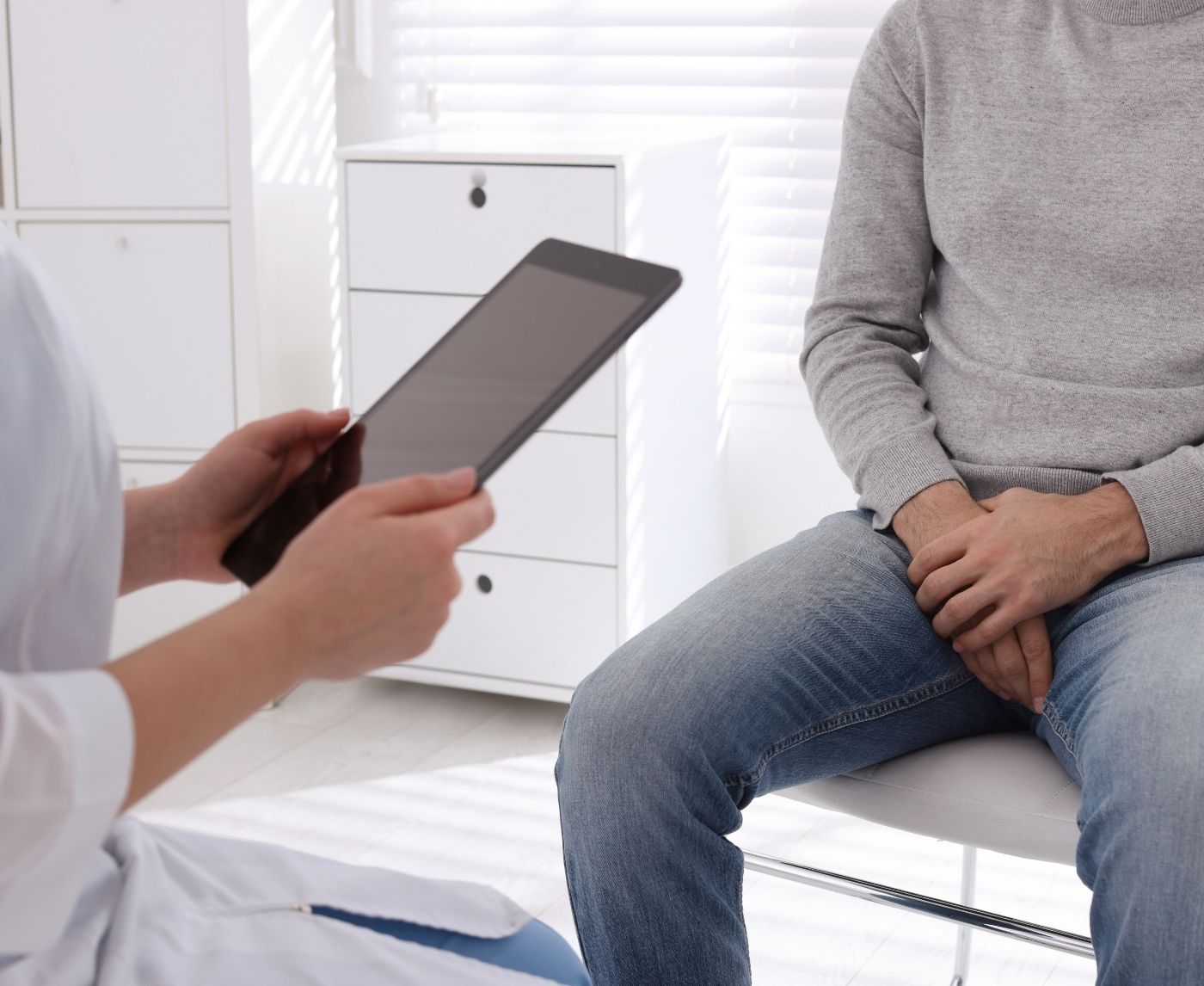
Almost every clinic visit for an STI test includes a few questions that catch people off guard. How many partners in the last few months? When was the last sexual contact? Oral, vaginal, anal? Most people pause, recalculate in their head, and wonder whether they should round numbers down or tell the whole truth. That moment of awkwardness is universal.
It also has nothing to do with judgment. Sexual health clinicians ask these questions for the same reason cardiologists ask about diet and pulmonologists ask about smoking: context shapes which tests get ordered, which results get interpreted as significant, and which partners may need follow-up. Without those answers, screening turns into a slow process of elimination rather than a focused investigation. This article walks through what each intake question is really deciding, what stays private, and how to think about the testing process so the questions feel less like an interrogation and more like a tool.
Key Takeaways
- Partner history decides which sample sites get tested. A genital-only swab can miss throat or rectal infections that may follow oral or anal exposure.
- Each infection has its own window period before testing becomes reliable. Knowing when exposure happened protects you from a false-negative result.
Why Symptoms Alone Cannot Drive Testing Decisions
The intuitive model of STI care is simple: you notice a symptom, the doctor tests for the matching infection, and you get an answer. In practice, symptoms are one of the least reliable starting points. Burning during urination can mean a urinary tract infection, chlamydia, gonorrhea, or non-infectious irritation. A small painless sore can be an ingrown hair, a herpes vesicle, or the primary chancre of syphilis. The visible clues overlap heavily, which is exactly why a focused exposure history matters.
Many infections also produce no symptoms at all in a large share of cases. CDC surveillance data consistently document a large gap between estimated and reported infections, reflecting the high proportion of asymptomatic cases (CDC STI Statistics). Annual screening is recommended for sexually active adults under 25 and others at increased risk per the CDC screening recommendations. Someone with no symptoms can still transmit the infection to a partner and develop complications later.
The takeaway for the intake conversation: a doctor cannot rely on what you are feeling today. Combining symptoms (or their absence) with what kind of exposure happened, when, and with whom is what gives the clinician enough signal to order the right tests instead of running random ones.
A large share of chlamydia and gonorrhea infections produce no symptoms. A clear-feeling patient can still transmit the infection to a partner and develop complications later. Testing based on symptom presence alone misses most cases, which is why screening recommendations and exposure history matter more than how you feel today.
How Partner Details Shape Which Tests You Need
STI testing is not one universal panel. Different infections live in different tissues, so the type of sex you describe determines which sample sites get screened. The CDC's extragenital screening guidance is direct: people who report oral sex should be offered pharyngeal (throat) testing, and people who report receptive anal sex should be offered rectal testing, regardless of symptoms.
That is why questions about type of sex are not optional small talk. A urine test alone, common in primary care, only screens the genital tract. Without the right swab, a throat or rectal infection can stay invisible while continuing to transmit. The same logic applies to condom use: consistent condom use lowers but does not eliminate risk for skin-to-skin infections like herpes or HPV, and a partner with a known infection raises the prior probability of transmission enough that a clinician may move straight to targeted testing.
| What the doctor asks | What it decides | Tests that may be added |
|---|---|---|
| Type of sex (oral, vaginal, anal) | Which body sites get sampled | Urine, vaginal/penile swab, throat swab, rectal swab |
| Number of recent partners | Probability of any exposure at all | Full screening panel vs single-infection test |
| Condom use | Estimated transmission probability | Targeted vs comprehensive screening |
| A new partner in the last 1 to 12 months | Whether to retest after the window period | Repeat testing at the right interval |
| A partner with a known STI | Whether to start treatment empirically | Same-visit testing plus possible empiric antibiotics |
Why Timing Matters: The Window Period
Another question that surprises patients: when did the exposure happen? This is not curiosity. Every test has a window period, the gap between exposure and when the test can reliably pick up the infection. Test too early and a true infection can produce a negative result, which is the worst combination because it offers false reassurance.
Window periods depend on the test technology. Antibody tests need time for the immune system to seroconvert (produce enough antibodies for the test to detect). Antigen and nucleic acid amplification tests (NAATs) can detect infection earlier because they look for the pathogen itself or its proteins. At-home rapid tests, including the ones sold on this site, are lateral-flow chemistry; their reliable detection windows are similar to other antibody-based tests and a positive result is worth confirming with a lab NAAT when possible per CDC screening guidance.
The table below summarizes typical earliest reliable windows. These are conservative starting points. If the intake conversation reveals a very recent exposure, the clinician may schedule a follow-up test at the correct interval rather than relying on a single early result.
| Infection | Earliest reliable testing window | Common test type |
|---|---|---|
| Chlamydia | About 1 to 2 weeks after exposure | Urine or genital swab (NAAT in lab; swab for rapid) |
| Gonorrhea | About 1 to 2 weeks after exposure | Urine, genital, throat, or rectal swab |
| Syphilis | 3 to 6 weeks, repeat at 3 months if negative | Blood test (antibody) |
| HIV (4th-generation antigen/antibody) | About 18 to 45 days; antibody-only tests can take up to 90 days | Blood or fingerstick |
| Hepatitis B / C | Hep B: 3 to 6 weeks; Hep C: about 8 to 11 weeks (antibody) | Blood test |
| Herpes (HSV-2 antibody) | About 6 to 12 weeks for most people; some assays may take up to 16 weeks. Confirm with the specific test insert. | Blood test (antibody) |
So why do doctors really ask about my partners?
To decide three things at once: which sample sites to test (genital, throat, rectal), whether the timing means a single test now is reliable or a repeat test is needed, and whether a recent partner should also be notified so an infection does not bounce back after treatment. Partner answers turn screening from a generic panel into a focused plan.
Risk Patterns Clinicians Look For
Sexual health professionals are trained to spot patterns of exposure that raise the probability of specific infections. These patterns are diagnostic shortcuts, not moral grades. A pattern simply tells the clinician where to look first so the right test happens on the first visit instead of the third.
None of these patterns mean a person is reckless or unhealthy. They mean the clinician has a better-than-random idea of which infections to prioritize.
| Risk pattern | Why it matters | Testing approach |
|---|---|---|
| Multiple recent partners | Higher probability of exposure to any STI | Comprehensive screening panel |
| Unprotected sex with a new partner | Increased risk for chlamydia, gonorrhea, syphilis | Targeted bacterial panel plus HIV |
| Receptive oral sex | Pharyngeal (throat) gonorrhea and chlamydia often produce no symptoms | Pharyngeal swab (clinic-administered) |
| Receptive anal sex | Rectal infections often produce no symptoms | Rectal swab (clinic-administered) |
| Partner with a known STI | Pre-test probability is high enough to act on | Same-visit testing; sometimes empiric treatment |
Why Partner Notification Protects You, Too
One of the most practical reasons clinics ask about partners is to interrupt reinfection. Chlamydia and gonorrhea are notorious for the so-called ping-pong effect: a treated patient resumes sex with an untreated partner and the infection returns within weeks. Coordinating partner testing and treatment is the single best way to stop that cycle.
In many U.S. states, clinicians can offer Expedited Partner Therapy (EPT), which lets a diagnosed patient deliver medication or a prescription directly to recent partners without those partners needing their own clinic visit. The CDC supports EPT for chlamydia and gonorrhea in heterosexual partnerships where the partner is unlikely to seek care. Local laws and protocols vary, so the clinician will explain what is available in your area.
Public health departments also operate voluntary partner services, where trained staff can help anonymously notify partners that they may have been exposed and should test. Your name is not shared. The point is not enforcement; it is breaking the chain of transmission quickly enough that fewer people get sick and fewer infections become resistant from undertreatment.
What Stays Private and What Gets Reported
The fear that sharing partner information could somehow leak is one of the most common reasons people give vague answers at intake. In most countries, the legal framework is the opposite of leaky. Medical privacy laws (HIPAA in the United States, equivalent regulations elsewhere) treat sexual health records the same as any other clinical record. Your dating history is not shared with employers, family members, or your other healthcare providers without your authorization.
Certain STIs are classified as notifiable diseases, which means a positive lab result is reported to the local public health department. The report typically contains the diagnosis plus basic demographics like age and ZIP code. It does not contain your partners' names or details about your sex life. Those data feed surveillance systems that track outbreaks and direct resources to communities with rising rates. The system needs the diagnosis count; it does not need your story.
If you opt in to partner services, the health department can notify your recent partners that they may have been exposed and should test. They do this without using your name. Partner services are voluntary, and most patients who use them say afterward that having a trained third party make the calls was easier than doing it themselves.
Partner services are free, voluntary, and confidential. Disease intervention specialists work with patients to identify and confidentially notify partners about possible exposure.
Testing Privately at Home
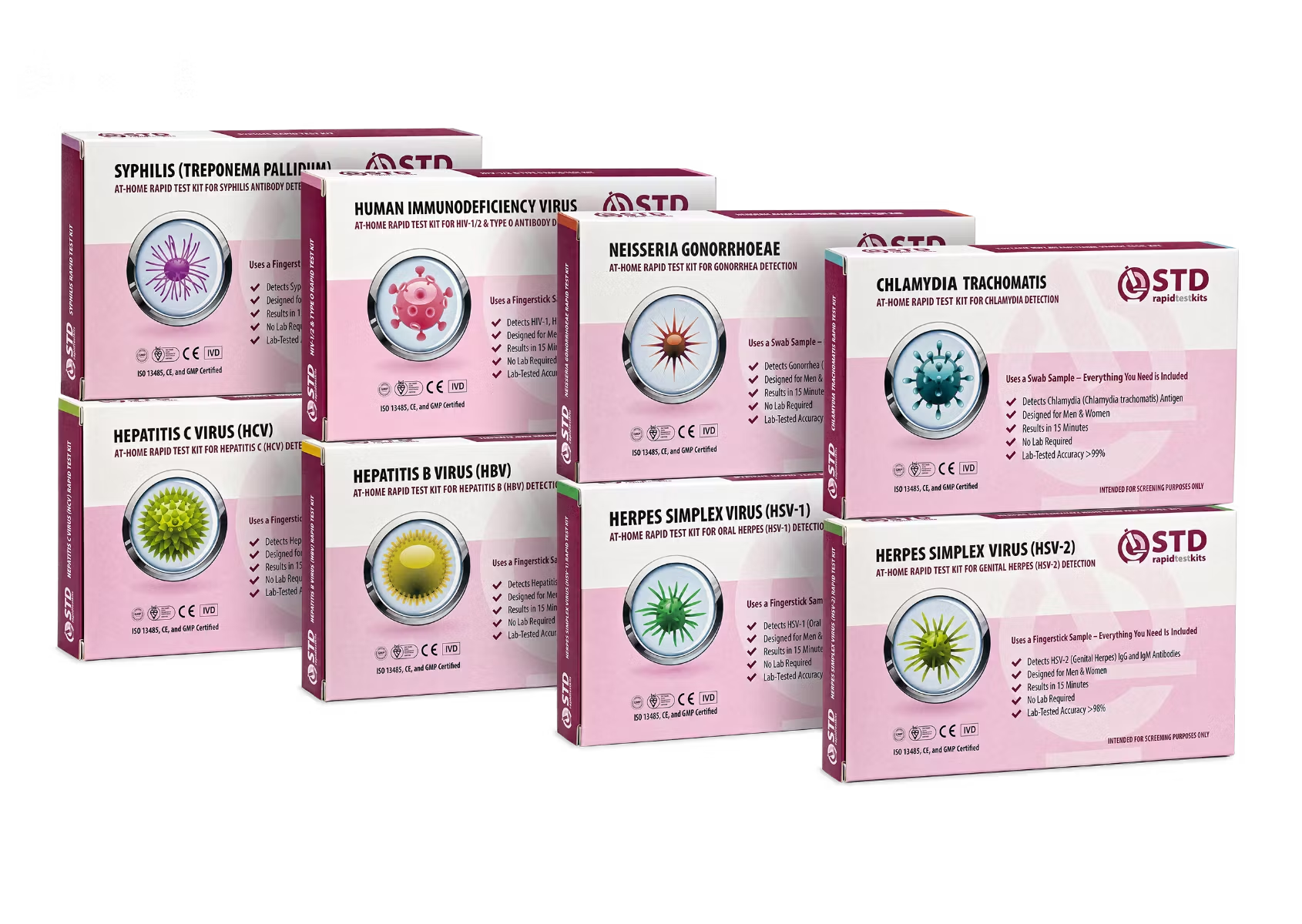
Not everyone wants to start with a clinic visit. Some people prefer the privacy of collecting their own sample and reading their own result before deciding whether to involve a provider. At-home rapid tests, including the ones from STD Rapid Test Kits, are lateral-flow tests for HIV, syphilis, hepatitis B and C, chlamydia, gonorrhea, herpes, trichomoniasis, and HPV in various combinations.
A few important limits to know before relying on home testing alone. First, home rapid kits cover genital and blood-based screening, not pharyngeal (throat) or rectal swabs. For the throat-swab test someone needs after oral exposure, see a clinic; we do not sell that. Second, the trichomoniasis and HPV swab kits are validated for vaginal self-collection only; readers who need a male trich or HPV test should also see a clinic. Third, a positive at-home result is a strong signal that should be confirmed at a clinic, where treatment can be started and partner notification supported.
Home testing is most useful as a private screen between clinic visits, after a possible exposure where you want answers before making an appointment, or for couples checking each other before a new sexual relationship.

Honest Answers Lead to Faster, More Accurate Care
Embarrassment drives most of the omissions at intake, and a missed infection is the most common consequence. A clinician who is not told about oral exposure will not order a throat swab. A clinician who is not told about a recent partner will not schedule a follow-up test at the right window. Two weeks later the patient is back, the symptom is worse or has spread to a partner, and the visit happens anyway, this time with more anxiety attached.
Sexual health professionals have heard every version of human dating life. Long-term partnerships, open relationships, situationships, hookups that lasted three weeks, hookups that lasted three hours. None of it surprises the people whose job is to interpret it medically. Their question set is built to extract clinical signal, not to score behavior.
The most useful thing a patient can do is answer literally and roughly. Clear short answers like "Two partners in the last three months, one new in the past month, oral and vaginal, condoms inconsistent" are a sentence a clinician can act on in five seconds, while "It's complicated" or a long pause forces a longer interview and sometimes results in fewer tests because the clinician does not have enough information to justify ordering them.
Answers Beat Guesswork
The intake questions during STD testing can feel personal because they are, in the literal sense, about your personal life. The framing inside the clinic is different. To the clinician, those answers are clinical signal: they decide which swabs go in which tubes, which window periods apply, and whether anyone else needs to be notified. The privacy framework around the conversation is built specifically so that honesty does not cost you anything.
If something feels off after a sexual encounter, the most efficient path is rarely an internet search at 2 a.m. It is a test, accurately timed, of the right sample sites. If you prefer to start privately, a home rapid kit can answer the most common questions and tell you whether a clinic visit is the next step. Either way, the goal of the questions is the same as your goal: a clear answer, soon, with the right plan attached.
Frequently asked questions
- Why do doctors really need to know how many partners I have had?
- Partner count is a probability input, not a moral judgment. More recent partners means a higher pre-test probability of exposure to any given infection, which can shift the clinician from a single targeted test to a comprehensive panel. A rough estimate is fine. "Two in the last three months" is enough information to act on.
- Why are they asking about oral and anal sex specifically?
- Because some STIs colonize the throat or rectum and produce no symptoms there. The CDC recommends pharyngeal (throat) screening after oral sex and rectal screening after receptive anal sex regardless of how you feel. A genital-only or urine-only test will not pick up a throat or rectal infection that may still be transmissible.
- What if I genuinely cannot remember exact dates or numbers?
- Approximations are usually enough. "A new partner about a month ago" or "two partners in the last few months" gives the clinician what they need to choose tests and decide whether to schedule a follow-up at the right window period. A perfect timeline is not the goal; a workable one is.
- Will my answers about partners be shared with anyone?
- Short answer: no identifying details, no partner names. HIPAA and equivalent laws protect your clinical record. A positive diagnosis is reported to public health authorities with diagnosis and basic demographics only. Sexual history and partner identities are not included. Partner notification services are voluntary and do not use your name.
- What is expedited partner therapy, and is it for me?
- Expedited partner therapy (EPT) is a CDC-supported approach for chlamydia and gonorrhea where a diagnosed patient can deliver medication or a prescription directly to recent partners without those partners needing their own clinic visit. Availability varies by jurisdiction and partnership type. The clinician treating you will explain what is offered locally.
- Why does the clinic care when the exposure happened?
- Because tests have window periods. A chlamydia or gonorrhea NAAT becomes reliable about 1 to 2 weeks after exposure. HIV antigen/antibody tests detect infection at roughly 18 to 45 days. A syphilis antibody test usually becomes positive between 3 and 6 weeks, with a repeat at 3 months if negative. Testing too early can produce a false-negative; knowing the exposure date lets the clinician schedule the right test at the right time.
- Can a home rapid test replace the clinic visit?
- It can replace the first step for many people, especially for HIV, syphilis, hepatitis B and C, and bacterial STIs on the genital tract. It cannot replace a throat or rectal swab after oral or anal exposure, and a positive result is worth confirming at a clinic where treatment and partner notification can be set up. Use home testing as a private first answer, not as the whole answer.
- What is the simplest way to answer the intake questions?
- Be literal, be rough, and keep it short. Type of sex, approximate count, approximate timing, condom use, anything you know about partners' status. "Two partners in three months, one new last month, oral and vaginal, condoms inconsistent" is exactly the level of detail clinicians want. It shortens the visit and sharpens the testing plan.
How we sourced this article: This guide summarizes current screening and partner-services guidance from the U.S. Centers for Disease Control and Prevention (STI treatment guidelines, partner services, expedited partner therapy), the World Health Organization STI fact sheet, and the UK NHS conditions library. Window-period ranges reflect conservative published values across antibody and NAAT-based test technologies. We do not provide clinical diagnosis; the article is editorial summary for general audiences. For symptoms or testing decisions specific to your situation, consult a licensed clinician.
- U.S. Centers for Disease Control and Prevention. STI Treatment Guidelines: screening recommendations for adults and adolescents, including extragenital (pharyngeal and rectal) screening guidance.
- U.S. Centers for Disease Control and Prevention. STI program homepage: overview of partner services and other STI-prevention resources.
- U.S. Centers for Disease Control and Prevention. Expedited Partner Therapy legal status: jurisdiction-by-jurisdiction EPT guidance for chlamydia and gonorrhea partner treatment.
- U.S. Centers for Disease Control and Prevention. STI surveillance summaries: gap between estimated and reported infections, reflecting the high proportion of asymptomatic cases in U.S. populations.
- World Health Organization. Sexually Transmitted Infections (STIs) fact sheet: global burden, transmission routes, and screening guidance.
- U.K. National Health Service. Sexually transmitted infections conditions library: symptom overview, testing pathways, and confidentiality at sexual health services.
