Published: September 2025 | Last updated: May 2026 | Editorial review and quality control: Martina N.
Many men assume an STI announces itself with pain, burning, or visible discharge. The reality is the opposite for several common infections. Chlamydia, gonorrhea, HPV, and early HIV often produce nothing the penis can flag. When symptoms do show up, they can live in the throat, rectum, or whole body, far from the spot a man would think to check.
This guide walks through what those quieter signs look like, why men skip testing more often than women do, and how to time a test so it actually catches what is there. Most readers worried enough to be reading this will test negative, and the goal is real reassurance for that group. For the smaller share who do need to test or treat, the goal is clear next steps that catch an infection at the easiest possible stage.
Key Takeaways
- Most men with chlamydia have no symptoms, and most people with HSV-2 do not know they have the infection (CDC). Absence of penis pain or discharge does not rule out infection.
- Testing is the only reliable way to confirm STI status in the absence of symptoms. Time the test to the infection's window period, and see a clinic for throat or rectal screening if those exposures occurred.
When Nothing Feels Wrong, But Something Is
The single most common reason men miss an STI is the assumption that the body would tell them. It often does not. Most men with chlamydia have no symptoms, per the CDC's STI overview. Gonorrhea behaves similarly in many men, especially when the infection sits in the throat or rectum rather than the urethra. HPV is silent in close to all men who carry it. Acute HIV can read as a brief flu and then quiet down for years before causing further symptoms.
Surveillance reports keep returning the same picture: a meaningful share of new diagnoses are picked up at routine screening, not when a man notices something. Throat infections in particular are easy to miss because they rarely cause a sore throat, and they often clear up on their own without ever announcing themselves.
What STIs Look Like When the Penis Isn't the Site
When a man has an STI without genital symptoms, the body sometimes whispers in unrelated ways. A scratchy throat that lingers, a low-grade fever, a few days of fatigue, mild itching around the anus, or a faint rash on the palms or soles. Each of these is easy to dismiss as a cold, a hard week at work, or hemorrhoids. Some are. Some are not.
The table below summarizes how the most common STIs can present in men outside the penis, including how often they go unnoticed entirely. The patterns are drawn from the CDC and the WHO STI fact sheet. Specific asymptomatic rates vary by study and depend heavily on which body site is sampled.
| STI | Common penis symptoms | Non-genital or no symptoms | How often it's silent in men |
|---|---|---|---|
| Chlamydia | Burning urination, mild discharge | Throat or rectal infection, often nothing at all | Most cases |
| Gonorrhea | White or yellow discharge | Sore throat, anal itching, fatigue | Common, especially throat and rectal |
| Syphilis | Painless chancre at the exposure site | Mouth sores, palm or sole rash, fever, swollen lymph nodes | Varies by stage; latent syphilis is silent |
| HIV (acute) | Often none early on | Flu-like fever, night sweats, sore throat, fatigue | Common; symptoms are unspecific |
| HPV | Genital warts (only some strains) | No visible signs in most men | Almost all male carriers |
| HSV-2 | Genital sores or blisters (when present) | No outbreaks; mild tingling that goes unnoticed | Most carriers unaware (CDC) |
Can you have an STI without any penis symptoms?
Yes. Chlamydia, gonorrhea, HPV, syphilis, and early HIV often produce no genital symptoms in men. Most men with chlamydia have none, and most people with HSV-2 do not know they have it, per <a href="https://www.cdc.gov/herpes/index.html" target="_blank" rel="noopener">CDC herpes guidance</a>. Testing on a proper window-period schedule is the only reliable way to confirm your status when the body is not giving signs.
Throat and Rectal Infections: The Easiest Ones to Miss
Pharyngeal (throat) gonorrhea and chlamydia are common and usually silent. The CDC notes that pharyngeal gonorrhea rarely causes a sore throat and often clears spontaneously, but it can transmit to a partner during oral sex while it is present. Rectal infections behave the same way. Most are asymptomatic, and when symptoms do appear they show as mild discomfort, occasional itching, or a small streak of blood on toilet tissue, which is exactly what hemorrhoids feel like.
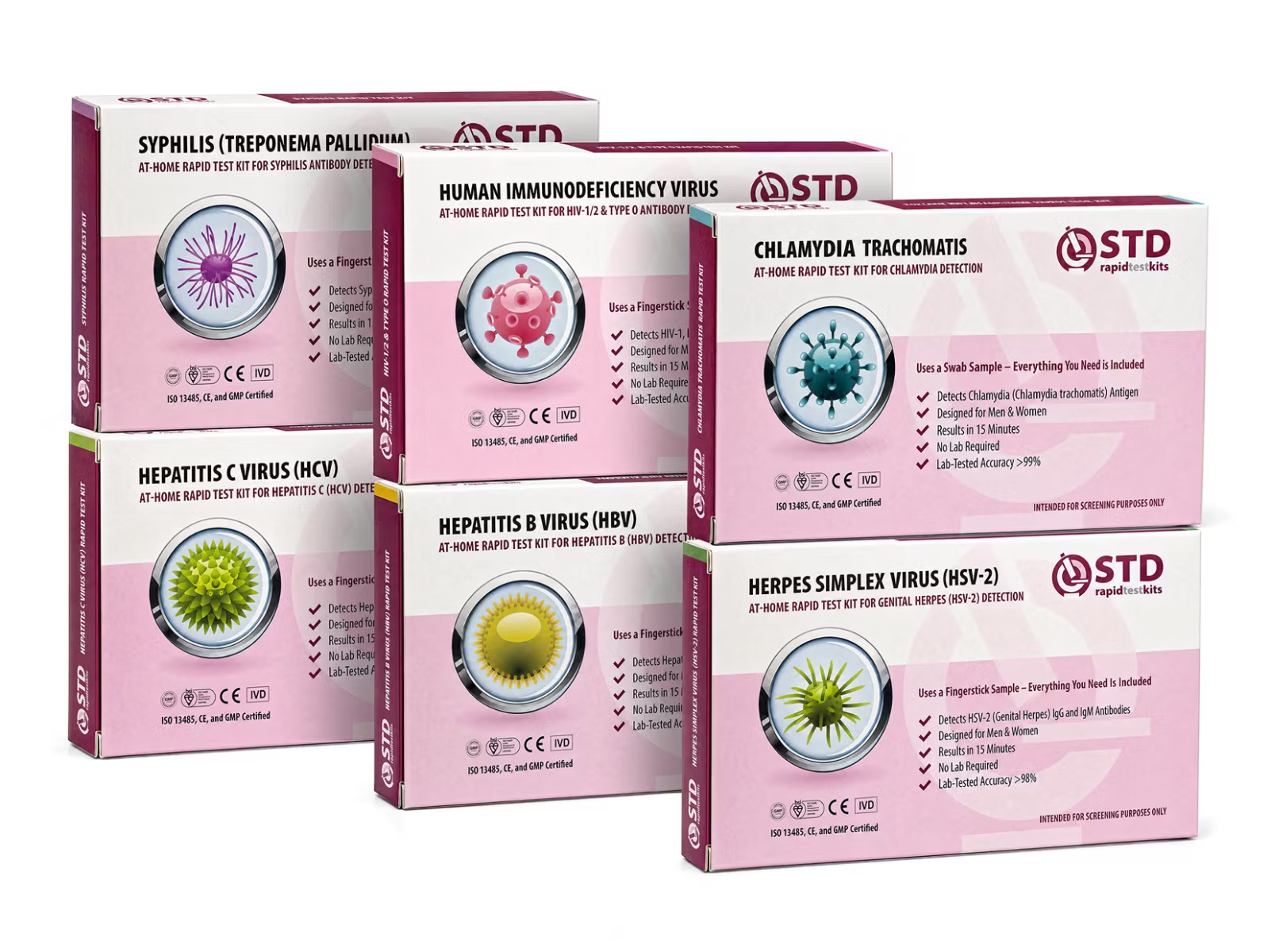
The at-home rapid kits available on stdrapidtestkits.com use a self-collected genital swab or a fingerstick blood draw. They cannot screen the throat or rectum. If oral or anal contact is part of the exposure you are worried about, see a clinic that runs a nucleic acid amplification test (NAAT) on a pharyngeal or rectal swab. That is the test the CDC's clinical screening guidance recommends for men who report those exposures, and it is what those sites need to be tested correctly.

"But I Always Use Protection": Why That Isn't a Full Guarantee
Condoms reduce the risk of most STIs and are the single best harm-reduction tool men have for vaginal and anal sex. They do not cover everything. Skin-to-skin transmission infections, including HPV, herpes, and syphilis, can pass from skin not covered by the condom, such as the base of the penis, the scrotum, the perineum, or the upper thigh. Oral sex is the second gap. Most people skip protection for it entirely, and that is the route most pharyngeal infections take.
None of this means condoms are pointless. Used consistently and correctly, they cut the transmission risk of chlamydia, gonorrhea, HIV, and trichomoniasis substantially, per the CDC's STI Treatment Guidelines. The honest framing is that condoms plus periodic screening is the combination that catches what condoms alone miss. Neither tool replaces the other.
This article is published by stdrapidtestkits.com, which sells the at-home rapid kits linked below. Product recommendations are based on which kit fits the reader's stated concern, not commercial benefit.

What Untreated STIs Actually Do
Untreated bacterial STIs do not stay quiet forever. Chlamydia and gonorrhea can spread up the urethra into the epididymis, causing epididymitis (painful inflammation of the tube at the back of the testicle). A smaller subset of men develop reactive arthritis, with joint swelling and pain, weeks after the original infection. Untreated syphilis moves through stages, and the late stage is capable of damaging the brain, eyes, heart, and other organs years after the initial chancre has healed.
Untreated viral infections work differently. HIV without treatment slowly erodes the immune system over years. HPV usually clears on its own, but persistent infection with high-risk strains is responsible for nearly all cervical cancer and a rising share of throat and anal cancers. Herpes is lifelong, but daily antivirals reduce both outbreak frequency and transmission risk substantially.
The relationship side matters too. Without a diagnosis, a man can pass an infection to a current or future partner without ever knowing. That is the asymmetric harm of asymptomatic STIs. The carrier feels nothing while the next person can develop tubal scarring, infertility, or a chronic infection that is now harder to trace back to its source.
Feeling fine and looking fine does not rule out an active STI. Most chlamydia in men, most HSV-2, and nearly all HPV in men are silent. The window where you carry an infection without knowing is exactly when transmission is most likely. Testing closes that window.
Timing Matters: When to Test After Exposure
Every STI has a window period, the time between exposure and when a test can reliably detect the infection. Test too early and a false negative is possible even with a high-quality test. The window depends on both the infection and the test technology. Antibody tests need time for your immune system to build a detectable response. Antigen and nucleic acid tests can detect markers earlier, but each has its own minimum.
The table below summarizes current testing-window guidance for the most common STIs based on CDC guidance for each infection, drawing on the CDC STI Treatment Guidelines for chlamydia, gonorrhea, syphilis, and trichomoniasis, and the CDC HIV testing overview for the fourth-generation antigen-antibody window. These are the targets to hit if you want a result you can trust.
| STI | Earliest reliable test | Most accurate timing | Test type |
|---|---|---|---|
| Chlamydia | 5–7 days | 14+ days | NAAT (urine or swab) |
| Gonorrhea | 5–7 days | 14+ days | NAAT (urine or swab) |
| Syphilis | 3 weeks | 6–12 weeks | Antibody (RPR plus treponemal) |
| HIV | 10–14 days (NAAT) | 18–45 days (Ag/Ab combo) | 4th-gen Ag/Ab combo or NAAT |
| Trichomoniasis | 5 days | 2–4 weeks | NAAT or antigen swab |
| HSV-2 | 3–6 weeks | 12–16 weeks | Type-specific IgG antibody (blood) |
Why Men Skip Testing, and Why That Backfires
"If something was wrong, I would feel it" is the most common reason men give for not testing. The data does not support it. Men account for fewer routine STI screens than women, and surveillance reports consistently show that men are diagnosed later in the course of an infection, when complications such as epididymitis, reactive arthritis, or partner-onward transmission are more likely.
Stigma plays a role, as does the friction of clinic visits. Both are real barriers. At-home testing solves the friction part. Privacy, no waiting room, no scheduling around work hours, no risk of running into a coworker at a clinic. It does not replace clinic care for confirmation of a positive result, and it cannot screen body sites the home kits do not cover. For an initial screen during a quiet stretch, at-home testing is often what gets a man to actually test rather than postpone again.
U.S. surveillance data consistently shows men receive fewer routine STI screens than women and are diagnosed at later stages of infection, particularly for chlamydia and gonorrhea (CDC). Routine screening on a defined cadence is the simplest way to close that gap, regardless of how you feel.
What If the Test Is Positive But You Feel Fine?
A positive result with no symptoms is more common than people expect. Most people with HSV-2 do not know they carry it (CDC), and the same broad pattern holds for chlamydia, HPV, and early HIV. A positive in this scenario is not a sign the result is wrong; some carriers acquired the infection months or years earlier without ever having a symptomatic episode.
The next steps are the same regardless of how you feel. They look like this in practice.
- Confirm the result with a clinic test. This is mandatory for HIV and syphilis, since rapid lateral-flow tests are screening tools rather than diagnostic-grade.
- Start treatment. For chlamydia, gonorrhea, syphilis, and trichomoniasis, that is straightforward antibiotic therapy. For HIV, modern antiretroviral medication brings the virus to undetectable levels in most people, with normal life expectancy when treatment starts early.
- Notify recent partners so they can test and treat as needed. Public-health departments in most U.S. states offer anonymous partner-notification support if direct conversation feels too hard to manage alone.
One Test Isn't Always Enough
A single test answers a single moment. If your test was inside the window period, was before a new exposure, or was negative while a partner later tested positive, a second test is warranted. The CDC's general guidance is to retest at three months after exposure for chlamydia and gonorrhea, both of which have high reinfection rates among men whose partners were not also treated. For HIV and syphilis, retest at the test-specific conclusive window if any uncertainty remains.
Test at 14 days post-exposure for chlamydia and gonorrhea. Test at 4 to 6 weeks for HIV with a fourth-generation antigen-antibody test, which is reliable from 18 to 45 days for most people. Test again at 90 days (3 months) if any uncertainty remains for syphilis or HIV. Calendar reminders help more than memory.
The Subtle Signs Men Often Miss
When penis symptoms are absent, the warning signs that do show up tend to be unspecific. They are easy to write off, especially when sexual exposure is not the first thing on a man's mind. Clinicians regularly see patients connect these dots only in retrospect, after a positive test result has changed the framing.
The list below covers the patterns most often reported after diagnosis. Any one item can be benign on its own. Two or more, especially after an exposure event you remember, is worth a screening test. Catching an asymptomatic infection at this stage is the simplest treatment scenario most men will face.
- Persistent fatigue, sometimes paired with low-grade fever or night sweats (early HIV seroconversion).
- A scratchy or mildly sore throat that does not improve with rest (pharyngeal gonorrhea or chlamydia).
- Painless small sores in the mouth, on the tongue, or near the anus (primary syphilis chancre).
- A non-itchy rash on the palms or soles, sometimes weeks after an exposure (secondary syphilis).
- Mild rectal discomfort, itching, or spotting that resembles hemorrhoids (rectal chlamydia or gonorrhea).
- Dull aching in the testicles or scrotum without an obvious mechanical cause (epididymitis from untreated chlamydia or gonorrhea).
- Swollen lymph nodes in the groin or neck without a nearby cold or wound to explain them.

At-Home, Mail-In, or Clinic: How They Compare
The right test depends on what you need it to answer and how soon. Three tiers exist for men in the U.S. and most other markets. Rapid at-home lateral-flow kits, mail-in lab kits that you self-collect and ship to a CLIA-certified laboratory, and in-clinic testing with a provider. Each has a fit-for-purpose case, and the choice is usually a tradeoff between speed, privacy, sample-site coverage, and confirmatory accuracy.
The table below compares the three on the dimensions that matter most when symptoms are not pointing the way. The scenarios where one outperforms the others are listed in the rightmost column.
| Test type | Speed | Privacy | Accuracy | Best for |
|---|---|---|---|---|
| At-home rapid test | 10–20 minutes | Very high | Moderate to high (screening grade) | Quick screen during anxiety, baseline check between partners |
| Mail-in lab kit | 2–5 days after mailing | High | High (lab NAAT) | Multi-site panels, including pharyngeal or rectal swabs |
| In-clinic testing | Same day to 7 days | Moderate | Very high (diagnostic) | Confirmation of a positive, persistent symptoms, complex cases |
You Deserve Answers, Not Assumptions
The hardest part of a silent STI is the gap between feeling fine and being fine. The two are not the same. Most men whose anxiety brings them to this article will test negative, and the result is real reassurance grounded in something better than guesswork. The smaller share who do test positive will catch an infection at the easiest possible stage, with the simplest treatment options and a clear chance to protect partners they care about.
If you have had a recent exposure and your body is not telling you anything, give it the time the window period asks for, then test. The same logic applies if you are between partners and want a clean baseline before a new relationship. The test is fast. The information is yours.
Most people who have an STI have no symptoms. The only way to know if you have an STI is to get tested.
FAQs
- Can I really have an STI without any penis symptoms?
- Yes, and the body site matters more than most men realize. Pharyngeal (throat) and rectal infections are silent far more often than urethral ones, which is exactly where at-home rapid kits and standard urine tests do not look. Routine male care rarely includes pharyngeal screening, so an oral exposure can sit undetected for months. If oral or anal contact is in your recent history, ask a clinic for a NAAT swab of the relevant site rather than relying on penis symptoms or a urine test alone.
- Which STIs are most likely to be silent in men?
- Chlamydia leads the list, especially in throat and rectal sites. HPV is the next most silent, with most male carriers showing no visible signs at any point. Pharyngeal gonorrhea rarely causes a sore throat. HSV-2 outbreaks are mild enough to miss in most carriers. Each one is a candidate for routine screening rather than waiting for symptoms.
- My test is positive but I feel completely fine. Is the result wrong?
- Probably not. Asymptomatic positives are common, especially for chlamydia, HPV, and HSV-2. Confirm the result with a clinic test (mandatory for HIV and syphilis, since rapid tests are screening tools), then start treatment. Most bacterial STIs clear with a single course of antibiotics, and modern HIV treatment brings the virus to undetectable levels for most people.
- Can I transmit an STI without knowing I have one?
- Yes. Asymptomatic carriage is the most common way STIs spread, especially for chlamydia and pharyngeal gonorrhea. The carrier feels nothing while transmission continues. Routine testing during quiet stretches is the only way to break that loop, regardless of how you feel.
- I only had oral sex. Should I still test?
- Yes. Pharyngeal gonorrhea, chlamydia, syphilis, and herpes can all spread through oral contact, and throat infections often have no sore-throat symptoms at all. The home rapid kits sold here cannot test the throat. For an oral exposure, see a clinic for a pharyngeal NAAT swab, which is the test the CDC recommends for that site.
- Condoms work, right? Do I really need to test?
- Condoms cut transmission risk substantially for chlamydia, gonorrhea, HIV, and trichomoniasis when used consistently and correctly (CDC). They do not block skin-to-skin infections like HPV, herpes, or syphilis from areas the condom does not cover, such as the scrotum, perineum, or upper thigh. Most people also skip them for oral sex. Periodic screening fills those gaps.
- How long after exposure should I wait to test?
- Chlamydia and gonorrhea: 14 days post-exposure for the most reliable NAAT result. HIV: a fourth-generation antigen-antibody test is reliable between 18 and 45 days after exposure (CDC), with 90 days considered conclusive. Syphilis: 3 weeks at the earliest, more reliable at 6 to 12 weeks. Test once at the earliest reliable window and again at the conclusive window if uncertainty remains.
- I tested negative but I'm still worried. Should I retest?
- Worth retesting if the first test was inside the window period, if you have had a new exposure since, if a partner tested positive after your result, or if you were treated and want to confirm clearance. The CDC recommends retesting at three months after exposure for chlamydia and gonorrhea, which have high reinfection rates.
- U.S. Centers for Disease Control and Prevention. About sexually transmitted infections, including the prevalence of asymptomatic carriage.
- U.S. Centers for Disease Control and Prevention. Clinical screening guidance for chlamydia and gonorrhea, including indications for pharyngeal and rectal NAAT swabs.
- U.S. Centers for Disease Control and Prevention. STI Treatment Guidelines, including current first-line treatment for chlamydia, gonorrhea, syphilis, and trichomoniasis.
- U.S. Centers for Disease Control and Prevention. Genital herpes overview, with the directional finding that most people with herpes are unaware of their infection.
- World Health Organization. Sexually transmitted infections fact sheet, with global epidemiology and asymptomatic-carriage estimates.
- Mayo Clinic. Sexually transmitted diseases (STDs) symptoms and causes overview.
- U.S. Centers for Disease Control and Prevention. HIV testing overview, including fourth-generation antigen-antibody window-period guidance.
