

Published: July 2025 | Last updated: May 2026 | Editorial review and quality control: Martina N.
The moment the word “positive” appears on a sexual-health test result, the emotional reaction often arrives before any rational thought. Heat rises in your face. Your stomach drops. A loop starts running in the background: “I’m disgusting. I’m contaminated. Who will ever want me now?” That response is real, it is common, and it is treatable. It says much more about cultural conditioning than about your worth as a person, your future relationships, or your health.
The mental fallout of an STI diagnosis is rarely discussed at the testing visit, yet it shapes almost everything that comes next. Whether you start treatment quickly, hide the result from people who could support you, isolate from friends, or move forward with calm depends in large part on how that first wave of shame is handled. This guide walks through what happens emotionally after a positive result, why it happens, and what actually helps you process it without making the next few weeks harder than they need to be.
Key takeaways
- Shame after an STI diagnosis is a conditioned response to stigma. It is not evidence about your character, your future relationships, or your health.
- Most people feel measurably better within two to three weeks when they combine accurate information, social support, and a few simple self-compassion practices.
Why an STI diagnosis hits like a physical blow
The brain processes social rejection through many of the same circuits it uses for physical pain. An unexpected positive result acts as a social-threat signal: your nervous system reacts as if you have been excluded from the group, even before anyone else knows. That is why the first few minutes can feel so bodily. Nausea, sweating, a racing heart, tight chest, or a sudden urge to cry are part of an acute stress response. They are physiological reactions to perceived danger, not evidence that something terrible is happening inside your body.
The reaction is amplified by years of cultural messaging. Most adults grew up hearing that people with STIs are “dirty,” “irresponsible,” or somehow ruined. That conditioning sits quietly in the back of the mind until a result triggers it, and then it floods forward as feelings rather than thoughts. The U.S. Centers for Disease Control and Prevention reports that millions of new STI infections occur every year in the United States, which means the people who taught you those messages were almost certainly affected by them too.
What helps in the first hour is naming what your body is doing. “I’m having an acute stress response. My nervous system thinks I am in danger. I can slow my breathing, drink water, and wait this wave out.” Within twenty to thirty minutes, the intensity usually drops far enough that the catastrophic story running in your head loses some of its momentum.
The first wave is a stress response, not a verdict. Heart rate spikes, sweating, nausea, and the urge to cry are part of how the body reacts to a perceived social threat. Slow breathing, water, and twenty quiet minutes usually take the edge off the physical symptoms. The intensity passes on its own; you do not have to think your way out of it.
Shame is the symptom you cannot see
Shame and guilt are not the same thing, and the difference matters. Guilt says, “I did something I regret.” It points at a specific behavior and gives you a path forward. Shame says, “I am bad,” and it points at your whole identity. Shame is the feeling that makes people delay treatment, hide a diagnosis from a partner, or avoid telling a doctor what is actually going on.
Clinical research has consistently linked internalized stigma around health conditions to higher rates of depression, anxiety, and avoidance of medical care. With STIs, that pattern shows up early. People skip the second appointment. They tell themselves they will deal with it next month. They quietly stop dating. None of those choices come from logical risk assessment; they come from a felt sense that they have become something other people should keep their distance from.
Shame thrives in silence. The more it stays inside, the louder it gets. The first practical move against it is almost always speaking it out loud, even if only to one safe person or in a written journal entry. Saying “I feel ashamed and I think I shouldn’t” to a friend, a therapist, or a peer-support line breaks the loop because shame depends on secrecy to keep its grip.
It also helps to separate the diagnosis from the meaning your mind is layering on top of it. Chlamydia is a bacterial infection that responds to a short course of antibiotics. Genital herpes is a common viral infection that is manageable with medication and lifestyle adjustments. Most HPV infections clear on their own within two years. Those are medical facts; the moral weight is added separately.
Guilt and shame point at different things
- Guilt says “I did something I regret.” It points at a specific behavior and offers a clear path forward.
- Shame says “I am bad.” It points at your whole identity and drives people to delay treatment or hide a diagnosis.
The emotional pattern most people do not see coming
Once the initial shock fades, a recognizable pattern often settles in over the first two to three weeks. Recognizing it in advance makes it less frightening when it shows up.
- Intrusive thoughts. “What if I passed it to someone?” “What if my partner leaves?” “What if I never feel normal again?” These thoughts arrive without invitation, often at three in the morning. They are loud, and they are not predictive.
- Body checking. Repeatedly inspecting skin, discharge, or sensations for new symptoms. A small amount is reasonable while you learn what is normal for your diagnosis. Hours per day is a sign the mind is using checking as a way to manage anxiety.
- Catastrophic forecasting. The brain plays out worst-case future scenes in detail. Most never happen, and many of the ones that do are far less devastating in real life than they were in the imagined version.
- Social withdrawal. Canceling plans, dropping off group chats, eating less, sleeping more. This is often an automatic protective reflex rather than a considered decision.
- Panic spikes. Sudden waves of dread, chest tightness, or a feeling of unreality. These can be intense and they are not dangerous. They pass.
These patterns are common, and they usually quiet down within two to three weeks. Naming each one out loud as it arrives tends to shorten how long it stays.
Why herpes and HIV carry the heaviest mental load
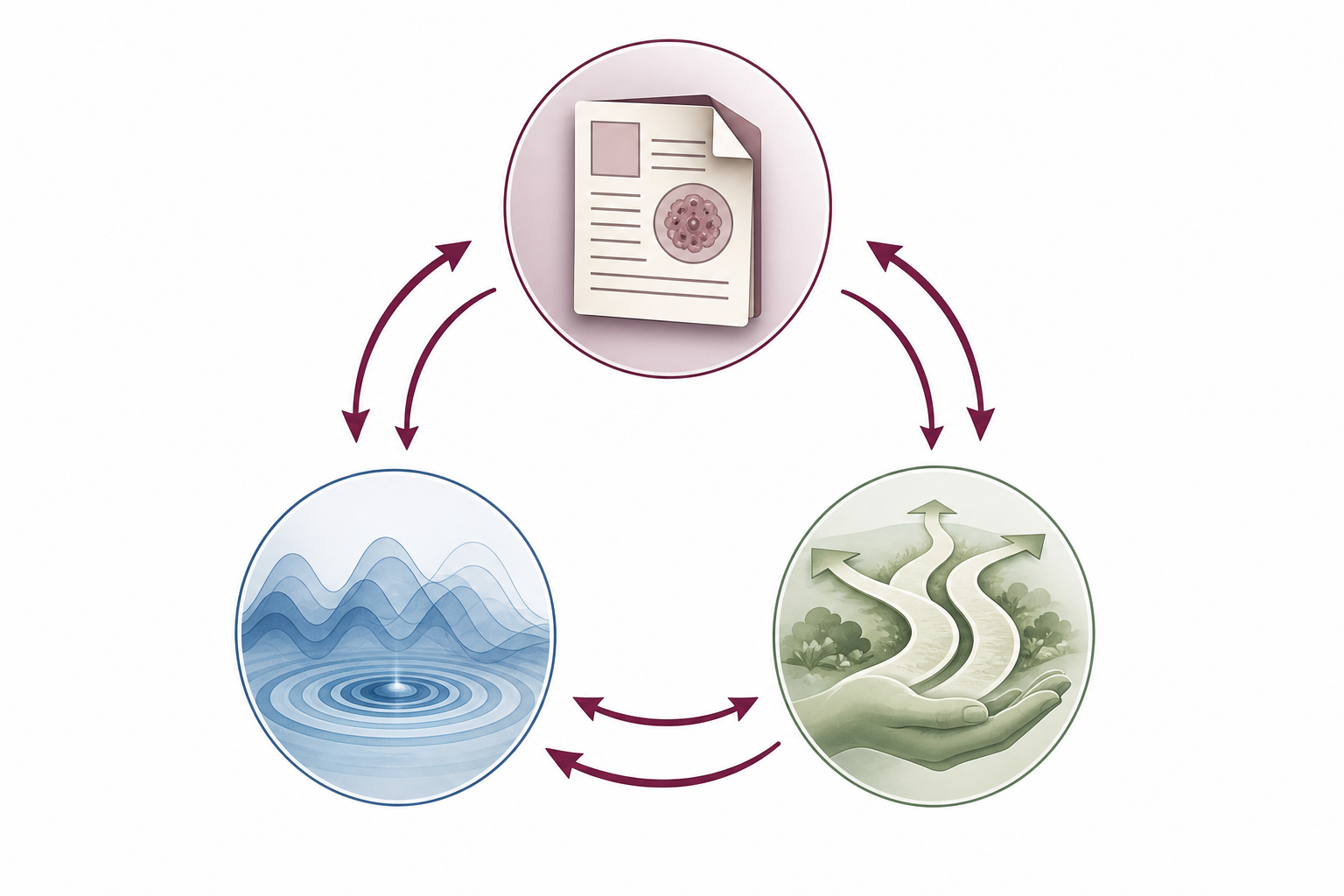
Herpes and HIV diagnoses tend to bring the heaviest reaction. The cultural stigma around them has far outpaced any change in their actual medical severity since effective treatments arrived, and decades of media framing built an association between these infections and personal failure that has not kept pace with modern medical reality.
The medical facts have moved on. Most people with genital herpes have few or infrequent outbreaks, and daily suppressive therapy reduces both symptoms and the risk of transmission to partners. HIV, once a terminal diagnosis, is now a manageable chronic condition for people on consistent antiretroviral therapy. The CDC and other public-health bodies confirm that people who reach and maintain an undetectable viral load on treatment do not sexually transmit HIV, a finding usually summarized as “undetectable equals untransmittable” (U=U). Pre-exposure prophylaxis (PrEP) further reduces transmission risk for partners. These are huge shifts, and most of the stigma in circulation predates them.
If you have just received a herpes or HIV diagnosis, give yourself permission to grieve a version of the future you were imagining before you fact-check it. Then, when the first wave settles, read the current guidance from the CDC or your country’s public-health authority. Most people are surprised by how far the medical picture has moved since the stigma they absorbed was set.
The disclosure question
One of the heaviest pieces of mental weight is the question of what to tell future partners and when. The simplest principle: you do not owe disclosure to strangers, and you do owe honesty to anyone you become sexually involved with, ideally before sex happens. Most people get better at these conversations with practice. Many partners respond more calmly than the catastrophizing mind expects, especially when the conversation is calm, factual, and includes specifics about your management plan.
The <a href="https://www.who.int/news-room/fact-sheets/detail/sexually-transmitted-infections-(stis)" target="_blank" rel="noopener">World Health Organization’s STI fact sheet</a> lists stigmatization and discrimination among the direct harms of sexually transmitted infections, alongside infertility, cancers, and pregnancy complications. The emotional fallout is not a side effect; international public-health bodies count it as part of the health burden these infections carry.
How to care for your mind the way you care for your body
You would not ignore a rash, a discharge, or a fever. The emotional fallout from a diagnosis deserves the same attention. The following steps are drawn from what mental-health professionals usually recommend for adjustment reactions and health-related anxiety. None of them require a therapist to start.
Name the feeling out loud
Say it plainly, in your own voice. “I feel ashamed.” “I feel scared about telling my partner.” “I feel angry that I have to deal with this.” The act of naming activates the parts of the brain that regulate emotion and quiets the parts that amplify it. Whisper it to yourself, write it in your notes app, or say it on a walk. The point is to take it from a vague heavy feeling to a specific named one.
Tell one safe person
Pick someone who has shown they can hold difficult information without judgment. A close friend, a sibling, a therapist, a peer-support helpline, or even an anonymous online community for people with the same diagnosis. The goal is not advice. The goal is to break the silence cycle that keeps shame alive. The first time you say it out loud is the hardest. Each subsequent time is measurably easier.
Fact-check the thoughts
When a thought like “no one will ever want me” arrives, treat it as a hypothesis, not a verdict. Look for evidence. Plenty of people with chronic STIs are in committed, sexually active, fulfilling relationships. The right person will care about how you handle a health condition, not whether you have one. Replace “I am ruined” with “I am managing my health responsibly.” This is the everyday work of cognitive behavioral therapy (CBT), and you can do it on your own with practice.
Protect sleep, food, and movement
The mind and body are connected closely enough that the basics matter more than usual right now. Aim for seven to nine hours of sleep. Eat real meals. Walk daily, even briefly. None of this is glamorous, and all of it measurably shortens the duration of the acute emotional response.
Limit doom-scrolling
Reading anonymous forum posts at midnight is rarely a good source of perspective. Set a daily window of fifteen to twenty minutes for reading from CDC, NHS, or your country’s public-health authority, then close the tab when the timer ends.
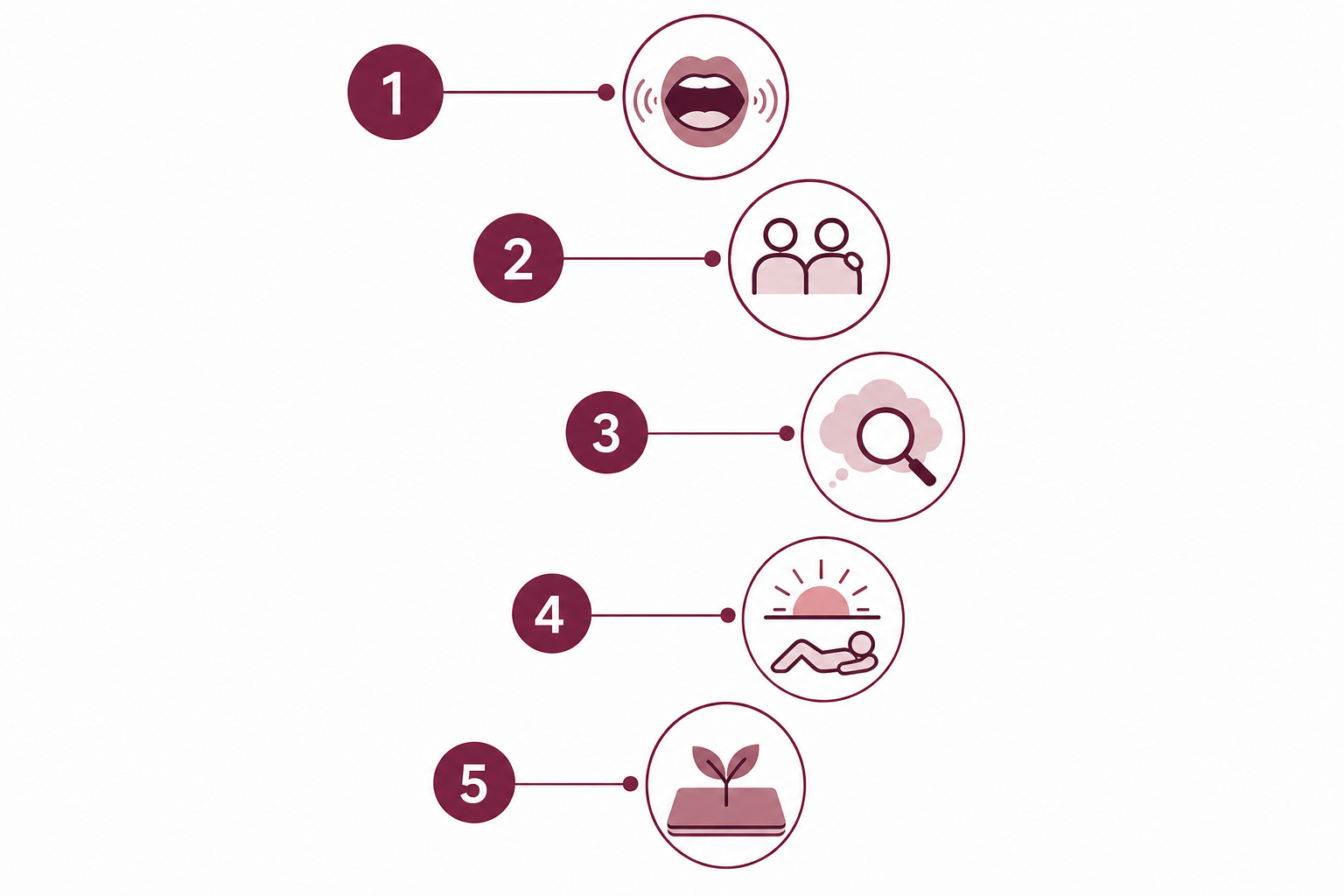
Think of the five practices as a sequence, not a checklist. Most people work through them in waves: an hour of naming the feeling, a phone call to one safe person, a long walk, an early night, a closed laptop. Repeat the cycle the next day. Each loop trims a little more weight from the diagnosis.
Acute distress in the first two to three weeks after a diagnosis is normal. Reach out to a mental-health professional or a crisis line sooner if you notice persistent low mood lasting beyond two to three weeks, panic attacks that interfere with daily life, intrusive thoughts about self-harm, complete withdrawal from people you love, or an inability to sleep or eat for more than several days. In the United States, the <a href="https://988lifeline.org/" target="_blank" rel="noopener">988 Suicide and Crisis Lifeline</a> is available 24/7. In the United Kingdom, <a href="https://www.samaritans.org/" target="_blank" rel="noopener">Samaritans</a> is reachable on 116 123. Therapists who specialize in sexual health, trauma, or chronic-condition adjustment are particularly equipped to help.
Testing, dating, and moving forward without hiding
One of the most useful things you can do for your own mental health after a diagnosis is to take small, concrete actions that reinforce a sense of agency. The diagnosis was not your choice. What happens next mostly is.
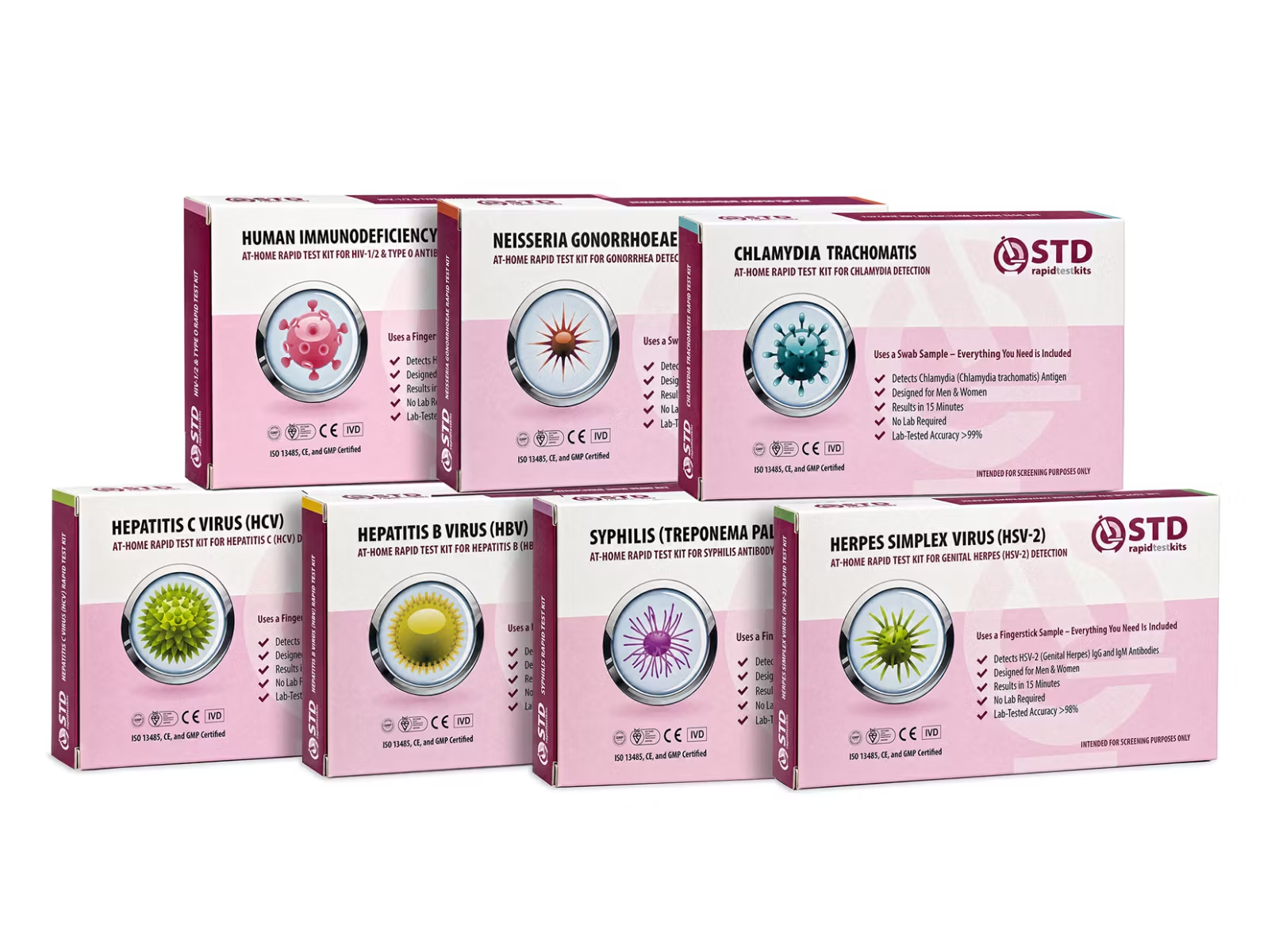
Private at-home testing is a small example. For people who delayed re-testing or follow-up testing because the clinic environment triggered anxiety, a discreet swab or fingerstick option at home can be the difference between knowing your status quickly and avoiding it for months. At-home rapid tests use lateral-flow chemistry and offer a screening result in about fifteen minutes. They do not replace lab confirmation when a positive result needs it, and they do let you check in on your own status, your partners’ status, or your treatment progress without leaving the house. A lab-based nucleic acid amplification test (NAAT) remains the gold standard for several infections, and a positive at-home rapid result should be confirmed with a clinic NAAT before treatment decisions. This article is published by stdrapidtestkits.com, which sells at-home STI test kits; we recommend products based on fit for the reader’s concern, not commercial benefit.
Reentering dating can wait until you are ready. When you do, prepare the disclosure conversation in advance. Two or three sentences are usually enough: what you have, how it is managed, what it means for the person you are dating, and any precautions you take. Practice the script in front of a mirror once before the conversation; the words come out steadier when the body has already heard you say them.
A different relationship with your body, one week at a time
The feeling of being gross does not vanish with a clever insight. It softens through small, repeated practices that retrain a nervous system trained on stigma. The first week is often the hardest. By the third week, most people report that the worst loops have quieted. By the second month, the diagnosis usually feels like a manageable fact about their health instead of a verdict on their identity.
If you are still in the first week, treat yourself as if a close friend just received the same news. Be patient with the wave. Drink water. Let one person know. Sleep. Read accurate information in small doses. Make one practical appointment, whether that is a follow-up with a clinician, a first call with a therapist, or a private home test. Then close the laptop and rest.
How you choose to treat yourself in those first weeks is what stays with you long after the diagnosis itself stops feeling new.
Common questions about the emotional fallout of an STI diagnosis
- Why do I feel so dirty after getting diagnosed with an STI?
- The feeling comes from years of cultural stigma, not from any actual change in your cleanliness or worth. Most STIs are common infections that respond to treatment or are managed long-term. The reaction is a conditioned response your brain learned long before the diagnosis arrived.
- Can an STI diagnosis cause depression or anxiety?
- Yes, and it is common. Many people experience low mood, panic, intrusive thoughts, or social withdrawal after a positive result. These reactions are treatable and usually peak in the first two to three weeks. Persistent symptoms beyond that are worth discussing with a mental-health professional.
- Is it normal to cry after a positive STI test?
- Very. Crying is a normal response to shock, fear, and grief. Allow yourself the space to feel without trying to push the emotion away. The acute reaction usually softens within a few days as the initial wave passes.
- How long does the shame after an STI diagnosis last?
- It varies. Most people notice meaningful improvement within a few weeks when they combine accurate information, social support, and self-compassion practices. Persistent shame lasting many months is a strong signal to work with a therapist who specializes in sexual health or chronic-condition adjustment.
- Will anyone want to date me again after this?
- Disclosure gets easier with practice, and most partners respond more calmly than the worst-case scenario your mind runs at 3 a.m. The right person focuses on how you handle your health and how you communicate, not on whether you have a manageable condition. Drafting two or three sentences in advance makes the conversation feel less heavy when it matters.
- Are at-home rapid tests reliable enough to use if I am anxious about visiting a clinic?
- Yes, for screening. Sensitivity varies by infection and how soon after exposure you test. A negative result outside the window period is reassuring. Treat any positive as a prompt to confirm with a clinic NAAT, which remains more sensitive for several infections.
- How do I stop obsessing about my diagnosis?
- Limit doom-scrolling, lean on a trusted person, journal what you are feeling, and seek therapy if intrusive thoughts persist beyond a few weeks. CBT is particularly effective for health-related anxiety. Avoid trying to think your way out alone for too long.
- When should I get professional mental-health support after a diagnosis?
- Reach out if low mood, panic, or intrusive thoughts persist beyond two to three weeks, if you cannot sleep or eat for several days, if you withdraw completely from people you love, or if you have any thoughts of self-harm. In the United States, the 988 Suicide and Crisis Lifeline is available 24/7. Therapists with experience in sexual health or chronic-condition adjustment are well-suited to help.
- U.S. Centers for Disease Control and Prevention. About sexually transmitted infections (STIs), including national overview and the cultural context of stigma.
- U.S. Centers for Disease Control and Prevention. About genital herpes, including management, treatment, and information for partners.
- U.S. Centers for Disease Control and Prevention. About HIV, including current treatment, prevention, and the undetectable equals untransmittable (U=U) finding.
- U.S. Centers for Disease Control and Prevention. About human papillomavirus (HPV), including natural-clearance estimates and vaccination guidance.
- World Health Organization. Sexually transmitted infections (STIs) fact sheet, including stigmatization as a direct harm.
- National Health Service (UK). Sexually transmitted infections (STIs) overview, including emotional impact and testing access.
- National Institute of Mental Health. Anxiety disorders overview, including signs that distress is becoming clinical and when to seek care.
- 988 Suicide and Crisis Lifeline. United States 24/7 mental-health crisis support.
