Published: November 2025 | Last updated: May 2026 | Editorial review and quality control: Martina N.
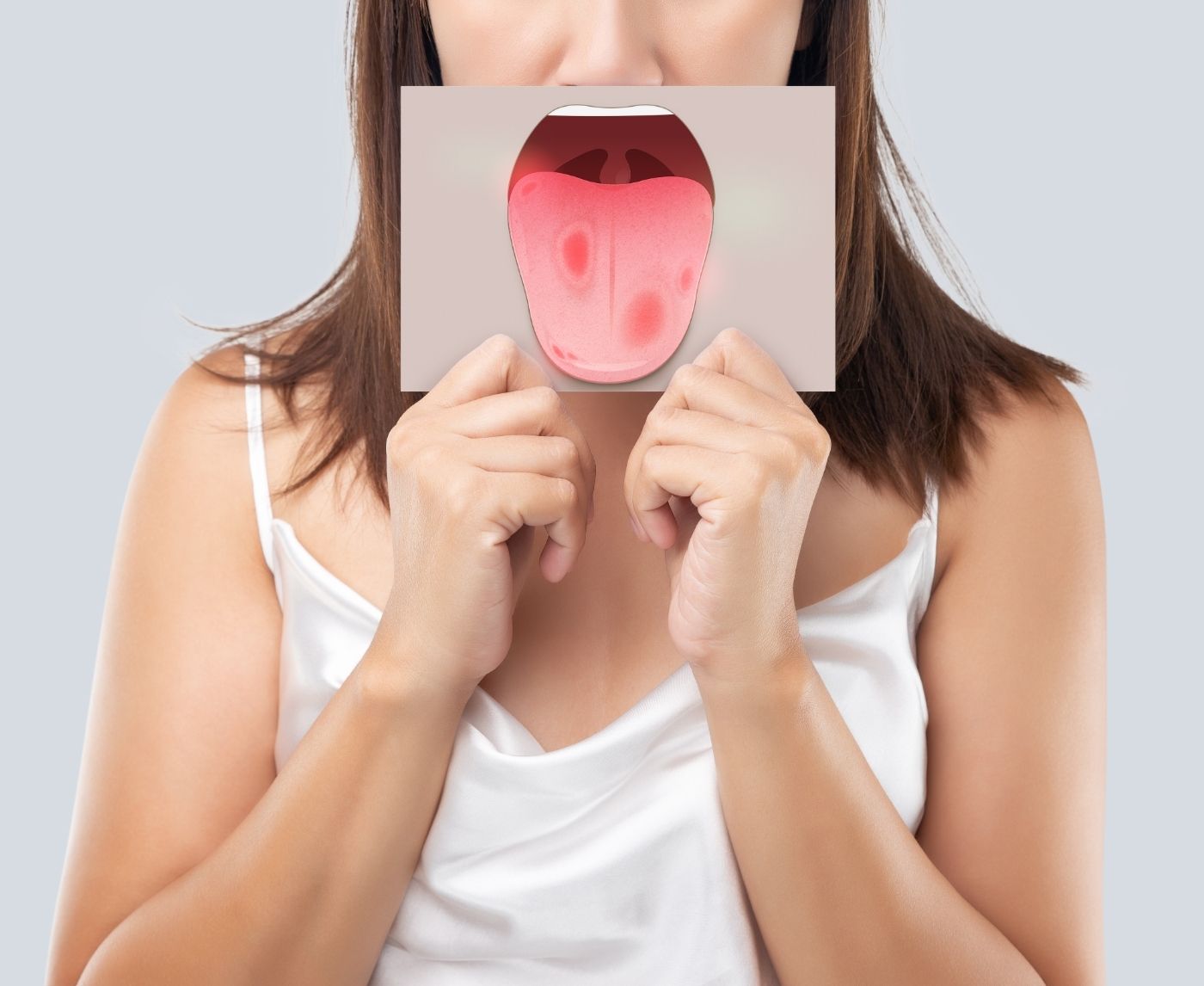
You noticed a sore in your mouth a few days after oral sex, and now your brain is running through every worst-case scenario it can think of. Here is the calmer picture: most mouth ulcers have nothing to do with sexually transmitted infections. Aphthous ulcers (canker sores), small bites, hot-food burns, and ordinary viral lesions account for the vast majority of mouth sores in adults, including the ones that show up after sex.
A handful of patterns do warrant testing, and this guide walks through how to tell the difference, what at-home tests can actually rule out, and when a clinic visit is the smart next step. Read it through once before you spend another evening on Google.
Is my mouth ulcer from oral sex an STI?
Probably not. The vast majority of mouth ulcers are aphthous (canker) sores or minor trauma, and they heal on their own within 7 to 14 days. Three patterns do warrant testing: a single painless firm sore that lingers (possible syphilis chancre), clusters of painful blisters that ulcerate (possible herpes), or a stubborn sore throat with pus-flecked lesions one to two weeks after exposure (possible oral gonorrhea or acute HIV).
Key takeaways
- Most mouth ulcers that appear after oral sex are canker sores or minor trauma, not STIs, and resolve in 7 to 14 days without treatment.
- A single painless ulcer, painful blister clusters, or a sore throat with pus that lasts more than two weeks deserves clinical testing, ideally with a clinic-administered swab plus blood antibody screening for HIV and syphilis.
Most mouth ulcers have nothing to do with STIs
Before reading anything else here, take a breath. The single most common cause of a small painful mouth sore in an otherwise healthy adult is an aphthous ulcer (canker sore). Recurrent canker sores are common in otherwise healthy adults and have nothing to do with sex. Per the NHS guidance on mouth ulcers, common everyday causes include:
- Minor trauma: accidentally biting the inside of a cheek, a toothbrush bristle scrape, an ill-fitting dental appliance, or a sharp piece of food.
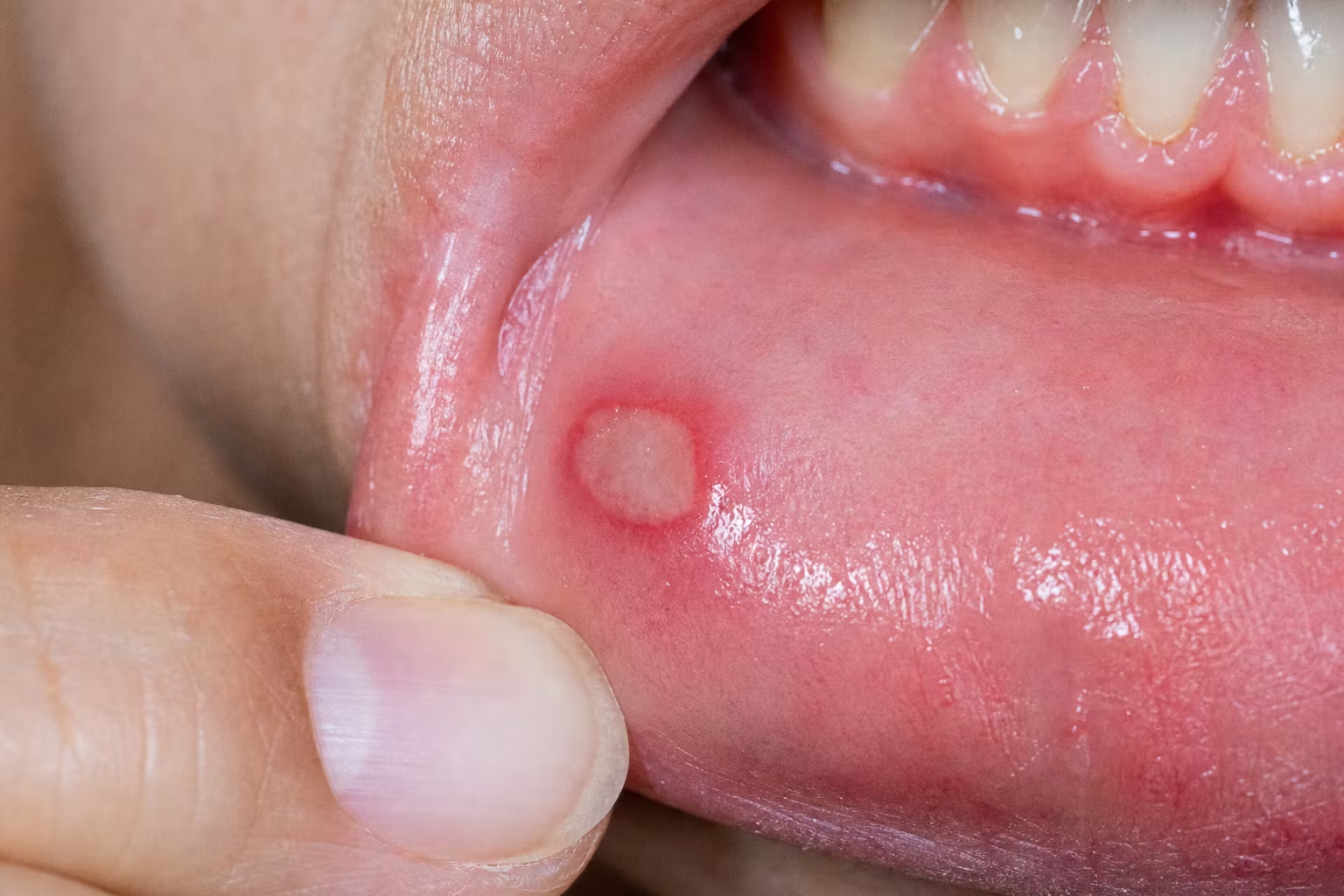
- Aphthous (canker) ulcers: small, round or oval sores with a yellowish-white center and a thin red halo. They sting, especially when you eat acidic food, and they heal on their own in 7 to 14 days.
- Stress, sleep loss, and hormonal shifts: classic triggers for recurrent canker sores.
- Nutritional deficiencies: low B12, folate, iron, or zinc.
- Food sensitivities: chocolate, coffee, citrus, tomatoes, and certain spices are common culprits.
- Viral illness: hand-foot-and-mouth disease, herpangina, and ordinary cold-sore reactivation can all produce mouth lesions, none of which require new exposure to cause an outbreak.
- Sodium lauryl sulfate: an ingredient in many toothpastes that triggers ulcers in some people.
If your sore is round, hurts, has a creamy white center with a red rim, and turned up after a stressful week or a hot pizza, the math overwhelmingly points to a canker sore. Watch it for a couple of weeks. If it shrinks and disappears, you have your answer.
When a mouth sore can signal an STI
Several STIs can produce mouth lesions after oral exposure. Per the CDC's STI overview, both bacterial infections (chlamydia, gonorrhea, syphilis) and viral infections (herpes, HIV, HPV) can be transmitted through oral sex, though the per-act risk is generally lower than for vaginal or anal sex. The visual patterns matter, because each infection presents differently.
Syphilis (primary chancre)
The classic primary syphilis lesion is a chancre: a single, round, firm sore with a clean rolled border and an indurated base. The defining feature is that it does not hurt. Per the CDC syphilis fact sheet, primary chancres typically appear about 3 weeks after exposure (a range cited in standard clinical references is roughly 10 to 90 days), heal on their own in 3 to 6 weeks, and can show up on the lip, tongue, or tonsil after oral sex. Because it is painless, many people never notice or simply assume it is a benign sore that resolved itself. The infection then progresses to secondary syphilis whether or not the chancre is treated.
Oral herpes (HSV-1, sometimes HSV-2)
Herpes lesions in the mouth start as painful clusters of small fluid-filled blisters that rupture into shallow ulcers, then crust over. The site is usually on the lip border, hard palate, or gums. Per the CDC herpes overview, HSV-1 is overwhelmingly the strain that causes oral lesions, and most adults already carry it from childhood exposure. New oral HSV-1 acquisition from oral sex is possible but it is not the typical mode. HSV-2 occasionally causes oral lesions, though it is much more common genitally.
An important caveat: a cold sore on the lip is almost always HSV-1 reactivation, not new infection. Stress, illness, sun exposure, and menstrual cycle hormones all trigger reactivation in someone who has carried the virus for years. The timing after a hookup is often coincidence.
Oral gonorrhea
Pharyngeal gonorrhea (gonorrhea of the throat) most often produces no symptoms at all. When it does, it usually looks like a stubborn sore throat with mild redness and sometimes white or yellow specks on the tonsils, easy to mistake for strep. True throat ulceration is uncommon. Per the CDC gonorrhea fact sheet, most pharyngeal cases are asymptomatic; symptoms, when they appear, typically develop within about two weeks of exposure.
Oral chlamydia
Chlamydia of the throat is even quieter than gonorrhea. Most cases are completely asymptomatic. When throat symptoms appear, they tend to be vague: mild soreness or irritation, occasionally swollen lymph nodes. Discrete ulcers are unusual.
Acute HIV (seroconversion illness)
Acute HIV infection causes a flu-like illness in many newly infected people, typically 2 to 4 weeks after exposure. Per the CDC HIV basics page, symptoms can include fever, sore throat, swollen lymph nodes, body aches, rash, and sometimes shallow oral ulcers that look like canker sores. The ulcers are not specific to HIV; the constellation (fever plus rash plus mouth sores plus a recent unprotected exposure) is what raises suspicion.
The risk of HIV transmission from oral sex alone is genuinely low for most encounters, but it is not zero, and several factors raise it. Ejaculation in the mouth, active sores or bleeding gums in the receiving partner, recent dental work, and a source partner with a high viral load (untreated HIV, or a very recent infection where viral load peaks) all push the per-act probability higher. Layered prevention plus testing at the right window is the practical answer rather than worry.
HPV
HPV does not typically cause mouth ulcers. Oral HPV usually produces no symptoms at all and is detected only when warts develop or when the strain causes oropharyngeal cancer years later. A new mouth ulcer is not a typical HPV presentation.
Red flags worth a clinician's eye
Most ulcers do not need testing. The patterns below do. If your sore matches one of these descriptions, get it evaluated rather than waiting it out.
- A single painless firm sore that lasts more than 10 days. The classic syphilis chancre. If it does not hurt, that is a feature of syphilis, not a reassurance. Heals on its own without treating the underlying infection.
- Clusters of painful blisters that crust over, especially in the same spot recurrently. Suggestive of HSV. Worth a clinician swab during an active outbreak for accurate typing.
- A sore throat that lasts longer than two weeks after a recent oral encounter, especially with white or yellow specks on the tonsils. Pharyngeal gonorrhea or strep are both possibilities, and a clinic throat swab can distinguish them.
- Fever, rash, body aches, swollen lymph nodes, plus oral ulcers, all appearing about 2 to 4 weeks after a possible exposure. This combination warrants HIV testing now and again at the appropriate window. Acute seroconversion is a window where viral load is extremely high and transmission risk to others peaks.
- Any mouth ulcer that has not started shrinking after 14 days. Whether or not the cause is sexual, persistent oral lesions deserve a look. Oral cancer can present this way too.
- Multiple painless ulcers plus a generalized rash on the palms or soles. Suggestive of secondary syphilis, which follows the primary chancre by weeks to months.
The single least useful approach is to wait, hope, and keep refreshing search results. Either test, see a clinician, or both.
Same-day clinical evaluation is warranted if you have any of: a painless ulcer that has not healed in two weeks, a sore throat plus fever plus rash plus a recent unprotected oral exposure, swollen lymph nodes that are large or growing, or any oral lesion in someone who is immunocompromised or pregnant. Free or low-cost testing is available at most local health department clinics in the U.S. and at NHS sexual-health clinics in the U.K.
Testing options after an oral exposure
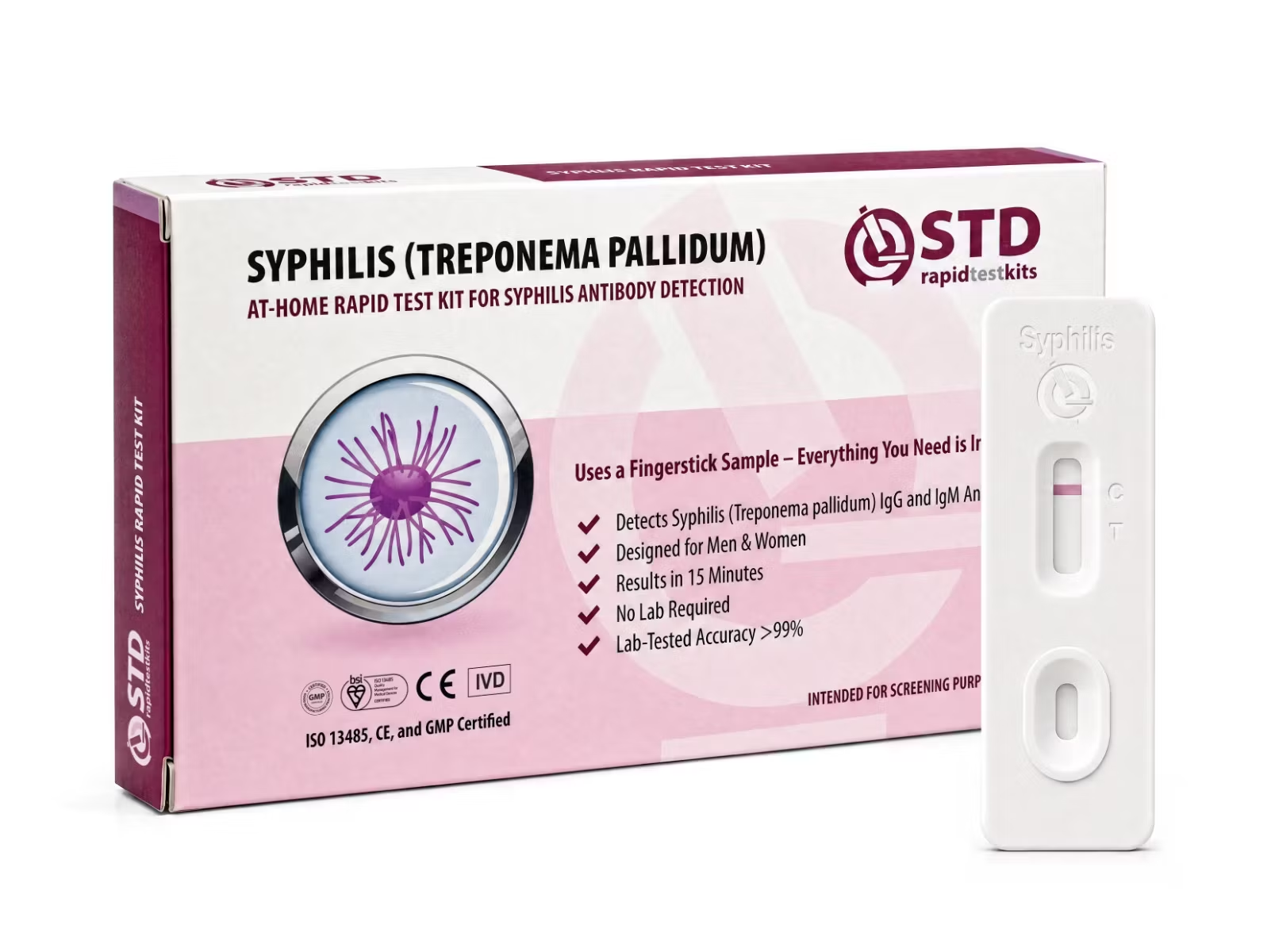
stdrapidtestkits.com sells genital self-swab kits and fingerstick blood antibody tests. We do not sell pharyngeal (throat) swab kits. The gold-standard test for confirming pharyngeal gonorrhea or chlamydia is a NAAT (nucleic acid amplification test) on a clinic-administered throat swab. If your concern is specifically a sore throat after oral sex, a clinic visit is the right call for that swab. Local health departments and NHS sexual-health clinics offer this at low or no cost.
Where at-home testing is genuinely useful after an oral exposure is for the systemic infections, the ones that travel through the bloodstream and can be detected by a fingerstick blood antibody test once seroconversion has occurred:
- HIV antibody test: useful from about 23 to 90 days after exposure depending on the assay generation. Earlier than that, a clinic-administered antigen/antibody combo or RNA test is more sensitive.
- Syphilis antibody test: typically positive 3 to 6 weeks after exposure, sometimes longer. Useful even after a primary chancre has healed, because antibodies persist.
- Herpes antibody test (HSV-1 and HSV-2): detects whether you have been exposed at any point, but does not localize where the infection sits. Most useful for confirming whether a person already carries the virus, less useful for diagnosing a current outbreak. For an active lesion, a clinician PCR swab during the outbreak is far more accurate.
- Hepatitis B and C blood tests: low risk from oral sex specifically, but often included in comprehensive panels.
Lateral-flow rapid tests like the ones we sell are screening tools. They use the same blood sample type as lab tests, but their analytical sensitivity is generally lower than a laboratory NAAT or fourth-generation immunoassay. A reactive home result is worth confirming at a clinic; a non-reactive result well past the window period is reassuring but should be repeated if the exposure was very recent.
Prevention basics for oral sex
Per the CDC STI prevention guidance, oral sex carries a meaningfully lower per-act risk than vaginal or anal sex for most STIs, but the risk is not zero. Sensible reductions:
- External condoms during fellatio. A standard condom worn on the penis during oral sex is the single highest-impact intervention for reducing pharyngeal transmission of gonorrhea, chlamydia, syphilis, and HIV.
- Dental dams during cunnilingus or rimming. A latex or polyurethane sheet placed over the vulva or anus reduces oral exposure to STIs and to enteric pathogens. A condom cut lengthwise or a square of plastic wrap can substitute in a pinch.
- Avoid oral sex when either partner has a visible lesion on the mouth or genitals. Active herpes outbreaks and primary syphilis chancres are highly transmissible.
- Get screened together. Mutual STI testing before a new sexual relationship is the most reliable way to know what you are working with. Screening covers a different question than diagnosis: it catches asymptomatic carriers.
- HPV vaccination through age 26 routinely, and through age 45 with shared clinical decision-making per ACIP guidance. Reduces oropharyngeal cancer risk over the long term.
- Brush gently and skip vigorous flossing right before oral sex. Oral abrasions raise transmission risk for blood-borne infections.
None of this is a guarantee. Layered prevention plus regular screening (every 3 to 12 months depending on partner count and exposure type) is the practical floor for sexually active adults.
Use an external condom during fellatio. It is the single largest reduction in pharyngeal transmission risk for gonorrhea, chlamydia, syphilis, and HIV.
Use a dental dam during cunnilingus or rimming. A latex or polyurethane sheet (or a condom cut lengthwise) interrupts the fluid and skin contact that drives oral STI transmission.
Healing timelines and what to watch
Tracking the timeline of your sore is one of the most useful things you can do. Most causes have characteristic durations.
- Aphthous (canker) ulcer: 7 to 14 days, occasionally up to 3 weeks for major aphthae. Painful throughout. Heals without scarring.
- Traumatic ulcer (bite, burn, brace abrasion): 5 to 10 days once the source of trauma is removed. If a sharp tooth or appliance is still rubbing the spot, the ulcer will not heal.
- Herpes simplex outbreak: 7 to 14 days from prodrome through crust to fully healed. First outbreaks tend to be longer (2 to 3 weeks) and more severe than recurrences.
- Primary syphilis chancre: 3 to 6 weeks. Heals on its own without treatment, which does not mean the infection is gone.
- Acute HIV oral ulcers: typically resolve within 1 to 2 weeks alongside the rest of the seroconversion illness. The infection persists.
- Oral cancer or pre-cancerous lesion: does not heal. A persistent ulcer beyond 3 weeks always warrants clinical evaluation, regardless of recent sexual activity.
If you are tracking an ulcer at home, take a photo every 3 days. Visible shrinking is a strongly reassuring sign. No change after 2 weeks, or progression, should send you to a clinician promptly.
Many STDs can be passed from one partner to another by oral sex. Although the risk of HIV transmission through oral sex is much lower than for anal or vaginal sex, multiple risk factors can change that.
Frequently asked questions
- Can you really get an STI from oral sex?
- Yes, though the per-act risk is meaningfully lower than for vaginal or anal sex. Syphilis, herpes, gonorrhea, chlamydia, and HIV can all be transmitted through unprotected oral sex. HPV can be transmitted as well, though it does not typically cause mouth ulcers.
- What does a syphilis sore in the mouth look like?
- A primary syphilis chancre is usually a single round or oval ulcer with a firm raised border and a clean base, most often on the lip, tongue, or tonsil. The defining feature is that it does not hurt. It typically appears about 3 weeks after exposure and heals on its own in 3 to 6 weeks even without treatment.
- How long after oral sex would STI symptoms appear in my mouth?
- If a sore turned up within hours of an encounter, the timing alone makes a sexually transmitted cause very unlikely; most infections take days to weeks to produce symptoms. Herpes shows up fastest, often within 2 to 12 days. Oral gonorrhea symptoms (when they appear at all) typically start within about two weeks. Syphilis chancres average around 3 weeks. Acute HIV symptoms emerge 2 to 4 weeks after exposure. Oral chlamydia is usually silent.
- Can a home test detect an oral STI?
- Partly. At-home fingerstick blood tests can detect HIV and syphilis antibodies (after the appropriate window period) and herpes antibodies. They cannot reliably detect active pharyngeal gonorrhea or chlamydia, which require a clinic-administered throat swab tested by NAAT. If your concern is specifically about throat infection from oral sex, see a clinician for the swab and use home blood tests for the systemic infections.
- Should I avoid kissing or oral sex while I have a mouth ulcer?
- Yes, until you know what is causing it. Active herpes lesions are highly transmissible. Untreated primary syphilis chancres are also infectious. Even if the sore turns out to be a canker sore, the broken mucosa can raise transmission risk for blood-borne infections in either direction during the window the ulcer is open.
- Do dental dams actually reduce STI risk during oral sex?
- Yes, when used correctly. A latex or polyurethane sheet held in place between mouth and vulva or anus reduces transmission of bacterial STIs (chlamydia, gonorrhea, syphilis) and viral STIs (herpes, HIV, HPV) by interrupting fluid and skin contact. They are underused, partly because they can be hard to find. A condom cut lengthwise or a square of plastic wrap will work as a substitute.
- How long do canker sores normally last?
- Most canker sores resolve in 7 to 14 days. Larger major aphthae (over 1 centimeter) can take up to 3 weeks and sometimes leave a small scar. Topical numbing gels and rinses ease the pain but do not shorten the timeline. Persistent ulcers beyond 3 weeks, regardless of suspected cause, should be evaluated by a dentist or doctor.
- U.S. Centers for Disease Control and Prevention. Sexually transmitted infections overview, including transmission routes through oral sex.
- U.S. Centers for Disease Control and Prevention. Syphilis fact sheet, including primary chancre presentation and timing.
- U.S. Centers for Disease Control and Prevention. Genital herpes (HSV-1 and HSV-2) overview, including oral presentation and transmission.
- U.S. Centers for Disease Control and Prevention. Gonorrhea fact sheet, including pharyngeal gonorrhea presentation.
- U.S. Centers for Disease Control and Prevention. HIV basics, including acute infection presentation and seroconversion symptoms.
- National Health Service (UK). Mouth ulcers: causes, duration, and when to see a clinician.
- Mayo Clinic. Canker sore: condition overview including symptoms, triggers, and clinical evaluation criteria.
