
Published: December 2025 | Last updated: May 2026 | Editorial review and quality control: Martina N.
Can you really get an STI from oral sex?
Yes. The CDC lists six STIs that transmit through oral sex: chlamydia, gonorrhea, syphilis, herpes (HSV-1 and HSV-2), HPV, and HIV. Per-act risk is lower than vaginal or anal sex, and HIV is rated little to no risk. The catch: most throat infections cause no symptoms, and no at-home kit tests the throat, which needs a clinic swab.
The conversation about oral sex tends to split into two camps that both miss the point: one treats it as essentially safe, the other assumes it is as risky as everything else. The accurate picture sits in between. Six STIs reliably spread through mouth-to-genital contact according to the U.S. Centers for Disease Control and Prevention, the per-act risk is lower than penetrative sex for most of them, and the at-home testing landscape covers some of these infections cleanly while missing others entirely. Because most throat infections cause no symptoms, routine testing, and asking a clinic for a throat swab when oral sex is part of the picture, matter more than waiting for signs. This guide walks through what is transmitted, what the symptoms look like when there are any, and what the right next step is after a recent unprotected oral exposure.
Key Takeaways
- Six STIs spread through oral sex per the CDC: chlamydia, gonorrhea, syphilis, herpes, HPV, and HIV. The risk is real but lower than penetrative sex, and most pharyngeal (throat) infections cause no symptoms at all.
- HPV causes 60% to 70% of oropharyngeal cancers in the United States, and at-home and urine-based panels do not test the throat. Vaccination through age 26 (with shared decision-making to age 45) substantially reduces that risk.
How STIs spread through oral sex
Most STI pathogens need a mucous membrane or a microscopic break in the skin to establish infection. The mouth, throat, and genital tissues are all lined with mucous membranes, which is why the route works in both directions. Bacteria like Neisseria gonorrhoeae (gonorrhea) can colonize the back of the throat in the same way they colonize the cervix or urethra. Viruses like HPV and herpes shed from skin and mucous membranes, often without any visible lesion, so the transmitting partner does not know they are infectious in the moment.
The mouth is also a more accommodating environment than most adults assume. Microscopic abrasions from vigorous brushing, flossing, recent dental work, ulcers from spicy food, or simple gum inflammation create direct entry points. The pharynx, the part of the throat behind the soft palate, can host gonorrhea or chlamydia for weeks without producing symptoms. On the receiving side, the urethra, vagina, anus, and surrounding skin are exposed to saliva and to whatever the giving partner is carrying in their mouth or throat.
A few exposure factors reliably raise the per-act risk:
- Recent dental work or vigorous brushing. Microabrasions in the gums and tongue act as entry points for blood-borne and mucosal pathogens.
- Existing oral or genital sores. An active herpes outbreak, a syphilis chancre, or even a canker sore can change a near-zero exposure into a meaningful one.
- A coexisting STI. Pharyngeal gonorrhea, for example, increases susceptibility to HIV if there is later exposure.
Saliva is a weak antiviral and weak antibacterial environment for several pathogens, which is part of why HIV transmission via oral sex is rated as little to no risk by the CDC. It does not, however, neutralize HPV, herpes shedding, or the bacterial STIs.
Many STIs are spread through oral sex, including chlamydia, gonorrhea, syphilis, herpes, HPV, and HIV. The risk of getting HIV from oral sex is much lower than the risk of getting HIV from anal or vaginal sex.
The six STIs that spread through oral sex
The CDC's oral sex risk page names six. They are not equally common, and the per-act risk is not the same for each.
Gonorrhea is the most reliably transmitted bacterial STI through oral sex. Pharyngeal gonorrhea is well documented and frequently asymptomatic, which is why CDC guidance includes throat swabs in the workup when oral exposure has occurred. When symptoms appear, they look like generic pharyngitis. Strep tests come back negative because gonorrhea is a different organism entirely. Treatment is a single antibiotic injection once it is identified.
Chlamydia can establish in the throat but does so less efficiently than gonorrhea. Most pharyngeal chlamydia clears spontaneously, though it can transmit during the infection window. Detection requires a NAAT throat swab in clinic; urine panels and home kits miss it.
Syphilis is genuinely worth taking seriously. Oral chancres, the painless ulcers of primary syphilis, can develop on the lips, tongue, tonsils, or palate after oral exposure. They look unremarkable, often heal on their own, and the infection then progresses systemically if untreated. Many people mistake the chancre for a canker sore precisely because it does not hurt. Antibody blood tests detect syphilis reliably from about three to six weeks after exposure.
Herpes covers two distinct concerns. HSV-1, traditionally the cold-sore strain, is now a leading cause of genital herpes among younger adults who acquired it through oral-genital contact. HSV-2, typically genital, can transmit to the mouth, though less commonly. Both are lifelong; antivirals reduce outbreaks and shedding but do not cure.
HPV is the most common viral STI worldwide and has the most consequential long-term link to oral health. Persistent oral HPV with high-risk strains is the dominant cause of oropharyngeal cancer, covered in detail below.
HIV is the lowest-risk of the six in the oral-sex context. The CDC explicitly states there is little to no risk of getting or transmitting HIV from oral sex, with the rare exceptions involving open sores, recent dental trauma, or a coexisting STI. It is also worth knowing that a partner living with HIV who is on effective treatment with an undetectable viral load does not transmit HIV sexually. If you are anxious about a specific exposure, an at-home HIV test at the right window gives a definite answer.
| STI | Per-act risk via oral sex | Most common direction |
|---|---|---|
| Gonorrhea | Documented, moderate | Mouth catches infection from genitals |
| Chlamydia | Lower than gonorrhea | Mouth catches infection from genitals |
| Syphilis | Real, especially with chancres | Either direction during primary or secondary stage |
| HSV-1 | Common | Oral cold sore transmits to genitals |
| HSV-2 | Less common but real | Genital herpes transmits to mouth |
| HPV | Common, often silent | Either direction |
| HIV | Little to no risk per CDC | Theoretical, with open sores or coexisting STI |
HPV and the oropharyngeal cancer connection
According to the CDC's oropharyngeal cancer page, HPV is thought to cause 60% to 70% of oropharyngeal cancers (cancers of the back of the throat, base of the tongue, and tonsils) in the United States. About 10% of men and 3.6% of women have oral HPV at any given time, with prevalence rising with age and number of oral-sex partners.
Most oral HPV infections clear within one to two years and never cause harm. The cancer risk comes from persistent infection with high-risk strains, mainly HPV-16, and that persistence is the minority of cases. When oropharyngeal cancer does develop, the CDC notes it usually takes years after infection, which is why these cancers are now climbing in adults who were sexually active before HPV vaccination existed. Worldwide, HPV drives a large share of cancers beyond the throat, and the WHO points to vaccination and screening as the main ways to prevent them.
The vaccination math is genuinely strong. The HPV vaccine protects against the strains that cause most HPV-related cancers, including the high-risk types tied to oropharyngeal cancer. The CDC recommends routine vaccination at ages 11 to 12, with catch-up vaccination through age 26 and shared clinical decision-making with a provider through age 45 for those at ongoing risk. The vaccine is recommended for all genders, and HPV-related oropharyngeal cancers are now more common in men than women in the United States.
Symptoms of pharyngeal STIs, and why most are silent
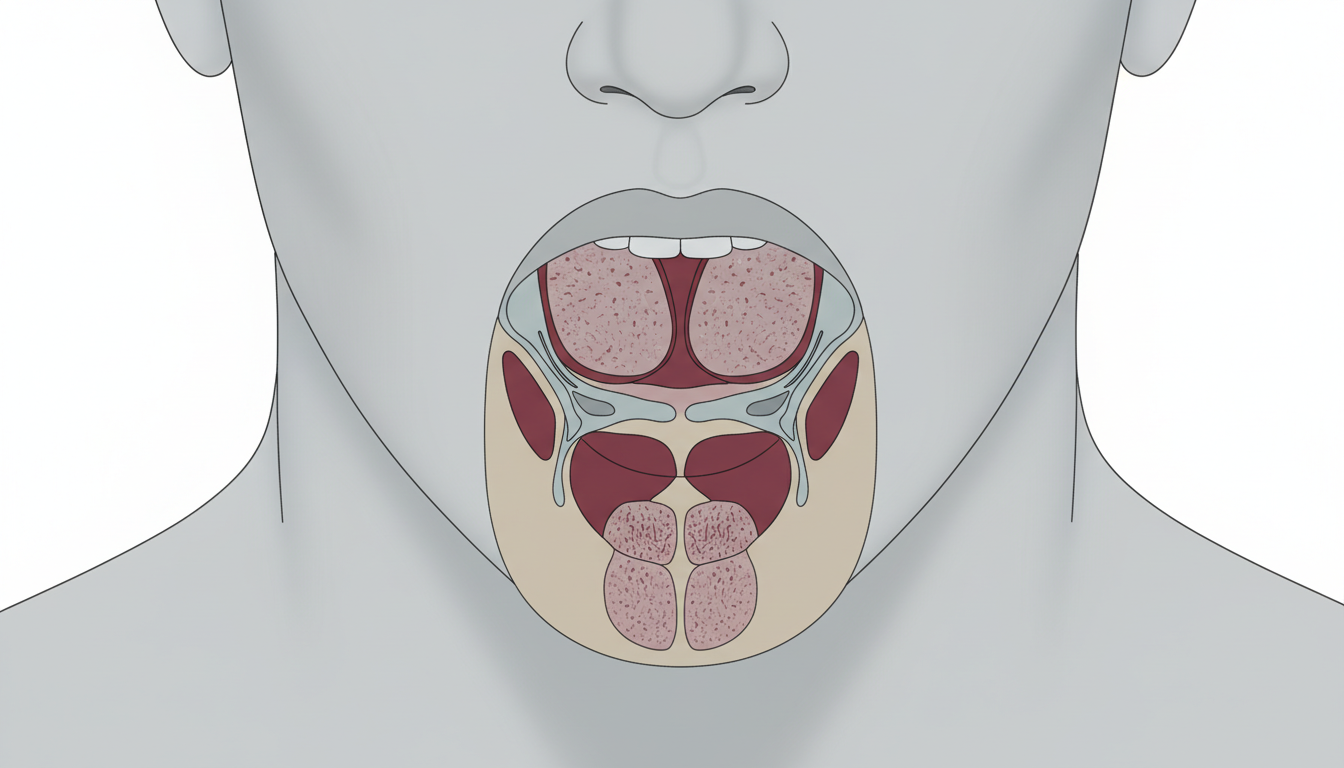
The most useful thing to know about throat STIs is that the majority cause no symptoms at all, a pattern MedlinePlus notes holds across STIs in general. They spread because nobody knows they have them. That creates an asymmetry worth naming: the person carrying a quiet throat infection has no cue to test, while the partner who picks it up genitally is usually the one who notices first and traces the chain back. Routine screening catches far more of these than symptom-watching does.
When symptoms do appear, they are almost always non-specific and easy to mistake for a viral sore throat. None of the patterns below is specific enough to self-diagnose. A persistent sore throat that is not improving after a week, an unexplained painless ulcer, or a flu-like illness following a higher-risk exposure all warrant a clinical workup with appropriate testing.
Signs that can follow an oral STI exposure
Most throat infections cause no symptoms at all, so feeling fine rules nothing out. Having one of these does not confirm an STI either. Only a test settles it.
- Persistent sore throat or inflamed tonsils that outlast a normal cold and test negative for strep Common
- Grouped small blisters on the lips, gums, or hard palate, often after a tingling or burning sensation Common
- A single painless ulcer (chancre) on the lip, tongue, tonsil, or palate Less common
- Swollen lymph nodes in the neck with no obvious cause Less common
- White or red patches in the mouth or throat that persist for weeks Rare
- Flu-like illness (fever, sore throat, body aches) two to four weeks after a higher-risk exposure Rare
How risk shifts with the act and circumstances
Per-act risk is not a single number. A few patterns explain most of the variation people read about online.
Giving versus receiving. The partner whose mouth contacts the genitals is generally at higher risk of catching pharyngeal gonorrhea, chlamydia, and oral HPV. The partner whose genitals are contacted by the mouth is generally at higher risk of catching oral HSV-1 transmitted to the genitals. The asymmetry is not absolute; both partners can transmit and receive every infection on this list. The direction simply skews based on which mucosal surface meets which.
Ejaculation in the mouth. Semen does increase exposure to certain pathogens, with HIV the most-discussed example, but for most STIs the bigger driver of risk is whether infection is present in the partner's genital tissues at all, not the volume of fluid exchanged.
Active sores or recent dental work. An active herpes outbreak, a fresh syphilis chancre, or a recent extraction can convert a near-zero exposure into a meaningfully elevated one. Postpone oral sex during obvious outbreaks, and skip it for a day or two after extractions or substantial dental procedures while the tissue heals.
Number of partners. The more sexual partners, and especially the more new partners, the higher the cumulative annual risk of any STI, including oral ones. CDC surveillance consistently shows higher pharyngeal STI rates among adults with multiple new partners in the past year.
Cross-site herpes: the worry that defines this topic
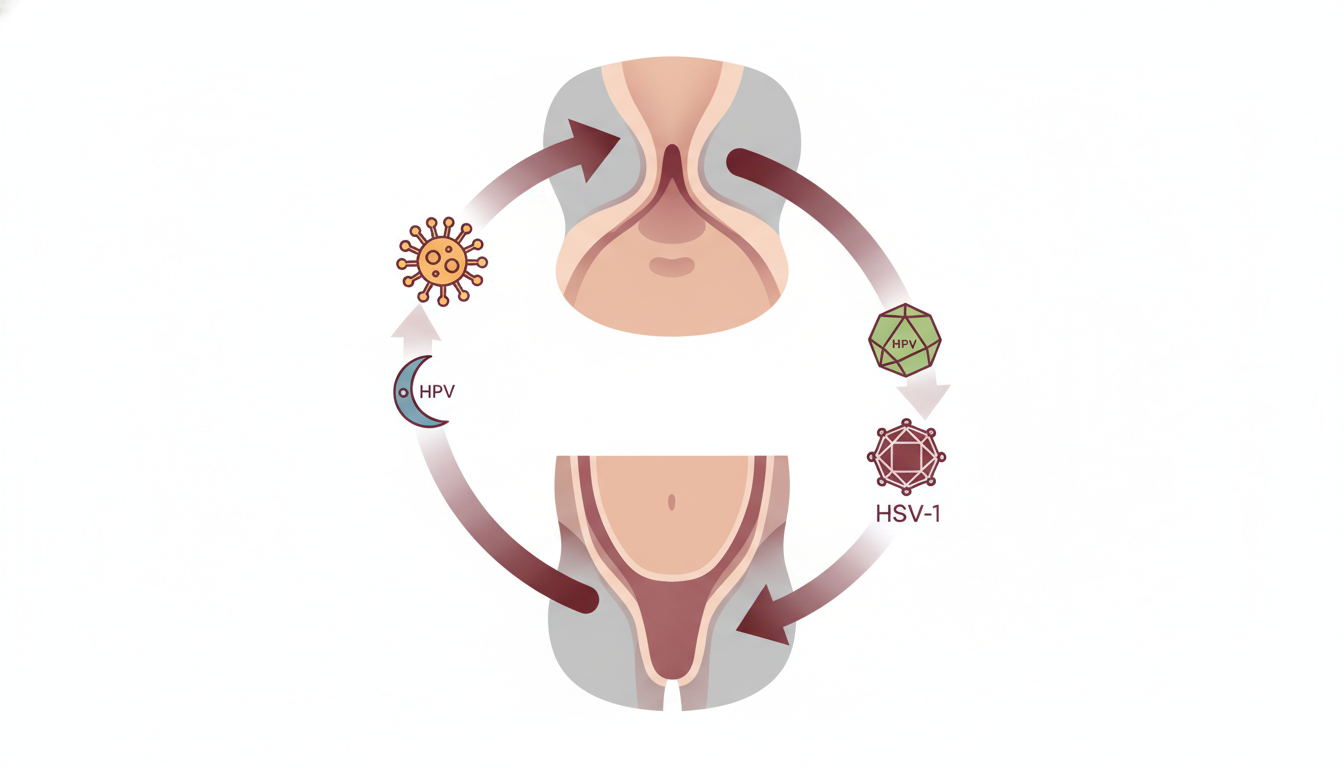
If one concern sends people searching about oral sex and STIs, it is herpes crossing sites. The pattern is real and increasingly common. HSV-1, the classic cold-sore virus, now causes a large share of new genital herpes among younger adults, acquired through oral-genital contact. As the CDC's genital herpes page puts it, oral herpes caused by HSV-1 can spread from the mouth to the genitals through oral sex, and a partner can pass it on even without a visible sore, during asymptomatic shedding.
Here is the part that trips people up about testing. A blood antibody test answers the question "have I ever been infected with HSV?" It cannot tell you whether a specific sore in front of you today is herpes, and antibodies take weeks to develop after a new exposure. To identify an active lesion, a clinician swabs it and runs a PCR test that distinguishes HSV-1 from HSV-2. The at-home blood test is the right tool for the different, common question many people are actually asking after an oral encounter: whether they carry the virus at all.
HSV sheds from skin even without a visible sore. A partner can transmit herpes when they feel fine and have no outbreak. Antivirals reduce but do not eliminate this shedding, and barrier use lowers it further.
Prevention basics that actually move the numbers
The CDC, NHS, and WHO converge on the same short list of effective prevention strategies. None is perfect; using two or three together works far better than relying on one.
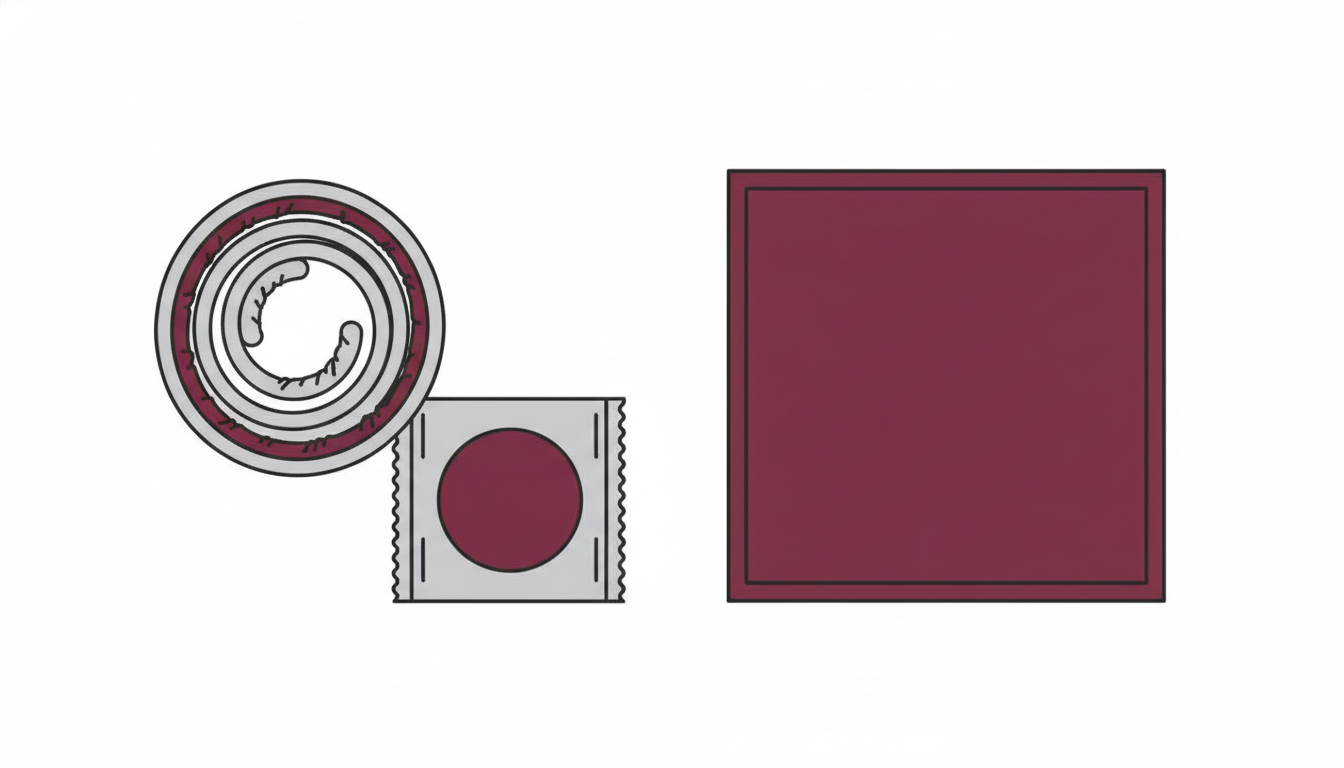
- Barrier protection. Flavored latex or polyurethane condoms during fellatio, and dental dams (or a condom cut lengthwise into a sheet) during cunnilingus and analingus. Barriers reduce but do not eliminate transmission, partly because HPV and HSV can shed from skin the barrier does not cover. The NHS also lists oral sex as a transmission route that barrier protection helps reduce, and barriers remain the single most effective thing most people can add to their routine.
- HPV vaccination. If you are under 27, the case for catching up is straightforward. If you are 27 to 45, talk with a provider; vaccination is still recommended in select circumstances under shared clinical decision-making. The vaccine works prophylactically; it does not treat existing HPV.
- Hepatitis B vaccination. Standard since childhood for most adults under 40 in the US; worth confirming if you are unsure of your status.
- Routine STI testing. The single biggest predictor of long-term sexual health is whether someone tests on a schedule rather than waiting for symptoms. The CDC's general guidance is at least annual testing for sexually active adults, and many people with new or multiple partners benefit from testing every three to six months.
- Oral hygiene timing. Good gum health reduces the microabrasions that act as entry points. The counterintuitive detail: do not brush or floss vigorously immediately before oral sex, since the temporary microabrasions can briefly raise susceptibility. Brush at a different time of day.
- Open partner conversations. The practical framing is short: "I tested last month and everything came back clear. When did you last test?" That gives information and invites it back.
What at-home tests can answer after oral sex
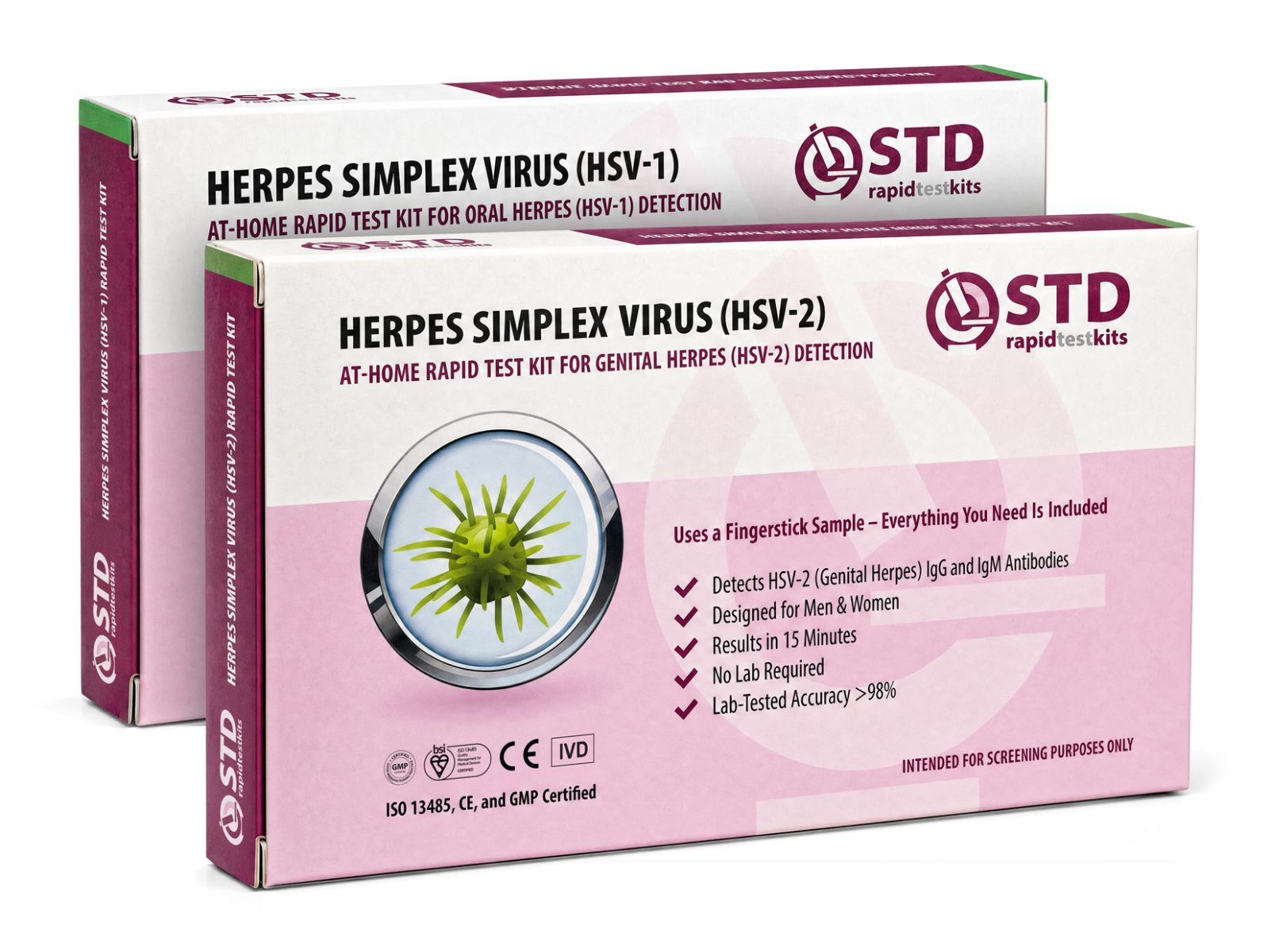
Home testing covers some of the relevant infections well and is the wrong tool for others. Two groups of infections fall within reach of an at-home kit. If you want both in one box, an at-home STI test kit that combines a fingerstick blood test with a genital self-swab is a sensible baseline. One honest limitation to keep front of mind: these are rapid lateral-flow tests, lab-comparable for screening when used correctly after the window period, and a reactive result should be confirmed by a clinician. They use the same genital sample type as lab NAATs, but a lab still performs the higher-sensitivity NAAT, so the two are complementary.
Disclosure: stdrapidtestkits.com sells rapid at-home lateral-flow testing kits. We recommend products based on fit for the reader's concern, not commercial benefit, and the product banners in this article are part of that line.
- Bloodwork-based STIs: HIV, syphilis, hepatitis B, hepatitis C, and herpes (HSV antibodies), screened from a fingerstick blood sample with results in about 15 minutes.
- Genital chlamydia and gonorrhea: through a self-collected vaginal or penile swab, which screens the genital site and not the throat.

Testing windows: when each test becomes reliable
The temptation after a possible exposure is to test the next day. Most tests cannot detect anything that early. Each STI has a window period during which the infection is present but the test cannot yet see it, so a negative taken inside the window can be falsely reassuring. Practical guidance from the CDC and FDA-cleared assay labels follows. If your exposure was last week, you can take one test now for a baseline, then repeat at the appropriate window for each pathogen.
When you still need a clinic
A home rapid panel is appropriate for routine screening, post-exposure verification of the systemic infections, and ongoing peace of mind. Several situations call for a clinic instead.
- Pharyngeal (throat) testing for gonorrhea or chlamydia. This needs a healthcare-administered throat swab processed by NAAT in a lab. Home kits, including ours, and standard urine panels do not include a pharyngeal swab. If your specific concern is a throat infection, book a clinic visit and ask for a pharyngeal swab by name.
- Active oral herpes lesion confirmation. A clinician can swab a visible lesion and run a PCR test to tell HSV-1 from HSV-2. The home herpes blood test detects antibodies, which answer "have I ever been infected?" rather than "is this sore herpes?"
- Oral HPV screening. There is no validated at-home oral HPV test. Cervical HPV screening is well established, and we offer a women-only at-home cervical HPV swab, but oral HPV remains a clinical-research question for now.
- A positive home result. Any reactive HIV, syphilis, or hepatitis result should be confirmed in clinic, and treatment has to come from a prescriber.
- A possible high-risk HIV exposure within 72 hours. Post-exposure prophylaxis (PEP) can substantially reduce the chance of seroconversion, but it is prescription-only and works best the sooner it starts.
If you may have been exposed to HIV in the past 72 hours, post-exposure prophylaxis (PEP) can substantially reduce the chance of seroconversion. PEP is a clinic-only intervention and works best the sooner it is started. Call urgent care, an emergency department, or a sexual-health clinic now. Do not wait for home-test results.
Common myths about oral sex and STIs
The myths are durable because they sound plausible and travel through conversations more than through clinical guidance. Here are four of the most common, each with the current public-health position beside it.
Common misconceptions about oral sex and STIs
Myth: Oral sex is safer than anal or vaginal sex, so it is basically safe.
Fact: Lower risk is not no risk. The CDC names six STIs that transmit through oral sex, pharyngeal gonorrhea is well documented, and persistent oral HPV is the leading cause of oropharyngeal cancer.
Myth: Only women need to worry about HPV.
Fact: HPV-related oropharyngeal cancers are now more common in men than women in the United States. The CDC recommends HPV vaccination for all genders through age 26, with shared decision-making to age 45.
Myth: Mouthwash kills STIs, so a thorough rinse replaces protection.
Fact: It does not. Mouthwash briefly lowers oral bacteria, which is not the same as blocking pathogens from entering mucous membranes. The Listerine-for-gonorrhea idea has been studied with inconsistent results and is not endorsed by the CDC, NHS, or WHO.
Myth: If you only had oral sex, you do not need an STI test.
Fact: You do. Pharyngeal gonorrhea and chlamydia are usually silent, oral HPV is silent for years, and oral syphilis chancres are painless. Routine testing is the only reliable way to find them.
The bottom line
Unprotected oral sex is not the high-risk activity that anal and vaginal sex are, and it is not the zero-risk activity it gets framed as in casual conversation. It transmits six STIs at varying rates, most of those infections cause no symptoms, and the long-term concern (HPV-driven oropharyngeal cancer) builds over years, not days. Treating it as a clean baseline is what lets the silent infections keep moving forward.
For someone with a recent unprotected oral exposure, the practical move is small and specific. The decision below walks through it.
What to do after a recent unprotected oral exposure
Was the exposure high-risk and within the past 72 hours, for example with a partner known to have HIV?
Yes: Call a clinic, urgent care, or an emergency department now about post-exposure prophylaxis (PEP). It works best the sooner it starts, so do not wait for home-test results.
Is your main concern the throat, such as a sore throat that outlasts a cold or a painless mouth ulcer?
Yes: Book a clinic visit and ask for a pharyngeal NAAT swab by name. Home kits and urine panels do not test the throat.
Otherwise, do you want to screen for the infections an at-home kit can detect?
Yes: Take a baseline blood panel for HIV, syphilis, and hepatitis now, then repeat at the right window: about 1 to 2 weeks for a clinic swab for chlamydia or gonorrhea, and 12 to 16 weeks for HSV antibodies (most assays are reliable at 12 weeks; some need 16).
No: At minimum, use barriers for future oral encounters and confirm your HPV vaccination status if you are under 45. Test on a routine schedule rather than waiting for symptoms, and see a clinician for a persistent sore throat, a painless oral ulcer, or an unusual neck lump.
Guidance only. A healthcare provider can advise based on your specific situation.
Frequently asked questions
- How long after unprotected oral sex should I wait before testing?
- A practical approach is one test at the 2-week mark for chlamydia and gonorrhea, then a follow-up around the 12-week mark to clear HIV antibodies, and 12 to 16 weeks for herpes depending on the assay. Syphilis serology is reliable by 6 weeks and can go in either visit. If the exposure was higher-risk or you are anxious, a clinician can compress the schedule and order a fourth-generation HIV lab test sooner. The goal is two tests at appropriate windows rather than one panicked test the week after exposure.
- Will a regular at-home STI panel cover throat infections?
- No. At-home kits cover the bloodwork (HIV, syphilis, hepatitis B and C, herpes antibodies) and genital swabs for chlamydia and gonorrhea, but not the throat. Pharyngeal NAAT requires a clinician-collected swab processed by a lab, and that step cannot be replicated at home. If a throat infection is your specific concern, book a clinic visit and ask for a pharyngeal swab by name.
- Can oral sex really cause throat cancer?
- The link is real but specific. Most oral HPV infections clear on their own within one to two years and never cause harm. Cancer risk applies only to the smaller share of infections that persist with high-risk strains, mainly HPV-16. When that persistent infection eventually drives oropharyngeal cancer, it accounts for 60% to 70% of US cases per the CDC. Vaccination substantially reduces the chance of acquiring those high-risk strains in the first place.
- Is HIV transmission through oral sex actually a real concern?
- The CDC states there is little to no risk of getting or transmitting HIV from oral sex. Documented oral transmission has occurred but is rare and usually involves open sores, recent dental trauma, or a coexisting STI. Anal and vaginal sex are dramatically higher-risk routes, and a partner on effective treatment with an undetectable viral load does not transmit HIV at all. If a specific exposure was within 72 hours and high-risk, post-exposure prophylaxis (PEP) is a same-day clinic conversation.
- Do dental dams really make a difference, or is it more performative than protective?
- They genuinely reduce transmission of bacterial STIs, herpes, and HPV during oral-vaginal or oral-anal contact. The reduction is not 100%, since HPV and HSV can shed from skin outside the barrier, but barrier use is consistently associated with lower STI rates in epidemiological data. A condom cut lengthwise works as a substitute. The main practical issue is consistent use, not effectiveness.
- Can I transmit oral herpes (HSV-1) to someone's genitals?
- Yes. HSV-1 transmits from the mouth to the genital region during oral-genital contact, including during asymptomatic shedding when no cold sore is visible. A growing share of newly diagnosed genital herpes in younger adults is HSV-1 acquired this way, per CDC guidance. Antiviral suppressive therapy reduces shedding and transmission risk, and barriers reduce it further.
- Should I get the HPV vaccine if I am in my 30s?
- Possibly. The CDC recommends routine vaccination through age 26 and shared clinical decision-making with a provider through age 45 for those at ongoing risk. The vaccine works best before exposure to the strains it covers, but it can still protect against strains you have not yet encountered. Talk with a provider; the cost-benefit depends on prior exposures and ongoing risk.
- Is closed-mouth kissing risky for STIs too?
- Most STIs need more contact than closed-mouth kissing to transmit. The exceptions worth knowing: HSV-1 transmits through oral contact and can pass during kissing if a partner has an active or shedding cold sore, and syphilis chancres in or around the mouth are transmissible through direct contact. Routine kissing with a partner who has no oral sores carries low risk for the major STIs.
- U.S. Centers for Disease Control and Prevention. About STI Risk and Oral Sex. Lists the six STIs that spread through oral sex (chlamydia, gonorrhea, syphilis, herpes, HPV, HIV) and states the risk of getting HIV from oral sex is much lower than from anal or vaginal sex.
- U.S. Centers for Disease Control and Prevention. HPV and Oropharyngeal Cancer. Source for the 60% to 70% HPV-attributable share of oropharyngeal cancers, oral HPV prevalence (about 10% of men and 3.6% of women), and the years-to-cancer timeline.
- U.S. Centers for Disease Control and Prevention. HPV Vaccines. Guidance for routine vaccination at ages 11 to 12, catch-up through age 26, and shared clinical decision-making for adults age 27 through 45.
- UK National Health Service. Sexually Transmitted Infections (STIs). Confirms oral sex is a transmission route requiring barrier protection and testing.
- World Health Organization. Human Papillomavirus and Cancer Fact Sheet. Source for the global HPV cancer burden, HPV transmission, and the role of vaccination and screening.
- MedlinePlus (U.S. National Library of Medicine). Sexually Transmitted Infections. Confirms STIs are usually spread during vaginal, oral, or anal sex and that they often cause no symptoms.
