







Quick Answer: Being monogamous does not guarantee STD safety. Factors like past infections, dormant viruses, testing gaps, and undisclosed cheating can all result in transmission, even when both partners believe they’re exclusive.
The Monogamy Myth: Why Trust Isn’t a Test
Back in college, Jamal and Priya decided to be exclusive. They were each other’s firsts, or so they believed. Two years in, Priya developed symptoms she couldn’t explain. A burning sensation during urination. A weird rash. The diagnosis? Chlamydia. Jamal swore he hadn’t cheated, and eventually, the real culprit emerged: Priya had been infected by a partner before Jamal and never knew. It had just... lingered.
This isn’t rare. Many STDs can stay silent in the body for weeks, months, even years. According to the CDC, herpes can remain dormant with no symptoms. HPV often clears on its own but may still be passed during asymptomatic periods. And chlamydia can go unnoticed in over 70% of women and 50% of men.
That means two people can be completely faithful, and still pass an infection between them. It doesn’t mean someone lied. It doesn’t mean someone cheated. It means that our bodies, like our pasts, can be complicated.
STD Dormancy and Delayed Symptoms: A Hidden Timeline
STDs don’t follow moral logic. They follow biological timelines. One of the most misunderstood aspects of STD risk in “closed” relationships is how long some infections can sit in the body undetected. Here’s what that looks like in clinical reality:
| STD | Can It Be Asymptomatic? | Dormancy Potential | When Symptoms Might Appear |
|---|---|---|---|
| Herpes (HSV-2) | Yes, often | Months to years | First outbreak can happen long after exposure |
| Chlamydia | Yes, 70%+ of cases | Weeks to months | Often found only through testing |
| HIV | Yes | Long latency period | May not show for years without testing |
| HPV | Yes | Can remain dormant indefinitely | May never show symptoms at all |
Table 1. Dormancy potential and asymptomatic risks of common STDs, even in monogamous relationships.
This table isn’t meant to scare you, it’s meant to explain why even the most trustworthy, loyal, and transparent relationships can still involve STD transmission. If neither partner was ever tested at the start, there’s a window for uninvited guests to sneak in.
“But We Tested Before We Slept Together…” (Did You?)
Here’s another story we hear a lot: “We got tested before becoming exclusive.” But did you really? Or did one of you test? Or did you get tested for “everything” except herpes, HPV, or trichomoniasis, three infections often skipped in routine panels?
Testing gaps are common. Unless you specifically ask for a full STD panel, your provider might only run tests based on symptoms, gender, or insurance coverage. According to the Mayo Clinic, even comprehensive STD testing doesn't always include all infections unless you request them.
Plus, the infamous “window period” creates a false sense of security. If your partner tested three days after a risky encounter, the results might’ve been too early to detect an infection. That window period differs per infection, but it matters for accuracy. Timing isn’t just a technical detail, it’s the difference between false peace of mind and real prevention.
And then there’s human error. Remembering the wrong date, forgetting a past partner, or assuming monogamy from a new partner without discussing it, it all adds up.

People are also reading: The Numbers Don’t Lie Why Non-Sex Workers Often Have Higher Undiagnosed STD Rates
When Cheating Isn’t the Whole Story (Or the Only Risk)
Let’s not dance around it: yes, sometimes infidelity is part of the equation. But framing every unexpected STD as “someone must’ve cheated” is both oversimplified and harmful.
Think of Ana, 42, who got a positive HPV result during her annual OB/GYN visit. She and her wife had been together for nine years. There was no cheating. But Ana had slept with someone during a one-night stand in her twenties, and the virus had been dormant the entire time. Her doctor explained it could have activated due to stress, immunity changes, or sheer biological randomness.
This is why many STDs get mislabeled as “proof of betrayal.” In reality, bodies aren’t moral calculators. They carry history. That includes viral DNA, bacterial traces, and sometimes, emotional fallout we never saw coming.
The trauma from an unexpected STD result in a monogamous relationship isn’t just about biology, it’s about emotional trust. But if we don’t understand how dormancy, asymptomatic infections, and incomplete testing work, we risk punishing ourselves (or our partners) for something science can explain.
Planned Parenthood urges that regular testing should be normalized in all relationships, not just casual or “risky” ones. It’s not a trust issue. It’s a health reality.
Testing in Monogamy: When, Why, and How Often?
So, should people in long-term, closed relationships still test for STDs? The answer is yes, especially if you:
, Never tested at the start of your relationship , Had partners before this relationship , Aren’t 100% sure of your partner’s testing history , Have ever had unprotected sex, even years ago , Are planning to stop using condoms , Have symptoms (even vague ones) now
Frequency depends on your situation. The CDC recommends that sexually active people under 25 get tested yearly for chlamydia and gonorrhea. But if your last test was five years ago, and you’re assuming monogamy is your shield, it may be time to rethink your schedule.
This isn’t about punishment, it’s about power. Knowing your status means owning your health, not fearing your past or your partner’s. It means facing facts with compassion and using them to build a safer future.
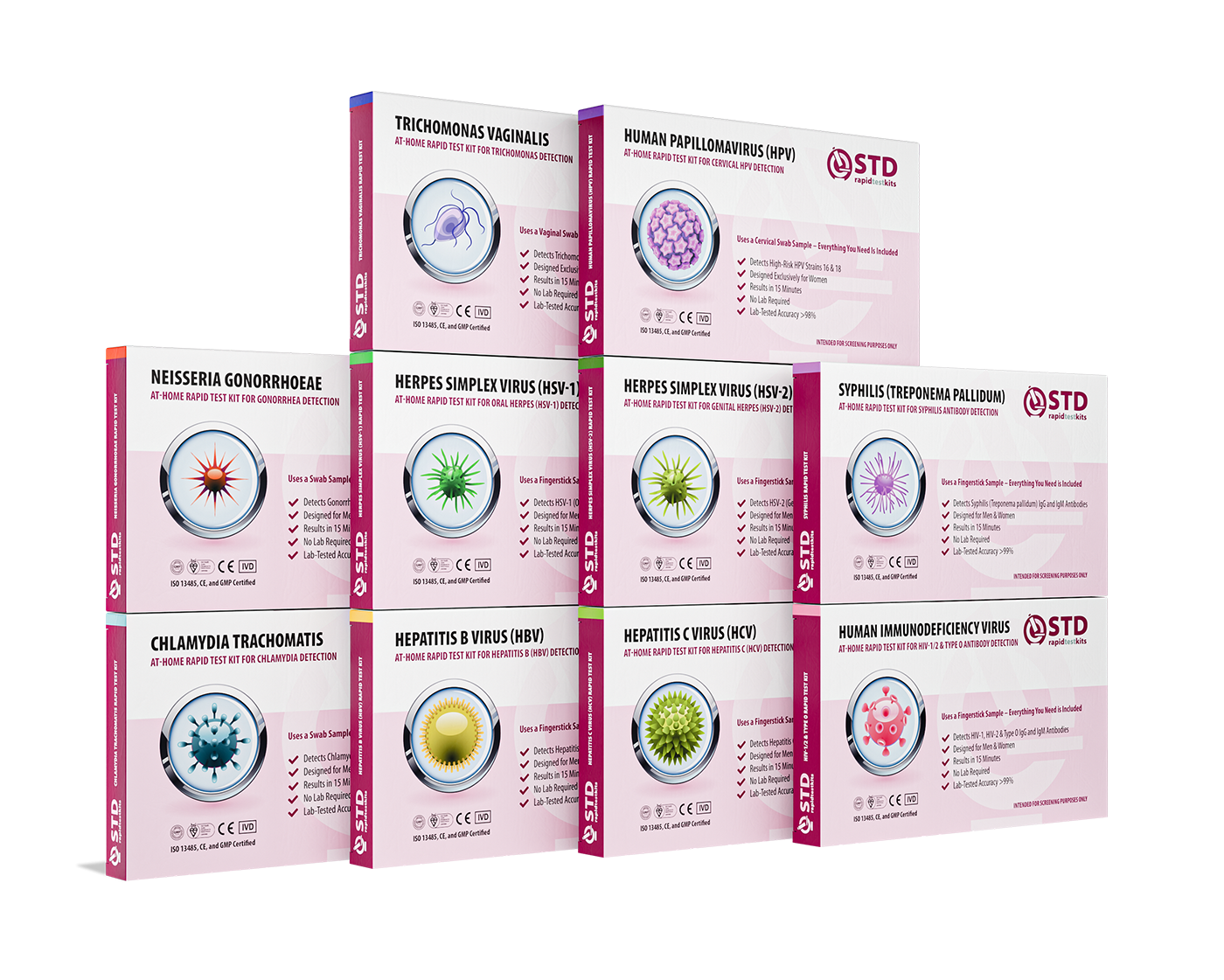
This at-home combo test kit screens for multiple STDs in one go, discreetly delivered and easy to use. If you’re in a monogamous relationship and just want to be sure, it’s a way to check in with peace of mind, not paranoia.
Monogamy, Testing, and That Awkward Conversation
Let’s say you’re in a steady relationship. You love each other, trust each other, and haven’t had “the talk” about STD testing since the beginning. Bringing it up now feels awkward, like you’re accusing them of something. But what if you’re not? What if you’re just ready to put your health first?
Testing doesn’t mean you don’t trust your partner. It means you understand that infections can live undetected. You’re doing the responsible thing. And honestly? That’s hot. There’s nothing sexier than two people making informed choices together. It's a shared investment in pleasure, safety, and respect.
Jesse and Marco, a married couple in their thirties, recently decided to test before trying for a baby. Neither had symptoms. Both believed they were STD-free. And yet, Marco tested positive for trichomoniasis, a common but often overlooked infection. They were stunned. But instead of spiraling into accusations, they realized something else: neither of them had been tested in over six years.
They treated it, retested, and moved on. Stronger. Smarter. Still in love.
STD Transmission Without Cheating: The Science Is Real
This isn’t clickbait. It’s biology. Here are three common ways STDs can spread in “closed” relationships, no betrayal required:
| Transmission Route | How It Happens | Examples |
|---|---|---|
| Past Exposure | Undiagnosed infections from before the relationship | HPV, herpes, chlamydia lying dormant |
| Testing Gaps | One or both partners weren’t tested fully or recently | Assuming “all clear” too early or missing infections like trichomoniasis |
| False Negatives | Testing during the window period or user error in at-home kits | Early HIV test missing infection, herpes not showing antibodies yet |
Table 2. How STDs can spread inside monogamous relationships, without cheating involved.
So yes, you can get an STD in a faithful relationship. That doesn’t mean fidelity is worthless, it means biology doesn’t honor relationship contracts. Viruses and bacteria operate on their own timeline. They don’t care about promises or rings. And that’s why routine testing, no matter your relationship status, still matters.
Check Your STD Status in Minutes
Test at Home with Remedium10-in-1 STD Test Kit
 For Women
 Results in Minutes
 No Lab Needed
 Private & Discreet
Order Now $189.00 $490.00
For all 10 tests
Can You Be Reinfected by Your Partner?
One of the hardest moments after treating an STD in a monogamous relationship is reinfection. It can feel like salt in the wound. But reinfection isn’t always about fresh cheating, it’s often just poor timing.
If one person gets treated and the other doesn’t, or if they both don’t abstain for the full treatment window, the infection can ping-pong back and forth. This happens most often with chlamydia and gonorrhea. You treat it, feel fine, resume sex, and get reinfected.
This is why coordinated treatment and follow-up testing matter so much. Not just for accuracy, but for emotional healing too. Knowing you’re both cleared and synced can restore a sense of security after an unexpected result.
There’s also this: if you’ve ever felt symptoms again and wondered, “Did they cheat again?”, you’re not alone. But it could be a new exposure, a leftover bacteria, or a false sense of “done-ness” after the first treatment.
NHS guidelines stress the importance of abstaining until both partners have finished treatment and tested negative again. Not forever, just long enough to make sure you’re both clear.
Pregnancy, Monogamy, and Silent Infections
Let’s talk about another overlooked piece of the puzzle: pregnancy. Many people assume that if a couple is trying to conceive, or already has, they must be STD-free. But that’s not always true.
Some infections, like chlamydia and gonorrhea, can cause serious complications during pregnancy, including premature birth or even infertility before conception. Yet these same infections are often silent. You wouldn’t know you had them unless you tested specifically for them.
Sofia and Darren had been married for four years when they decided to start trying. During her preconception screening, Sofia tested positive for chlamydia. She was devastated, and furious. But Darren insisted he hadn’t cheated. He begged her to believe him. As they walked it back, they realized Darren had never been tested for STDs. Not once. And the chlamydia? It could’ve been sitting dormant for years.
They treated it, got cleared, and later conceived a healthy baby. But it took time, therapy, and education to get there. Testing saved more than just their health, it saved their marriage.
If you’re planning for pregnancy, retesting, even in a long-term, monogamous relationship, isn’t insulting. It’s smart. And it’s protective. For both partners, and for the baby you might bring into the world.
But What If They Did Cheat? Navigating the Fallout
Sometimes, the STD does come from cheating. And if that’s your story, we see you. The betrayal, the heartbreak, the confusion about what to do next, it’s a lot. But knowing your status is still a gift. It gives you power. It lets you choose how to care for yourself, how to move forward, and how to protect your body even when your heart is in pieces.
You don’t have to decide everything today. But you do need facts. And that starts with accurate, comprehensive testing. From there, you can choose care, boundaries, treatment, therapy, whatever comes next.
And remember: people cheat for reasons that have nothing to do with you. That’s not to excuse it. It’s to keep you from blaming yourself. You’re not the STD. You’re not the betrayal. You’re the survivor. You’re the one building something better, whether with them or without them.
Want to take that first step today? STD Rapid Test Kits offers discreet, fast results. No clinic. No judgment. Just answers.

People are also reading: STD Symptom Panic at Night: What’s Really Going On?
FAQs
1. Can you really catch an STD even if you’re both faithful?
Yeah, you can, and it sucks how often that surprises people. Being monogamous feels safe, but it doesn’t undo the past. If either of you had an infection before the relationship, say, from an old partner who never told you, it can hang out silently in the body. Then boom: it shows up one day, years later, and everyone’s confused and hurt. Faithfulness is powerful, but biology doesn’t care about commitment.
2. We got tested at the start. Shouldn’t that be enough?
Only if the timing and test types were perfect, which they rarely are. A lot of people get tested during the “window period,” when infections like HIV or chlamydia might not show up yet. Others assume they were tested for everything, but spoiler: most clinics don’t automatically include herpes, HPV, or trichomoniasis unless you ask. So yeah, even with good intentions, things can slip through.
3. Does testing positive mean someone cheated?
Not always. Not even close. Some STDs, like herpes or HPV, can stay dormant for years before causing symptoms. So you might test positive for something you got a decade ago. Or your partner might have had an infection before they ever met you and just never knew. Is cheating possible? Sure. But it’s not the only explanation, and jumping to conclusions can cause more harm than good. Get all the facts first.
4. I don’t have any symptoms. Why should I test?
Because most STDs don’t come with warning signs. Like, seriously, chlamydia is asymptomatic in up to 70% of women. Gonorrhea can feel like nothing more than a mild irritation. HPV? You might never know unless it causes cell changes. Testing isn’t about reacting to symptoms; it’s about knowing what’s going on in your body before anything escalates.
5. How long can an STD stay hidden in someone’s body?
Longer than most people think. Herpes can lie low for months or even years before flaring up. HIV might not cause obvious symptoms for a long time. HPV can just hang out in cervical cells for years. Your body keeps the receipts, even when it’s silent. That’s why past infections sometimes show up in long-term monogamous couples and shock everyone.
6. What if one of us tests positive and the other doesn’t?
Totally possible. STDs don’t always get passed every time you have sex. Plus, different immune systems, test timing, and even biological sex can affect detection. One partner might clear an infection naturally; the other might not. Or you may have gotten tested too early, or too late. It’s complicated, but it doesn’t always mean someone’s lying.
7. How often should committed couples actually get tested?
Think of it like dental checkups, but for your sex life. Ideally, get tested when you first become exclusive. Then again before ditching condoms. After that, it depends. Once a year is a good baseline, especially if you’ve had past partners, new symptoms, or plans to get pregnant. It’s not overkill. It’s just care.
8. Are at-home STD tests actually reliable?
Yes, when you use the right ones. The rapid tests from trusted brands (like STD Rapid Test Kits) are legit and FDA-approved. They’re not perfect, but neither are most clinic tests. The key is using them at the right time, usually 2+ weeks after a potential exposure, and following the instructions exactly. If you test positive, follow up with a clinic for confirmation. But for peace of mind, at-home kits are a game changer.
9. I tested positive. My partner swears they didn’t cheat. Now what?
Take a breath. Then take a second test to confirm. From there, have a real conversation, ideally after some sleep and some facts. Consider both your histories, what infections were tested for, and how long you’ve been together. And if things still feel murky, a doctor or couples counselor can help. Not everything has a clear villain. Sometimes it’s just virology being messy.
10. Is it wrong to ask my partner to test if we’re monogamous?
Not at all. In fact, it’s responsible, and honestly, kind of hot. It says, “I care about us.” Testing isn’t a trap. It’s a trust-builder. If your partner freaks out about it, that’s not on you. Open communication about sexual health is adulting 101. Asking for a test doesn’t mean you don’t trust them. It means you respect both your bodies enough to stay safe.
You Deserve Answers, Not Assumptions
Whether your result was a surprise or a wake-up call, one thing is true: testing is not a betrayal. It’s a beginning. Being monogamous might feel like the ultimate shield against STDs, but it isn’t foolproof, and that’s not your fault. It’s biology.
Don’t wait and wonder. Don’t let shame or confusion make the decisions for you. Knowing your status is how you reclaim peace of mind, protect your partner, and move forward with clarity, not fear.
This at-home combo test kit checks for the most common STDs discreetly and quickly, no awkward appointments, just answers you can trust.
How We Sourced This Article: We combined current guidance from leading medical organizations with peer-reviewed research and lived-experience reporting to make this guide practical, compassionate, and accurate. In total, around fifteen references informed the writing; below, we’ve highlighted some of the most relevant and reader-friendly sources.
Sources
2. NHS – Sexually Transmitted Infections
3. Strategies for Partner Notification for Sexually Transmitted Infections (PMC)
4. CDC — Chlamydial Infections Management & Partner Treatment
About the Author
Dr. F. David, MD is a board-certified infectious disease specialist focused on STI prevention, diagnosis, and treatment. He blends clinical precision with a no-nonsense, sex-positive approach and is committed to expanding access for readers in both urban and off-grid settings.
Reviewed by: Dr. Maya Reynolds, MPH | Last medically reviewed: October 2025
This article is for informational purposes and does not replace medical advice.


