

Published: September 2025 | Last updated: April 2026 | Editorial review and quality control: Martina N.
One partner tests positive. The other tests negative. The questions start almost before the result has finished sinking in. Did someone cheat? Is the test broken? How long has this been going on? Why didn't I catch it too?
Most of the time the answer is far less dramatic than the panic suggests. STIs do not move along emotional logic, and they do not infect every exposure. They follow biology: detection windows, viral or bacterial load, sample-collection variables, and probability per contact. A discordant result (one partner positive, one partner negative) is common in monogamous couples, casual partners, and long-term relationships alike. It does not automatically point to infidelity, and it does not always mean the negative partner is in the clear. It usually means the two tests captured different moments along the same infection curve, or that transmission simply did not occur on a given exposure.
This guide pulls together what the CDC, WHO, NHS, and Mayo Clinic say about discordant test results, retesting protocols, and harm reduction for couples with mixed STI status. It gives you enough specificity to make a calm decision tonight, and enough context to make the conversation that follows a little easier.
If my partner tested positive and I tested negative, what does that actually mean?
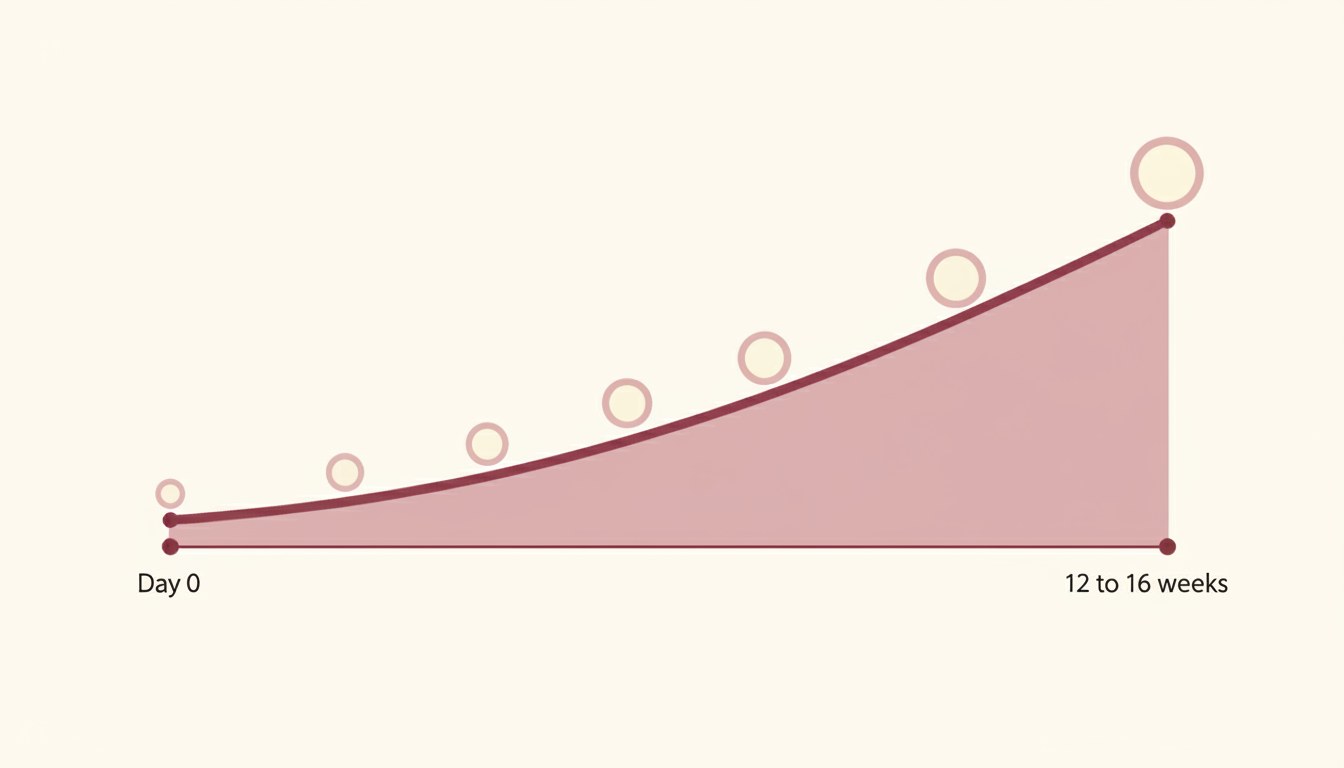
Several things can explain it. The most common is the window period: the gap between exposure and when an infection becomes detectable. For chlamydia and gonorrhea on a NAAT, that gap is roughly 1 to 2 weeks. For HIV antigen/antibody testing it is 18 to 45 days. For syphilis, 3 to 6 weeks. For HSV-2 antibody testing, seroconversion can take several weeks to a few months, with most clinical guidance suggesting a retest at 12 to 16 weeks. Test type matters too: laboratory NAAT/PCR is more sensitive than at-home rapid lateral-flow strips. And transmission itself is probabilistic, so even unprotected sex with an infected partner does not guarantee infection. The right move is almost always to retest after the relevant window closes, and to keep using barriers in the meantime (<a href="https://www.cdc.gov/sti/testing/index.html" target="_blank" rel="noopener">CDC, Getting Tested for STIs</a>).
Key Takeaways
- A negative result during the window period does not rule out infection. Retest after the window closes (about 2 weeks for chlamydia and gonorrhea, 6 to 12 weeks for HIV and syphilis, and a 12 to 16 week retest for HSV-2 antibodies).
- Mismatched partner results are common and rarely point to one cause. Test timing, sample collection, and the gap between rapid lateral-flow tests and lab NAATs all change what each result shows.
How can one partner have an STI and the other not?
Transmission is probabilistic. The per-act risk for unprotected vaginal sex with a partner who has chlamydia or gonorrhea sits in the rough single-digit to low double-digit percent range. For HIV, the per-act risk for receptive vaginal sex is around 0.08% (about 8 in 10,000) per CDC modeling. For HSV-2, the annualized transmission risk between discordant heterosexual partners using condoms and daily antiviral suppression can be under 2% per year. None of those numbers are zero. None are 100%. That probability gap is one reason a single negative can be genuine even when the partner's positive is also genuine.
The second axis is testing biology. Tests do not detect infection from minute one. NAAT and PCR tests look for the pathogen's DNA or RNA. Antigen tests look for proteins the pathogen produces. Antibody tests look for the immune system's response. Each target rises on its own schedule after exposure, which is why the same person can test negative on day 5 and positive on day 21 without anything else changing.
So a discordant couple usually maps to one of three patterns: (a) the negative partner is genuinely uninfected for this exposure, (b) the negative partner is infected but tested before the window period closed, or (c) the two tests used different chemistries and one was less sensitive than the other. Often the cause is a mix of (b) and (c), which is why retesting and confirming with a different test type matters so much.
| Factor | How it affects whether transmission happens |
|---|---|
| Window-period timing | Detectable pathogen or antibody levels rise over days to weeks. A test taken too early returns a real negative even in someone who is infected. |
| Pathogen and viral load | Lower load (HIV under treatment, herpes between outbreaks) reduces the per-act probability of transmission to a susceptible partner. |
| Type of contact | Vaginal, anal, oral, and skin-to-skin contact carry different risks. HSV-2 and HPV transmit through skin contact in areas a condom does not cover. |
| Anatomic vulnerability | Receptive partners and people with vaginal mucosa are statistically more susceptible to several STIs than insertive partners. |
| Barrier use | Consistent condom use significantly reduces, but does not eliminate, transmission risk for fluid-borne infections. |
Window periods: what the timeline actually looks like
A window period is the gap between exposure and when a given test can reliably detect the infection. Each pathogen and each test type has its own window. Test inside that gap and a real negative tells you nothing definitive. Wait it out and the same test usually catches what was always there.
The CDC's testing guidance and individual assay product labels generally agree on the windows below. These are the conservative ranges that most public-health agencies recommend planning around (CDC STI Treatment Guidelines, screening recommendations). For HSV-2, the CDC notes that type-specific antibody tests can take several weeks to a few months to turn positive after exposure (CDC, Testing for Genital Herpes), which is why most sexual-health clinicians recommend retesting at around 12 to 16 weeks rather than treating an early negative as final.
If your partner just tested positive and your last possible exposure was within the past two weeks, your initial negative does not settle anything. For HIV and HSV-2, plan on two retests after the windows in the table below, one at the early end of the window and one at the long end, since seroconversion can take months. For curable bacterial infections (chlamydia, gonorrhea, trichomoniasis, syphilis), one retest at the recommended interval is usually enough.
| Infection (test type) | Earliest reliable detection | Recommended retest |
|---|---|---|
| Chlamydia (NAAT) | About 1 to 2 weeks post-exposure | 2 weeks if exposure was recent |
| Gonorrhea (NAAT) | About 1 to 2 weeks | 2 weeks |
| Syphilis (treponemal antibody) | 3 to 6 weeks | 6 to 12 weeks |
| HIV (4th-gen Ag/Ab combo) | 18 to 45 days | At 6 weeks and again at 3 months |
| HIV (NAAT/RNA) | 10 to 33 days | At 4 weeks |
| HSV-2 (IgG antibody) | Several weeks; some assays may take longer | 12 to 16 weeks |
| Trichomoniasis (NAAT) | About 5 to 7 days | 14 days |
Why a rapid at-home test and a clinic NAAT can disagree
Not all STI tests use the same chemistry. Clinic and laboratory NAAT/PCR tests look for the pathogen's nucleic acid and have very high analytical sensitivity, often catching infections at low pathogen loads. At-home rapid tests, including the lateral-flow cassettes sold on this site, look for antigens or antibodies and trade some sensitivity for speed and privacy. The two technologies are complementary, not equivalent. A positive on either is meaningful. A negative on a rapid test is more informative once the window is well past, and is best confirmed with a lab NAAT when the partner is known positive.
When a clinic NAAT detects an infection that a rapid test missed, the most common reasons are these:
- Pathogen load below the rapid test's detection threshold, especially in asymptomatic infections where the bacterial or viral load is lower.
- Sample-collection variation. A swab that misses the infected mucosal site, urine collected too soon after voiding, or a fingerprick sample with insufficient volume can all reduce assay performance.
- Different sample types. A clinic might run a NAAT on first-void urine while a rapid kit uses a self-collected vaginal swab. One anatomic site can be infected while the other is not, particularly for pharyngeal or rectal infections that home swabs do not sample.
For a discordant couple, this means the result gap may be a sensitivity gap rather than a true difference in infection status. The rapid lateral-flow cassettes sold on this site are screening tools, not laboratory NAATs, so a positive home result is almost always worth confirming with a lab NAAT, and a negative home result during a known-exposure scenario is worth confirming the same way (CDC, Getting Tested for STIs).
Confirm your negative with a lab NAAT before treating it as final. Lateral-flow rapid cassettes and laboratory NAATs are designed to work together: the rapid kit gives you a fast first read at home, the lab NAAT catches what the rapid kit can miss in low-load or asymptomatic infections.
If you are the negative partner, here is what to do tonight
You do not need to make every decision now. You do need to make a few small ones in the right order.
- Pause sexual contact with your partner until both of you have completed retesting and any indicated treatment. This protects them from reinfection if they are mid-treatment, and protects you from transmission if you tested too early.
- Note your last possible exposure date and count forward to the relevant retest window from the table above. Chlamydia or gonorrhea: 14 days from exposure. HIV antigen/antibody: 45 days. Syphilis: 6 weeks. HSV-2 antibodies: 12 to 16 weeks.
- Schedule the retest. If the partner's diagnosis was a curable bacterial STI (chlamydia, gonorrhea, trichomoniasis, syphilis), a NAAT through a clinic or a multi-infection at-home kit covers most of the relevant ground. If the partner's diagnosis was HIV or HSV-2, plan two follow-up tests: one at the early end of the window and one at the long end.
- If symptoms appear at any point (unusual discharge, sores, painful urination, unexplained rash, swollen glands, fever) test immediately rather than waiting on the calendar window. Symptomatic infection often shows up earlier than the average window.
- Use barriers consistently for any sexual contact during the waiting period. Condoms reduce but do not eliminate transmission risk for fluid-borne STIs, and they reduce risk for skin-to-skin STIs in the areas they cover.
Many couples in this situation eventually retest together. Doing it that way takes the question of suspicion off the table and frames testing as shared maintenance, the same way couples handle blood-pressure checks or routine bloodwork together. It can also catch a second infection nobody suspected: in clusters of co-infections, a partner positive for one STI is meaningfully more likely to also have a second, and a single test for a single infection misses that.
Sex after a partner's diagnosis: what is actually safe?
The answer depends on which infection, what stage of treatment, and what each partner is comfortable with. The general framework looks like this.
Curable bacterial STIs (chlamydia, gonorrhea, syphilis, trichomoniasis): pause sex from the day of diagnosis until both partners have completed antibiotic treatment and any test-of-cure the prescribing clinician recommends. The CDC guidelines suggest waiting at least 7 days after a single-dose regimen, and through the full course for longer regimens, with a follow-up retest at 3 months because reinfection rates are high.
Lifelong viral infections (HIV, HSV-2, HSV-1, persistent high-risk HPV): ongoing risk reduction replaces a clean cure. The toolbox includes:
- Daily antiviral suppression for the partner with HSV-2 reduces transmission to a susceptible partner by roughly half when combined with consistent condom use, per controlled trials cited in CDC clinical guidance.
- Treatment as prevention for HIV. A partner with HIV on effective antiretroviral therapy who maintains an undetectable viral load (under 200 copies per mL, sustained for at least 6 months) cannot transmit HIV sexually. The CDC summarizes this as Undetectable equals Untransmittable, or U=U.
- Pre-exposure prophylaxis (PrEP) for the HIV-negative partner. Once-daily oral tenofovir-based PrEP reduces HIV acquisition risk by approximately 99% when taken consistently.
- HPV vaccination. ACIP recommends routine vaccination through age 26, with shared clinical decision-making for vaccination through age 45. Vaccination reduces the risk of acquiring the most common high-risk HPV types, including those linked to cervical and oropharyngeal cancers.
Intimacy is more than penetration. While the testing window plays out, mutual touch, oral contact (with appropriate barriers when relevant), or simple physical closeness can carry the relationship through. Many couples find the conversations they have during this stretch end up clarifying what they actually want from each other beyond sex itself.
Undetectable equals untransmittable. People with HIV who take HIV medicine as prescribed and get and keep an undetectable viral load will not transmit HIV to their sexual partners.
Talking about it without turning it into an interrogation
The hardest part is rarely the science. It is the conversation. A few framings help keep it productive.
Use "we" language. "Let's both retest at the right interval and figure this out together" lands very differently from "How could you give me this?" Open questions invite information, while yes-or-no traps tend to foreclose the conversation regardless of the answer. "Do you remember when you might have first been exposed?" or "Have you had unexplained symptoms before?" gather data; accusations rarely do.
Separate the diagnosis from the relationship verdict. A positive STI test is medical information about the body, not a verdict on the relationship. Many people carry chlamydia, HSV-2, or HPV asymptomatically for months or years and only learn about it through an unrelated screening, a partner's symptom, or a routine clinic visit. A current positive can reflect an exposure that predates the relationship by a long way.
If the conversation keeps escalating or shutting down, pause and bring in a third party. Couples therapists, sexual-health hotlines through Planned Parenthood, your local public-health department, or your medical provider can all help structure the discussion without taking sides.
If a partner refuses to discuss their status at all, that refusal is information too. Ongoing transparency is part of consent. You can choose to use barriers consistently, to test frequently, or to step back from the relationship, whichever fits your boundaries. None of those choices is automatically the right one. They are options to weigh against each other.
Try: "Do you remember when you might have first been exposed?" or "Have you had unexplained symptoms before this?" or "Would you be open to retesting together?"
Avoid: "How long have you known about this?" or "Why didn't you tell me sooner?" Those framings sound like accusations even when they are not, and they tend to shut down the information you actually need.
Protecting both of you while you wait for clarity
A discordant result does not mean the relationship has to end, and it does not mean intimacy has to vanish during the wait. The same harm-reduction tools that public-health agencies recommend for new couples and for couples with known mixed status apply here. The goal is to take the discordant result and turn it into an information advantage. Two people who both know their status, both know their windows, and both have the same prevention plan are safer than two people who never tested at all.
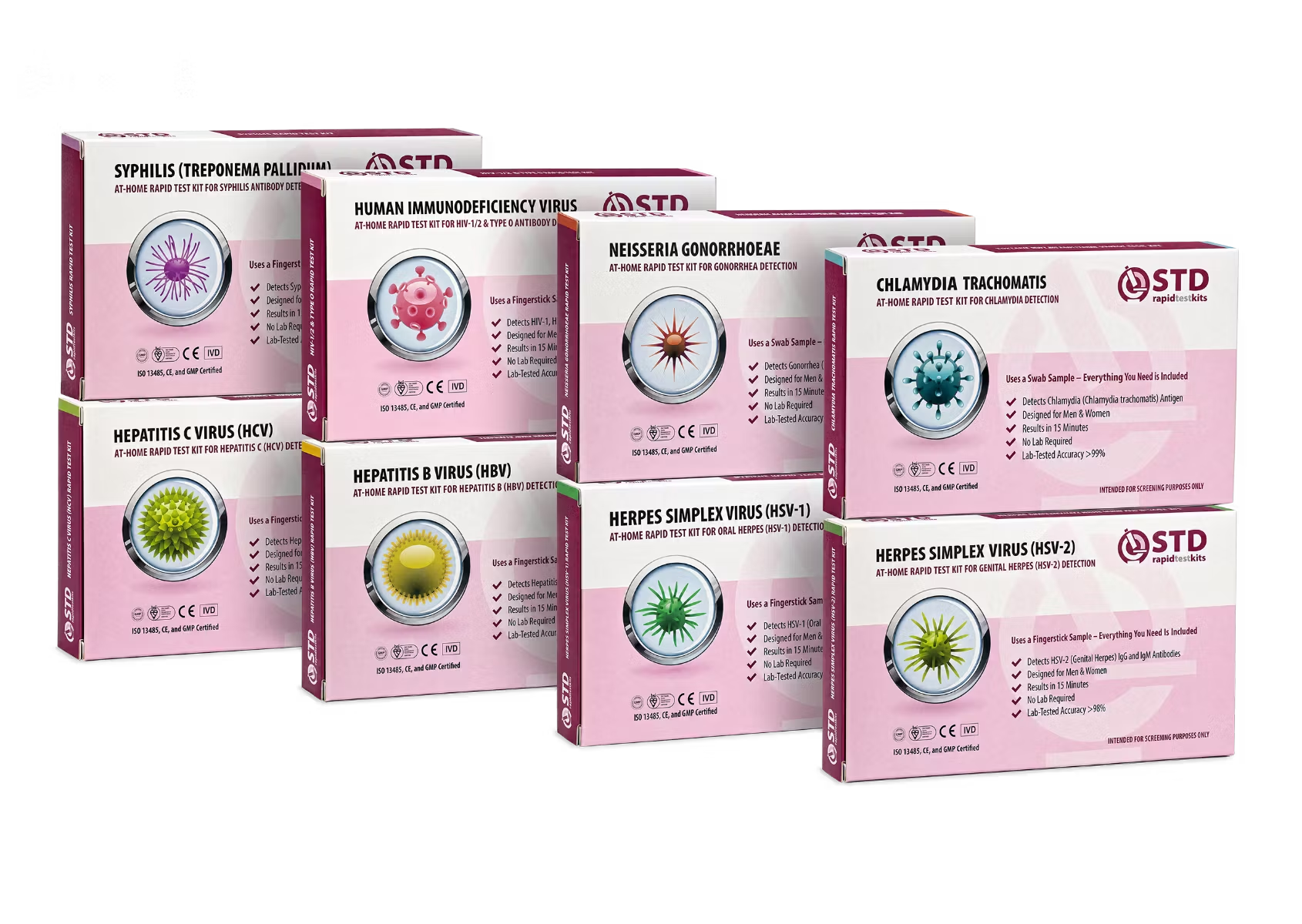
A note on which home kits work for which anatomy: the at-home swab kits we sell for trichomoniasis and HPV are validated for vaginal self-collection only. We do not currently offer a male-compatible at-home trich or HPV kit. If your partner is male and trichomoniasis or HPV is in question for him specifically, a clinic visit is the right path. The rest of our home-test catalog (chlamydia, gonorrhea, HIV, syphilis, hepatitis B, hepatitis C, HSV-1, HSV-2) is validated for any-gender use.
| Tool | What it actually does |
|---|---|
| Consistent condom use | Reduces transmission risk for fluid-borne STIs (HIV, gonorrhea, chlamydia, syphilis) by roughly 80% to 90% when used correctly every time. Partial coverage for skin-to-skin STIs in the areas covered. |
| Daily antiviral suppression | For an HSV-2 positive partner, valacyclovir or acyclovir taken daily reduces transmission to a susceptible partner. Most effective in combination with condoms. |
| HPV vaccination | The Gardasil-9 series prevents infection with the most common high-risk and wart-causing HPV types. Most effective before exposure but offers partial benefit afterward, through age 45 with shared clinical decision-making. |
| HIV PrEP | For the HIV-negative partner of someone with HIV (or in any high-exposure situation), once-daily oral PrEP reduces HIV acquisition risk by approximately 99% when taken consistently. |
| Routine couples retesting | Every 3 to 6 months for sexually active partners, more often when one or both have other partners. Catches asymptomatic infections before they spread further. |
Can the relationship survive this? Yes, if you both want it to
Mixed-status relationships are more common than the conversation around STIs would suggest. Many long-term couples have one partner with HSV-2, HPV, or HIV and one without, and have managed transmission risk for years using the tools above. A diagnosis does not change who your partner is. It changes the maintenance their health needs, and sometimes the maintenance yours does too.
If the relationship was strong before the diagnosis, it can be strong after, particularly if both partners commit to the same testing schedule and the same prevention plan. If the diagnosis is the latest in a longer pattern of secrecy or missed conversations, that is also worth naming. A positive test result can clarify what was already there.
Loving someone with an STI, staying intimate with them, and building a life together: all of that is realistic for many couples. Stepping away is also a valid choice when your boundaries call for it. Either way, knowing your status and your partner's gives you a real choice rather than a guess.
Frequently asked questions
- If my partner tested positive, how long should I wait before retesting?
- Two weeks covers chlamydia and gonorrhea on a NAAT. HIV antigen/antibody testing needs 6 weeks at minimum, with a follow-up at 3 months for full confidence. Syphilis treponemal testing usually clears at 6 weeks but the conservative retest is at 12 weeks. HSV-2 antibody tests are slowest, plan for a blood draw at around 12 to 16 weeks. If your last possible exposure was within the past few days, plan to retest at the long end of each range rather than the early end.
- Does a positive test in my partner mean they cheated?
- Not necessarily. Many STIs sit asymptomatic for months or years. Chlamydia in women is asymptomatic in roughly 70% of cases per CDC estimates, HSV-2 in most newly infected adults, and HPV in nearly all carriers. A positive test today can reflect an infection acquired long before the current relationship started.
- Can I have sex with someone who has herpes without getting it?
- Yes. In well-managed discordant heterosexual couples, the per-year transmission risk can drop under 2%. "Well-managed" here means three things at once: the HSV-2 positive partner takes daily antiviral suppression (valacyclovir or acyclovir), both partners use condoms consistently, and they avoid sex during prodromal symptoms and visible outbreaks. Without that combination, the risk runs higher. With it, many couples have had safe, satisfying sex lives for decades.
- My partner has HIV. Am I going to get it?
- Not if they are on effective antiretroviral therapy with a sustained undetectable viral load. The CDC's U=U statement is unambiguous: undetectable equals untransmittable for sexual transmission. Adding daily oral PrEP for the negative partner reduces residual risk by approximately 99%.
- Why was my rapid at-home test negative when my partner's clinic test was positive?
- Rapid lateral-flow tests have lower analytical sensitivity than lab NAATs and may miss low-level infections, especially asymptomatic ones. Confirmation with a clinic NAAT or a mail-in lab kit is generally recommended after a partner's positive diagnosis, even if your initial home test was negative.
- Can I be a carrier without symptoms or detectable infection?
- Briefly during the window period, yes, you can be infected but test-negative. Outside the window, most STIs are detectable with the right test even when there are no symptoms. Many infections (chlamydia, HSV-2, HPV) are asymptomatic in most carriers, which is why routine testing rather than symptom-based testing is the public-health standard.
- We had unprotected sex multiple times. Why did I not get it?
- Per-act transmission probability is well under 100% for every common STI. Even repeated unprotected exposure does not guarantee infection. Variables include viral or bacterial load, biological vulnerability, condom-use consistency, and timing. "I got lucky" is real but it is not a reliable strategy for the future. Test, retest, and use prevention going forward.
- Should I tell other recent partners that mine tested positive?
- Generally yes, particularly if there is any chance you are also infected. Anonymous partner-notification services exist in most U.S. states and through Planned Parenthood. The conversation can be brief: someone I was with tested positive for X, you may want to retest. It is harm reduction, not a confession.
Clarity is one test away
If your partner has tested positive and you have tested negative, the path forward is rarely as dramatic as the first hour suggests. Wait out the relevant window, retest with the right test type, use barriers in the meantime, and keep talking. Most discordant couples in this situation either find that the negative partner is genuinely uninfected, or that a slightly later test catches what an early test missed. Either outcome is workable.
If you would rather not wait for a clinic appointment, an at-home combination panel covers most of what you would test for after a partner's positive diagnosis, with discreet shipping and 15-minute results. Confirm anything positive with a clinic NAAT and bring your partner's diagnosis to your provider so any indicated treatment, suppression, or PrEP discussion can start at the same visit.
Bacterial (chlamydia, gonorrhea, trichomoniasis): retest at 2 weeks from your last possible exposure.
Syphilis: retest at 6 weeks, with a follow-up at 12 weeks if the first is negative.
HIV: plan two blood draws, one at 6 weeks and one at 3 months.
HSV-2: plan two blood draws, one at the early end of the window and one at 12 to 16 weeks.
- U.S. Centers for Disease Control and Prevention. Getting tested for sexually transmitted infections: testing types, retesting protocols, and partner-notification guidance.
- U.S. Centers for Disease Control and Prevention. STI Treatment Guidelines: screening recommendations and retesting after treatment for chlamydia, gonorrhea, syphilis, and HIV.
- U.S. Centers for Disease Control and Prevention. HIV testing: window periods for NAAT, antigen/antibody combination tests, and antibody-only tests, plus recommended retesting intervals.
- U.S. Centers for Disease Control and Prevention. Testing for genital herpes (HSV-1, HSV-2): type-specific antibody tests, viral PCR, and limitations of antibody-only screening (including the time required for seroconversion).
- World Health Organization. Sexually transmitted infections fact sheet: prevalence, asymptomatic carriage, and prevention recommendations.
- Mayo Clinic. STD testing: comparison of test types (NAAT, PCR, antigen, antibody, rapid lateral-flow) and recommendations for which test to choose given exposure history.
- U.S. Centers for Disease Control and Prevention. Treating HIV: antiretroviral therapy, viral suppression, and the U=U (Undetectable = Untransmittable) statement that an undetectable viral load means HIV is not sexually transmissible.
