
Published: November 2025 | Last updated: May 2026 | Editorial review and quality control: Martina N.
You woke up with gaps. Maybe your clothes were arranged differently than you remember leaving them. Maybe a friend dropped a comment that made your stomach drop. Maybe nothing concrete happened at all, just a sinking sense that you don't have the full picture of last night. If your brain stopped saving the file partway through, your body still went through whatever it went through, and that's the part you can act on now.
This guide is for the practical question underneath the panic: do you need an STI test, when should you take one, and what kind makes sense for what you can and can't remember? You don't need a complete memory to make a smart testing decision. You just need a calm walkthrough of what blackouts actually do, what counts as an exposure, and what the testing timelines really look like according to current CDC guidance.
Key Takeaways
- The safest plan is a combo at-home test at 2 to 3 weeks, a follow-up HIV and syphilis check at about 6 weeks, and if herpes is a concern, a final HSV antibody test at 6 to 12 weeks post-exposure.
- You don't need a clear memory or visible symptoms to deserve testing. The CDC notes that most STIs cause no symptoms, so testing is the only reliable way to know your current status.
Why a Memory Gap Is a Real Testing Question
Blacking out is not the same as passing out. A blackout is your hippocampus, the part of the brain that writes new memories, going offline while the rest of you keeps functioning. The National Institute on Alcohol Abuse and Alcoholism describes blackouts as periods where someone may walk, talk, drive, kiss, or have sex while forming no lasting memory of any of it. From the outside, you can look fine. From the inside, the recording is missing.
That matters here because STIs do not require your memory to spread. Chlamydia, gonorrhea, syphilis, herpes, HIV, and trichomoniasis can all transmit through oral, vaginal, or anal contact. Some, like herpes and HPV, can transmit through skin-to-skin contact in the genital area without penetration. So if you woke up with unexplained soreness, a condom wrapper you don't remember, or just a strong gut sense that something happened, you have enough reason to consider testing. A blackout creates a blind spot in your timeline. The good news is that lab testing fills that blind spot in a way memory never will.
- Blackout: memory formation stops while you remain awake and active. You can talk, walk, kiss, or have sex with no lasting recall. The action still happened; the recording was never written.
- Passing out: loss of consciousness. You stop moving and responding to your environment. Different mechanism, and a clearer outward signal that something is wrong.
What Counts as an Exposure (Even If You're Not Sure)?
One of the most common questions after a foggy night is whether what may have happened even counts. People often assume STIs require unprotected penetrative sex, and that anything short of that is fine. That's not how transmission actually works. Below is how the most common scenarios map onto risk, drawing on the CDC's screening guidance for sexually active adults.
| Scenario | Potential Risk Level | What's Reasonable to Test For |
|---|---|---|
| Clothes partially off, unfamiliar genital soreness on waking | High | Combo panel covering chlamydia, gonorrhea, trichomoniasis, syphilis, HIV |
| Woke up undressed, unsure if penetrative sex occurred | High | Full combo panel plus HSV-2 antibody at the right window |
| Recall oral contact only, no other memory | Moderate | Oral exposure can transmit gonorrhea, chlamydia, syphilis, herpes; clinic swab is best for throat-site testing |
| Kissing only, no recalled genital contact | Low to moderate | Mostly oral HSV-1 risk; testing not usually urgent without symptoms |
| No memory at all; the other person says nothing happened | Variable | Test if your gut still feels uncertain; reassurance has value |
Most STIs do not cause symptoms, so the only way to know for sure if you have an STI is to get tested.
When Should You Actually Get Tested?
If your blackout was within the last 24 to 48 hours, walking into the bathroom and using a rapid test right now will not give you a useful answer. Every STI test has a window period, the gap between when an infection occurs and when a test can detect it. Test too early and you can get a false negative that feels like reassurance but isn't accurate yet.
Two practical patterns work well for someone in your spot. The first is a single test at 2 to 3 weeks after the possible exposure, which catches most bacterial infections at decent accuracy. The second is a layered approach: an early rapid test at one week for emotional triage, then a comprehensive combo test at 3 weeks, and a final HIV and syphilis check at about 6 weeks to close out the slower-window infections. The layered approach is what most clinicians recommend when the exposure is uncertain rather than known.
Disclosure: the at-home test kits linked further down this article are sold by stdrapidtestkits.com. We recommend products based on fit for the reader's concern, not commercial benefit.
The timeline below shows the detection windows most home and lab tests follow, based on CDC guidance:
| Infection | Earliest Reliable Test | Best Accuracy Window |
|---|---|---|
| Chlamydia | About 7 days | 14 to 21 days |
| Gonorrhea | About 7 days | 14+ days |
| Trichomoniasis | 5 to 7 days | About 14 days |
| HIV (4th-generation antigen/antibody) | About 18 days | 28 to 45 days |
| Syphilis | About 21 days | 6 weeks or more |
| Herpes (HSV antibody test) | About 21 days | 6 to 12 weeks |
Choosing Between At-Home Rapid, Mail-In Lab, and Clinic
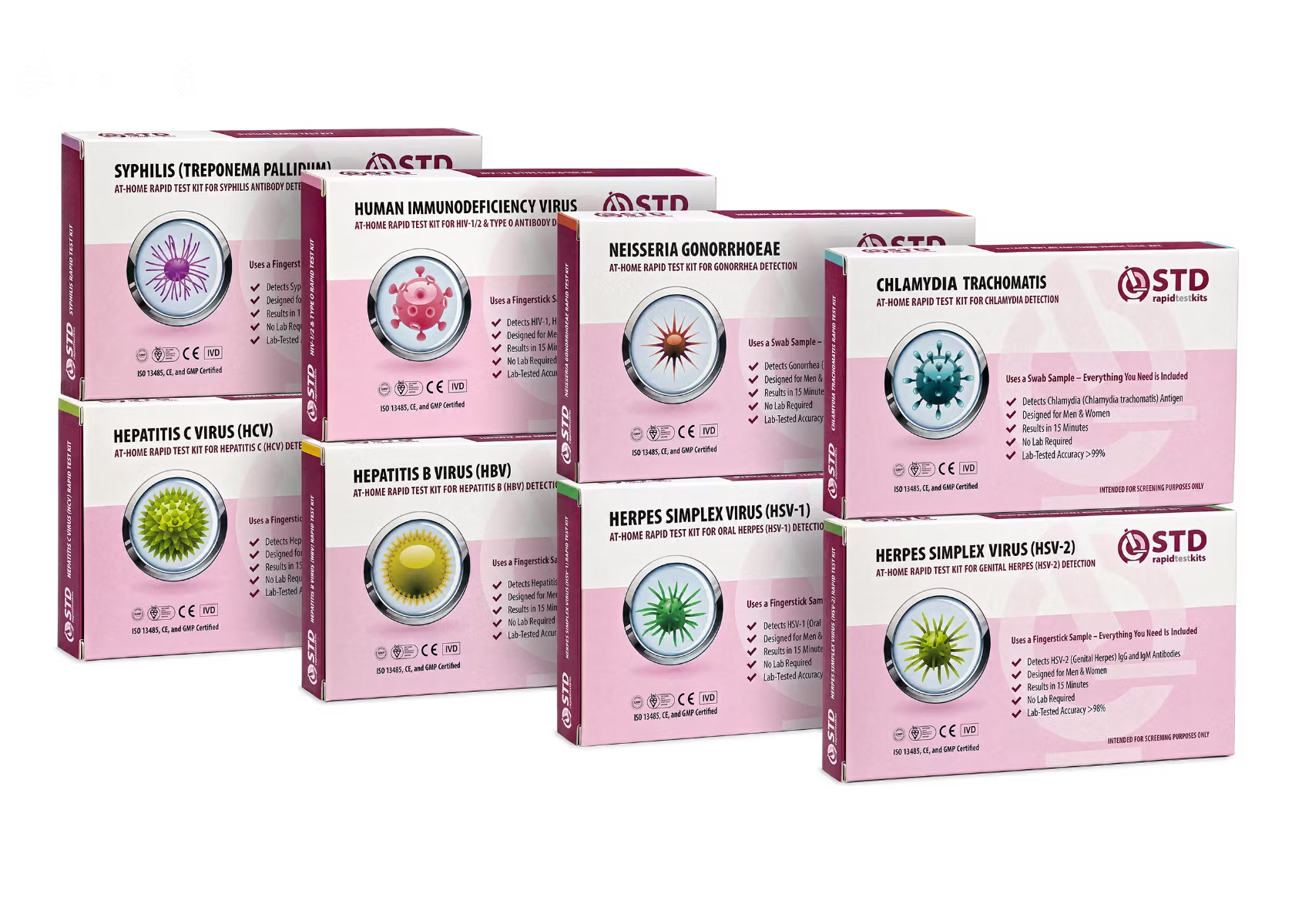
If walking into a clinic feels unbearable right now, that is information, not weakness. Sexual-health testing has three real paths and each one fits a different set of needs. The right one depends on how panicked you are, how much privacy you need, and whether the situation may have involved violence or non-consent.
For most people in this situation, an at-home rapid test for early reassurance plus a follow-up combo kit at the right window covers both the panic and the accuracy. If your situation might involve assault, the clinic path matters more, because PEP for HIV is only useful within 72 hours and many sexual assault nurse examiners (SANEs) can document evidence without you having to file a report. RAINN has a 24/7 hotline if you want to talk through options confidentially before deciding anything.
The comparison below breaks down each path:
| Testing Path | Strengths | Limits | When It Fits Best |
|---|---|---|---|
| At-home rapid lateral-flow test | Results in about 15 minutes, total privacy, no shipping wait | Lateral-flow chemistry; positives should be confirmed by a lab. Less sensitive than NAAT for early infections | First-week emotional triage; ongoing screening between exposures |
| Mail-in lab test kit | High lab-grade accuracy, broad panels, still private packaging | Results take 2 to 5 business days; you mail the sample | Confirmation testing or a comprehensive panel at the right window |
| Clinic or sexual-health center | Full menu including HIV RNA, throat and rectal swabs, and PEP if within 72 hours | Less private; possible wait times; some areas have judgmental staff | Possible assault, severe symptoms, or need for emergency prevention |
Why a Retest Often Matters
A negative test at day 6 is not the same as a clean bill of health. Some infections take weeks to show up in the blood or in a swab sample. The CDC's testing guidance recommends repeat testing in several scenarios: after a known exposure, after a positive partner notification, and any time the first test was taken before the relevant window period closed.
Here is a clean retest schedule that matches CDC window-period data:
- Chlamydia and gonorrhea: retest at 14 to 21 days if your first test was earlier than that.
- HIV (4th-generation antigen/antibody test): retest at 28 to 45 days for the strongest accuracy. If your exposure was high-risk, ask a clinician about HIV RNA testing or PEP within 72 hours.
- Syphilis: retest at about 6 weeks even if you have no symptoms, since the antibody response can take that long to develop.
- Herpes (HSV antibody): retest at 6 to 12 weeks if your first test was within 3 weeks of the possible exposure.
Talking to a Partner Before You Have All the Answers
If you are in a monogamous relationship, you may be wrestling with whether to mention this at all when you don't know what actually happened. There isn't a universal right answer, but two principles tend to hold up. First, if your partner could meaningfully benefit from action, like PEP within 72 hours or a retest at the right window, the clock matters more than the conversation feeling perfect. Second, if you want to wait until you have a clearer picture before opening a hard conversation, that is a reasonable choice as long as you actually take the steps in the meantime.
If you are looking for words, the script below has worked for a lot of people in your spot.
"Something happened while I was out that I can't fully remember. I'm getting tested as a precaution. I'd feel better if we both got tested at the right window so neither of us has to wonder."
What If a Test Comes Back Positive?
A positive result is not a verdict on your character. STIs are common, often passed without anyone knowing they had one, and most are either curable or very manageable. Here is what typically happens by category, drawn from the CDC's treatment summaries:
- Chlamydia, gonorrhea, or trichomoniasis: standard antibiotics, usually a short course. Many telehealth platforms can prescribe and ship treatment without an in-person visit.
- Syphilis: penicillin remains the first-line cure when caught early. Confirmatory bloodwork is needed before treatment.
- Herpes (HSV-1 or HSV-2): not curable but very manageable with antivirals. Many people have few or no outbreaks and live normal sex lives with informed partners.
- HIV: requires confirmatory testing and a clinician. Modern antiretroviral therapy keeps viral load undetectable in most people on consistent treatment, which means untransmittable to partners (U=U).
If You're Not Sure It Was Consensual
Some readers come to a guide like this with a quieter, sharper question underneath the testing one: was that even consent? You do not need bruises, a torn shirt, or a clear memory of saying no for the answer to be no. Sober, ongoing consent is the standard. If you were too impaired to give it, the law in most jurisdictions agrees with your gut.
Two paths matter regardless of what you decide to label the night. First, if it has been less than 72 hours, an emergency room or sexual-health clinic can offer post-exposure prophylaxis (PEP) for HIV, which is most effective the sooner it starts. The CDC's HIV resource center covers PEP eligibility and where to access it. Second, a sexual assault nurse examiner can document evidence even if you are not ready to file a police report, preserving the option without forcing the decision now. RAINN's hotline at 1-800-656-HOPE is confidential and does not require you to commit to any next step.
Frequently Asked Questions
- Can I get an STI if I don't remember having sex?
- Yes. Memory and exposure are separate. If you were drunk enough to lose memory, your body could still have been involved in oral, vaginal, or anal contact. Skin-to-skin contact alone can transmit herpes and HPV. The right move when memory is gone is to think about what's reasonable based on the circumstances, not what you can recall.
- I have no symptoms. Do I really need to test?
- Most STIs cause no symptoms early on, and several (chlamydia, gonorrhea, herpes between outbreaks) can stay quiet for months or years. Waiting for a sign means you might miss the early window when treatment is simplest. Testing is how you find out, not how you confirm what your body is already telling you.
- How soon after a blackout can I test?
- You can test as early as 5 to 7 days for chlamydia, gonorrhea, and trichomoniasis, but accuracy peaks at 2 to 3 weeks. HIV needs about 18 to 45 days for a 4th-generation antigen/antibody test, syphilis about 6 weeks, and herpes antibodies up to 12 weeks. A reasonable plan is one early test for emotional triage and a follow-up at the proper window.
- If my early test is negative, am I in the clear?
- Not necessarily. An early negative is informative but not conclusive. If you tested under 7 days post-exposure for anything except very early chlamydia or gonorrhea, you owe yourself a retest at the proper window. False reassurance from a too-early test is one of the most common reasons people miss an early infection.
- Should I test for everything, or just one or two infections?
- When you don't know what happened, a broader panel is usually the better choice. A combo kit covers the common bacterial and viral infections in one visit. Testing for one infection at a time can leave gaps that a single combo panel would have closed for the same effort.
- Will anyone know I ordered an at-home test?
- Home test kits ship in plain, unbranded packaging with no STI references on the outside. Billing on a credit card statement typically shows a generic merchant name. You open the kit privately, test privately, and the result is yours alone unless you choose to share it.
- Does alcohol or any drug I took affect the test result?
- No. Alcohol and recreational drugs do not affect the chemistry of an STI test, whether it's a swab, lateral-flow rapid kit, or lab assay. They affected the situation that brought you here, but they don't affect whether the test detects an infection.
- What if I never figure out what actually happened?
- You don't need a complete narrative to take care of yourself. Test at the right windows, treat anything that turns up, and let yourself put the night behind you once your testing schedule is done. Healing doesn't require a full memory; it requires action you can be proud of, which is what you're already doing by reading this.
How we sourced this article: We combined current guidance from the U.S. Centers for Disease Control and Prevention, the National Institute on Alcohol Abuse and Alcoholism, and the Rape, Abuse and Incest National Network with practical reporting on at-home testing windows. Every external link in this article points to a primary public-health or non-profit source and was verified to support the specific claim it's used for. We summarize public-health guidance into plain English; we do not provide clinical advice. For symptoms or situations that concern you, see a licensed clinician.
- U.S. Centers for Disease Control and Prevention. Getting Tested for STIs: who should test, when, and which tests cover which infections. Used for screening guidance and retest timing.
- U.S. Centers for Disease Control and Prevention. HIV resource center. Used for PEP eligibility and the 72-hour window for post-exposure prophylaxis.
- U.S. Centers for Disease Control and Prevention. Genital Herpes resource. Used for skin-to-skin transmission and asymptomatic shedding claims.
- National Institute on Alcohol Abuse and Alcoholism. Interrupted Memories: Alcohol-Induced Blackouts. Explains how blackouts affect memory formation while motor function continues.
- Rape, Abuse and Incest National Network (RAINN). Confidential 24/7 hotline and information on sexual assault response, including SANE exams and PEP timing.
