Published: November 2025 | Last updated: May 2026 | Editorial review and quality control: Martina N.
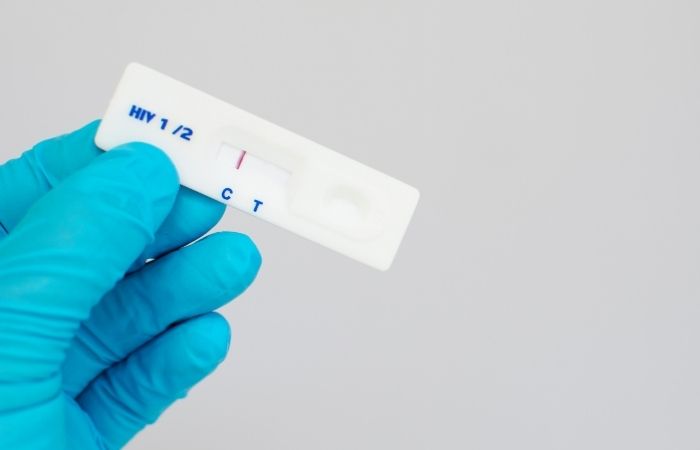
You took the test. There is a clean control line, and in the test region, something that may or may not be a stripe. You hold the cassette up to the light, then move it to the window, then back. A faint line on an HIV rapid test is one of the most stressful results to interpret, and it sends thousands of people every year into a spiral of late-night search queries.
This guide explains what a faint line actually represents, why it can appear, when it likely points to a real positive versus an artifact, and how to confirm a result before drawing any conclusion. The aim is calm, accurate information and a clear next step.
Key Takeaways
- A faint line on an HIV rapid test typically means HIV antibodies were detected at a low concentration. Common causes include early infection, oral-fluid sampling, a weak immune response, or a borderline reading.
- Always confirm a faint or unclear result with a fingerstick blood rapid test or a lab-based fourth-generation antigen/antibody test. Both the CDC and the WHO recommend never relying on a single rapid test for an HIV diagnosis.
How an HIV rapid test produces a line, faint or otherwise
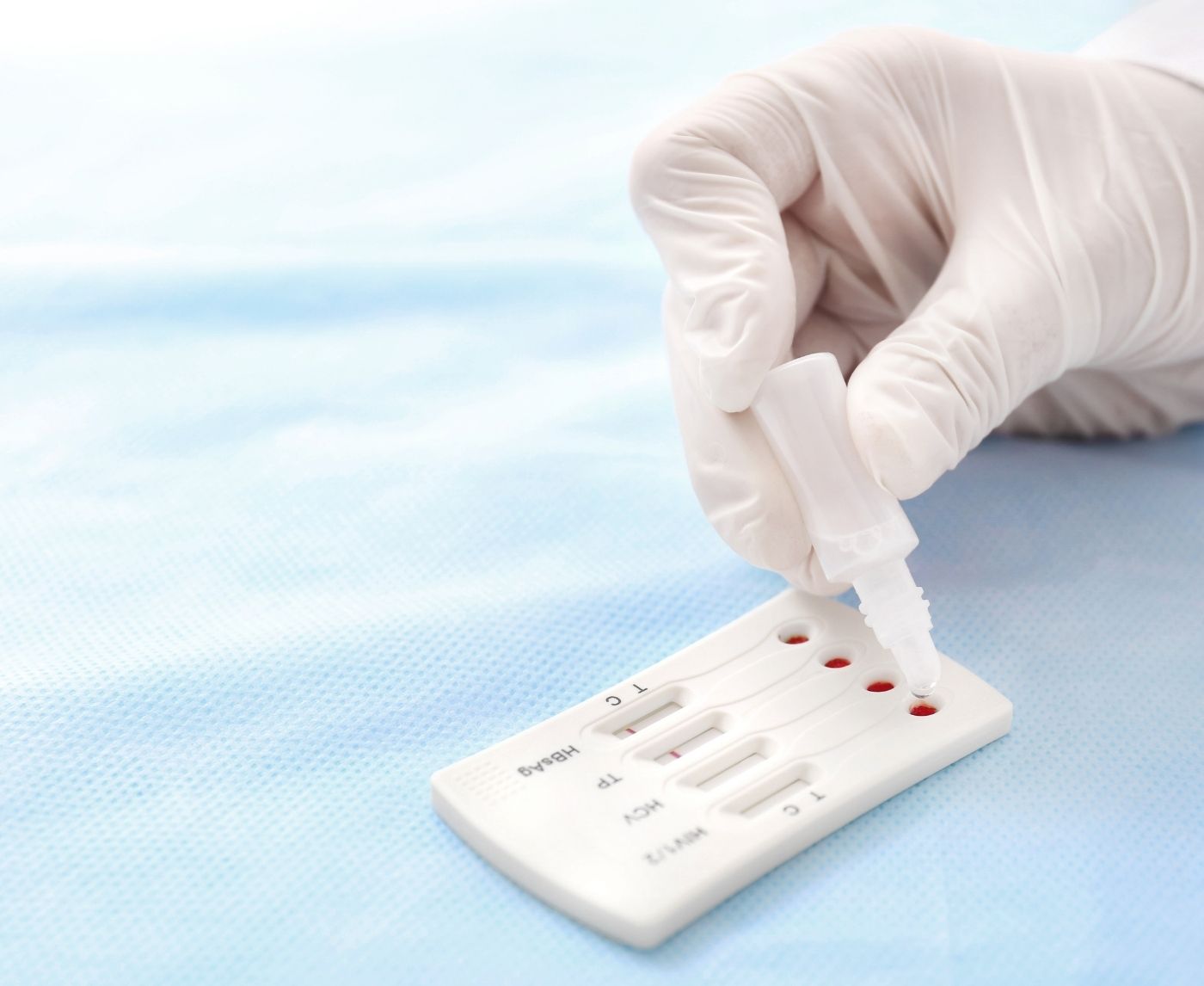
Most at-home HIV tests sold in the United States in 2026 are lateral-flow immunoassays. The chemistry sits in the same family as a pregnancy test or a COVID antigen swab. A small drop of capillary blood from a fingerstick, or a swab of oral fluid, is applied to the cassette. The fluid wicks across a strip coated with HIV antigens. If your sample contains HIV antibodies, those antibodies bind to the strip in the test region and pull along a colored marker, producing a visible line.
A faint line means antibodies were detected, but in a low concentration. Several biological and technical reasons can explain this. Early infection is the most common: antibody levels rise gradually after exposure, so in the first few weeks your body may produce just enough antibody to bind the test strip without producing a bold line. Oral-fluid samples are a second factor. The U.S. CDC's HIV testing guidance notes that oral-fluid rapid tests have lower sensitivity than blood-based versions, in part because antibody concentrations in saliva are lower than in blood.
Storage and handling matter too. Heat, humidity, expired strips, and misread timing can each reduce the apparent strength of a true positive line. People on immunosuppressive medication, and people living with co-occurring infections that suppress the immune response, often mount slower antibody responses than the average reader of these instructions would expect.
Window periods explain most ambiguous early results
The window period is the time between an HIV exposure and when a test can reliably detect infection. It is the single most important number to know when you are trying to interpret a faint or unclear result.
Per the CDC's HIV testing guidance, antibody-only rapid tests typically detect infection within 23 to 90 days after exposure. Most people will have a clear positive by six weeks, but a meaningful minority will not. Lab-based fourth-generation tests, which detect both p24 antigen and antibodies, shorten that window to roughly 18 to 45 days. Nucleic acid amplification tests (NAATs), which look for HIV RNA directly, can detect infection in 10 to 33 days.
If your faint line appeared inside the first three weeks after a possible exposure, the result is biologically premature. You may genuinely be developing antibodies (a faint line that grows bolder on retest is a strong sign of seroconversion), or you may be reading background noise from the test strip itself.
The table below summarizes the detection windows for the most common test types.
| Test type | What it detects | Earliest reliable detection | Recommended confirmation window |
|---|---|---|---|
| Oral-fluid rapid | HIV antibodies | About 3 weeks | 12 weeks |
| Fingerstick blood rapid | HIV antibodies | About 3 weeks | 8 to 12 weeks |
| Lab fourth-generation | p24 antigen plus antibodies | 18 to 45 days | 6 weeks |
| NAAT (HIV RNA) | HIV RNA viral load | 10 to 33 days | 2 to 4 weeks |
Sensitivity, specificity, and the limits of any single rapid test
Sensitivity is the probability that a test correctly identifies a person who is HIV-positive. Specificity is the probability that it correctly identifies someone who is HIV-negative. For most FDA-cleared at-home rapid tests, specificity sits well above 99 percent, while sensitivity varies more meaningfully by sample type and by how recently the person was infected.
Reported figures vary by assay; check the package insert that ships with your specific kit for the exact numbers it claims. As a general rule, oral-fluid antibody-only tests sit in the low-90s percent range for sensitivity in studies that include people who tested inside their window period, while fingerstick blood antibody tests reach roughly 99 percent sensitivity once antibodies have had time to develop. Lab-based fourth-generation tests are the standard for confirmatory work because they detect antigens earlier in infection and because professional handling minimizes the small user errors that can degrade rapid-test accuracy.
Read the table below in the context of timing. The same test that performs in the high 90s outside the window period will look much less accurate inside it, because antibodies have not yet built up to detectable levels.
| Test type | Sample | What it detects | Approx. sensitivity | Approx. specificity |
|---|---|---|---|---|
| Oral-fluid rapid | Oral swab | Antibody only | 92 to 94% | 99.9% |
| Fingerstick blood rapid | Capillary blood | Antibody only | About 99% | 99.9% |
| Lab fourth-generation | Venous blood | Antigen plus antibody | About 99.7% | About 99.6% |
| NAAT (HIV RNA) | Plasma | Viral RNA | About 99.9% | About 99.9% |
Common user errors that mimic a faint positive
Reading a result outside the timing window written in the kit's instructions is the single most common cause of a misread faint line. Most lateral-flow tests have a 15 to 20 minute window for reading the result. After that, the strip can develop evaporation lines or drying patterns that look identical to a faint positive but mean nothing diagnostically.
A few other recurring patterns:
- Overdoing the sample. Too much oral fluid or too much blood can flood the strip and produce uneven coloration in the test region. Follow the volume guidance in the kit precisely.
- Using a test strip that was stored badly. A kit that sat in a hot mailbox for a week may produce ghost lines on either side of the result region.
- Reading the cassette in poor light. A lamp held at an angle, or daylight through frosted glass, can highlight or hide a real line. Use bright, even lighting.
- Using an expired test. Lateral-flow chemistry degrades over time, especially after the printed expiration date.
- Misidentifying which line is the test line. The control line is always present on a working strip; the test line is the one that indicates antibody binding. Re-read the kit's diagram before interpreting.
Run a fresh kit indoors under bright even lighting, set a phone timer for the kit's stated read window, and read the cassette flat against a white surface so any real second line stands out cleanly against the strip background.
A faint line is most likely a real preliminary positive when (1) you tested at or beyond three weeks post-exposure with a fingerstick blood test, (2) you read the result inside the kit's stated time window in good lighting, and (3) the test is FDA-cleared and unexpired. Even then, the standard of care is to confirm with a second, more sensitive test. The WHO has stated that no HIV diagnosis should rest on a single rapid test alone.
What does a faint line on an HIV rapid test actually mean?
A faint line typically means HIV antibodies were detected at a low concentration; common causes are early infection, oral-fluid sampling, or a borderline reading from storage or timing issues. Confirm with a fingerstick blood rapid test or a lab-based fourth-generation antigen/antibody test before drawing any conclusion.
How and when to confirm a faint or unclear result
Confirmation has two parts: choosing the right test, and choosing the right timing.
The right test:
- A fingerstick blood rapid test is more sensitive than an oral-fluid version. If your faint line came from an oral-fluid test, repeating with a fingerstick blood version is a meaningful upgrade.
- A lab-based fourth-generation test detects both p24 antigen and antibodies. It can pick up infection earlier (about 18 to 45 days post-exposure) and produces an objective lab-generated result.
- A NAAT detects HIV RNA directly and is the earliest-detection test available, with a typical window of 10 to 33 days. NAATs are usually ordered through a clinic or telehealth provider rather than purchased at home.
The right timing:
- If the faint line appeared inside three weeks of a possible exposure, schedule a confirmatory test for the six-week mark. Use a lab-based fourth-generation test if accessible.
- If the faint line appeared at or beyond three weeks, a same-day or next-day fingerstick blood rapid test is reasonable, with a follow-up lab test for definitive confirmation.
- If the faint line appeared at or beyond twelve weeks post-exposure, treat it as a preliminary positive and schedule a clinic visit for confirmatory testing as soon as possible.
Per WHO HIV guidance, an HIV diagnosis should never rest on a single rapid test alone. Most clinics will run the confirmatory antigen/antibody test on a fingerstick or venous draw at the same visit; results are typically returned by phone or patient portal within 1 to 3 business days, depending on local lab turnaround.
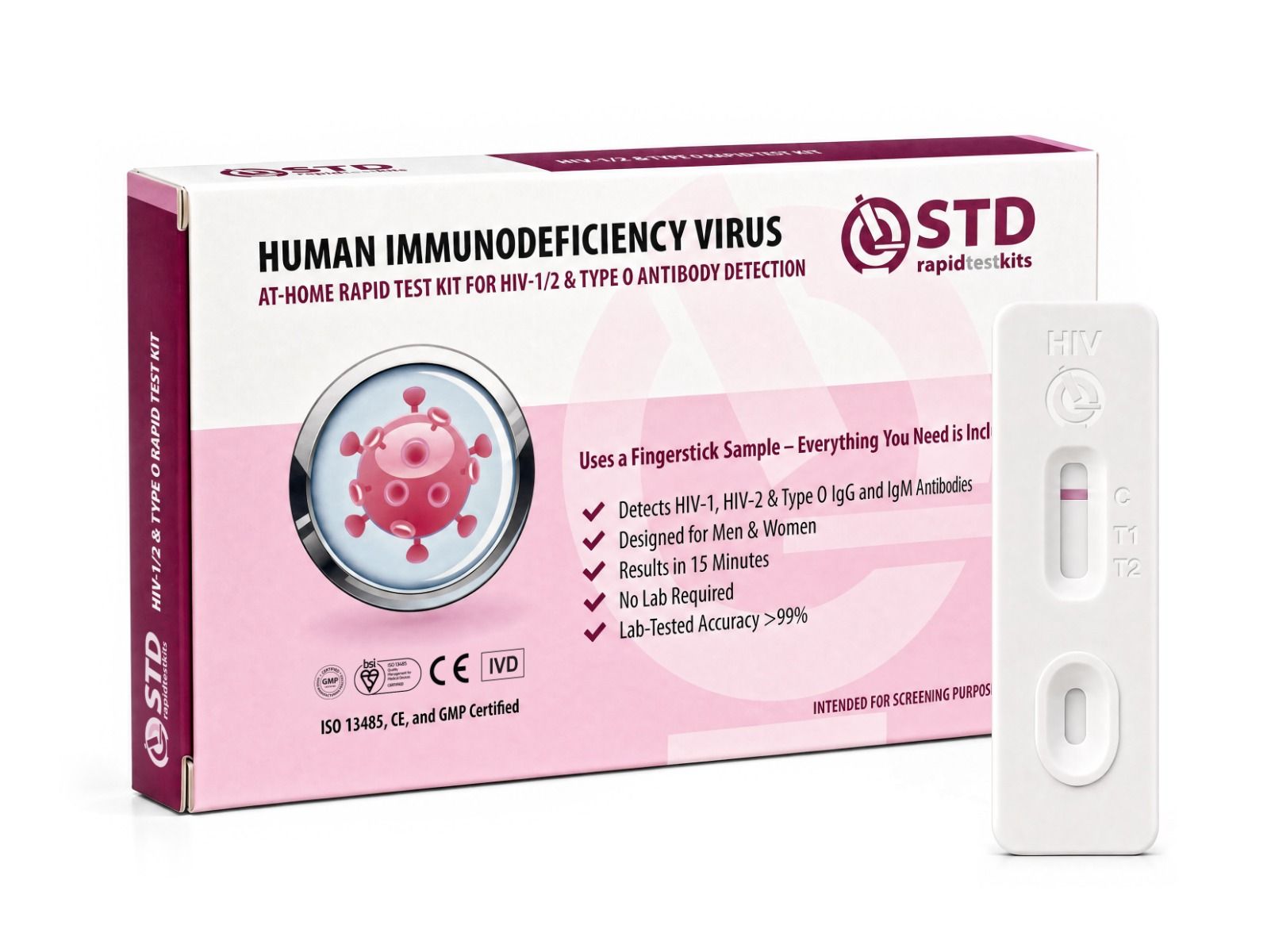
stdrapidtestkits.com sells at-home rapid STI tests, including the HIV kit referenced below. We recommend products based on fit-for-purpose for the reader's concern, not commercial benefit.
Should you tell a partner before confirming?
A faint line puts you in an in-between zone: you do not yet have a confirmed diagnosis, but the result is significant enough to warrant a conversation about safer sex while you wait for the confirmatory result. The right move depends on your circumstances, but a few points are worth thinking through.
Recent partners benefit from honesty even before confirmation. You do not have to say, "I am HIV-positive." A clearer framing is something like, "I got an unclear result on a test, I am following up to be sure, and in the meantime I want us to use barriers." Most people respond to that kind of honesty with appreciation rather than alarm, especially when it is paired with a clear plan.
For partners further in the past, the timing of disclosure depends on whether the confirmatory test comes back positive. If it does not, there is no diagnosis to disclose. If it does, your local health department can help with anonymous partner notification at no cost to you, and the CDC-funded National HIV/STD Hotline (1-800-232-4636) staffs counselors who walk callers through scripts and disclosure-timing decisions.
No single test can provide a full HIV positive diagnosis; confirmatory testing is required.
PrEP, immunosuppression, and other factors that change interpretation
Pre-exposure prophylaxis (PrEP) is highly protective against HIV when taken consistently. It does not cause HIV. But if a person on PrEP becomes infected, which happens rarely and usually only with missed doses or with an undetected infection at the point PrEP was started, the medication can delay or blunt the antibody response. Per CDC HIV guidance, people on PrEP are routinely monitored with lab-based fourth-generation antigen/antibody testing rather than antibody-only rapid kits, precisely because of this delayed-seroconversion pattern.
Other situations can also change how a faint line should be read. The callout below summarizes the most common ones. If any apply to you, mention them when you book a confirmatory test so the lab or clinic can pick the assay best suited to your circumstances; a standard fourth-generation lab test handles most of these, with NAAT added for higher-stakes cases.
- Immunosuppressive medications (chemotherapy, transplant medications, high-dose corticosteroids) can blunt antibody production. A lab-based antigen test is more reliable than antibody-only rapid kits in this scenario.
- Active treatment for another condition that suppresses the immune system can produce the same pattern.
- Pregnancy does not affect HIV test accuracy in any meaningful way, but adds urgency to confirming a result quickly because of mother-to-child transmission considerations.
- Cross-reactive antibodies from certain other infections or recent vaccinations can occasionally produce a faint reactive line on some HIV antibody tests; this is one of the reasons confirmatory testing exists.
What happens if confirmation comes back positive
Modern HIV care looks very different from the picture many people still carry. Antiretroviral therapy (ART), started early and taken consistently, brings the virus to undetectable levels in the blood. Per CDC HIV guidance on treatment as prevention, people whose viral load is undetectable on ART do not transmit HIV sexually. Life expectancy for people who start ART early and stay engaged in care is close to that of the general population.
The first 48 hours after a confirmed positive matter for two reasons. The first is medical: starting ART early reduces the size of the viral reservoir and makes ongoing treatment easier to maintain. The second is psychological: connecting with an HIV-experienced clinician, peer-support resources, or an organization like HIV.gov helps you make decisions from a more grounded place.
The roadmap below summarizes the first six months. Once viral load reaches undetectable, maintenance is typically a single daily pill and routine monitoring every three to six months; long-acting injectable regimens given every two months are now an option to discuss with your clinician at the first care visit if daily pills feel hard to keep up.
ART roadmap after a confirmed positive
- Within the first week: baseline labs (viral load, CD4 count, screening for co-infections such as hepatitis B/C and syphilis).
- Within the first month: start ART under HIV-experienced clinician guidance.
- Within 3 to 6 months: expect viral load to drop to undetectable on consistent ART.
When in doubt, get clarity
A faint line on an HIV rapid test is a prompt for a follow-up test, not a final answer. Whether your result confirms positive, comes back negative on retest, or remains ambiguous and pushes you toward a lab-based confirmation, the path forward is the same: get a definitive answer. Modern testing options, from fingerstick blood kits at home to fourth-generation lab tests at clinics, make that path shorter than it has ever been.
If you are weighing what to order next, choose the test type that closes the gap a faint line opened. That usually means a more sensitive sampling method (blood instead of oral fluid), a more sensitive technology (antigen/antibody combo or NAAT instead of antibody-only), or both. Your local clinic and the CDC's testing guidance can both help you pick.
One last consideration. If the same exposure event could plausibly have transmitted other STIs (syphilis, hepatitis B, and hepatitis C share many of the same exposure routes as HIV), a combination kit covers those alongside HIV in one round of testing rather than separate orders for each. The HIV-only kit linked above covers that question precisely. If one exposure event raised concerns about syphilis, hepatitis B, or hepatitis C alongside HIV, the multi-STI kit below handles all of them in one round of testing.
Frequently asked questions
- Does a faint line always mean I am HIV-positive?
- No. A faint line can mean early infection, an oral-fluid test running near its sensitivity floor, low antibody levels from a slow immune response, or a misread from improper storage or timing. A faint line always warrants a confirmatory test, but it is not by itself a diagnosis.
- How long should I wait before retesting?
- If you tested before three weeks post-exposure, plan to retest at six weeks with a fingerstick blood test or a lab-based fourth-generation test. If still uncertain, do one more at twelve weeks for the antibody-based gold standard.
- Could the faint line be a smudge or evaporation artifact?
- Yes. Lines that appear after the kit's stated reading window (usually 15 to 20 minutes) can be drying or evaporation patterns rather than reactive lines. Always read inside the timing window and use a fresh kit if the result was ambiguous.
- I am on PrEP. Does that affect the result?
- If you are on PrEP and see a faint line, request a fourth-generation lab test at your next clinic visit rather than relying on the home antibody result alone. PrEP can suppress seroconversion enough that even an early breakthrough infection shows below-threshold antibody levels on a rapid strip, which is why CDC PrEP guidance routes people on PrEP to lab tests for monitoring.
- I retested negative. Which result do I trust?
- Generally the later, more sensitive test. If the negative test was a fingerstick blood test or a lab-based fourth-generation test taken several weeks after the original faint result, lean on it. If both tests were the same kit taken back-to-back, consider an additional lab-based test for confidence.
- Should I tell a partner before confirming?
- For recent partners, honest framing helps. You do not have to say "I am positive," only that you got an unclear result and are following up. For more distant partners, waiting for confirmation is reasonable. Local health departments offer anonymous partner notification if a confirmed positive arrives later.
- Where can I get a confirmatory test if there is no clinic nearby?
- Telehealth services can order a fourth-generation lab test that arrives at your home as a dried-blood-spot kit, or they can connect you with a local lab for a quick draw. Many community-based HIV services also offer free rapid testing and counseling.
- How accurate are at-home HIV rapid tests overall?
- Most FDA-cleared at-home rapid tests report specificity above 99.5 percent and sensitivity in the low to mid 90s for oral fluid and around 99 percent for fingerstick blood, when used after the appropriate window period. They are reliable for screening and most negative results are accurate, but any positive or unclear result needs lab confirmation.
- U.S. Centers for Disease Control and Prevention. HIV testing landing page (overview of test types, sample types, and window periods).
- World Health Organization. HIV/AIDS fact sheet (testing, diagnosis, and treatment guidance, including the standard against single-rapid-test diagnosis).
- HIV.gov. Understanding HIV test results (federal guidance on interpreting positive, negative, and indeterminate test results).
- U.S. Centers for Disease Control and Prevention. HIV homepage (entry point for prevention guidance including PrEP, treatment as prevention/U=U, and monitoring recommendations for people on PrEP).
- U.S. National Library of Medicine, MedlinePlus. HIV/AIDS overview (federal patient-facing summary of HIV testing, treatment, and management).
