

Published: July 2025 | Last updated: April 2026 | Editorial review and quality control: Martina N.
Most teens who have chlamydia don't know it. The bacteria settle into the cervix, urethra, throat, or rectum without ringing any alarm bells. Weeks pass, sometimes months. Meanwhile the infection can quietly damage tissue that matters for fertility, comfort during sex, and long-term reproductive health.
This guide is for teens trying to figure out what's happening in their bodies, and for the parents who want to support a teen through testing. We'll cover what chlamydia actually does, why clinics miss it so often, how to test privately, and what to do if a result comes back positive. No shame, no panic, no jargon you can't decode.
What does chlamydia do to your body as a teen, even when you feel fine?
Chlamydia infects the cervix, urethra, throat, or rectum and most often causes zero symptoms; the majority of teen infections are silent at the time of diagnosis. Untreated, it can travel up the reproductive tract and trigger pelvic inflammatory disease, scar fallopian tubes, raise the risk of ectopic pregnancy, or cause epididymitis in people with penises. The good news: a 7-day course of doxycycline (or single-dose azithromycin) clears it, and confidential at-home rapid testing is available without a parent's involvement in every U.S. state.
Key Takeaways
- About two of every three reported chlamydia cases in the United States are in people aged 15 to 24, and most of those infections cause no symptoms when first diagnosed.
- Confidential STI testing is legally available to minors in every U.S. state, and at-home rapid kits ship in plain packaging with no STI labeling on the box, the return label, or the billing record.
Why Chlamydia Hits Teen Bodies Harder
Teen anatomy is biologically more susceptible to chlamydia than adult anatomy, and the gap is real. In people with vaginas, the cervix during the teen years carries more exposed columnar cells (a feature called cervical ectopy), and chlamydia bacteria attach to those cells especially well. Vaginal walls are also thinner during adolescence, so small abrasions during sex give the bacteria another way in. Per the CDC chlamydia fact sheet, chlamydia is a common STI in the country.
For teens with penises, urethral biology is similar to an adult's, but symptoms tend to be subtle. Mild burning when peeing or a slight watery discharge is easy to ignore or mistake for irritation from soap, gym shorts, or a vigorous workout. So the infection persists, gets passed to partners, and the cycle continues without anyone realizing.
Behavior and access add another layer. A lot of teens don't have a primary care doctor they trust. Many won't disclose sexual activity to a clinician because a parent is in the room or because they fear the conversation will travel home. Others convince themselves the symptom is a urinary tract infection, a yeast flare, or stress from finals, and it never gets brought up. Chlamydia thrives in that quiet.
The data backs this up. Per CDC surveillance, roughly two of every three reported chlamydia cases in the United States are in people aged 15 to 24. Yet a substantial share of eligible teens never receive their recommended annual screening, and screening rates lag further among teen boys, who are not routinely included in the screening guideline that covers sexually active people with vaginas under 25 (CDC STI screening recommendations). The population most likely to have chlamydia is the population least likely to test for it. Closing that gap starts with understanding what the infection looks like, what it doesn't look like, and how to test on your own terms.
Most people who have chlamydia have no symptoms. If you do have symptoms, they may not appear until several weeks after you have sex with an infected partner.
The Silent Symptom Problem
Chlamydia is so often called the "silent infection" because most people who carry it have no obvious signs. Per the CDC's chlamydia fact sheet, the majority of chlamydia infections in people with vaginas cause no symptoms, and roughly half of infections in people with penises are also asymptomatic. When symptoms do show up, they tend to be subtle: light spotting between periods, a vague pelvic ache, mild burning during urination, or thin discharge that's easy to write off as normal cycle variation.
Where the bacteria settle depends on the type of contact. Vaginal sex puts the cervix at risk; penile sex routes infection through the urethra; oral sex can land bacteria in the throat; receptive anal sex can leave it in the rectum. Each site has its own quiet symptom signature, and each carries its own long-term risk if left untreated. The table below maps it out.
Many teens only learn they had chlamydia when a partner tells them, when a routine screen at a college clinic flags it, or when complications push them into urgent care. By the time something feels wrong, the bacteria have often had weeks of head start to travel up the reproductive tract and trigger inflammation.
| Infection site (route) | What you might (or might not) feel | Long-term risk if untreated |
|---|---|---|
| Cervix (vaginal sex) | Often no symptoms; sometimes light spotting between periods, mild pelvic ache, or thin discharge | Pelvic inflammatory disease, scarred fallopian tubes, infertility, increased risk of ectopic pregnancy |
| Urethra (penile or vaginal sex) | Mild burning when peeing, slight cloudy or watery discharge, or nothing at all | Epididymitis (painful swelling near the testicle), urethral scarring, possible effects on sperm transport |
| Throat (oral sex) | Usually no symptoms; rarely a mild sore throat | Mostly a transmission risk to partners; severe complications are rare |
| Rectum (anal sex) | Often no symptoms; sometimes pain, discharge, bleeding, or a sense of incomplete bowel movement | Chronic inflammation (proctitis), pain, increased susceptibility to HIV during exposure |
Why Doctors Miss It: The UTI and Yeast Infection Trap
Even teens who do show symptoms often walk out of a clinic with the wrong diagnosis. Early chlamydia in people with vaginas mimics three things primary care providers see all the time: urinary tract infections (burning when peeing), bacterial vaginosis (thin discharge with an odor), and yeast infections (itching with thicker discharge). A rushed appointment sometimes lands on the loudest-sounding symptom and prescribes for it.
The trouble is that UTI antibiotics like nitrofurantoin don't treat chlamydia. Yeast creams quiet the itch but leave the underlying bacteria untouched. Metronidazole for bacterial vaginosis targets a completely different bug. So the obvious symptom fades, the prescription feels like it worked, and the chlamydia keeps climbing toward the upper reproductive tract.
Boys often get the wrong story too. Testicular discomfort and faint urethral discharge sometimes get written off as a sports injury, jock itch, or a soap reaction. The provider doesn't ask about partners, and the teen doesn't volunteer. By the time the infection becomes obvious, it's been spreading for months, sometimes alongside gonorrhea, which frequently travels with chlamydia as a co-infection (per CDC treatment guidelines, dual chlamydia-gonorrhea testing is recommended for that reason).
Here's the symptom overlap side by side, so a teen (or a parent) heading into an appointment can name what's happening and ask for the right test directly. The single sentence that changes the visit is: "Can you also test me for chlamydia and gonorrhea?"
| Condition | Common symptoms | Test that confirms it | Treatment that actually works |
|---|---|---|---|
| Chlamydia | Burning when peeing, discharge, pain during sex, often nothing at all | NAAT swab or urine test | Doxycycline (7 days) or azithromycin (single dose) |
| Urinary tract infection | Burning, urgency, cloudy urine, no discharge | Urine dipstick plus culture | Nitrofurantoin or trimethoprim-sulfa |
| Bacterial vaginosis | Thin gray discharge with a fishy odor | Vaginal swab plus microscopy | Metronidazole or clindamycin |
| Yeast infection | Thick white discharge, intense itching | Visual exam, sometimes a culture | Antifungal cream or oral fluconazole |
What Untreated Chlamydia Does to Your Future
The reason teens treat chlamydia seriously isn't about today. It's about what untreated chlamydia can do to a body that hasn't finished growing. Here's the cascade.
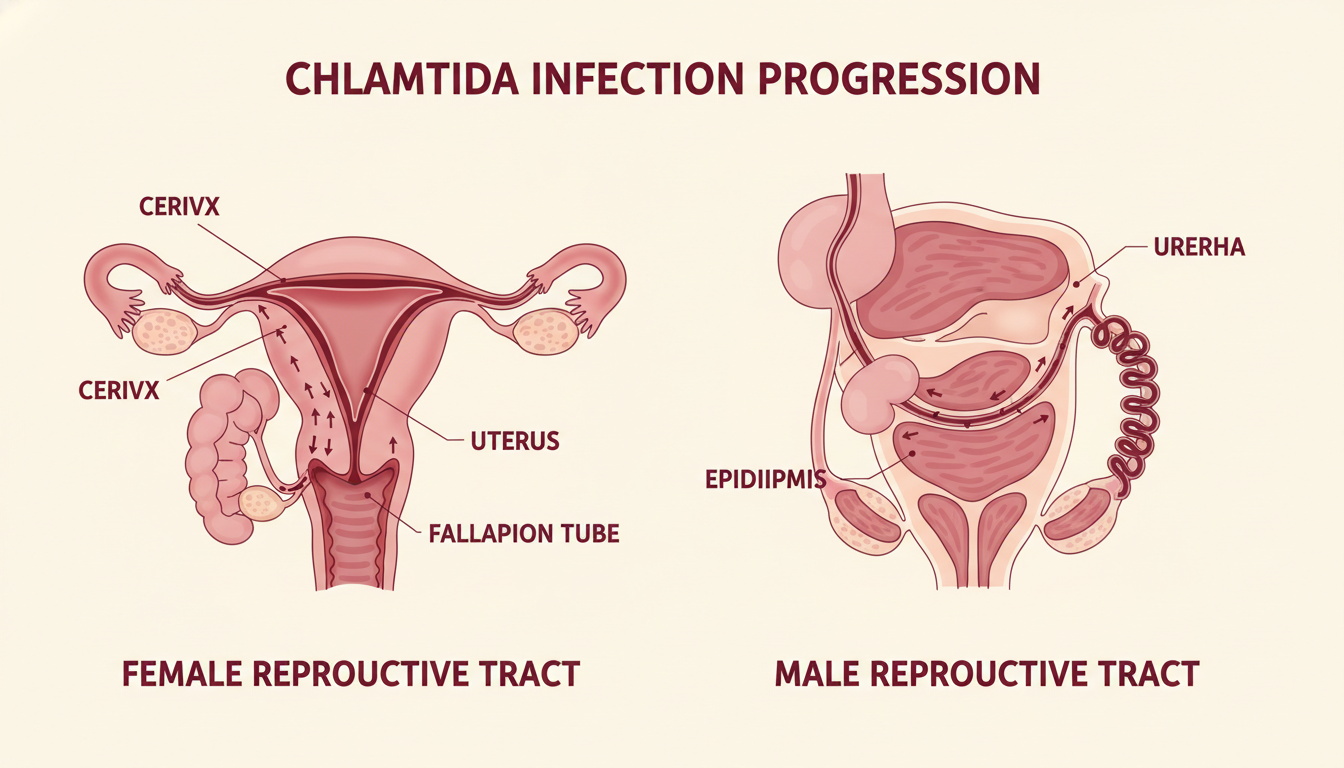
Pelvic inflammatory disease (PID). When the infection climbs from the cervix into the uterus, fallopian tubes, and ovaries, it triggers inflammation that scars tissue. CDC data show that PID can affect fertility in a meaningful share of cases and raises the risk of ectopic pregnancy, where a fertilized egg implants in a damaged tube instead of the uterus. PID can be silent too. Some people reach a fertility clinic years later and learn that an undiagnosed teenage chlamydia infection scarred their tubes.
Epididymitis. In people with penises, untreated chlamydia can travel from the urethra up to the epididymis, the coiled tube that stores and carries sperm. The result is painful swelling, sometimes mistaken for a sports injury or testicular torsion. Severe or recurrent inflammation can affect sperm transport.
Reactive arthritis. A small fraction of chlamydia infections trigger an immune-mediated joint inflammation called reactive arthritis, with painful swelling in the knees, ankles, or feet weeks after the original infection. It's a complication documented in clinical literature, though far less common than PID or epididymitis.
Increased HIV vulnerability. Active chlamydia infection causes inflammation in the genital or rectal lining, which makes HIV transmission easier if exposed. The two infections move together more often than people realize.
Pregnancy and newborn risks. If a teen with untreated chlamydia gets pregnant, the bacteria can transmit during delivery and cause neonatal conjunctivitis or pneumonia in the baby. This is one of the reasons routine chlamydia screening is part of standard prenatal care.
The whole point of the cascade is that it's preventable. A single course of antibiotics, taken correctly and finished completely, clears the infection in nearly every case. The damage list above only shows up when chlamydia stays untreated for months or years. The diagram below shows the regions where the bacteria establish and travel.
How Teens Can Test Without Anyone Finding Out
Confidentiality is one of the biggest reasons teens delay testing, and it's also one of the most misunderstood pieces of the picture. In every U.S. state, minors have at least some legal right to consent to STI testing and treatment without a parent's involvement, and most states extend the right broadly to anyone aged 12 or 13 and up. State-by-state details and clinical guidance for adolescent STI care are in the CDC adolescent STI screening and treatment guidance. Public health clinics, Planned Parenthood, school-based health centers, and university student health services all offer confidential testing.
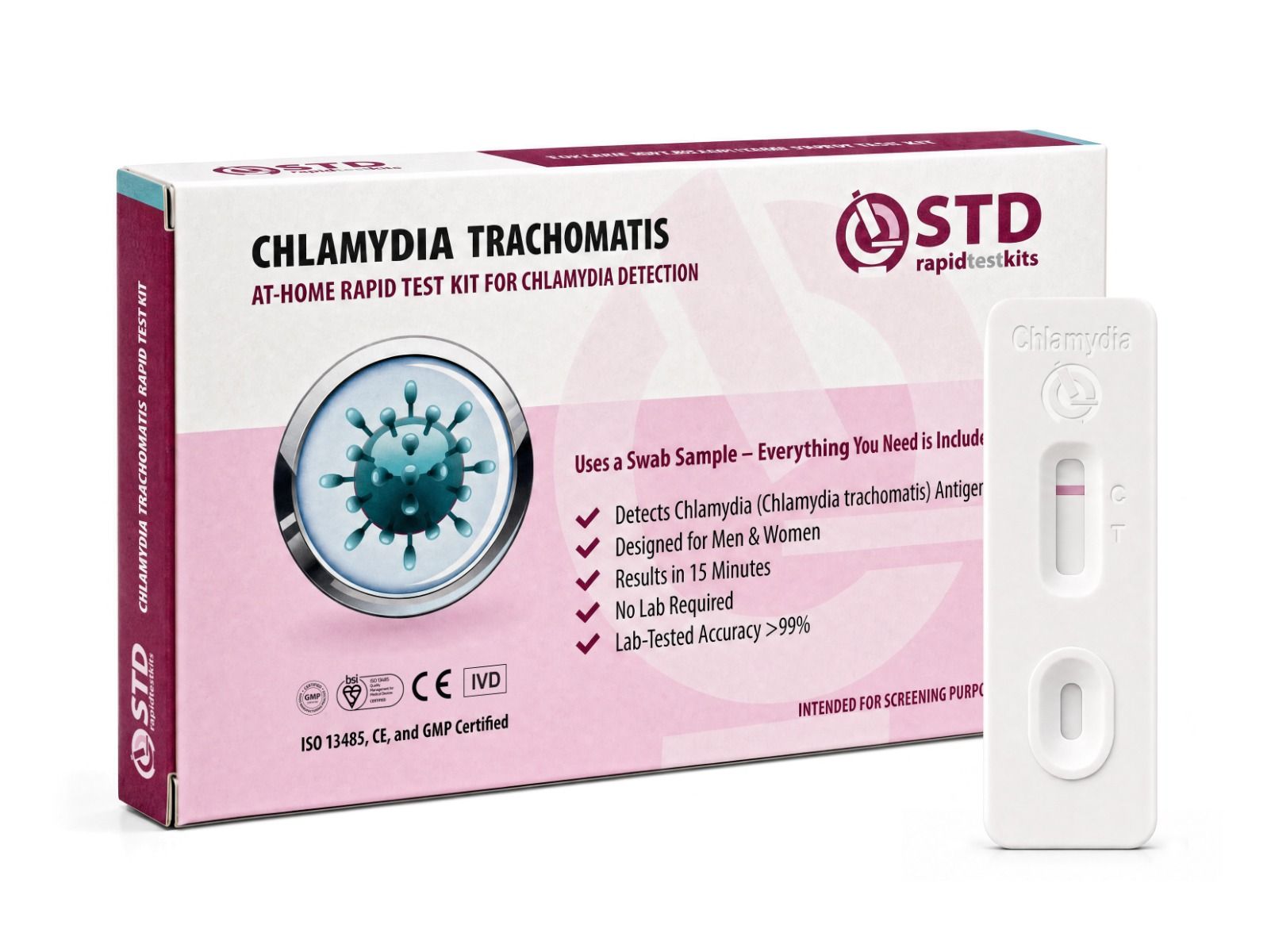
The other route is at-home testing. Rapid lateral-flow chlamydia kits use a self-collected swab and give a result in about 15 minutes. Mail-in NAAT (nucleic acid amplification test) kits use a similar swab sample and send it to a certified lab, with results back in a few days. Both options ship in plain packaging with no STI wording on the box, the return label, or the credit-card statement, which solves the "what if my mom sees the box" problem most teens worry about.
Lab-based NAAT testing is the gold standard for analytical sensitivity, and that's true whether the sample comes from a clinic visit or a mail-in kit. At-home rapid lateral-flow tests use a different chemistry: faster and more private, but slightly less sensitive than a lab NAAT. A positive result on a rapid test is worth confirming with a clinician or a follow-up lab test if access allows. A negative rapid test more than two weeks after exposure is reassuring but not absolute, especially if symptoms persist.
For a teen who isn't ready to walk into a clinic, the at-home kit is often the difference between testing and not testing at all. That tradeoff (a slightly less sensitive screen that actually gets done) usually wins over a perfect lab test that never happens.
Disclosure: this article is published by stdrapidtestkits.com, which sells the at-home rapid kits linked below.
When to Test, and What "Window Period" Means
Test too early and a chlamydia kit can show a false negative, even when the bacteria are present. The detection window for chlamydia is roughly 7 to 14 days after exposure. Inside that window, bacteria levels in the sample may be too low for the test (rapid or NAAT) to pick up reliably.
If you're 2 or 3 days post-exposure and panicking, testing now for peace of mind is fine, but plan to retest at the two-week mark before trusting a negative. If you're symptomatic earlier than that, get tested sooner anyway and follow up regardless of the result.
Two other timing rules matter. After a positive test and treatment, the CDC recommends a follow-up test about three months later because reinfection from an untreated partner is common. And sexually active people under 25 are recommended to screen annually for chlamydia even with no symptoms; if you have a new partner or multiple partners, every three to six months is a smarter cadence based on general sexual-health guidance for higher-risk situations.
After a possible exposure: wait 7 to 14 days before testing for the most reliable result. If symptomatic, test sooner and retest at two weeks.
After a positive test and treatment: retest at 3 months to catch reinfection.
Routine cadence if sexually active and under 25: at least once a year, every 3 to 6 months with new or multiple partners.
What Happens After a Positive Test
A positive chlamydia result doesn't define who you are. It tells you about a treatable bacterial infection, and the steps from here are short and clear.
Get the prescription. Standard treatment per the CDC chlamydia treatment guidelines is a 7-day course of oral doxycycline (100 mg twice daily). For people with allergies or pregnancy considerations, single-dose azithromycin is an alternative. Telehealth services can prescribe based on a positive at-home test result; in-person clinics can prescribe same-day. Finish the full course even if symptoms fade after day two.
Wait before having sex again. The standard advice is no sex (oral, vaginal, anal) for 7 days after starting treatment, and ideally until any partner from your recent timeline has also tested and finished treatment. Otherwise the cycle restarts.
Tell your partners. This part feels enormous and isn't. A short, calm message ("I tested positive for chlamydia. I'm getting treated. You should test too.") is enough. You don't owe anyone a backstory. Public health departments in most states offer anonymous partner notification services if telling someone directly feels unsafe.
Retest in three months. Reinfection is common, which is why the three-month follow-up exists.
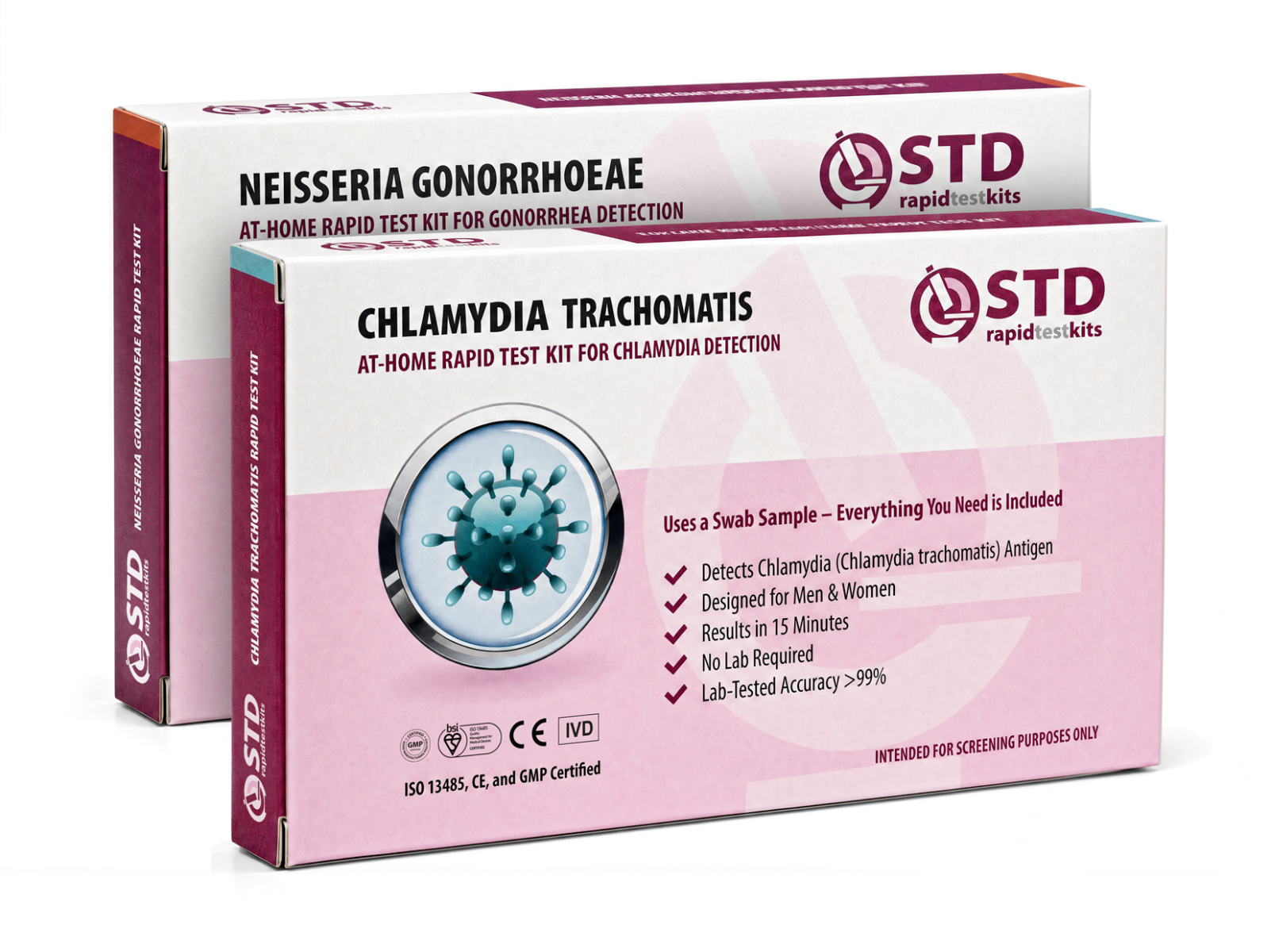
If chlamydia screening turned up positive, a broader STI panel is also worth considering. Co-infection with gonorrhea is common enough that the CDC recommends dual testing for both infections at the same visit, and the two share enough symptoms (and frequently the same partner timeline) that a combination kit answers both questions in one go without an extra appointment.
Why Once Is Rarely Enough: Reinfection and the Long Game
A treated chlamydia infection doesn't leave behind protective immunity. You can catch it again from the same partner if they didn't test and treat, from a new partner who was never tested, or from a return to inconsistent condom use. National surveillance shows a meaningful share of teens who clear chlamydia get reinfected within months of their original diagnosis, often because partner notification and treatment didn't happen on the same timeline.
The fix is structural rather than perfect. Test routinely (every three to six months for sexually active teens with new partners), use condoms consistently to lower transmission risk, and treat partners alongside yourself rather than alone. For teens having sex with multiple people, broader-panel testing covers the infections that travel together (chlamydia, gonorrhea, syphilis, HIV, hepatitis B and C) and saves multiple separate tests and appointments. Per the WHO chlamydia fact sheet, regular testing is recommended for people at increased risk of chlamydia, a principle that applies directly to sexually active teens with new or multiple partners.
The point isn't to make sex feel like a medical procedure. It's to make a routine simple enough that you actually keep doing it: a kit in a drawer, a calendar reminder every few months, and a no-drama line for partners. Once that's in place, chlamydia stops being a scary surprise and becomes a routine thing you check for.
FAQs
- Can chlamydia really feel like a UTI or yeast infection?
- Yes, especially in people with vaginas. Burning when peeing, mild discharge, and pelvic discomfort overlap with UTIs and yeast infections, and a same-day clinic appointment can land on the wrong diagnosis. If a UTI prescription doesn't clear your symptoms within a few days, ask specifically for a chlamydia and gonorrhea test. The single sentence that changes things is: "Can we add an STI panel to today's visit?"
- Will my parents find out if I get tested at home?
- At-home kits ship in plain packaging with no STI wording on the box, the return label, or the billing statement. Many telehealth services also offer minor-friendly confidential consults. In every U.S. state, minors can legally consent to STI testing without parental involvement; the age threshold varies by state but starts as low as 12 or 13 in most.
- I haven't had penetrative sex. Can I still have chlamydia?
- Yes. Oral sex, genital-to-genital contact without penetration, and shared sex toys can all transmit chlamydia. Surveys of teens who tested positive often turn up reports of "I haven't had sex" followed by activities that can absolutely transmit the bacteria. If genitals or mouths were involved, testing makes sense.
- How soon after sex should I test?
- The detection window is roughly 7 to 14 days post-exposure. Testing earlier can show a false negative because the bacteria haven't built up enough to detect reliably. If symptoms appear within a day or two of exposure, test now and retest at two weeks before trusting a negative.
- What happens if chlamydia goes untreated?
- In people with vaginas, the infection can climb into the uterus and fallopian tubes and cause pelvic inflammatory disease, scarred tubes, infertility, and increased risk of ectopic pregnancy. In people with penises, it can cause epididymitis (painful testicular swelling). Untreated chlamydia also raises vulnerability to HIV during exposure. Most damage shows up only after months or years of an unchecked infection.
- Can chlamydia mess with my period?
- Sometimes. Light spotting between periods and pelvic cramping that doesn't match your usual cycle can be early signs. Many teens have no period changes at all. If your cycle suddenly feels off and you've been sexually active recently, it's worth testing rather than waiting it out as stress.
- After treatment, when can I have sex again?
- Wait at least 7 days after starting a 7-day antibiotic course, or 7 days after a single-dose treatment. Bacteria can linger even when symptoms are gone, so the cooldown matters. Ideally, also wait until any recent partner has tested and finished treatment so you're not bouncing the infection back and forth.
- Why do people get chlamydia again after treatment?
- Because clearing the infection doesn't leave protective immunity, and reinfection is common, usually from an untreated partner. The CDC recommends retesting about three months after treatment to catch reinfection early, and sticking to a 3-to-6-month routine cadence if you have new or multiple partners.
- U.S. Centers for Disease Control and Prevention. Chlamydia: detailed fact sheet covering asymptomatic prevalence, transmission routes, and complications including PID.
- U.S. Centers for Disease Control and Prevention. STI Treatment Guidelines: chlamydial infections, recommended antibiotic regimens (doxycycline, azithromycin), dual chlamydia-gonorrhea testing, and follow-up testing.
- U.S. Centers for Disease Control and Prevention. STI Treatment Guidelines: adolescents, including confidentiality and consent guidance for STI services for minors in the U.S.
- U.S. Centers for Disease Control and Prevention. STI Screening Recommendations, including annual chlamydia screening for sexually active people under 25 and screening cadence for higher-risk groups.
- World Health Organization. Chlamydia fact sheet, including global epidemiology, complications, and recommendation that people at increased risk receive regular testing.
- NHS. Chlamydia: overview of symptoms, transmission, diagnosis, treatment, and general annual-screening recommendation for sexually active people.
