
Published: November 2025 | Last updated: May 2026 | Editorial review and quality control: Martina N.
A pastor in a small Midwestern congregation once realized he had never spoken the word "chlamydia" from his pulpit. When a teenager came to him after a positive test, he wanted to offer compassion. The words felt wrong because he had no script for sexual health, only for sexual ethics. That gap is the reason this article exists.
Across the U.S., young people aged 15 to 24 account for roughly half of all new sexually transmitted infections each year, according to the CDC's STI surveillance reports. Many of them sit in pews on Sunday and at youth groups on Wednesday. Short answer for the leaders reading this: yes, you can talk about STD testing without compromising spiritual values, and the first step matters less than taking it.
Key Takeaways
- Faith communities can address STD testing as a form of bodily care rather than a violation of values. Open conversations help reduce shame and shorten delays in seeking treatment.
- You do not need a medical background to make a difference. One welcoming sentence from a leader often does more than a sermon to break the silence.
Why This Article Exists
Maybe you are a pastor, an imam, a youth leader, or simply someone in your congregation who wants to help people feel less ashamed. Maybe someone confided in you and you froze. Maybe you have watched what silence does, how it makes people delay testing, fear disclosure, or believe a diagnosis is a punishment from God. This article is for you.
It is also for the young couple in pre-marriage counseling wondering if they should ask each other about testing. The single parent worried about a teenager's health. The woman who has not had sex in five years and just got diagnosed with HPV. The man who caught something from a partner and cannot bring himself to tell his pastor. Every one of those people deserves a faith community that does not fall silent at the moment they need words most.
STDs spread through biology and through silence, since silence delays testing and treatment. Faith communities, when equipped, can become powerful places of healing and truth. Below, you will find what scripture does and does not say, how to reduce shame, what phrases work in real conversations, and where to point people who need help.
Pastors, imams, rabbis, youth leaders, lay counselors, ministry volunteers, and any congregation member who has been asked a sexual health question and wished they had a better answer. The named scenarios in this article are composites or use changed names for privacy.
The Problem Is the Silence Around the Diagnosis
If you have never heard the word "herpes" spoken from a pulpit, you are not alone. If no one in your congregation has ever said "I got tested," silence is the reason, not a lack of need. That default has consequences for the people sitting closest to you.
In many faith spaces, sex is discussed only through the lens of abstinence or morality. Testing is left out entirely, or whispered about as something "those people" do. Yet people of faith get gonorrhea, chlamydia, and HIV at rates roughly comparable to the general population. The less openly any of this is acknowledged, the more likely it is that someone in the pews carries a diagnosis in secret, without support, without treatment, and without knowing they are not alone.
Caring for people's physical health is itself a moral act, and no doctrine needs revision to make room for it. If a faith community can be a hospital for the hurting, it can also be a place where people learn how to care for their bodies, without shame, without fear, and without hiding in the dark.

What Silence Teaches, and Why It Is Dangerous
Consider a common scenario. A pastor in a Midwest church has never mentioned chlamydia from the pulpit. When a member of his youth ministry comes to him in tears after a positive test, he realizes the silence has said more than any sermon could. It said, "We do not talk about that here."
Religious silence around STDs is not neutral. It teaches fear, shame, and misinformation. When STDs are framed only as a consequence of "immorality," people who are sick get cast out, either socially or psychologically. They are more likely to delay testing, hide symptoms, and internalize stigma that could have been prevented with a single sentence: "You are still loved, and you deserve care."
Research on stigma in conservative faith communities consistently finds that members are less likely to seek STD testing, even when they know they are at risk. That hesitation is rooted in shame rather than science. The same authority figures whose silence reinforces stigma can dismantle it just as quickly when they speak up.
Members of faith communities sometimes delay STD testing because they fear judgment from clergy or fellow congregants. Supportive language from a trusted leader is one of the most consistently identified levers for closing that gap, alongside privacy-respecting testing options that do not require a clinic visit.
What Scripture Actually Says (and Does Not Say)
There is no Bible verse, hadith, or sacred teaching that says getting tested for HIV, syphilis, or herpes is a moral failing. Silence allows people to assume otherwise, which is why it carries weight when spiritual leaders clarify that getting tested is a form of self-care, of responsibility, and of protection for one's neighbor.
Testing is love in action. It functions as "treating your body as a temple" (1 Corinthians 6:19) by genuinely caring for it. It is honoring your neighbor (Mark 12:31) by not exposing them to harm you can detect. It is even an act of humility, the willingness to say "I do not know, but I want to do right."
Some leaders worry that talking about testing sends a permission slip to be sexually active. Public health data does not support that fear. People who are going to have sex are already having sex, and ignoring that does not change the rate. It only raises the odds that someone walks around with a curable chlamydia infection for months because they were too ashamed to ask for help. The CDC's STI testing guidance describes stigma as a powerful force that prevents people from being tested or treated, naming stigma reduction a public-health priority. Faith communities can do real public-health work by naming both the risks and the resources, without flinching at either.
1 Corinthians 6:19 describes the body as a temple. Many readers extend that image to include preventive care, screening, and treatment. Mark 12:31 records the command to love your neighbor as yourself, which many readers connect to protecting partners from preventable harm. Neither passage names a specific infection or test, so faith leaders have wide latitude in how they apply them to modern sexual health.
Real Phrases Faith Leaders Can Use
Many religious leaders say they are willing to open the conversation but do not know where to start. The table below offers direct, usable phrases clergy and ministry staff can weave into sermons, counseling, or group sessions without alienating their audience. They are short on theology and long on care, which is what most people most need.
| Situation | Suggested Language |
|---|---|
| Youth group lesson on purity | "Whether you are sexually active now or later, knowing how to care for your body includes understanding infections, and testing is part of that care." |
| Pastoral counseling session | "Getting tested does not mean you did something wrong. It means you are being wise, protecting your health and your relationships." |
| Sermon on healing or redemption | "Many of us carry things we did not choose: diagnoses, fears, mistakes. None of those separate you from God's love or your right to receive medical care." |
| Community Q&A or open panel | "Yes, Christians can get STDs. Yes, Christians can and should get tested. Testing is honest care, plain and simple." |
| Marriage prep class | "Part of preparing for marriage is caring for your bodies together. That includes getting tested so you start fully informed and confident." |
STDs Do Not Discriminate, So Neither Should We
Infections do not care about faith, gender, or intentions. According to the CDC's STI statistics hub, rates of chlamydia, gonorrhea, and syphilis have climbed sharply over the past decade, with the steepest rise among young adults aged 15 to 24. Many of those young adults are in your youth group, your college ministry, or your weekly service.
One of the most damaging myths in faith spaces is that "good" people do not get STDs. The biology says otherwise. You can be married, monogamous, faithful, and still acquire HPV or herpes. Most people with herpes contracted it from partners who did not know they were infectious, since both viruses can shed without visible symptoms. Past experiences before a marriage, blood transfusions decades ago, sexual assault, and rare non-sexual transmission routes all play a role too.
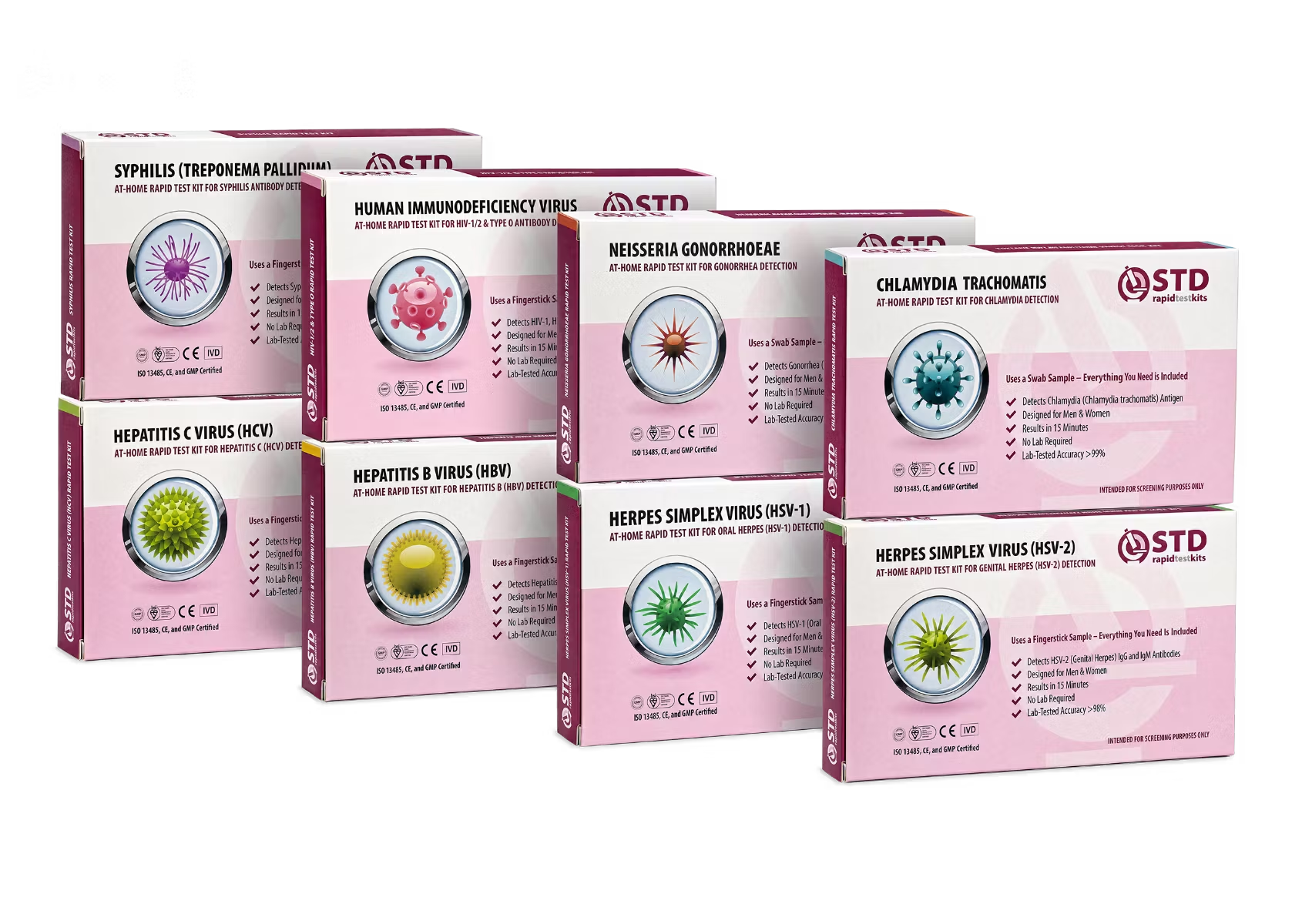
When STDs are treated as a moral test, people get shamed into silence. When they are treated as medical conditions, the door opens to testing, treatment, and honesty. Testing resources belong inside faith settings as much as inside clinical ones. If your congregation needs a private, judgment-free starting point, the rapid at-home panel below requires no clinic visit and arrives in plain packaging.
What One Sentence of Truth Can Unlock
Consider another scenario, drawn from common pastoral experience. A young woman, call her Naomi, grew up in a conservative Evangelical church where abstinence was taught as the only acceptable sexual ethic. After a single encounter in college led to a herpes diagnosis, she did not tell anyone, not her family, not her doctor, and certainly not her church. For three years she avoided dating and silently carried the emotional weight of her diagnosis.
"I thought if I ever told someone, I would lose my community. I did not even consider getting treated for the outbreaks. I thought this was the price I had to pay for messing up."
Her turning point came when she stumbled on a video from a Christian sex therapist explaining that herpes is common, manageable, and does not make anyone "bad." That one piece of information led her to a clinician, a support group, and eventually a pastor who told her: "This does not disqualify you from anything God has for you." Naomi now volunteers with a faith-based group that helps women talk openly about STDs, testing, and healing. Her experience shows what one sentence of truth can unlock for someone who has spent years convinced they were uniquely beyond help.

How to Start the Conversation Without Causing Controversy
Not every congregation is ready for a blunt sermon on STDs, and that is fine. The conversation can still happen with the right entry point. Faith leaders can build safer, smarter communities without ever shaming or shocking anyone from the pulpit.
Start with connection rather than correction. Frame testing as part of holistic care, spiritual, emotional, and physical. Normalize it inside wellness ministries, relationship classes, and premarital counseling. Do not assume everyone already knows the risks, and do not assume they do not. The five entry points in the table below have worked for clergy across denominations.
| Setting | Conversation Entry Point |
|---|---|
| Premarital counseling | "Part of preparing for marriage is caring for your bodies. That includes getting tested so you can begin fully informed and confident." |
| Youth retreat or camp | "This is also about how to protect yourself if and when you make adult choices later. Let's talk about that openly." |
| Men's or women's group session | "We have been talking about accountability and wholeness. That includes health screenings. STD testing is one way we honor ourselves and our partners." |
| Health ministry outreach | "Alongside our blood pressure checks and diabetes screenings, we encourage confidential STD testing. It is part of full-body wellness." |
| Open Q&A forum | "No topic is off limits here. If you have ever wondered about STDs, herpes, testing, or symptoms, you are not alone. Let's talk openly, without judgment." |
Start Small. Start Honest. Just Start.
One pastor in a marriage prep class kept his approach to a single slide containing one direct question: "Have you both been tested?" He did not preface it with theology or extended commentary. That single question sparked dozens of quiet follow-ups, requests for resources, and a tearful thank-you from a couple who realized they had never had the conversation at all.
Starting does not require overhauling your doctrine. It means making space for the lives people are already living. Members of your community are already navigating HPV diagnoses, syphilis scares, and silent panic after unprotected encounters. What they need is a way to talk without being told they have failed.
You do not have to be a sexual health expert; you just have to be a safe place. The clinical work, the testing, and the treatment are jobs for the medical system, while the trust is the job that only you can do. Once you have built that trust, point people to clinicians, community clinics, or reputable home-testing options that fit their privacy needs.
First steps any faith leader can take this week
- Add one screening-related question to premarital counseling intake forms.
- Bookmark the CDC STI testing page and one trusted at-home testing option to share when asked.
- Practice one sentence of welcome out loud, so it feels natural the first time someone confides in you.
When the Church Can Help and Often Does Not
Many religious organizations run food pantries, addiction support groups, and mental health ministries. Sexual health is the place where things still go quiet. That silence is costing people, especially young adults, the chance to catch infections early, get treated, and stay well.
Some congregations have begun partnering with community health departments to host on-site testing events, distribute health guides, or share evidence-based STD facts on their digital channels. Others include links to reputable testing resources in the weekly bulletin or ministry newsletter. These actions look quiet from the outside. A link in a weekly bulletin can still be the first step someone takes toward a diagnosis they needed years earlier.
You do not need a full health department to reduce STD stigma in your church. You just need the willingness to say, on the record: "Your sexual health matters here." That sentence, repeated until people believe it, changes who feels safe enough to ask for help.
You Do Not Have to Know Everything, Just Be Willing to Listen
No one expects faith leaders to become sexual health experts overnight. What matters is the willingness to break the silence, name the stigma, and remind people that illness is not the same as impurity. Breaking that silence is the first step toward treatment, community, and relief for the people sitting in your pews.
STD testing is an act of stewardship over the body and the relationships it inhabits. When churches, mosques, and synagogues lead with care rather than condemnation, they save lives, rebuild trust, and reflect the radical compassion their traditions already teach. The tools are simple: one welcoming sentence, one trusted resource, one moment of honesty in a setting that has long avoided the topic.
Members of your community who need help will know that conversation is welcome and resources are at hand, and they are more likely to ask for the referral or the kit they have been afraid to mention.
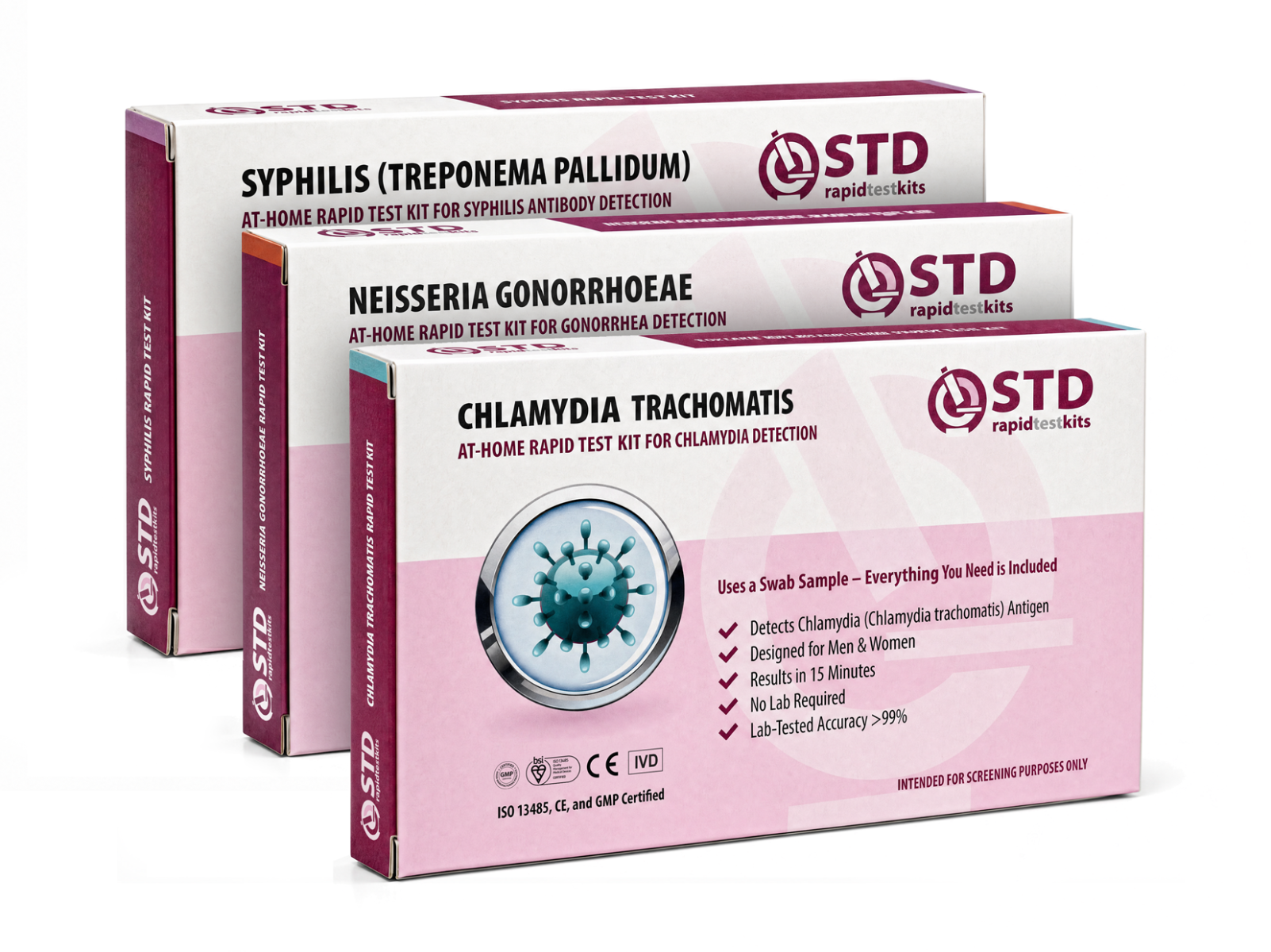
For congregants with questions, the <a href="https://www.cdc.gov/sti/testing/index.html" target="_blank" rel="noopener">CDC's STI testing guide</a> covers who should test and when. Local public health departments often provide free or low-cost screening. Reputable rapid home-testing kits give an alternative for anyone who needs full privacy.
Faith and STD Testing: Common Questions
- Can a person of faith really talk about STDs without compromising values?
- Yes, and many would say it is essential. Spiritual life already includes caring for the body, and that includes taking its health seriously. Honest conversation about STDs is itself an act of care for the person in front of you and for everyone else they may encounter. The people in your pews have bodies, histories, fears, and questions like everyone else, and a leader who can hold that reality without flinching becomes a safer person to talk to.
- Will talking about testing encourage people to have sex?
- Decades of public health research say no. When people have access to clear sexual health information, including testing, they tend to make more thoughtful decisions, not fewer. Silence does not protect anyone. It only delays diagnosis and treatment for the people who needed help yesterday.
- What if someone in my congregation tells me they tested positive?
- Take a breath, hold space, and listen. Try a sentence as simple as: "Thank you for telling me. That took courage." You do not need every answer; you need to show them they are still welcome, still loved, and still worthy of care. From there, help connect them with a clinician or testing resource if they are not sure where to start. Confidentiality is critical, so be clear about what you will and will not share with others.
- How can I bring up testing without sounding accusatory?
- Lead with curiosity and care, not judgment. Try: "Have you ever been tested?" or "Would you feel safe talking with your partner about getting tested together?" The framing is responsibility with information they may have never been offered. Many people have never been asked that question in a kind tone. You can be the first.
- Do faithful or monogamous people really get STDs?
- A positive test is not evidence of infidelity or moral failure. HPV and herpes can persist undetected for years, meaning a current partner may have been exposed by a past one neither of them knew was infectious. Even people in long-standing relationships benefit from a baseline screening, since biology does not track commitment.
- Is it okay to host a testing event at church?
- Absolutely. Some of the most respected churches in the U.S. partner with community health clinics to do exactly that. Frame it like any other health screening day. You do not need to make a big moral statement, just a practical one: "We care about your health, all of it." Public health departments will often supply test kits, staff, and educational materials at no cost to the host.
- What is the most discreet way for someone to get tested if they are worried about gossip?
- Home testing is the most private option. There is no clinic visit, no waiting-room encounter, and no awkward conversation. Rapid lateral-flow at-home kits, including fingerstick HIV tests, give results within minutes without any mailing or lab waiting period. The privacy bar is much higher than at a local clinic.
- I want to help, but I do not feel qualified. Where do I start?
- You do not need a degree in epidemiology. You need to be willing to open the door. Point people to trusted resources like the <a href="https://www.cdc.gov/sti/testing/index.html" target="_blank" rel="noopener">CDC's STI testing pages</a> or your local public health department. Share what you are learning. Ask questions. Offer kindness. In a world full of shame and silence, even an unsure voice that says "you are still loved" can change a life.
How We Sourced This Article: We combined current guidance from leading public health organizations (CDC, WHO, NHS, NIH/MedlinePlus) with peer-reviewed research on stigma in faith communities and lived-experience accounts. The goal is a guide that is practical, compassionate, and clinically accurate. Below are the most relevant and reader-friendly sources we drew from.
- U.S. Centers for Disease Control and Prevention. Getting Tested for STIs, including who should test, when to test, and how testing reduces transmission and stigma.
- U.S. Centers for Disease Control and Prevention. STI surveillance and statistics hub, including age-stratified incidence data for chlamydia, gonorrhea, and syphilis.
- World Health Organization. Sexually Transmitted Infections fact sheet, covering global epidemiology, transmission, and stigma as a barrier to care.
- UK National Health Service. Sexually Transmitted Infections (STIs) overview for patients, including testing routes and confidentiality protections.
- MedlinePlus (U.S. National Library of Medicine, NIH). STI Tests overview, including blood-based and swab-based testing methods and what each detects.
