Published: November 2025 | Last updated: May 2026 | Editorial review and quality control: Martina N.
Anal symptoms are one of the most-searched and least-talked-about health concerns. The discomfort feels embarrassing, the cause feels mysterious, and every search result seems to lead with worst-case scenarios. The honest answer is calmer than most readers expect. Most short-lived anal itching, burning, or light bleeding is caused by hemorrhoids, friction, skin irritation, or anal fissures, not a sexually transmitted infection. Rectal STIs are real, often quiet, and worth ruling out when symptoms persist or follow a recent sexual exposure.
This guide walks through how to think about anal symptoms, what hemorrhoids and rectal STIs each tend to look and feel like, when testing is appropriate, and what an at-home rapid kit can and cannot tell you. It does not replace a clinical visit, especially for symptoms that linger or change.
Key Takeaways
- Most short-term anal itching, burning, or light bleeding is caused by hemorrhoids, skin irritation, or an anal fissure, not by a sexually transmitted infection.
- Rectal STIs (chlamydia, gonorrhea, herpes, syphilis, HPV) are often silent or mimic everyday issues. If symptoms last more than a week, follow a recent exposure, or include discharge or visible sores, testing is the only way to know.
Why Anal Symptoms Are So Confusing
The anal canal sits in a sensitive spot anatomically and emotionally. It has fewer surface nerve endings than the genitals, so symptoms tend to show up as vague pressure, dull burning, or mild itching instead of sharp, obvious pain. The skin around the anus is also delicate and prone to friction, irritation, soap reactions, hemorrhoid flares, and small tears. Any of those can produce the exact symptoms people associate with "something serious."
The rectum is also one of the body's most common sites for asymptomatic STIs in people who have receptive anal sex. CDC's chlamydia treatment guidelines note that most rectal chlamydia infections are asymptomatic, and CDC's gonorrhea overview says the same for rectal gonorrhea. Both can cause inflammation and be passed to a partner even when the person carrying them feels nothing. The combination of "easy to misread" plus "easy to miss" is what makes this category of symptoms feel so impossible to interpret on your own.
The goal of this guide is not to talk you into worst-case thinking. It is to help you tell the difference between symptoms that calm down on their own and symptoms that deserve a test or a clinical visit.
Rectal chlamydia and rectal gonorrhea produce no symptoms in most people who carry them. Testing after receptive anal exposure is the only reliable way to rule them out; waiting for symptoms is a strategy that misses most active infections.
What Hemorrhoids Actually Feel Like
Hemorrhoids are swollen veins in or around the anus, per the National Institute of Diabetes and Digestive and Kidney Diseases. They flare from straining on the toilet, sitting for long periods, pregnancy, low-fiber diets, heavy lifting, and aging connective tissue. They are not infectious, not caused by sex, and not a moral failing of any kind.
Internal hemorrhoids sit inside the rectum and usually don't hurt. The most common sign is bright red blood on the toilet paper or in the bowl after a bowel movement, plus a sense of pressure or fullness. External hemorrhoids form under the skin around the anus and can feel like a soft lump or grape-sized swelling. A thrombosed external hemorrhoid (one with a blood clot inside) can be sharply painful, hard, and bluish-purple.
Itching is also part of the picture, especially when a hemorrhoid is leaking small amounts of mucus or when wiping has irritated the skin. The pain tends to be worst during and right after a bowel movement, ease up between bowel movements, and respond to fiber, hydration, sitz baths, and over-the-counter creams over a few days.
How Rectal STIs Show Up (When They Show Up at All)
Several STIs can settle in the rectum: chlamydia, gonorrhea, herpes simplex (most often HSV-2), and syphilis. Human papillomavirus (HPV) can cause perianal or anal warts. The symptom picture varies a lot between them, and overlap with hemorrhoids is common.
Rectal chlamydia and gonorrhea are most often silent. When they do produce symptoms, the pattern is rectal pain, mucus or pus-like discharge, bleeding that isn't tied to a hard bowel movement, and a feeling of needing to pass stool when nothing comes out (clinicians call this tenesmus). The two infections feel nearly identical at the rectal site, which is why CDC's chlamydia treatment guidelines recommend testing for both at the same time.
Rectal herpes tends to produce small clustered blisters or shallow ulcers around or just inside the anus. Outbreaks often start with tingling or burning, then progress to painful sores that crust over within a week or two. First outbreaks can also bring fever, body aches, and tender lymph nodes in the groin.
Rectal syphilis in its primary stage produces a single firm painless ulcer (called a chancre) at the site of infection. Because it does not hurt, it gets missed almost every time. Secondary syphilis can show up weeks to months later as a non-itchy rash, including on the palms and soles.
Perianal HPV appears as small flesh-colored or grayish bumps that can grow into cauliflower-like clusters. They are usually painless but can itch, snag on clothing, or bleed if irritated. Most HPV infections clear on their own within two years. Persistent high-risk strains, especially HPV 16 and 18, are associated with a small but real risk of anal intraepithelial neoplasia and anal cancer over time, particularly in people living with HIV or other immune-suppressing conditions. Anal Pap smears and high-resolution anoscopy are the clinical screening tools for that risk; home rapid kits do not screen for cancer or precancer.
The picture below shows the most common visible patterns side by side. Real-world presentations vary widely; this is a starting reference, not a diagnostic tool.
Side by Side: Hemorrhoids vs Rectal STIs
Symptoms overlap, but tendencies differ. The table below captures the patterns clinicians use as starting hypotheses, not diagnostic certainty. Any sustained or unusual symptom warrants a test, regardless of which column it falls in.
| Symptom | More typical of hemorrhoids/fissures | More typical of rectal STIs |
|---|---|---|
| Burning sensation | Common, tied to bowel movements | Common with herpes ulcers or active gonorrhea/chlamydia inflammation |
| Visible bumps or sores | Soft lump (external hemorrhoid) or single linear tear (fissure) | Clustered blisters (herpes), single painless ulcer (syphilis), cauliflower-like warts (HPV) |
| Itching | Common, from mucus leak or wiping irritation | Common with HPV, less specific for chlamydia or gonorrhea |
| Bleeding | Bright red, on toilet paper, after bowel movement | Can be darker, mixed with mucus, not always tied to bowel movements |
| Pain during bowel movement | Very common, especially with fissures and thrombosed hemorrhoids | Common with herpes outbreaks or active proctitis |
| Mucus or pus-like discharge | Uncommon | Hallmark of rectal gonorrhea and chlamydia |
| Tenesmus (feeling of needing to pass stool with nothing coming out) | Uncommon | Common with active rectal infection |
| Follows a recent sexual exposure | Coincidence, not causal | Major clue; testing window matters (see below) |
When Both Are Happening at Once
Hemorrhoids and rectal STIs are not mutually exclusive. Someone can have a long-standing external hemorrhoid and an active rectal chlamydia infection at the same time, with the hemorrhoid masking the symptoms of the infection. Anything that produces small tears in the perianal skin (friction from anal sex, hemorrhoid flares, chronic constipation) can also slightly raise the per-act transmission risk for STIs during unprotected exposure.
This is part of why the "it's just my hemorrhoids" assumption is risky after a new sexual exposure. The hemorrhoid may be real, and the infection may also be real. A short symptom diary (what changed, when, after which exposure event) is more useful for picking the right test than trying to feel for a single diagnosis.
A symptom diary beats symptom guessing. Note what changed, when it changed, and which exposure event preceded it. That short timeline is what a clinician needs to order the right test and interpret a borderline result.
When to Test for a Rectal STI
Testing too early can miss an active infection because the pathogen has not multiplied enough to detect. Testing too late risks complications and onward transmission. The right time depends on the test type, the infection, and what exposure happened.
Two common situations call for rectal-specific testing: receptive anal sex with a new or unknown-status partner, and rimming (mouth-to-anus contact), which can transmit syphilis, gonorrhea, HSV, and HPV. Condoms reduce but do not eliminate this risk, especially for infections spread by skin-to-skin contact like herpes and HPV.
Here are the standard testing windows clinicians use for rectal-site exposure. The chlamydia and gonorrhea rows align with the CDC chlamydia treatment guidelines and the CDC gonorrhea overview; the syphilis and HSV-2 rows reflect standard antibody-test seroconversion ranges used by sexual-health clinics.
| Infection | Test type used | Recommended wait after exposure | Retest? |
|---|---|---|---|
| Chlamydia (rectal) | Rectal swab, lab NAAT | About 1 to 2 weeks | Yes if symptoms persist or early result is negative |
| Gonorrhea (rectal) | Rectal swab, lab NAAT | About 1 to 2 weeks | Yes if symptoms persist or early result is negative |
| Herpes (HSV-2) | Swab of an active lesion (PCR) is best; blood antibody test if no lesion | Swab as soon as a lesion appears; antibody blood test from about 12 weeks for reliable seroconversion | Antibody retest at 12 weeks if early test is negative |
| Syphilis | Blood antibody test; lesion swab if a chancre is visible | Blood test from about 3 to 6 weeks; up to 90 days for full sensitivity | Yes if early result is negative and exposure is high-risk |
| HPV (warts) | Visual exam by a clinician (no routine home test for anal HPV) | Warts can appear weeks to months after exposure | Visual monitoring; biopsy if diagnosis is unclear |
How do I tell if my anal symptoms are an STI or just a hemorrhoid?
You cannot reliably tell from symptoms alone. Hemorrhoids more typically cause bright red bleeding tied to bowel movements and ease with fiber, sitz baths, and time. Rectal STIs are more likely to produce mucus or pus-like discharge, painless ulcers, clustered blisters, or symptoms that follow a recent sexual exposure. If symptoms last more than about a week, change pattern, or include discharge or visible sores, test.
What If You Already Tested and It Came Back Negative?
A negative result is not always the end of the story. A few common patterns can produce a falsely reassuring negative.
You tested too early. Each infection has its own window period (see table above). A chlamydia test on day 3 after exposure is too soon. A syphilis blood test on day 14 is too soon. Re-test at the right window before you trust a negative.
You tested the wrong site. Rectal STIs require a sample from the rectum. A urine sample misses rectal chlamydia and rectal gonorrhea. A genital self-swab does not detect rectal infection. CDC's chlamydia and gonorrhea treatment guidelines explicitly recommend site-specific testing (rectal swab, throat swab, urine or genital swab) based on the kind of sexual exposure that occurred.
You tested for the wrong infection. "Full STI panel" varies a lot between clinics and home kits. A panel covering HIV, syphilis, and hepatitis B and C will not catch chlamydia, gonorrhea, herpes, or HPV. Ask exactly what is in the test.
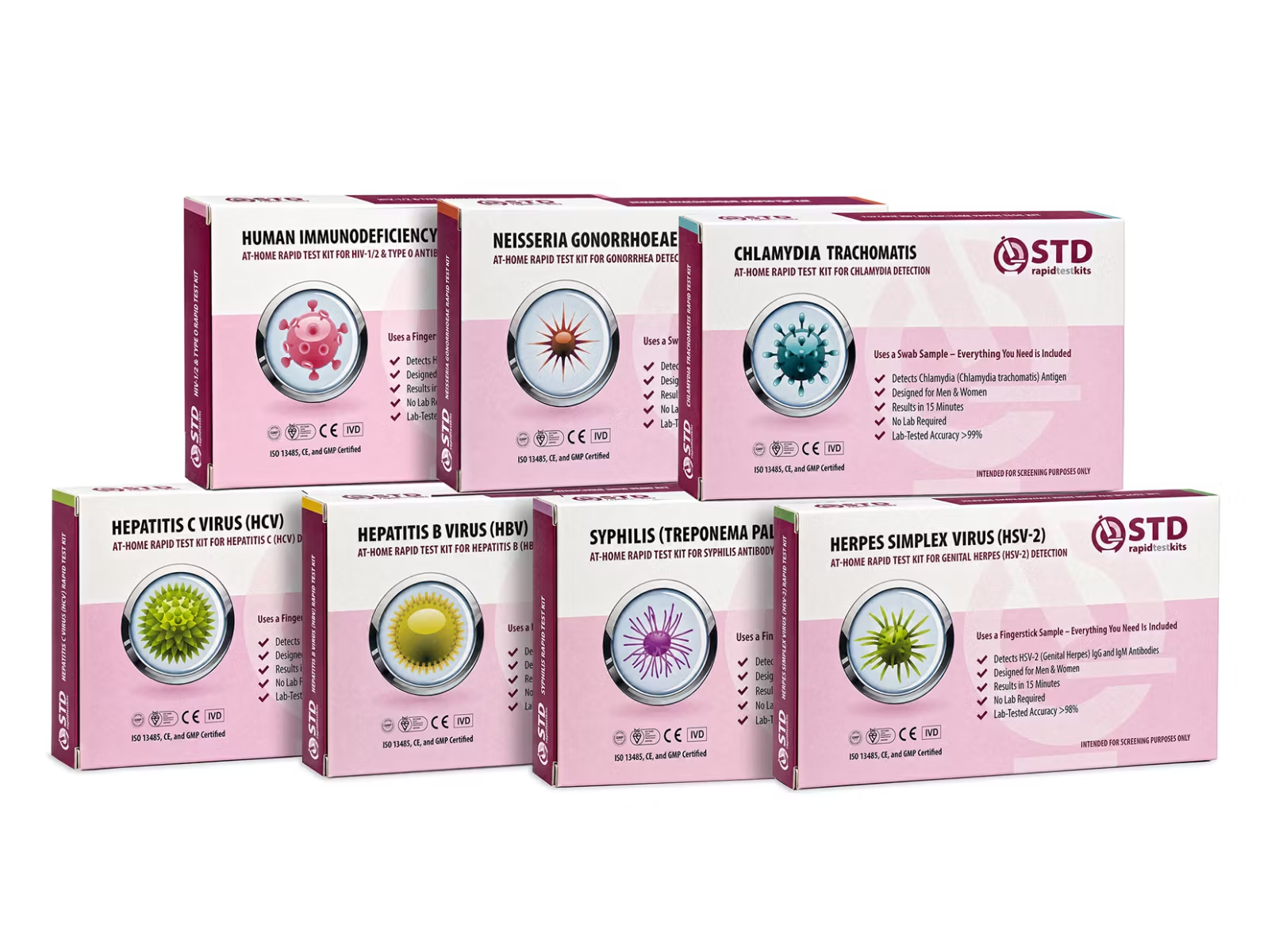
This site sells rapid at-home STI kits, and we note where our products fit and where they don't, so you can make an informed decision. Our kits use self-collected vaginal or penile genital swabs plus fingerstick blood. We do not currently offer a rectal-swab kit. For a rectal-specific chlamydia or gonorrhea test, see a clinic, an urgent-care that offers STI testing, or a sexual-health center; they can collect a rectal swab and send it for lab NAAT. The panel below screens for the adjacent genital and bloodborne STIs the same exposure event could have caused, which is useful as a parallel step rather than a substitute.
At-Home Testing: What It Can and Can't Tell You
At-home rapid kits use lateral-flow chemistry, the same technology behind home pregnancy tests and rapid COVID-19 antigen tests. They are designed for fast screening with quick turnaround, not for laboratory-grade analytical sensitivity. There are a few genuine strengths to using one. They give fast answers after a known exposure, so a partner who just tested positive doesn't have to wait days for a follow-up read. They also make periodic screening easier; CDC's general STI testing guidance recommends annual gonorrhea and chlamydia screening for all sexually active women under 25 and for women 25 and older with new or multiple partners, with separate more-frequent recommendations for men who have sex with men and people with specific risk factors. A discreet kit makes that cadence easier to keep up with. And for anyone who avoids clinics out of embarrassment, a kit that ships in plain packaging removes the main barrier to ever testing at all.
What at-home rapid kits do not replace: a clinical exam for a visible lesion, rectal or pharyngeal site-specific testing, laboratory NAAT confirmation for a positive screen, and treatment. A positive rapid result is a signal to confirm with a clinic and get treated, not the end of the process. Our lateral-flow kits are screening tools that work alongside lab NAAT, not equivalent to it.
A rapid home result is a screening signal, not a final answer. A positive screen needs a lab NAAT confirmation and a treatment plan; a negative screen at the right window is reassuring but not the same as a clean lab panel. Use both tools in sequence rather than as substitutes.
When to Skip Home Testing and See a Clinic
A few situations call for in-person care rather than (or in addition to) an at-home test:
- You see a sore, blister, ulcer, or wart-like growth. A clinician can swab the lesion directly for HSV PCR or biopsy a wart for confirmation. Antibody blood tests for herpes can show past exposure but cannot diagnose the lesion you are looking at right now.
- Bleeding is heavy, dark, or persistent. Most hemorrhoid bleeding is bright red and tied to bowel movements. Dark or persistent rectal bleeding can mean something else and warrants evaluation.
- You have rectal pain plus fever, chills, or severe abdominal pain. Symptoms that go systemic deserve same-day clinical evaluation.
- You need a rectal swab. Our home kits do not include one. A primary care office, sexual health clinic, or urgent care can collect a rectal swab and send it for lab NAAT testing.
- You are pregnant, immunocompromised, or living with HIV. Treatment thresholds and follow-up differ; clinical guidance is worth the visit.
Most people who have chlamydia or gonorrhea have no symptoms. Rectal infections can also be asymptomatic and may go undiagnosed without site-specific testing.
The Quiet Cost of Stigma Around Anal Health
Anal symptoms get less airtime than almost any other body complaint. People delay asking, delay testing, and self-treat with creams and wipes that do not address what is actually going on. For LGBTQ+ readers and women who have anal sex, that silence can last months. For straight men, the silence can be even longer because the assumption is that this should not happen to them.
The clinical reality is plainer than the stigma. Rectal STIs are common, treatable, and preventable. Hemorrhoids are even more common and rarely dangerous. Neither says anything about who you are. Both deserve the same calm attention you would give a sore throat or a strained back.
If symptoms have lasted more than a week, follow a recent sexual exposure, or have you Googling at midnight, the responsible move is the same. Test, see a clinician if a lesion is visible, and let actual data replace the spiral of worst-case thinking.
If symptoms have lasted more than a week, follow a recent sexual exposure, or include discharge or visible sores, that is your cue to test or see a clinician. Embarrassment is a poor substitute for information, and rectal STIs are treatable when caught early.
FAQs
- Can a hemorrhoid look like herpes?
- It can, especially at a glance. A single thrombosed external hemorrhoid is a firm, bluish-purple, painful nodule at the anal margin. Herpes typically shows up as a tight cluster of small fluid-filled blisters that may break open into shallow ulcers, with surrounding redness. The difference is morphology: one lump versus a cluster of small lesions. If you cannot tell, a clinician can swab a lesion for HSV PCR; that is the definitive test for an active outbreak.
- Is light bleeding after anal sex always a problem?
- Not always. Some light bleeding can happen after anal sex from friction, insufficient lubrication, or an existing hemorrhoid being irritated. The pattern that is worth attention is bleeding that keeps coming back over days, bleeding mixed with mucus or pus, or bleeding paired with rectal pain that is not tied to bowel movements. Those warrant evaluation.
- Can I have a rectal STI with no symptoms at all?
- Yes, and this is common. Per CDC, most rectal chlamydia and rectal gonorrhea infections produce no noticeable symptoms. Periodic screening matters precisely because waiting for symptoms is unreliable. If you have had receptive anal sex with a new partner in the past several months, site-specific testing is worth scheduling.
- My genital swab came back negative. Does that rule out a rectal STI?
- No. Genital swabs sample the urethra (in men) or vagina (in women). A rectal infection lives at the rectal site and needs a rectal swab to detect. If you had receptive anal exposure, ask for a rectal swab specifically. CDC treatment guidelines call this site-specific testing.
- Can I get herpes or other STIs from rimming?
- Yes. Mouth-to-anus contact can transmit HSV (both HSV-1 and HSV-2), gonorrhea, syphilis, and HPV. Risk depends on whether either partner has an active or asymptomatic infection. Safer-sex precautions for rimming include dental dams and avoiding contact during a known oral or perianal outbreak.
- What does an anal fissure feel like compared to a herpes outbreak?
- An anal fissure usually feels like a sharp tearing pain during a bowel movement that fades to a dull ache between movements, often with a small streak of bright red blood on the paper. Herpes pain is typically a burning, tingling, or aching sensation, often accompanied by a cluster of small blisters or ulcers and sometimes flu-like symptoms during a first outbreak. Fissures heal with fiber, water, and time; herpes outbreaks recur and need antiviral medication for shortening or suppression.
- Are at-home rapid STI kits accurate enough to trust?
- Used at the correct window after exposure, a well-designed rapid kit is accurate enough to act on. A positive result warrants clinic confirmation and antibiotic or antiviral treatment. A well-timed negative is reassuring but is not equivalent to a clean lab panel, since sensitivity sits below laboratory NAAT for most infections. Treat home kits as a strong first screen, not the final word, and pair them with clinic follow-up when results matter for treatment or partner notification.
- If my test is positive, what happens next?
- First, breathe. Bacterial rectal STIs like chlamydia, gonorrhea, and syphilis are curable with antibiotics. Herpes and HPV are manageable with antivirals and clinical follow-up. The next steps are confirmation with a lab test through a clinic, the appropriate antibiotic or antiviral course, and notifying recent sexual partners so they can also test. Most clinics can schedule same-day or next-day STI follow-up visits.
How we sourced this article: Our article was constructed based on current advice from the most prominent public health and medical organizations (CDC, NIDDK), and then molded into plain language based on the situations readers actually experience. We do not provide personal clinical diagnosis. For symptoms that concern you, see a licensed provider.
- U.S. Centers for Disease Control and Prevention. Chlamydial infections treatment guidelines, including rectal-site testing recommendations and the high frequency of asymptomatic rectal chlamydia.
- U.S. Centers for Disease Control and Prevention. About gonorrhea, including symptoms, transmission routes, asymptomatic rectal infection, and testing recommendations.
- U.S. Centers for Disease Control and Prevention. Proctitis, proctocolitis, and enteritis treatment guidance, used for diagnostic evaluation and empirical treatment of symptomatic proctitis.
- U.S. Centers for Disease Control and Prevention. Getting tested for STIs, including annual gonorrhea and chlamydia screening for sexually active women under 25 and separate guidance for MSM and other risk groups.
- National Institute of Diabetes and Digestive and Kidney Diseases. Hemorrhoids overview, including definitions, risk factors, symptoms, and treatment.
